Pasing Grades
  • Start Selling
  • Blog
  • Contact
  • 0

    Your cart is empty!

English

  • English
  • Spanish
  • Arabic
Create Account Sign In
  • Library
    • New Prep Guides
    • Featured Prep Guides
    • Free Exam Prep Guides
    • Best sellers
  • General
  • Nursing
    • Research Paper
    • Case Study
    • Discussion Post
    • Assignment
    • Exam
    • Practice Questions and Answers
    • Test Bank
    • solutions manual
  • Accounting
    • Case Study
    • Thesis
    • Study Guide
    • Summary
    • Research Paper
    • test bank
  • English
    • Creative Writing
    • Research Paper
    • Summary
    • Rhetorics
    • Literature
    • Journal
    • Exam
    • Grammar
    • Discussion Post
    • Essay
  • Psychology
    • Hesi
    • Presentation
    • Essay
    • Summary
    • Study Guide
    • Essay
    • Solution Manual
    • Final Exam Review
    • Class Notes
    • test bank
  • Business
    • Lecture Notes
    • Solution Manual
    • Presentation
    • Business Plan
    • Class Notes
    • Experiment
    • Summary
    • Practice Questions
    • Study Guide
    • Case Study
    • test bank
    • Exam
  • More
    • Computer Science
    • Economics
    • Statistics
    • Engineering
    • Biology
    • Religious Studies
    • Physics
    • Chemistry
    • Mathematics
    • History
    • Sociology
    • Science
    • Philosophy
    • Law
  • Pages
    • About Us
    • Selling Tips
    • Delivery Policy
    • Faq
    • Privacy Policy
  • Flash Sale
  • Home
  • Chapter 08: Pain Lewis: Medical-Surgical Nursing, 10th Edition with 100% correct answers

Chapter 08: Pain Lewis: Medical-Surgical Nursing, 10th Edition with 100% correct answers

Preview page 1 Preview page 2 Preview page 3
Add To Favorites

Share this item Share this item

  • Item Details
  • Comments (0)
  • Reviews (0)
  • Contact Seller
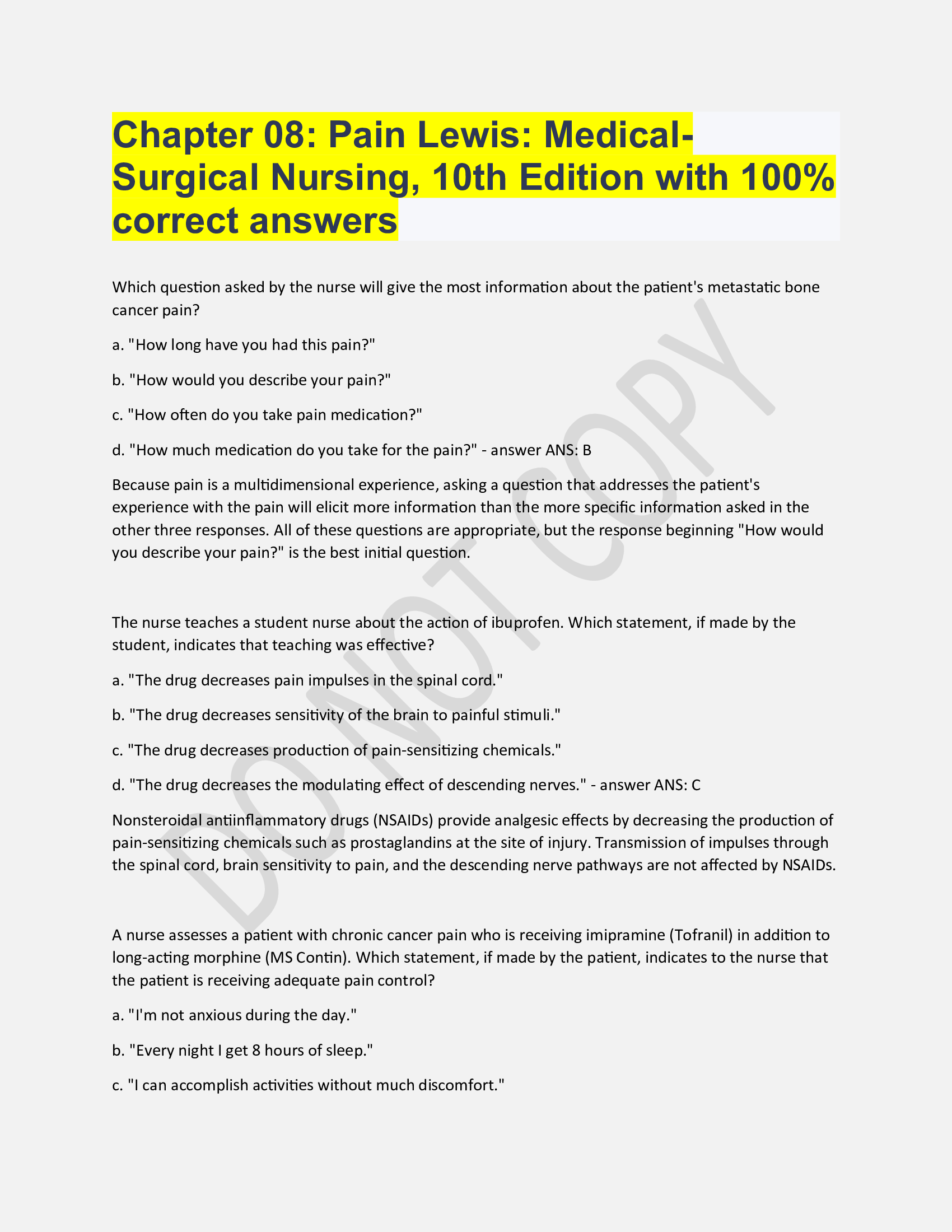
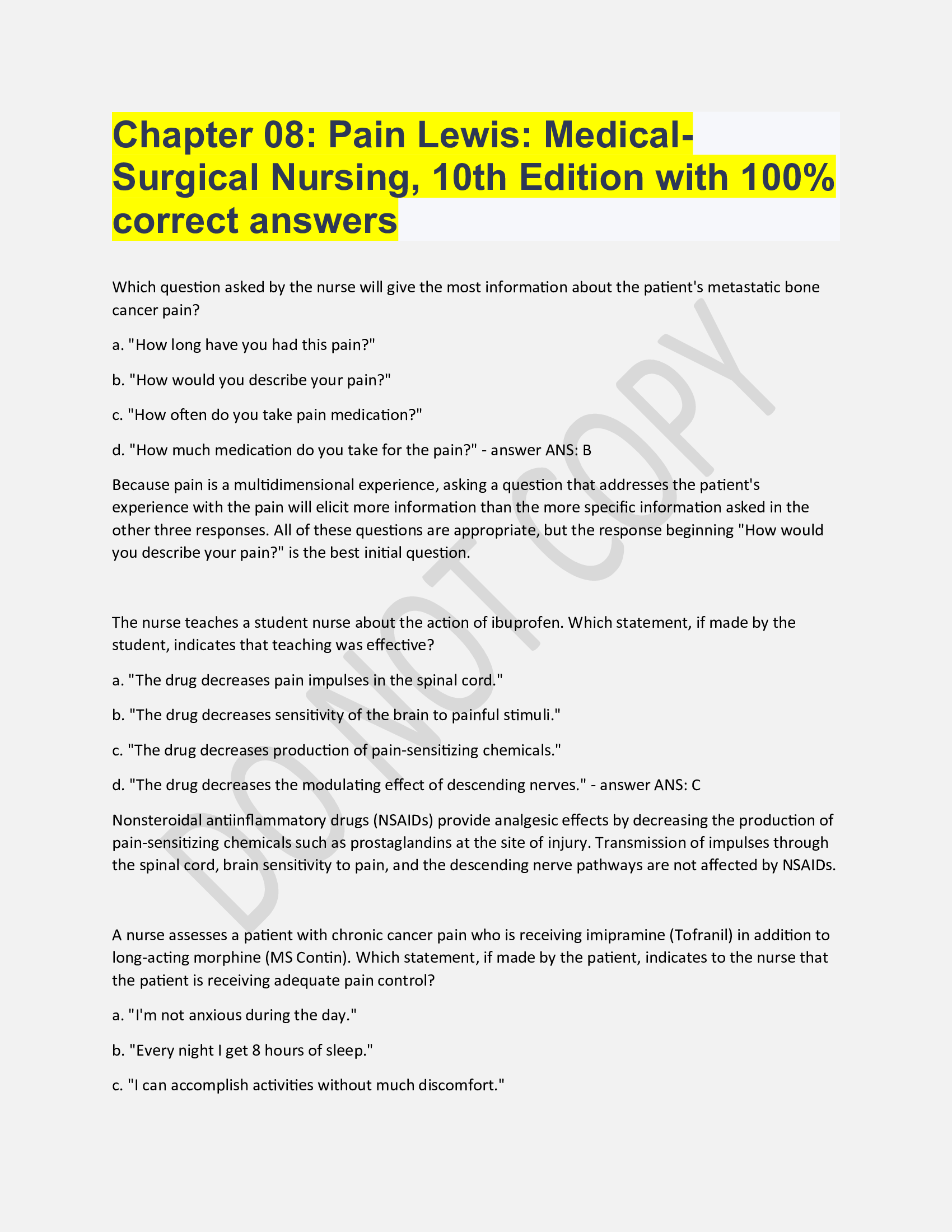
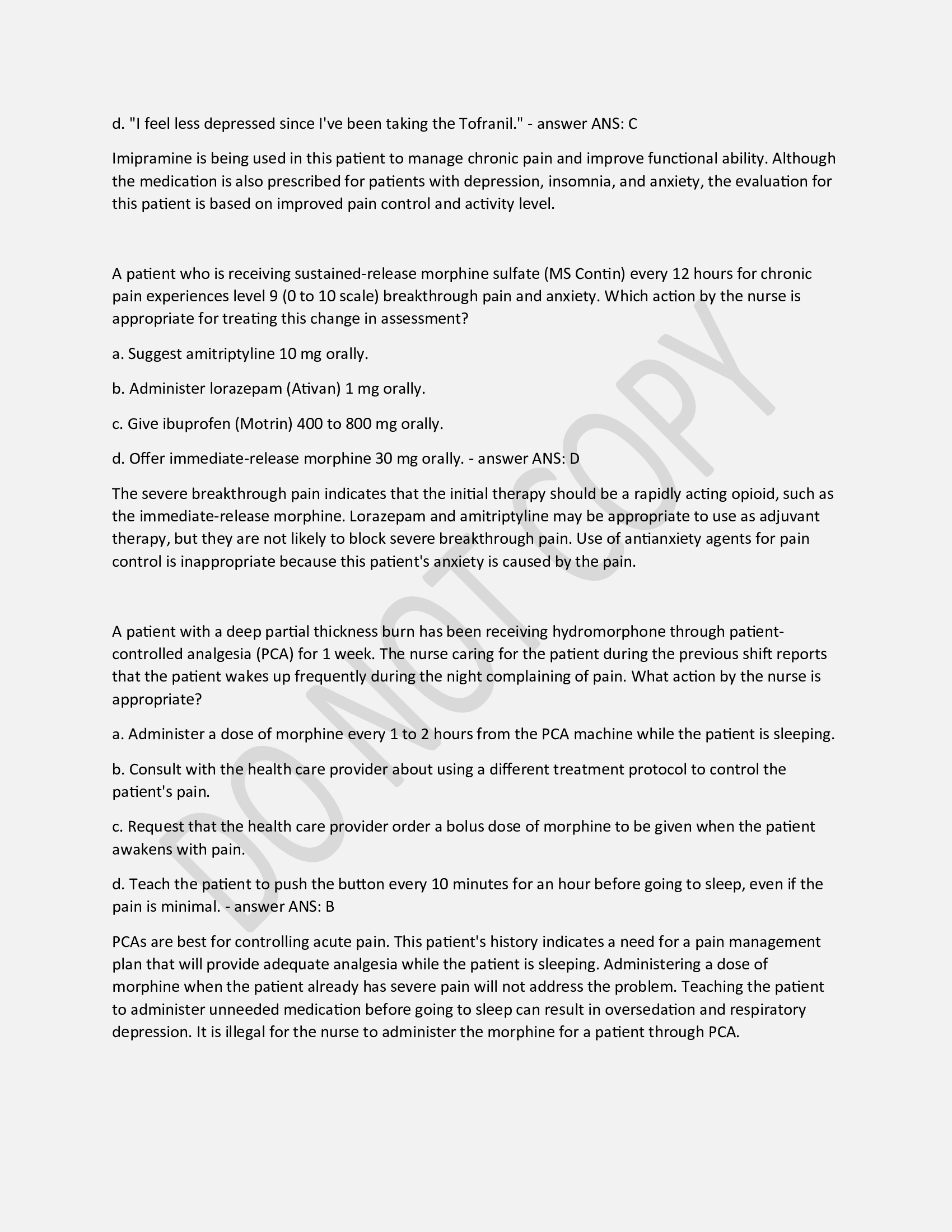
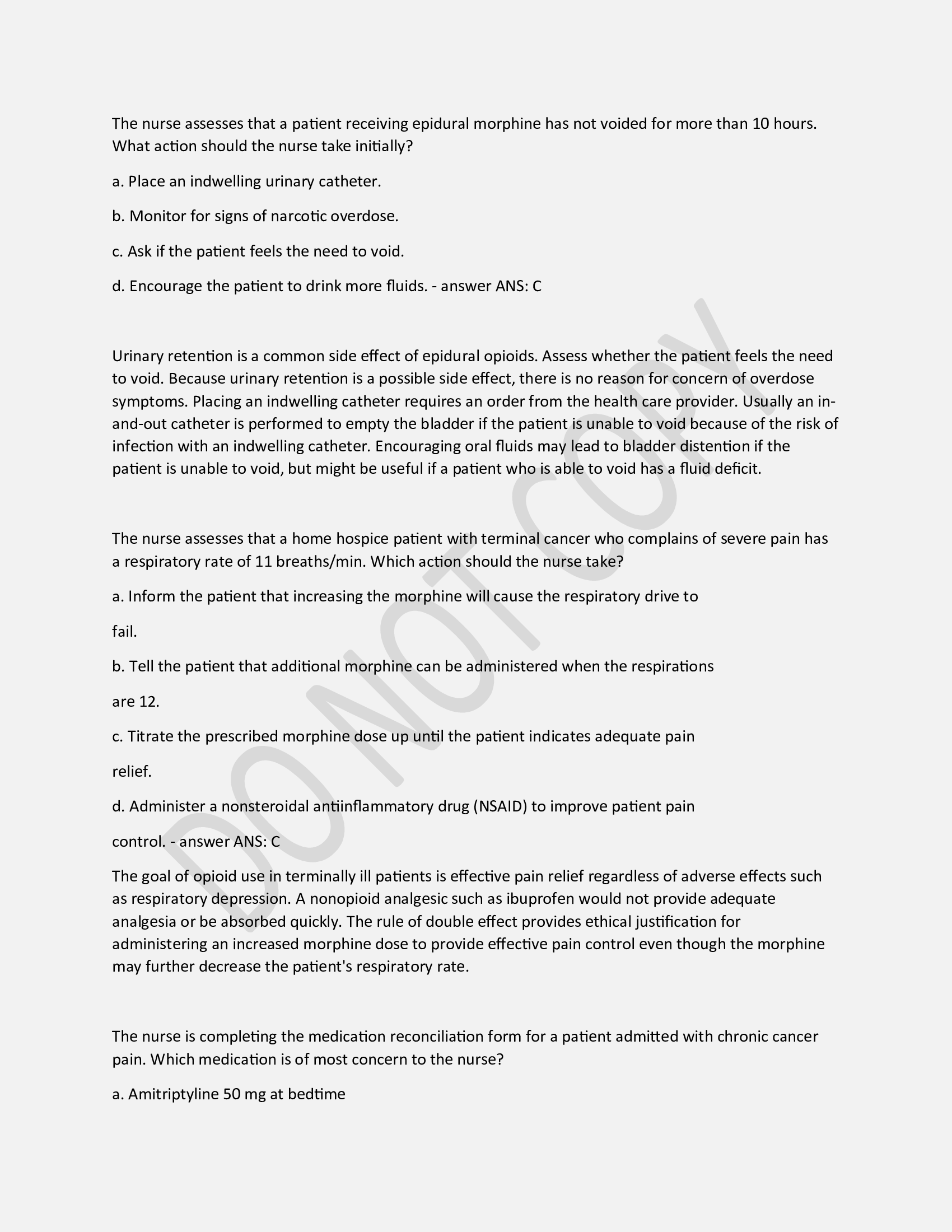
Which question asked by the nurse will give the most information about the patient's metastatic bone cancer pain? a. "How long have you had this pain?" b. "How would you describe your pain?" c. "How often do you take pain medication?" d. "How much medication do you take for the pain?" - answer ANS: B Because pain is a multidimensional experience, asking a question that addresses the patient's experience with the pain will elicit more information than the more specific information asked in the other three responses. All of these questions are appropriate, but the response beginning "How would you describe your pain?" is the best initial question. The nurse teaches a student nurse about the action of ibuprofen. Which statement, if made by the student, indicates that teaching was effective? a. "The drug decreases pain impulses in the spinal cord." b. "The drug decreases sensitivity of the brain to painful stimuli." c. "The drug decreases production of pain-sensitizing chemicals." d. "The drug decreases the modulating effect of descending nerves." - answer ANS: C Nonsteroidal antiinflammatory drugs (NSAIDs) provide analgesic effects by decreasing the production of pain-sensitizing chemicals such as prostaglandins at the site of injury. Transmission of impulses through the spinal cord, brain sensitivity to pain, and the descending nerve pathways are not affected by NSAIDs. A nurse assesses a patient with chronic cancer pain who is receiving imipramine (Tofranil) in addition to long-acting morphine (MS Contin). Which statement, if made by the patient, indicates to the nurse that the patient is receiving adequate pain control? a. "I'm not anxious during the day." b. "Every night I get 8 hours of sleep." c. "I can accomplish activities without much discomfort." d. "I feel less depressed since I've been taking the Tofranil." - answer ANS: C Imipramine is being used in this patient to manage chronic pain and improve functional ability. Although the medication is also prescribed for patients with depression, insomnia, and anxiety, the evaluation for this patient is based on improved pain control and activity level. A patient who is receiving sustained-release morphine sulfate (MS Contin) every 12 hours for chronic pain experiences level 9 (0 to 10 scale) breakthrough pain and anxiety. Which action by the nurse is appropriate for treating this change in assessment? a. Suggest amitriptyline 10 mg orally. b. Administer lorazepam (Ativan) 1 mg orally. c. Give ibuprofen (Motrin) 400 to 800 mg orally. d. Offer immediate-release morphine 30 mg orally. - answer ANS: D The severe breakthrough pain indicates that the initial therapy should be a rapidly acting opioid, such as the immediate-release morphine. Lorazepam and amitriptyline may be appropriate to use as adjuvant therapy, but they are not likely to block severe breakthrough pain. Use of antianxiety agents for pain control is inappropriate because this patient's anxiety is caused by the pain. A patient with a deep partial thickness burn has been receiving hydromorphone through patient-controlled analgesia (PCA) for 1 week. The nurse caring for the patient during the previous shift reports that the patient wakes up frequently during the night complaining of pain. What action by the nurse is appropriate? a. Administer a dose of morphine every 1 to 2 hours from the PCA machine while the patient is sleeping. b. Consult with the health care provider about using a different treatment protocol to control the patient's pain. c. Request that the health care provider order a bolus dose of morphine to be given when the patient awakens with pain. d. Teach the patient to push the button every 10 minutes for an hour before going to sleep, even if the pain is minimal. - answer ANS: B PCAs are best for controlling acute pain. This patient's history indicates a need for a pain management plan that will provide adequate analgesia while the patient is sleeping. Administering a dose of morphine when the patient already has severe pain will not address the problem. Teaching the patient to administer unneeded medication before going to sleep can result in oversedation and respiratory depression. It is illegal for the nurse to administer the morphine for a patient through PCA. The nurse assesses that a patient receiving epidural morphine has not voided for more than 10 hours. What action should the nurse take initially? a. Place an indwelling urinary catheter. b. Monitor for signs of narcotic overdose. c. Ask if the patient feels the need to void. d. Encourage the patient to drink more fluids. - answer ANS: C Urinary retention is a common side effect of epidural opioids. Assess whether the patient feels the need to void. Because urinary retention is a possible side effect, there is no reason for concern of overdose symptoms. Placing an indwelling catheter requires an order from the health care provider. Usually an in-and-out catheter is performed to empty the bladder if the patient is unable to void because of the risk of infection with an indwelling catheter. Encouraging oral fluids may lead to bladder distention if the patient is unable to void, but might be useful if a patient who is able to void has a fluid deficit. The nurse assesses that a home hospice patient with terminal cancer who complains of severe pain has a respiratory rate of 11 breaths/min. Which action should the nurse take? a. Inform the patient that increasing the morphine will cause the respiratory drive to fail. b. Tell the patient that additional morphine can be administered when the respirations are 12. c. Titrate the prescribed morphine dose up until the patient indicates adequate pain relief. d. Administer a nonsteroidal antiinflammatory drug (NSAID) to improve patient pain control. - answer ANS: C The goal of opioid use in terminally ill patients is effective pain relief regardless of adverse effects such as respiratory depression. A nonopioid analgesic such as ibuprofen would not provide adequate analgesia or be absorbed quickly. The rule of double effect provides ethical justification for administering an increased morphine dose to provide effective pain control even though the morphine may further decrease the patient's respiratory rate. The nurse is completing the medication reconciliation form for a patient admitted with chronic cancer pain. Which medication is of most concern to the nurse? a. Amitriptyline 50 mg at bedtime b. Ibuprofen 800 mg 3 times daily c. Oxycodone (OxyContin) 80 mg twice daily d. Meperidine (Demerol) 25 mg every 4 hours - answer ANS: D Meperidine is contraindicated for chronic pain because it forms a metabolite that is neurotoxic and can cause seizures when used for prolonged periods. The ibuprofen, amitriptyline, and oxycodone are appropriate medications for long-term pain management. The nurse is caring for a patient who has diabetes and complains of chronic, burning leg pain even when taking oxycodone (OxyContin) twice daily. Which prescribed medication is the best choice for the nurse to administer as an adjuvant to decrease the patient's pain? a. Aspirin b. Amitriptyline c. Celecoxib (Celebrex) d. Acetaminophen (Tylenol) - answer ANS: B The patient's pain symptoms are consistent with neuropathic pain and the tricyclic antidepressants are effective for treating this type of pain. The other medications are more effective for nociceptive pain. A patient who uses a fentanyl (Duragesic) patch for chronic abdominal pain caused by ovarian cancer asks the nurse to administer the prescribed hydrocodone tablets, but the patient is asleep when the nurse returns with the medication. Which action is best for the nurse to take? a. Wake the patient and administer the hydrocodone. b. Wait until the patient wakes up and reassess the pain. c. Suggest the use of nondrug therapies for pain relief instead of additional opioids. d. Consult with the health care provider about changing the fentanyl (Duragesic) dose. - answer ANS: A Because patients with chronic pain frequently use withdrawal and decreased activity as coping mechanisms for pain, sleep is not an indicator that the patient is pain free. The nurse should wake the patient and administer the hydrocodone. The following medications are prescribed by the health care provider for a middle-aged patient who uses long-acting morphine (MS Contin) for chronic back pain but still has ongoing pain. Which medication should the nurse question? a. Morphine b. Dexamethasone c. Pentazocine (Talwin) d. Celecoxib (Celebrex) - answer ANS: C Opioid agonist-antagonists can precipitate withdrawal if used in a patient who is physically dependent on mu agonist drugs such as morphine. The other medications are appropriate for the patient. The nurse is caring for a patient who had abdominal surgery yesterday and is receiving morphine through patient-controlled analgesia (PCA). What action by the nurse is a priority? a. Assessing for nausea b. Auscultating bowel sounds c. Checking the respiratory rate d. Evaluating for sacral redness - answer ANS: C The patient's respiratory rate is the highest priority of care while using PCA medication because of the possible respiratory depression. The other areas also require assessment but do not reflect immediately life-threatening complications. A patient who has just started taking sustained-release morphine sulfate (MS Contin) for chronic arthritic joint pain after a traumatic injury complains of nausea and abdominal fullness. Which action should the nurse take initially? a. Administer the ordered antiemetic medication. b. Order the patient a clear liquid diet until the nausea decreases. c. Tell the patient that the nausea should subside in about a week. d. Consult with the health care provider about using a different opioid. - answer ANS: A Nausea is frequently experienced with the initiation of opioid therapy, and antiemetics usually are prescribed to treat this expected side effect. The best choice would be to administer the antiemetic medication so the patient can eat. There is no indication that a different opioid is needed, although if the nausea persists, the health care provider may order a change of opioid. Although tolerance

Contact the Seller

Please Sign In to contact this seller.


  • 👎  Report Copyright Violation

Frequently Asked Questions

What Do I Get When I Buy This Study Material?

+

When you buy a study material on Passing Grades, an instant download link will be sent directly to your email, giving you access to the file anytime after payment is completed.

Is Passing Grades a Trusted Platform?

+

Yes, Passing Grades is a reputable students’ marketplace with a secure payment system and reliable customer support. You can trust us to ensure a safe and seamless transaction experience.

Will I Be Stuck with a Subscription?

+

No, all purchases on Passing Grades are one-time transactions. You only pay for the notes you choose to buy, with no subscriptions or hidden fees attached.

Who Am I Buying These Study Materials From?

+

Passing Grades is a marketplace, which means you are purchasing the document from an individual vendor, not directly from us. We facilitate the payment and delivery process between you and the vendor.

Does Passing Grades Offer Free Study Materials?

+

Yes, sellers on Passing Grades have uploaded numerous free test banks, exams, practice questions, and class notes that can be downloaded at no cost.

Pasinggrades - Quality Study Materials

USD 11

    • Quality checked by Pasing Grades
    • 100% satisfaction guarantee
    • Seller: BACKTOSCHOOL
Buy PDF $11

Seller Information

BACKTOSCHOOL

Member since January 2024

  • icon
View Profile
  • total sales

    0
  • Favourites

    0
  • Comments

    0
    ( 0 Ratings )

Item Information

  • Uploaded

    04 January 2024

  • Updated

    24 November 2025

  • Category

    Nursing

  • Item Type

    exam

  • Tags

    Medical Surgical Nursing Medical Surgical Nursing Test Bank Medical Surgical Nursing Exam

Related Exam Prep Guides by BACKTOSCHOOL

Care of the Surgical Patient nclex test questions and answers 2025/2026
View Document

Care of the Surgical...

  • BACKTOSCHOOL

    BACKTOSCHOOL

  • exam

Care of the Surgical Patient nclex test questions and answers 2025/2026 A perioperative nurse is pre...

11 USD

0

0

Surgery: Surgical Nursing Exam with Verified Solutions
View Document

Surgery: Surgical Nu...

  • BACKTOSCHOOL

    BACKTOSCHOOL

  • exam

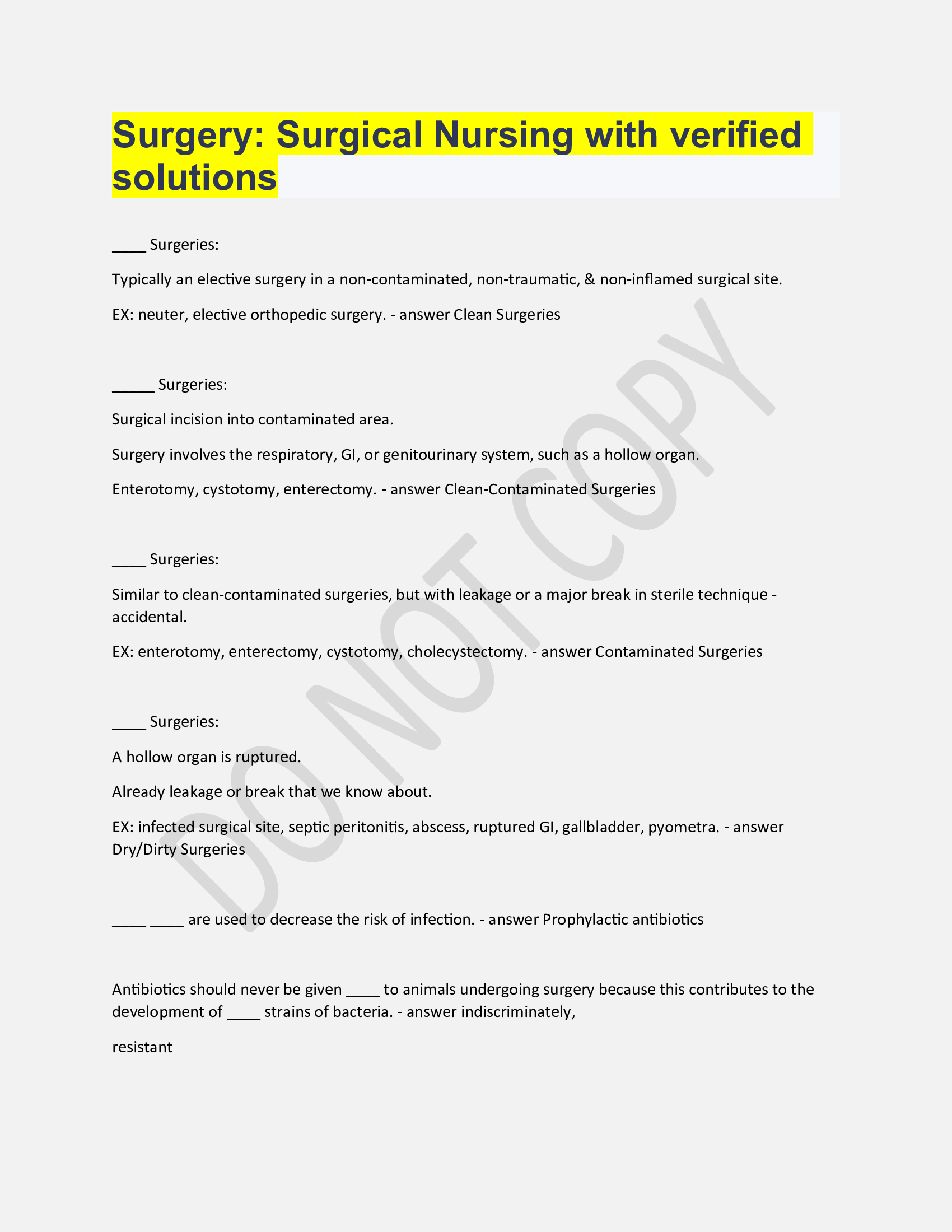
Surgery: Surgical Nursing with verified solutions...

11 USD

0

0

s-13 NYC city wide standpipe test with 100 Percent correct answers
View Document

s-13 NYC city wide s...

  • BACKTOSCHOOL

    BACKTOSCHOOL

  • exam

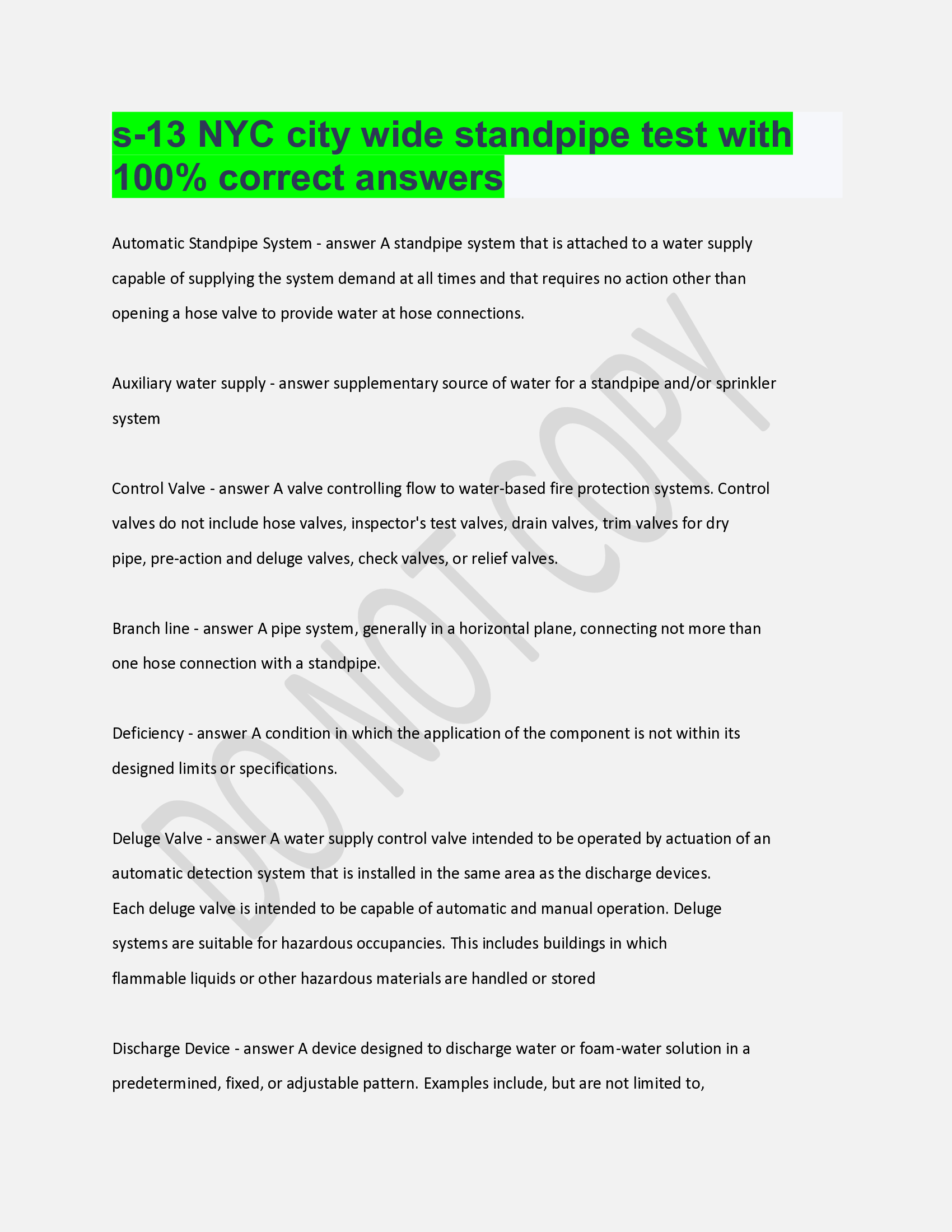
s-13 NYC city wide standpipe test with 100 Percent correct answers – Download PDF...

11 USD

0

0

Purchase

Download link will be sent to this email immediately after purchase.

IMPORTANT LINKS

  • How To Upload Class Notes
  • Selling Tips
  • Passing Grades's Study Materials
  • Scholarships for International Students 2025

POPULAR CATEGORIES

  • Law
  • Accounting
  • English
  • Psychology
  • Business
  • Nursing
  • Computer Science
  • General

View Document

  • Blog
  • Contact
  • Delivery Policy
  • Latest Scholarships Around the World
  • How to Pass Bar Exams: Passing Grades’ Strategies
  • How to Study and Pass the CPA Exam
  • All Test Banks
  • Faq
  • Copyright Claims
  • Privacy Policy
  • Terms of Use

KNOWLEDGE BASE

  • How to Write A+ Grade Good Research Paper
  • How to Manage Stress During Exam Period
  • Best Time to Study
  • How to Pass NCLEX-RN Exam
  • How To Effectively Utilize Test Banks
  • Popular Shadow Health Exam Assessments
  • Popular HESI Case Studies
  • How to Prepare for a Nursing Career
  • The Importance Of Summaries in Exam Revisvion

© 2026 Pasing Grades. All rights reserved.