
Learning style summary
The VARK questionnaire results indicated the scores as visual: 5, Aural: 3, read/write: 5, and kinesthetic: 3.
From the gathered results, it is evident that the matching learning preference is mild visual and reading/writing strategies. In such a preference, the learner ought to use different formats of learning, such as graphs, charts and diagrams, maps and plans.
On the other hand, since the learner prefers both the use of visuals and reading/writing, this insinuates that they will best learn from the use of the printed word as the most effective mechanism of conveying information (Saga, Qamar & Trali 2015).
Therefore, it is imperative that the learner considers using lists, notes, and text in different formats, whether print or online. Decoding from visual strategies, it is integral that the learner considers some of the strengths they have and exploits them.
They should also learn how to manage their weakness and threats. The same should also apply when it comes to reading and writing. Considering the scores, it is essential that a learner with such scores ensure that they use diagrams when learning. Understanding how visual learning helps students revise during exams, assignments, and tests can significantly boost their ability to perform well by recalling the pictures made on their pages (Tsingos, Bosnic-Anticevich & Smith 2015).
Furthermore, it is important to practice turning visuals back into words. Regarding reading and writing, in order for one to perform well in exams, it is expected of them to practice with multiple choice questions, write paragraphs with a starting point and an ending.
It is also important that they organize their learning materials in lists and words arranged in hierarchies and points (Saga, Qamar & Trali 2015).
Preferred learning strategies
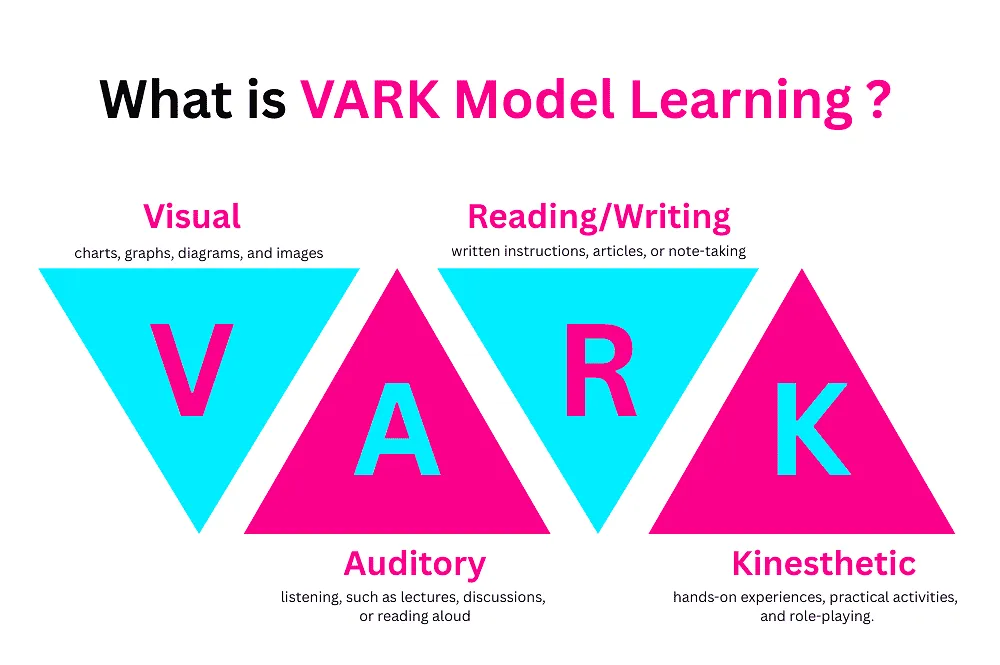
The highest scores on the VARK questionnaire were on visuals and read/write, since they tied with a score of 5, while the other indicators, which are Aural and kinesthetic, scored 3.
The reflections from the questionnaire closely align with the student's favored learning strategies.
The preference is ordering work in points and having everything organized. When preparing for an exam, another preference is conducting discussions with their peers, and when challenges are encountered, it is better to enquire from others before looking for efficient materials with the correct information.
Moreover, another preference is preparing for exams early enough before the due date. It is important to prepare in time so that one gets to familiarize oneself well with the concept and objectives of a study, thus avoiding common exam failure pitfalls. Also, it is essential to interpret all the visuals into words for proper memorization of the content within the visuals.
Comparison between the preferred learning strategies and the identified strategies for the preferred learning style
There are numerous similarities between the student's preferred learning strategy and the identified learning strategies of the preferred learning style.
The first similarity is that both learning styles like their work organized and every detail regarding a topic or subject organized into topics.
Based on the identified strategies from the preferred learning style, for a person having a reading or writing learning style, it is important for them to organize their writing into lists. Also, for them to attain a better output, they are expected to arrange their word into hierarchies (Vaishnav & Chirayu, 2013).
This is similar to the preferred learning strategy because organization is an important tool in learning. Through the proper organization, one finds it easy to locate, read and understand information that is needed at a particular time.
Also, from the student's preferred learning strategy, they like conducting discussions when preparing for exams, assignments, or tests. This is a common feature among individuals who like visual and read/write strategies. Also, the students likes enquiring when a challenge presents.
This is also a similarity with individuals preferring visuals, reading and writing strategies. From the identified strategies on the preferred learning style, for such individuals to perform well in any test, assignment, or examination, because they like recalling, and this can be done through discussions. Recognizing the importance of group discussions helps these students structure their peer learning sessions more effectively and recall what they were taught during normal class sessions.
Also, they are expected to practice with multiple questions which are a feature often conducted in discussions hierarchies (Vaishnav & Chirayu 2013). Furthermore, the student prefers preparing for exams early enough before the due date arrives. Within the visual and reading/writing strategies, it is imperative that the learners practice for enough time.
Additionally, they are experienced in reading their notes, though silently repetitively, so that they can be remembered when doing the exam (Tsingos, Bosnic-Anticevich & Smith 2015). Therefore, there are numerous similarities between the student's learning strategies and the strategies for their preferred learning style.
How the awareness of individual learning styles, preferences and strategies influences teaching and learning
Understanding an individual’s learning style, preference and strategies are important since it helps to teach by making it efficient. Research has identified that when the teacher gets insights on varied styles of learning, it enables them to employ varied approaches in the course of instructing students within the classroom, such as optimizing computer-aided presentation techniques to keep everyone engaged.
When teachers do not understand learning styles, they might generalize their teaching and thus fail to help other students, hoping to help a majority of students in a classroom (Tsingos, Bosnic-Anticevich & Smith 2015).
For example, a teacher might think that when they read materials out loud, all the students will be in a position of taking good notes. However, this is not true because some learners in a class might not be strong in reading and writing and thus have trouble when trying to learn such material.
On the contrary, when a teacher knows the learning style, they might be in a position of developing special learning strategies for students with certain deficiencies (Tsingos, Bosnic-Anticevich & Smith 2015).
On the other hand, when students understand their preferred learning style, they will know the types of learning strategies they require to succeed in academics. It is for this reason that conducting the VARK questionnaire is essential for students. Each student has a different learning style.
Therefore, it is also important that learners have insight into their learning styles in order to identify the means of merging their learning styles with their peers (Tsingos, Bosnic-Anticevich & Smith 2015).
References
- Saga, Z., Qamar, K., & Trali, G. (2015). Learning styles-understanding for learning strategies. Pakistan Armed Forces Medical Journal, 65(5).
- Tsingos, C., Bosnic-Anticevich, S., & Smith, L. (2015). Learning styles and approaches: Can reflective strategies encourage deep learning?. Currents in Pharmacy Teaching and Learning, 7(4), 492-504.
- Vaishnav, R. S., & Chirayu, K. C. (2013). Learning style and academic achievement of secondary school students. Voice of Research, 1(4), 1-4.
0
2221