Pasing Grades
  • Start Selling
  • Blog
  • Contact
  • 0

    Your cart is empty!

English

  • English
  • Spanish
  • Arabic
Create Account Sign In
  • Library
    • New Prep Guides
    • Featured Prep Guides
    • Free Exam Prep Guides
    • Best sellers
  • General
  • Nursing
    • Research Paper
    • Case Study
    • Discussion Post
    • Assignment
    • Exam
    • Practice Questions and Answers
    • Test Bank
    • solutions manual
  • Accounting
    • Case Study
    • Thesis
    • Study Guide
    • Summary
    • Research Paper
    • test bank
  • English
    • Creative Writing
    • Research Paper
    • Summary
    • Rhetorics
    • Literature
    • Journal
    • Exam
    • Grammar
    • Discussion Post
    • Essay
  • Psychology
    • Hesi
    • Presentation
    • Essay
    • Summary
    • Study Guide
    • Essay
    • Solution Manual
    • Final Exam Review
    • Class Notes
    • test bank
  • Business
    • Lecture Notes
    • Solution Manual
    • Presentation
    • Business Plan
    • Class Notes
    • Experiment
    • Summary
    • Practice Questions
    • Study Guide
    • Case Study
    • test bank
    • Exam
  • More
    • Computer Science
    • Economics
    • Statistics
    • Engineering
    • Biology
    • Religious Studies
    • Physics
    • Chemistry
    • Mathematics
    • History
    • Sociology
    • Science
    • Philosophy
    • Law
  • Pages
    • About Us
    • Selling Tips
    • Delivery Policy
    • Faq
    • Privacy Policy
  • Flash Sale
  • Home
  • WGU D236 Pathophysiology Exam Questions and Answers 2023, 2024

WGU D236 Pathophysiology Exam Questions and Answers 2023, 2024

Preview page 1 Preview page 2 Preview page 3
Add To Favorites

Share this item Share this item

  • Item Details
  • Comments (0)
  • Reviews (0)
  • Contact Seller

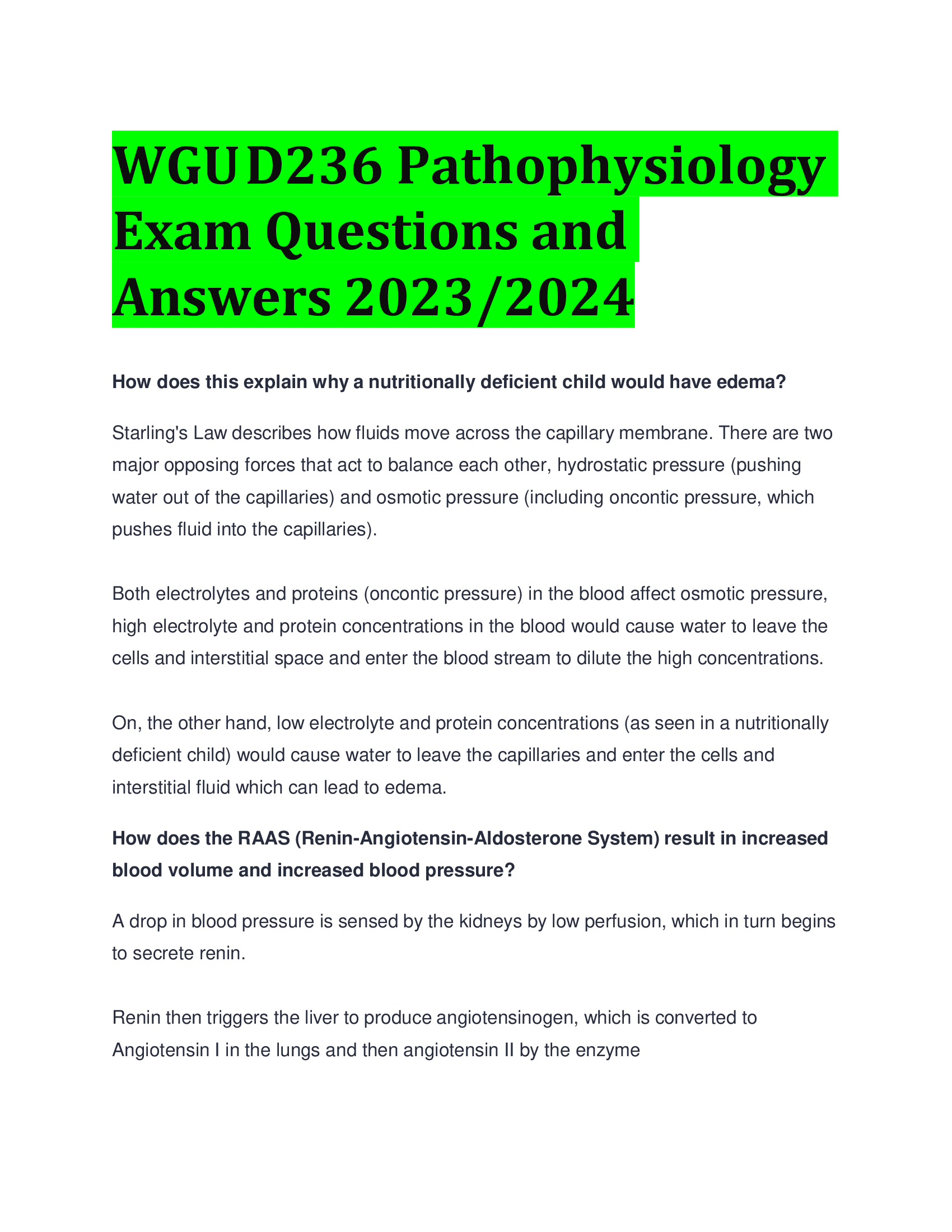
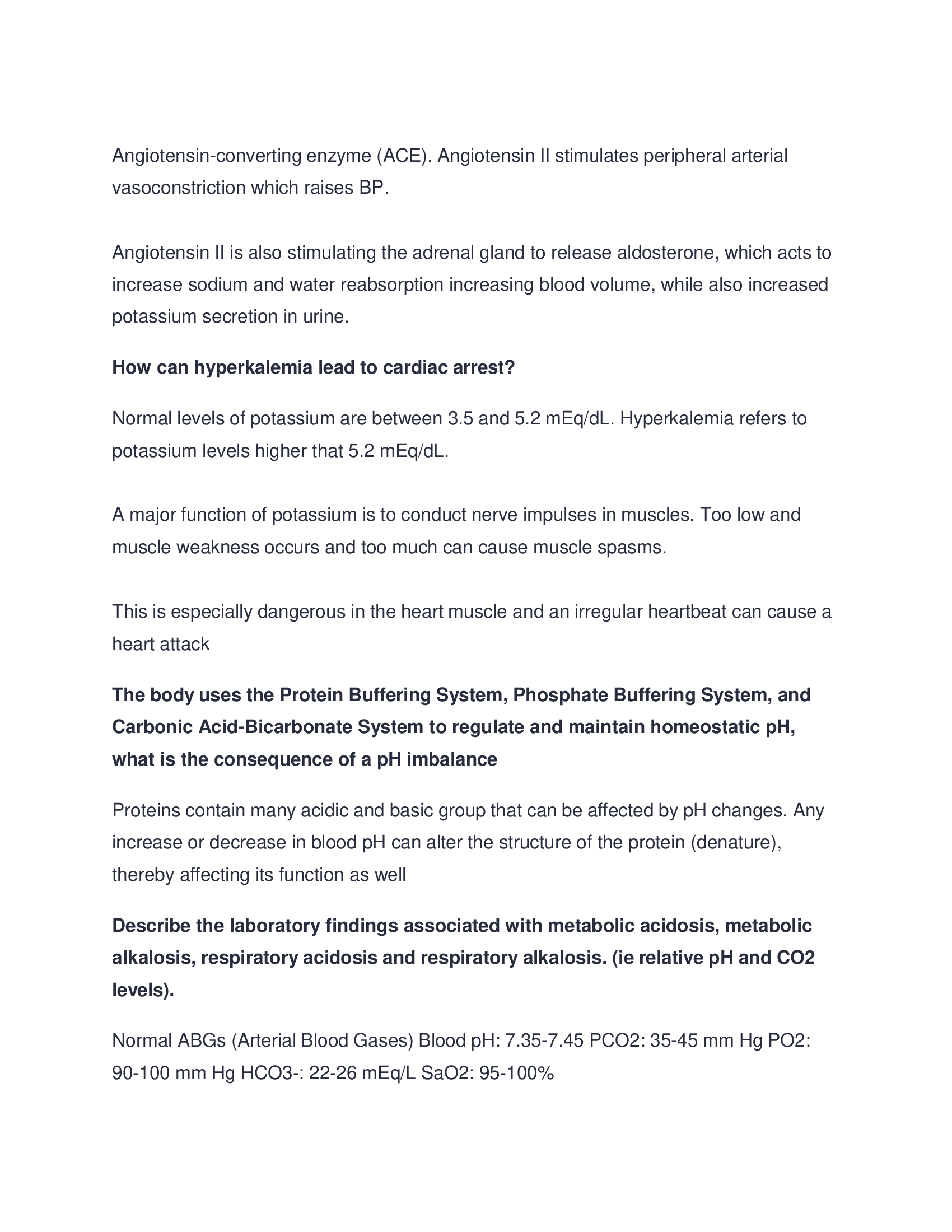
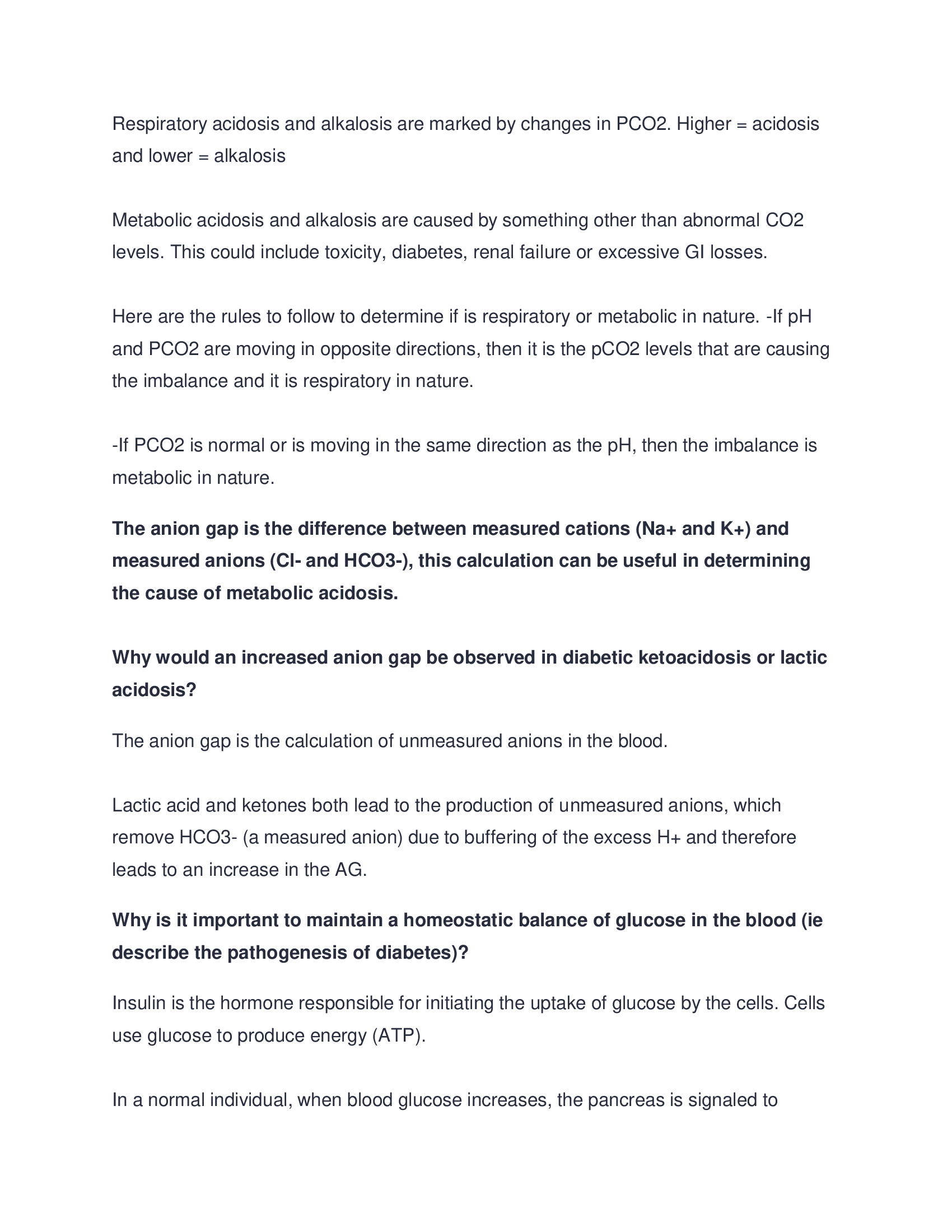
How does this explain why a nutritionally deficient child would have edema? Starling's Law describes how fluids move across the capillary membrane. There are two major opposing forces that act to balance each other, hydrostatic pressure (pushing water out of the capillaries) and osmotic pressure (including oncontic pressure, which pushes fluid into the capillaries). Both electrolytes and proteins (oncontic pressure) in the blood affect osmotic pressure, high electrolyte and protein concentrations in the blood would cause water to leave the cells and interstitial space and enter the blood stream to dilute the high concentrations. On, the other hand, low electrolyte and protein concentrations (as seen in a nutritionally deficient child) would cause water to leave the capillaries and enter the cells and interstitial fluid which can lead to edema. How does the RAAS (Renin-Angiotensin-Aldosterone System) result in increased blood volume and increased blood pressure? A drop in blood pressure is sensed by the kidneys by low perfusion, which in turn begins to secrete renin. Renin then triggers the liver to produce angiotensinogen, which is converted to Angiotensin I in the lungs and then angiotensin II by the enzyme Angiotensin-converting enzyme (ACE). Angiotensin II stimulates peripheral arterial vasoconstriction which raises BP. Angiotensin II is also stimulating the adrenal gland to release aldosterone, which acts to increase sodium and water reabsorption increasing blood volume, while also increased potassium secretion in urine. How can hyperkalemia lead to cardiac arrest? Normal levels of potassium are between 3.5 and 5.2 mEq/dL. Hyperkalemia refers to potassium levels higher that 5.2 mEq/dL. A major function of potassium is to conduct nerve impulses in muscles. Too low and muscle weakness occurs and too much can cause muscle spasms. This is especially dangerous in the heart muscle and an irregular heartbeat can cause a heart attack The body uses the Protein Buffering System, Phosphate Buffering System, and Carbonic Acid-Bicarbonate System to regulate and maintain homeostatic pH, what is the consequence of a pH imbalance Proteins contain many acidic and basic group that can be affected by pH changes. Any increase or decrease in blood pH can alter the structure of the protein (denature), thereby affecting its function as well Describe the laboratory findings associated with metabolic acidosis, metabolic alkalosis, respiratory acidosis and respiratory alkalosis. (ie relative pH and CO2 levels). Normal ABGs (Arterial Blood Gases) Blood pH: 7.35-7.45 PCO2: 35-45 mm Hg PO2: 90-100 mm Hg HCO3-: 22-26 mEq/L SaO2: 95-100% Respiratory acidosis and alkalosis are marked by changes in PCO2. Higher = acidosis and lower = alkalosis Metabolic acidosis and alkalosis are caused by something other than abnormal CO2 levels. This could include toxicity, diabetes, renal failure or excessive GI losses. Here are the rules to follow to determine if is respiratory or metabolic in nature. -If pH and PCO2 are moving in opposite directions, then it is the pCO2 levels that are causing the imbalance and it is respiratory in nature. -If PCO2 is normal or is moving in the same direction as the pH, then the imbalance is metabolic in nature. The anion gap is the difference between measured cations (Na+ and K+) and measured anions (Cl- and HCO3-), this calculation can be useful in determining the cause of metabolic acidosis. Why would an increased anion gap be observed in diabetic ketoacidosis or lactic acidosis? The anion gap is the calculation of unmeasured anions in the blood. Lactic acid and ketones both lead to the production of unmeasured anions, which remove HCO3- (a measured anion) due to buffering of the excess H+ and therefore leads to an increase in the AG. Why is it important to maintain a homeostatic balance of glucose in the blood (ie describe the pathogenesis of diabetes)? Insulin is the hormone responsible for initiating the uptake of glucose by the cells. Cells use glucose to produce energy (ATP). In a normal individual, when blood glucose increases, the pancreas is signaled to produced in insulin, which binds to insulin receptors on a cells surface and initiates the uptake of glucose. Glucose is a very reactive molecule and if left in the blood, it can start to bind to other proteins and lipids, which can lead to loss of function. AGEs are advanced glycation end products that are a result of glucose reacting with the endothelial lining, which can lead to damage in the heart and kidneys. Compare and contrast Type I and Type II Diabetes Type I diabetes is caused by lack of insulin. With out insulin signaling, glucose will not be taken into the cell and leads to high blood glucose (hyperglycemia). Type I is usually treated with insulin injections. Type II diabetes is caused by a desensitization to insulin signaling. The insulin receptors are no longer responding to insulin, which also leads to hyperglycemia. Type II is usually treated with drugs to increase the sensitization to insulin (metformin), dietary and life-style changes or insulin injections. Describe some reasons for a patient needing dialysis AEIOU-acidosis. Electrolytes, Intoxication/Ingestion, overload, uremia. Patients with kidney or heart failure. A build up of phosphates, urea and magnesium are removed from the blood using a semi-permeable membrane and dialysate. AEIOU: A—acidosis; E—electrolytes principally hyperkalemia; I—ingestions or overdose of medications/drugs;

Contact the Seller

Please Sign In to contact this seller.


  • 👎  Report Copyright Violation

Frequently Asked Questions

What Do I Get When I Buy This Study Material?

+

When you buy a study material on Passing Grades, an instant download link will be sent directly to your email, giving you access to the file anytime after payment is completed.

Is Passing Grades a Trusted Platform?

+

Yes, Passing Grades is a reputable students’ marketplace with a secure payment system and reliable customer support. You can trust us to ensure a safe and seamless transaction experience.

Will I Be Stuck with a Subscription?

+

No, all purchases on Passing Grades are one-time transactions. You only pay for the notes you choose to buy, with no subscriptions or hidden fees attached.

Who Am I Buying These Study Materials From?

+

Passing Grades is a marketplace, which means you are purchasing the document from an individual vendor, not directly from us. We facilitate the payment and delivery process between you and the vendor.

Does Passing Grades Offer Free Study Materials?

+

Yes, sellers on Passing Grades have uploaded numerous free test banks, exams, practice questions, and class notes that can be downloaded at no cost.

Pasinggrades - Quality Study Materials

USD 14

    • Quality checked by Pasing Grades
    • 100% satisfaction guarantee
    • Seller: Highergrades
Buy PDF $14

Seller Information

Highergrades

Member since January 2024

  • icon
  • icon
View Profile
  • total sales

    0
  • Favourites

    0
  • Comments

    0
    ( 0 Ratings )

Item Information

  • Uploaded

    17 January 2024

  • Updated

    24 October 2025

  • Category

    Nursing

  • Item Type

    ati medical surgical

  • Tags

    WGU D236 Pathophysiology Exam

Related Exam Prep Guides by Highergrades

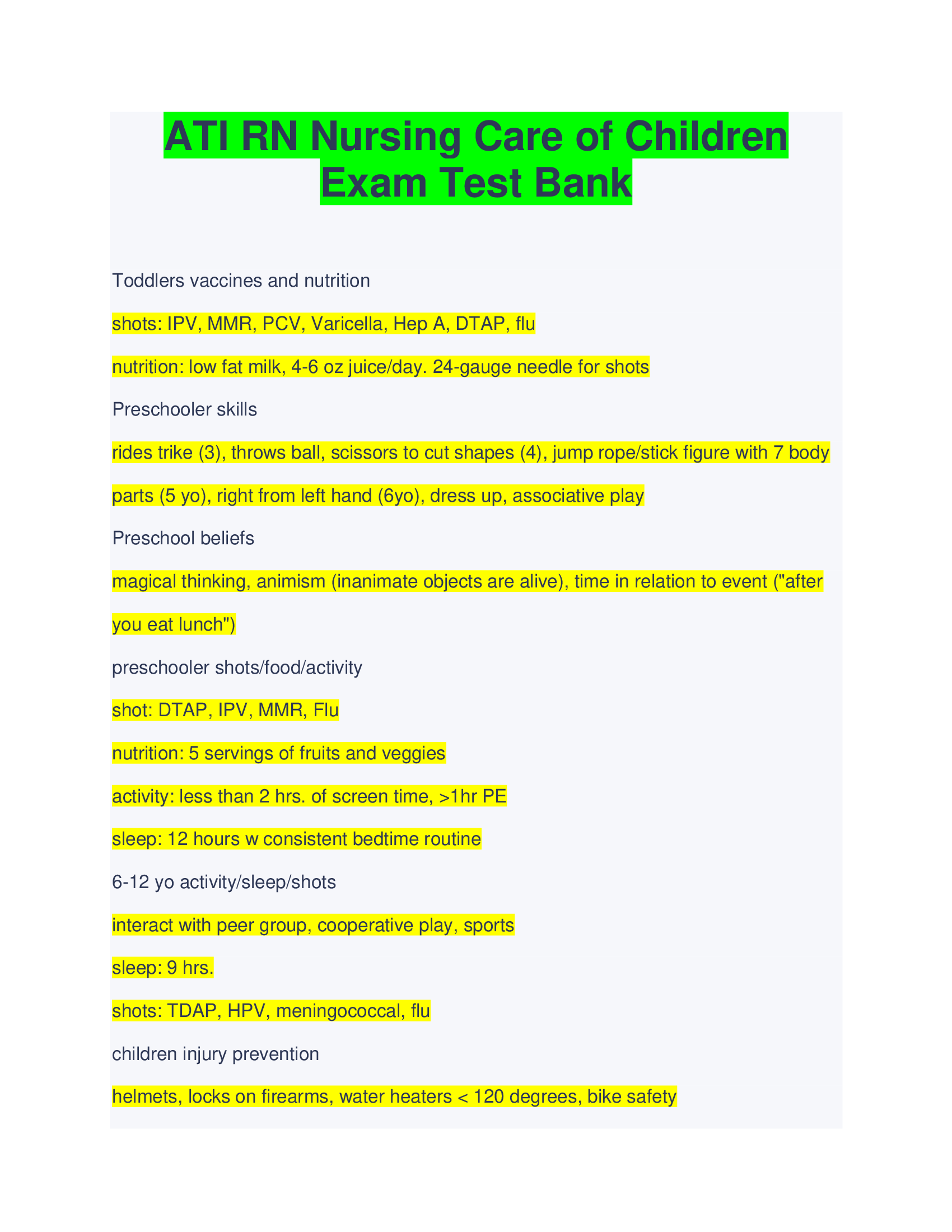
ATI RN Nursing Care of Children Exam Test Bank Latest 2024
View Document

ATI RN Nursing Care ...

  • Highergrades

    Highergrades

  • ati medical surgical

ATI RN Nursing Care of Children Exam Test Bank Latest 2024 – Download PDF...

14 USD

0

0

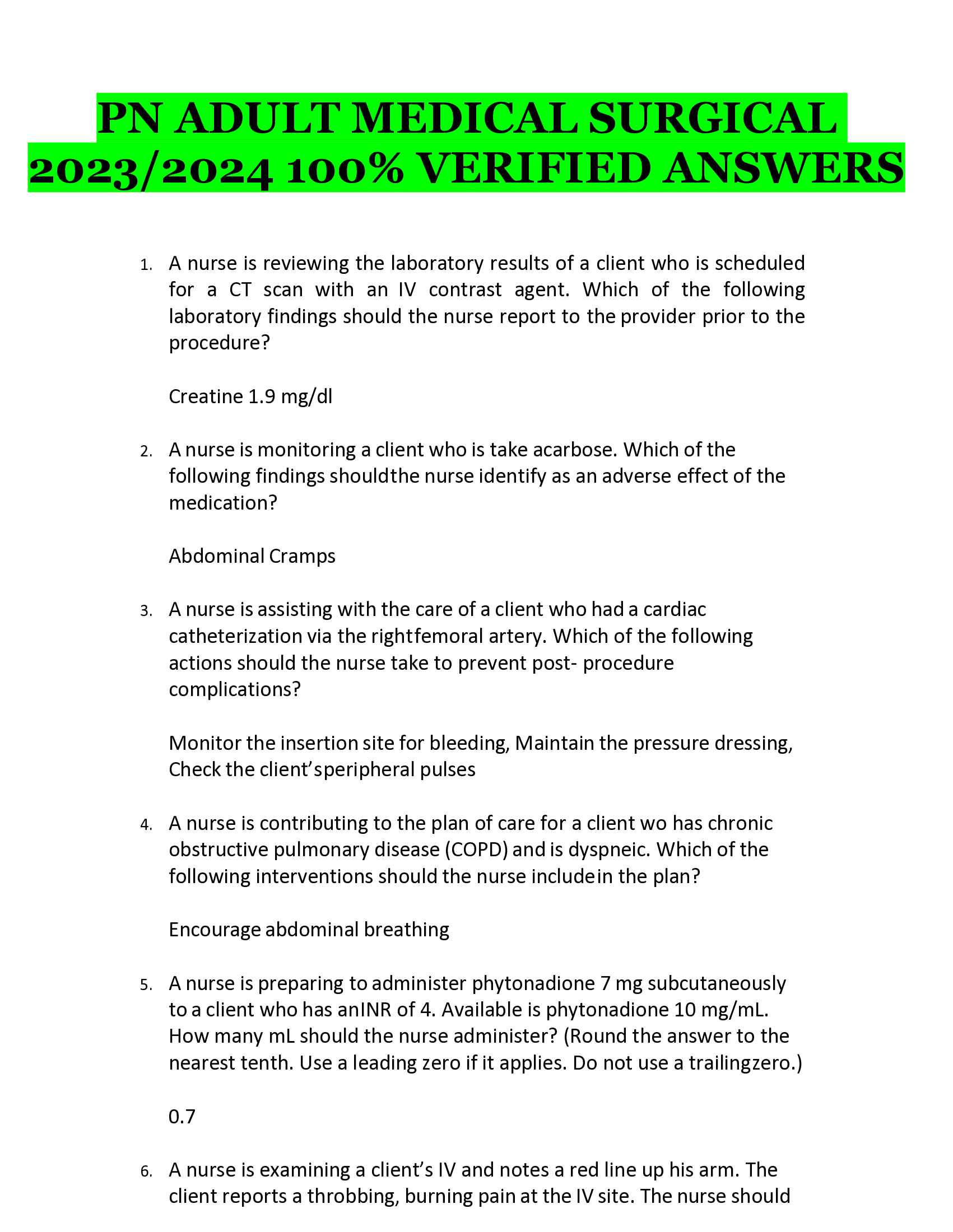
PN ADULT MEDICAL SURGICAL 2023, 2024 100 percent VERIFIED ANSWERS
View Document

PN ADULT MEDICAL SUR...

  • Highergrades

    Highergrades

  • ati medical surgical

PN ADULT MEDICAL SURGICAL 2023, 2024 100 percent VERIFIED ANSWERS – Download PDF...

14 USD

0

0

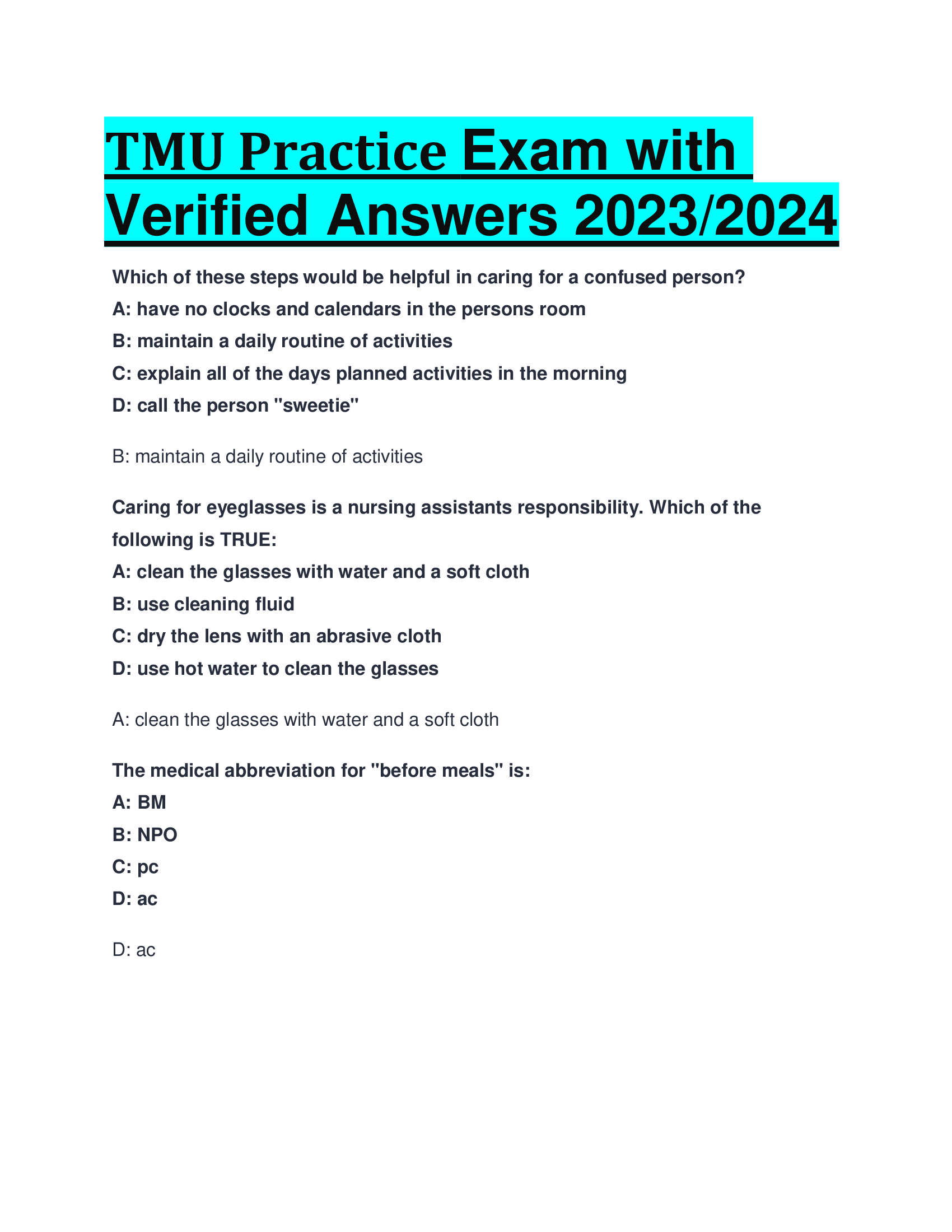
TMU Practice Exam with Verified Answers 2023, 2024
View Document

TMU Practice Exam wi...

  • Highergrades

    Highergrades

  • ati medical surgical

TMU Practice Exam with Verified Answers 2023, 2024 – Download PDF...

14 USD

0

0

Purchase

Download link will be sent to this email immediately after purchase.

IMPORTANT LINKS

  • How To Upload Class Notes
  • Selling Tips
  • Passing Grades's Study Materials
  • Scholarships for International Students 2025

POPULAR CATEGORIES

  • Law
  • Accounting
  • English
  • Psychology
  • Business
  • Nursing
  • Computer Science
  • General

View Document

  • Blog
  • Contact
  • Delivery Policy
  • Latest Scholarships Around the World
  • How to Pass Bar Exams: Passing Grades’ Strategies
  • How to Study and Pass the CPA Exam
  • All Test Banks
  • Faq
  • Copyright Claims
  • Privacy Policy
  • Terms of Use

KNOWLEDGE BASE

  • How to Write A+ Grade Good Research Paper
  • How to Manage Stress During Exam Period
  • Best Time to Study
  • How to Pass NCLEX-RN Exam
  • How To Effectively Utilize Test Banks
  • Popular Shadow Health Exam Assessments
  • Popular HESI Case Studies
  • How to Prepare for a Nursing Career
  • The Importance Of Summaries in Exam Revisvion

© 2026 Pasing Grades. All rights reserved.