Pasing Grades
  • Start Selling
  • Blog
  • Contact
  • 0

    Your cart is empty!

English

  • English
  • Spanish
  • Arabic
Create Account Sign In
  • Library
    • New Prep Guides
    • Featured Prep Guides
    • Free Exam Prep Guides
    • Best sellers
  • General
  • Nursing
    • Research Paper
    • Case Study
    • Discussion Post
    • Assignment
    • Exam
    • Practice Questions and Answers
    • Test Bank
    • solutions manual
  • Accounting
    • Case Study
    • Thesis
    • Study Guide
    • Summary
    • Research Paper
    • test bank
  • English
    • Creative Writing
    • Research Paper
    • Summary
    • Rhetorics
    • Literature
    • Journal
    • Exam
    • Grammar
    • Discussion Post
    • Essay
  • Psychology
    • Hesi
    • Presentation
    • Essay
    • Summary
    • Study Guide
    • Essay
    • Solution Manual
    • Final Exam Review
    • Class Notes
    • test bank
  • Business
    • Lecture Notes
    • Solution Manual
    • Presentation
    • Business Plan
    • Class Notes
    • Experiment
    • Summary
    • Practice Questions
    • Study Guide
    • Case Study
    • test bank
    • Exam
  • More
    • Computer Science
    • Economics
    • Statistics
    • Engineering
    • Biology
    • Religious Studies
    • Physics
    • Chemistry
    • Mathematics
    • History
    • Sociology
    • Science
    • Philosophy
    • Law
  • Pages
    • About Us
    • Selling Tips
    • Delivery Policy
    • Faq
    • Privacy Policy
  • Flash Sale
  • Home
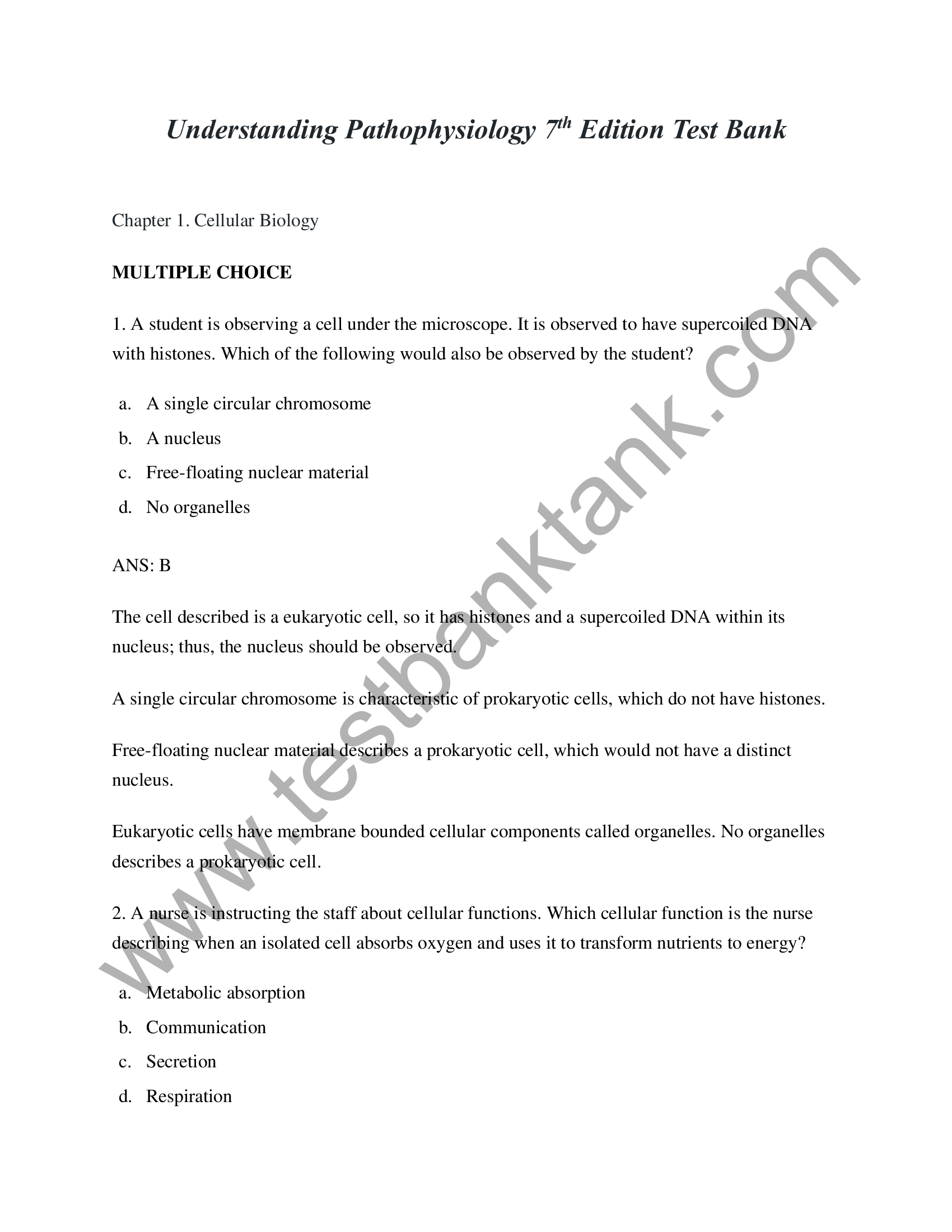
  • Understanding Pathophysiology 7th Edition Test_Bank

Understanding Pathophysiology 7th Edition Test_Bank

Preview page 1 Preview page 2 Preview page 3
Add To Favorites

Share this item Share this item

  • Item Details
  • Comments (0)
  • Reviews (0)
  • Contact Seller

a.   Is malnourished


b.  Was exposed to hepatitis B


c.   Is immunosuppressed d.  Is diabetic


ANS: C


KS is a vascular malignancy associated with immunodeficiency states and occurs among transplant recipients taking immunosuppressive drugs.


KS is not related to malnourishment.


KS is not related to exposure to hepatitis B. KS is not related to the presence of diabetes.


Chapter 44. Alterations of the Integument in Children


MULTIPLE CHOICE


1. A 4-month-old male is brought to his primary care provider for severe itching and skin lesions. He is diagnosed with atopic dermatitis. Which of the following would be elevated in this patient?


a.   Immunoglobulin D (IgD) b.  Immunoglobulin M (IgM) c.   Immunoglobulin E (IgE) d.  Immunoglobulin G (IgG)


ANS: C


Most individuals affected with atopic dermatitis show an increased serum IgE level.


Most individuals affected with atopic dermatitis show an increased serum IgE level, not IgD.


Most individuals affected with atopic dermatitis show an increased serum IgE level, not IgG.


Cognitive Level: Comprehension 1071


2. A 4-month-old female is diagnosed with atopic dermatitis (AD). Which of the following assessment findings by the nurse will most likely support this diagnosis?


a.   Blistering


b.  Moist reddened skin c.   Dry, itchy skin

d.  White patches


ANS: C


AD has a constellation of clinical features that include dry, sensitive, itchy, and easily irritated skin because the barrier function of the skin is impaired.


Dry skin, not blistering, occurs in AD. Dry skin, not moist skin, occurs in AD.

White patches are characteristic of other disorders, such as measles.


Cognitive Level: Comprehension 1071


3. A 2-month-old female develops diaper dermatitis. A nurse will monitor this patient for which secondary infection that frequently accompanies diaper dermatitis?


a.   Streptococcus


b.  Proteus


c.   Candida albicans


d.  Staphylococcus aureus


ANS: C


Diaper dermatitis is secondarily infected with Candida albicans, not Streptococcus. Diaper dermatitis is secondarily infected with Candida albicans, not Proteus.

Diaper dermatitis is secondarily infected with Candida albicans, not Staphylococcus aureus.


Cognitive Level: Comprehension 1072


4. Acne vulgaris involves inflammation of the:


a.   Hair follicles


b.  Sebaceous follicles c.   Eccrine glands

d.  Apocrine glands


ANS: B


Acne is a disorder of the pilosebaceous units, known as sebaceous follicles.


Acne is a disorder of the pilosebaceous units, known as sebaceous follicles, not hair follicles. Acne is a disorder of the pilosebaceous units, known as sebaceous follicles, not eccrine glands. Acne is a disorder of the pilosebaceous units, known as sebaceous follicles, not apocrine glands. Cognitive Level: Comprehension 1070

5. A 14-year-old female presents with severe acne. Which of the following promotes acne development?


a.   Androgens b.  Estrogens

c.   Gonadotropins d.  Glucocorticoids


Androgens increase the size and productivity of the sebaceous glands and promote P. acnes.


Androgens, not estrogens, increase the size and productivity of the sebaceous glands and promote P. acnes.


Androgens, not gonadotropins, increase the size and productivity of the sebaceous glands and promote P. acnes.


Androgens, not glucocorticoids, increase the size and productivity of the sebaceous glands and promote P. acnes.


Cognitive Level: Comprehension 1071


6. Bullous impetigo is caused by a strain of:


a.   Staphylococcus aureus


b.  Molluscum contagiosum c.   Escherichia coli

d.  Candida albicans


ANS: A


S. aureus is currently the most common overall cause of impetigo.


S. aureus, not molluscum contagiosum, is currently the most common overall cause of impetigo.


S. aureus, not E. coli, is currently the most common overall cause of impetigo.


S. aureus, not Candida albicans, is currently the most common overall cause of impetigo.


Cognitive Level: Comprehension 1072


7. A 10-year-old female from east Africa presents with vesicles consistent with vesicular impetigo. Which of the following is the most likely cause of her condition?


a.   Herpes virus


b.  Candida albicans


c.   Streptococcus pyogenes


d.  Human papillomavirus (HPV)


ANS: C


Vesicular impetigo is caused by Streptococcus pyogenes.


Vesicular impetigo is caused by Streptococcus pyogenes, not herpes.


Vesicular impetigo is caused by Streptococcus pyogenes, not Candida albicans. Vesicular impetigo is caused by Streptococcus pyogenes, not HPV.

Cognitive Level: Comprehension 1073


8. A 3-year-old male develops tinea capitis after playing with the family dog. This infection is caused by a:


a.   Fungus


b.  Bacterium c.   Virus

d.  Parasite


ANS: A


Tinea capitis is caused by a fungus.


Tinea capitis is caused by a fungus, not bacteria. Tinea capitis is caused by a fungus, not a virus. Tinea capitis is caused by a fungus, not a parasite. Cognitive Level: Comprehension 1074


9. A 5-year-old male is diagnosed with tinea corporis following development of lesions on the non-hairy parts of his face, trunk, and limbs. A common source of this condition is a:


a.   Kitten


b.  Pet bird c. Hamster d.  Horse


ANS: A


Tinea corporis is usually attributed to contact with young dogs and cats.


Tinea corporis is usually attributed to contact with young dogs and cats, not birds. Tinea corporis is usually attributed to contact with young dogs and cats, not hamsters. Tinea corporis is usually attributed to contact with young dogs and cats, not horses. Cognitive Level: Comprehension 1074

10. The nurse would correctly identify the medical term for ringworm as:


a.   Impetigo


b.  Tinea corporis c.   Thrush

d.  Psoriasis


ANS: B


Ringworm is also known as tinea corporis. Ringworm is not impetigo.

Ringworm is not thrush. Ringworm is not psoriasis.


11. A 4-month-old female develops white spots and shallow ulcers in her mouth. Her pediatrician diagnoses her with thrush. This condition is caused by:


a.   Escherichia coli


b.  Streptococcal bacteria c.   Candida albicans

d.  Staphylococcal bacteria


ANS: C


Thrush is caused by Candida albicans.


Thrush is caused by Candida albicans, not E coli. Thrush is caused by Candida albicans, not strep. Thrush is caused by Candida albicans, not staph. Cognitive Level: Comprehension 1074

12. A 6-year-old male presents with slightly umbilicated, dome-shaped lesions on the skin of the trunk, face, and extremities. He is diagnosed with molluscum contagiosum caused by a highly contagious:


a.   Bacterium b.  Virus

c.   Fungus d.  Parasite


ANS: B


Molluscum contagiosum is caused by a virus.


Molluscum contagiosum is caused by a virus, not bacteria.


Molluscum contagiosum is caused by a virus, not a parasite.


Cognitive Level: Comprehension 1074


13. Molluscum contagiosum affects the skin and:


a.   Nails


b.  Tongue


c.   Conjunctiva d.  Hair follicles


ANS: C


Molluscum contagiosum affects the skin and conjunctiva.


Molluscum contagiosum affects the skin and conjunctiva, not the nails. Molluscum contagiosum affects the skin and conjunctiva, not the tongue. Molluscum contagiosum affects the skin and conjunctiva, not the hair. Cognitive Level: Comprehension 1074

14. The nurse would be correct in identifying the duration of rubella as:


a.   12 hours


b.  1 to 3 days c.   7 days

d.  12 to 15 days


ANS: B


Rubella has a duration of 1 to 3 days.


Rubella has a duration of 1 to 3 days, not 7 days. Rubella has a duration of 1 to 3 days, not 12 to 15 days. Cognitive Level: Comprehension 1075

15. Rubella, rubeola, and roseola are common communicable diseases caused by                                                                                                                                             


infection.


a.   Viral


b.  Bacterial c.   Yeast

d.  Fungal


ANS: A


Rubella, rubeola, and roseola are all caused by a virus.


Rubella, rubeola, and roseola are all caused by a virus, not bacteria. Rubella, rubeola, and roseola are all caused by a virus, not yeast. Rubella, rubeola, and roseola are all caused by a virus, not a fungus. REF: pp. 1075-1076

16. A 5-year-old female develops chickenpox after exposure at her day care center. This disease is caused by:


a.   A pox virus


b.  A herpes virus c.   An adenovirus d.  HPV


Chickenpox is caused by a herpes virus.


Chickenpox is caused by a herpes virus, not a pox virus. Chickenpox is caused by a herpes virus, not adenovirus. Chickenpox is caused by a herpes virus, not HPV. Cognitive Level: Comprehension 1076

17. The pathophysiology student would correctly identify the etiologic agent of smallpox as:


a.   A bacteria b.  A virus

c.   Insects d.  Mites


ANS: B


The etiologic agent of smallpox is the pox virus.


The etiologic agent of smallpox is a virus, not bacteria. The etiologic agent of small pox is a virus, not insects. The etiologic agent of small pox is a virus, not mites. Cognitive Level: Comprehension 1077

18. The nurse would expect the occurrence of scabies to occur more commonly among children who:


a.   Attend day care


b.  Live in crowded, unsanitary conditions


c.   Reside in rural areas d.  Play outside


ANS: B


Scabies is often epidemic in areas of overcrowded housing and poor sanitation.


Scabies does occur in day care centers, but it occurs more commonly in unsanitary conditions. Scabies occurs more commonly in areas of poor sanitation, not in rural areas.

Scabies can occur in children who play outside, but more commonly in areas of poor sanitation.

Contact the Seller

Please Sign In to contact this seller.


  • 👎  Report Copyright Violation

Frequently Asked Questions

What Do I Get When I Buy This Study Material?

+

When you buy a study material on Passing Grades, an instant download link will be sent directly to your email, giving you access to the file anytime after payment is completed.

Is Passing Grades a Trusted Platform?

+

Yes, Passing Grades is a reputable students’ marketplace with a secure payment system and reliable customer support. You can trust us to ensure a safe and seamless transaction experience.

Will I Be Stuck with a Subscription?

+

No, all purchases on Passing Grades are one-time transactions. You only pay for the notes you choose to buy, with no subscriptions or hidden fees attached.

Who Am I Buying These Study Materials From?

+

Passing Grades is a marketplace, which means you are purchasing the document from an individual vendor, not directly from us. We facilitate the payment and delivery process between you and the vendor.

Does Passing Grades Offer Free Study Materials?

+

Yes, sellers on Passing Grades have uploaded numerous free test banks, exams, practice questions, and class notes that can be downloaded at no cost.

Pasinggrades - Quality Study Materials

USD 17

    • Quality checked by Pasing Grades
    • 100% satisfaction guarantee
    • Seller: mentor2000
Buy PDF $17

Seller Information

mentor2000

Member since April 2021

  • icon
  • icon
View Profile
  • total sales

    0
  • Favourites

    0
  • Comments

    0
    ( 0 Ratings )

Item Information

  • Uploaded

    25 February 2024

  • Updated

    28 April 2025

  • Category

    Nursing

  • Item Type

    test bank

  • Tags

    Understanding Pathophysiology 7th Edition Test Bank

Related Exam Prep Guides by mentor2000

Test Bank for Essentials for Nursing Practice 8th Edition by Potter | All Chapters
View Document

Test Bank for Essent...

  • mentor2000

    mentor2000

  • test bank

Master nursing concepts with this study material; Test Bank for Essentials for Nursing Practice, 8th...

17 USD

0

0

A &P 1 MA278 BSC2 Final Module II Questions & Answers 2026 Update
View Document

A &P 1 MA278 BSC2 Fi...

  • mentor2000

    mentor2000

  • test bank

Prepare for success with A&P 1 MA278 BSC2 Final Module II 2024 Q&A. Boost your grades with this comp...

17 USD

0

0

ATI Comprehensive Predictor Exam 2026
View Document

ATI Comprehensive Pr...

  • mentor2000

    mentor2000

  • test bank

Prepare for success with the ATI Comprehensive Predictor Exam 2026. Access key practice questions to...

17 USD

0

0

Purchase

Download link will be sent to this email immediately after purchase.

IMPORTANT LINKS

  • How To Upload Class Notes
  • Selling Tips
  • Passing Grades's Study Materials
  • Scholarships for International Students 2025

POPULAR CATEGORIES

  • Law
  • Accounting
  • English
  • Psychology
  • Business
  • Nursing
  • Computer Science
  • General

View Document

  • Blog
  • Contact
  • Delivery Policy
  • Latest Scholarships Around the World
  • How to Pass Bar Exams: Passing Grades’ Strategies
  • How to Study and Pass the CPA Exam
  • All Test Banks
  • Faq
  • Copyright Claims
  • Privacy Policy
  • Terms of Use

KNOWLEDGE BASE

  • How to Write A+ Grade Good Research Paper
  • How to Manage Stress During Exam Period
  • Best Time to Study
  • How to Pass NCLEX-RN Exam
  • How To Effectively Utilize Test Banks
  • Popular Shadow Health Exam Assessments
  • Popular HESI Case Studies
  • How to Prepare for a Nursing Career
  • The Importance Of Summaries in Exam Revisvion

© 2026 Pasing Grades. All rights reserved.