Pasing Grades
  • Start Selling
  • Blog
  • Contact
  • 0

    Your cart is empty!

English

  • English
  • Spanish
  • Arabic
Create Account Sign In
  • Library
    • New Prep Guides
    • Featured Prep Guides
    • Free Exam Prep Guides
    • Best sellers
  • General
  • Nursing
    • Research Paper
    • Case Study
    • Discussion Post
    • Assignment
    • Exam
    • Practice Questions and Answers
    • Test Bank
    • solutions manual
  • Accounting
    • Case Study
    • Thesis
    • Study Guide
    • Summary
    • Research Paper
    • test bank
  • English
    • Creative Writing
    • Research Paper
    • Summary
    • Rhetorics
    • Literature
    • Journal
    • Exam
    • Grammar
    • Discussion Post
    • Essay
  • Psychology
    • Hesi
    • Presentation
    • Essay
    • Summary
    • Study Guide
    • Essay
    • Solution Manual
    • Final Exam Review
    • Class Notes
    • test bank
  • Business
    • Lecture Notes
    • Solution Manual
    • Presentation
    • Business Plan
    • Class Notes
    • Experiment
    • Summary
    • Practice Questions
    • Study Guide
    • Case Study
    • test bank
    • Exam
  • More
    • Computer Science
    • Economics
    • Statistics
    • Engineering
    • Biology
    • Religious Studies
    • Physics
    • Chemistry
    • Mathematics
    • History
    • Sociology
    • Science
    • Philosophy
    • Law
  • Pages
    • About Us
    • Selling Tips
    • Delivery Policy
    • Faq
    • Privacy Policy
  • Flash Sale
  • Home
  • PALS- Practical Application Study Guide 2023

PALS- Practical Application Study Guide 2023

Preview page 1 Preview page 2 Preview page 3
Add To Favorites

Share this item Share this item

  • Item Details
  • Comments (0)
  • Reviews (0)
  • Contact Seller
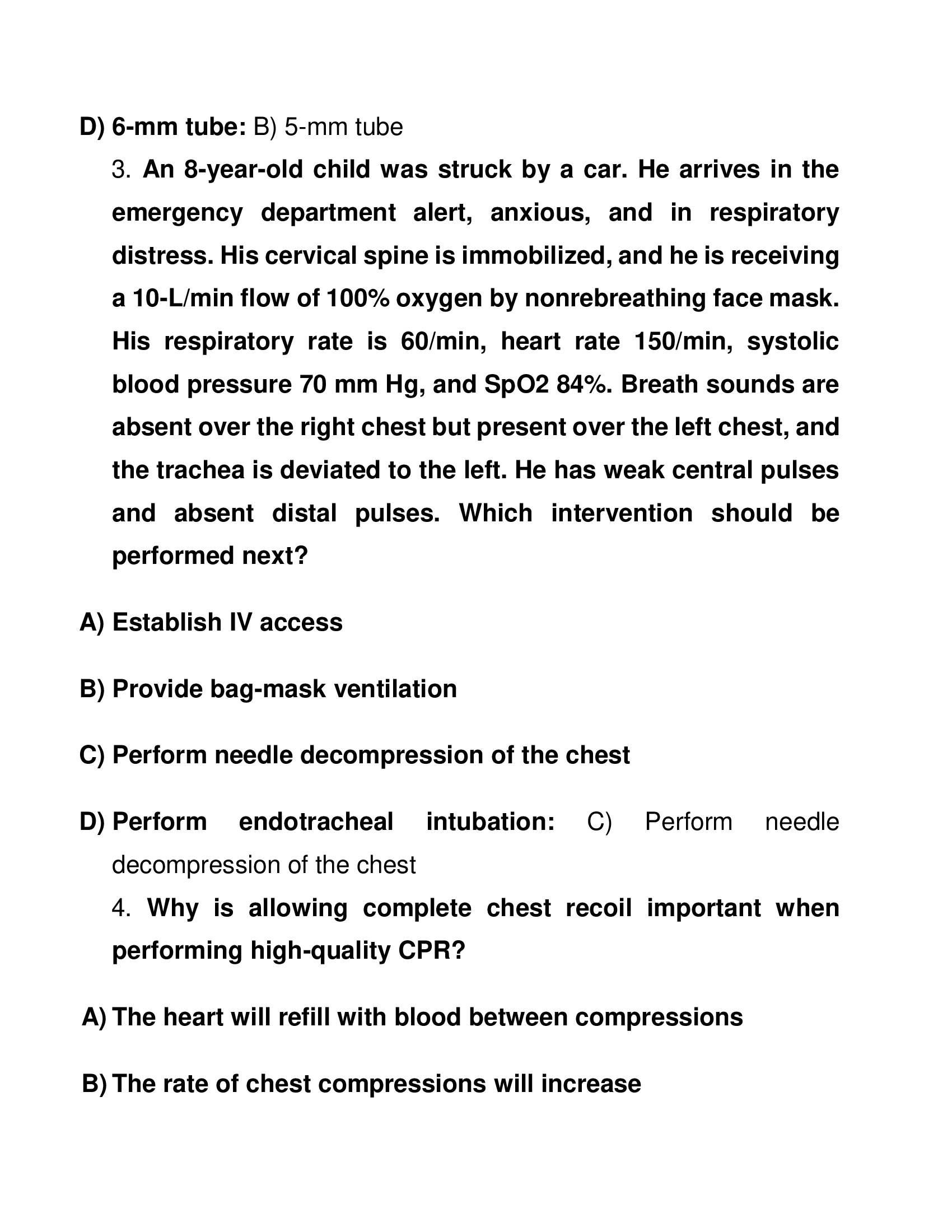
PALS- Practical Application Study Guide 1. What compression-to-ventilation ratio should be used for 2rescuer infant CPR? A) 20 compressions to 2 breaths B) 5 compressions to 1 breath C) 15 compressions to 2 breaths D) 30 compressions to 2 breaths: C) 15 compressions to 2 breaths 2. You are assisting in the elective intubation of an averagesized 4-year-old child with respiratory failure. A colleague is retrieving the color-coded length-based tape from the resuscitation cart. Which of the following is likely to be the estimated size of the uncuffed endotracheal tube for this child? A) 4-mm tube B) 5-mm tube C) 3-mm D) 6-mm tube: B) 5-mm tube 3. An 8-year-old child was struck by a car. He arrives in the emergency department alert, anxious, and in respiratory distress. His cervical spine is immobilized, and he is receiving a 10-L/min flow of 100% oxygen by nonrebreathing face mask. His respiratory rate is 60/min, heart rate 150/min, systolic blood pressure 70 mm Hg, and SpO2 84%. Breath sounds are absent over the right chest but present over the left chest, and the trachea is deviated to the left. He has weak central pulses and absent distal pulses. Which intervention should be performed next? A) Establish IV access B) Provide bag-mask ventilation C) Perform needle decompression of the chest D) Perform endotracheal intubation: C) Perform needle decompression of the chest 4. Why is allowing complete chest recoil important when performing high-quality CPR? A) The heart will refill with blood between compressions B) The rate of chest compressions will increase C) There will be a reduction in rescuer fatigue D) It will reduce the risk of rib fractures: A) The heart will refill with blood between compressions 5. You find an infant who is unresponsive, is not breathing, and does not have a pulse. You shout for nearby help, but no one arrives. What action should you take next? A) Provide CPR for approximately 2 minutes before leaving to activate the emergency response system B) Activate the emergency response system after giving CPR for 90 seconds C) Activate the emergency system after giving CPR for 10 minutes D) Provide CPR for 60 seconds before leaving to activate the emergency response system: A) Provide CPR for approximately 2 minutes before leaving to activate the emergency response system 6. A 1-year-old boy is brought to the emergency department for evaluation of poor feeding, irritability, and sweating. The child is lethargic but arousable. He has labored breathing, very rapid pulses, and a dusky color. His respiratory rate is 68/min, heart rate 300/min, and blood pressure 70/45 mm Hg.

Contact the Seller

Please Sign In to contact this seller.


  • 👎  Report Copyright Violation

Frequently Asked Questions

What Do I Get When I Buy This Study Material?

+

When you buy a study material on Passing Grades, an instant download link will be sent directly to your email, giving you access to the file anytime after payment is completed.

Is Passing Grades a Trusted Platform?

+

Yes, Passing Grades is a reputable students’ marketplace with a secure payment system and reliable customer support. You can trust us to ensure a safe and seamless transaction experience.

Will I Be Stuck with a Subscription?

+

No, all purchases on Passing Grades are one-time transactions. You only pay for the notes you choose to buy, with no subscriptions or hidden fees attached.

Who Am I Buying These Study Materials From?

+

Passing Grades is a marketplace, which means you are purchasing the document from an individual vendor, not directly from us. We facilitate the payment and delivery process between you and the vendor.

Does Passing Grades Offer Free Study Materials?

+

Yes, sellers on Passing Grades have uploaded numerous free test banks, exams, practice questions, and class notes that can be downloaded at no cost.

Pasinggrades - Quality Study Materials

USD 7

    • Quality checked by Pasing Grades
    • 100% satisfaction guarantee
    • Seller: Pasing-Grades
Buy PDF $7

Seller Information

Pasing-Grades

Member since May 2021

  • icon
View Profile
  • total sales

    0
  • Favourites

    0
  • Comments

    0
    ( 0 Ratings )

Item Information

  • Uploaded

    14 October 2023

  • Updated

    17 October 2025

  • Category

    General

  • Item Type

    exam

  • Tags

    PALS Practical Application Study Guide 2023

Related Exam Prep Guides by Pasing-Grades

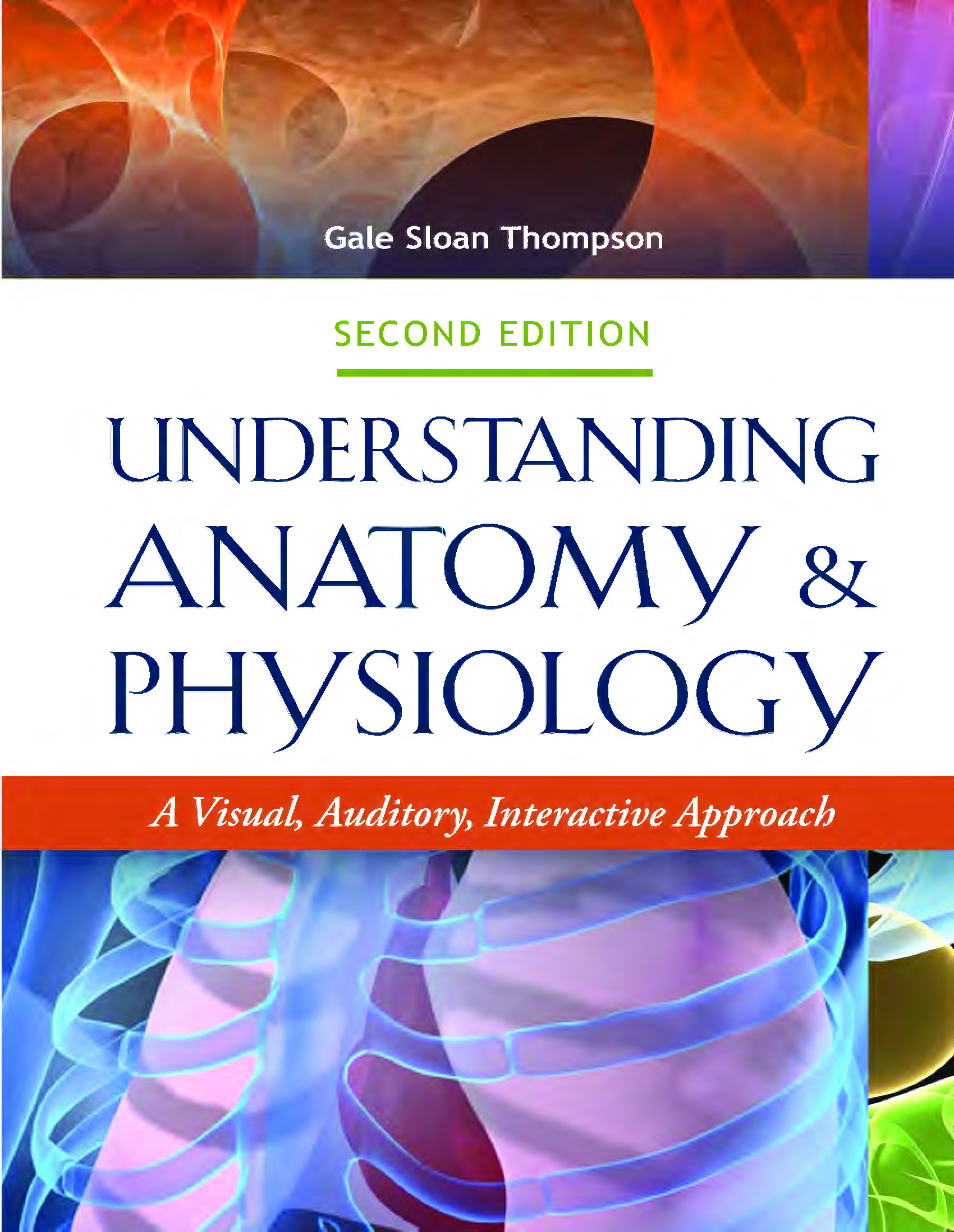
Understanding Anatomy and Physiology; A Visual, Auditory, Interactive Approach by Gale. S. Thompson
View Document

Understanding Anatom...

  • Pasing-Grades

    Pasing-Grades

  • exam

Third Edition: Understanding Anatomy and Physiology; A Visual, Auditory, Interactive Approach by Gal...

7 USD

0

0

Workbook to Accompany Understanding Anatomy & Physiology: A Visual, Auditory, Interactive Approach by Gale Sloan Thompson RN
View Document

Workbook to Accompan...

  • Pasing-Grades

    Pasing-Grades

  • exam

Workbook to Accompany Understanding Anatomy & Physiology: A Visual, Auditory, Interactive Approach b...

7 USD

0

0

Test Bank for Fundamentals of Nursing 10th Edition by Taylor
View Document

Test Bank for Fundam...

  • Pasing-Grades

    Pasing-Grades

  • exam

Get now the Test Bank for Fundamentals of Nursing 10th Edition by Taylor. Instant PDF Download....

7 USD

0

0

Purchase

Download link will be sent to this email immediately after purchase.

IMPORTANT LINKS

  • How To Upload Class Notes
  • Selling Tips
  • Passing Grades's Study Materials
  • Scholarships for International Students 2026

POPULAR CATEGORIES

  • Law
  • Accounting
  • English
  • Psychology
  • Business
  • Nursing
  • Computer Science
  • General

View Document

  • Blog
  • Contact
  • Delivery Policy
  • Latest Scholarships Around the World
  • How to Pass Bar Exams: Passing Grades’ Strategies
  • How to Study and Pass the CPA Exam
  • All Test Banks
  • Faq
  • Copyright Claims
  • Privacy Policy
  • Terms of Use

KNOWLEDGE BASE

  • How to Write A+ Grade Good Research Paper
  • How to Manage Stress During Exam Period
  • Best Time to Study
  • How to Pass NCLEX-RN Exam
  • How To Effectively Utilize Test Banks
  • Popular Shadow Health Exam Assessments
  • Popular HESI Case Studies
  • How to Prepare for a Nursing Career
  • The Importance Of Summaries in Exam Revisvion

© 2026 Pasing Grades. All rights reserved.