Pasing Grades
  • Start Selling
  • Blog
  • Contact
  • 0

    Your cart is empty!

English

  • English
  • Spanish
  • Arabic
Create Account Sign In
  • Library
    • New Prep Guides
    • Featured Prep Guides
    • Free Exam Prep Guides
    • Best sellers
  • General
  • Nursing
    • Research Paper
    • Case Study
    • Discussion Post
    • Assignment
    • Exam
    • Practice Questions and Answers
    • Test Bank
    • solutions manual
  • Accounting
    • Case Study
    • Thesis
    • Study Guide
    • Summary
    • Research Paper
    • test bank
  • English
    • Creative Writing
    • Research Paper
    • Summary
    • Rhetorics
    • Literature
    • Journal
    • Exam
    • Grammar
    • Discussion Post
    • Essay
  • Psychology
    • Hesi
    • Presentation
    • Essay
    • Summary
    • Study Guide
    • Essay
    • Solution Manual
    • Final Exam Review
    • Class Notes
    • test bank
  • Business
    • Lecture Notes
    • Solution Manual
    • Presentation
    • Business Plan
    • Class Notes
    • Experiment
    • Summary
    • Practice Questions
    • Study Guide
    • Case Study
    • test bank
    • Exam
  • More
    • Computer Science
    • Economics
    • Statistics
    • Engineering
    • Biology
    • Religious Studies
    • Physics
    • Chemistry
    • Mathematics
    • History
    • Sociology
    • Science
    • Philosophy
    • Law
  • Pages
    • About Us
    • Selling Tips
    • Delivery Policy
    • Faq
    • Privacy Policy
  • Flash Sale
  • Home
  • New NCLEX-PN Test-Bank (200 Questions with Answers and Explanation)

New NCLEX-PN Test-Bank (200 Questions with Answers and Explanation)

Preview page 1 Preview page 2 Preview page 3
Add To Favorites

Share this item Share this item

  • Item Details
  • Comments (0)
  • Reviews (0)
  • Contact Seller
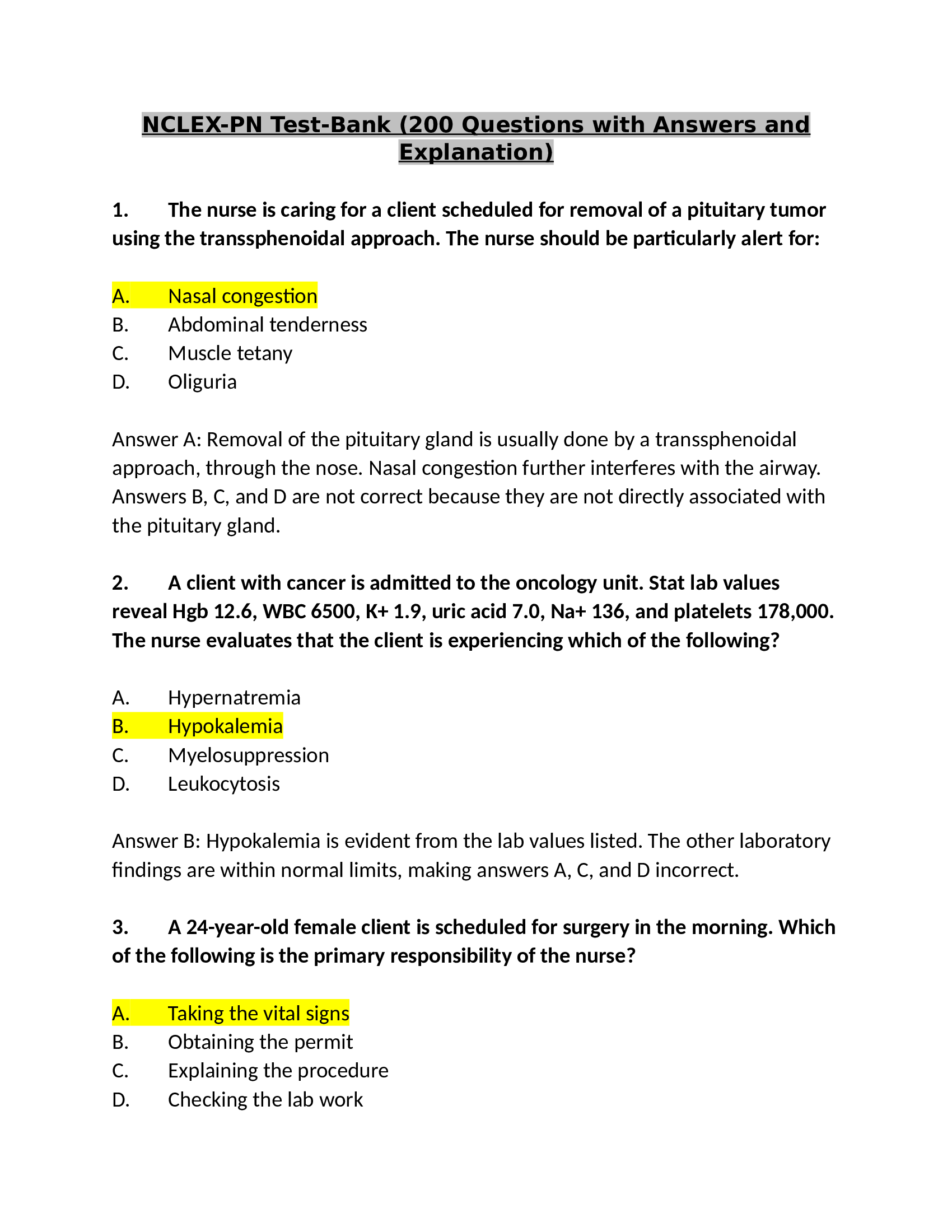
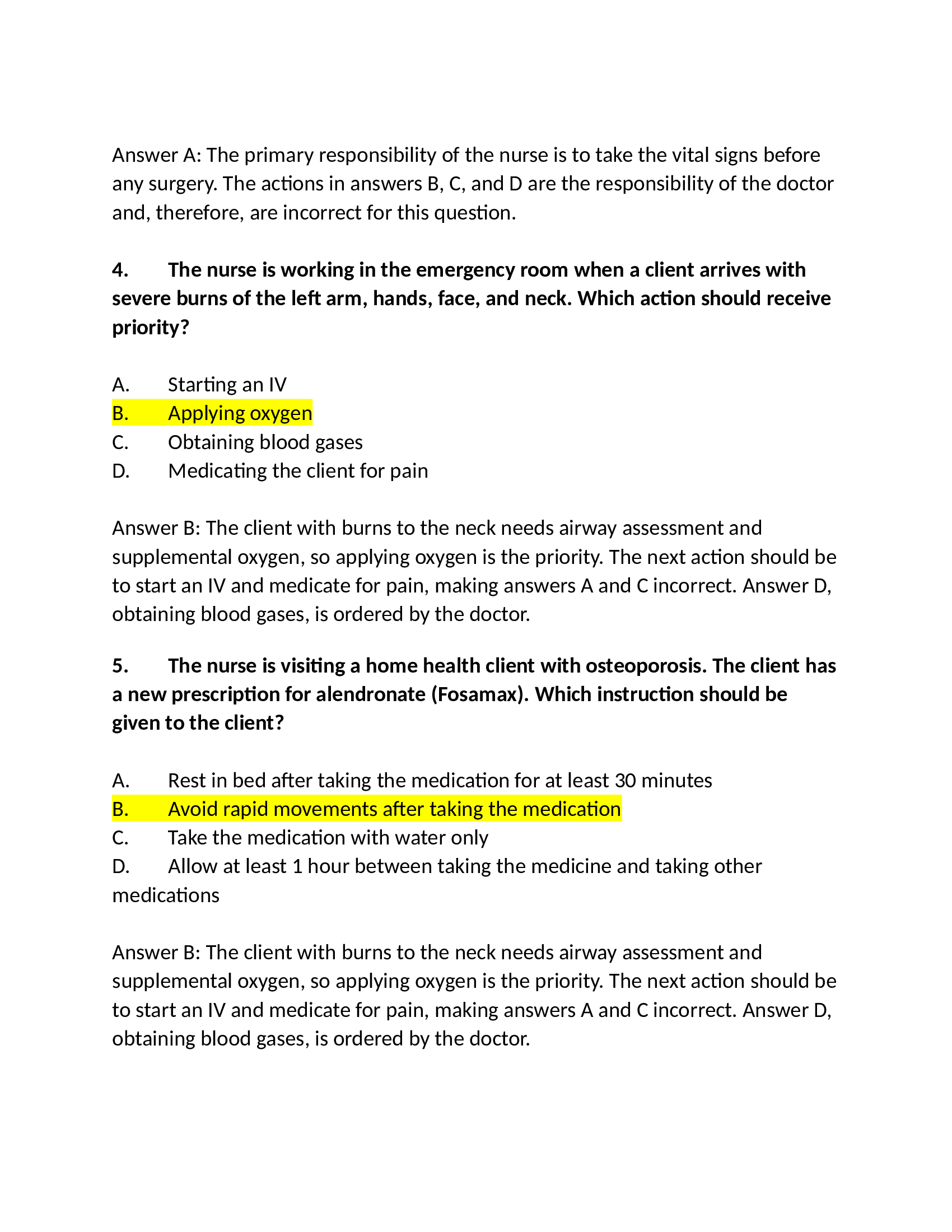
NCLEX-PN Test-Bank (200 Questions with Answers and Explanation) 1. The nurse is caring for a client scheduled for removal of a pituitary tumor using the transsphenoidal approach. The nurse should be particularly alert for: A. Nasal congestion B. Abdominal tenderness C. Muscle tetany D. Oliguria Answer A: Removal of the pituitary gland is usually done by a transsphenoidal approach, through the nose. Nasal congestion further interferes with the airway. Answers B, C, and D are not correct because they are not directly associated with the pituitary gland. 2. A client with cancer is admitted to the oncology unit. Stat lab values reveal Hgb 12.6, WBC 6500, K+ 1.9, uric acid 7.0, Na+ 136, and platelets 178,000. The nurse evaluates that the client is experiencing which of the following? A. Hypernatremia B. Hypokalemia C. Myelosuppression D. Leukocytosis Answer B: Hypokalemia is evident from the lab values listed. The other laboratory findings are within normal limits, making answers A, C, and D incorrect. 3. A 24-year-old female client is scheduled for surgery in the morning. Which of the following is the primary responsibility of the nurse? A. Taking the vital signs B. Obtaining the permit C. Explaining the procedure D. Checking the lab work Answer A: The primary responsibility of the nurse is to take the vital signs before any surgery. The actions in answers B, C, and D are the responsibility of the doctor and, therefore, are incorrect for this question. 4. The nurse is working in the emergency room when a client arrives with severe burns of the left arm, hands, face, and neck. Which action should receive priority? A. Starting an IV B. Applying oxygen C. Obtaining blood gases D. Medicating the client for pain Answer B: The client with burns to the neck needs airway assessment and supplemental oxygen, so applying oxygen is the priority. The next action should be to start an IV and medicate for pain, making answers A and C incorrect. Answer D, obtaining blood gases, is ordered by the doctor. 5. The nurse is visiting a home health client with osteoporosis. The client has a new prescription for alendronate (Fosamax). Which instruction should be given to the client? A. Rest in bed after taking the medication for at least 30 minutes B. Avoid rapid movements after taking the medication C. Take the medication with water only D. Allow at least 1 hour between taking the medicine and taking other medications Answer B: The client with burns to the neck needs airway assessment and supplemental oxygen, so applying oxygen is the priority. The next action should be to start an IV and medicate for pain, making answers A and C incorrect. Answer D, obtaining blood gases, is ordered by the doctor. 6. The nurse is making initial rounds on a client with a C5 fracture and crutchfield tongs. Which equipment should be kept at the bedside? A. A pair of forceps B. A torque wrench C. A pair of wire cutters D. A screwdriver Answer B: A torque wrench is kept at the bedside to tighten and loosen the screws of crutchfield tongs. This wrench controls the amount of pressure that is placed on the screws. A pair of forceps, wire cutters, and a screwdriver, in answers A, C, and D, would not be used and, thus, are incorrect. 7. An infant weighs 7 pounds at birth. The expected weight by 1 year should be: A. 10 pounds B. 12 pounds C. 18 pounds D. 21 pounds Answer D: A birth weight of 7 pounds would indicate 21 pounds in 1 year, or triple his birth weight. Answers A, B, and C therefore are incorrect. 8. A client is admitted with a Ewing’s sarcoma. Which symptoms would be expected due to this tumor’s location? A. Hemiplegia B. Aphasia C. Nausea D. Bone pain Answer D: Sarcoma is a type of bone cancer; therefore, bone pain would be expected. Answers A, B, and C are not specific to this type of cancer and are incorrect. 9. The nurse is caring for a client with epilepsy who is being treated with carbamazepine (Tegretol). Which laboratory value might indicate a serious side effect of this drug? A. Uric acid of 5mg/dL B. Hematocrit of 33% C. WBC 2,000 per cubic millimeter D. Platelets 150,000 per cubic millimeter Answer C: Tegretol can suppress the bone marrow and decrease the white blood cell count; thus, a lab value of WBC 2,000 per cubic millimeter indicates side effects of the drug. Answers A and D are within normal limits, and answer B is a lower limit of normal; therefore, answers A, B, and D are incorrect. 10. A 6-month-old client is admitted with possible intussuception. Which question during the nursing history is least helpful in obtaining information regarding this diagnosis? A. “Tell me about his pain.” B. “What does his vomit look like?” C. “Describe his usual diet.” D. “Have you noticed changes in his abdominal size?” Answer C: The least-helpful questions are those describing his usual diet. A, B, and D are useful in determining the extent of disease process and, thus, are incorrect. 11. The nurse is assisting a client with diverticulosis to select appropriate foods. Which food should be avoided? A. Bran B. Fresh peaches C. Cucumber salad D. Yeast rolls Answer C: The client with diverticulitis should avoid foods with seeds. The foods in answers A, B, and D are allowed; in fact, bran cereal and fruit will help prevent constipation. 12. A client has rectal cancer and is scheduled for an abdominal perineal resection. What should be the priority nursing care during the post-op period? A. Teaching how to irrigate the illeostomy B. Stopping electrolyte loss in the incisional area C. Encouraging a high-fiber diet D. Facilitating perineal wound drainage Answer D: The client with a perineal resection will have a perineal incision. Drains will be used to facilitate wound drainage. This will help prevent infection of the surgical site. The client will not have an illeostomy, as in answer A; he will have some electrolyte loss, but treatment is not focused on preventing the loss, so answer B is incorrect. A high-fiber diet, in answer C, is not ordered at this time. 13. The nurse is performing discharge teaching on a client with diverticulitis who has been placed on a low-roughage diet. Which food would have to be eliminated from this client’s diet? A. Roasted chicken B. Noodles C. Cooked broccoli D. Custard Answer C: The client with diverticulitis should avoid eating foods that are gas forming and that increase abdominal discomfort, such as cooked broccoli. Foods such as those listed in answers A, B, and D are allowed. 14. The nurse is caring for a new mother. The mother asks why her baby has lost weight since he was born. The best explanation of the weight loss is: A. The baby is dehydrated due to polyuria. B. The baby is hypoglycemic due to lack of glucose. C. The baby is allergic to the formula the mother is giving him. D. The baby can lose up to 10% of weight due to meconium stool, loss of extracellular fluid, and initiation of breast-feeding. Answer D: After birth, meconium stool, loss of extracellular fluid, and initiation of breastfeeding cause the infant to lose body mass. There is no evidence to indicate dehydration, hypoglycemia, or allergy to the infant formula; thus, answers A, B, and C are incorrect. 15. The nurse is caring for a client with laryngeal cancer. Which finding ascertained in the health history would not be common for this diagnosis? A. Foul breath B. Dysphagia C. Diarrhea D. Chronic hiccups Answer C: Diarrhea is not common in clients with mouth and throat cancer. All the findings in answers A, B, and D are expected findings. 16. A removal of the left lower lobe of the lung is performed on a client with lung cancer. Which post-operative measure would usually be included in the plan? A. Closed chest drainage B. A tracheostomy C. A mediastinal tube D. Percussion vibration and drainage Answer A: The client with a lung resection will have chest tubes and a drainagecollection device. He probably will not have a tracheostomy or mediastinal tube, and he will not have an order for percussion, vibration, or drainage. Therefore, answers B, C, and D are incorrect. 17. Six hours after birth, the infant is found to have an area of swelling over the right parietal area that does not cross the suture line. The nurse should chart this finding as: A. A cephalohematoma B. Molding C. Subdural hematoma D. Caput succedaneum Answer A: A swelling over the right parietal area is a cephalohematoma, an area of bleeding outside the cranium. This type of hematoma does not cross the suture line because it is outside the cranium but beneath the periosteum. Answer B, molding, is overlapping of the bones of the cranium and, thus, incorrect. In answer C, a subdural hematoma, or intracranial bleeding, is ominous and can be seen only on a CAT scan or x-ray. A caput succedaneum, in answer D, crosses the suture line and is edema. 18. The nurse is assisting the RN with discharge instructions for a client with an implantable defibrillator. What discharge instruction is essential? A. “You cannot eat food prepared in a microwave.” B. “You should avoid moving the shoulder on the side of the pacemaker site for 6 weeks.” C. “You should use your cellphone on your right side.” D. “You will not be able to fly on a commercial airliner with the defibrillator in place.” Answer C: The client with an internal defibrillator should learn to use any batteryoperated machinery on the opposite side. He should also take his pulse rate and report dizziness or fainting. Answers A, B, and D are incorrect because the client can eat food prepared in the microwave, move his shoulder on the affected side, and fly in an airplane. 19. A client in the cardiac step-down unit requires suctioning for excess mucous secretions. The nurse should be most careful to monitor the client for which dysrhythmia during this procedure? A. Bradycardia B. Tachycardia C. Premature ventricular beats D. Heart block Answer A: Suctioning can cause a vagal response and bradycardia. Answer B is unlikely and, therefore, not most important, although it can occur. Answers C and D can occur as well, but they are less likely. 20. The nurse is caring for a client scheduled for a surgical repair of a sacular abdominal aortic aneurysm. Which assessment is most crucial during the preoperative period? A. Assessment of the client’s level of anxiety B. Evaluation of the client’s exercise tolerance C. Identification of peripheral pulses D. Assessment of bowel sounds and activity Answer C: The assessment that is most crucial to the client is the identification of peripheral pulses because the aorta is clamped during surgery. This decreases blood circulation to the kidneys and lower extremities. The nurse must also assess for the return of circulation to the lower extremities. Answer A is of lesser concern, answer B is not advised at this time, and answer D is of lesser concern than answer A. 21. A client with suspected renal disease is to undergo a renal biopsy. The nurse plans to include which statement in the teaching session? A. “You will be sitting for the examination procedure.” B. “Portions of the procedure will cause pain or discomfort.” C. “You will be given some medication to anesthetize the area.” D. “You will not be able to drink fluids for 24 hours before the study.” Answer B: Portions of the exam are painful, especially when the sample is being withdrawn, so this should be included in the session with the client. Answer A is incorrect because the client will be positioned prone, not in a sitting position, for the exam. Anesthesia is not commonly given before this test, making answer C incorrect. Answer D is incorrect because the client can eat and drink following the test. 22. The nurse is performing an assessment on a client with possible pernicious anemia. Which data would support this diagnosis? A. A weight loss of 10 pounds in 2 weeks B. Complaints of numbness and tingling in the extremities C. A red, beefy tongue D. A hemoglobin level of 12.0gm/dL Answer C: A red, beefy tongue is characteristic of the client with pernicious anemia. Answer A, a weight loss of 10 pounds in 2 weeks, is abnormal but is not seen in pernicious anemia. Numbness and tingling, in answer B, can be associated with anemia but are not particular to pernicious anemia. This is more likely associated with peripheral vascular diseases involving vasculature. In answer D, the hemoglobin is low normal. 23. A client arrives in the emergency room with a possible fractured femur. The nurse should anticipate an order for: A. Trendelenburg position B. Ice to the entire extremity C. Buck’s traction D. An abduction pillow Answer C: The client with a fractured femur will be placed in Buck’s traction to realign the leg and to decrease spasms and pain. The Trendelenburg position is the wrong position for this client, so answer A is incorrect. Ice might be ordered

Contact the Seller

Please Sign In to contact this seller.


  • 👎  Report Copyright Violation

Frequently Asked Questions

What Do I Get When I Buy This Study Material?

+

When you buy a study material on Passing Grades, an instant download link will be sent directly to your email, giving you access to the file anytime after payment is completed.

Is Passing Grades a Trusted Platform?

+

Yes, Passing Grades is a reputable students’ marketplace with a secure payment system and reliable customer support. You can trust us to ensure a safe and seamless transaction experience.

Will I Be Stuck with a Subscription?

+

No, all purchases on Passing Grades are one-time transactions. You only pay for the notes you choose to buy, with no subscriptions or hidden fees attached.

Who Am I Buying These Study Materials From?

+

Passing Grades is a marketplace, which means you are purchasing the document from an individual vendor, not directly from us. We facilitate the payment and delivery process between you and the vendor.

Does Passing Grades Offer Free Study Materials?

+

Yes, sellers on Passing Grades have uploaded numerous free test banks, exams, practice questions, and class notes that can be downloaded at no cost.

Pasinggrades - Quality Study Materials

USD 15

    • Quality checked by Pasing Grades
    • 100% satisfaction guarantee
    • Seller: Kaponga
Buy PDF $15

Seller Information

Kaponga

Member since September 2022

  • icon
  • icon
View Profile
  • total sales

    0
  • Favourites

    0
  • Comments

    0
    ( 0 Ratings )

Item Information

  • Uploaded

    13 August 2023

  • Updated

    17 October 2025

  • Category

    Accounting

  • Item Type

    nclex

  • Tags

    New NCLEX PN Test Bank

Related Exam Prep Guides by Kaponga

Nursing Fundamentals for NCLEX: The Only Study Guide You Need To PASS NCLEX Exam | 2026
View Document

Nursing Fundamentals...

  • Kaponga

    Kaponga

  • nclex

Nursing Fundamentals for NCLEX; The Only Study Guide You Need to Pass NCLEX Exam, 2025, Comprehensiv...

15 USD

0

0

SEJPME II Module Test Bank: From Module 3 to 22 with Verified Answers Latest (2022)
View Document

SEJPME II Module Tes...

  • Kaponga

    Kaponga

  • nclex

SEJPME II Module Test Bank: From Module 3 to 22 with Verified Answers Latest (2022)...

15 USD

0

0

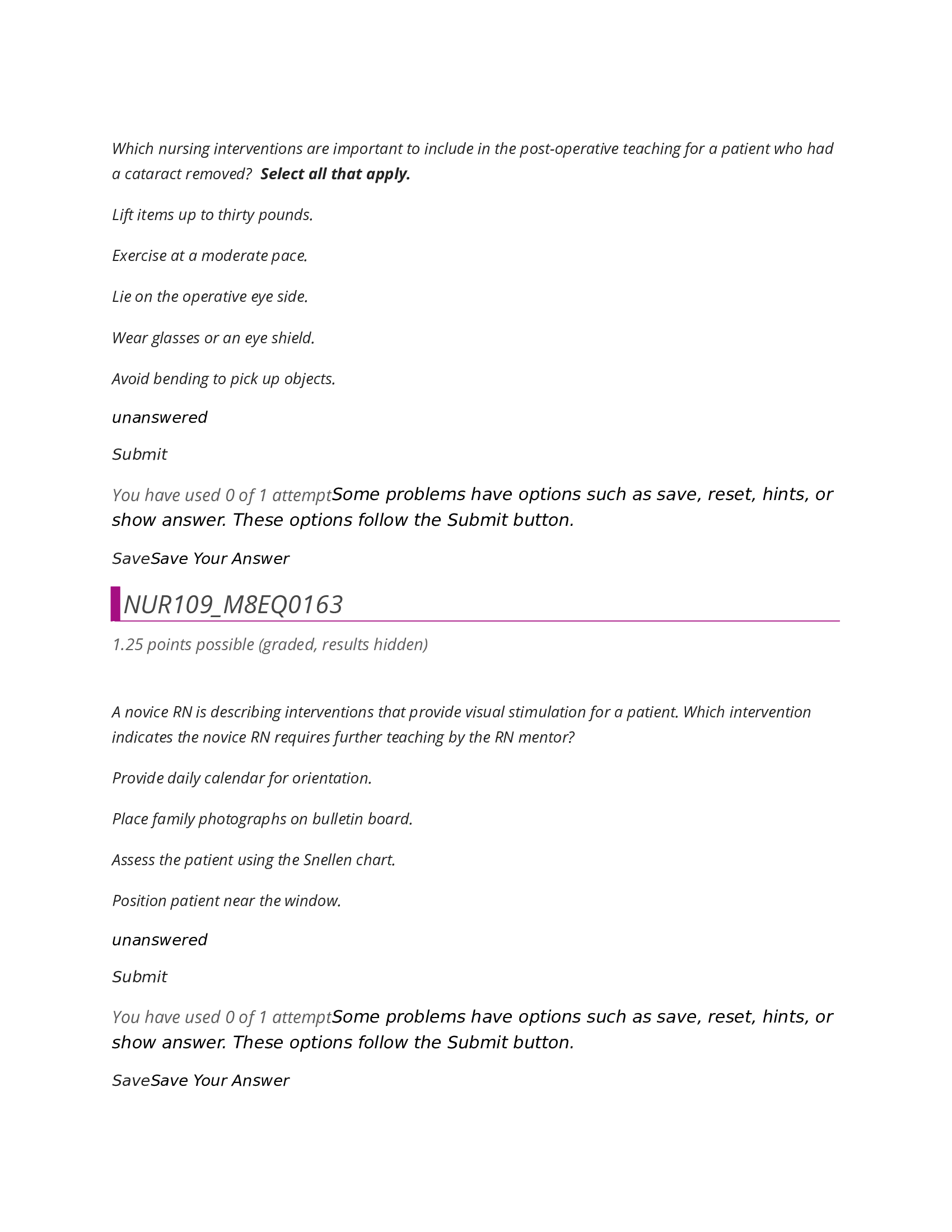
NUR109 EXAM 2 QUESTIONS WITH ANSWERS (Excelsior School 2022)
View Document

NUR109 EXAM 2 QUESTI...

  • Kaponga

    Kaponga

  • nclex

NUR109 EXAM 2 QUESTIONS WITH ANSWERS (Excelsior School 2022)...

15 USD

0

0

Purchase

Download link will be sent to this email immediately after purchase.

IMPORTANT LINKS

  • How To Upload Class Notes
  • Selling Tips
  • Passing Grades's Study Materials
  • Scholarships for International Students 2025

POPULAR CATEGORIES

  • Law
  • Accounting
  • English
  • Psychology
  • Business
  • Nursing
  • Computer Science
  • General

View Document

  • Blog
  • Contact
  • Delivery Policy
  • Latest Scholarships Around the World
  • How to Pass Bar Exams: Passing Grades’ Strategies
  • How to Study and Pass the CPA Exam
  • All Test Banks
  • Faq
  • Copyright Claims
  • Privacy Policy
  • Terms of Use

KNOWLEDGE BASE

  • How to Write A+ Grade Good Research Paper
  • How to Manage Stress During Exam Period
  • Best Time to Study
  • How to Pass NCLEX-RN Exam
  • How To Effectively Utilize Test Banks
  • Popular Shadow Health Exam Assessments
  • Popular HESI Case Studies
  • How to Prepare for a Nursing Career
  • The Importance Of Summaries in Exam Revisvion

© 2026 Pasing Grades. All rights reserved.