Pasing Grades
  • Start Selling
  • Blog
  • Contact
  • 0

    Your cart is empty!

English

  • English
  • Spanish
  • Arabic
Create Account Sign In
  • Library
    • New Prep Guides
    • Featured Prep Guides
    • Free Exam Prep Guides
    • Best sellers
  • General
  • Nursing
    • Research Paper
    • Case Study
    • Discussion Post
    • Assignment
    • Exam
    • Practice Questions and Answers
    • Test Bank
    • solutions manual
  • Accounting
    • Case Study
    • Thesis
    • Study Guide
    • Summary
    • Research Paper
    • test bank
  • English
    • Creative Writing
    • Research Paper
    • Summary
    • Rhetorics
    • Literature
    • Journal
    • Exam
    • Grammar
    • Discussion Post
    • Essay
  • Psychology
    • Hesi
    • Presentation
    • Essay
    • Summary
    • Study Guide
    • Essay
    • Solution Manual
    • Final Exam Review
    • Class Notes
    • test bank
  • Business
    • Lecture Notes
    • Solution Manual
    • Presentation
    • Business Plan
    • Class Notes
    • Experiment
    • Summary
    • Practice Questions
    • Study Guide
    • Case Study
    • test bank
    • Exam
  • More
    • Computer Science
    • Economics
    • Statistics
    • Engineering
    • Biology
    • Religious Studies
    • Physics
    • Chemistry
    • Mathematics
    • History
    • Sociology
    • Science
    • Philosophy
    • Law
  • Pages
    • About Us
    • Selling Tips
    • Delivery Policy
    • Faq
    • Privacy Policy
  • Flash Sale
  • Home
  • ATI MENTAL HEALTH PROCTORED EXAMS WITH NGN MULTIPLE VERSIONS

ATI MENTAL HEALTH PROCTORED EXAMS WITH NGN MULTIPLE VERSIONS

Preview page 1 Preview page 2 Preview page 3
Add To Favorites

Share this item Share this item

  • Item Details
  • Comments (0)
  • Reviews (0)
  • Contact Seller

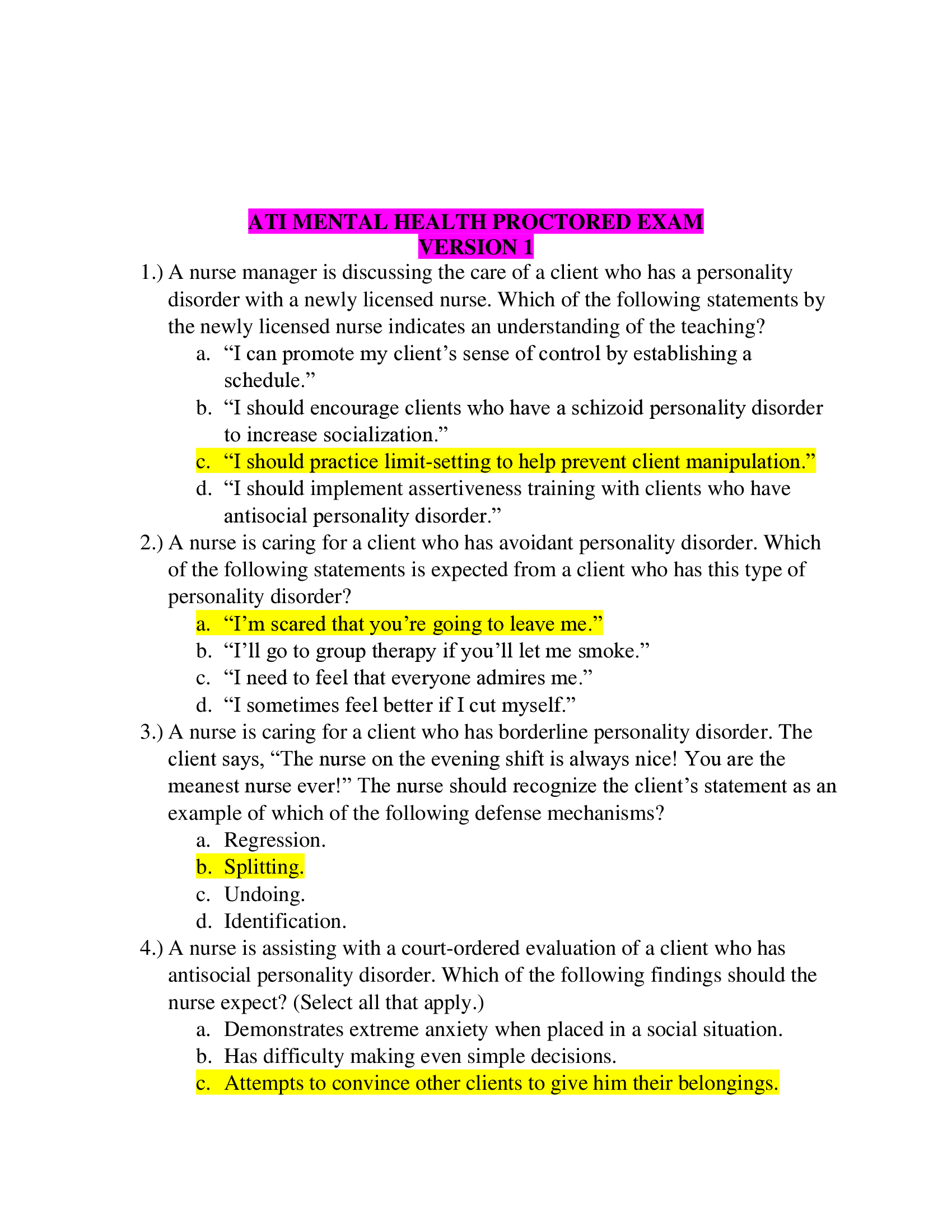
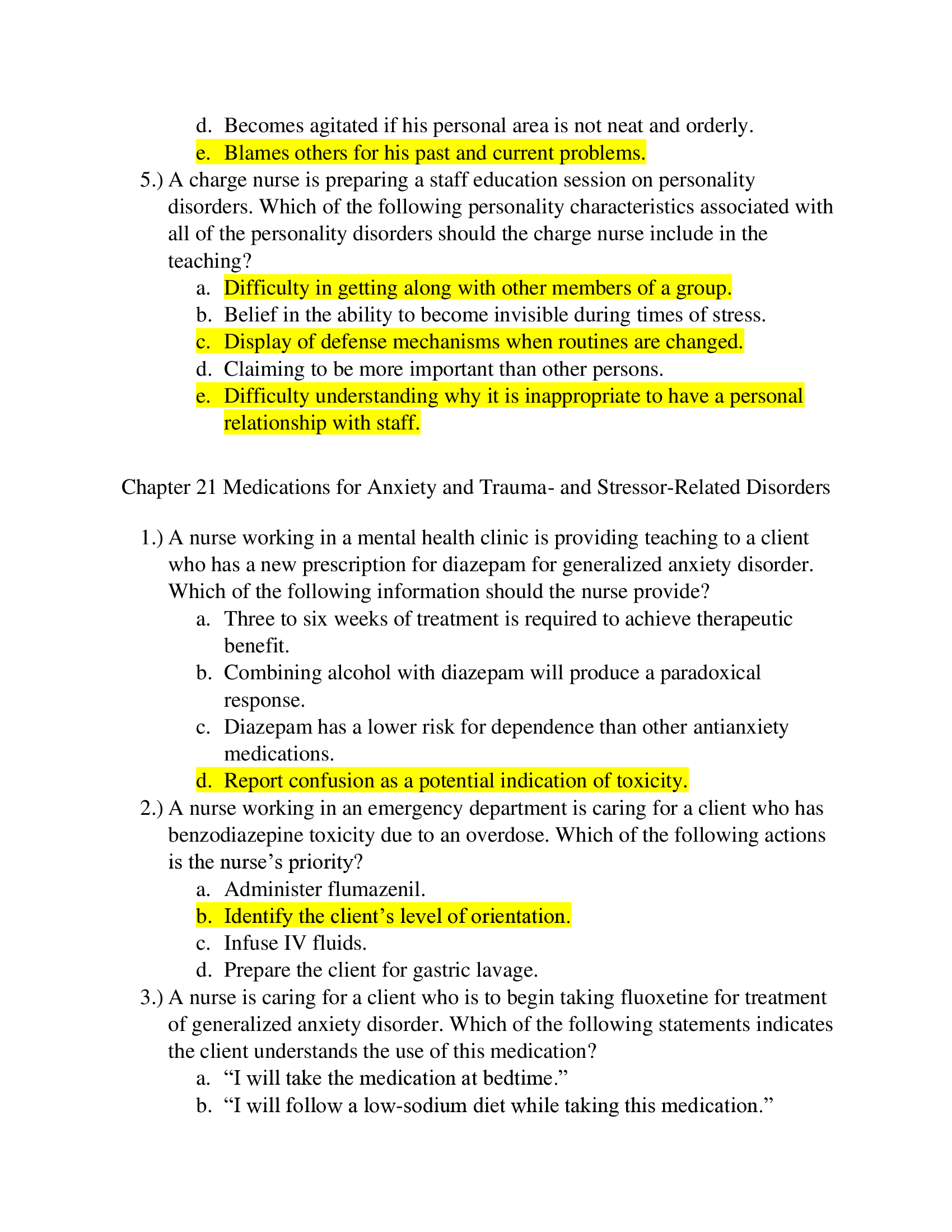
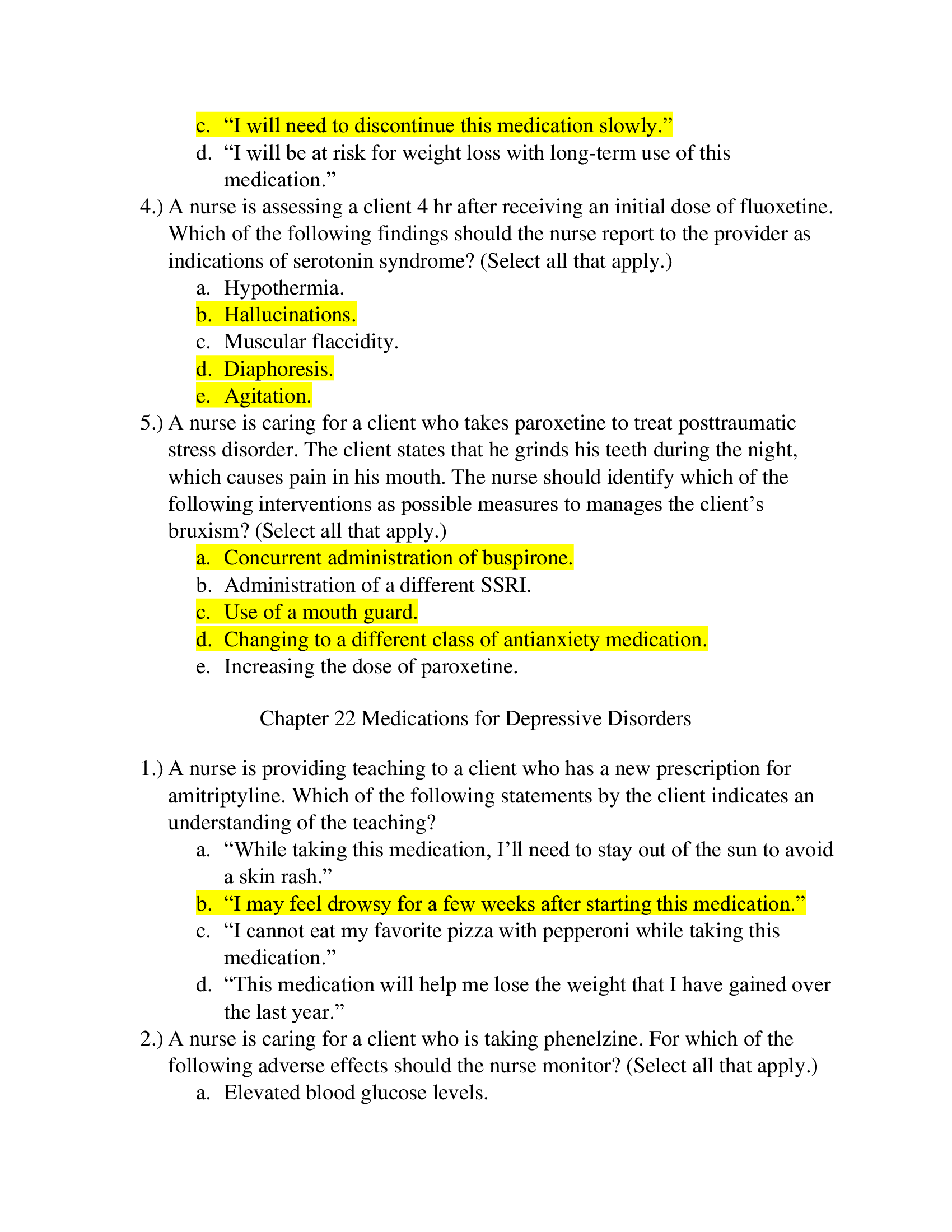
Chapter 10 Brain Stimulation Therapies 6.) A nurse is providing teaching for a client who is scheduled to receive ECT for the treatment of major depressive disorder. Which of the following client statements indicates understanding of the teaching? a. “It is common to treat depression with ECT before trying medications.” b. “I can have my depression cured if I receive a series of ECT treatments.” c. “I should receive ECT once a week for 6 weeks.” d. “I will receive a muscle relaxant to protect me from injury during ECT.” 7.) A charge nurse is discussing TMS with a newly licensed nurse. Which of the following statements by the newly licensed nurse indicates an understanding of the teaching? a. “TMS is indicated for clients who have schizophrenia spectrum disorders.” b. “I will provide postanesthesia care following TMS.” c. “TMS treatments usually last 5 to 10 minutes.” d. “I will schedule the client for daily TMS treatments for the first several weeks.” 8.) A nurse is assessing a client immediately following an ECT procedure. Which of the following findings should the nurse expect? (Select all that apply.) a. Hypotension. b. Paralytic ileus. c. Memory loss. d. Nausea. e. Confusion. 9.) A nurse is leading a peer group discussion about the indications for ECT. Which of the following indications should the nurse include in the discussion? a. Borderline personality disorder. b. Acute withdrawal related to a substance use disorder. c. Bipolar disorder with rapid cycling. d. Dysphoric disorder. 10.) A nurse is planning care for a client following surgical implantation of a VNS device. The nurse should plan to monitor for which of the following adverse effects? (Select all that apply.) a. Voice changes. b. Seizure activity. c. Disorientation. d. Dysphagia. e. Neck pain. Chapter 16 Personality Disorders 11.) A nurse manager is discussing the care of a client who has a personality disorder with a newly licensed nurse. Which of the following statements by the newly licensed nurse indicates an understanding of the teaching? a. “I can promote my client’s sense of control by establishing a schedule.” b. “I should encourage clients who have a schizoid personality disorder to increase socialization.” c. “I should practice limit-setting to help prevent client manipulation.” d. “I should implement assertiveness training with clients who have antisocial personality disorder.” 12.) A nurse is caring for a client who has avoidant personality disorder. Which of the following statements is expected from a client who has this type of personality disorder? a. “I’m scared that you’re going to leave me.” b. “I’ll go to group therapy if you’ll let me smoke.” c. “I need to feel that everyone admires me.” d. “I sometimes feel better if I cut myself.” 13.) A nurse is caring for a client who has borderline personality disorder. The client says, “The nurse on the evening shift is always nice! You are the meanest nurse ever!” The nurse should recognize the client’s statement as an example of which of the following defense mechanisms? a. Regression. b. Splitting. c. Undoing. d. Identification. 14.) A nurse is assisting with a court-ordered evaluation of a client who has antisocial personality disorder. Which of the following findings should the nurse expect? (Select all that apply.) a. Demonstrates extreme anxiety when placed in a social situation. b. Has difficulty making even simple decisions. c. Attempts to convince other clients to give him their belongings. d. Becomes agitated if his personal area is not neat and orderly. e. Blames others for his past and current problems. 15.) A charge nurse is preparing a staff education session on personality disorders. Which of the following personality characteristics associated with all of the personality disorders should the charge nurse include in the teaching? a. Difficulty in getting along with other members of a group. b. Belief in the ability to become invisible during times of stress. c. Display of defense mechanisms when routines are changed. d. Claiming to be more important than other persons. e. Difficulty understanding why it is inappropriate to have a personal relationship with staff. Chapter 21 Medications for Anxiety and Trauma- and Stressor-Related Disorders 11.) A nurse working in a mental health clinic is providing teaching to a client who has a new prescription for diazepam for generalized anxiety disorder. Which of the following information should the nurse provide? a. Three to six weeks of treatment is required to achieve therapeutic benefit. b. Combining alcohol with diazepam will produce a paradoxical response. c. Diazepam has a lower risk for dependence than other antianxiety medications. d. Report confusion as a potential indication of toxicity. 12.) A nurse working in an emergency department is caring for a client who has benzodiazepine toxicity due to an overdose. Which of the following actions is the nurse’s priority? a. Administer flumazenil. b. Identify the client’s level of orientation. c. Infuse IV fluids. d. Prepare the client for gastric lavage. 13.) A nurse is caring for a client who is to begin taking fluoxetine for treatment of generalized anxiety disorder. Which of the following statements indicates the client understands the use of this medication? a. “I will take the medication at bedtime.” b. “I will follow a low-sodium diet while taking this medication.” c. “I will need to discontinue this medication slowly.” d. “I will be at risk for weight loss with long-term use of this medication.” 14.) A nurse is assessing a client 4 hr after receiving an initial dose of fluoxetine. Which of the following findings should the nurse report to the provider as indications of serotonin syndrome? (Select all that apply.) a. Hypothermia. b. Hallucinations. c. Muscular flaccidity. d. Diaphoresis. e. Agitation. 15.) A nurse is caring for a client who takes paroxetine to treat posttraumatic stress disorder. The client states that he grinds his teeth during the night, which causes pain in his mouth. The nurse should identify which of the following interventions as possible measures to manages the client’s bruxism? (Select all that apply.) a. Concurrent administration of buspirone. b. Administration of a different SSRI. c. Use of a mouth guard. d. Changing to a different class of antianxiety medication. e. Increasing the dose of paroxetine. Chapter 22 Medications for Depressive Disorders 6.) A nurse is providing teaching to a client who has a new prescription for amitriptyline. Which of the following statements by the client indicates an understanding of the teaching? a. “While taking this medication, I’ll need to stay out of the sun to avoid a skin rash.” b. “I may feel drowsy for a few weeks after starting this medication.” c. “I cannot eat my favorite pizza with pepperoni while taking this medication.” d. “This medication will help me lose the weight that I have gained over the last year.” 7.) A nurse is caring for a client who is taking phenelzine. For which of the following adverse effects should the nurse monitor? (Select all that apply.) a. Elevated blood glucose levels. b. Orthostatic hypotension. c. Priapism. d. Headache. e. Bruxism. 8.) A nurse is reviewing the medical record of a client who has a new prescription for bupropion for depression. Which of the following findings is the priority for the nurse to report to the provider? a. The client has a family history of seasonal pattern depression. b. The client currently smokes 1.5 packs of cigarettes per day. c. The client had a motor vehicle crash last year and sustained a head injury. d. The client has a BMI of 25 and has gained 10 lb over the last year. 9.) A nurse is teaching a client who has a new prescription for imipramine how to minimize anticholinergic effects. Which of the following instructions should the nurse include in the teaching? (Select all that apply.) a. Void just before taking the medication. b. Increase the dietary intake of potassium c. Wear sunglasses when outside. d. Change positions slowly when getting up. e. Chew sugarless gum. 10.) A charge nurse is discussing mirtazapine with a newly licensed nurse. Which of the following statements by the newly licensed nurse indicates understanding? a. “This medication increases the release of serotonin and norepinephrine.” b. “I will need to monitor the client for hyponatremia while taking this medication.” c. “This medication is contraindicated for clients who have an eating disorder.” d. “Sexual dysfunction is a common adverse effect of this medication.”

Contact the Seller

Please Sign In to contact this seller.


  • 👎  Report Copyright Violation

Frequently Asked Questions

What Do I Get When I Buy This Study Material?

+

When you buy a study material on Passing Grades, an instant download link will be sent directly to your email, giving you access to the file anytime after payment is completed.

Is Passing Grades a Trusted Platform?

+

Yes, Passing Grades is a reputable students’ marketplace with a secure payment system and reliable customer support. You can trust us to ensure a safe and seamless transaction experience.

Will I Be Stuck with a Subscription?

+

No, all purchases on Passing Grades are one-time transactions. You only pay for the notes you choose to buy, with no subscriptions or hidden fees attached.

Who Am I Buying These Study Materials From?

+

Passing Grades is a marketplace, which means you are purchasing the document from an individual vendor, not directly from us. We facilitate the payment and delivery process between you and the vendor.

Does Passing Grades Offer Free Study Materials?

+

Yes, sellers on Passing Grades have uploaded numerous free test banks, exams, practice questions, and class notes that can be downloaded at no cost.

Pasinggrades - Quality Study Materials

USD 29

    • Quality checked by Pasing Grades
    • 100% satisfaction guarantee
    • Seller: TopAcademik
Buy PDF $29

Seller Information

TopAcademik

Member since May 2024

  • icon
View Profile
  • total sales

    0
  • Favourites

    0
  • Comments

    0
    ( 0 Ratings )

Item Information

  • Uploaded

    25 May 2024

  • Updated

    24 October 2025

  • Category

    Nursing

  • Item Type

    ati

  • Tags

    ati mental health proctored exam mental health ngn

Related Exam Prep Guides by TopAcademik

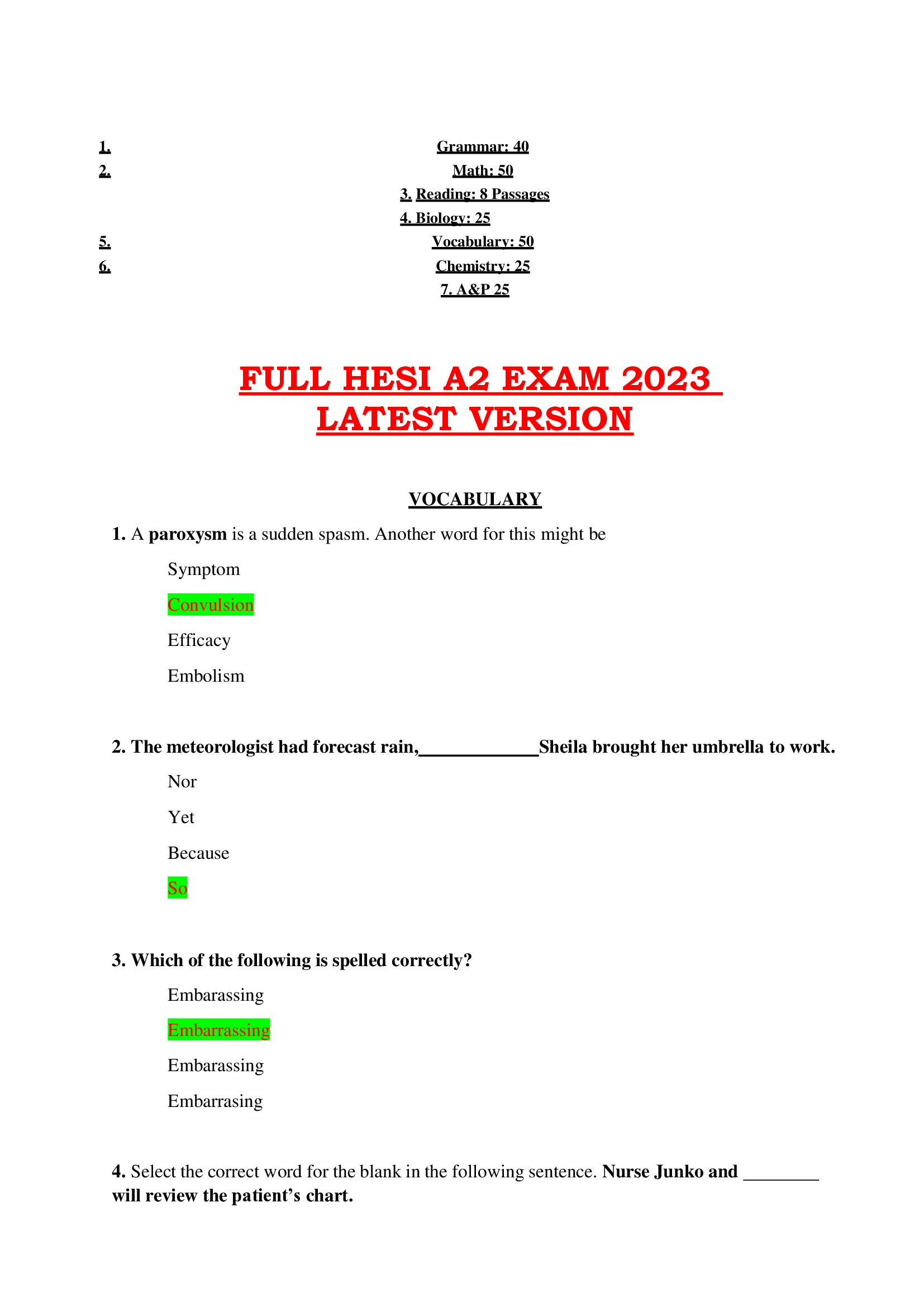
Full HESI A2 Exam 2026: Vocabulary, Math, Grammar, Reading, Biology, Chemistry & A&P with Correct Answers
View Document

Full HESI A2 Exam 20...

  • TopAcademik

    TopAcademik

  • ati

Get the complete HESI A2 2025 exam guide with all sections: Vocabulary, Math, Grammar, Reading, Biol...

29 USD

0

0

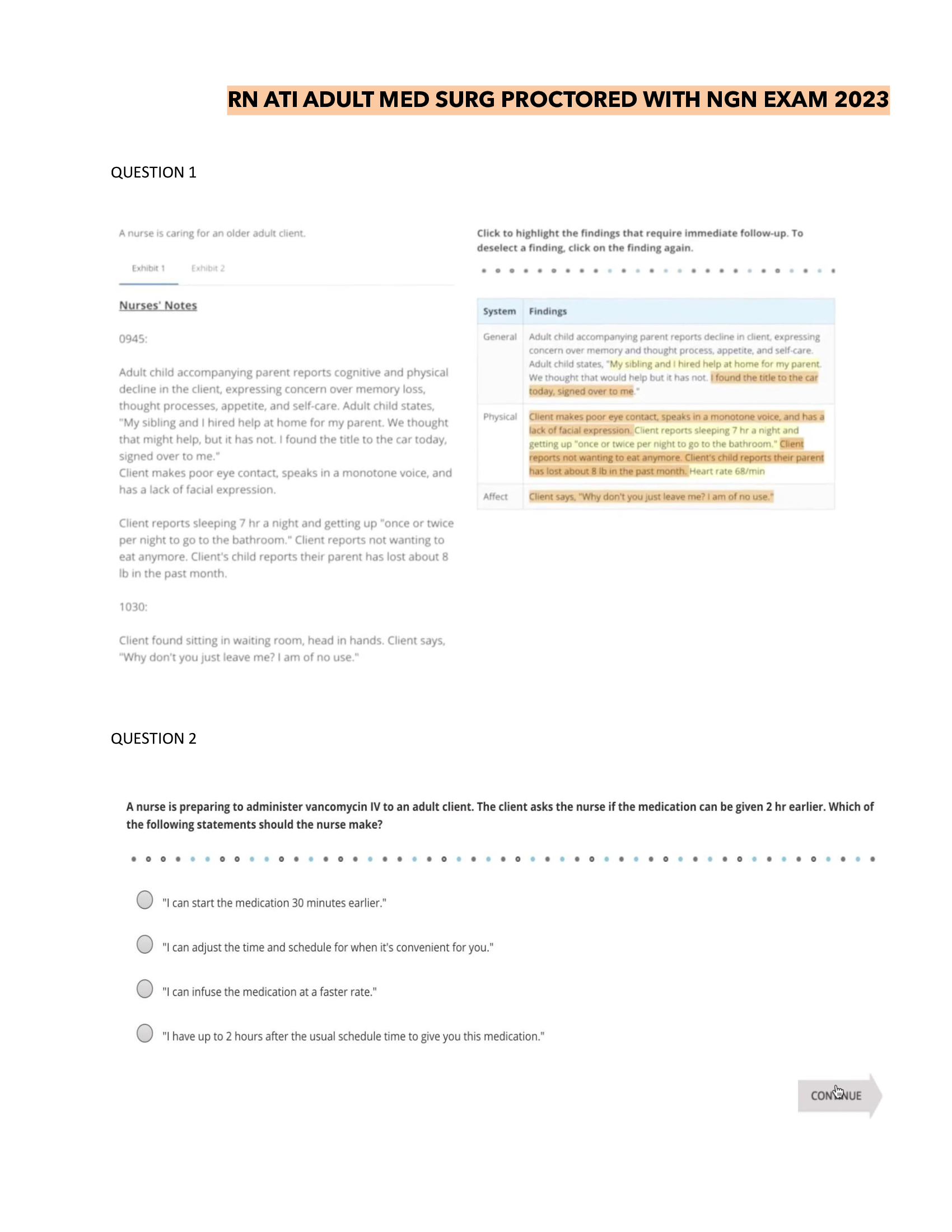
RN ATI ADULT MED SURG PROCTORED WITH NGN EXAM 2023/2024
View Document

RN ATI ADULT MED SUR...

  • TopAcademik

    TopAcademik

  • ati

RN ATI ADULT MED SURG PROCTORED WITH NGN EXAM 2023/2024...

29 USD

0

0

RN ATI COMMUNITY HEALTH PROCTORED EXAM 2023/2024 WITH NGN
View Document

RN ATI COMMUNITY HEA...

  • TopAcademik

    TopAcademik

  • ati

RN ATI COMMUNITY HEALTH PROCTORED EXAM 2023/2024 WITH NGN...

29 USD

0

0

Purchase

Download link will be sent to this email immediately after purchase.

IMPORTANT LINKS

  • How To Upload Class Notes
  • Selling Tips
  • Passing Grades's Study Materials
  • Scholarships for International Students 2026

POPULAR CATEGORIES

  • Law
  • Accounting
  • English
  • Psychology
  • Business
  • Nursing
  • Computer Science
  • General

View Document

  • Blog
  • Contact
  • Delivery Policy
  • Latest Scholarships Around the World
  • How to Pass Bar Exams: Passing Grades’ Strategies
  • How to Study and Pass the CPA Exam
  • All Test Banks
  • Faq
  • Copyright Claims
  • Privacy Policy
  • Terms of Use

KNOWLEDGE BASE

  • How to Write A+ Grade Good Research Paper
  • How to Manage Stress During Exam Period
  • Best Time to Study
  • How to Pass NCLEX-RN Exam
  • How To Effectively Utilize Test Banks
  • Popular Shadow Health Exam Assessments
  • Popular HESI Case Studies
  • How to Prepare for a Nursing Career
  • The Importance Of Summaries in Exam Revisvion

© 2026 Pasing Grades. All rights reserved.