
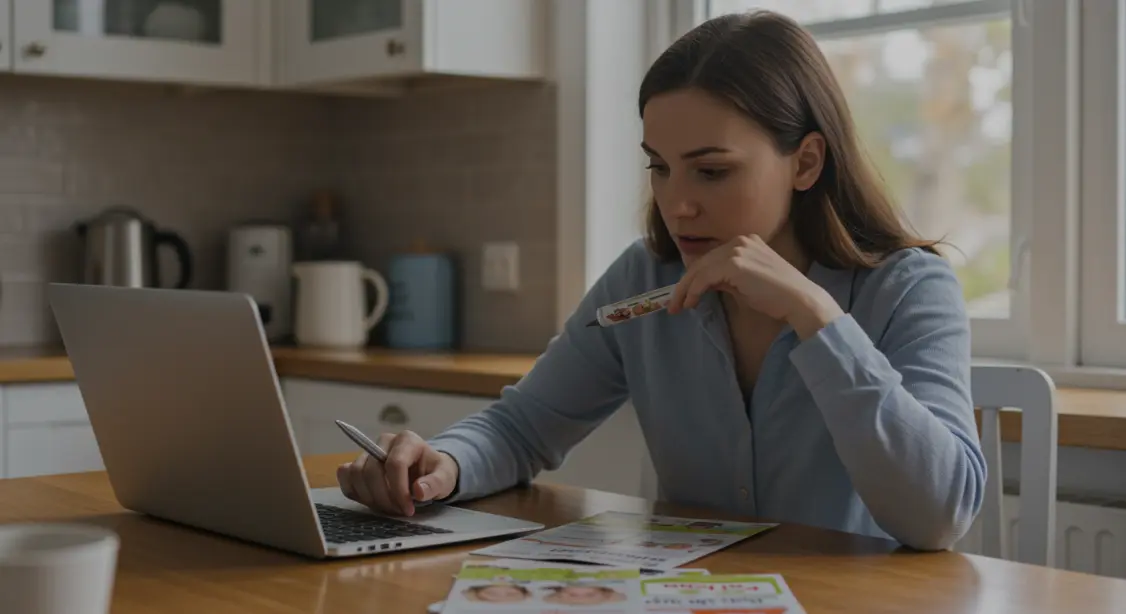
Nobody prepares you for how overwhelming it is to choose a daycare in Orange County.
You start with a Google search, end up with forty browser tabs, and somehow feel less informed than when you started. Every center has cheerful photos and a five-star rating. Every website promises a nurturing environment, qualified teachers, and a curriculum that will set your child up for life. The language starts to blur together until you genuinely cannot tell one place from another.
I’ve been there. After months of touring centers across Costa Mesa, Irvine, and the surrounding OC communities, I learned that the difference between an average daycare and a genuinely great one isn’t found on a website. It’s found in the details you only catch when you show up in person, ask the right questions, and pay attention to what isn’t being said.
This is the guide I wish someone had handed me at the start.
Start With the Basics, Then Go Deeper
Before you book any tours, it helps to get clear on your non-negotiables. Location matters, obviously, a center that’s fifteen minutes out of your way in the wrong direction will quietly drain you by month three. Hours matter too. Most centers in Orange County operate somewhere between 7:00 AM and 6:00 PM, but not all of them do, and the ones that offer extended care often charge separately for it in ways that aren’t obvious upfront.
Then there’s price. Daycare costs in Orange County can vary dramatically depending on the area, the age of your child, and what’s included. Some centers quote a base rate and then layer on fees for meals, supplies, and extracurriculars until the monthly total looks nothing like the number you saw on the website. Others offer a flat, transparent rate that covers everything.
That simplicity matters more than parents often realize until they’re knee-deep in billing surprises.
The One Number Most Parents Skip Right Over
Once you’ve sorted out your practical requirements, there’s a metric that should sit near the top of every evaluation list: the teacher-to-child ratio.
In California, the state-mandated ratio for preschool-age children is 1 teacher for every 12 kids. A lot of centers operate right at that limit. It’s legal, it’s common, and it’s genuinely not enough if you care about your child receiving individual attention during the day.
What does 1:12 look like in real life? One adult managing twelve toddlers. Which means that adult is, for most of the day, in crowd-control mode. They’re preventing chaos, not nurturing development.
When you find a center maintaining a 1:8 ratio or better, that’s worth stopping for. One teacher, eight children. The room is calmer. The kids are more engaged. The teacher actually knows each child by name and by personality instead of centers where teachers identifies your child just as one of the group.
When I toured Super Bees Academy in Costa Mesa, their 1:8 ratio was the first thing that registered when I walked in. The difference in the energy of the room compared to centers I’d visited that morning was immediate. I asked one of the teachers about it and she laughed: “I couldn’t imagine going back. I actually get to teach here.”
That line stayed with me for weeks.
What to Actually Look for on a Tour
Touring a daycare is a skill, and most first-time parents don’t know they need to develop it until they’re standing in a lobby being handed a glossy brochure. Here’s what I’d focus on instead of the brochure:
- Watch the teachers, not the decor. Colorful walls and bright murals are easy. Look for a teacher who is crouched at child level, genuinely listening to a three-year-old explain something important. The question to ask yourself: does this person seem like they want to be here?
- Look at what’s happening, not what’s on display. Are children actively engaged, or are they just being managed? Is there structure, or is it structured chaos? The best classrooms have a rhythm to them. You can feel it within five minutes.
- Notice how transitions happen. Moving a group of toddlers from one activity to the next is one of the hardest parts of running a preschool classroom. Centers with good training and good ratios make it look almost effortless. Centers that don’t, don’t.
- Ask to see the kitchen, the playground, and the nap area. Not because you’re an inspector, but because a center that’s proud of its environment will show you everything without hesitation. Any tour that steers around certain rooms deserves a follow-up question.
- Pay attention to how staff talk about the children. Do they use names? Do they reference individual quirks or accomplishments? Or is every child just “the kids”? The language teachers use in casual conversation tells you a lot about how they see the children in their care.
Meals: More Important Than YouÐThink
This one surprised me. I went into my daycare search thinking meals were a minor logistical detail. I came out the other side convinced they’re one of the better windows into a center’s overall philosophy.
Hot meals prepared on-site signal that a center is investing in the whole child experience, not just the educational program. They also tell you something about staffing levels, you need enough adults in the room for mealtime to be a calm, relational experience rather than a feed-and-move-on operation.
At centers where a hot home-style lunch was part of the daily rhythm, not a vending machine option or a pack-your-own situation. I consistently found the overall environment to be warmer and more attentive. It’s not a guarantee, but it’s a strong signal.
Safety Is a Feeling as Much as a Feature
Every center in Orange County will tell you they take safety seriously. What matters is whether the infrastructure actually reflects that commitment.
A few things worth checking on your tour:
- Access control. Is entry secured? Can someone walk in off the street, or is there a clear check-in process with ID verification?
- Parking and pickup zones. Separate, secured parking for families away from general street traffic is a detail that matters both practically and as an indicator of how much thought went into the overall setup.
- Outdoor supervision. A large playground is wonderful. A large playground with enough adults to actually watch every child on it is what you’re really evaluating.
- Emergency procedures. Ask directly: what happens if a child gets hurt? What’s the protocol for a lockdown or evacuation? How are parents notified? A well-run center will answer without skipping a beat.
Security at Super Bees Academy was one of the things that came up without me asking. The director walked me through their access-controlled entry, the separate secured parking, and their check-in process for pickups. It wasn’t a sales pitch. It felt more like the way someone explains something they’ve clearly thought about carefully and are genuinely proud of. That kind of unprompted transparency is a good sign in any center you visit.
The Curriculum Question (and Why It’s More Nuanced Than It Sounds)
A lot of centers in Orange County will mention their curriculum in the first three minutes of a tour. STEM-based learning, play-based learning, Montessori-influenced, Reggio-inspired, the vocabulary can feel like a lot.
Here’s a simpler way to think about it: does the curriculum actually shape what happens in the room on a regular Tuesday, or is it mostly a marketing frame?
Ask specifically what a typical day looks like for a child your kid’s age. Ask what the teachers do when a child is clearly ahead of or behind the group. Ask how learning is individualized. The answers to those questions will tell you more than any curriculum label.
What you’re ultimately looking for is a preschool in Orange County that treats development as something that happens child by child, not group by group. The best early childhood programs I visited weren’t the ones with the fanciest curriculum names. They were the ones where teachers could tell you something specific and individual about every child in the room.
How to Compare Centers Without Losing Your Mind
After your tours, you’ll have a collection of brochures, a set of gut feelings, and probably a few competing opinions from your partner or family. Here’s a simple framework that helped me cut through the noise:
- Would I be comfortable dropping in unannounced? The best centers are always prepared for unexpected visits. If you’d feel anxious showing up without warning, pay attention to that.
- Did I leave feeling reassured or just dazzled? A great facility can temporarily override your instincts. Give yourself 24 hours after each tour before making a judgment call. Ask yourself: how did the people make you feel, separate from the building?
- What did my child do during the tour? If you brought your child along, their reaction is data. Did they want to stay? Did they seem comfortable? Kids are remarkably good at picking up on whether adults in a room are genuinely warm or just professionally pleasant.
- Is the pricing honest? Get the full rate breakdown in writing before you commit. Ask about enrollment fees, supply fees, meal fees, and what happens to your rate as your child ages into a new classroom.
A Few Things I’d Tell a Friend Starting This Search Today
Tour more centers than you think you need to. The first few tours are really just calibration to train your eye in order to identify bad, good and best. By tour four or five, you’ll have a much clearer sense of what actually matters to you.
Don’t over-prioritize prestige or programming. The fanciest program in the most impressive building means very little if the teacher-to-child ratio is stretched and the staff turnover is high. Ask how long teachers have been at the center. Consistency in caregiving is one of the strongest predictors of a positive experience for young children.
And when something feels right, trust that feeling but verify it with questions. A warm, calm environment backed up by a real 1:8 ratio, transparent pricing, hot meals, and a team that’s been there for years is not common. When you find it, you’ll know.
That combination was what ultimately made Super Bees Academy stand out during my search. It wasn’t any single feature. It was the fact that everything pointed in the same direction. Imagine a place that had clearly been built around what children actually need, not around what looks good in a brochure. A center with nearly four decades of roots in the Costa Mesa community doesn’t get that kind of longevity by accident.
The Short Version
Choosing a daycare in Orange County doesn’t have to be as overwhelming as it feels at the start. Once you know what to look for, in this case, the ratio, the meals, the safety infrastructure, the staff stability, the honest pricing, the noise starts to clear pretty quickly.
The right center exists. You’ll recognize it not because it checks every box on a spreadsheet, but because you walk in and think: this is where I want my kid to spend their days.
That feeling is real. And it’s worth holding out for.
The best daycare isn’t the one with the longest waitlist or the fanciest newsletter. It’s the one where your child is genuinely known and happy to go back.
0
159