
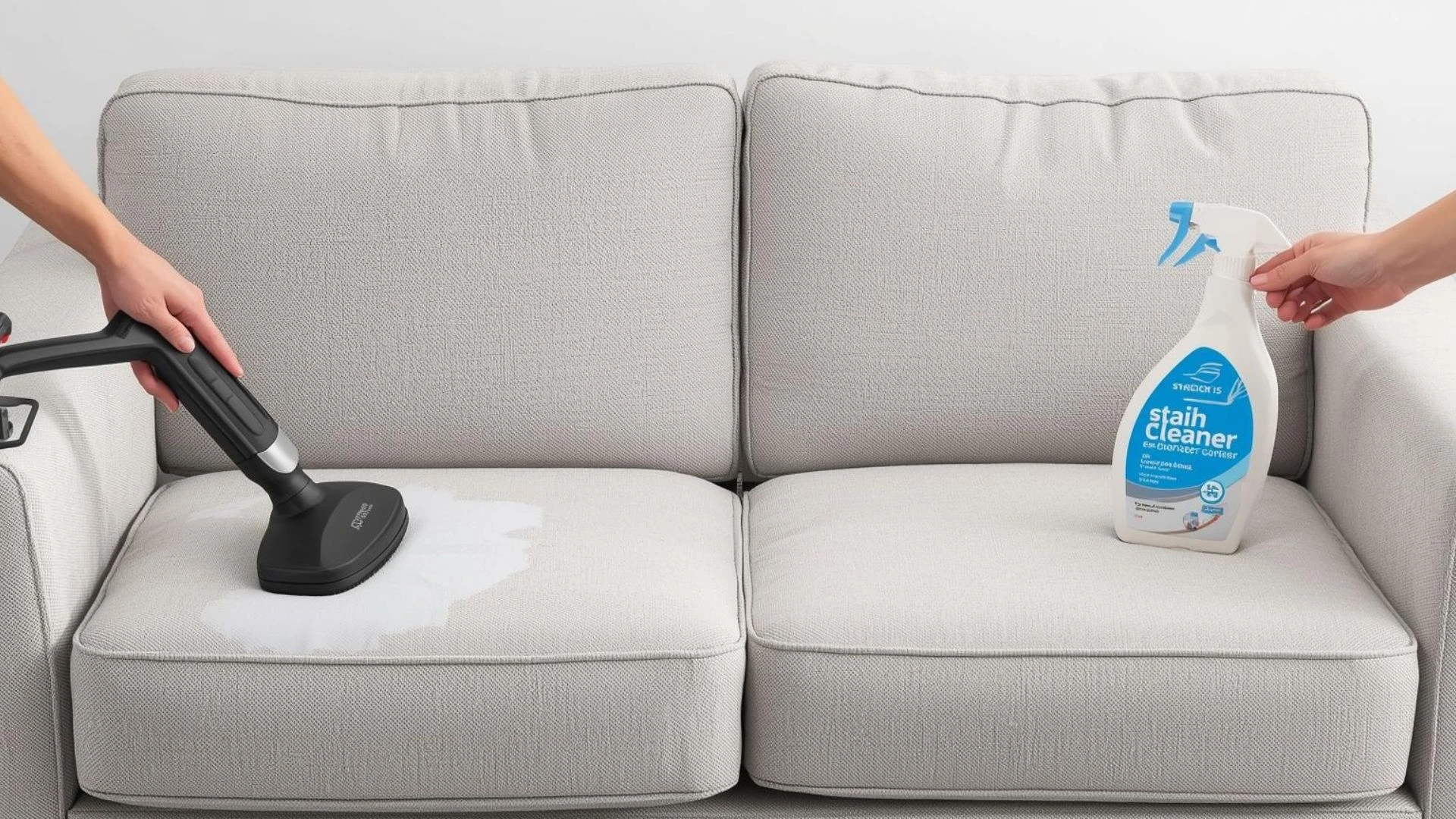
If you've ever searched for upholstery cleaning services or tried to clean a sofa yourself, you've probably run into a wall of terminology. Common ones include; hot water extraction, dry cleaning, foam cleaning, carbonation, encapsulation.
Each method sounds legitimate, and providers will often tell you theirs is the best. For a homeowner in Bothell, Washington, trying to make a practical decision about how to clean the furniture in a humid Pacific Northwest home, cutting through that noise matters.
The short answer is that no single method is best for all situations. The right choice depends on fabric type, the nature and age of the soiling, drying time constraints, and budget. But some methods genuinely perform better than others in specific contexts.
Considering Bothell's climate, where moisture management is a constant concern, the drying time question alone is enough to make one approach clearly preferable over another for most households.
This guide breaks down each major upholstery cleaning method, how it works, what it's best suited for, and what Bothell homeowners need to know before choosing a service or attempting a DIY clean.
Hot Water Extraction: The Method Most Providers Call "Steam Cleaning"
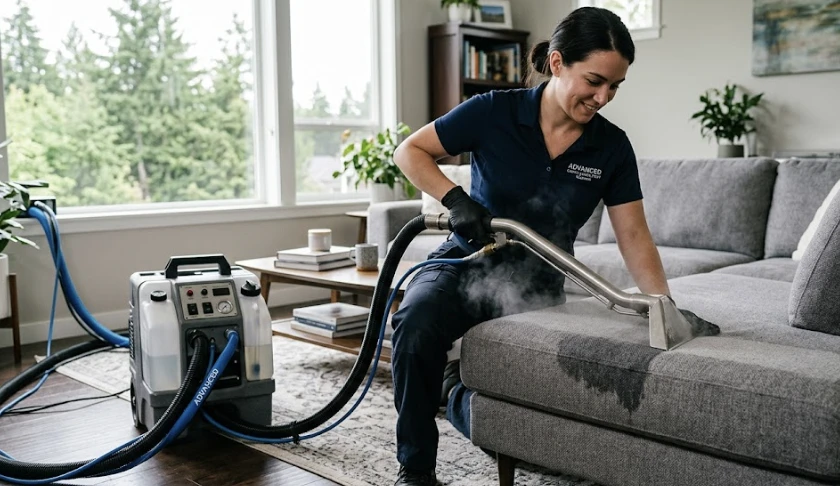
Hot water extraction is the most widely used professional upholstery cleaning method in the United States, and it's what most providers mean when they advertise "steam cleaning" — even though true steam isn't always involved. The process works by injecting a heated mixture of water and cleaning solution deep into fabric fibers under pressure, then immediately extracting it along with the suspended dirt, allergens, bacteria, and biological material it has loosened.
The heat serves two purposes. First, it activates the cleaning chemistry more effectively than cold water, breaking down grease, skin oils, and organic compounds that have bonded to fiber surfaces. Second, temperatures above 60°C kill the vast majority of dust mites, bacteria, and mold spores on contact — a meaningful benefit in a climate like Bothell's where biological load in soft furnishings tends to be higher than in drier regions.
Truck-mounted hot water extraction systems — the equipment used by professional services who bring a large unit in their van — operate at higher water temperatures and extraction pressures than portable machines. This translates to deeper cleaning and faster drying times, typically 2–4 hours for professional truck-mounted equipment versus 6–12 hours for portable units. In Bothell's humid environment, faster drying is not a minor convenience; it's a mold-risk management factor that makes truck-mounted equipment meaningfully better for fabric upholstery.
Hot water extraction works best on: synthetic fabric blends (polyester, nylon, polypropylene), cotton-polyester blends, most microfiber, and acrylic upholstery. It is the default recommendation for sofas, sectionals, and fabric armchairs that see regular daily use in Pacific Northwest homes.
Dry Cleaning Methods: When Moisture Is the Enemy
Some upholstery fabrics cannot tolerate water without shrinking, distorting, or developing water marks — velvet, silk, rayon, some wools, and certain vintage or antique upholstery fabrics fall into this category. For these materials, low-moisture or dry cleaning methods are the appropriate approach.
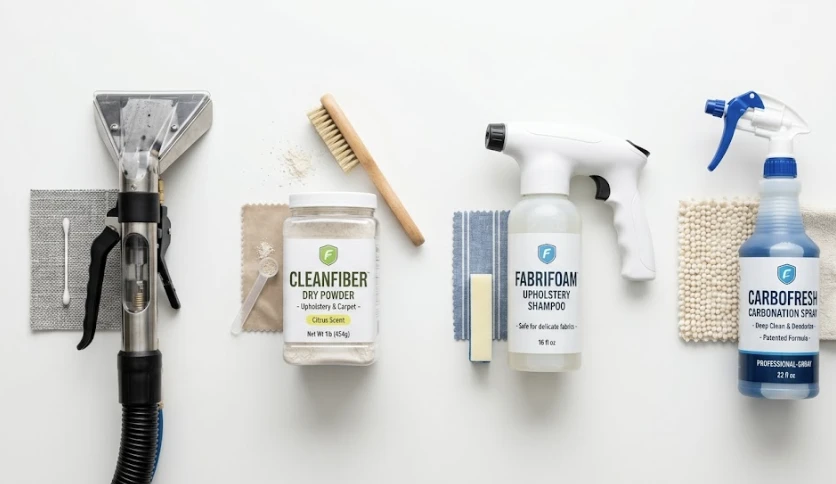
The most common dry method uses a cleaning compound — a powder or granular material impregnated with solvents — that is worked into the fabric with a brush or machine, allowed to dwell while it absorbs soil and breaks down contaminants, and then thoroughly vacuumed out. The fabric remains nearly dry throughout the process, with no risk of shrinkage or water damage.
Solvent-based dry cleaning, more common in commercial settings, uses chemical solvents rather than water-based compounds. It's effective on specific types of staining — grease-based soils, certain adhesives, some paint — that water-based methods handle poorly. For residential upholstery, solvent methods are used selectively by professional services for spot treatment rather than as a whole-piece cleaning approach.
The limitation of dry methods is depth. Without water as a carrier, cleaning compounds don't penetrate as deeply into fabric fiber structures as hot water extraction does. For heavily soiled furniture, or upholstery carrying significant allergen or biological load, dry cleaning addresses the surface layer more effectively than the embedded accumulation. This is why, for most Bothell households, dry cleaning methods are reserved for delicate fabrics or as a between-visit maintenance approach rather than a substitute for periodic hot water extraction.
Foam Shampoo Cleaning: A Middle Ground That Works in Specific Situations
Foam shampoo cleaning applies a whipped detergent foam to upholstery surfaces, works it into the fabric with brushes or a rotating machine, allows it to dry, and then vacuums out the residue along with the suspended soil it captured. It's a lower-moisture approach than hot water extraction, which makes it a reasonable option for fabrics that need more than dry cleaning but can't tolerate full wet extraction.
Foam cleaning works reasonably well for moderately soiled furniture — the kind that has accumulated dust, light food residue, and surface skin oils but hasn't been allowed to build up severe biological load or staining. It's particularly practical for large sectionals or built-in upholstered pieces that are difficult to move and for which the airflow needed to dry a wet-extracted piece isn't easy to arrange.
The limitation is residue. Foam methods leave a small amount of detergent residue in fabric fibers that, over time, attracts resoiling. Furniture cleaned by foam shampoo tends to get dirty again faster than furniture cleaned by hot water extraction, which extracts both the soil and the cleaning chemistry from the fiber structure. For homeowners on a tight maintenance budget, this matters: foam cleaning may be cheaper per visit but often requires more frequent service to maintain equivalent results.
Carbonation Cleaning: A Low-Moisture Option With Genuine Advantages
Carbonation cleaning — offered by some specialty providers under brand names like Chem-Dry — uses carbonated water and a proprietary cleaning solution rather than hot water and standard detergent. The millions of tiny bubbles produced by the carbonation lift soil particles to the surface, where they can be extracted. The process uses significantly less water than hot water extraction, resulting in drying times of 1–2 hours in most conditions.
For Bothell homeowners specifically concerned about drying time — households with pets or young children who need furniture back in service quickly, or homes with limited ventilation — carbonation cleaning offers a practical advantage. The trade-off is cleaning depth: carbonation is highly effective on surface and near-surface soil but less thorough than hot water extraction for deeply embedded allergens or severe biological contamination.
Carbonation cleaning also tends to be gentler on fabric structure than hot water extraction, making it a reasonable option for fabrics that are in good condition and maintained on a regular schedule. For furniture that hasn't been professionally cleaned in several years and has accumulated significant embedded soil, hot water extraction is generally the more appropriate first treatment, with carbonation as a viable follow-up method once the baseline is established.
Encapsulation Cleaning: A Maintenance Method, Not a Deep-Clean Solution
Encapsulation is a cleaning approach more commonly used for commercial carpets than residential upholstery, but some providers offer it for fabric furniture as well. The method applies a polymer solution to the fabric; as it dries, the polymer crystals encapsulate soil particles, which are then removed by vacuuming. It's fast, low-moisture, and leaves no sticky residue — but it's designed as a maintenance method rather than a restorative cleaning approach.
For Bothell homeowners, encapsulation makes most sense as an interim between more thorough professional cleanings on high-traffic commercial-style furniture, or as a follow-up method to extend the time before the next hot water extraction is needed. As a standalone primary cleaning method for residential upholstery that hasn't been recently deep-cleaned, it's not the right tool.
DIY Methods: Rental Machines and Consumer Products
Consumer-grade upholstery cleaning machines — both purchased units like Bissell models and rental equipment available at hardware stores — use a simplified version of hot water extraction: they spray water and cleaning solution onto fabric surfaces and vacuum it back. They're more effective than manual spot-cleaning and can handle moderately soiled furniture reasonably well.
Their limitations are extracting power and heat. Consumer machines operate at lower water temperatures and lower vacuum suction than professional truck-mounted equipment. This means shallower penetration, higher residual moisture in the fabric after cleaning, and longer drying times — sometimes 12–24 hours in Bothell's humid conditions. Extended drying time in a Pacific Northwest home is a real mold risk if the room isn't well-ventilated, which limits when and how DIY machine cleaning is appropriate.
Consumer cleaning products — sprays, foams, and enzyme cleaners — are genuinely effective for immediate spill treatment and light surface refreshing between professional visits. Used correctly on fresh spills, enzyme cleaners break down organic compounds (pet accidents, food, beverages) before they set. Used as a substitute for professional cleaning on heavily soiled furniture, they address surface appearance without reaching the embedded material that causes hygiene and durability problems over time.
Which Method Is Right for Which Fabric?
Matching the cleaning method to the fabric type is the most important factor in getting good results without damaging upholstery. Here's a practical guide to the most common residential upholstery fabrics:
Polyester and nylon blends are the most forgiving fabric category — they tolerate hot water extraction well, dry relatively quickly, and respond to most cleaning methods without damage. These are the fabrics in the majority of mass-market sofas and sectionals.
Microfiber varies by construction. W-coded microfiber (water-safe) responds well to hot water extraction and carbonation. S-coded microfiber (solvent-only) requires dry methods; water-based cleaning causes water marking and fabric distortion. Professional services check the cleaning code before proceeding — homeowners should do the same before attempting DIY cleaning.
Cotton and linen can be water-cleaned but are prone to shrinkage and wrinkling if overwetted. Low-moisture extraction by an experienced technician works well; high-volume DIY machine cleaning on cotton can cause problems. Pre-testing in an inconspicuous area is always advisable.
Velvet — whether synthetic or natural — requires dry methods or very low-moisture cleaning by a specialist. Water-based cleaning crushes the pile and often leaves permanent marking. This is a fabric where professional assessment before any cleaning attempt is not optional.
Wool and wool blends are sensitive to both heat and excessive moisture. Low-temperature extraction or dry compound cleaning is appropriate; high-heat steam can cause felting and shrinkage. Professional handling is strongly recommended.

How to Choose the Right Service for Your Home in Bothell
Understanding the methods is useful, but the practical decision for most Bothell homeowners comes down to selecting a provider who matches the method to the fabric rather than applying one approach to everything. Before booking a service, a few questions clarify whether a provider is worth trusting with your furniture.
Ask whether they pre-inspect fabric type and check cleaning codes before selecting a method. Any professional service will do this without hesitation; a provider that doesn't ask about fabric or check codes is applying a one-size-fits-all approach regardless of what they tell you otherwise.
Ask what equipment they use and whether it's truck-mounted or portable. In Bothell's climate, this question matters specifically for drying time. A truck-mounted system's higher extraction power means significantly lower residual moisture in the fabric and a drying window of 2–4 hours rather than 6–12. For households with pets, children, or limited ventilation, that difference is worth paying for.
Ask about pre-treatment. High-quality upholstery steam cleaning Bothell providers will pre-treat stained or heavily soiled areas with appropriate chemistry — enzyme solutions for organic stains, solvent pre-sprays for grease — before the primary cleaning pass. This step significantly improves results on anything beyond lightly soiled furniture and is standard practice among thorough providers.
Those who take the time to ask these questions consistently find that providers willing to answer them in specific, practical terms — rather than in vague marketing language — deliver results that justify the service. A technician who can explain why they're choosing hot water extraction over foam cleaning for your specific fabric, or why they're pre-treating one cushion differently from another, is a technician who knows what they're doing.
Final Thoughts: Method Matters, but So Does Timing
The debate between steam cleaning, dry cleaning, and alternative methods matters most at the selection stage — once a professional is in your home with the right equipment and the right chemistry for your fabric, the outcome is largely determined by their skill and the quality of their equipment. For most upholstered furniture in Bothell homes, hot water extraction remains the most thorough and cost-effective primary cleaning method, with dry and low-moisture alternatives playing an important supporting role for specific fabrics and situations.
What matters as much as the method is consistency. The Pacific Northwest climate doesn't pause while furniture accumulates biological load — getting the right cleaning approach applied on a regular schedule is how Bothell homeowners protect furniture investments that represent real money and daily quality of life. Once a year for primary living room pieces, every two years for lower-traffic furniture, and as-needed for immediate spill and stain events is the framework that most local households find balances quality maintenance with a manageable cost over time.
0
185