
Part A:
Critically evaluate the current and future trade relationship between China and the USA
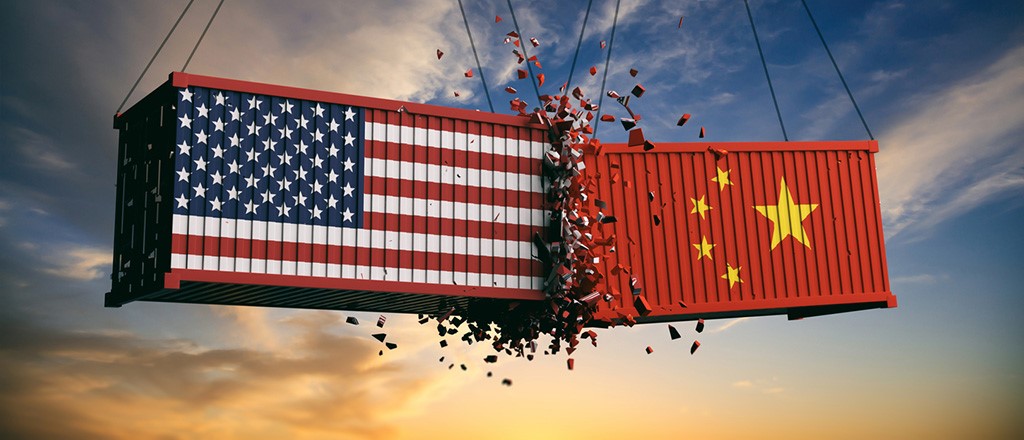
China is currently one of the rapidly growing economies in the world. However, due to their economic growth, they have often faced opposition from the united states due to several issues. The rivalry between the United States and China has been in existence for decades (Liu & Woo 2018). Attempts to resolve the disputes between the two countries can be dated to the time when U.S president Richard Nixon went to Beijing for a meeting with China’s chairman Mao Zedong and Premier Zhou Enlai. This particular meeting took place in the year 1972 and the trip is commonly known as “a journey of peace.” After the meeting, there was improvement in how trade was being conducted between the two nations. However, trade continued to be limited and things have not changed since then (Evans, 2019). Recently, on December, 2018, U.S president Donald Trump engaged in a negotiation with China’s ruler Xi Jinping after which trump noted that the meeting was very good and productive. However, after the meeting, not much positive change has been exhibited, an indication that the meeting was not very productive.
China saw a hasty economic growth especially in 2001 when the country managed to join World Trade Organization (WTO). This membership was evidenced after it signed an agreement with the United States that reduced Chinese tariffs on several commodities (Cavallo, Cal & Laski 2019). Tariffs on farming commodities were reduced while tariffs on information technology products were eliminated. The U.S also made a promise to china that it will remove all the foreign equity limitations on banking, telecom, securities, insurance, professional and travel services. China’s membership in WTO dramatically increased the country’s exports to other parts of the world inclusive of the United States. Bown (2019) notes that following Chinese membership in the WTO saw a 92% increase in Chinese exports to America.
In the year 2008 when President Barack Obama was elected, US’s deficit with china had amounted to $296 which was nearly half of the account deficit that the United States had with all other countries. Even though the 2008-2009 Global Financial Crisis saw a decrease in the deficit, china managed to recover quickly and its exports to the United States continued to grow rapidly. Even though the Obama government tried frequently to pursue the trade cases that the country had against china at the world trade organization, there is little success that was garnered. In the year 2016, china had the highest global export summing up to 13.8% (Lukin, 2019).
In the year 2011, the rivalry between china and US became apparent with Donald Trump openly sharing his disregard for china. In one of trump’s tweets in 2012, he wrote, “China is robbing us blind in trade deficits and stealing our jobs, yet our leaders are claiming ‘progress’ SAD!” In his campaign, Trump continued to utter words that shows his negative perception of china (Cavallo, Cal & Laski 2019). He even once stated that he will label china as a currency manipulator if elected the president of US. When Trump was elected, he did not stand by his words since he highly considered China’s support in conveying a deal with Korea on US nuclear weapon development program. Here, the US was working with china which was an indication that US could have a better trade relationship with china (Bolt, Mavromatis & van Wijnbergen 2019).
One of the things that has affected the trade relationship between US and china is the issue of IP theft and enforced technology transfers. In his reign, trump severally accused china of copyright infringements, forced technology transfers and cyberespionage. These accusations have been levelled against china by previous US administrations. Estimate shows that these complaints costed the U.S $255 billion every year. Chinese did not turn down these allegations and promised that they will look into it. There have also been accusations that china was stealing jobs from Americans and transferring wealth (Cavallo, Cal & Laski 2019).
In 2018, china announced that their economy is growing much slower that expected due to the trade war that it has with the US. China’s economy in 2018 grew at 6.6% per year which was a very slow growth compared to previous years since the year 1990. Apart from the trade war with the US, Chinese slow growth was propagated by their declining global demand (Cavallo, Cal & Laski 2019). The decline in economic growth forced some Chinese exporters to postpone their investment and even laid off a portion of their workforce. At the time, china’s unemployment rate rose by 0.1%. The bad relationship between china and the U.S also affected china’s relationship with other countries (Cavallo, Cal & Laski 2019).
Regarding future trade relationships, China’s entry into the WTO relies on the successful execution of their trade transactions. Also, their entrance will serve as a template for other countries that would like to join WTO. With the continued relationship between US and China, it would be challenging for US officials to state positive progress on the deals that the country is making with china. However, analysts suggest that there can be improve in trade relationship between the two countries following the recent elections. Currently, there are reports indicating that china has purchased US agricultural products. However, completing the stage one of the purchases still experiences challenges due to practical difficulties (Cavallo, Cal & Laski 2019). The outbreak and spread of coronavirus is one of the major things that has hindered china’s completion of the first phase of its commitment and continued deterioration of the relationship. If the solution to COVID-19 will not be attained in the recent future, then there is a possibility that the bad relationship between china and the US will also continue to prevail.
The year 2020 is a clear indication that the fall in trade relationships between the US and China will continue. The total value of the trade between the US and china increased by two percent reaching 2.82 trillion BMB from January to September 2020. This figure amounted to 12.2% of the entire foreign trade value (Itakura, 2020). The trade relationship between the two countries is largely affected partly because they have a complex systemic relationship that encompasses other sectors such as education, politics, science and technology and security and military affairs among other things.
Recently, the US introduced several extreme sanctions aimed towards china. Critics assert that hitting Chinese companies with this sanction does not only affect china but US businesses are affected. The extreme pressure that the U.S is putting on china will cost the two countries billions of dollars in the near future (Cavallo, Cal & Laski 2019). Therefore, it is important that the two countries should re-examine the charges of their mutual competition. Regardless of the fact that china is currently being suppressed by the US, it is important that it makes effort to protect the US China trade. From a long-term view, it is important that the US and China consider a bilateral trade even though there is an ongoing geopolitical turmoil to ensure there is continued economic and trade activities (Cavallo, Cal & Laski 2019).
Part B:
Based on political, economic, social and technological (PEST) factors, discuss the potential impact of this trade war on the functioning and development of the global economy.
The recent past has seen china turn out to be one of the most attractive locations around the world particularly when it comes to trade activities. The rise in trade activities in the countries has made it into one of the strongest world powers which in turn has had a positive impact on Chinese international business. China is one of the most sorted business locations due to several factors; the size of the market, its growth potential and cheap labor (Li, Balistreri & Zhang 2020
The US-China trade war has an adverse impact on the global economy. In the case whereby the U.S and china tariffs remain in one place; the direct and short-term macroeconomic consequences are going to be minimal. However, the indirect impact on these tariffs will be more even affecting other countries that are in their nest such as countries such as Canada and others in Europe. Despite the fact that the trade war between the two countries will have minimal direct economic effects on the countries in the near future, the war between the two countries will have long term consequences for worldwide supply chains, consumers purchasing power and US business sentiment. The increase that was imposed by President Trump will heighten the general U.S. consumer price inflation diffidently (Bolt, Mavromatis & van Wijnbergen 2019).
The political war between the two countries will generally affect the functioning and development of the global economy. The current COVID-19 pandemic has affected every country in the world. Due to the limited movement of people and goods, e-commerce has proved to be the best mode of business. Chinese government’s effort on e-commerce will highly boost its relationship with other countries. As a result of their improved ecommerce, there is a possibility that the war between the two countries will not affect global economic development especially the one driven from e-commerce amidst the COVID-19 pandemic. However, since china is ruled by only one party; the communist party of china, there is lack of political freedom. Critics also assert that there is lack of transparency in China’s political system. This is an aspect that it totally different considering the case of the United States. The difference in political systems between the two countries makes it very challenging for policies to be passed between the two countries (Li, Balistreri & Zhang 2020).
At the root of the dispute between the US and China, there is an entrenched disagreement over technology. The US government believes that the Chinese subsidies on its tech sectors offers Chinese companies an advantage compared to the tech companies in US which is unfair. Considering the lack of fairness on the technological deals between the two countries, majority of the US officials are concerned that china’s technology could be a threat to the national security of the United States (Bolt, Mavromatis & van Wijnbergen 2019).
Li, Balistreri & Zhang (2020) note that the imposed tariffs between the US and China are not likely to have adverse impact on the functioning and development of the global economy. Currently, the United States exports 0.6% of its gross domestic product (GDP) to china while china exports 3.6% of its GDP to the United States. Even though there is minimal impact regardless of the difference, it is expected that the difference in the exportation will raise inflation in the two countries and other countries that do business with US and China (Bolt, Mavromatis & van Wijnbergen 2019). The indirect effects of the rivalry between the two countries will affect the functioning and development of the global economy by disrupting the supply chains especially considering the fact that many countries have regulated movement of goods and people due to the spread of coronavirus.
A report by Vlados (2020) shows that the trade war is most likely to affect Europe countries. Currently, the European Union charges a 10% tariff on cars that are imported from the United States unlike the 2.5 tariff charge on cars entering the United States. In a country such as Germany, auto production sums up to 5% of their total GDP and thus the trade war has a significant negative impact on them. The only nations that are willing to employ fiscal stimulus are the ones which have a high debt as in the case of Italy.
The trade rivalry between the two countries has had a severe impact on both countries. Moreover, it has brought about a diversion of trade flows away from the two countries. Huang et al (2018) assert that the war between the two nations has led to slow economic growth, slowed business investment and unemployment which has in turn affected the rate of production and exportation to other nations. Subsequently, this rivalry has affected the global economy which means that there is slowed development in other nations (Bolt, Mavromatis & van Wijnbergen 2019). Therefore, it is important that other nations intervene and come up with effective interventions that will see an end to the rivalry especially during this ongoing COVID-19 pandemic.
Reference
Bolt, W., Mavromatis, K., & van Wijnbergen, S. (2019). The Global Macroeconomics of a Trade War: The EAGLE model on the US-China trade conflict.
Bown, C. P. (2019). US-China Trade War: The Guns of August. Trade and investment policy watch.
Cavallo, A., Cal, M., & Laski, A. (2019). The US–China Trade War. Havard Business School.
Evans, O. (2019). The effects of US-China trade war and Trumponomics. In Forum Scientiae Oeconomia (Vol. 7, No. 1, pp. 47-55). Wydawnictwo Naukowe Akademii WSB.
Itakura, K. (2020). Evaluating the impact of the US–China trade war. Asian Economic Policy Review, 15(1), 77-93.
Huang, Y., Lin, C., Liu, S., & Tang, H. (2018). Trade linkages and firm value: Evidence from the 2018 US-China trade war (No. 11-2018). Graduate Institute of International and Development Studies Working Paper.
Liu, T., & Woo, W. T. (2018). Understanding the US-China trade war. China Economic Journal, 11(3), 319-340.
Li, M., Balistreri, E. J., & Zhang, W. (2020). The US–China trade war: Tariff data and general equilibrium analysis. Journal of Asian Economics, 69, 101216.
Lukin, A. (2019). The US–China Trade War and China's Strategic Future. Survival, 61(1), 23-50.
Vlados, C. (2020). The dynamics of the current global restructuring and contemporary framework of the US–China trade war. Global Journal of Emerging Market Economies, 12(1), 4-23.
0
1788