

Best Study Materials For College Students
Empowering Students with Quality Exam Resources for Academic Success


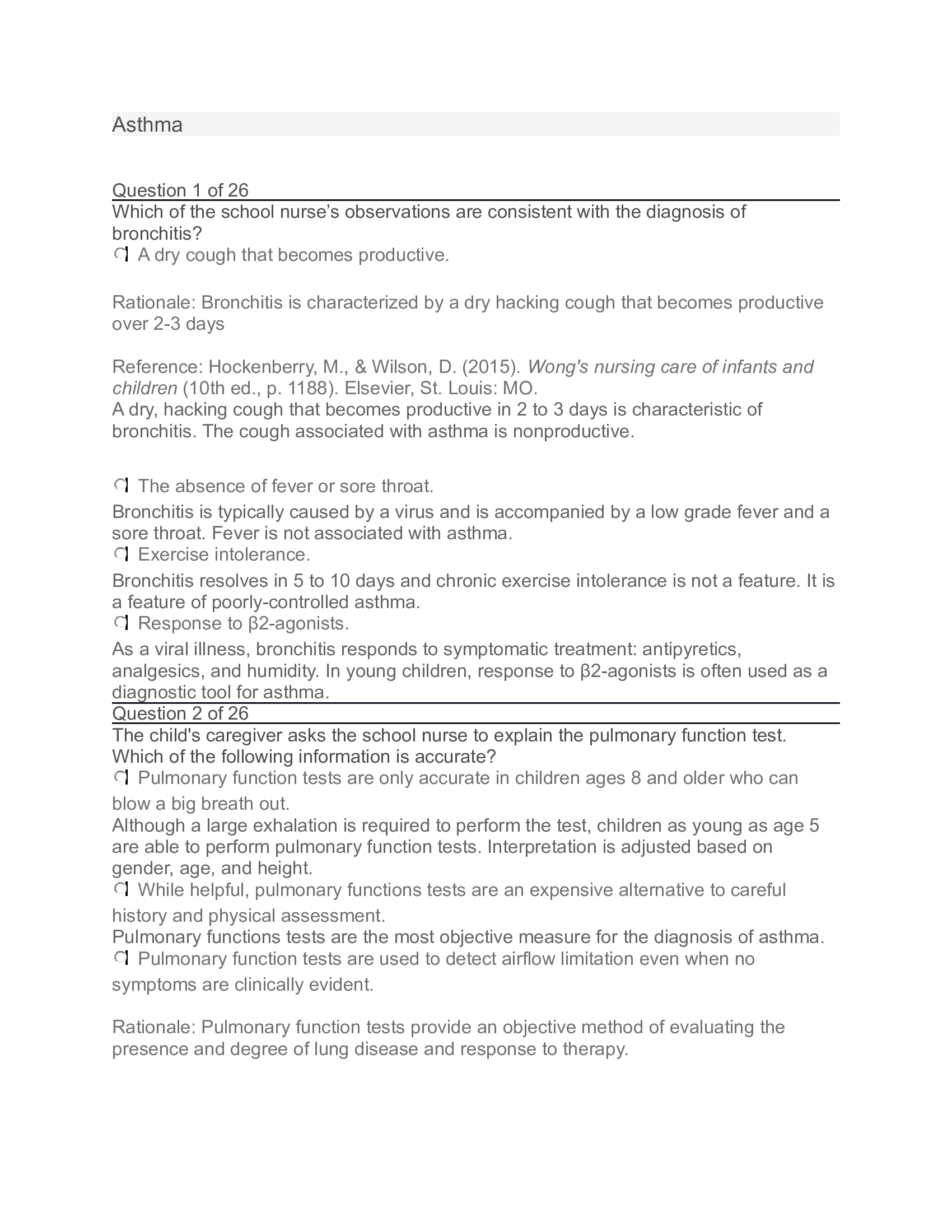
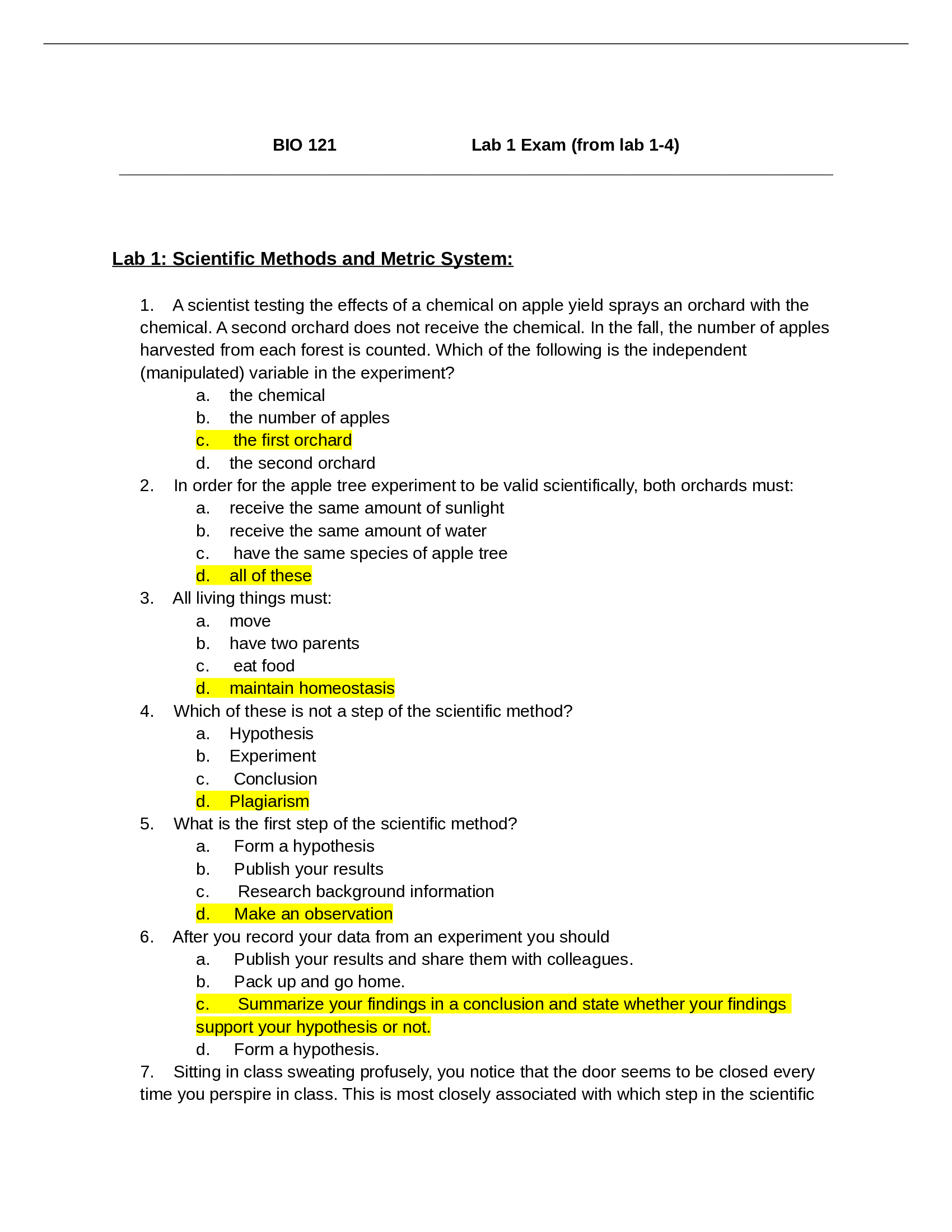
Biology 121 Lab 1-4 (Final Exam)
Lab 1: Scientific Methods and Metric System: 1. A scientist testing the effects of a chemical on apple yield sprays an orchard with the chemical. A second orchard does not receive the chemical. In the fall, the number of apples harvested from each forest is counted. Which of the following is the independent (manipulated) variable in the experiment? a. the chemical b. the number of apples c. the first orchard d. the second orchard 2. In order for the apple tree experiment to be valid scientifically, both orchards must: a. receive the same amount of sunlight b. receive the same amount of water c. have the same species of apple tree d. all of these 3. All living things must: a. move b. have two parents c. eat food d. maintain homeostasis 4. Which of these is not a step of the scientific method? a. Hypothesis b. Experiment c. Conclusion d. Plagiarism 5. What is the first step of the scientific method? a. Form a hypothesis b. Publish your results c. Research background information d. Make an observation 6. After you record your data from an experiment you should a. Publish your results and share them with colleagues. b. Pack up and go home. c. Summarize your findings in a conclusion and state whether your findings support your hypothesis or not. d. Form a hypothesis. 7. Sitting in class sweating profusely, you notice that the door seems to be closed every time you perspire in class. This is most closely associated with which step in the scientific
10 USD
case study
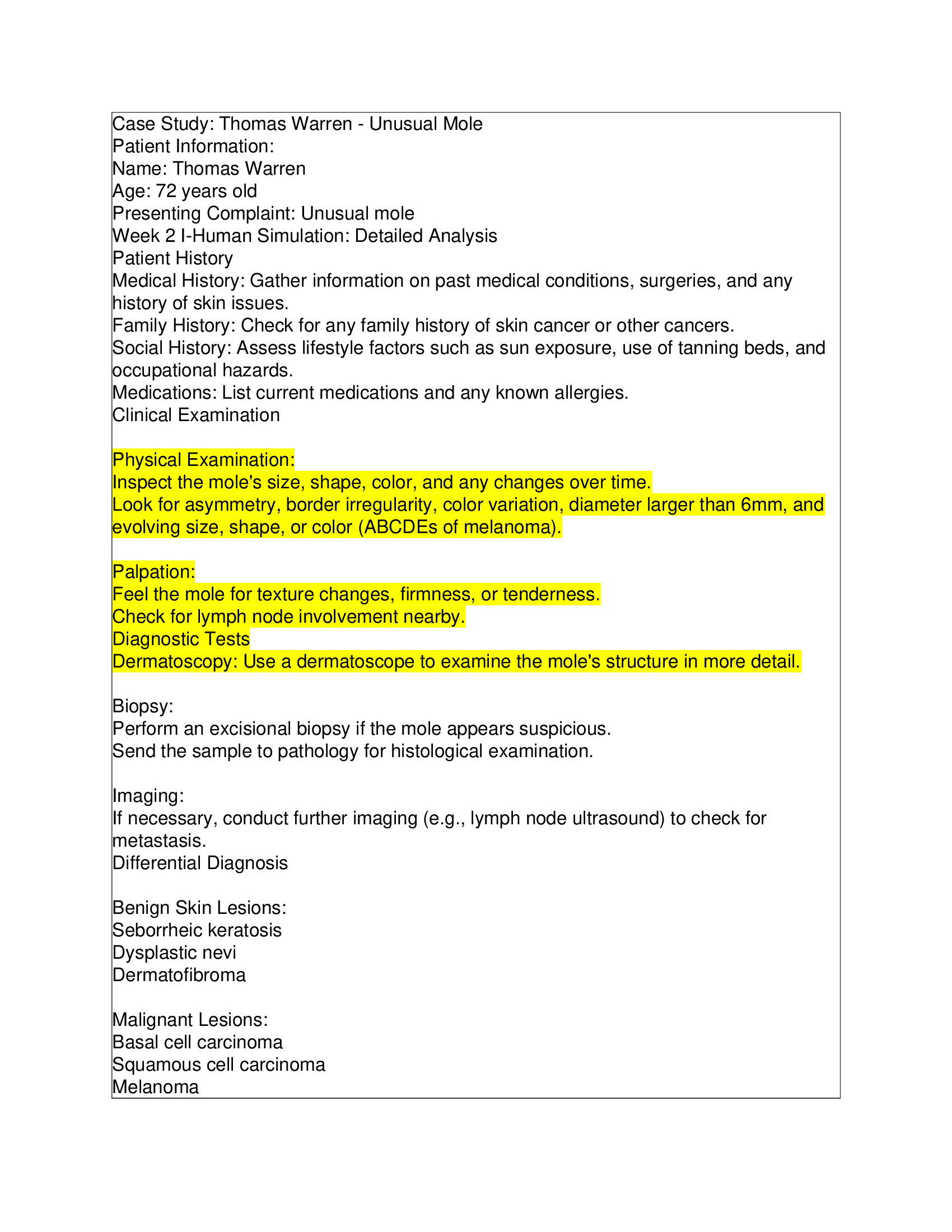
I-Human Case Study: Thomas Warren, a 72- year-old male, presents with a complaint of an unusual mole.
I-Human Case Study: Mr. Thomas Warren is a 72 year old Caucasian male farmer with a history of smoking 80 PPY for 40 years. Patient presents with presents a mole on his shoulder. He first noticed the asymmetric mole 4 months ago.
7 USD
case study
Case Study Annelise Arger Vanmeter-Gould’s Pathophysiology for the Health Professions 5th Edition
Case Study Annelise Arger Vanmeter-Gould’s Pathophysiology for the Health Professions 5th Edition
-

-
0
13 USD
case study
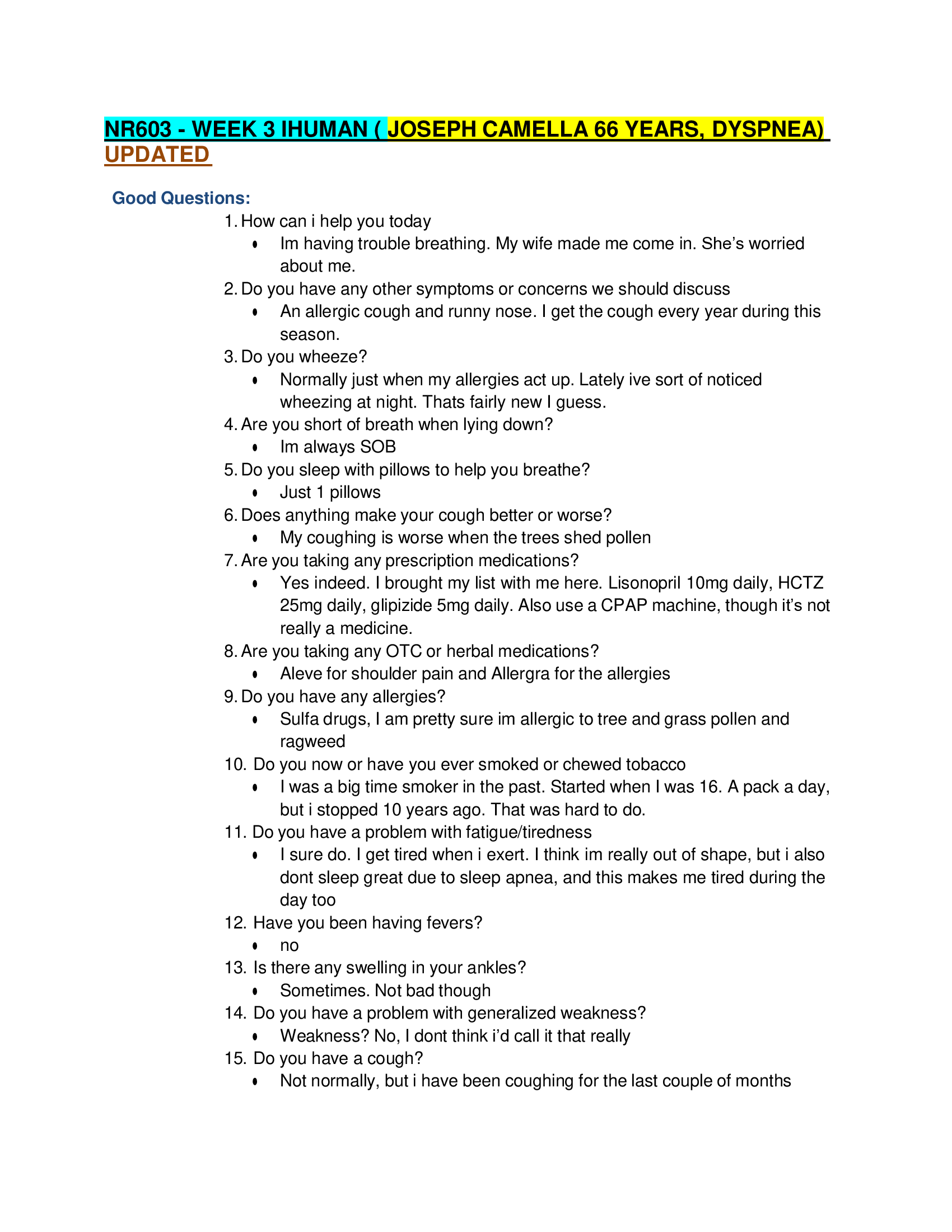
NR603: Week 3 iHuman (Joseph Camella 66 Years, Dyspnea)
Get PDF of NR603: Week 3 iHuman (Joseph Camella 66 Years, Dyspnea) on pasinggrades.com
8 USD
case study

