PasingGrades
  • Start Selling
  • Blog
  • Contact
  • 0

    Your cart is empty!

English

  • English
  • Spanish
  • Arabic
Create Account Sign In
  • Library
    • New Prep Guides
    • Featured Prep Guides
    • Free Exam Prep Guides
    • Best sellers
  • General
  • Nursing
    • Research Paper
    • Case Study
    • Discussion Post
    • Assignment
    • Exam
    • Practice Questions and Answers
    • Test Bank
    • solutions manual
    • study guide
  • Accounting
    • Case Study
    • Thesis
    • Study Guide
    • Summary
    • Research Paper
    • test bank
  • English
    • Creative Writing
    • Research Paper
    • Summary
    • Rhetorics
    • Literature
    • Journal
    • Exam
    • Grammar
    • Discussion Post
    • Essay
  • Psychology
    • Hesi
    • Presentation
    • Essay
    • Summary
    • Study Guide
    • Essay
    • Solution Manual
    • Final Exam Review
    • Class Notes
    • test bank
  • Business
    • Lecture Notes
    • Solution Manual
    • Presentation
    • Business Plan
    • Class Notes
    • Experiment
    • Summary
    • Practice Questions
    • Study Guide
    • Case Study
    • test bank
    • Exam
  • More
    • Computer Science
    • Economics
    • Statistics
    • Engineering
    • Biology
    • Religious Studies
    • Physics
    • Chemistry
    • Mathematics
    • History
    • Sociology
    • Science
    • Philosophy
    • Law
  • Pages
    • About Us
    • Selling Tips
    • Delivery Policy
    • Faq
    • Privacy Policy
  • Flash Sale
  • Home
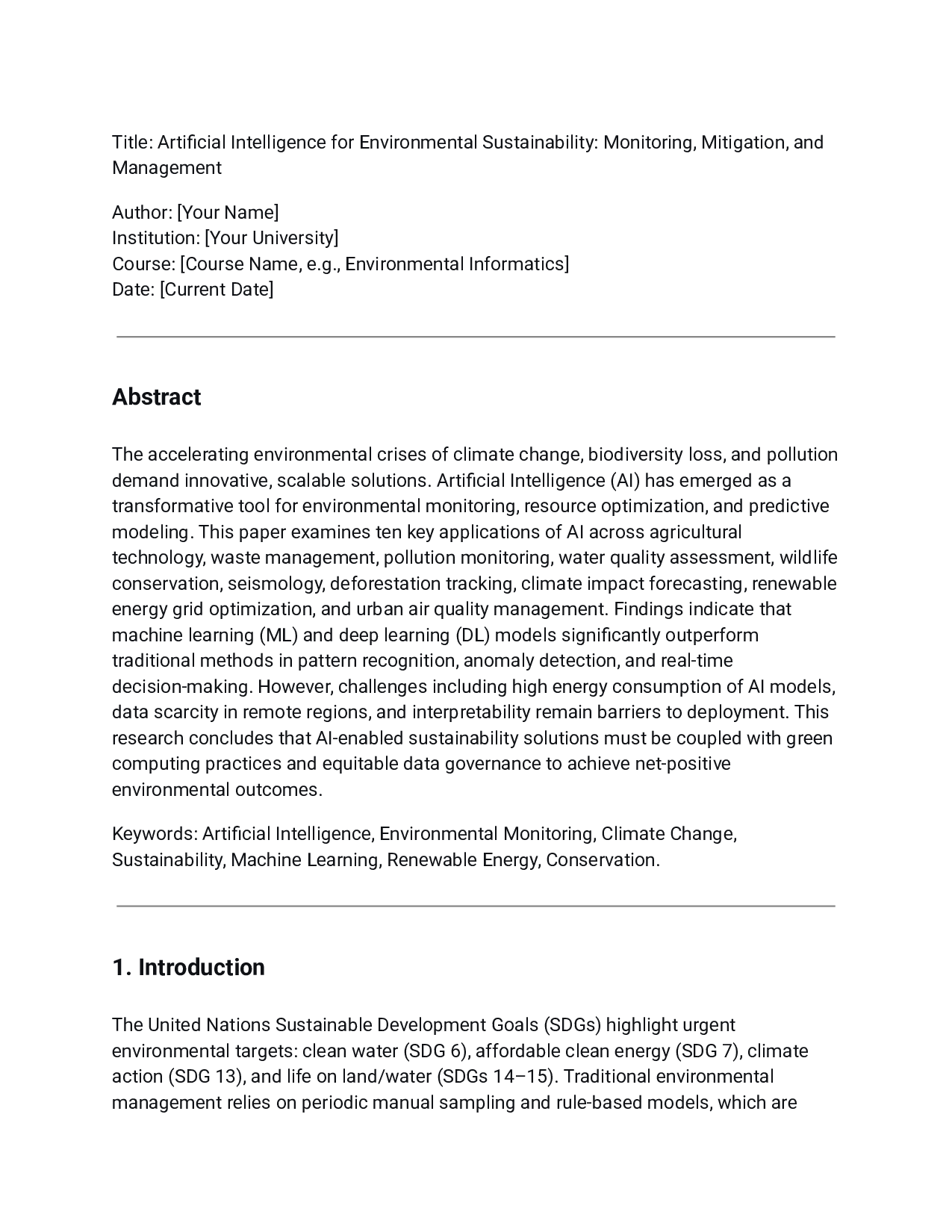
  • Title: Artificial Intelligence for Environmental Sustainability: Monitoring, Mitigation, and Management

Title: Artificial Intelligence for Environmental Sustainability: Monitoring, Mitigation, and Management

Preview page 1 Preview page 2 Preview page 3
Add To Favorites

Share this item Share this item

  • Item Details
  • Comments (0)
  • Reviews (0)
  • Contact Seller
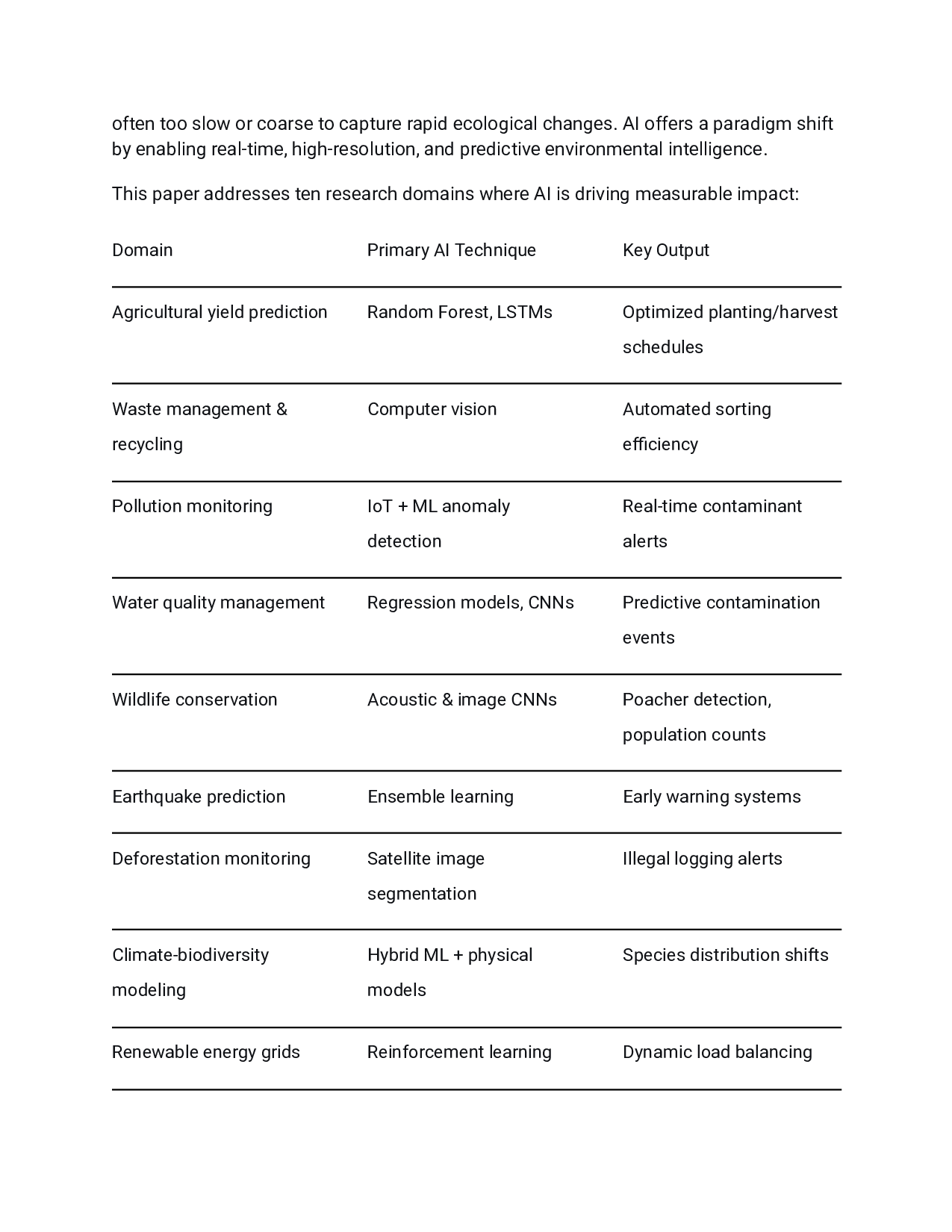
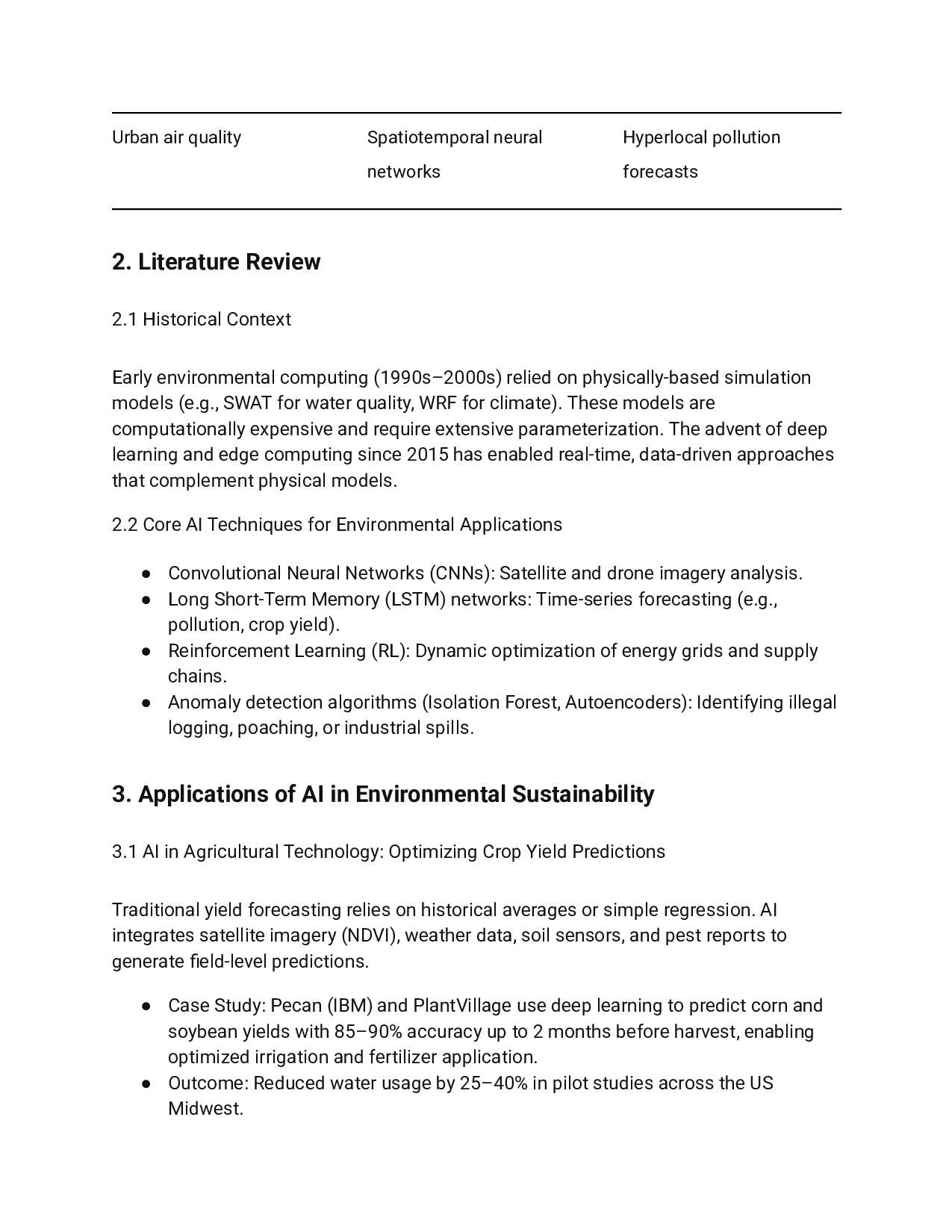
Abstract The accelerating environmental crises of climate change, biodiversity loss, and pollution demand innovative, scalable solutions. Artificial Intelligence (AI) has emerged as a transformative tool for environmental monitoring, resource optimization, and predictive modeling. This paper examines ten key applications of AI across agricultural technology, waste management, pollution monitoring, water quality assessment, wildlife conservation, seismology, deforestation tracking, climate impact forecasting, renewable energy grid optimization, and urban air quality management. Findings indicate that machine learning (ML) and deep learning (DL) models significantly outperform traditional methods in pattern recognition, anomaly detection, and real-time decision-making. However, challenges including high energy consumption of AI models, data scarcity in remote regions, and interpretability remain barriers to deployment. This research concludes that AI-enabled sustainability solutions must be coupled with green computing practices and equitable data governance to achieve net-positive environmental outcomes. Keywords: Artificial Intelligence, Environmental Monitoring, Climate Change, Sustainability, Machine Learning, Renewable Energy, Conservation. 1. Introduction The United Nations Sustainable Development Goals (SDGs) highlight urgent environmental targets: clean water (SDG 6), affordable clean energy (SDG 7), climate action (SDG 13), and life on land/water (SDGs 14–15). Traditional environmental management relies on periodic manual sampling and rule-based models, which are often too slow or coarse to capture rapid ecological changes. AI offers a paradigm shift by enabling real-time, high-resolution, and predictive environmental intelligence. This paper addresses ten research domains where AI is driving measurable impact: Domain Primary AI Technique Key Output Agricultural yield prediction Random Forest, LSTMs Optimized planting/harvest schedules Waste management & recycling Computer vision Automated sorting efficiency Pollution monitoring IoT + ML anomaly detection Real-time contaminant alerts Water quality management Regression models, CNNs Predictive contamination events Wildlife conservation Acoustic & image CNNs Poacher detection, population counts Earthquake prediction Ensemble learning Early warning systems Deforestation monitoring Satellite image segmentation Illegal logging alerts Climate-biodiversity modeling Hybrid ML + physical models Species distribution shifts Renewable energy grids Reinforcement learning Dynamic load balancing Urban air quality Spatiotemporal neural networks Hyperlocal pollution forecasts 2. Literature Review 2.1 Historical Context Early environmental computing (1990s–2000s) relied on physically-based simulation models (e.g., SWAT for water quality, WRF for climate). These models are computationally expensive and require extensive parameterization. The advent of deep learning and edge computing since 2015 has enabled real-time, data-driven approaches that complement physical models. 2.2 Core AI Techniques for Environmental Applications Convolutional Neural Networks (CNNs): Satellite and drone imagery analysis. Long Short-Term Memory (LSTM) networks: Time-series forecasting (e.g., pollution, crop yield). Reinforcement Learning (RL): Dynamic optimization of energy grids and supply chains. Anomaly detection algorithms (Isolation Forest, Autoencoders): Identifying illegal logging, poaching, or industrial spills. 3. Applications of AI in Environmental Sustainability 3.1 AI in Agricultural Technology: Optimizing Crop Yield Predictions Traditional yield forecasting relies on historical averages or simple regression. AI integrates satellite imagery (NDVI), weather data, soil sensors, and pest reports to generate field-level predictions. Case Study: Pecan (IBM) and PlantVillage use deep learning to predict corn and soybean yields with 85–90% accuracy up to 2 months before harvest, enabling optimized irrigation and fertilizer application. Outcome: Reduced water usage by 25–40% in pilot studies across the US Midwest. 3.2 AI for Effective Waste Management and Recycling Global municipal solid waste is projected to reach 3.4 billion tons by 2050. Manual recycling sorting is labor-intensive and error-prone. Application: Computer vision systems (e.g., AMP Robotics) deployed on recycling lines identify and sort materials (PET, HDPE, metals, paper) at 80–100 items per minute—double human speed with 95% purity. Innovation: AI waste-level sensors in bins optimize collection routes, reducing truck emissions by 30–50%. 3.3 Real-Time Monitoring of Environmental Pollution Industrial emissions, agricultural runoff, and urban smog require continuous monitoring. Technology: Low-cost IoT sensor networks (PM2.5, NO2, CO2) + edge AI anomaly detection. When a sensor reading deviates from expected baselines, alerts are triggered within seconds. Example: PurpleAir’s crowd-sourced sensor network uses ML to calibrate low-cost sensors against reference-grade monitors, providing hyperlocal air quality data. 3.4 Machine Learning for Water Quality Monitoring Water contaminants (heavy metals, pathogens, algal blooms) pose acute health risks. Traditional laboratory testing takes days; AI enables near-real-time assessment. Method: Remote sensing reflectance data (from Sentinel-2, Landsat) fed into neural networks to predict chlorophyll-a (algal bloom proxy), turbidity, and dissolved oxygen. Impact: Early warning of harmful algal blooms in Lake Erie, reducing drinking water shutdowns. 3.5 AI in Wildlife Conservation and Habitat Monitoring Camera traps, acoustic recorders, and drone surveys generate massive data volumes that overwhelm human analysts. Image classification: The Wildlife Insights platform uses Google’s AutoML to identify over 600 species from camera trap images with >90% accuracy. Acoustic monitoring: CNNs detect gunshot sounds in real-time (e.g., Rainforest Connection), alerting rangers to poaching activity within minutes. Animal tracking: GPS collar data + ML predicts movement corridors, informing protected area design. 3.6 Machine Learning in Seismology for Earthquake Prediction While deterministic earthquake prediction remains elusive, AI improves early warning and aftershock forecasting. Approach: Deep learning models (e.g., DeepShake) analyze continuous seismic waveform data to detect P-waves and estimate magnitude within 1–2 seconds, faster than traditional STA/LTA algorithms. Application: Japan’s earthquake early warning system uses ML to reduce false alarms by 40% while maintaining 90% sensitivity. 3.7 AI for Deforestation and Illegal Logging Monitoring Satellite imagery (Landsat, Sentinel, Planet) updates every 1–5 days, but manual analysis cannot keep pace. System: Global Forest Watch uses CNNs to segment forest cover change at 30m resolution. Anomaly detection algorithms flag small-scale, selective logging operations often missed by traditional change detection. Results: In the Brazilian Amazon, AI-assisted monitoring improved deforestation alert latency from months to 10,000 species will respond to 1.5°C, 2°C, and 3°C warming scenarios. Finding: AI models predict that 35–40% of amphibian species in the Amazon could lose >80% of suitable habitat by 2080 under high-emission scenarios. 3.9 AI-Driven Optimization of Renewable Energy Grid Distribution Variable renewables (solar, wind) create grid instability. AI balances supply, demand, and storage. Technique: Reinforcement learning agents control battery dispatch, solar curtailment, and load shifting. Case: Google’s DeepMind AI reduced energy used for cooling data centers by 40%. Applied to wind farms, 24-hour ahead wind power prediction improved grid integration by 20%. 3.10 Predictive Models for Urban Air Quality Management Air pollution kills an estimated 7 million people annually. Predictive models allow preemptive action (e.g., traffic restrictions, school closures). Model architecture: Spatiotemporal graph neural networks combining traffic flow, meteorological data, and industrial emissions. Performance: AirCloud (Beijing) and BreezoMeter achieve 24-hour PM2.5 predictions at street-level resolution with 600 lbs CO₂ (e.g., BERT) Use TinyML, pre-trained models, renewable-powered compute Data inequality Global South has fewer labeled environmental datasets Citizen science, transfer learning, synthetic data Model generalization Models trained in one region fail elsewhere Domain adaptation, ensemble methods Real-time latency Satellite data delays (hours to days) Edge AI on drones/IoT, geostationary assets Interpretability Environmental managers distrust black-box models Explainable AI (SHAP, attention maps) 6.3 The Paradox of AI for Sustainability AI solutions for environmental problems themselves require significant energy. Training a single deep learning model can emit as much carbon as five cars over their lifetimes. This paradox demands: Green AI research: Benchmarking energy efficiency alongside accuracy. Hardware acceleration: TPUs, neuromorphic computing. Model compression: Pruning, quantization, knowledge distillation. 7. Conclusion and Future Directions Artificial intelligence is not a panacea for environmental crises, but it is an indispensable tool for monitoring, prediction, and optimization across all major sustainability domains. The evidence reviewed demonstrates that AI consistently outperforms traditional methods in speed and often in accuracy, particularly in pattern recognition tasks involving satellite imagery, sensor networks, and acoustic data. However, meaningful impact requires moving beyond proof-of-concept studies to operational deployment. Key priorities for the next five years include: Federated environmental learning: Train models across global data sources without centralizing sensitive ecological data. AI-enabled digital twins of Earth: High-fidelity simulations integrating climate, oceans, land use, and biodiversity. Low-power edge AI for remote sensing: Solar-powered devices running lightweight models for real-time poacher detection and fire monitoring. Equitable AI governance: Ensuring Indigenous and local communities own and benefit from environmental AI data. Ultimately, AI is an amplifier of human intention. Deployed with ecological ethics and green computing principles, it can accelerate the transition to a sustainable and just future. References Rolnick, D., et al. (2022). Tackling Climate Change with Machine Learning. ACM Computing Surveys, 55(2), 1–96. Krupnik, D., et al. (2021). Machine learning for plant stress detection. Nature Plants, 7, 1207–1218. Kulik, L., et al. (2020). Acoustic monitoring of illegal logging. Remote Sensing in Ecology and Conservation, 6(4), 456–469. Ham, Y., et al. (2021). Deep learning for seismic phase picking. Geophysical Research Letters, 48(3), e2020GL090773. Mahajan, S., et al. (2022). AI for urban air quality. Environmental Science & Technology, 56(7), 4120–4132. Strubell, E., et al. (2019). Energy and Policy Considerations for Deep Learning. Proceedings of ACL, 3645–3650. United Nations Environment Programme (2023). AI for Nature: Accelerating the Global Biodiversity Framework.

Contact the Seller

Please Sign In to contact this seller.


  • 👎  Report Copyright Violation

Frequently Asked Questions

What Do I Get When I Buy This Study Material?

+

When you buy a study material on PasingGrades, an instant download link will be sent directly to your email, giving you access to the file anytime after payment is completed.

Is PasingGrades a Trusted Platform?

+

Yes, PasingGrades is a reputable students’ marketplace with a secure payment system and reliable customer support. You can trust us to ensure a safe and seamless transaction experience.

Will I Be Stuck with a Subscription?

+

No, all purchases on PasingGrades are one-time transactions. You only pay for the notes you choose to buy, with no subscriptions or hidden fees attached.

Who Am I Buying These Study Materials From?

+

PasingGrades is a marketplace, which means you are purchasing the document from an individual vendor, not directly from us. We facilitate the payment and delivery process between you and the vendor.

Does PasingGrades Offer Free Study Materials?

+

Yes, sellers on PasingGrades have uploaded numerous free test banks, exams, practice questions, and class notes that can be downloaded at no cost.

Pasinggrades - Quality Study Materials

USD 5

    • Quality checked by PasingGrades
    • 100% satisfaction guarantee
    • Seller: Rawnaf7
Buy PDF $5

Seller Information

Rawnaf7

Member since May 2026

  • icon
View Profile
  • total sales

    0
  • Favourites

    0
  • Comments

    0
    ( 0 Ratings )

Item Information

  • Uploaded

    01 May 2026

  • Updated

    01 May 2026

  • Category

    Science

  • Item Type

    study guide

  • Tags

    research marketing

Similar Study guides

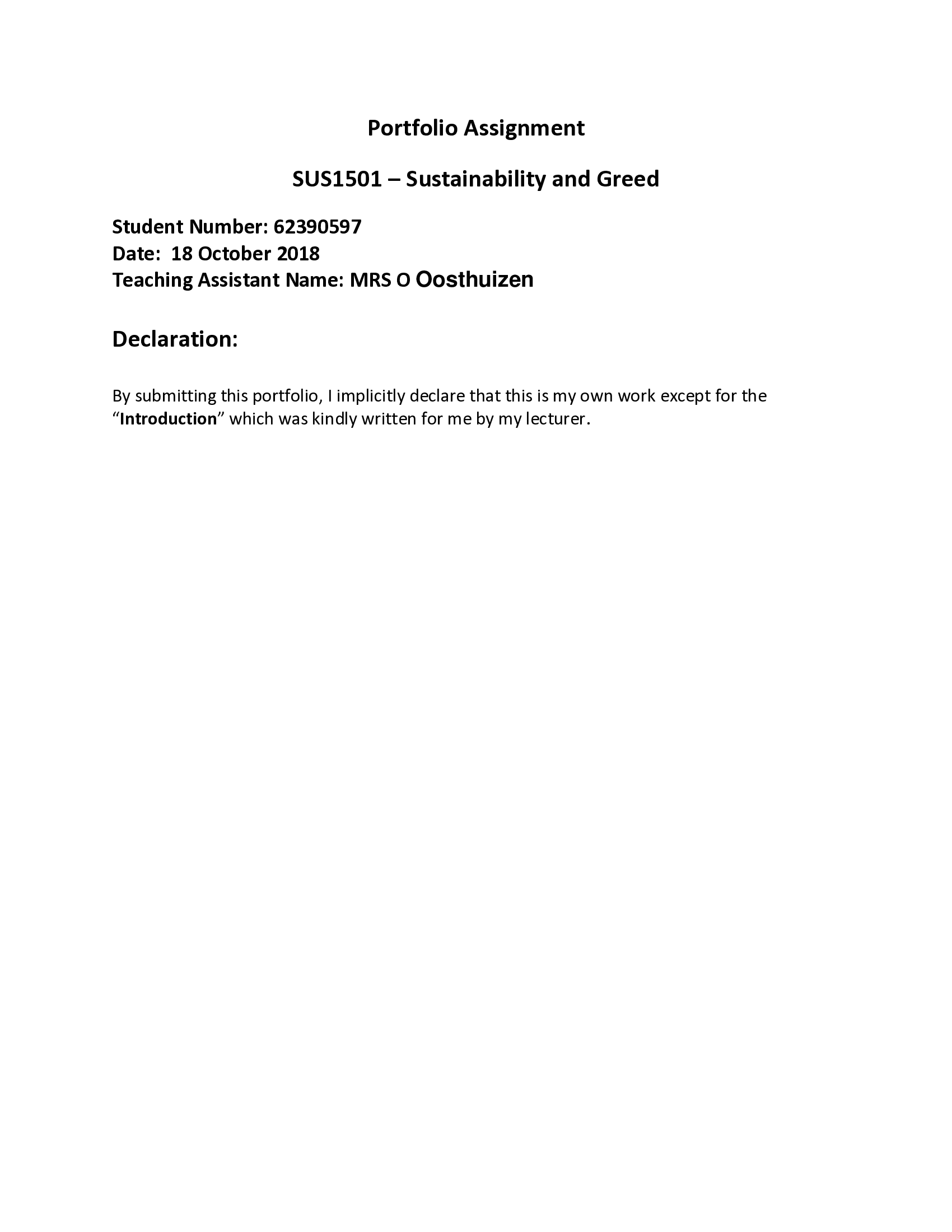
Portfolio Assignment SUS1501 – Sustainability and Greed 2021
View Document

Portfolio Assignment SUS1501 – Sustainability and Greed 2021

Portfolio Assignment SUS1501 – Sustainability and Greed 2021

10 USD
Test Bank for Business & Society Ethics, Sustainability & Stakeholder Management, 10th Edition By Archie B. Carroll, Jill Brown, Ann K. Buchholtz
View Document

Test Bank for Business & Society Ethics, Sustainability & Stakeholder Management, 10th Edition By Ar...

Test Bank for Business & Society Ethics, Sustainability & Stakeholder Management, 10th Edition By Ar...

15 USD
Test Bank for Cost Management Measuring, Monitoring, and Motivating Performance, 3rd Canadian Edition, Leslie G. Eldenburg, Susan K. Wolcott, Liang-Hsuan Chen, Gail Cook
View Document

Test Bank for Cost Management Measuring, Monitoring, and Motivating Performance, 3rd Canadian Editio...

Test Bank for Cost Management Measuring, Monitoring, and Motivating Performance, 3rd Canadian Editio...

15 USD

Related free study materials

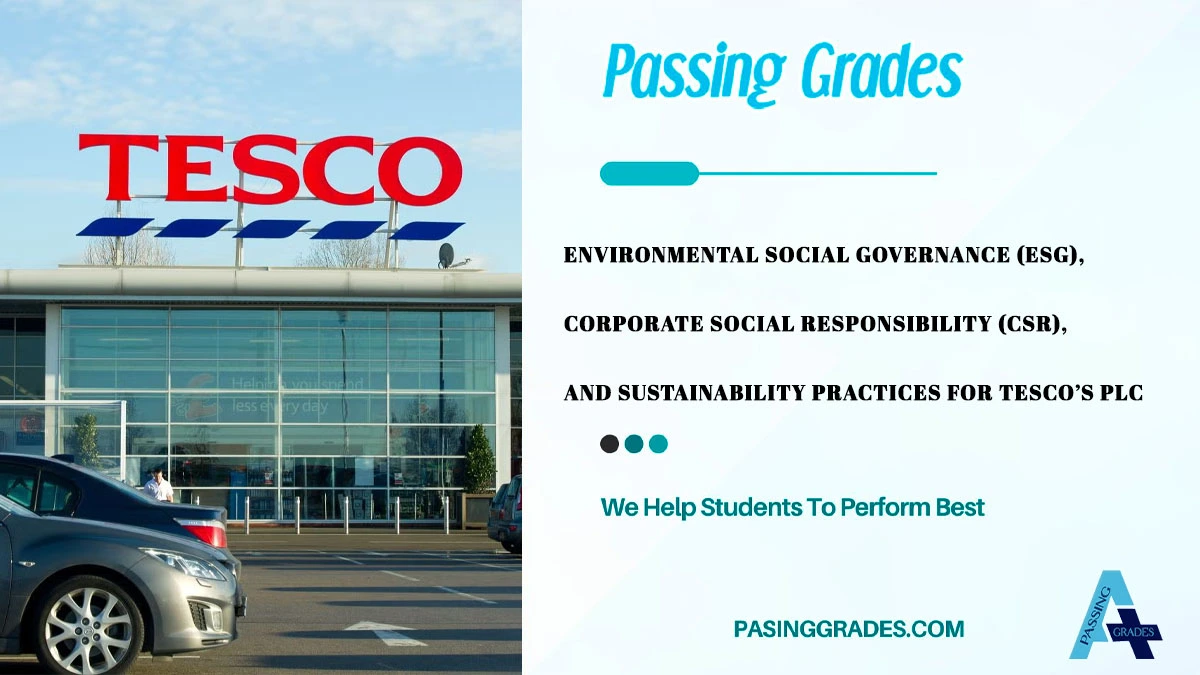
Environmental Social Governance (ESG), Corporate Social Responsibility (CSR), and Sustainability Practices for Tesco’s Plc
Read

Environmental Social Governance (ESG), Corporate S...

This is a research paper on Environmental Social Governance (ESG), Corporate Social Responsibility (...

Artificial Selection and the Evolutionary History of Dog Domestication
Read

Artificial Selection and the Evolutionary History...

This essay explores a scientific overview of dog domestication, explaining how natural selection and...

Assignment Instructions with Answers: Intelligence Collection and Analysis of ISIS
Read

Assignment Instructions with Answers: Intelligence...

Research paper Assignment Instructions with Answers: Intelligence Collection and Analysis of ISIS. T...

Related Exam Prep Guides by Rawnaf7

Title: Artificial Intelligence in Healthcare and Medicine: Transforming Diagnosis, Treatment, and Patient Outcomes
View Document

Title: Artificial In...

  • Rawnaf7

    Rawnaf7

  • study guide

Title: Artificial Intelligence in Healthcare and Medicine: Transforming Diagnosis, Treatment, and Pa...

5 USD

0

0

Title: Artificial Intelligence in Education and Accessibility: Democratizing Learning Through Adaptive Technologies
View Document

Title: Artificial In...

  • Rawnaf7

    Rawnaf7

  • study guide

Title: Artificial Intelligence in Education and Accessibility: Democratizing Learning Through Adapti...

5 USD

0

0

Title: Artificial Intelligence in Education and Accessibility: Democratizing Learning Through Adaptive Technologies
View Document

Title: Artificial In...

  • Rawnaf7

    Rawnaf7

  • study guide

Title: Artificial Intelligence in Education and Accessibility: Democratizing Learning Through Adapti...

5 USD

0

0

Purchase

Download link will be sent to this email immediately after purchase.

IMPORTANT LINKS

  • How To Upload Class Notes
  • Selling Tips
  • Pasing Grades's Study Materials
  • Scholarships for International Students 2026

POPULAR CATEGORIES

  • Law
  • Accounting
  • English
  • Psychology
  • Business
  • Nursing
  • Computer Science
  • General

View Document

  • Blog
  • Contact
  • Delivery Policy
  • Latest Scholarships Around the World
  • How to Pass Bar Exams: Passing Grades’ Strategies
  • How to Study and Pass the CPA Exam
  • All Test Banks
  • All Exams Preparation Materials
  • Faq
  • Copyright Claims
  • Privacy Policy
  • Terms of Use

KNOWLEDGE BASE

  • How to Write A+ Grade Good Research Paper
  • How to Manage Stress During Exam Period
  • Best Time to Study
  • How to Pass NCLEX-RN Exam
  • How To Effectively Utilize Test Banks
  • Popular Shadow Health Exam Assessments
  • Popular HESI Case Studies
  • How to Prepare for a Nursing Career
  • The Importance Of Summaries in Exam Revisvion

© 2026 PasingGrades. All rights reserved.