Pasing Grades
  • Start Selling
  • Blog
  • Contact
  • 0

    Your cart is empty!

English

  • English
  • Spanish
  • Arabic
Create Account Sign In
  • Library
    • New Prep Guides
    • Featured Prep Guides
    • Free Exam Prep Guides
    • Best sellers
  • General
  • Nursing
    • Research Paper
    • Case Study
    • Discussion Post
    • Assignment
    • Exam
    • Practice Questions and Answers
    • Test Bank
    • solutions manual
  • Accounting
    • Case Study
    • Thesis
    • Study Guide
    • Summary
    • Research Paper
    • test bank
  • English
    • Creative Writing
    • Research Paper
    • Summary
    • Rhetorics
    • Literature
    • Journal
    • Exam
    • Grammar
    • Discussion Post
    • Essay
  • Psychology
    • Hesi
    • Presentation
    • Essay
    • Summary
    • Study Guide
    • Essay
    • Solution Manual
    • Final Exam Review
    • Class Notes
    • test bank
  • Business
    • Lecture Notes
    • Solution Manual
    • Presentation
    • Business Plan
    • Class Notes
    • Experiment
    • Summary
    • Practice Questions
    • Study Guide
    • Case Study
    • test bank
    • Exam
  • More
    • Computer Science
    • Economics
    • Statistics
    • Engineering
    • Biology
    • Religious Studies
    • Physics
    • Chemistry
    • Mathematics
    • History
    • Sociology
    • Science
    • Philosophy
    • Law
  • Pages
    • About Us
    • Selling Tips
    • Delivery Policy
    • Faq
    • Privacy Policy
  • Flash Sale
  • Home
  • Test Bank for Williams’ Essentials of Nutrition and Diet Therapy, 10th Edition, Eleanor Schlenker, Sara Long Roth

Test Bank for Williams’ Essentials of Nutrition and Diet Therapy, 10th Edition, Eleanor Schlenker, Sara Long Roth

Preview page 1 Preview page 2 Preview page 3
Add To Favorites

Share this item Share this item

  • Item Details
  • Comments (0)
  • Reviews (0)
  • Contact Seller
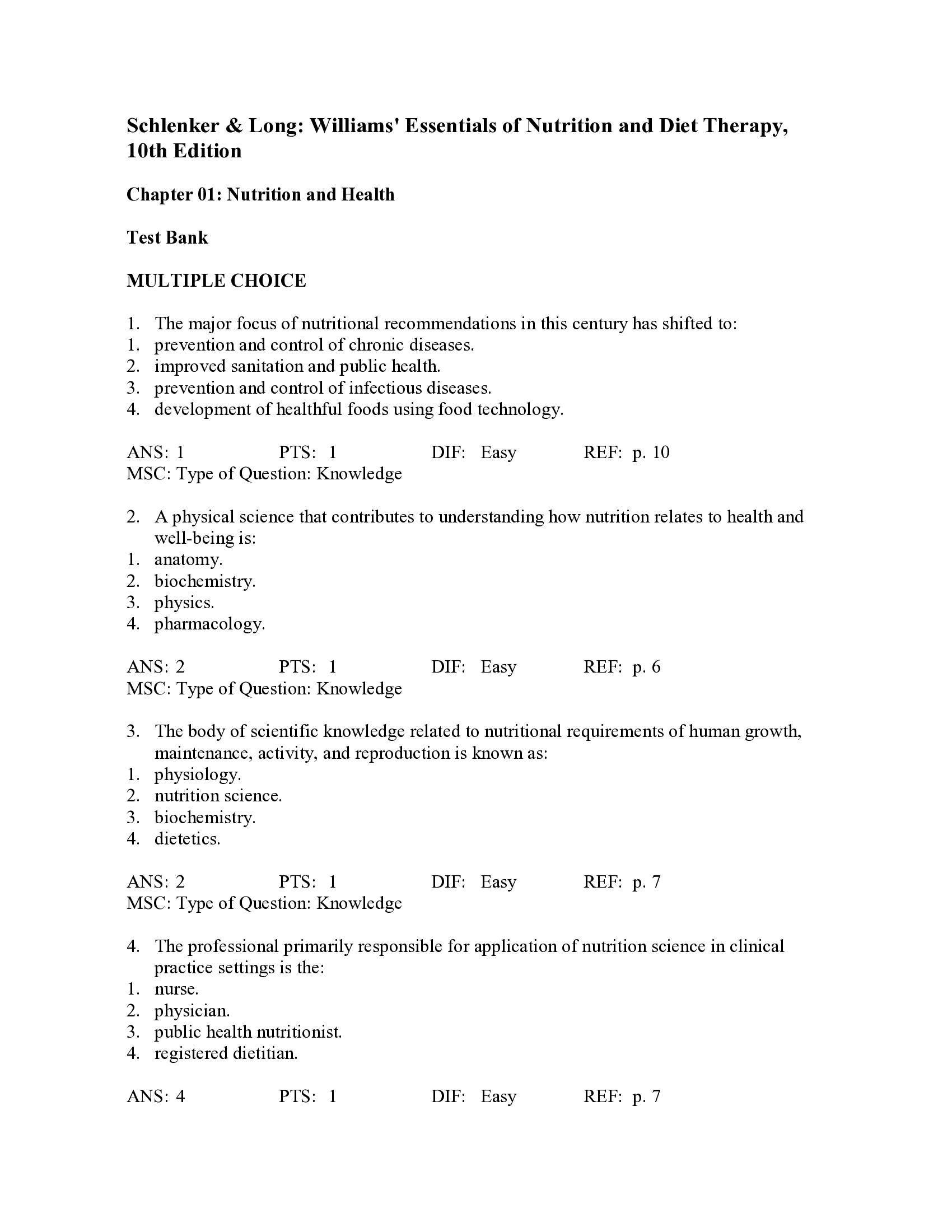
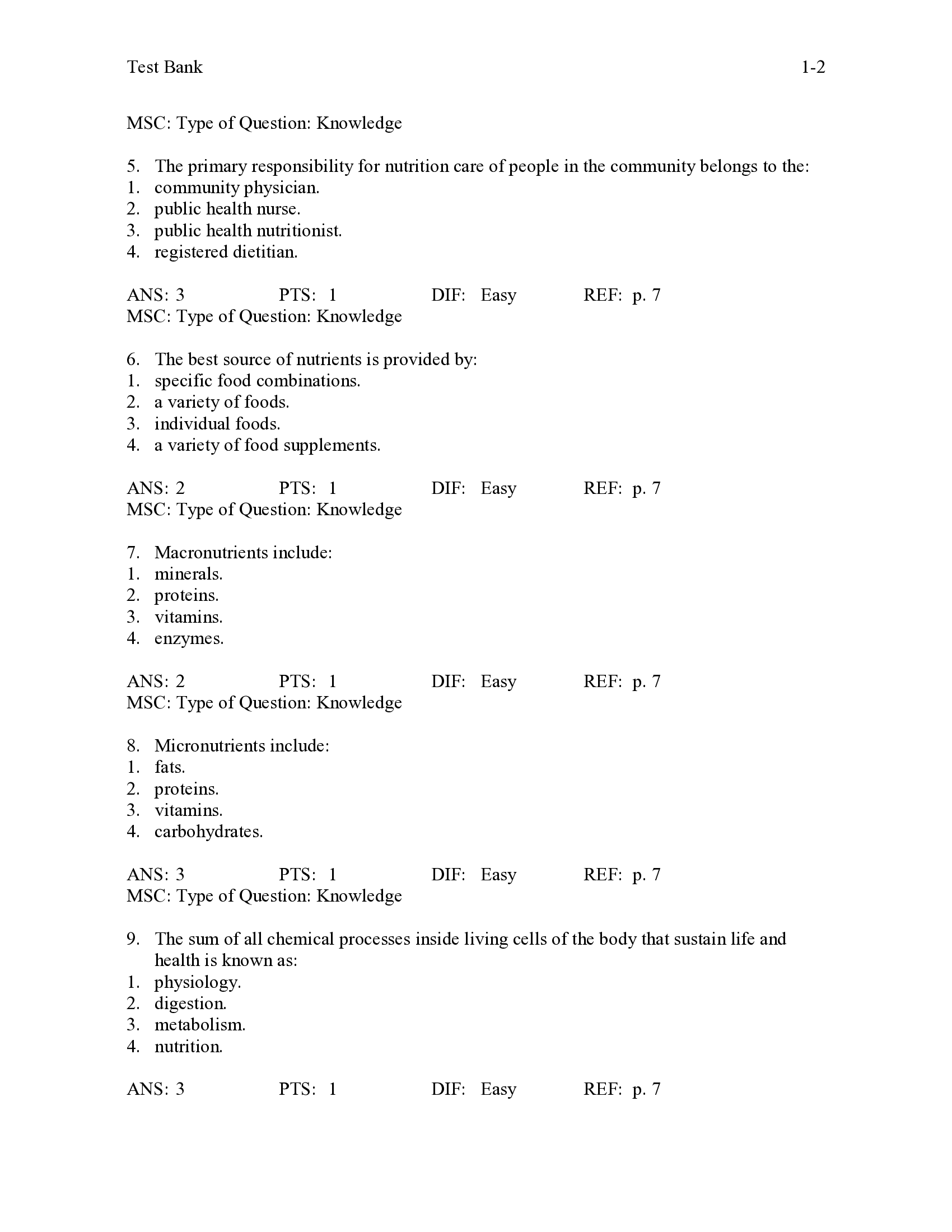
Test Bank for Williams’ Essentials of Nutrition and Diet Therapy, 10th Edition, Eleanor Schlenker, Sara Long Roth Schlenker & Long: Williams' Essentials of Nutrition and Diet Therapy, 10th Edition Chapter 01: Nutrition and Health Test Bank MULTIPLE CHOICE 1. The major focus of nutritional recommendations in this century has shifted to: 1. prevention and control of chronic diseases. 2. improved sanitation and public health. 3. prevention and control of infectious diseases. 4. development of healthful foods using food technology. ANS: 1 PTS: 1 DIF: Easy REF: p. 10 MSC: Type of Question: Knowledge 2. A physical science that contributes to understanding how nutrition relates to health and well-being is: 1. anatomy. 2. biochemistry. 3. physics. 4. pharmacology. ANS: 2 PTS: 1 DIF: Easy REF: p. 6 MSC: Type of Question: Knowledge 3. The body of scientific knowledge related to nutritional requirements of human growth, maintenance, activity, and reproduction is known as: 1. physiology. 2. nutrition science. 3. biochemistry. 4. dietetics. ANS: 2 PTS: 1 DIF: Easy REF: p. 7 MSC: Type of Question: Knowledge 4. The professional primarily responsible for application of nutrition science in clinical practice settings is the: 1. nurse. 2. physician. 3. public health nutritionist. 4. registered dietitian. ANS: 4 PTS: 1 DIF: Easy REF: p. 7 Test Bank 1-2 MSC: Type of Question: Knowledge 5. The primary responsibility for nutrition care of people in the community belongs to the: 1. community physician. 2. public health nurse. 3. public health nutritionist. 4. registered dietitian. ANS: 3 PTS: 1 DIF: Easy REF: p. 7 MSC: Type of Question: Knowledge 6. The best source of nutrients is provided by: 1. specific food combinations. 2. a variety of foods. 3. individual foods. 4. a variety of food supplements. ANS: 2 PTS: 1 DIF: Easy REF: p. 7 MSC: Type of Question: Knowledge 7. Macronutrients include: 1. minerals. 2. proteins. 3. vitamins. 4. enzymes. ANS: 2 PTS: 1 DIF: Easy REF: p. 7 MSC: Type of Question: Knowledge 8. Micronutrients include: 1. fats. 2. proteins. 3. vitamins. 4. carbohydrates. ANS: 3 PTS: 1 DIF: Easy REF: p. 7 MSC: Type of Question: Knowledge 9. The sum of all chemical processes inside living cells of the body that sustain life and health is known as: 1. physiology. 2. digestion. 3. metabolism. 4. nutrition. ANS: 3 PTS: 1 DIF: Easy REF: p. 7 Test Bank MSC: Type of Question: Knowledge 10. A primary function of macronutrients in the body is to: 1. supply energy. 2. regulate metabolic processes. 3. maintain homeostasis. 4. control cellular activity. ANS: 1 PTS: 1 DIF: Medium REF: p. 7 MSC: Type of Question: Knowledge 11. Nutrients interact in the body to regulate metabolic processes, to build and repair tissue, and to: 1. provide energy. 2. control cellular wastes. 3. control internal temperature. 4. monitor cardiac function. ANS: 1 PTS: 1 DIF: Medium REF: p. 7 MSC: Type of Question: Knowledge 12. Individual nutrients are characterized by their ability to: 1. work alone. 2. fulfill specific metabolic roles. 3. influence weight loss. 4. improve mental status. ANS: 2 PTS: 1 DIF: Medium REF: p. 7 MSC: Type of Question: Knowledge 13. The nutrient group that provides the primary source of energy for the body is: 1. carbohydrates. 2. fats. 3. proteins. 4. vitamins. ANS: 1 PTS: 1 DIF: Medium REF: p. 7 MSC: Type of Question: Knowledge 14. The primary function of carbohydrates as a food source is to: 1. regulate metabolic processes. 2. build body tissue. 3. supply energy. 4. provide bulk. ANS: 3 PTS: 1 DIF: Easy REF: p. 7 1-3 Test Bank MSC: Type of Question: Knowledge 15. The main body storage form of carbohydrates is: 1. glycogen. 2. starch. 3. fat. 4. glucose. ANS: 1 PTS: 1 DIF: Medium REF: p. 7 MSC: Type of Question: Knowledge 16. The number of kilocalories (kcalories or kcal) provided by a food that contains 30 g of carbohydrate is: 1. 90. 2. 120. 3. 180. 4. 270. ANS: 2 Carbohydrate contains 4 kcal per gram. Therefore 30 g carbohydrate contains 30  4 = 120 kcal. PTS: 1 DIF: Medium MSC: Type of Question: Application 17. The percentage of the total daily kcalories intake for healthy persons that should be supplied by carbohydrate is: 1. 10% to 35%. 2. 20% to 35%. 3. 40% to 55%. 4. 45% to 65%. ANS: 4 PTS: 1 DIF: Medium MSC: Type of Question: Knowledge 18. It has been generally accepted that the percentage of total daily kcalories supplied by fats should be no more than: 1. 10% to 15%. 2. 10% to 35%. 3. 20% to 35%. 4. 40% to 55%. ANS: 3 PTS: 1 DIF: Medium MSC: Type of Question: Knowledge 19. The number of kcalories provided by a food that contains 22 g of fat is: 1-4 Test Bank 1. 88. 2. 132. 3. 154. 4. 198. ANS: 4 Fat contains 9 kcal per gram; therefore, the number of kcal in 22 g of fat is 22  9 = 198 kcal. PTS: 1 DIF: Medium MSC: Type of Question: Application 20. The primary function of protein in the body is to: 1. supply energy. 2. regulate metabolic processes. 3. control muscle contractions. 4. build tissue. ANS: 4 PTS: 1 DIF: Easy MSC: Type of Question: Knowledge 21. The number of kcalories provided by 15 g of protein is: 1. 30. 2. 45. 3. 60. 4. 75. ANS: 3 Protein contains 4 kcal per gram. Therefore the number of kcal in 15 g protein is 15  4 = 60 kcal. PTS: 1 DIF: Medium MSC: Type of Question: Application 22. For a healthy person, the percentage of daily kcalories supplied by protein should be: 1. 5% to 10%. 2. 10% to 35%. 3. more than 25%. 4. more than 35%. ANS: 2 PTS: 1 DIF: Easy MSC: Type of Question: Knowledge 23. In addition to protein, nutrients that contribute to building and repair of tissue include: 1. vitamins. 2. carbohydrates. 3. fats. 1-5 Test Bank 4. enzymes. ANS: 1 PTS: 1 DIF: Easy MSC: Type of Question: Knowledge 24. The type of acids that form the basic building blocks of protein are ____ acids. 1. fatty 2. amino 3. nucleic 4. omega fatty ANS: 2 PTS: 1 DIF: Easy MSC: Type of Question: Knowledge 25. In addition to calcium, the major minerals needed to build and maintain bone tissue include: 1. potassium. 2. iron. 3. phosphorus. 4. fluoride. ANS: 3 PTS: 1 DIF: Medium MSC: Type of Question: Knowledge 26. The mineral that helps control enzyme actions in cell mitochondria that produce and store high-energy compounds is: 1. iron. 2. cobalt. 3. hemoglobin. 4. vitamin B 12 . ANS: 4 PTS: 1 DIF: Medium MSC: Type of Question: Knowledge 27. The nutrients involved in metabolic regulation and control include minerals, vitamins, and: 1. amino acids. 2. carbohydrates. 3. fats. 4. water. ANS: 4 PTS: 1 DIF: Hard MSC: Type of Question: Knowledge 28. An observation that provides evidence that a person has good nutritional status is: 1. small muscle mass. 1-6 Test Bank 2. normal weight-to-height ratio. 3. smooth tongue. 4. fragile skin. ANS: 2 PTS: 1 DIF: Easy MSC: Type of Question: Knowledge 29. Individuals with optimal nutritional status differ from those with marginal nutritional status in their: 1. nutrient reserves. 2. clinical signs. 3. body weight. 4. risk for mental illness. ANS: 1 PTS: 1 DIF: Medium MSC: Type of Question: Knowledge 30. In addition to poor eating habits, a factor that often contributes to marginal nutritional status is: 1. dependence on caffeine. 2. acute illness. 3. low income. 4. size of family unit. ANS: 3 PTS: 1 DIF: Easy MSC: Type of Question: Knowledge 31. Signs of malnutrition can appear when: 1. nutrient reserves are depleted. 2. nutrient intake exceeds daily needs. 3. energy intake is restricted. 4. caloric expenditure increases. ANS: 1 PTS: 1 DIF: Medium MSC: Type of Question: Knowledge 32. An age group that is very vulnerable to malnutrition is: 1. infants. 2. teenagers. 3. young adults. 4. middle-age adults. ANS: 1 PTS: 1 DIF: Medium MSC: Type of Question: Knowledge 1-7 Test Bank 33. The function of Dietary Reference Intakes (DRIs) is to designate nutrient recommendations for: 1. older adults. 2. children only. 3. pregnant women only. 4. most healthy people. ANS: 4 PTS: 1 DIF: Easy MSC: Type of Question: Knowledge 34. The Tolerable Upper Intake Level (UL) is: 1. a replacement for Recommended Dietary Allowances (RDAs). 2. a safe level of intake for people of all ages. 3. a potentially toxic level of intake of a nutrient. 4. the highest amount of a nutrient that can be safely consumed. ANS: 4 PTS: 1 DIF: Medium MSC: Type of Question: Knowledge 35. An example of government nutrition policy is: 1. MyPyramid Food Guidance System. 2. Dietary Guidelines for Americans 2010. 3. Healthy People 2010. 4. Dietary Reference Intakes (DRIs). ANS: 3 PTS: 1 DIF: Medium MSC: Type of Question: Knowledge 36. MyPyramid food guidance is based on the: 1. percentage of kcalories from each macronutrient. 2. Exchange Lists for Meal Planning. 3. numbers of servings from specific food groups. 4. amounts of macronutrients and micronutrients. ANS: 3 PTS: 1 DIF: Medium MSC: Type of Question: Knowledge 37. Foodborne illness may be caused by contamination of food with: 1. pesticides. 2. genetically modified ingredients. 3. microorganisms. 4. food additives. ANS: 3 PTS: 1 DIF: Medium MSC: Type of Question: Knowledge 1-8 Test Bank 38. Foods that contain naturally occurring substances that promote health are referred to as: 1. functional foods. 2. convenience foods. 3. supplemental foods. 4. essential foods. ANS: 3 PTS: 1 DIF: Medium MSC: Type of Question: Knowledge 39. The major nutrients supplied by foods in the vegetable group of MyPyramid are: 1. potassium and vitamin A. 2. iron and vitamin C. 3. calcium and vitamin B 12 . 4. sodium and vitamin E. ANS: 1 PTS: 1 DIF: Hard MSC: Type of Question: Knowledge 40. A food choice equivalent to one serving from the grains group of MyPyramid is: 1. one slice of bread. 2. 2 cups of rice. 3. 3 cups of spaghetti. 4. 4 oz of ready-to-eat cereal. ANS: 1 PTS: 1 DIF: Medium MSC: Type of Question: Knowledge 41. A food choice equivalent to 1 oz meat from the meat and beans group of MyPyramid is: 1. 1 oz nuts. 2. two eggs. 3. 1 / 4 cup cottage cheese. 4. 1 / 4 cup cooked dry beans. ANS: 4 PTS: 1 DIF: Hard MSC: Type of Question: Knowledge 42. Exchange Lists for Meal Planning was devised by the American Dietetic Association in collaboration with the American: 1. Cancer Society. 2. Diabetes Association. 3. Heart Association. 4. Chefs Society. ANS: 2 PTS: 1 DIF: Easy MSC: Type of Question: Knowledge 1-9 Test Bank 43. Exchange Lists for Meal Planning groups foods that are equivalent in their: 1. weight. 2. serving size. 3. micronutrient content. 4. macronutrient content. ANS: 4 PTS: 1 DIF: Medium MSC: Type of Question: Knowledge 44. Exchange Lists for Meal Planning was originally intended as a meal-planning tool for people who have: 1. cancer. 2. diabetes. 3. hypertension. 4. heart disease. ANS: 2 PTS: 1 DIF: Easy MSC: Type of Question: Knowledge 45. In the most recent edition of the Choose Your Foods: Exchange List for Diabetes, the three groups into which foods are arranged are: 1. fruits and vegetables, breads, and meats. 2. fats, starches and sugars, and meat and milk. 3. fruits and vegetables, meat and milk, and starches. 4. carbohydrates, meat and meat substitutes, and fats. ANS: 4 PTS: 1 DIF: Medium MSC: Type of Question: Knowledge 46. The Dietary Guidelines are published and revised by the U.S. Department of Agriculture in association with the: 1. Department of Health and Human Services. 2. National Institutes of Health. 3. National Academy of Sciences. 4. Food and Nutrition Board. ANS: 1 PTS: 1 DIF: Medium MSC: Type of Question: Knowledge 47. A major purpose of the Dietary Guidelines is to: 1. guarantee optimal health and nutrition. 2. prevent chronic disease and promote health. 3. prevent infectious disease and promote adequate diets. 4. report current scientific findings about nutrition. ANS: 2 PTS: 1 DIF: Medium 1-10 Test Bank MSC: Type of Question: Knowledge 48. Dietary Guidelines provide helpful advice for: 1. limiting portion sizes. 2. selecting a food pattern. 3. making smart food choices. 4. avoiding excessive nutrient intakes. ANS: 3 PTS: 1 DIF: Medium MSC: Type of Question: Knowledge 49. One benefit of keeping a record of everything you eat and drink for a day is: 1. precise estimates of portion sizes. 2. determination of appropriate energy intake. 3. estimation of supplement needs. 4. increased awareness of personal food patterns. ANS: 4 PTS: 1 DIF: Medium MSC: Type of Question: Knowledge 1-11

Contact the Seller

Please Sign In to contact this seller.


  • 👎  Report Copyright Violation

Frequently Asked Questions

What Do I Get When I Buy This Study Material?

+

When you buy a study material on Passing Grades, an instant download link will be sent directly to your email, giving you access to the file anytime after payment is completed.

Is Passing Grades a Trusted Platform?

+

Yes, Passing Grades is a reputable students’ marketplace with a secure payment system and reliable customer support. You can trust us to ensure a safe and seamless transaction experience.

Will I Be Stuck with a Subscription?

+

No, all purchases on Passing Grades are one-time transactions. You only pay for the notes you choose to buy, with no subscriptions or hidden fees attached.

Who Am I Buying These Study Materials From?

+

Passing Grades is a marketplace, which means you are purchasing the document from an individual vendor, not directly from us. We facilitate the payment and delivery process between you and the vendor.

Does Passing Grades Offer Free Study Materials?

+

Yes, sellers on Passing Grades have uploaded numerous free test banks, exams, practice questions, and class notes that can be downloaded at no cost.

Pasinggrades - Quality Study Materials

USD 15

    • Quality checked by Pasing Grades
    • 100% satisfaction guarantee
    • Seller: Pasing-Grades
Buy PDF $15

Seller Information

Pasing-Grades

Member since May 2021

  • icon
View Profile
  • total sales

    0
  • Favourites

    0
  • Comments

    0
    ( 0 Ratings )

Item Information

  • Uploaded

    28 August 2023

  • Updated

    01 October 2025

  • Category

    No category

  • Item Type

    test bank

  • Tags

    Test Bank for Williams’ Essentials of Nutrition and Diet Therapy 10th Edition Eleanor Schlenker Sara Long Roth

Related Exam Prep Guides by Pasing-Grades

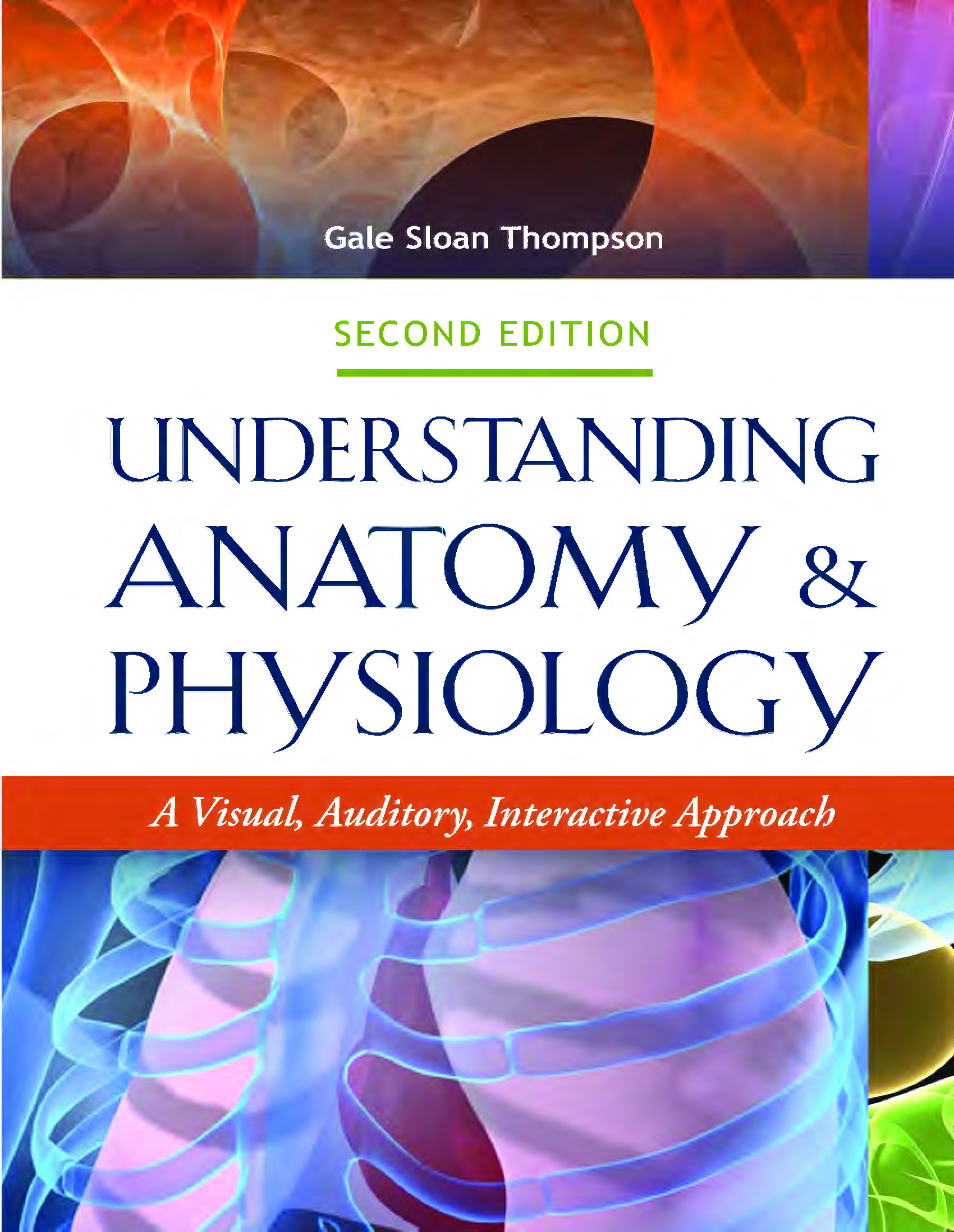
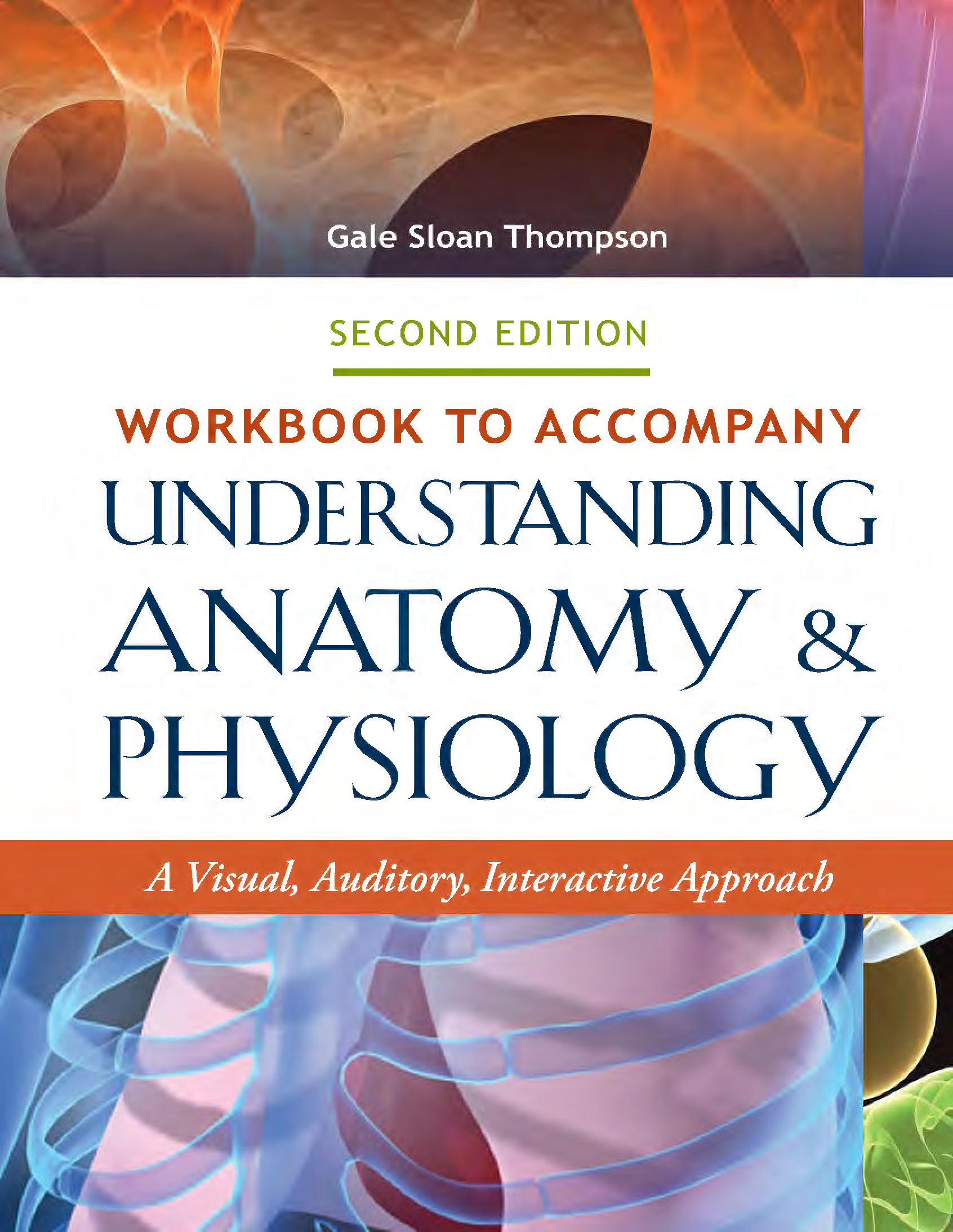
Understanding Anatomy and Physiology; A Visual, Auditory, Interactive Approach by Gale. S. Thompson
View Document

Understanding Anatom...

  • Pasing-Grades

    Pasing-Grades

  • test bank

Third Edition: Understanding Anatomy and Physiology; A Visual, Auditory, Interactive Approach by Gal...

15 USD

0

0

Workbook to Accompany Understanding Anatomy & Physiology: A Visual, Auditory, Interactive Approach by Gale Sloan Thompson RN
View Document

Workbook to Accompan...

  • Pasing-Grades

    Pasing-Grades

  • test bank

Workbook to Accompany Understanding Anatomy & Physiology: A Visual, Auditory, Interactive Approach b...

15 USD

0

0

Test Bank for Fundamentals of Nursing 10th Edition by Taylor
View Document

Test Bank for Fundam...

  • Pasing-Grades

    Pasing-Grades

  • test bank

Get now the Test Bank for Fundamentals of Nursing 10th Edition by Taylor. Instant PDF Download....

15 USD

0

0

Purchase

Download link will be sent to this email immediately after purchase.

IMPORTANT LINKS

  • How To Upload Class Notes
  • Selling Tips
  • Passing Grades's Study Materials
  • Scholarships for International Students 2025

POPULAR CATEGORIES

  • Law
  • Accounting
  • English
  • Psychology
  • Business
  • Nursing
  • Computer Science
  • General

View Document

  • Blog
  • Contact
  • Delivery Policy
  • Latest Scholarships Around the World
  • How to Pass Bar Exams: Passing Grades’ Strategies
  • How to Study and Pass the CPA Exam
  • All Test Banks
  • Faq
  • Copyright Claims
  • Privacy Policy
  • Terms of Use

KNOWLEDGE BASE

  • How to Write A+ Grade Good Research Paper
  • How to Manage Stress During Exam Period
  • Best Time to Study
  • How to Pass NCLEX-RN Exam
  • How To Effectively Utilize Test Banks
  • Popular Shadow Health Exam Assessments
  • Popular HESI Case Studies
  • How to Prepare for a Nursing Career
  • The Importance Of Summaries in Exam Revisvion

© 2026 Pasing Grades. All rights reserved.