Pasing Grades
  • Start Selling
  • Blog
  • Contact
  • 0

    Your cart is empty!

English

  • English
  • Spanish
  • Arabic
Create Account Sign In
  • Library
    • New Prep Guides
    • Featured Prep Guides
    • Free Exam Prep Guides
    • Best sellers
  • General
  • Nursing
    • Research Paper
    • Case Study
    • Discussion Post
    • Assignment
    • Exam
    • Practice Questions and Answers
    • Test Bank
    • solutions manual
  • Accounting
    • Case Study
    • Thesis
    • Study Guide
    • Summary
    • Research Paper
    • test bank
  • English
    • Creative Writing
    • Research Paper
    • Summary
    • Rhetorics
    • Literature
    • Journal
    • Exam
    • Grammar
    • Discussion Post
    • Essay
  • Psychology
    • Hesi
    • Presentation
    • Essay
    • Summary
    • Study Guide
    • Essay
    • Solution Manual
    • Final Exam Review
    • Class Notes
    • test bank
  • Business
    • Lecture Notes
    • Solution Manual
    • Presentation
    • Business Plan
    • Class Notes
    • Experiment
    • Summary
    • Practice Questions
    • Study Guide
    • Case Study
    • test bank
    • Exam
  • More
    • Computer Science
    • Economics
    • Statistics
    • Engineering
    • Biology
    • Religious Studies
    • Physics
    • Chemistry
    • Mathematics
    • History
    • Sociology
    • Science
    • Philosophy
    • Law
  • Pages
    • About Us
    • Selling Tips
    • Delivery Policy
    • Faq
    • Privacy Policy
  • Flash Sale
  • Home
  • Test Bank for Survey of Accounting 2nd Edition Kimmel

Test Bank for Survey of Accounting 2nd Edition Kimmel

Preview page 1 Preview page 2 Preview page 3
Add To Favorites

Share this item Share this item

  • Item Details
  • Comments (0)
  • Reviews (0)
  • Contact Seller

Test Bank for Survey of Accounting 2nd Edition Kimmel

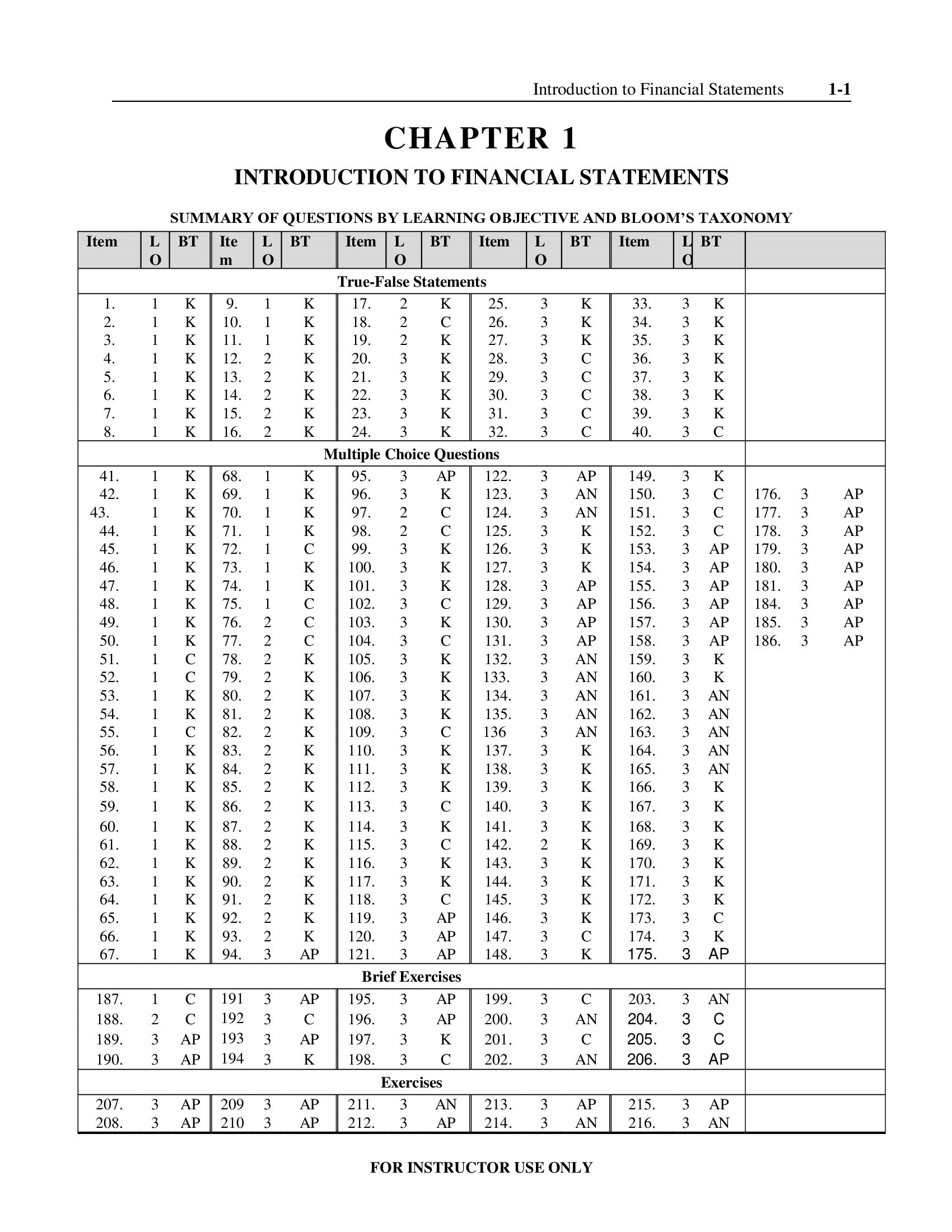
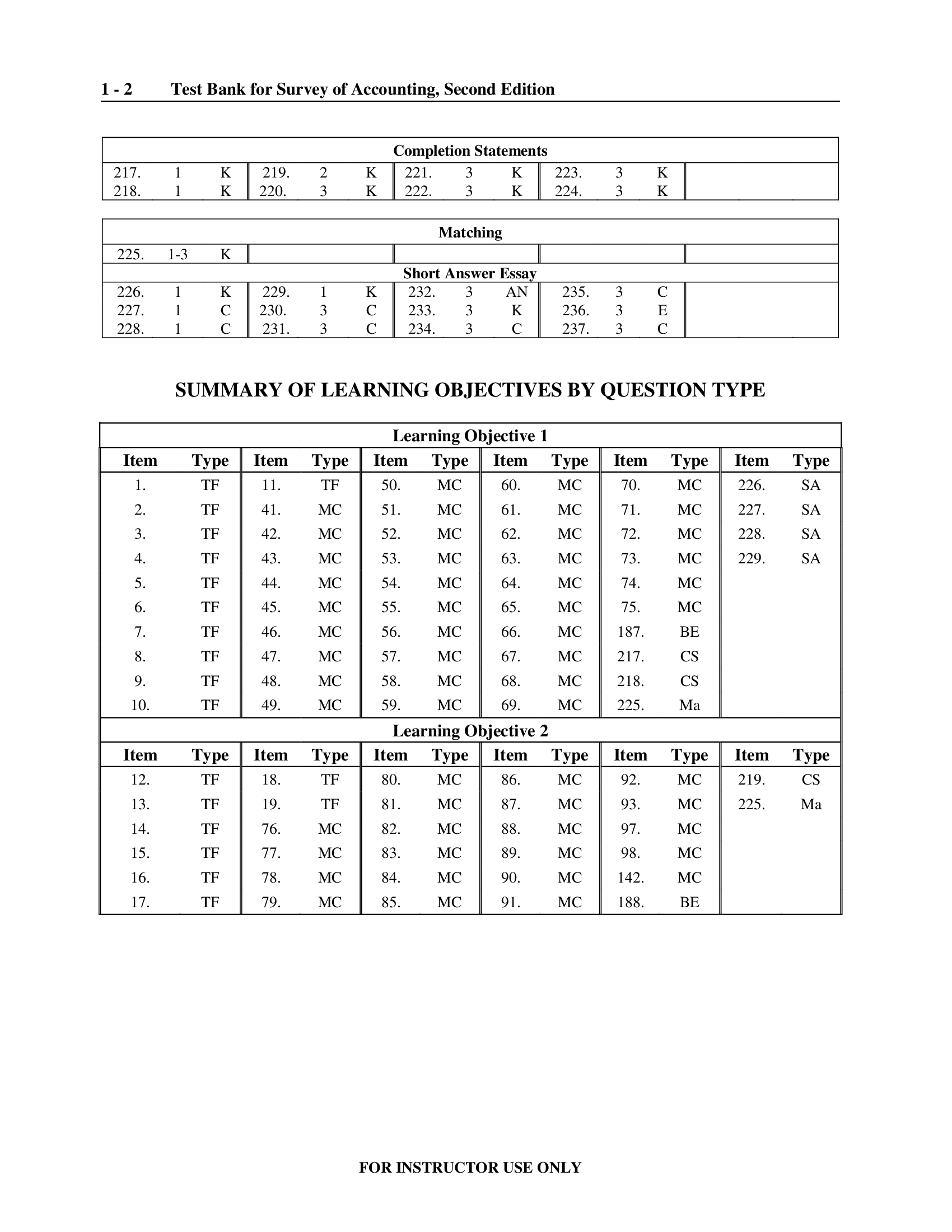
CHAPTER LEARNING OBJECTIVES 1. Identify the forms of business organization and the uses of accounting information. A sole proprietorship is a business owned by one person. A partnership is a business owned by two or more people associated as partners. A corporation is a separate legal entity for which evidence of ownership is provided by shares of stock. Internal users are managers who need accounting information to plan, organize, and run business operations. The primary external users are investors and creditors. Investors (stockholders) use accounting information to decide whether to buy, hold, or sell shares of a company’s stock. Creditors (suppliers and bankers) use accounting information to assess the risk of granting credit or loaning money to a business. Other groups who have an indirect interest in a business are taxing authorities, customers, labor unions, and regulatory agencies. 2. Explain the three principal types of business activity. Financing activities involve collecting the necessary funds to support the business. Investing activities involve acquiring the resources necessary to run the business. Operating activities involve putting the resources of the business into action to generate a profit. 3. Describe the four financial statements and how they are prepared. An income statement presents the revenues and expenses of a company for a specific period of time. A retained earnings statement summarizes the changes in retained earnings that have occurred for a specific period of time. A balance sheet reports the assets, liabilities, and stockholders’ equity of a business at a specific date. A statement of cash flows summarizes information concerning the cash inflows (receipts) and outflows (payments) for a specific period of time. Assets are resources owned by a business. Liabilities are the debts and obligations of the business. Liabilities represent claims of creditors on the assets of the business. Stockholders’ equity represents the claims of owners on the assets of the business. Stockholders’ equity is subdivided into two parts: common stock and retained earnings. The basic accounting equation is: Assets = Liabilities + Stockholders’ Equity. Within the annual report, the management discussion and analysis provides management’s interpretation of the company’s results and financial position as well as a discussion of plans for the future. Notes to the financial statements provide additional explanation or detail to make the financial statements more informative. The auditor’s report expresses an opinion as to whether the financial statements present fairly the company’s results of operations and financial position. Introduction to Financial Statements FOR INSTRUCTOR USE ONLY 1-5 TRUE-FALSE STATEMENTS 1. A business organized as a separate legal entity owned by stockholders is a partnership. Ans: F, LO: 1, Bloom: K, Difficulty: Easy, Min: 1, AACSB: None, AICPA BB: Legal/Regulatory Perspective, AICPA FC: Reporting, AICPA PC: None, IMA: Reporting 2. Corporate stockholders generally pay higher taxes but have no personal liability. Ans: T, LO: 1, Bloom: K, Difficulty: Easy, Min: 1, AACSB: None, AICPA BB: Legal/Regulatory Perspective, AICPA FC: Reporting, AICPA PC: None, IMA: Business Economics 3. The liability of corporate stockholders is limited to the amount of their investment. Ans: T, LO: 1, Bloom: K, Difficulty: Easy, Min: 1, AACSB: None, AICPA BB: Legal/Regulatory Perspective, AICPA FC: Reporting, AICPA PC: None, IMA: Business Economics 4. The majority of U.S. business is transacted by proprietorships. Ans: F, LO: 1, Bloom: K, Difficulty: Easy, Min: 1, AACSB: None, AICPA BB: Legal/Regulatory Perspective, AICPA FC: Reporting, AICPA PC: None, IMA: Business Economics 5. Proprietorships in the United States generate more revenue than the other two forms of business enterprise. Ans: F, LO: 1, Bloom: K, Difficulty: Easy, Min: 1, AACSB: None, AICPA BB: Legal/Regulatory Perspective, AICPA FC: Reporting, AICPA PC: None, IMA: Reporting 6. Owners of business firms are the only people who need accounting information. Ans: F, LO: 1, Bloom: K, Difficulty: Easy, Min: 1, AACSB: None, AICPA BB: Legal/Regulatory Perspective, AICPA FC: Reporting, AICPA PC: None, IMA: Business Economics 7. Management of a business enterprise is the major external user of information. Ans: F, LO: 1, Bloom: K, Difficulty: Easy, Min: 1, AACSB: None, AICPA BB: Legal/Regulatory Perspective, AICPA FC: Reporting, AICPA PC: None, IMA: Reporting 8. External users of accounting information are managers who plan, organize, and run a business. Ans: F, LO: 1, Bloom: K, Difficulty: Easy, Min: 1, AACSB: None, AICPA BB: Legal/Regulatory Perspective, AICPA FC: Reporting, AICPA PC: None, IMA: Reporting 9. The information needs and questions of external users vary considerably. Ans: T, LO: 1, Bloom: K, Difficulty: Easy, Min: 1, AACSB: None, AICPA BB: Legal/Regulatory Perspective, AICPA FC: Reporting, AICPA PC: None, IMA: Reporting 10. Accounting communicates financial information about a business to both internal and external users. Ans: T, LO: 1, Bloom: K, Difficulty: Easy, Min: 1, AACSB: None, AICPA BB: Legal/Regulatory Perspective, AICPA FC: Reporting, AICPA PC: None, IMA: Reporting 11. Two primary external users of accounting information are investors and creditors. Ans: T, LO: 1, Bloom: K, Difficulty: Easy, Min: 1, AACSB: None, AICPA BB: Legal/Regulatory Perspective, AICPA FC: Reporting, AICPA PC: None, IMA: Reporting 12. Financing activities for corporations include borrowing money and selling shares of their own stock. Ans: T, LO: 2, Bloom: K, Difficulty: Easy, Min: 1, AACSB: None, AICPA BB: Legal/Regulatory Perspective, AICPA FC: Reporting, AICPA PC: None, IMA: Reporting 13. Investing activities involve collecting the necessary funds to support the business. Ans: F, LO: 2, Bloom: K, Difficulty: Easy, Min: 1, AACSB: None, AICPA BB: Legal/Regulatory Perspective, AICPA FC: Reporting, AICPA PC: None, IMA: Reporting Test Bank for Survey of Accounting, Second Edition FOR INSTRUCTOR USE ONLY 1 - 6 14. The purchase of equipment is an example of a financing activity. Ans: F, LO: 2, Bloom: K, Difficulty: Easy, Min: 1, AACSB: None, AICPA BB: Legal/Regulatory Perspective, AICPA FC: Reporting, AICPA PC: None, IMA: Reporting 15. Assets are resources owned by a business that provide future services or benefits to the business. Ans: T, LO: 2, Bloom: K, Difficulty: Easy, Min: 1, AACSB: None, AICPA BB: Legal/Regulatory Perspective, AICPA FC: Reporting, AICPA PC: None, IMA: Reporting 16. Payments to owners are operating activities. Ans: F, LO: 2, Bloom: K, Difficulty: Easy, Min: 1, AACSB: None, AICPA BB: Legal/Regulatory Perspective, AICPA FC: Reporting, AICPA PC: None, IMA: Reporting 17. The economic resources that are owned by a business are called stockholders’ equity. Ans: F, LO: 2, Bloom: K, Difficulty: Easy, Min: 1, AACSB: None, AICPA BB: Legal/Regulatory Perspective, AICPA FC: Reporting, AICPA PC: None, IMA: Reporting 18. Operating activities involve putting the resources of the business into action to generate a profit. Ans: T, LO: 2, Bloom: C, Difficulty: Easy, Min: 1, AACSB: None, AICPA BB: Legal/Regulatory Perspective, AICPA FC: Reporting, AICPA PC: None, IMA: Reporting 19. A business is usually involved in two types of activity—financing and investing. Ans: F, LO: 2, Bloom: K, Difficulty: Easy, Min: 1, AACSB: None, AICPA BB: Legal/Regulatory Perspective, AICPA FC: Reporting, AICPA PC: None, IMA: Reporting 20. Net income for the period is determined by subtracting total expenses and dividends from revenues. Ans: F, LO: 3, Bloom: K, Difficulty: Easy, Min: 1, AACSB: None, AICPA BB: Legal/Regulatory Perspective, AICPA FC: Reporting, AICPA PC: None, IMA: Reporting 21. A different set of financial statements usually is prepared for each user. Ans: F, LO: 3, Bloom: K, Difficulty: Easy, Min: 1, AACSB: None, AICPA BB: Legal/Regulatory Perspective, AICPA FC: Reporting, AICPA PC: None, IMA: Reporting 22. The heading for the income statement might include the line “As of December 31, 20xx.” Ans: F, LO: 3, Bloom: K, Difficulty: Easy, Min: 1, AACSB: None, AICPA BB: Legal/Regulatory Perspective, AICPA FC: Reporting, AICPA PC: None, IMA: Reporting 23. Net income is another term for revenue. Ans: F, LO: 3, Bloom: K, Difficulty: Easy, Min: 1, AACSB: None, AICPA BB: Legal/Regulatory Perspective, AICPA FC: Reporting, AICPA PC: None, IMA: Reporting 24. Cash is another term for stockholders’ equity. Ans: F, LO: 3, Bloom: K, Difficulty: Easy, Min: 1, AACSB: None, AICPA BB: Legal/Regulatory Perspective, AICPA FC: Reporting, AICPA PC: None, IMA: Reporting 25. The primary purpose of the statement of cash flows is to provide information about the cash receipts and cash payments of a company for a specific period of time. Ans: T, LO: 3, Bloom: K, Difficulty: Easy, Min: 1, AACSB: None, AICPA BB: Legal/Regulatory Perspective, AICPA FC: Reporting, AICPA PC: None, IMA: Reporting 26. The balance sheet reports assets and claims to those assets at a specific point in time. Ans: T, LO: 3, Bloom: K, Difficulty: Easy, Min: 1, AACSB: None, AICPA BB: Legal/Regulatory Perspective, AICPA FC: Reporting, AICPA PC: None, IMA: Reporting Introduction to Financial Statements FOR INSTRUCTOR USE ONLY 1-7 27. The basic accounting equation states that Assets = Liabilities. Ans: F, LO: 3, Bloom: K, Difficulty: Easy, Min: 1, AACSB: None, AICPA BB: Legal/Regulatory Perspective, AICPA FC: Reporting, AICPA PC: None, IMA: Business Economics 28. One way of stating the accounting equation is: Assets + Liabilities = Stockholders’ Equity. Ans: F, LO: 3, Bloom: C, Difficulty: Easy, Min: 1, AACSB: None, AICPA BB: Legal/Regulatory Perspective, AICPA FC: Reporting, AICPA PC: None, IMA: Business Economics 29. The accounting equation can be expressed as Assets - Stockholders’ Equity = Liabilities. Ans: T, LO: 3, Bloom: C, Difficulty: Easy, Min: 1, AACSB: None, AICPA BB: Legal/Regulatory Perspective, AICPA FC: Reporting, AICPA PC: None, IMA: Business Economics 30. The accounting equation can be expressed as Assets - Liabilities = Stockholders’ Equity. Ans: T, LO: 3, Bloom: C, Difficulty: Easy, Min: 1, AACSB: None, AICPA BB: Legal/Regulatory Perspective, AICPA FC: Reporting, AICPA PC: None, IMA: Business Economics 31. If the assets owned by a business total $150,000 and liabilities total $105,000, stockholders’ equity totals $45,000. Ans: T, LO: 3, Bloom: C, Difficulty: Easy, Min: 1, AACSB: Analytic, AICPA BB: Legal/Regulatory Perspective, AICPA FC: Reporting, AICPA PC: Problem Solving, IMA: Business Economics 32. If the assets owned by a business total $100,000 and liabilities total $65,000, stockholders’ equity totals $25,000. Ans: F, LO: 3, Bloom: C, Difficulty: Easy, Min: 1, AACSB: Analytic, AICPA BB: Legal/Regulatory Perspective, AICPA FC: Reporting, AICPA PC: Problem Solving, IMA: Business Economics 33. Claims of creditors and owners on the assets of a business are called liabilities. Ans: F, LO: 3, Bloom: K, Difficulty: Easy, Min: 1, AACSB: None, AICPA BB: Legal/Regulatory Perspective, AICPA FC: Reporting, AICPA PC: None, IMA: Reporting 34. Creditors’ rights to assets supersede owners’ rights to the assets. Ans: T, LO: 3, Bloom: K, Difficulty: Easy, Min: 1, AACSB: None, AICPA BB: Legal/Regulatory Perspective, AICPA FC: Reporting, AICPA PC: None, IMA: Business Economics 35. All publicly traded U.S. companies must provide their stockholders with an annual report each year. Ans: T, LO: 3, Bloom: K, Difficulty: Easy, Min: 1, AACSB: None, AICPA BB: Legal/Regulatory Perspective, AICPA FC: Reporting, AICPA PC: None, IMA: Reporting 36. Information in the notes to the financial statements has to be quantifiable (numeric). Ans: F, LO: 3, Bloom: K, Difficulty: Easy, Min: 1, AACSB: None, AICPA BB: Legal/Regulatory Perspective, AICPA FC: Reporting, AICPA PC: None, IMA: Reporting 37. An auditor is an accounting professional who conducts an independent examination of the accounting data presented by a company. Ans: T, LO: 3, Bloom: K, Difficulty: Easy, Min: 1, AACSB: None, AICPA BB: Legal/Regulatory Perspective, AICPA FC: Reporting, AICPA PC: Professional Demeanor, IMA: Reporting 38. The management discussion and analysis (MD&A) section of an annual report covers various financial aspects of a company. Ans: T, LO: 3, Bloom: K, Difficulty: Easy, Min: 1, AACSB: None, AICPA BB: Legal/Regulatory Perspective, AICPA FC: Reporting, AICPA PC: Communications, IMA: Reporting 39. Explanatory notes and supporting schedules are an optional part of an annual report. Ans: F, LO: 3, Bloom: K, Difficulty: Easy, Min: 1, AACSB: None, AICPA BB: Legal/Regulatory Perspective, AICPA FC: Reporting, AICPA PC: Communications, IMA: Reporting Test Bank for Survey of Accounting, Second Edition FOR INSTRUCTOR USE ONLY 1 - 8 40. Examples of notes are descriptions of the significant accounting policies and methods used in preparing the statements, explanations of contingencies, and various statistics. Ans: T, LO: 3, Bloom: C, Difficulty: Easy, Min: 1, AACSB: None, AICPA BB: Legal/Regulatory Perspective, AICPA FC: Reporting, AICPA PC: Communications, IMA: Reporting Answers to True-False Statements 1. F 9. T 17. F 25. T 33. F 2. T 10. T 18. T 26. T 34. T 3. T 11. T 19. F 27. F 35. T 4. F 12. T 20. F 28. F 36. F 5. F 13. F 21. F 29. T 37. T 6. F 14. F 22. F 30. T 38. T 7. F 15. T 23. F 31. T 39. F 8. F 16. F 24. F 32. F 40. T MULTIPLE CHOICE QUESTIONS 41. The proprietorship form of business organization a. must have at least two owners in most states. b. generally receives favorable tax treatment relative to a corporation. c. combines the records of the business with the personal records of the owner. d. is classified as a separate legal entity. Ans: B, LO: 1, Bloom: K, Difficulty: Easy, Min: 1, AACSB: None, AICPA BB: Legal/Regulatory Perspective, AICPA FC: Reporting, AICPA PC: None, IMA: Reporting 42. A business organized as a corporation a. is not a separate legal entity in most states. b. requires that stockholders be personally liable for the debts of the business. c. is owned by its stockholders. d. has tax advantages over a proprietorship or partnership. Ans: C, LO: 1, Bloom: K, Difficulty: Easy, Min: 1, AACSB: None, AICPA BB: Legal/Regulatory Perspective, AICPA FC: Reporting, AICPA PC: None, IMA: Reporting 43. The partnership form of business organization a. is a separate legal entity. b. is a common form of organization for service-type businesses. c. enjoys an unlimited life. d. has limited liability. Ans: B, LO: 1, Bloom: K, Difficulty: Easy, Min: 1, AACSB: None, AICPA BB: Legal/Regulatory Perspective, AICPA FC: Reporting, AICPA PC: None, IMA: Reporting 44. Which of the following is not one of the three forms of business organization? a. Corporations b. Partnerships c. Proprietorships d. Investors Ans: D, LO: 1, Bloom: K, Difficulty: Easy, Min: 1, AACSB: None, AICPA BB: Legal/Regulatory Perspective, AICPA FC: Reporting, AICPA PC: None, IMA: Reporting Introduction to Financial Statements FOR INSTRUCTOR USE ONLY 1-9 45. Most business enterprises in the United States are a. proprietorships and partnerships. b. partnerships. c. corporations. d. government units. Ans: A, LO: 1, Bloom: K, Difficulty: Easy, Min: 1, AACSB: None, AICPA BB: Legal/Regulatory Perspective, AICPA FC: Reporting, AICPA PC: None, IMA: Reporting 46. A business organized as a separate legal entity is a a. corporation. b. proprietor. c. government unit. d. partnership. Ans: A, LO: 1, Bloom: K, Difficulty: Easy, Min: 1, AACSB: None, AICPA BB: Legal/Regulatory Perspective, AICPA FC: Reporting, AICPA PC: None, IMA: Reporting 47. Which of the following is not an advantage of the corporate form of business organization? a. No personal liability b. Easy to transfer ownership c. Favorable tax treatment d. Easy to raise funds Ans: C, LO: 1, Bloom: K, Difficulty: Easy, Min: 1, AACSB: None, AICPA BB: Legal/Regulatory Perspective, AICPA FC: Reporting, AICPA PC: None, IMA: Business Economics 48. An advantage of the corporate form of business is that a. it has limited life. b. its owner’s personal resources are at stake. c. its ownership is easily transferable via the sale of shares of stock. d. it is simple to establish. Ans: C, LO: 1, Bloom: K, Difficulty: Easy, Min: 1, AACSB: None, AICPA BB: Legal/Regulatory Perspective, AICPA FC: Reporting, AICPA PC: None, IMA: Business Economics 49. Which of the following is an advantage of corporations relative to partnerships and sole proprietorships? a. Reduced legal liability for investors b. Harder to transfer ownership c. Lower taxes d. Most common form of organization Ans: A, LO: 1, Bloom: K, Difficulty: Easy, Min: 1, AACSB: None, AICPA BB: Legal/Regulatory Perspective, AICPA FC: Reporting, AICPA PC: None, IMA: Business Economics 50. A corporation has which of the following set of characteristics? a. Shared control, tax advantages, increased skills and resources b. Simple to set up and maintains control with founder c. Easier to transfer ownership and raise funds, no personal liability d. Harder to raise funds and gives owner control Ans: C, LO: 1, Bloom: K, Difficulty: Easy, Min: 1, AACSB: None, AICPA BB: Legal/Regulatory Perspective, AICPA FC: Reporting, AICPA PC: None, IMA: Business Economics Test Bank for Survey of Accounting, Second Edition FOR INSTRUCTOR USE ONLY 1 - 10 51. A small neighborhood barber shop that is operated by its owner would likely be organized as a a. joint venture. b. partnership. c. corporation. d. proprietorship. Ans: D, LO: 1, Bloom: C, Difficulty: Easy, Min: 1, AACSB: None, AICPA BB: Legal/Regulatory Perspective, AICPA FC: Reporting, AICPA PC: None, IMA: Reporting 52. A local retail shop has been operating as a sole proprietorship. The business is growing and now the owner wants to incorporate. Which of the following is not a reason for this owner to incorporate? a. Ability to raise capital for expansion b. Desire to limit the owner’s personal liability c. The prestige of operating as a corporation d. The ease in transferring shares of the corporation’s stock Ans: C, LO: 1, Bloom: C, Difficulty: Easy, Min: 1, AACSB: None, AICPA BB: Legal/Regulatory Perspective, AICPA FC: Reporting, AICPA PC: None, IMA: Reporting 53. All of the following are advantages for choosing a proprietorship for a business except a. a proprietorship is a simple form of business to set up. b. a proprietorship gives the owner control of the business. c. proprietorship receive more favorable tax treatment. d. transfer of ownership is easily achieved through stock sales. Ans: D, LO: 1, Bloom: K, Difficulty: Easy, Min: 1, AACSB: None, AICPA BB: Legal/Regulatory Perspective, AICPA FC: Reporting, AICPA PC: None, IMA: Business Economics 54. Jack and Jill form a partnership. Jack runs the business in New York, while Jill vacations in Hawaii. During the time Jill is away from the business, Jack increases the debts of the business by $20,000. Which of the following statements is true regarding this debt? a. Only Jack is personally liable for the debt, since he has been the managing partner during that time. b. Only Jill is personally liable for the debt of the business, since Jack has been working and she has not. c. Both Jack and Jill are personally liable for the business debt. d. Neither Jack nor Jill is personally liable for the business debt, since the partnership is a separate legal entity. Ans: C, LO: 1, Bloom: K, Difficulty: Easy, Min: 1, AACSB: None, AICPA BB: Legal/Regulatory Perspective, AICPA FC: Reporting, AICPA PC: None, IMA: Business Economics 55. Which one of the following questions is most likely asked by an internal human resources director for the company? a. Which product line is most profitable? b. What price for our product will maximize the company income? c. What average pay raise is affordable for employees this year? d. Should any product lines be eliminated? Ans: C, LO: 1, Bloom: C, Difficulty: Easy, Min: 1, AACSB: None, AICPA BB: Legal/Regulatory Perspective, AICPA FC: Reporting, AICPA PC: None, IMA: Business Economics Introduction to Financial Statements FOR INSTRUCTOR USE ONLY 1-11 56. Which of the following are internal reports that accounting provides to internal users? a. Forecasts of cash needs for next year, but not financial comparisons of operating activity alternatives. b. Financial comparisons of operating activity alternatives, but not forecasts of cash needs for next year. c. Both forecasts of cash needs and financial comparisons are internal reports. d. Neither forecasts of cash needs nor financial comparisons are internal reports. Ans: C, LO: 1, Bloom: K, Difficulty: Easy, Min: 1, AACSB: None, AICPA BB: Legal/Regulatory Perspective, AICPA FC: Reporting, AICPA PC: None, IMA: Reporting 57. Which of the following is the best definition of an internal user of accounting information? a. Investors who use accounting information to decide whether to buy or sell stock. b. Creditors like banks that use accounting information to evaluate the risk of lending money. c. Labor unions who use accounting information to examine the ability of the company to pay increased wages and benefits. d. Managers who use accounting information to plan, organize, and run a business. Ans: D, LO: 1, Bloom: K, Difficulty: Easy, Min: 1, AACSB: None, AICPA BB: Legal/Regulatory Perspective, AICPA FC: Reporting, AICPA PC: None, IMA: Reporting 58. The Internal Revenue Service is an external user of accounting information and a a. taxing authority. b. labor union. c. customer. d. regulatory agency. Ans: A, LO: 1, Bloom: K, Difficulty: Easy, Min: 1, AACSB: None, AICPA BB: Legal/Regulatory Perspective, AICPA FC: Reporting, AICPA PC: None, IMA: Reporting 59. Which of the following statements is not true regarding the Sarbanes-Oxley Act (SOX)? a. The Act calls for increased oversight responsibilities for boards of directors. b. The Act has resulted in increased penalties for financial fraud by top management. c. The Act calls for decreased independence of outside auditors reviewing corporate financial statements. d. The Act is meant to decrease the likelihood of unethical corporate behavior. Ans: C, LO: 1, Bloom: K, Difficulty: Easy, Min: 1, AACSB: Ethics, AICPA BB: Legal/Regulatory Perspective, AICPA FC: Reporting, AICPA PC: None, IMA: Reporting 60. Which of the following is not a step for solving an ethical dilemma? a. Identifying the alternatives and weighing the impact of each alternative on various stakeholders. b. Certifying the ethical accuracy of the financial information. c. Identifying and analyzing the principal elements in the situation. d. Recognizing the ethical situation and issues involved. Ans: B, LO: 1, Bloom: K, Difficulty: Easy, Min: 1, AACSB: Ethics, AICPA BB: Legal/Regulatory Perspective, AICPA FC: Reporting, AICPA PC: Professional Demeanor, IMA: Reporting 61. Which of the following is the most appropriate definition of accounting? a. The information system that identifies, records, and communicates the economic events of an organization to interested users. b. A means of collecting information. c. The interconnected network of subsystems necessary to operate a business. d. Electronic collection, organization, and communication of vast amounts of information. 

Contact the Seller

Please Sign In to contact this seller.


  • 👎  Report Copyright Violation

Frequently Asked Questions

What Do I Get When I Buy This Study Material?

+

When you buy a study material on Passing Grades, an instant download link will be sent directly to your email, giving you access to the file anytime after payment is completed.

Is Passing Grades a Trusted Platform?

+

Yes, Passing Grades is a reputable students’ marketplace with a secure payment system and reliable customer support. You can trust us to ensure a safe and seamless transaction experience.

Will I Be Stuck with a Subscription?

+

No, all purchases on Passing Grades are one-time transactions. You only pay for the notes you choose to buy, with no subscriptions or hidden fees attached.

Who Am I Buying These Study Materials From?

+

Passing Grades is a marketplace, which means you are purchasing the document from an individual vendor, not directly from us. We facilitate the payment and delivery process between you and the vendor.

Does Passing Grades Offer Free Study Materials?

+

Yes, sellers on Passing Grades have uploaded numerous free test banks, exams, practice questions, and class notes that can be downloaded at no cost.


Pasinggrades - Quality Study Materials

USD 15

    • Quality checked by Pasing Grades
    • 100% satisfaction guarantee
    • Seller: Laila
Buy PDF $15

Seller Information

Laila

Member since January 2025

  • icon
View Profile
  • total sales

    0
  • Favourites

    0
  • Comments

    0
    ( 0 Ratings )

Item Information

  • Uploaded

    06 February 2025

  • Updated

    21 June 2025

  • Category

    Accounting

  • Item Type

    test bank

  • Tags

    Test Bank for Survey of Accounting 2nd Edition Kimmel

Related Exam Prep Guides by Laila

Test Bank Lutz's Nutrition and Diet Therapy 8th Edition by Erin Mazur ISBN 9781719644867
View Document

Test Bank Lutz's Nut...

  • Laila

    Laila

  • test bank

Get the Test Bank (PDF) for Lutz's Nutrition and Diet Therapy, 8th Edition by Erin Mazur. Comprehens...

15 USD

0

0

Sophia Communication In Workplace Milestone 1 Exam 2026 Solutions
View Document

Sophia Communication...

  • Laila

    Laila

  • test bank

Sophia Communication In Workplace Milestone 1 Exam 2025 Solutions...

15 USD

0

0

Lutz's Test Bank for Nutrition and Diet Therapy 7th Edition by Erin E. Mazur
View Document

Lutz's Test Bank for...

  • Laila

    Laila

  • test bank

Test Bank for Lutz's Nutrition and Diet Therapy 7th Edition by Erin E. Mazur...

15 USD

0

0

Purchase

Download link will be sent to this email immediately after purchase.

IMPORTANT LINKS

  • How To Upload Class Notes
  • Selling Tips
  • Passing Grades's Study Materials
  • Scholarships for International Students 2025

POPULAR CATEGORIES

  • Law
  • Accounting
  • English
  • Psychology
  • Business
  • Nursing
  • Computer Science
  • General

View Document

  • Blog
  • Contact
  • Delivery Policy
  • Latest Scholarships Around the World
  • How to Pass Bar Exams: Passing Grades’ Strategies
  • How to Study and Pass the CPA Exam
  • All Test Banks
  • Faq
  • Copyright Claims
  • Privacy Policy
  • Terms of Use

KNOWLEDGE BASE

  • How to Write A+ Grade Good Research Paper
  • How to Manage Stress During Exam Period
  • Best Time to Study
  • How to Pass NCLEX-RN Exam
  • How To Effectively Utilize Test Banks
  • Popular Shadow Health Exam Assessments
  • Popular HESI Case Studies
  • How to Prepare for a Nursing Career
  • The Importance Of Summaries in Exam Revisvion

© 2026 Pasing Grades. All rights reserved.