Pasing Grades
  • Start Selling
  • Blog
  • Contact
  • 0

    Your cart is empty!

English

  • English
  • Spanish
  • Arabic
Create Account Sign In
  • Library
    • New Prep Guides
    • Featured Prep Guides
    • Free Exam Prep Guides
    • Best sellers
  • General
  • Nursing
    • Research Paper
    • Case Study
    • Discussion Post
    • Assignment
    • Exam
    • Practice Questions and Answers
    • Test Bank
    • solutions manual
  • Accounting
    • Case Study
    • Thesis
    • Study Guide
    • Summary
    • Research Paper
    • test bank
  • English
    • Creative Writing
    • Research Paper
    • Summary
    • Rhetorics
    • Literature
    • Journal
    • Exam
    • Grammar
    • Discussion Post
    • Essay
  • Psychology
    • Hesi
    • Presentation
    • Essay
    • Summary
    • Study Guide
    • Essay
    • Solution Manual
    • Final Exam Review
    • Class Notes
    • test bank
  • Business
    • Lecture Notes
    • Solution Manual
    • Presentation
    • Business Plan
    • Class Notes
    • Experiment
    • Summary
    • Practice Questions
    • Study Guide
    • Case Study
    • test bank
    • Exam
  • More
    • Computer Science
    • Economics
    • Statistics
    • Engineering
    • Biology
    • Religious Studies
    • Physics
    • Chemistry
    • Mathematics
    • History
    • Sociology
    • Science
    • Philosophy
    • Law
  • Pages
    • About Us
    • Selling Tips
    • Delivery Policy
    • Faq
    • Privacy Policy
  • Flash Sale
  • Home
  • Test Bank For Maternal Child Nursing 6th Edition By Emily Slone McKinney (All chapters)

Test Bank For Maternal Child Nursing 6th Edition By Emily Slone McKinney (All chapters)

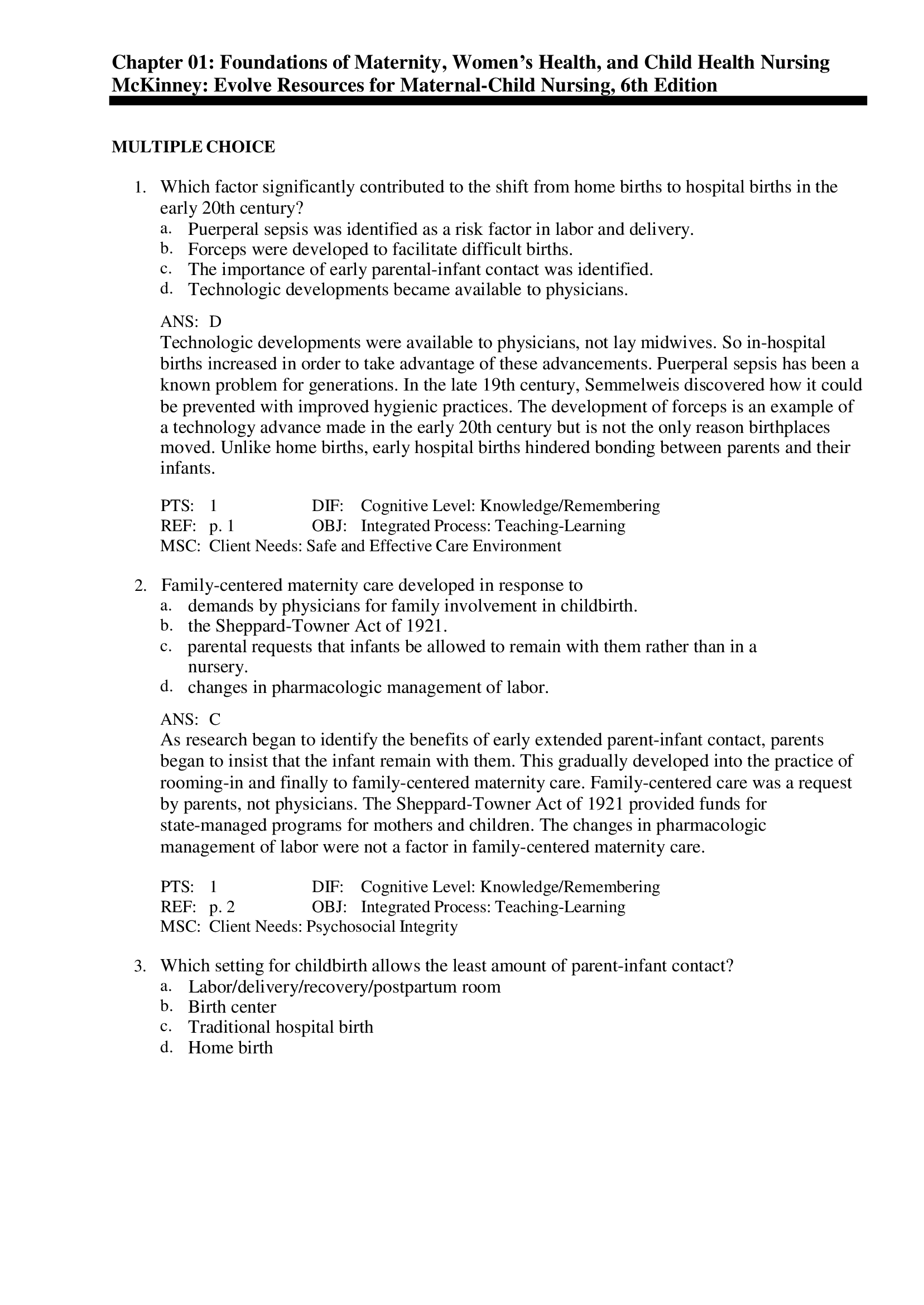
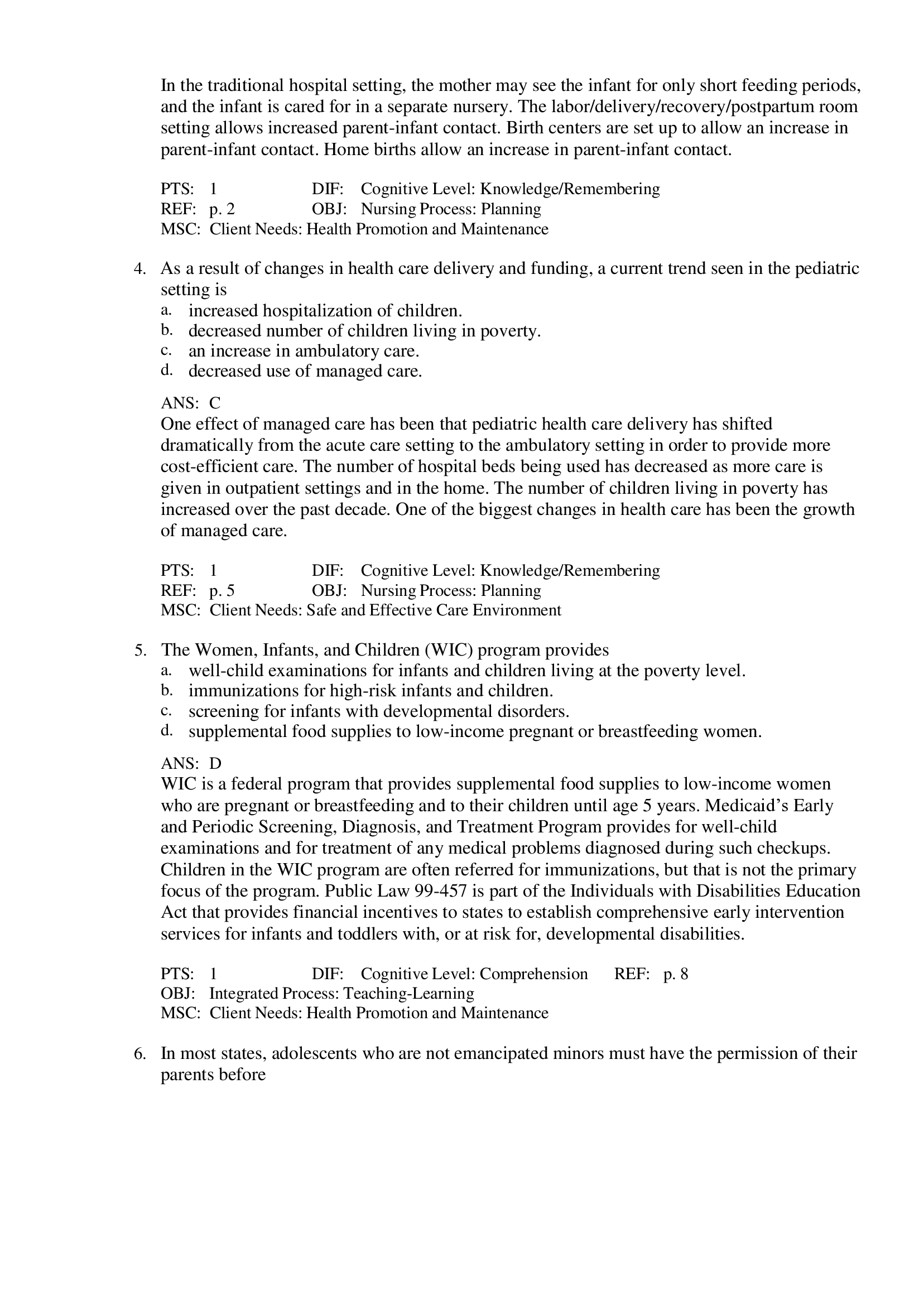
Preview page 1 Preview page 2 Preview page 3
Add To Favorites

Share this item Share this item

  • Item Details
  • Comments (0)
  • Reviews (0)
  • Contact Seller

Test Bank For Maternal-Child Nursing 6th Edition by Emily Slone McKinney, All Chapters 1-55

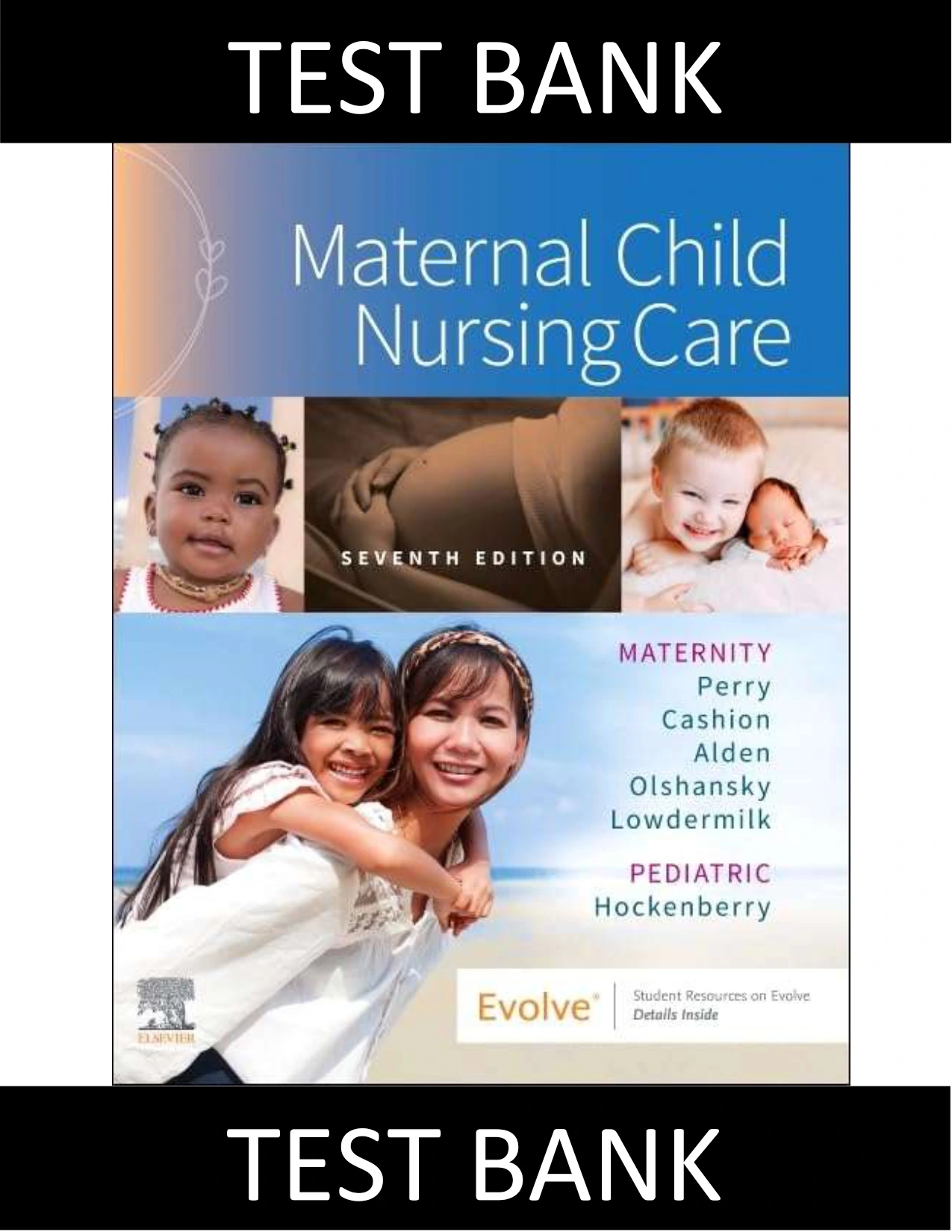
Prepare for exam success with the Test Bank for Maternal-Child Nursing, 6th Edition by Emily Slone McKinney, Susan Rowen James, Sharon Smith Murray, Kristine Nelson, and Jean Ashwill.

This complete test bank provides chapter-by-chapter exam-style questions with verified answers, giving nursing students and instructors a reliable tool for both study and assessment.

What You’ll Get:

  • Full Chapter Coverage – All chapters from the 6th Edition are included.
  • Exam-Style Questions – Multiple choice, application-based, and case study formats.
  • Verified Correct Answers – Accuracy guaranteed for effective learning.
  • Supports NCLEX Prep – Reinforces key maternal-child nursing concepts.
  • Time-Saving Resource – Focus on the most important and testable material.

Perfect for nursing students preparing for exams and NCLEX-style assessments, and for instructors building quizzes or practice tests, this test bank is a trusted study companion for mastering maternal-child nursing.

Sample Test Bank Q & As Chapter 03: The Childbearing and Child-Rearing Family

McKinney: Evolve Resources for Maternal-Child Nursing, 6th Edition Test Bank

1. The nurse teaches parents that the formula used to guide time-out as a disciplinary method is

a. 1 minute per each year of the child’s age.

b. to relate the length of the time-out to the severity of the behavior.

c. never to use time-out for a child younger than 4 years.

d. to follow the time-out with a treat.

ANS: A

It is important to structure time-out in a time frame that allows the child to understand why he or she has been removed from the environment. The current guideline is 1 minute per age in years. Relating time to a behavior is subjective and is inappropriate when the child is very young. Time-out can be used with the toddler. Negative behavior should not be reinforced with a positive action.

PTS: 1 DIF: Cognitive Level: Knowledge/Remembering REF: p. 44 OBJ: Integrated Process: Teaching-Learning MSC: Client Needs: Health Promotion and Maintenance

2. The nurse observes that when an 8-year-old enters the playroom, the child often causes disruption by taking toys from other children. The nurse’s best approach for this behavior is to a. ban the child from the playroom until the child learns to control behavior.

b. explain to the children in the playroom that this child is very ill and should be allowed to have the toys.

c. approach the child in his or her room and ask, “Would you like it if the other children took your toys from you?”

d. approach the child in his room and state, “I am concerned that you are taking the other children’s toys. It upsets them and me.”

ANS: D

By the nurse’s using “I” rather than the “you” message, the child can focus on the behavior. The child and the nurse can begin to explore why the behavior occurs. Banning the child from the playroom will not solve the problem. The problem is his behavior, not the place where he exhibits it. Illness is not a reason for a child to be undisciplined. When the child recovers, the parents will have to deal with a child who is undisciplined and unruly. Children should not be made to feel guilty and to have their self-esteem attacked.

PTS: 1 DIF: Cognitive Level: Application/Applying

REF: p. 44 OBJ: Integrated Process: Communication and Documentation MSC: Client Needs: Health Promotion and Maintenance

3. Families who deal effectively with stress exhibit which behavior pattern?

a. Focus on family problems

b. Feel weakened by stress

c. Expect that some stress is normal

d. Feel guilty when stress exists

ANS: C

Healthy families recognize that some stress is normal in all families. Healthy families focus on family strengths rather than on the problems and know that stress is temporary and may be positive. If families are dealing effectively with stress, then weakening of the family unit should not occur. Because some stress is normal in all families, feeling guilty is not reasonable. Guilt only immobilizes the family and does not lead to resolution of the stress.

PTS: 1 DIF: Cognitive Level: Comprehension/Understanding REF: p. 38 OBJ: Nursing Process: Assessment

MSC: Client Needs: Psychosocial Integrity

4. Which family will most likely have the most difficulty coping with a seriously ill child?

a. A single-parent mother who has the support of her parents and siblings

b. Parents who have just moved to the area and have not yet found health care providers

c. The family of a child who has had multiple hospitalizations related to asthma and has adequate relationships with the nursing staff

d. A family in which there is a young child and four older married children who live in the area

ANS: B

Parents in a new environment will have increased stress related to their lack of a support system. They have no previous experiences in the setting from which to draw confidence. Not only does this family not have friends or relatives to help them, they must find a provider when their child is seriously ill. Although only one parent is available, she has the support of her extended family, which will assist her in adjusting to the crisis. Because this family has had positive experiences in the past, family members can draw from those experiences and feel confident about the setting. This family has an extensive support system that will assist the parents in adjusting to the crisis.

PTS: 1 DIF: Cognitive Level: Comprehension/Understanding

REF: p. 38 | Box 3.1 OBJ: Nursing Process: Assessment MSC: Client Needs: Psychosocial Integrity

5. A nurse determines that a child consistently displays predictable behavior and is regular in performing daily habits. Which temperament is the child displaying? a. Easy

b. Slow-to-warm-up

c. Difficult

d. Shy

ANS: A

Children with an easy temperament are even tempered, predictable, and regular in their habits. They react positively to new stimuli. The slow-to-warm-up temperament type prefers to be inactive and moody. A high activity level and adapting slowly to new stimuli are characteristics of a difficult temperament. Shyness is a personality type and not a characteristic of temperament.

PTS: 1 DIF: Cognitive Level: Knowledge/Remembering REF: p. 43 OBJ: Nursing Process: Assessment

MSC: Client Needs: Psychosocial Integrity

6. The parent of a child who has had numerous hospitalizations asks the nurse for advice because the child has been having behavior problems at home and in school. In discussing effective discipline, what is an essential component?

a. All children display some degree of acting out, and this behavior is normal.

b. The child is manipulative and should have firmer limits set on her behavior.

c. Positive reinforcement and encouragement should be used to promote cooperation and the desired behaviors.

d. Underlying reasons for rules should be given, and the child should be allowed to decide which rules should be followed.

ANS: C

Using positive reinforcement and encouragement to promote cooperation and desired behaviors is one of the three essential components of effective discipline. Behavior problems should not be disregarded as normal. It would be incorrect to assume the child is being manipulative and should have firmer limits set on her behaviors. Providing the underlying reasons for rules and giving the child a choice concerning which rules to follow constitute a component of permissive parenting and are not considered an essential component of effective discipline.

PTS: 1 DIF: Cognitive Level: Comprehension/Understanding REF: p. 44 OBJ: Integrated Process: Teaching-Learning

MSC: Client Needs: Psychosocial Integrity

7. What characteristic would most likely be found in a Mexican-American family? a. Stoicism

b. Close extended family

c. Considering docile children weak

d. Very interested in health-promoting lifestyles

ANS: B

Most Mexican-American families are very close, and it is not unusual for children to be surrounded by parents, siblings, grandparents, and godparents. It is important to respect this cultural characteristic and to see it as a strength, not a weakness. Although stoicism may be present in any family, Mexican-American families tend to be more expressive. Considering docile children weak is a characteristic of Native Americans. Although everyone tends now to embrace more health-promoting lifestyles, they are more prominent in Anglo-Americans.

PTS: 1 DIF: Cognitive Level: Knowledge/Remembering REF: p. 41 OBJ: Integrated Process: Culture and Spirituality

MSC: Client Needs: Psychosocial Integrity

8. While reviewing the dietary-intake documentation of a 7-year-old Asian patient with a fractured femur, the nurse notes that the patient consistently refuses to eat the food on his tray.

What assumption is most likely accurate? a. The child is a picky eater.

b. The child needs less food because of bed rest.

c. The child may have culturally related food preferences.

d. The child is probably eating between meals and spoiling his appetite.

ANS: C

When cultural differences are noted, food preferences should always be obtained. A child will often refuse to eat unfamiliar foods. Although the child may be a picky eater, the key point is that there are cultural differences that need to be considered. The foods he is being served may seem strange to a child. Nutrition plays an important role in healing. Although the energy the child expends has decreased while on bed rest, he or she has increased needs for good nutrition. Although the nurse should determine whether the child is eating food the family has brought from home, the more important point is to determine whether there are culturally related food preferences.

PTS: 1 DIF: Cognitive Level: Comprehension/Understanding REF: p. 38 OBJ: Integrated Process: Culture and Spirituality

MSC: Client Needs: Psychosocial Integrity

9. A nurse is caring for a child who is a Christian Scientist. What intervention should the nurse include in the care plan for this child?

a. Offer iced tea to the child who is experiencing deficient fluid volume.

b. Offer to inform a Christian Science practitioner of the child’s admission.

c. Allow parents to sign a form opting out of routine immunizations.

d. Ask parents whether the child has been baptized.

ANS: B

When a Christian Science believer is hospitalized, a parent or patient may request that a Christian Science practitioner be notified as opposed to the hospital-assigned clergy. Coffee and tea are declined as a drink. Christian Science believers seek exemption from immunizations but obey legal requirements. Baptism is not a ceremony for the Christian Science religion.

PTS: 1 DIF: Cognitive Level: Application/Applying

REF: Table 3.1 OBJ: Integrated Process: Culture and Spirituality

MSC: Client Needs: Psychosocial Integrity

10. To resolve family conflict, it is necessary to have open communication, accurate perception of the problem, and a(n)

a. intact family structure.

b. arbitrator.

c. willingness to consider the view of others.

d. balance in personality types.

ANS: C

Without constructive efforts to resolve the conflict, such as the willingness of the members of a group to consider the views of others, conflict resolution cannot take place. The structure of a family may affect family dynamics, but it is still possible to resolve conflict without an intact family structure if all of the ingredients of conflict resolution are present. Conflicts can be resolved without the assistance of an arbitrator. Most families have diverse personality types among their members. This diversity may make conflict resolution more difficult but should not impede it as long as the ingredients of conflict resolution are present.

PTS: 1 DIF: Cognitive Level: Comprehension/Understanding REF: p. 37 OBJ: Nursing Process: Assessment

MSC: Client Needs: Psychosocial Integrity

11. Which statement is true about the characteristics of a healthy family?

a. The parents and children have rigid assignments for all the family tasks.

b. Young families assume the total responsibility for the parenting tasks, refusing any assistance.

c. The family is overwhelmed by the significant changes that occur as a result of childbirth.

d. Adults agree on the majority of basic parenting principles.

ANS: D

Adults in a healthy family communicate with each other so that minimal discord occurs in parenting principles, such as discipline and sleep schedules. Healthy families remain flexible in their role assignments. Members of a healthy family accept assistance without feeling guilty. Healthy families can adapt to the significant changes that are common during the months after childbirth.

PTS: 1 DIF: Cognitive Level: Knowledge/Remembering REF: p. 37 OBJ: Nursing Process: Assessment

MSC: Client Needs: Psychosocial Integrity

12. A nurse observes that parents discuss rules with their children when the children do not agree with the rules. Which style of parenting is being displayed? a. Autocratic

b. Authoritative

c. Permissive

d. Disciplinarian

ANS: B

A parent who discusses the rules with which children do not agree is using an authoritative parenting style. A parent who expects children to follow rules without questioning is using an authoritarian parenting style. A parent who does not consistently enforce rules and allows the child to decide whether he or she wishes to follow rules is using a permissive parenting style. A disciplinarian style would be similar to the authoritarian style.

PTS: 1 DIF: Cognitive Level: Knowledge/Remembering REF: p. 43 OBJ: Nursing Process: Assessment

MSC: Client Needs: Psychosocial Integrity

13. What should the nurse expect to be problematic for a family whose religious affiliation is Jehovah’s Witness? a. Birth control

b. Autopsy

c. Plasma expanders

d. Blood transfusion

ANS: D

Jehovah’s Witnesses do not accept blood transfusions but may accept alternatives such as plasma expanders. Birth control and autopsy are also allowed.

PTS: 1 DIF: Cognitive Level: Knowledge/Remembering

REF: Table 3.1 OBJ: Integrated Process: Culture and Spirituality

MSC: Client Needs: Psychosocial Integrity

14. A traditional family structure in which married male and female partners and their children live as an independent unit is known as a(n) _____ family. a. extended

b. binuclear

c. nuclear

d. blended

ANS: C

A nuclear family is one in which two opposite-sex parents and their children live together. This is also known as a traditional family. Extended or multigenerational families include other blood relatives in addition to the parents. Binuclear is not a listed family type according to U.S. Census Bureau data but would include two nuclear families living together. A blended family is reconstructed after divorce and involves the merger of two families.

PTS: 1 DIF: Cognitive Level: Knowledge/Remembering REF: p. 34 OBJ: Nursing Process: Assessment

MSC: Client Needs: Psychosocial Integrity

15. A pictorial tool that can assist the nurse in assessing aspects of family life related to health care is the

a. genogram.

b. ecomap.

c. life cycle model.

d. human development wheel.

ANS: A

A genogram (also known as a pedigree) is a diagram that depicts the relationships and health issues of family members over generations, usually three. An ecomap is a pictorial representation of the family structures and their relationships with the external environment. The life cycle model in no way illustrates a family genogram. This model focuses on stages that a person reaches throughout his or her life. The human development wheel describes various stages of growth and development rather than a family’s relationships to each other.

PTS: 1 DIF: Cognitive Level: Knowledge/Remembering REF: p. 45 OBJ: Nursing Process: Assessment

MSC: Client Needs: Psychosocial Integrity

16. According to Friedman’s classifications, providing such physical necessities as food, clothing, and shelter is the __________ family function. a. economic

b. socialization

c. reproductive

d. health care

ANS: D

Physical necessities such as food, clothing, and shelter are considered part of health care. The economic function provides resources but is not concerned with health care and other basic necessities. The socialization function teaches the child cultural values. The reproductive function is concerned with ensuring family continuity.

Contact the Seller

Please Sign In to contact this seller.


  • 👎  Report Copyright Violation

Frequently Asked Questions

What Do I Get When I Buy This Study Material?

+

When you buy a study material on Passing Grades, an instant download link will be sent directly to your email, giving you access to the file anytime after payment is completed.

Is Passing Grades a Trusted Platform?

+

Yes, Passing Grades is a reputable students’ marketplace with a secure payment system and reliable customer support. You can trust us to ensure a safe and seamless transaction experience.

Will I Be Stuck with a Subscription?

+

No, all purchases on Passing Grades are one-time transactions. You only pay for the notes you choose to buy, with no subscriptions or hidden fees attached.

Who Am I Buying These Study Materials From?

+

Passing Grades is a marketplace, which means you are purchasing the document from an individual vendor, not directly from us. We facilitate the payment and delivery process between you and the vendor.

Does Passing Grades Offer Free Study Materials?

+

Yes, sellers on Passing Grades have uploaded numerous free test banks, exams, practice questions, and class notes that can be downloaded at no cost.

Pasinggrades - Quality Study Materials

USD 15

    • Quality checked by Pasing Grades
    • 100% satisfaction guarantee
    • Seller: mentor2000
Buy PDF $15

Seller Information

mentor2000

Member since April 2021

  • icon
  • icon
View Profile
  • total sales

    0
  • Favourites

    0
  • Comments

    0
    ( 0 Ratings )

Item Information

  • Uploaded

    21 August 2024

  • Updated

    08 September 2025

  • Category

    Nursing

  • Item Type

    test bank

  • Tags

    Test Bank Maternal Child Nursing 6th Edition Emily Slone McKinney

Related Exam Prep Guides by mentor2000

Test Bank for Essentials for Nursing Practice 8th Edition by Potter | All Chapters
View Document

Test Bank for Essent...

  • mentor2000

    mentor2000

  • test bank

Master nursing concepts with this study material; Test Bank for Essentials for Nursing Practice, 8th...

15 USD

0

0

A &P 1 MA278 BSC2 Final Module II Questions & Answers 2026 Update
View Document

A &P 1 MA278 BSC2 Fi...

  • mentor2000

    mentor2000

  • test bank

Prepare for success with A&P 1 MA278 BSC2 Final Module II 2024 Q&A. Boost your grades with this comp...

15 USD

0

0

ATI Comprehensive Predictor Exam 2026
View Document

ATI Comprehensive Pr...

  • mentor2000

    mentor2000

  • test bank

Prepare for success with the ATI Comprehensive Predictor Exam 2026. Access key practice questions to...

15 USD

0

0

Purchase

Download link will be sent to this email immediately after purchase.

IMPORTANT LINKS

  • How To Upload Class Notes
  • Selling Tips
  • Passing Grades's Study Materials
  • Scholarships for International Students 2025

POPULAR CATEGORIES

  • Law
  • Accounting
  • English
  • Psychology
  • Business
  • Nursing
  • Computer Science
  • General

View Document

  • Blog
  • Contact
  • Delivery Policy
  • Latest Scholarships Around the World
  • How to Pass Bar Exams: Passing Grades’ Strategies
  • How to Study and Pass the CPA Exam
  • All Test Banks
  • Faq
  • Copyright Claims
  • Privacy Policy
  • Terms of Use

KNOWLEDGE BASE

  • How to Write A+ Grade Good Research Paper
  • How to Manage Stress During Exam Period
  • Best Time to Study
  • How to Pass NCLEX-RN Exam
  • How To Effectively Utilize Test Banks
  • Popular Shadow Health Exam Assessments
  • Popular HESI Case Studies
  • How to Prepare for a Nursing Career
  • The Importance Of Summaries in Exam Revisvion

© 2026 Pasing Grades. All rights reserved.