Pasing Grades
  • Start Selling
  • Blog
  • Contact
  • 0

    Your cart is empty!

English

  • English
  • Spanish
  • Arabic
Create Account Sign In
  • Library
    • New Prep Guides
    • Featured Prep Guides
    • Free Exam Prep Guides
    • Best sellers
  • General
  • Nursing
    • Research Paper
    • Case Study
    • Discussion Post
    • Assignment
    • Exam
    • Practice Questions and Answers
    • Test Bank
    • solutions manual
  • Accounting
    • Case Study
    • Thesis
    • Study Guide
    • Summary
    • Research Paper
    • test bank
  • English
    • Creative Writing
    • Research Paper
    • Summary
    • Rhetorics
    • Literature
    • Journal
    • Exam
    • Grammar
    • Discussion Post
    • Essay
  • Psychology
    • Hesi
    • Presentation
    • Essay
    • Summary
    • Study Guide
    • Essay
    • Solution Manual
    • Final Exam Review
    • Class Notes
    • test bank
  • Business
    • Lecture Notes
    • Solution Manual
    • Presentation
    • Business Plan
    • Class Notes
    • Experiment
    • Summary
    • Practice Questions
    • Study Guide
    • Case Study
    • test bank
    • Exam
  • More
    • Computer Science
    • Economics
    • Statistics
    • Engineering
    • Biology
    • Religious Studies
    • Physics
    • Chemistry
    • Mathematics
    • History
    • Sociology
    • Science
    • Philosophy
    • Law
  • Pages
    • About Us
    • Selling Tips
    • Delivery Policy
    • Faq
    • Privacy Policy
  • Flash Sale
  • Home
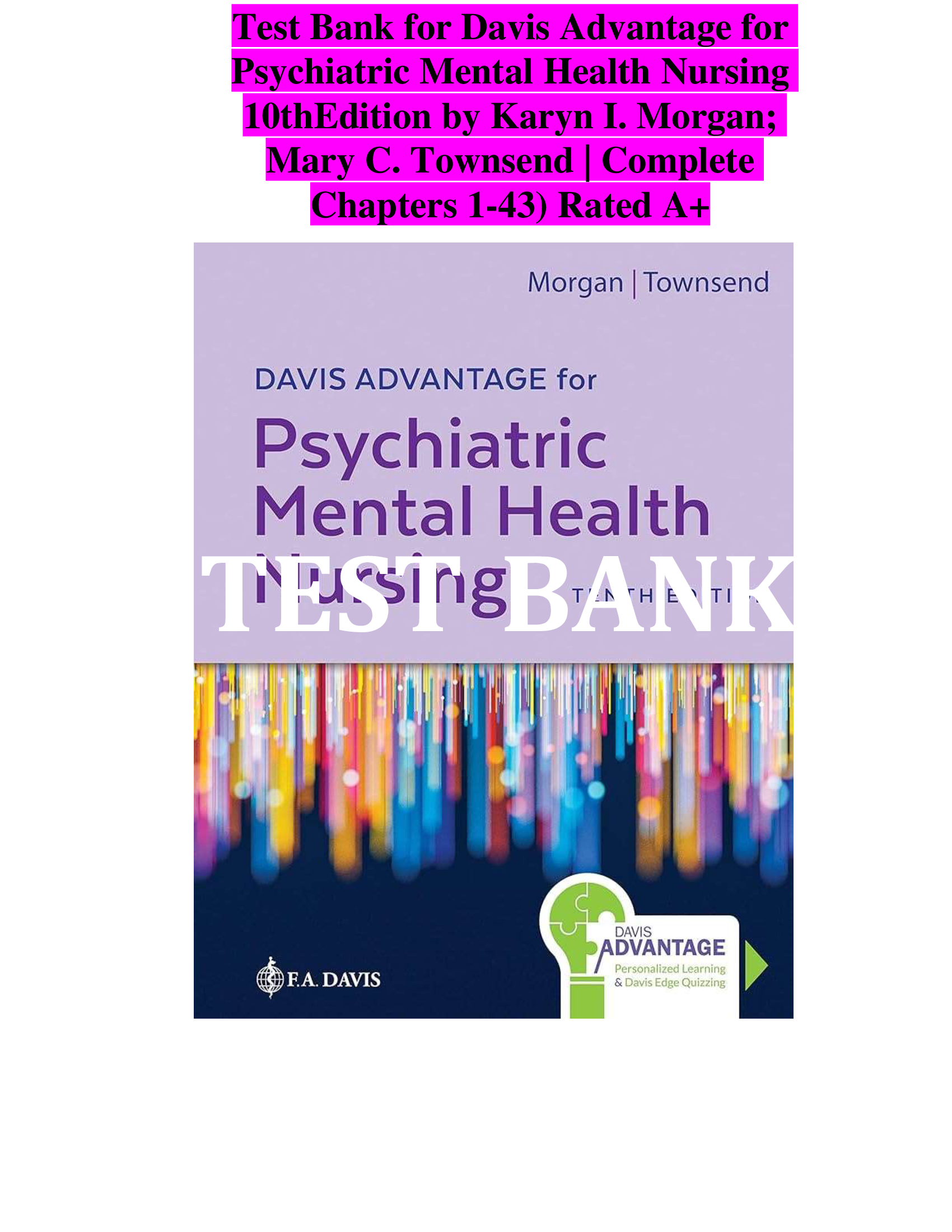
  • Test Bank for Davis Advantage for Psychiatric Mental Health Nursing 10th Edition by Karyn I. Morgan; Mary C. Townsend | Complete Chapters 1-43 | Rated A+

Test Bank for Davis Advantage for Psychiatric Mental Health Nursing 10th Edition by Karyn I. Morgan; Mary C. Townsend | Complete Chapters 1-43 | Rated A+

Preview page 1 Preview page 2 Preview page 3
Add To Favorites

Share this item Share this item

  • Item Details
  • Comments (0)
  • Reviews (0)
  • Contact Seller

Complete Exam Prep with Davis Advantage for Psychiatric Mental Health Nursing Chapters 1-43 | Rated A+

If you're preparing for psychiatric mental health nursing exams, the Test Bank for Davis Advantage for Psychiatric Mental Health Nursing, 10th Edition is your ultimate study companion. This comprehensive test bank, based on Karyn I. Morgan and Mary C. Townsend’s trusted textbook, offers a vast collection of multiple-choice questions, detailed answers, and in-depth explanations to help nursing students, educators, and professionals master essential psychiatric nursing concepts.

Designed to align with the latest nursing curriculum, this Davis Advantage Test Bank ensures that you stay current with evidence-based practices in mental health nursing.

✅ Prepare with confidence—Buy Now and take your exam preparation to the next level!

What’s Inside?

✔ Comprehensive set of multiple-choice questions
✔ Accurate answers with detailed explanations
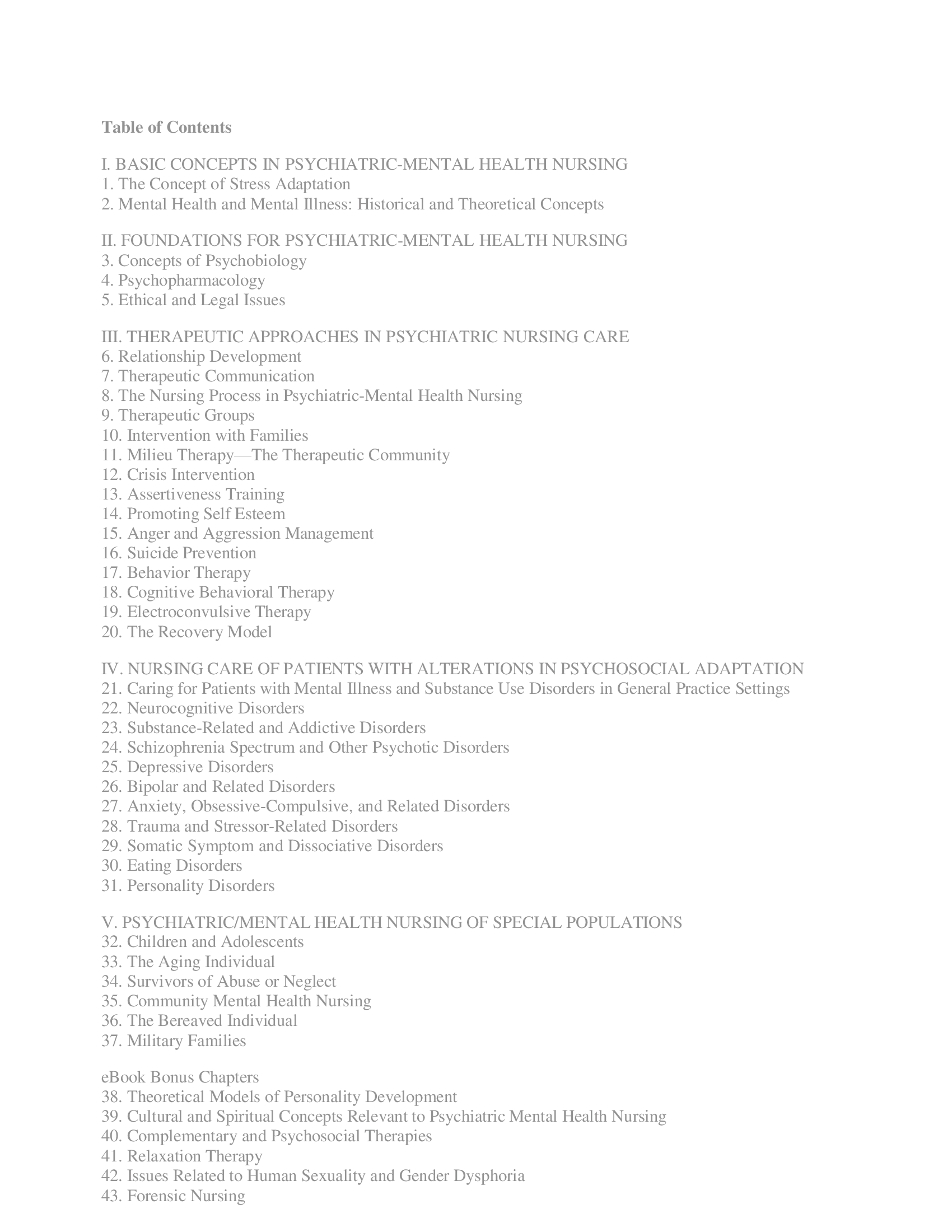
✔ Covers all 43 chapters of Davis Advantage for Psychiatric Mental Health Nursing
✔ Perfect for self-assessment and exam success

Don’t miss this essential resource! Buy Now and get instant access to the complete test bank!

Why Choose the Davis Advantage Test Bank?

This Test Bank for Psychiatric Mental Health Nursing helps students strengthen their understanding of mental health disorders, therapeutic interventions, and psychiatric care principles. Whether you're studying for exams or reinforcing your knowledge, this test bank is the perfect tool to boost confidence and improve performance.

Looking for a Davis Advantage for Psychiatric Mental Health Nursing 10th Edition PDF Free? While we don’t offer free versions, we provide authentic, high-quality content to help you excel in your nursing studies.

Get ahead in your nursing exams—Buy Now and start practicing with the Davis Advantage Test Bank today!

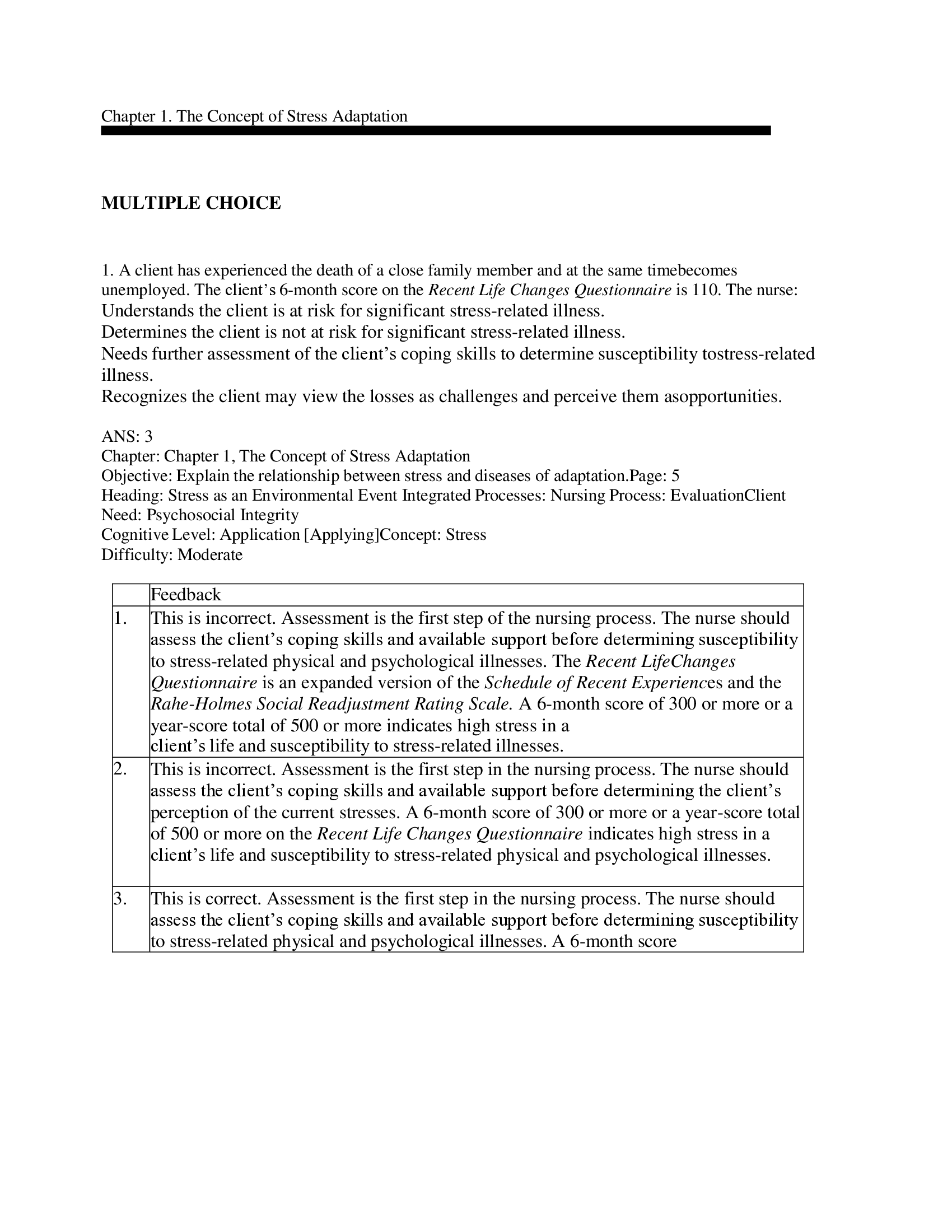
Sample Questions from the Test Bank for Davis Advantage for Psychiatric Mental Health Nursing

Chapter 15. Anger and Aggression Management


MULTIPLE CHOICE

1. A student nurse has just entered a psychiatric rotation. The student asks a nursing instructor, “How will we know if someone may get violent?” Which is the most appropriate reply by the nursing instructor?

1. “You can’t really say for sure. There are limited indicators of potential violence.”

2. “Certain behaviors indicate a potential for violence, such as rigid posture, clenched fists, and raised voice.”                                                                 

3. “Any client can become violent, so be aware of your surroundings at all times.”

4. “When a client suddenly becomes quiet, is withdrawn, and maintains a flat affect, this is an indicator of potential violence.”

ANS: 2

Chapter: Chapter 15, Anger and Aggression Management

Objective: Discuss predisposing factors to the maladaptive expreasbsiribo.cnomo/fteasnt ger. Page: 252

Heading: Predisposing Factors to Anger and Aggression > Environmental Factors

Integrated Processes: Teaching and Learning                                Client Need: Safe and Effective Care Environment: Management of Care Cognitive Level: Comprehension [Understanding]

Concept: Violence Difficulty: Easy      

            Feedback

1.         This is incorrect. There are many indicators of potential vioablierbn.coem,/mtesat ny of which are considered “prodromal.”

2.         This is correct. The most appropriate statement by the instructor is “Certain

behaviors indicate a potential for violence. They are labeled as a ‘prodromal syndrome’ and include rigid posture, clenched fists, and .” Rigid posture, clenched fists, and raised voice are predictors of violent behavior.

3.         This is incorrect. Although the prudent nurse and student would be aware of their

surroundings, there are indicators of potential violence should know to promote safety.

4.         This is incorrect. This behavior is not typically a sign for the “prodromal syndrome”

of pending violence.                                                             

CON: Violence

2. The nurse is discussing the concept of anger versus aggression with clients during a counseling session. Which of the following statements best differentiates between anger and aggression?

1. “Aggression is a physiological arousal state due to a painful exapbierbr.iceonmc/tes,t where anger is a learned behavior.”

2. “Anger is a normal, healthy emotional response to a negative stimulus, where aggression is an expression of anger.”                                          

3. “Aggression is a normal emotional response to a negative stimulus, where anger is an emotional expression of aggression.”

4. “There is no difference between anger and aggression; they are essentially the same phenomenon.”

ANS: 2

Chapter: Chapter 15, Anger and Aggression Management

Objective: Define and differentiate between anger and aggression.

Page: 252

Heading: Anger and Aggression, Defined

Integrated Processes: Teaching and Learning

Client Need: Psychosocial Integrity

Cognitive Level: Comprehension [Understanding] Concept: Violence

Difficulty: Easy

                Feedback

1.             This is incorrect. Aggression is a learned behavior in respoanbsirb.ctoma/tnesgt er, which is a physiological state of arousal.

2.             This is correct. Anger is a normal emotion that is typically experienced as an almost- automatic inner response to negative stimuli such as emotiaobnirab.lcopma/itnes,tfrustration, or fear. Aggression is a behavioral response of anger intended to inflict pain to or injury

to others.

3.             This is incorrect. Aggression is not a normal emotional response to a negative stimulus, as it is typically a violent act toward a person or oabbirjbe.cotmi/tesrtesponse to

anger.

4.     This is incorrect. Anger and aggression are significantly different.

CON: Violence

3. Which client statement demonstrates improvement in anger and aggression management?

1. “I realize I have a problem expressing my anger appropriately.a”birb.com/test

2. “I know I can’t use physical force anymore, but I can verbally intimidate others.”

3. “It’s bad to feel as angry as I feel. I’m working on eliminating this poisonous emotion entirely.

4. “Because my wife seems to be the one to set me off, I’ve decided to remain separated from her.”

ANS: 1

Chapter: Chapter 15, Anger/Aggression Management

Objective: Apply the nursing process to clients expressing anger or aggression, (d) Evaluate achievement of the projected outcomes in the interventiaobnirbw.coimth/tecsltients

demonstrating maladaptive expression of anger.

Page: 257

Heading: The Nursing Process > Evaluation; Table 16–2, Care Plan for the Individual

Who Expresses Anger Inappropriately

Integrated Processes: Nursing Process: Evaluation

Client Need: Psychosocial Integrity Cognitive Level: Application [Applying] Concept: Violence

Difficulty: Moderate

1.       Feedback                                                                             

This is correct. This statement indicates that the client is taking responsibility for his or her anger.

2.       This is incorrect. The client does not recognize that aggresasbioirbn.ccoman/tebste verbal as well as physical.

3.       This is incorrect. The client does not recognize the difference between anger and

aggression. Anger is a powerful and normal emotion, whereas aggression is a negative form of expressing anger.                                    

4.       This is incorrect. The client does not recognize that the expression of anger can come under personal control. By eliminating the stimulus (interactions with the wife), the client does not learn how to control their aggressaibvireb.cteomnd/teesnt cies.

CON: Violence

4. A client is served divorce papers while on the inpatient psychiatric unit. When the nurse tells the client that the unit telephone cannot be used after-haboirub.rcso,mt/hteestclient raises his fists, swears, and spits at the nurse. What would be the priority nursing diagnosis at this time?

1. Ineffective coping related to dysfunctional family system as evidenced by (AEB) aggressive behavior

2. Risk for violence related to dysfunctional family system AEB aggressive behavior

3. Risk for anger related to dysfunctional family system AEB aggressive behavior

4. Ineffective grieving related to dysfunctional family system AEaBbirbp.ceonmd/tiensgt  divorce

ANS: 2   

Objective: Apply the nursing process to clients expressing anger or aggression, (a)

Assessment: Describe physical and psychological responses to anger. Page: 257

Heading: Table 16–2, Care Plan for the Individual Who Expresses Anger Inappropriately

Integrated Processes: Nursing Process: Assessment

Client Need: Psychosocial Integrity Cognitive Level: Application [Applying] Concept: Violence

Difficulty: Moderate

            Feedback                                                                             

1.         This is incorrect. This would not be a priority nursing diagnosis compared with the other answer options.

2.         This is correct. This would be a priority nursing diagnosis absirbth.ceomc/lteiestnt has displayed aggressive and violent behavior toward the nurse.

3.         This is incorrect. This is not a NANDA International-approved nursing diagnosis.

4.         This is incorrect. This is not a priority nursing diagnosis.

CON: Violence

5. A nurse is caring for four clients. Which client does the nurse identify is least prone to developing problems with anger and aggression?

1. A child raised by a physically abusive parent

2. An adult with a history of epilepsy

3. A young adult living in the ghetto of an inner city

4. An adolescent raised by Scandinavian immigrant parents

ANS: 4

Objective: Discuss predisposing factors to the maladaptive expreasbsiribo.cnomo/fteasnt ger. Page: 252

Heading: Predisposing Factors to Anger and Aggression > Environmental Factors

Integrated Processes: Nursing Process: Assessment

Client Need: Psychosocial Integrity Cognitive Level: Analysis [Analyzing] Concept: Violence

Difficulty: Difficult

                Feedback

1.             This is incorrect. A history of abuse is a predisposing factoarbitrob.caonmg/tesrt and aggression.

2.             This is incorrect. A history of epilepsy is a predisposing factor to anger and aggression.

3.             This is incorrect. A history of overcrowding and poverty  sing factors to anger and aggression.

4.       This is correct. An adolescent raised by Scandinavian immigrant parents would be least prone to developing problems with anger and aggression as compared with the other clients presented.

CON: Violence

6. After less-restrictive means have been attempted, an order for client restraints has been obtained for a hostile, aggressive 30-year-old client. If client aggression continues, how long will the nurse expect the client to remain in restraints wabitirhbo.cuomt /atespthysician

order renewal?

1. 1 hour

2. 2 hours

3. 3 hours

4. 4 hours

ANS: 4

Objective: Apply the nursing process to clients expressing anger or aggression, (d) Evaluation: Evaluate achievement of the projected outcomes in tahbeirbi.nctoemr/vteesnt tion with clients demonstrating maladaptive expression of anger.

Page: 257

Heading: The Nursing Process > Evaluation; Table 16–2, Care Plan for the Individual

Who Expresses Anger Inappropriately

Integrated Processes: Nursing Process: Implementation

Client Need: Safe and Effective Care Environment: Management of Care

Cognitive Level: Application [Applying] Concept: Safety

Difficulty: Moderate

                Feedback             

1.             This is incorrect. The Joint Commission requires that a physician or licensed independent provider (LIP) must reissue a new order for restraints every 1 hour for clients younger than 9 years.                                              

2.             This is incorrect. The Joint Commission requires that a physician or LIP must

reissue a new order for restraints every 2 hours for clients age 9 to 17 years.

3.             This is incorrect. Joint Commission requirements do not stipulate that a physician or LIP must reissue a new order for restraints every 3 hours for adults.

4.             This is correct. The Joint Commission requires that a physician or LIP must reissue a new order for restraints every 4 hours for adults.

CON: Safety

7. An adult client assaults another client and is placed in restraints. Which client statement alerts the nurse that further assessment is necessary?

1. “I hate all of you!”

2. “My fingers are tingly.”

3. “You wait until I tell my lawyer.”

4. “I have a sinus headache.”

ANS: 2

Objective: Apply the nursing process to clients expressing anger or aggression, (a) Assessment: Describe physical and psychological responses to anabgirebr.c.om/test

Page: 257

Heading: The Nursing Process > Assessment; Table 16–2, Care Plan for the Individual

Who Expresses Anger Inappropriately

Integrated Processes: Nursing Process: Assessment

Client Need: Physiological Integrity Cognitive Level: Application [Applying] Concept: Patient-Centered Care Difficulty: Moderate

Feedback        

1.         This is incorrect. This is an aggressive statement and would not necessitate further assessment.

2.         This is correct. The client’s statement “My fingers are tingly” indicates that the

restraints are too tight and impeding circulation.                  

3.         This is incorrect. This is an aggressive statement, which may be part of the reason

why the client is in restraints.

4.         This is incorrect. The client may be using this statement toadbiir

the restraints and does not need further assessment rationale for

CON: Patient-Centered Care

8. After the client’s restraints are removed, the staff discusses establishes guidelines for the client’s return to the therapeutic milieu. Which unit procedure is the staff implementing?

1. Milieu reenactment

2. Treatment planning

3. Crisis intervention

4. Debriefing

ANS: 4

Objective: Apply the nursing process to clients expressing anger or aggression, (d) 

Evaluation: Evaluate achievement of the projected outcomes in the intervention with

clients demonstrating maladaptive expression of anger. Page: 258

Heading: Table 16–2, Care Plan for the Individual Who Expresses Anger Inappropriately > Nursing Diagnosis: Risk for Self-Directed or Oatbhirbe.rc-oDm/itreestcted Violence Integrated Processes: Nursing Process: Evaluation

Client Need: Safe and Effective Care Environment: Management of Care

Cognitive Level: Application [Applying] Concept: Stress

Difficulty: Moderate

Feedback            

1.

2.             This is incorrect. This would not diminish the emotional impact of the intervention.

This is incorrect. Treatment planning would be an intervention as a result of debriefing.                                                                          

3.             This is incorrect. This occurred during the crisis, not afterward.

4.             This is correct. Debriefing following the incident allows the staff the opportunity to express feelings, review, and learn from the experience.

CON: Stress

9. Once the nurse initiates restraints for an out-of-control 45-year-old patient, per Joint

Commission standards, what must occur within 1 hour?

1. The patient must be let out of restraints.                                   

2. A physician or other LIP must conduct an in-person evaluation.

3. The patient must be bathed and fed.

4. The patient must be included in debriefing.                              

ANS: 2

Chapter: Chapter 15, Anger and Aggression Management

Objective: Apply the nursing process to clients expressing angeraobrirba.cgogmr/etessst ion, (d) Evaluation: Evaluate achievement of the projected outcomes in the intervention with clients demonstrating maladaptive expression of anger.

Page: 256                                                                                       

Heading: Table 16–2, Care Plan for the Individual Who Expresses Anger

Inappropriately > Nursing Diagnosis: Risk for Self-Directed or Other-Directed Violence

Integrated Processes: Nursing Process: Implementation

Client Need: Safe and Effective Care Environment: Management of Care

Cognitive Level: Comprehension [Understanding] Concept: Patient-Centered Care

Difficulty: Moderate                                                                      

10. Physical restraints are sometimes a necessary intervention This is based on which premise?

1. Clients with poor boundaries do not respond to verbal redirection, and they need firm and consistent limit-setting.

2. Clients with limited internal control over their behavior need external controls to prevent harm to themselves and others

3. Clients with antisocial tendencies need to submit to the staff’s authority.

4. Clients with behavioral dysfunction need strict limits and behavior interventions


ANS: 2

Chapter: Chapter 15, Anger and Aggression Management

Objective: Apply the nursing process to clients anger or aggression, (a) Assessment: Describe physical and psychological responses to anger.

Page: 256

Heading: Table 16–2, Care Plan for the Individual Who ExpresseasbirAb.cnogme/trest Inappropriately > Nursing Diagnosis: Risk for Self-Directed or Other-Directed Violence Integrated Processes: Nursing Process: Evaluation

Client Need: Safe and Effective Care Environment: Management of Care


Cognitive Level: Comprehension [Understanding] Concept: Safety

Difficulty: Moderate

            Feedback

1.         This is incorrect. The least-restrictive interventions, such as removal of privileges, are used first.

2.         This is correct. Restraints are sometimes necessary when clients have limited internal control over their behavior and need external controls (restraints) to prevent harm to themself and others. Restraints are removed as soon as the client has regained control. The least-restrictive interventions are useadbirubn.cloems/stestht e client is a danger to self or others.

3.         This is incorrect. Antisocial behaviors do not necessitate severe limitations such as restraints. 

4.         This is incorrect. The least-restrictive interventions should be used to modify nonviolent behavior.

CON: Safety

11. A client diagnosed with paranoid schizophrenia has a assault. The nurse assigns “Risk for other-directed violence” as the client’s priority nursing diagnosis. Which is an appropriate, correctly written outcome for the client?

1. The client will not verbalize anger or hit anyone.

2. The client will verbalize anger rather than hit others.

3. The client will not inflict harm on others during this shift.

4. The client will be restrained if any abuse is observed during this shift. 

ANS: 3

Chapter: Chapter 15, Anger and Aggression Management

Objective: Apply the nursing process to clients expressing anger or aggression, (b) Diagnosis/Outcome Identification: Formulate nursing diagnoses  criteria for clients expressing anger and aggression.

Page: 256

Heading: The Nursing Process > Diagnosis/Outcome 16–2, Care Plan for the Individual Who Expresses Anger Inappropriately > Nursing Diagnosis: Risk for Self-Directed or Other-Directed Violence

Integrated Processes: Nursing Process: Planning

Client Need: Safe and Effective Care Environment: 

Cognitive Level: Application [Applying] Concept: Patient-Centered Care

Difficulty: Moderate                                                                      

            Feedback

1.         This is incorrect. Outcomes must be client-centered, specific, realistic, and measurable and contain a time frame. This nursing  because there is no time frame.

2.         This is incorrect. There is no time frame in this outcome. Outcomes must be client-

centered, specific, realistic, and measurable and have a

3.         This is correct. Preventing injury to others is the appropriate outcome. Outcomes must be client-centered, specific, realistic, and measurable and contain a time frame.

4.         This is incorrect. This would be considered an intervention outcome

CON: Patient-Centered Care

12. When least-restrictive methods fail for an angry, aggressive client, a physician orders restraints at 3 a.m. Per Joint Commission standards, at what interested by whom does the nurse expect an in-person client evaluation?

Contact the Seller

Please Sign In to contact this seller.


  • 👎  Report Copyright Violation

Frequently Asked Questions

What Do I Get When I Buy This Study Material?

+

When you buy a study material on Passing Grades, an instant download link will be sent directly to your email, giving you access to the file anytime after payment is completed.

Is Passing Grades a Trusted Platform?

+

Yes, Passing Grades is a reputable students’ marketplace with a secure payment system and reliable customer support. You can trust us to ensure a safe and seamless transaction experience.

Will I Be Stuck with a Subscription?

+

No, all purchases on Passing Grades are one-time transactions. You only pay for the notes you choose to buy, with no subscriptions or hidden fees attached.

Who Am I Buying These Study Materials From?

+

Passing Grades is a marketplace, which means you are purchasing the document from an individual vendor, not directly from us. We facilitate the payment and delivery process between you and the vendor.

Does Passing Grades Offer Free Study Materials?

+

Yes, sellers on Passing Grades have uploaded numerous free test banks, exams, practice questions, and class notes that can be downloaded at no cost.

Pasinggrades - Quality Study Materials

USD 15

    • Quality checked by Pasing Grades
    • 100% satisfaction guarantee
    • Seller: Highergrades
Buy PDF $15

Seller Information

Highergrades

Member since January 2024

  • icon
  • icon
View Profile
  • total sales

    0
  • Favourites

    0
  • Comments

    0
    ( 0 Ratings )

Item Information

  • Uploaded

    21 August 2024

  • Updated

    01 October 2025

  • Category

    Nursing

  • Item Type

    study guide

  • Tags

    Test Bank Davis Advantage for Psychiatric Mental Health Nursing 10th Edition Karyn I. Morgan Mary C. Townsend

Related Exam Prep Guides by Highergrades

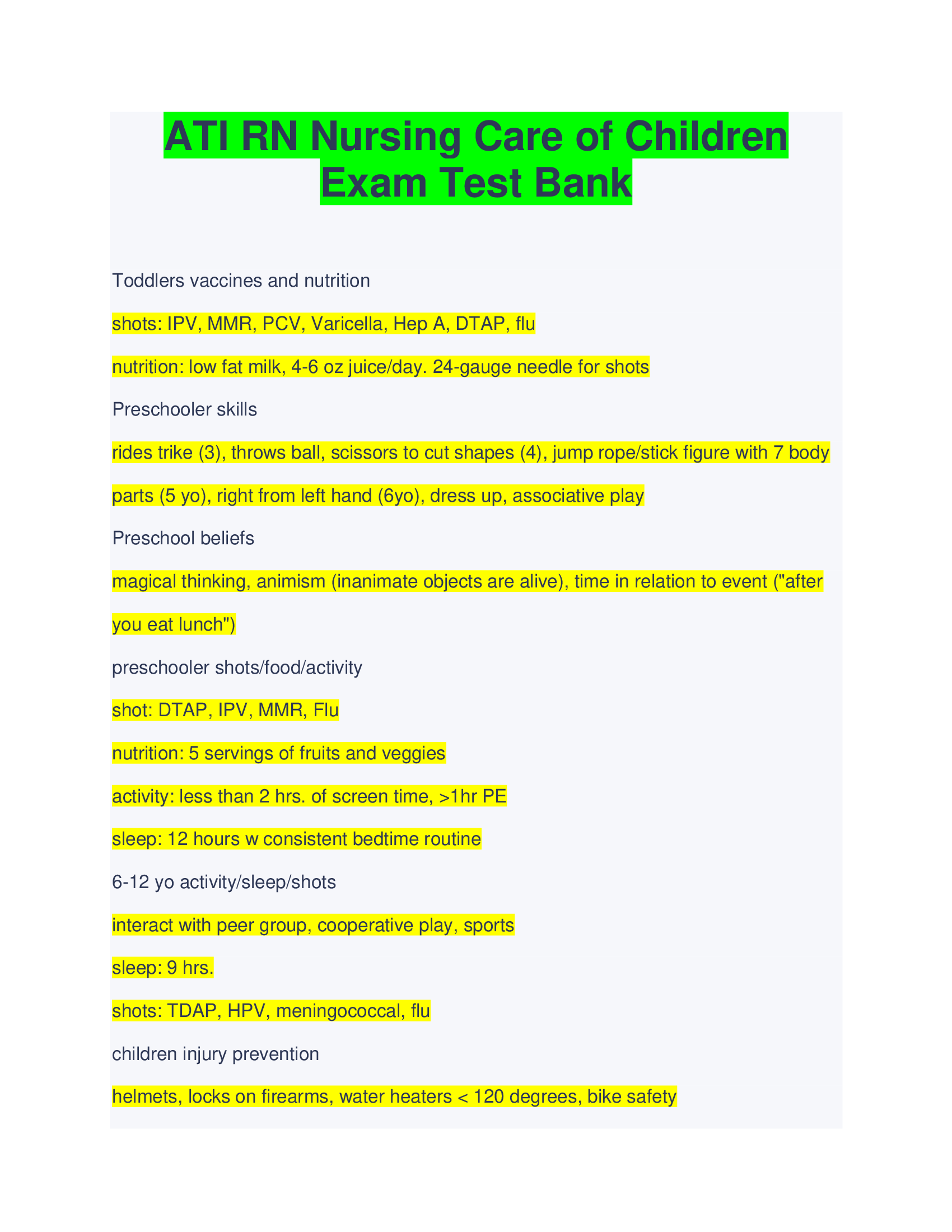
ATI RN Nursing Care of Children Exam Test Bank Latest 2024
View Document

ATI RN Nursing Care ...

  • Highergrades

    Highergrades

  • study guide

ATI RN Nursing Care of Children Exam Test Bank Latest 2024 – Download PDF...

15 USD

0

0

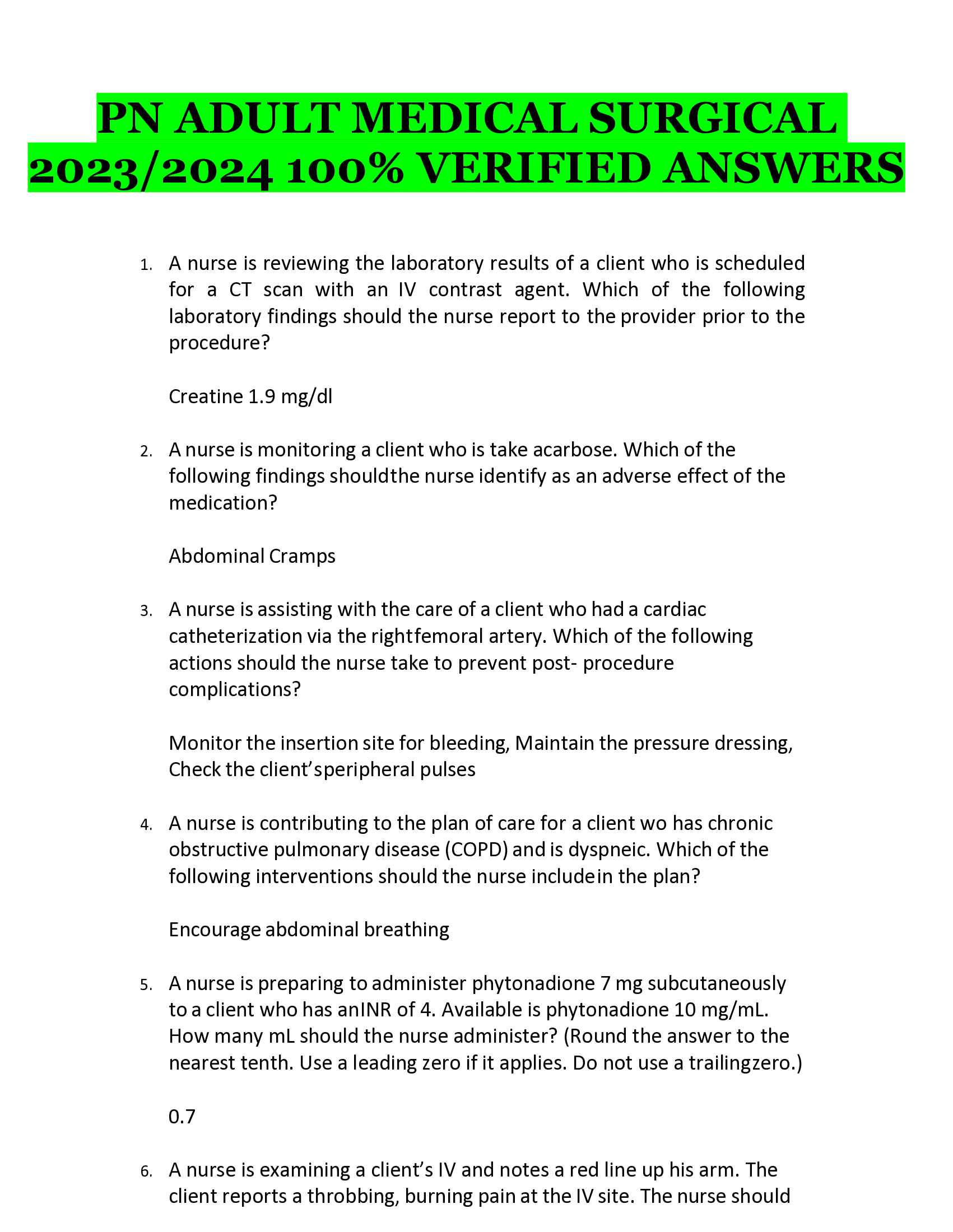
PN ADULT MEDICAL SURGICAL 2023, 2024 100 percent VERIFIED ANSWERS
View Document

PN ADULT MEDICAL SUR...

  • Highergrades

    Highergrades

  • study guide

PN ADULT MEDICAL SURGICAL 2023, 2024 100 percent VERIFIED ANSWERS – Download PDF...

15 USD

0

0

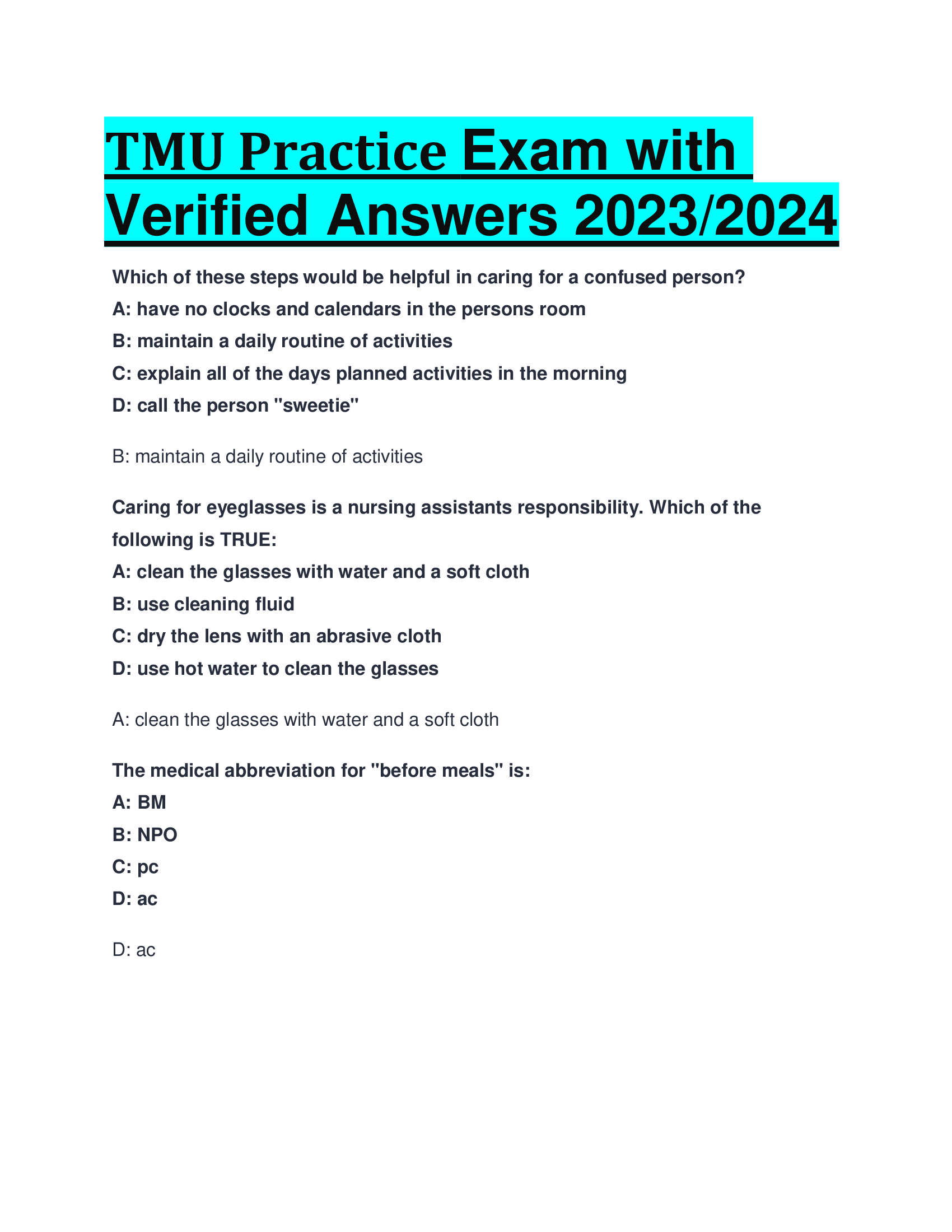
TMU Practice Exam with Verified Answers 2023, 2024
View Document

TMU Practice Exam wi...

  • Highergrades

    Highergrades

  • study guide

TMU Practice Exam with Verified Answers 2023, 2024 – Download PDF...

15 USD

0

0

Purchase

Download link will be sent to this email immediately after purchase.

IMPORTANT LINKS

  • How To Upload Class Notes
  • Selling Tips
  • Passing Grades's Study Materials
  • Scholarships for International Students 2025

POPULAR CATEGORIES

  • Law
  • Accounting
  • English
  • Psychology
  • Business
  • Nursing
  • Computer Science
  • General

View Document

  • Blog
  • Contact
  • Delivery Policy
  • Latest Scholarships Around the World
  • How to Pass Bar Exams: Passing Grades’ Strategies
  • How to Study and Pass the CPA Exam
  • All Test Banks
  • Faq
  • Copyright Claims
  • Privacy Policy
  • Terms of Use

KNOWLEDGE BASE

  • How to Write A+ Grade Good Research Paper
  • How to Manage Stress During Exam Period
  • Best Time to Study
  • How to Pass NCLEX-RN Exam
  • How To Effectively Utilize Test Banks
  • Popular Shadow Health Exam Assessments
  • Popular HESI Case Studies
  • How to Prepare for a Nursing Career
  • The Importance Of Summaries in Exam Revisvion

© 2026 Pasing Grades. All rights reserved.