Pasing Grades
  • Start Selling
  • Blog
  • Contact
  • 0

    Your cart is empty!

English

  • English
  • Spanish
  • Arabic
Create Account Sign In
  • Library
    • New Prep Guides
    • Featured Prep Guides
    • Free Exam Prep Guides
    • Best sellers
  • General
  • Nursing
    • Research Paper
    • Case Study
    • Discussion Post
    • Assignment
    • Exam
    • Practice Questions and Answers
    • Test Bank
    • solutions manual
  • Accounting
    • Case Study
    • Thesis
    • Study Guide
    • Summary
    • Research Paper
    • test bank
  • English
    • Creative Writing
    • Research Paper
    • Summary
    • Rhetorics
    • Literature
    • Journal
    • Exam
    • Grammar
    • Discussion Post
    • Essay
  • Psychology
    • Hesi
    • Presentation
    • Essay
    • Summary
    • Study Guide
    • Essay
    • Solution Manual
    • Final Exam Review
    • Class Notes
    • test bank
  • Business
    • Lecture Notes
    • Solution Manual
    • Presentation
    • Business Plan
    • Class Notes
    • Experiment
    • Summary
    • Practice Questions
    • Study Guide
    • Case Study
    • test bank
    • Exam
  • More
    • Computer Science
    • Economics
    • Statistics
    • Engineering
    • Biology
    • Religious Studies
    • Physics
    • Chemistry
    • Mathematics
    • History
    • Sociology
    • Science
    • Philosophy
    • Law
  • Pages
    • About Us
    • Selling Tips
    • Delivery Policy
    • Faq
    • Privacy Policy
  • Flash Sale
  • Home
  • Solution Manual for Thinking About Biology An Introductory Lab Manual, 6th Edition, Mimi Bres, Arnold Weisshaar

Solution Manual for Thinking About Biology An Introductory Lab Manual, 6th Edition, Mimi Bres, Arnold Weisshaar

Preview page 1 Preview page 2 Preview page 3
Add To Favorites

Share this item Share this item

  • Item Details
  • Comments (0)
  • Reviews (0)
  • Contact Seller
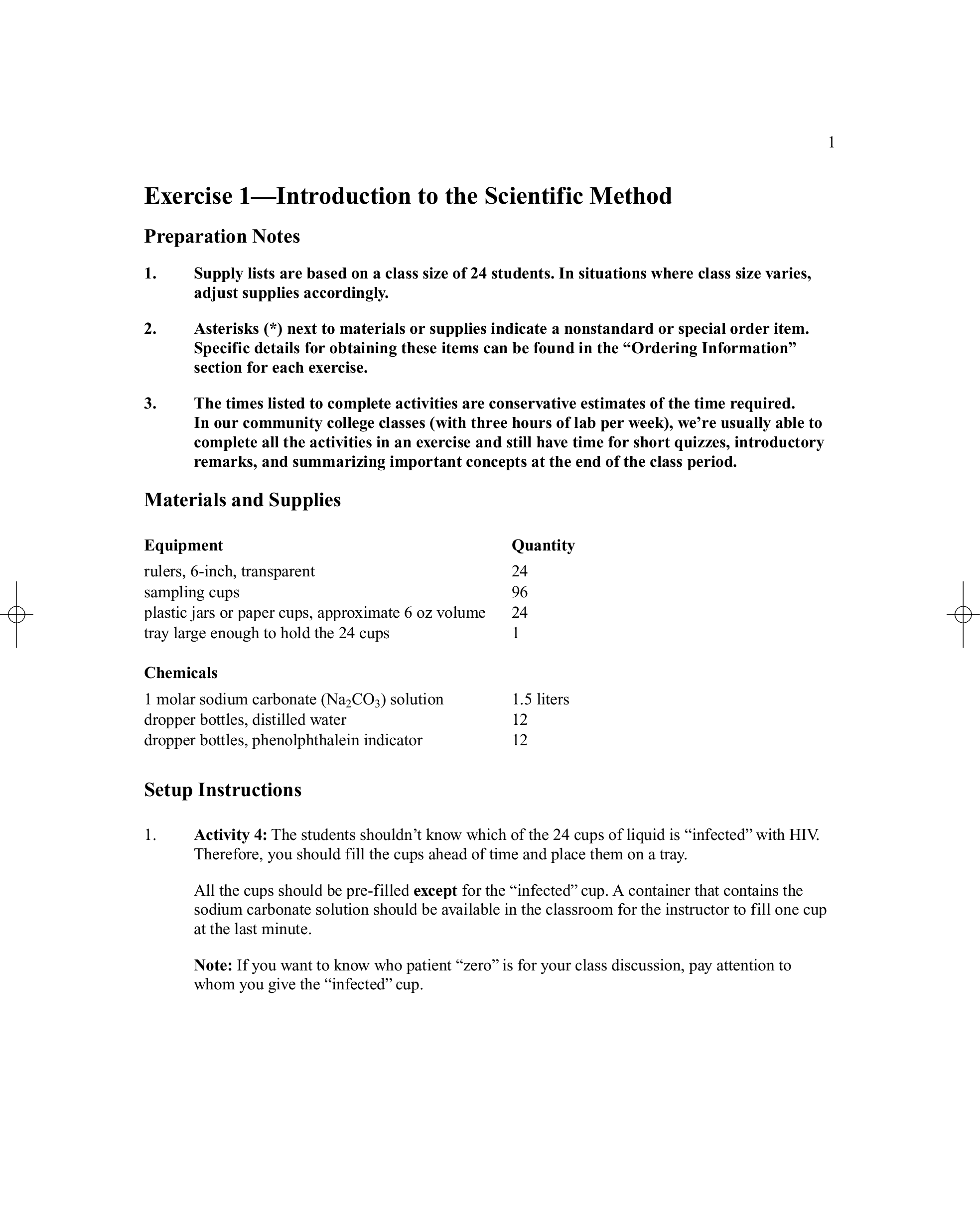
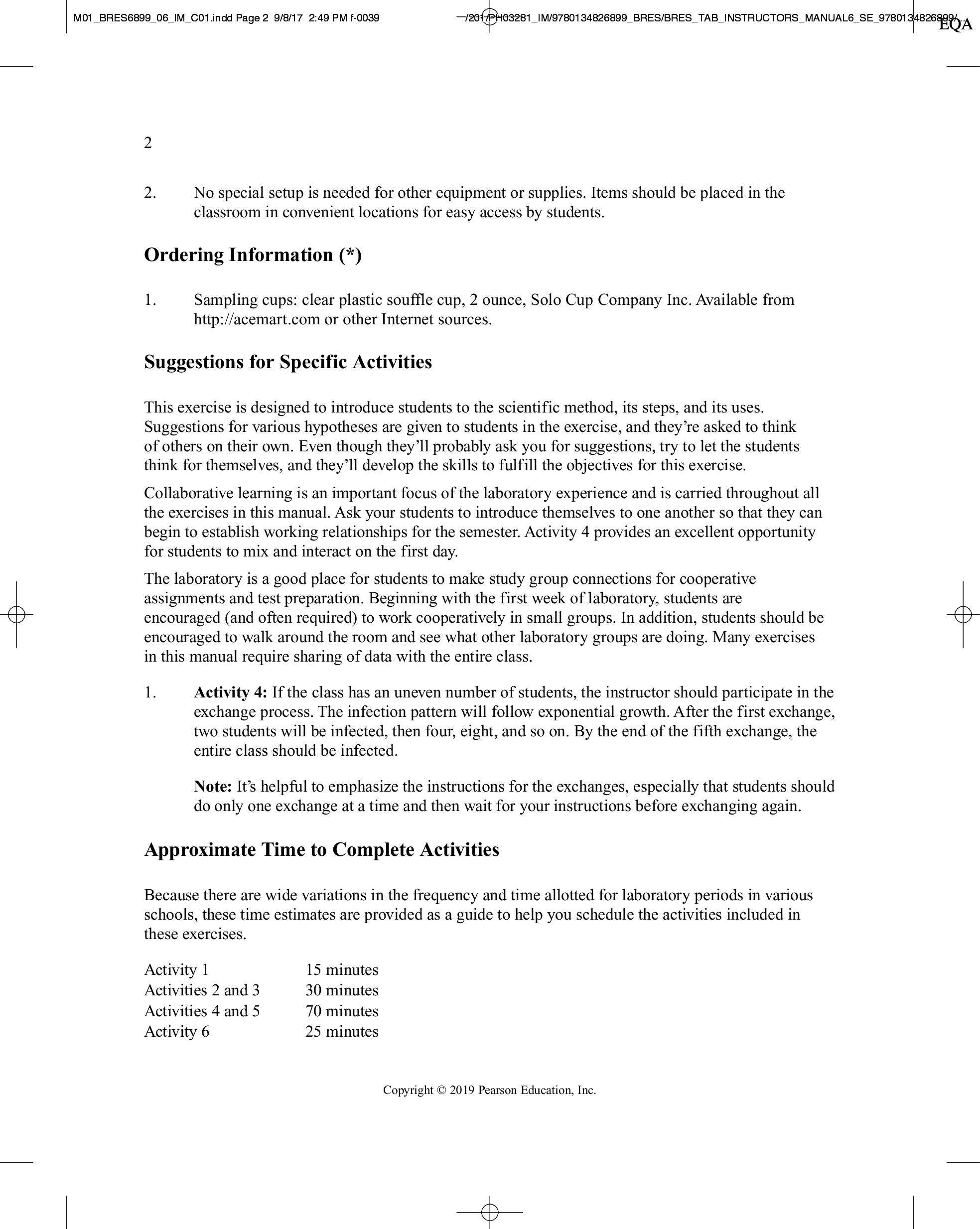
Solution Manual for Thinking About Biology An Introductory Lab Manual, 6th Edition, Mimi Bres, Arnold Weisshaar Exercise 1—Introduction to the Scientific Method Preparation Notes 1. Supply lists are based on a class size of 24 students. In situations where class size varies, adjust supplies accordingly. 2. Asterisks (*) next to materials or supplies indicate a nonstandard or special order item. Specific details for obtaining these items can be found in the “Ordering Information” section for each exercise. 3. The times listed to complete activities are conservative estimates of the time required. In our community college classes (with three hours of lab per week), we’re usually able to complete all the activities in an exercise and still have time for short quizzes, introductory remarks, and summarizing important concepts at the end of the class period. Materials and Supplies Equipment Quantity rulers, 6-inch, transparent 24 sampling cups 96 plastic jars or paper cups, approximate 6 oz volume 24 tray large enough to hold the 24 cups 1 Chemicals 1 molar sodium carbonate (Na 2 CO ) solution 1.5 liters dropper bottles, distilled water 12 dropper bottles, phenolphthalein indicator 12 Setup Instructions 3 1. Activity 4: The students shouldn’t know which of the 24 cups of liquid is “infected” with HIV. Therefore, you should fill the cups ahead of time and place them on a tray. All the cups should be pre-filled except for the “infected” cup. A container that contains the sodium carbonate solution should be available in the classroom for the instructor to fill one cup at the last minute. Note: If you want to know who patient “zero” is for your class discussion, pay attention to whom you give the “infected” cup. 1 M01_BRES6899_06_IM_C01.indd Page 2 9/8/17 2:49 PM f-0039 /201/PH03281_IM/9780134826899_BRES/BRES_TAB_INSTRUCTORS_MANUAL6_SE_9780134826899/ ... 2 2. No special setup is needed for other equipment or supplies. Items should be placed in the classroom in convenient locations for easy access by students. Ordering Information (*) 1. Sampling cups: clear plastic souffle cup, 2 ounce, Solo Cup Company Inc. Available from http://acemart.com or other Internet sources. Suggestions for Specific Activities This exercise is designed to introduce students to the scientific method, its steps, and its uses. Suggestions for various hypotheses are given to students in the exercise, and they’re asked to think of others on their own. Even though they’ll probably ask you for suggestions, try to let the students think for themselves, and they’ll develop the skills to fulfill the objectives for this exercise. Collaborative learning is an important focus of the laboratory experience and is carried throughout all the exercises in this manual. Ask your students to introduce themselves to one another so that they can begin to establish working relationships for the semester. Activity 4 provides an excellent opportunity for students to mix and interact on the first day. The laboratory is a good place for students to make study group connections for cooperative assignments and test preparation. Beginning with the first week of laboratory, students are encouraged (and often required) to work cooperatively in small groups. In addition, students should be encouraged to walk around the room and see what other laboratory groups are doing. Many exercises in this manual require sharing of data with the entire class. 1. Activity 4: If the class has an uneven number of students, the instructor should participate in the exchange process. The infection pattern will follow exponential growth. After the first exchange, two students will be infected, then four, eight, and so on. By the end of the fifth exchange, the entire class should be infected. Note: It’s helpful to emphasize the instructions for the exchanges, especially that students should do only one exchange at a time and then wait for your instructions before exchanging again. Approximate Time to Complete Activities Because there are wide variations in the frequency and time allotted for laboratory periods in various schools, these time estimates are provided as a guide to help you schedule the activities included in these exercises. Activity 1 15 minutes Activities 2 and 3 30 minutes Activities 4 and 5 70 minutes Activity 6 25 minutes M01_BRES6899_06_IM_C01.indd Page 3 9/8/17 2:49 PM f-0039 /201/PH03281_IM/9780134826899_BRES/BRES_TAB_INSTRUCTORS_MANUAL6_SE_9780134826899/ ... Answer Key to Questions Activity 1 Sample chemistry experiment hypotheses (Table 1-1) The roommate didn’t copy the formula correctly. The chemicals were contaminated, out of date, mixed improperly. You didn’t follow the directions properly. The instructor presented the formula incorrectly. Activity 2 Comprehension Check 1. You need a control group to compare with your experimental group (to see if observed changes were caused by the one factor that differs between the two groups). 2. To control the variables that can exist within an experiment, and that can make it hard to inter- pret your results. 3. You would use larger groups to decrease the effect of individual variability on the experimental re- sults. You might also wish to conduct your experiment for a longer period of time, for example, the entire growing season. You might experiment with different levels of fertilizer application to determine the optimal concentration. You might repeat the experiments with other species of plants. Activity 3 Comprehension Check 1. Yes. The experimental group grew taller. Plants from the experimental group gained an average of 45 cm in height, while plants from the control group only gained, on average, 21 cm in height. 2. Yes. Fertilizer did make a significant difference in height compared to the group without fertilizer. 3. Individual plants differ in their growth patterns due to genetic variability. If we used only one plant from each group, we would have no way of knowing if we were comparing a “naturally tall” plant with one that was just “naturally shorter.” Therefore, the larger the group we compare, the more confidence we’ll have that our conclusions are accurate and supported by real evidence. Activity 4 13. Table 1-4: Individual results will vary, but most students will be infected at some time before the end of the activity. 3 M01_BRES6899_06_IM_C01.indd Page 4 9/8/17 2:49 PM f-0039 /201/PH03281_IM/9780134826899_BRES/BRES_TAB_INSTRUCTORS_MANUAL6_SE_9780134826899/ ... 4 14. Table 1-5: Survey results will vary, but in general, the number of infected students will increase with each fluid exchange. 15. The phenolphthalein indicator test was performed on the distilled water to ensure that no false positives would occur and that the indicator was reliable to use in the experiment. 16. The control. Activity 5 Comprehension Check 1. Check for correct graphing procedures in Figure 1-4. 2. With each exchange, the number of infected students increased. By the end of the experiment, the entire class was probably infected. 3. Sexual exchanges are less frequent, people might not have as many partners, some people prac- tice abstinence, many people practice safe sex and use condoms to prevent the spread of disease, diseases may have longer incubation periods. 4. Use of condoms during sexual activity, decrease number of partners, public education about sexually transmitted diseases, and safe sex practices. Activity 6 1. The range of scores is 72 (97–25). 2. No. The median score was 83 and your score was only 80. 3. No. The mean was only 72, but the modal score was 87. In general, the larger the range, the less informative the mean will be. 4. You’ll want the following statistical information: • How many women were evaluated? • What was the modal weight loss for the group? • What was the median weight loss? • What was the range? You’ll also want additional information not related directly to statistics but important for the validity of the experiment. For example: • Was there a control group in this experiment? • How were the women selected? • What was the daily activity level?

Contact the Seller

Please Sign In to contact this seller.


  • 👎  Report Copyright Violation

Frequently Asked Questions

What Do I Get When I Buy This Study Material?

+

When you buy a study material on Passing Grades, an instant download link will be sent directly to your email, giving you access to the file anytime after payment is completed.

Is Passing Grades a Trusted Platform?

+

Yes, Passing Grades is a reputable students’ marketplace with a secure payment system and reliable customer support. You can trust us to ensure a safe and seamless transaction experience.

Will I Be Stuck with a Subscription?

+

No, all purchases on Passing Grades are one-time transactions. You only pay for the notes you choose to buy, with no subscriptions or hidden fees attached.

Who Am I Buying These Study Materials From?

+

Passing Grades is a marketplace, which means you are purchasing the document from an individual vendor, not directly from us. We facilitate the payment and delivery process between you and the vendor.

Does Passing Grades Offer Free Study Materials?

+

Yes, sellers on Passing Grades have uploaded numerous free test banks, exams, practice questions, and class notes that can be downloaded at no cost.


Pasinggrades - Quality Study Materials

USD 15

    • Quality checked by Pasing Grades
    • 100% satisfaction guarantee
    • Seller: Pasing-Grades
Buy PDF $15

Seller Information

Pasing-Grades

Member since May 2021

  • icon
View Profile
  • total sales

    0
  • Favourites

    0
  • Comments

    0
    ( 0 Ratings )

Item Information

  • Uploaded

    28 August 2023

  • Updated

    01 October 2025

  • Category

    No category

  • Item Type

    test bank

  • Tags

    Solution Manual for Thinking About Biology An Introductory Lab Manual 6th Edition Mimi Bres Arnold Weisshaar

Related Exam Prep Guides by Pasing-Grades

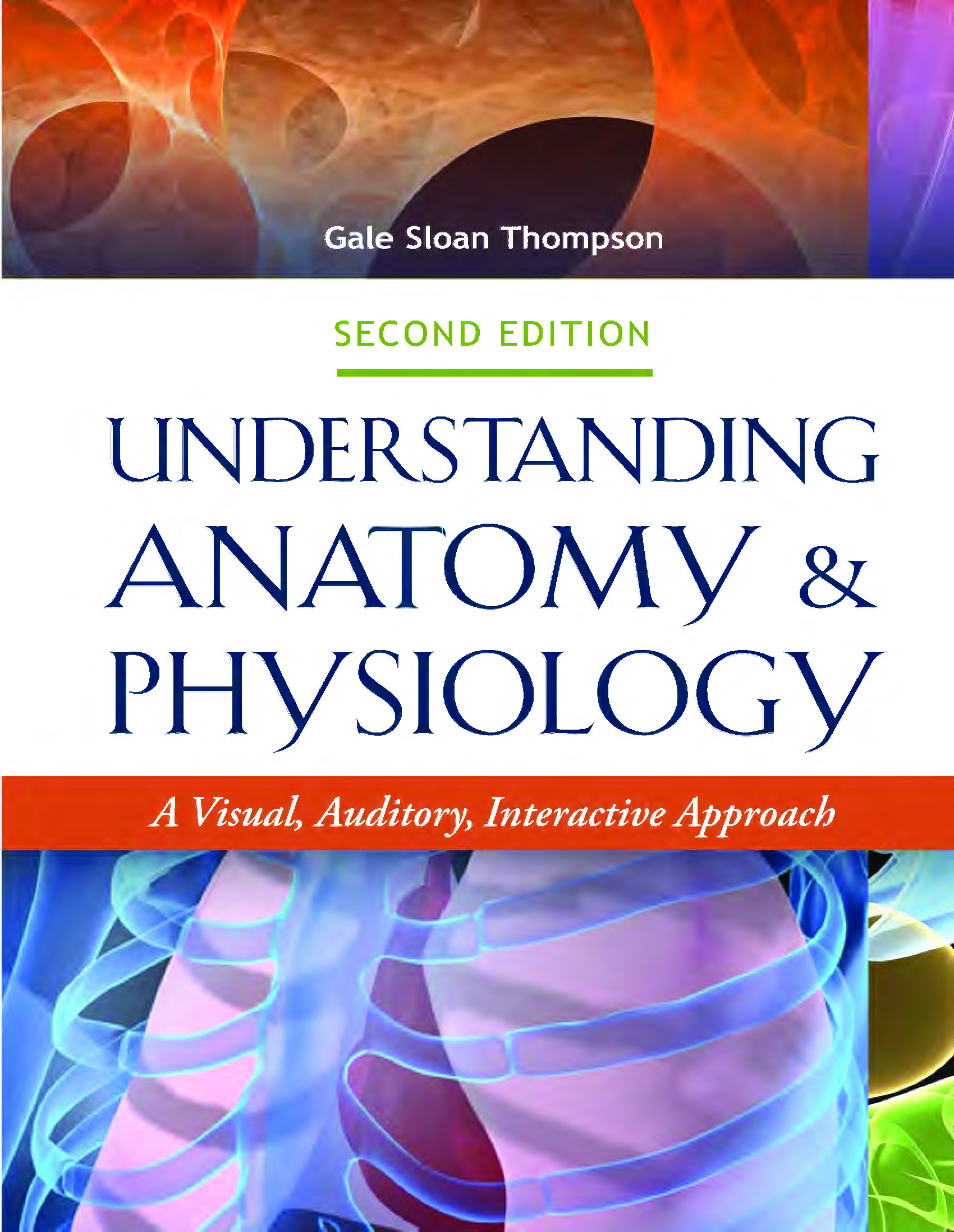
Understanding Anatomy and Physiology; A Visual, Auditory, Interactive Approach by Gale. S. Thompson
View Document

Understanding Anatom...

  • Pasing-Grades

    Pasing-Grades

  • test bank

Third Edition: Understanding Anatomy and Physiology; A Visual, Auditory, Interactive Approach by Gal...

15 USD

0

0

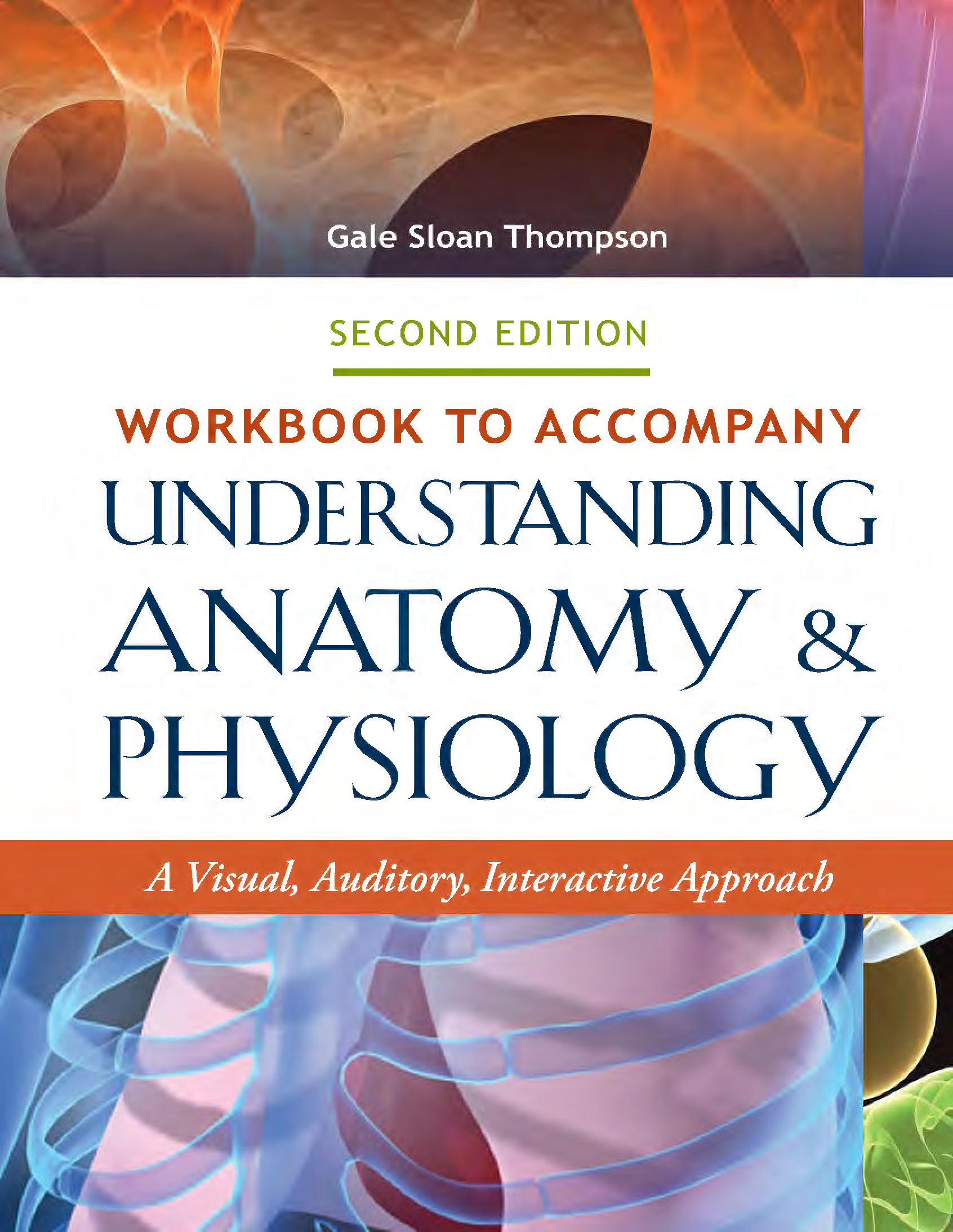
Workbook to Accompany Understanding Anatomy & Physiology: A Visual, Auditory, Interactive Approach by Gale Sloan Thompson RN
View Document

Workbook to Accompan...

  • Pasing-Grades

    Pasing-Grades

  • test bank

Workbook to Accompany Understanding Anatomy & Physiology: A Visual, Auditory, Interactive Approach b...

15 USD

0

0

Test Bank for Fundamentals of Nursing 10th Edition by Taylor
View Document

Test Bank for Fundam...

  • Pasing-Grades

    Pasing-Grades

  • test bank

Get now the Test Bank for Fundamentals of Nursing 10th Edition by Taylor. Instant PDF Download....

15 USD

0

0

Purchase

Download link will be sent to this email immediately after purchase.

IMPORTANT LINKS

  • How To Upload Class Notes
  • Selling Tips
  • Passing Grades's Study Materials
  • Scholarships for International Students 2025

POPULAR CATEGORIES

  • Law
  • Accounting
  • English
  • Psychology
  • Business
  • Nursing
  • Computer Science
  • General

View Document

  • Blog
  • Contact
  • Delivery Policy
  • Latest Scholarships Around the World
  • How to Pass Bar Exams: Passing Grades’ Strategies
  • How to Study and Pass the CPA Exam
  • All Test Banks
  • Faq
  • Copyright Claims
  • Privacy Policy
  • Terms of Use

KNOWLEDGE BASE

  • How to Write A+ Grade Good Research Paper
  • How to Manage Stress During Exam Period
  • Best Time to Study
  • How to Pass NCLEX-RN Exam
  • How To Effectively Utilize Test Banks
  • Popular Shadow Health Exam Assessments
  • Popular HESI Case Studies
  • How to Prepare for a Nursing Career
  • The Importance Of Summaries in Exam Revisvion

© 2026 Pasing Grades. All rights reserved.