Pasing Grades
  • Start Selling
  • Blog
  • Contact
  • 0

    Your cart is empty!

English

  • English
  • Spanish
  • Arabic
Create Account Sign In
  • Library
    • New Prep Guides
    • Featured Prep Guides
    • Free Exam Prep Guides
    • Best sellers
  • General
  • Nursing
    • Research Paper
    • Case Study
    • Discussion Post
    • Assignment
    • Exam
    • Practice Questions and Answers
    • Test Bank
    • solutions manual
  • Accounting
    • Case Study
    • Thesis
    • Study Guide
    • Summary
    • Research Paper
    • test bank
  • English
    • Creative Writing
    • Research Paper
    • Summary
    • Rhetorics
    • Literature
    • Journal
    • Exam
    • Grammar
    • Discussion Post
    • Essay
  • Psychology
    • Hesi
    • Presentation
    • Essay
    • Summary
    • Study Guide
    • Essay
    • Solution Manual
    • Final Exam Review
    • Class Notes
    • test bank
  • Business
    • Lecture Notes
    • Solution Manual
    • Presentation
    • Business Plan
    • Class Notes
    • Experiment
    • Summary
    • Practice Questions
    • Study Guide
    • Case Study
    • test bank
    • Exam
  • More
    • Computer Science
    • Economics
    • Statistics
    • Engineering
    • Biology
    • Religious Studies
    • Physics
    • Chemistry
    • Mathematics
    • History
    • Sociology
    • Science
    • Philosophy
    • Law
  • Pages
    • About Us
    • Selling Tips
    • Delivery Policy
    • Faq
    • Privacy Policy
  • Flash Sale
  • Home
  • AANP 2023 Final Exam Study Guide

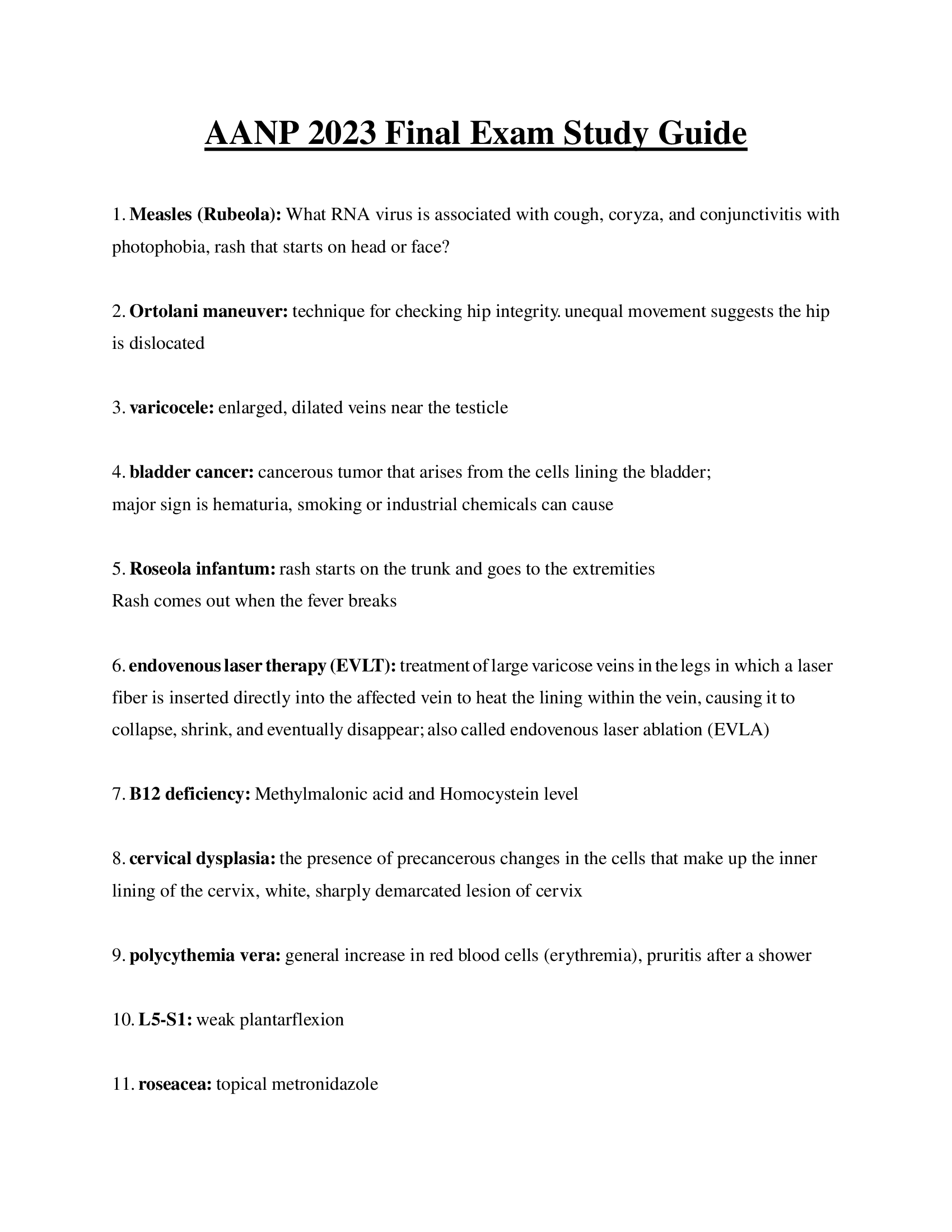
AANP 2023 Final Exam Study Guide

Preview page 1 Preview page 2 Preview page 3
Add To Favorites

Share this item Share this item

  • Item Details
  • Comments (0)
  • Reviews (0)
  • Contact Seller
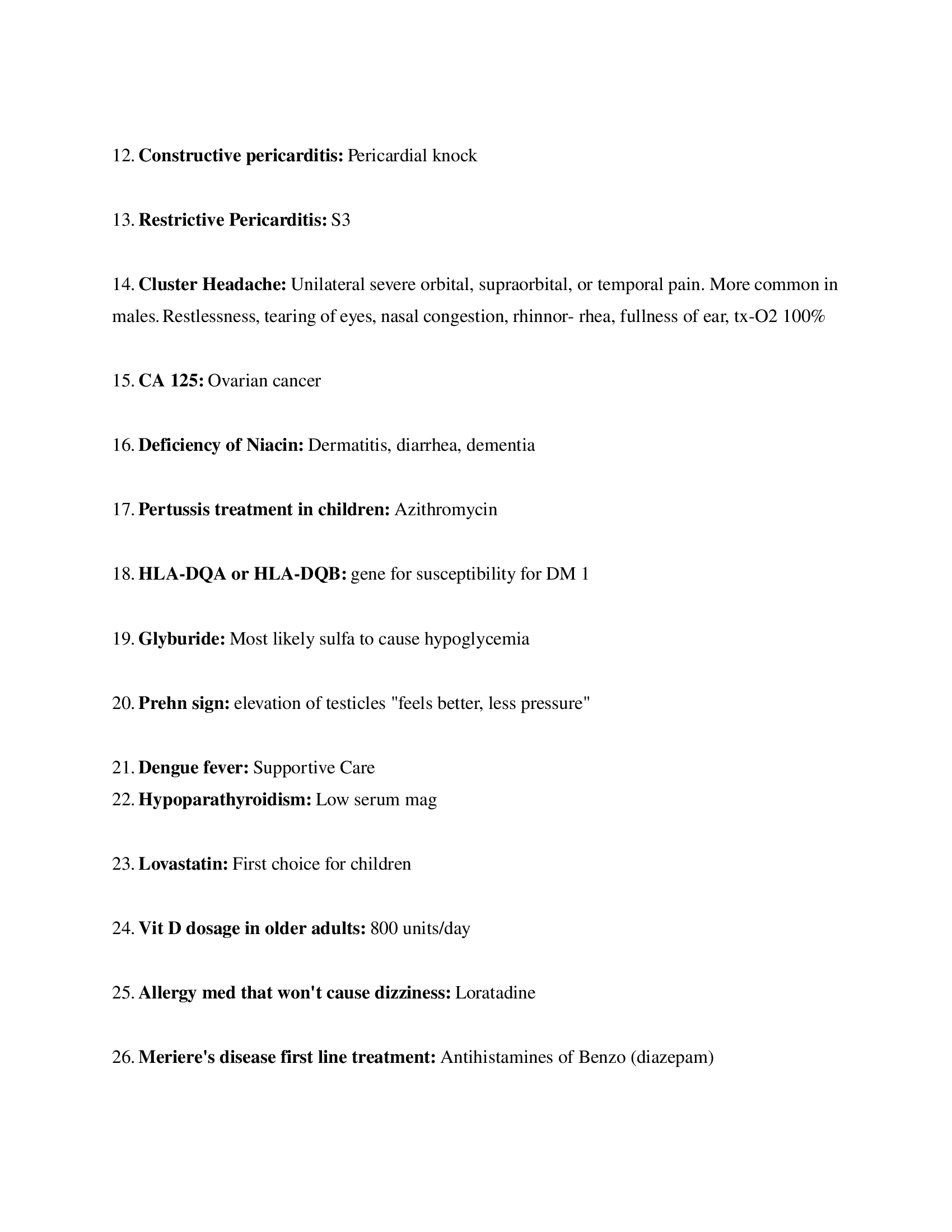
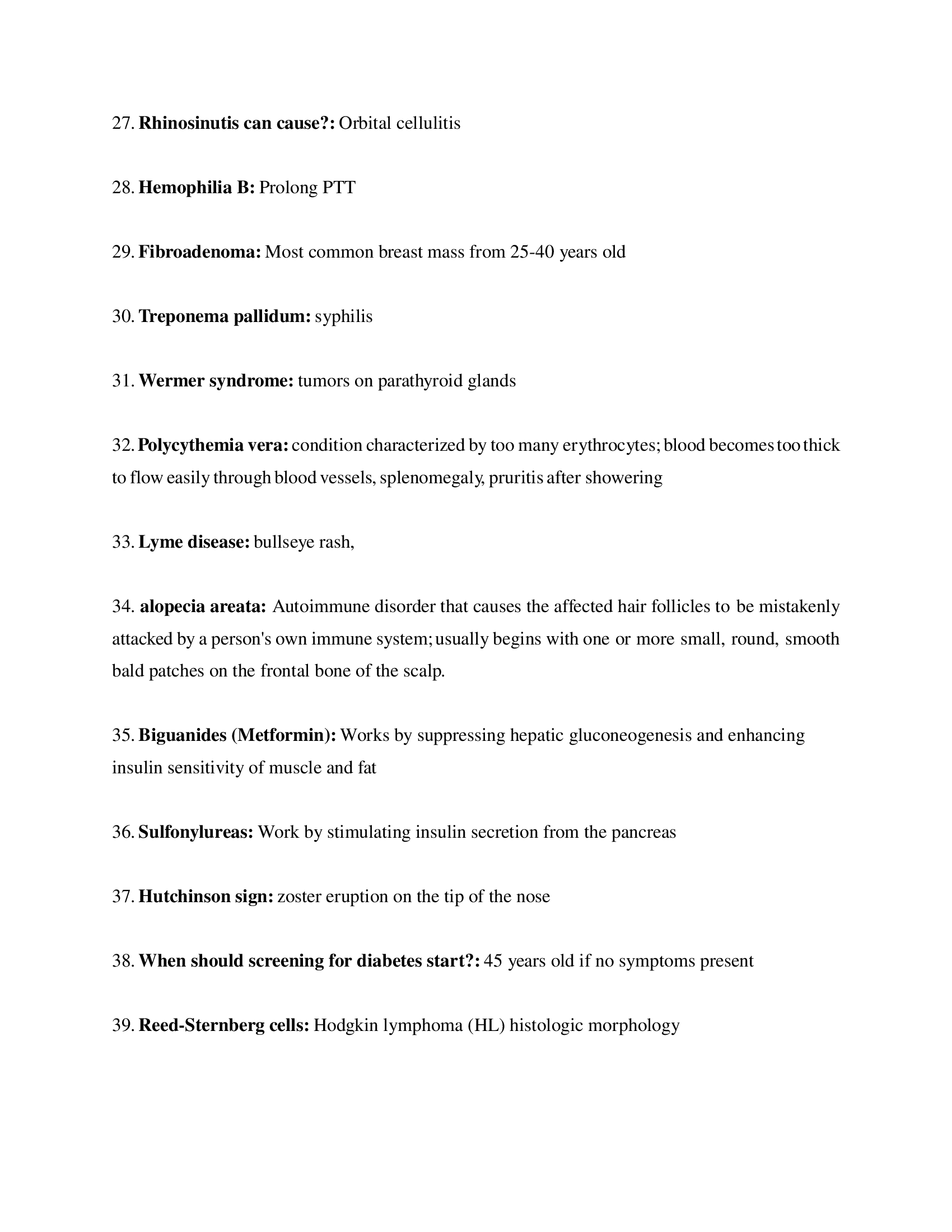
AANP 2023 Final Exam Study Guide 47. Pinworm treatment: Albendazole or pyrantel pamoate or albendazole PO 48. Primary achalasia: loss of peristalysis in distal esophagus and failure of LES relaxation with swallowing 49. Polymyositis treatment: 1. steroids 2. followed by methotrexate (methotrexate for long-term immunosuppressant therapy) 50. CLL (chronic lymphocytic leukemia): -Chronic with lengthy survival -Primarily a diagnosis of the elderly -Usually B cells -WBC more mature and not functioning properly 51. Vitamin D deficiency: Less than 12 mg/ml 52. Acute urticaria: fenofenadine, cetirizine, loratadine, first line (second-genera- tion H1 antihistamines) 53. ankylosing spondylitis: can cause uveitis 54. tinea cruris: Jock itch, terbinafine or butenafine first line (topical) 55. Diagnosing asthma: spirometry 56. Hypoparathyroidism: hypocalcemia and hyperphosphatemia 57. Screening for gestational diabetes: Between 24-28 weeks 58. Indication for PM?: Asymptomatic Mobitz II second-degree AV block-risk of progressing to 3rd degree HB 59. Horner syndrome: ptosis, miosis, anhidrosis 60. Binocular diplopia, horizontal diplopia on gaze towards affected side? what cranial nerve and muscle?: Abducens nerve, lateral rectus muscle 61. First line treatment for pertussis?: Azithromycin 62. Lichen planus: Pruritic, purple, polygonal planar papules and plaques (6 P's), treatmenttopical steroids (topical fluocinonide) 63. Expected clinical finding with high triglycerides?: Eruptive xanthoma 64. Rotterdam criteria: Diagnosis of PCOS (2 out of 3) - amenorrhea/anovulatory cycles, signs of hyperandrogenism (hirsutism, acne, alopecia, virilization, infertili- ty), polycystic ovaries on US 65. Marfan syndrome: Aortic regurgitation 66. Shigella: Treatment-azithromycin 67. De Quervain thyroiditis: caused by neutrophilic inflammation of the thyroid gland. It is typically viral in origin, and is preceded by an upper respiratory infection 68. Acromegaly: -abnormal enlargement of the extremities -insidious onset, with a time to diagnosis on the order of 6-10 years. The classic facial findings, which include enlargement of the supraorbital ridges, mandible and a widened nose 69. glucose-6-phosphate dehydrogenase (G6PD) deficiency: avoid antimalar- ial drugs, sulfonamides (sulfamethoxazole), nitrofurans (nitrofurantoin), methylene blue, vitamin K, and phenazopyridine 70. Eosinophilic esophagitis: dysphagia to solid foods 71. Retropharyngeal abscess is a deep neck space infection: sore throat, difficulty swallowing, or difficulty breathing with possible signs of fever and systemic toxicity. Examination of the oral pharynx may demonstrate midline or unilateral swelling or bulging of the posterior pharyngeal wall -CT scan of the neck with intravenous contrast 72. Vascular dementia: seen in patients with risk factors such as hyperlipidemia, hypertension and diabetes. Patients with vascular dementia have patchy cognitive impairment, often with focal neurologic signs and symptoms. Onset may be abrupt, with a stepwise decline. Patients who have had a stroke are at increased risk for vascular dementia 73. Tinea versicolor, also called pityriasis versicolor: macules, patches, scales, or thin plaques, that may be hypo- or hyperpigmented or may be slightly erythematous -Ketoconazole 2% shampoo 74. Celiac disease: -autoimmune disorder of the gastrointestinal tract caused by exposure to dietary gluten in genetically susceptible individuals -dermatitis herpetiformis, a pruritic vesicular rash on extensor bony surfaces, is pathognomonic for celiac disease. -IgA tissue transglutaminase is currently the test of choice for serologic diagnosis and for monitoring of celiac disease 75. Pemphigus vulgaris: Nikolsky's sign (separation of epidermis caused by rub- bing of the skin) -severe, rare autoimmune disease that causes blistering of the mucosa, skin, or both 76. herpetic whitlow: viral infection of the distal finger, typically between the fascial planes surrounding the nail. This infection is caused by the herpes simplex virus -symptomatic management 77. cluster headache: The classic presentation of a cluster headache is severe orbital, temporal, or supraorbital pain that is accompanied by autonomic symptoms such as ipsilateral ptosis, miosis, nasal congestion, rhinorrhea, lacrimation, or conjunctival injection. Restlessness and agitation often accompany the headache with patients pacing or rocking back and forth. Typical headache attacks last for between 15-180 minutes and occur between 1-8 times throughout the day 78. atrial septal defect: widely split and fixed S2 is very common in large left-to-right shunts 79. Still's murmurs: typically a grade 1 or grade 2 systolic murmur, most often loudest in the lower left sternal border or apex. The murmur may be noted when the patient is supine, compared to when the patient is sitting. Fever or anxiety may result in a louder murmur 80. Polymyalgia rheumatica (PMR): acute proximal muscle pain and stiffness. Age of onset is > 50 years. Areas commonly affected are the muscles of the shoulder and pelvic girdle. -Treatment is corticosteroids, usually prednisone 10-20 mg per day. 81. Aortic regurgitation: low diastolic blood pressure 82. Hyperaldosteronism: -excessive output of aldosterone from the adrenal gland, leading to increased sodium and water retention and loss of potassium, hypertension common -Treatment is with high-dose spironolactone or eplerenone (aldosterone antago- nist) to normalize potassium levels 83. What is the most common type of elbow dislocation?: Posterolateral 84. Which of the following lab findings would you expect to find in a patient with betathalassemia?: Codocytes 85. Ankylosing spondylitis: -It typically has a slow onset, with the pain being worse in the morning that improves with activity. -notable fusion of the sacroiliac joints and eventual ossification of the annulus fibrosus, which results in the classic "bamboo spine" appearance on X-ray. 86. Protracted bacterial bronchitis: -chronic wet cough for more than 4 weeks, the absence of other signs or symptoms that indicate another cause, normal chest radiographs, minimal systemic effects, minimal improvement with bronchodilators, and resolution of the cough within 2 weeks of starting an antibiotic 87. Rheumatoid arthritis: symmetric polyarthritis of small joints. Rheumatoid arthritis is more common in women than men with a peak onset of 40-50 years in women and 60-80 years in men. Clinical manifestations include early morning stiffness and pain of the affected joints that persists beyond 30 minutes. The stiffness recurs after periods of inactivity or after strenuous activity. -The laboratory workup for rheumatoid arthritis includes ESR and CRP levels, presence of antibodies to cyclic citrullinated peptide (anti-CCP) bodies, rheumatoid factor, a CBC, kidney function, and hepatic enzymes 88. Lynch syndrome: hereditary nonpolyposis colorectal cancer (HNPCC), is the most common cause of hereditary colon cancer. Men and women with Lynch syndrome are more likely to get colon cancer or other cancers, such as stomach, liver, kidney, and brain cancer, before the age of 50 89. Multiple myeloma: Men are slightly more affected than women. Multiple myeloma should be suspected in any patient presenting with one or more of the following: bone pain resulting from lytic lesions, hypercalcemia, kidney injury, or anemia. Elevated serum protein levels can also be seen in patients with multiple myeloma. -protein electrophoresis and free light chain assay 90. Acute mastoiditis: Streptococcus pneumoniae is the most common cause of mastoiditis. Mastoiditis presents with fever, headache, and otalgia. Patients will often have a preceding history of acute otitis media which has not resolved after 2 or more weeks. Physical examination reveals postauricular erythema and tenderness, as well as protrusion of the auricle. In addition, the tympanic membrane is erythematous, bulging, and has decreased mobility. 91. A 65-year-old man presents for follow-up after an upper endoscopy. He has a 10-year history of cirrhosis. The upper endoscopy revealed small esophageal varices with red signs. There was no active bleeding seen and no band ligation was performed. Based on his history of cirrhosis and findings on endoscopy, what would be the most appropriate next step in the management of this patient?: Start nadolol- or other non-selective beta blocker-reduces portal venous inflow 92. Proprioceptive sensitivity loss: high-stepping and stamping gait, increased risk of falls 93. niacin (vitamin B3) deficiency: -dementia, dermatitis, and diarrhea -Isoniazid (INH) biochemically competes with niacin and inhibits the conversion of tryptophan to niacin, resulting in niacin deficiency. 94. venous hum: Common innocent murmur. It is low-pitched and is best heard in the right or left supraclavicular or infraclavicular areas. The low-pitch quality allows for the murmur to be best heard with the bell of the stethoscope. 95. A 53-year-old man presents with weight loss, anorexia, abdominal pain, jaundice and early satiety. Which of the following is the most appropriate initial diagnostic test to diagnose and stage pancreatic cancer?: CT scan 96. What is the most common form of psoriasis?: Psoriasis vulgaris 97. primary hyperparathyroidism: asymptomatic hypercalcemia, which is typi- cally detected as an incidental finding on routine blood testing. Manifestations of hypercalcemia include paresthesias, muscle cramps, fatigue, and depression. Cardiovascular symptoms may include hypertension, palpitations, prolonged PR interval, shortened QT interval, bradydysrhythmias, and heart block 98. systolic murmur at the apex. The murmur is associated with a midsystolic click: -Mitral valve prolapse occurs due to a mitral valve leaflet abnormality. The associated murmur is systolic with a mid- to late-systolic click, heard best at the apex of the heart. Symptoms can include palpitations, depression, anxiety, fatigue, or syncope -procedural antibiotic prophylaxis is indicated to avoid infective endocarditis 99. A 66-year-old man presents to the clinic for his annual wellness visit. Which of the following factors places the patient at risk for hypertension?: - A1C of 8% 100. Which of the following is the most sensitive diagnostic test for genital herpes simplex virus infection?: Polymerase chain reaction-based testing 101. A 16-year-old boy presents with a scalp rash. On examination, it is a 5 x 5 cm boggy and thickened area of the right parietal cap with an overlying scaly and crusty plaque and hair loss. The lesion appears yellowish-green under a Wood lamp. What is the treatment of choice for this lesion?: Oral griseofulvin, dx: is best treated with oral griseofulvin. A kerion is an abscess caused by a fungal infection most commonly on the scalp but may also present on the upper limbs and the face. It appears as a boggy, pus-filled lesion with significant inflammation. The overlying skin often has an eczematous, itchy rash as well as hair loss. The patient may also have nearby lymphadenopathy, fevers, and malaise. 102. A 34-year-old man presents to your office with complaints of a dry, nonproductive cough for the past 10 weeks. He also reports clear nasal drainage and frequent watery eyes. He is a nonsmoker, reports no past med- ical history, and takes no prescription medications. On physical examination, you notice a cobblestone appearance and clear exudate to the oropharynx. His lung fields are clear to auscultation. Which of the following is the most likely diagnosis in this patient?: Upper airway cough syndrome 103. Which of the following tests would confirm a diagnosis of systemic lupus erythematosus (SLE)?: Anti-double stranded deoxyribonucleic acid (DNA) antibody 104. A 56-year-old man underwent a prolonged pelvic surgery. Two weeks later, he reports frequent tripping over his right foot. Strength examination of the right foot reveals: 5/5 plantar flexion, 5/5 ankle inversion, 3/5 ankle eversion, and 2/5 dorsiflexion. Light touch sensation is diminished over the lateral but not medial shin. Ankle and knee reflexes are intact. Injury to which one of the following nerves is most likely causative?: Common peroneal 105. A three-week-old infant presents to the clinic with his parents who state he is not gaining weight and is feeding poorly. Cardiac auscultation and exam reveal a 2/6 mid-frequency holosystolic murmur heard best at the fourth left intercostal space, a diastolic rumble, and a prominent apical impulse displaced laterally. Tachypnea and tachycardia are also noted. Which of the following is the most likely diagnosis?: Large ventricular septal defect 106. Which of the following cardiac auscultation findings is most consistent with mitral valve regurgitation?: Soft S1 and a loud, blowing holosystolic murmur 107. pheochromocytoma: -A tumor of the adrenal glands that produces cate- cholamines and is another form of secondary hypertension -Clinical findings include bilateral headache, hypertension, hypermetabolic state, hyperhidrosis, hyperglycemia, and palpitations 108. A 65-year-old woman presents to the clinic for a well visit. She is not on hormone replacement and is a current smoker with a 40 pack-year history. She is 5'2" tall and weighs 115 pounds. The nurse practitioner recommends a bone densitometry measurement and assesses for risk factors related to bone loss. Which of the following is a clinical manifestation of age-related osteoporosis?: Vertebral fracture 109. Which of the following historical findings will most likely lead to a diagnosis of panic disorder?: Chest pain 110. Aortic stenosis: harsh systolic murmur that is best heard at the second right intercostal space and apex of the heart. The murmur is crescendo-decrescendo in pattern, radiates to the carotids, and softens with standing. Dizziness and syncope are ominous symptoms of aortic stenosis and indicate decreased cardiac output. Valve replacement is the standard treatment for symptomatic aortic stenosis, thus referral to surgery is necessary. 111. Which of the following is characterized by macrocytic anemia with increased reticulocytes and Heinz bodies?: Glucose-6-phosphate dehydroge- nase deficiency 112. Porphyria cutanea tarda: that presents with chronic photosensitivity with the development of blistering and friable lesions on sun-exposed areas of the skin and may manifest as hair loss in women. 67% of patients who have the condition have hepatitis C viral infection 113. Polyarteritis nodosa: -rare systemic necrotizing vasculitis of medium-sized vessels and suggests multiple pathogenic processes, including immune mecha- nisms -Clinical onset is insidious, with fever, malaise, weight loss, and generalized weak- ness, and may exhibit pain in the extremities or neuropathy. The most common skin presentation is ulceration of the lower extremity, usually near the malleoli 114. A 19-year-old woman presents with a recurrent outbreak of orolabial herpes simplex virus. Which of the following is mostly likely to trigger a recurrence of orolabial herpes simplex virus infection?: Ultraviolet radiation exposure 115. A five-year-old girl is brought to the clinic for evaluation of petechiae. The parents deny fever, decreased appetite, bone or joint pain, or weight loss. She did have a cold and runny nose about a month ago. On physical exam, the girl appears well with normal vital signs, petechiae and purpura on the upper and lower extremities. There are no signs of mucosal bleeding with normal lymph nodes, liver, or spleen. Laboratory studies reveal platelet count of 60,000/microL and an otherwise normal complete blood count. Which of the following is the most likely diagnosis?: Immune thrombocytopenia 116. Thrombotic thrombocytopenic purpura: presents with thrombocytopenia, but other manifestations include schistocytes on the peripheral smear, anemia, and neurologic abnormalities, which were not present on the patient. 117. A 33-year-old woman presents to the clinic with a three-month history of amenorrhea. Her cycles are typically 26-28 days. Her follicle stimulating hormone, thyroid stimulating hormone, and luteinizing hormone levels are within normal limits, and her pregnancy test is negative. What is the best medication for this condition?: Medroxyprogesterone 10 mg daily for 10 days is a progesterone challenge to induce bleeding. 118. A 64-year-old woman with a 50 pack-year history of smoking cigarettes presents with a four-day history of a productive cough with shortness of breath and wheezing. She is coughing up copious "green" mucus. She has no other health issues, but she has had two other exacerbations this year. She is diagnosed with an exacerbation of her chronic bronchitis. Which of the following is the best treatment for this patient?: Clarithromycin 500 mg twice daily for seven days is the recommended treatment for a moderate to severe exacerbation of chronic bronchitis in a patient with no other comorbidities. 119. A 14-year-old girl is brought in by her mother with concerns for acne. She has tried over-the-counter acne preparations but continues to have skin lesions. On exam, there are multiple closed comedones scattered across the forehead, nose, and chin area without much inflammation. There are no pustular lesions. Which of the following would be the best initial pharma- cotherapeutic treatment?: A topical retinoid, such as tretinoin, is the appropriate firstline treatment for noninflammatory acne vulgaris 120. Analysis of a peripheral blood smear reveals a normocytic, nor- mochromic anemia with blast cells and Auer rods. This is most consistent with what diagnosis?: AML 121. A 24-year-old man presents with left eye pain and redness. He reports the symptoms started this morning. He does not recall injuring his eye. He is a contact lens wearer and reports infrequent cleaning and keeping them in for longer than the recommended time. He was able to remove the contact this morning with no difficulty. He reports clouding of vision in the left eye and an inability to hold his eyelid open secondary to the discomfort. On physical examination, his vital signs are normal. He has marked erythema to the left eye with excessive tearing. Both pupils are equal, round, and reactive to light. There is a corneal opacity noted in the left eye on examination with a penlight. This opacity stains with fluorescein dye. There is a small amount of purulent discharge noted to the medial canthus of the left eye. What is the most likely diagnosis in this patient?: Keratitis 122. A 25-year-old woman with a new diagnosis of celiac disease presents to the clinic with abdominal pain and diarrhea. Which of the following foods should the patient remove from her diet completely?: Wheat, rye, barley 123. A 55-year-old woman presents to the clinic for follow-up on lab work for her recently diagnosed glomerulonephritis. She has a normal serum creatinine of 0.9, proteinuria of 4.0 g/day, and no edema on physical exam. Which of the following is the best treatment for this patient?: Prednisone 1 mg/kg/day for 12 weeks 124. A 60-year-old woman presents to the clinic complaining of severe vulvar itching and burning that has persisted for 8 months. She reports she has been treated with diflucan three separate times and terconazole externally without complete resolution of symptoms. Physical exam reveals labial agglutination, ivory white plaques with purpura, and excoriations in a figure-eight pattern around the vulva and perianal area. Wet prep shows negative whiff, negative hyphae, negative clue cells, and positive lactobacil- lus. Which of the following is the most likely diagnosis?: The classic lichen sclerosus physical findings are thin fragile skin with white plaques. Other major findings often include purpura, fissures, excoriations from scratching, a "cigarette paper" appearance, and labial agglutination. Phimosis may also be present over the clitoral hood and urethra. The lesions often have a figure-eight formation around the vulva and perianal region. 125. PMS treatment vitamin: According to the International Society for Premen- strual Disorders, calcium supplementation has the strongest empirical evidence as a dietary supplement in treating PMS. The mechanism of action may be to regulate periovulatory calcium homeostasis. Calcium 600 mg twice a day has been shown to improve the emotional and physical symptoms experienced by women with PMS 126. the characteristic skin rash of Lyme disease: Erythema migrans 127. Which of the following laboratory results is consistent with Addison disease?: Increased ACTH level and decreased cortisol level 128. A 43-year-old woman presents to the clinic for her annual physical. She reports some concerns about changes in weight, depression, irregular menses, and increased sweating. She has a history of chronic low back pain and asthma. On exam, you note a buffalo hump, hirsutism, acne, and hyper- hidrosis. Her blood pressure is found to be elevated at 171/96 mm Hg. Which of the following findings is most likely to be increased with the suspected condition?: Cushing syndrome is caused by an increase of adrenocorticotropic hormone in the body. 129. A nurse practitioner is lecturing a class of students on different eye disorders. Which of the following are more likely to cause bacterial conjunc- tivitis in the pediatric population?: Streptococcus pneumoniae 130. A 32-year-old woman presents to the clinic with a six-month history of painful intercourse. She reports never having intercourse until six months ago on her wedding night and describes burning pain upon penetration that lasts for several hours. She reports having regular menstrual cycles every four weeks and menarche at 13 years of age. She has never used tampons. Physical examination reveals normal vagina mucosa. She reports pain upon separation of the labia minora and when a cotton swab is lightly pressed over her posterior introitus. Laboratory testing including a vaginal pH, wet mount, and yeast culture was negative. Which of the following is the best treatment option?: Duloxetine is a selective norepinephrine reuptake inhibitor that has shown to improve symptoms of vulvodynia 131. A 35-year-old woman presents to the clinic with left eye pain and photophobia that started this morning. She wears contact lenses regularly. Fluorescein testing reveals a corneal abrasion. Which of the following is indicated in the management of this patient?: Ciprofloxacin 0.3% ophthalmic ointment 132. A 48-year-old man complains of weakness and general malaise that has occurred for about 3 months. He denies any recent illness and does not take any medications. Physical examination reveals a pale looking man in no acute distress. His heart rate is 110 beats per minute without a murmur and his abdominal examination reveals hepatosplenomegaly. Laboratory findings are significant for a WBC of 62,000 and hemoglobin is 8.3, A cell differential reveals a predominance of myeloblasts and promyelocytes with Auer rods present. What is the most likely diagnosis?: Acute myeloid leukemia 133. Which of the following is the most common type of invasive breast cancer in women?: Infiltrating ductal 134. A 38-year-old woman with no significant history presents to the clinic with complaints of amenorrhea for the past 14 months, night sweats, and hot flashes. The clinician is concerned for premature ovarian failure. Which of the following places the patient most at risk for this diagnosis?: Family history 135. A six-year-old girl presents with sore throat and fever for the past three days. Physical exam reveals a faint, generalized rash on the face and chest that feels rough upon palpation. The rash spares the circumoral area. Exam of the oral cavity reveals a bright red tongue with white papillae. What is the most likely diagnosis?: Scarlet fever 136. A 50-year-old woman presents to the clinic with reports of insomnia and fatigue. She is perimenopausal and shares that she has been experiencing worsening and bothersome hot flashes on a nightly basis. Her medical history includes venous thromboembolism of the right calf and controlled hypertension. She currently takes lisinopril 20 mg and a multivitamin. Which of the following is the most appropriate therapy for her symptoms?: Venlafax- ine 37.5 mg daily 137. A 14-day old boy is brought to clinic for a well-child check. The boy was born full-term via normal spontaneous vaginal delivery to a G2, P2 mother who had limited prenatal care. There were no complications at delivery. The boy has not yet regained birth weight and has been breastfeeding poorly. On physical examination, you note bluish discoloration of the lips and oral mucosa, clear breath sounds and a harsh left upper sternal border murmur. Which of the following chest X-ray findings is consistent with Tetralogy of Fallot?: Lack of vascular congestion 138. A 28-year-old woman at 36 weeks gestation presents to the clinic with rectal itching and discomfort when sitting for the past week. She has pain with bowel movements and has noticed bright red blood on the toilet paper after defecation. She has had constipation throughout most of her pregnan- cy. Physical exam reveals a visible hemorrhoid that prolapses with Valsalva maneuver then retracts spontaneously. Which of the following is the best treatment option for symptomatic relief in this patient?: Docusate sodium 139. A 38-year-old woman presents with lower abdominal pain and bloating for the past year. She describes her abdominal pain as mild cramping that occurs 3-4 times per week and is partially relieved with a bowel movement. She reports having a bowel movement 2-3 times per week and describes the stool as hard and difficult to pass. She reports no blood in her stool. She reports no recent weight loss. She has no pertinent past medical history and takes no medications. She has been following a gluten- and lactose-free diet for the past 6 months with mild improvement in bloating and abdominal pain. She started taking a daily 17 g dose of polyethylene glycol with no improvement in the frequency or consistency of her bowel movements. Her grandfather had colon cancer diagnosed at the age of 67. She reports no other relevant family history. On physical examination, her vital signs are normal. Her abdominal examination is unremarkable. Results from a thyroid-stimulating hormone, complete blood count, and chemistry panel are normal. What would be the most appropriate next step in the management of this patient's condition?: The patient is likely presenting with irritable bowel syndrome with constipation (IBS-C). She was refractory to dietary modifications and the osmotic laxative polyethylene glycol. The next most appropriate step in the management of this patient's condition would be to initiate lubiprostone 140. You are seeing a 74-year-old woman with lung cancer. Her family is concerned because her appetite has been extremely decreased over the past couple months. They have been offering her additional calories, but she does not seem to be gaining weight. Which of the following medications can be offered to this patient to help stimulate her appetite?: Megestrol acetate 141. An 8-year-old girl is diagnosed with childhood absence epilepsy. Which of the following is the first-line pharmacologic treatment for this type of seizure disorder?: Ethosuximide 142. Which one of the following triptans has been found to be effective in preventing menstrual migraine?: Frovatriptan 143. Which of the following labs should be ordered first when a patient has suspected acromegaly?: Insulin-like growth factor 1 144. Which antiepileptic medication commonly causes hyponatremia at ther- apeutic doses?: Oxcarbazepine 145. You suspect a new patient has systemic lupus erythematosus based on symptomatology and physical exam. What laboratory tests in addition to an ANA should be ordered to help confirm the diagnosis?: Anti-Smith antibody and anti-double-stranded DNA 146. What is the most common cause of acquired aortic valve stenosis in the United States?: Degenerative calcific changes 147. A 40-year-old woman presents to the clinic for a routine checkup. Her complete blood count reveals a platelet count of 468,000/µL. Which of the following may explain this abnormal finding?: Iron deficiency anemia 148. What is the recommended first-line treatment for pneumocystis pneu- monia?: Trimethoprim-sulfamethoxazole 149. Koilonychia is most consistent with a deficiency in which of the follow- ing?: Iron 150. An 18-year-old woman presents to the clinic for vaginal itching, irritation, and odor. She used an over-the-counter treatment for yeast infection that did not resolve the problem. Speculum exam reveals green, frothy discharge and a strawberry cervix. Wet prep results are pH 6.0, positive amine, posi- tive trichomonads, negative hyphae, and positive leukocytes. Which of the following is the correct pharmacologic treatment?: Tinidazole 2 g orally in a single dose 151. Which of the following is the recommended first-line treatment for com- plex recurrent aphthous stomatitis in children?: Oral prednisone 152. A 26-year-old woman presents to the office requesting substance abuse treatment. She says that she has been injecting heroin daily for the past three years, numerous attempts at quitting on her own have been unsuccessful, and she has never tried any pharmacotherapy to address her symptoms. Which of the following is the most appropriate therapy?: Buprenorphine 153. A 48-year-old woman presents to the clinic complaining of abdominal pain, bloating, and flatulence for 5 days. Which of the following tests will confirm a diagnosis of small intestine bacterial overgrowth?: Carbohydrate breath test 154. Which lab marker elevation has the highest positive predictive value for a biliary etiology in patients diagnosed with acute pancreatitis?: Alanine aminotransferase ALT 155. Which of the following diagnostic tests should be ordered if you suspect suppurative thyroiditis in an adolescent patient?: Ultrasonography 156. The type of urinary incontinence that involved detrusor instability is:: - Urge incontinence 157. X-ray views after falling on shoulder: AP, scapular Y, axillary

Contact the Seller

Please Sign In to contact this seller.


  • 👎  Report Copyright Violation

Frequently Asked Questions

What Do I Get When I Buy This Study Material?

+

When you buy a study material on Passing Grades, an instant download link will be sent directly to your email, giving you access to the file anytime after payment is completed.

Is Passing Grades a Trusted Platform?

+

Yes, Passing Grades is a reputable students’ marketplace with a secure payment system and reliable customer support. You can trust us to ensure a safe and seamless transaction experience.

Will I Be Stuck with a Subscription?

+

No, all purchases on Passing Grades are one-time transactions. You only pay for the notes you choose to buy, with no subscriptions or hidden fees attached.

Who Am I Buying These Study Materials From?

+

Passing Grades is a marketplace, which means you are purchasing the document from an individual vendor, not directly from us. We facilitate the payment and delivery process between you and the vendor.

Does Passing Grades Offer Free Study Materials?

+

Yes, sellers on Passing Grades have uploaded numerous free test banks, exams, practice questions, and class notes that can be downloaded at no cost.


Pasinggrades - Quality Study Materials

USD 9

    • Quality checked by Pasing Grades
    • 100% satisfaction guarantee
    • Seller: mentor2000
Buy PDF $9

Seller Information

mentor2000

Member since April 2021

  • icon
  • icon
View Profile
  • total sales

    0
  • Favourites

    0
  • Comments

    0
    ( 0 Ratings )

Item Information

  • Uploaded

    06 April 2023

  • Updated

    21 April 2025

  • Category

    Nursing

  • Item Type

    questions & answers

  • Tags

    AANP 2023 Final Exam Study Guide

Related Exam Prep Guides by mentor2000

Test Bank for Essentials for Nursing Practice 8th Edition by Potter | All Chapters
View Document

Test Bank for Essent...

  • mentor2000

    mentor2000

  • questions & answers

Master nursing concepts with this study material; Test Bank for Essentials for Nursing Practice, 8th...

9 USD

0

0

A &P 1 MA278 BSC2 Final Module II Questions & Answers 2026 Update
View Document

A &P 1 MA278 BSC2 Fi...

  • mentor2000

    mentor2000

  • questions & answers

Prepare for success with A&P 1 MA278 BSC2 Final Module II 2024 Q&A. Boost your grades with this comp...

9 USD

0

0

ATI Comprehensive Predictor Exam 2026
View Document

ATI Comprehensive Pr...

  • mentor2000

    mentor2000

  • questions & answers

Prepare for success with the ATI Comprehensive Predictor Exam 2026. Access key practice questions to...

9 USD

0

0

Purchase

Download link will be sent to this email immediately after purchase.

IMPORTANT LINKS

  • How To Upload Class Notes
  • Selling Tips
  • Passing Grades's Study Materials
  • Scholarships for International Students 2025

POPULAR CATEGORIES

  • Law
  • Accounting
  • English
  • Psychology
  • Business
  • Nursing
  • Computer Science
  • General

View Document

  • Blog
  • Contact
  • Delivery Policy
  • Latest Scholarships Around the World
  • How to Pass Bar Exams: Passing Grades’ Strategies
  • How to Study and Pass the CPA Exam
  • All Test Banks
  • Faq
  • Copyright Claims
  • Privacy Policy
  • Terms of Use

KNOWLEDGE BASE

  • How to Write A+ Grade Good Research Paper
  • How to Manage Stress During Exam Period
  • Best Time to Study
  • How to Pass NCLEX-RN Exam
  • How To Effectively Utilize Test Banks
  • Popular Shadow Health Exam Assessments
  • Popular HESI Case Studies
  • How to Prepare for a Nursing Career
  • The Importance Of Summaries in Exam Revisvion

© 2026 Pasing Grades. All rights reserved.