

Conducive environment plays a vital role in learning. It is even more important when you are studying for your final exam.
At first, when designing a minimalist study corner, many will consider it a purely aesthetic decision, but it’s often more than the visual appeal. It’s the energy that comes with it. The focus and flow it carries automatically triggers productivity.
When studying for exams or just working at home, having just a minimalist study corner is your brain’s prime real estate.
If you are interested in creating such a study area in your house, then you are at the write place and below you will find just what you need to create a simple and inspiring minimalist study corner.
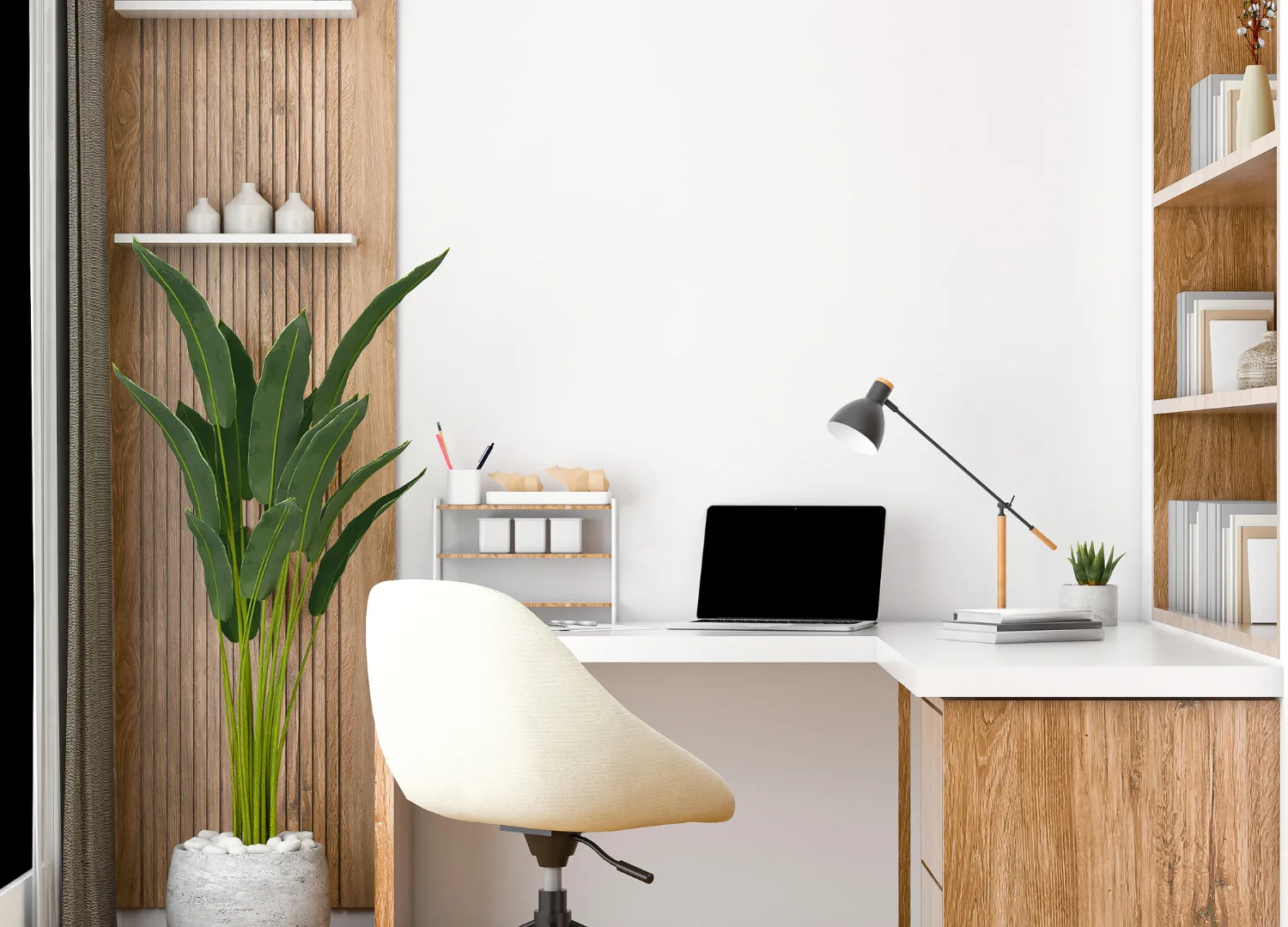
A calm, clutter-free study corner primes your mind for focus.
Set the Tone: Color and Mood
Did you know that the colors in your study space speak to your brain before you even open a book? Studies that have been conducted in color psychology have revealed that hues can shape mood, focus, and even aid in information retention.
Softer, cooler tones like blue and green often promote calm and clarity, while warm neutrals give a clean backdrop that feels cozy, not sterile.
For students whose coursework involves analysis or problem-solving, its advisable to try muted blues or sage tones.
If your goal is writing or long reading sessions, then warm whites and taupes have been found to create a calm environment that keeps distractions at bay.
To spice things up, add subtle accent colors such as mustard-yellow pen holder or a soft green plant. This is important as it gives visual balance without clutter. Every color decision supports how you want to feel while you study, not just how the room looks.
Furniture and Layout: Ergonomics Meets Minimalism
Your desk and chair are the foundation of your focus. A well-designed setup keeps you comfortable, alert, and physically aligned for long hours. Choose an adjustable chair with lumbar support and a desk that sits at elbow height when you’re seated.
Place your desk where it receives natural light, ideally beside a window but out of direct glare. Facing a window gives your eyes a break during study intervals. In the case whereby that’s not possible, hang a piece of calm, movement-based artwork, it can be something like wild horse poster prints to bring a sense of motion and energy into the space without adding visual clutter.
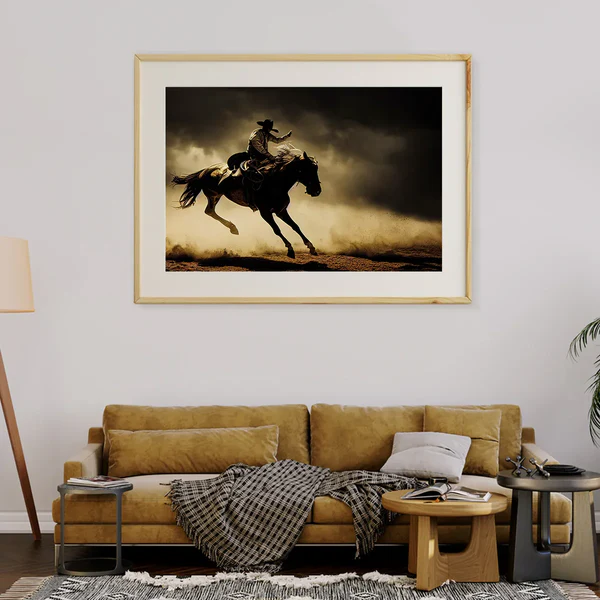
CetArt: Horse Posters for Walls
If you consider implementing such an idea, choose horse posters for walls that echo your undertones—sepia and warm browns for oak/leather schemes, cool grays or black-and-white for concrete and slate. For a single statement above a sofa or headboard, size the print two-thirds to three-quarters of the furniture width and hold the center near 145 cm from the floor. Portrait compositions elongate narrow columns; landscape steadies wide spans; square balances above consoles.
Keep frames consistent (black, oak, or white) and maintain 5–8 cm gaps if pairing with a secondary piece like a landscape or abstract print.
Keep the rest of your furniture arrangement simple: clear sightlines, clean edges, and open breathing space. In minimalism, every item earns its place.
Declutter and Organize: Systems That Sustain Focus
Once your furniture and colors are set, organization becomes your best productivity tool. Clutter—even visual clutter—creates mental noise. Start by creating “zones” for your materials:
- Active Work Zone: Current books, laptop, notes.
- Reference Zone: Items you’ll need soon but not now.
- Storage Zone: Supplies, cables, and extras tucked away neatly.
Studies show that refocusing after task-switching can eat up to 40% of your productive time. Keeping your workspace zoned means you stay on one task without constant visual reminders of the next.
Use hidden storage when possible, it can be a drawer tray for cables, or a small shelf basket for sticky notes and pens. Fewer visible objects translate to a calmer mind. Keep one personal item, like a small plant or an inspiring quote, but avoid covering the surface with knickknacks.
Lighting: The Productivity Catalyst
Lighting determines how well you concentrate, stay alert, and prevent fatigue. Natural light is ideal because it supports circadian rhythm and improves sleep quality.
In the case whereby you’re studying at night, layer your lighting. Combine ambient (room), task (desk), and accent lighting to avoid harsh shadows or glare.
Cool white bulbs (4000–5000 K) enhance alertness for analytical work, while warm white (2700–3000 K) light suits late-night reading or review. Several lighting studies indicate that colour temperature and light intensity can influence reaction times and sustained attention, especially when tasks require prolonged focus. For example, Zhao et al found shorter reaction times at higher correlated colour temperatures compared with warmer lighting in lab-based attention tasks (Zhao et al., 2021, Frontiers in Psychology).
A good rule: position your desk lamp on the opposite side of your dominant hand to prevent shadows on your writing surface.
Tech and Minimalism: Smart but Not Overwhelming
It is apparent that we can’t do without technology nowadays. However, its imperative to understand that technology should not complicate your study but rather enhance.
That said, when designing a minimalist study corner, keep cords out of sight using cable clips or sleeves. Use a USB-C hub to consolidate charging. Wireless keyboards and mice can reduce clutter, but reliability always comes first.
If you enjoy ambient soundscapes or focus playlists, integrate them into a “study mode” routine, perhaps just a single voice command that dims your lights, silences notifications, and starts your chosen background music.
Using these small automations is crucial as they train your brain to associate certain cues with deep work.
Additionally, keep a drawer or box for your tech extras such as adapters, chargers, backup drives so that your visual space stays clean even when your digital workspace is busy.
Budget-Friendly DIY Upgrades
You don’t need a huge budget to design a minimalist study space that feels high-end. Focus on comfort and function first.
- Repurpose: Turn mason jars into pen holders or shoe boxes into drawer dividers.
- Prioritize high-impact items: A supportive chair and proper lighting offer the biggest long-term returns.
- Experiment first: Rearrange what you already have before investing in upgrades—you’ll learn what layout or light direction suits you best.
Summing up
The goal of a minimalist study corner should be purpose and not perfection.
When designing your study space, ensure that every design decision; from color to chair height should support your focus and not distract it. A good learning environment sets the foundation for better academic performance, and becoming an A student often starts with designing the right space for focus.
Start small today: clear your desk surface, adjust your lighting, or add one piece of meaningful wall art. You will come to realize that, over time, those choices build an environment that quietly works with you, not against you.
Reference
Zhao, Y., Dake, L., Li, H., et al. (2021). Effects of correlated color temperature and illuminance on alertness, performance, and mood. Frontiers in Psychology, 12:705979.
0
383