
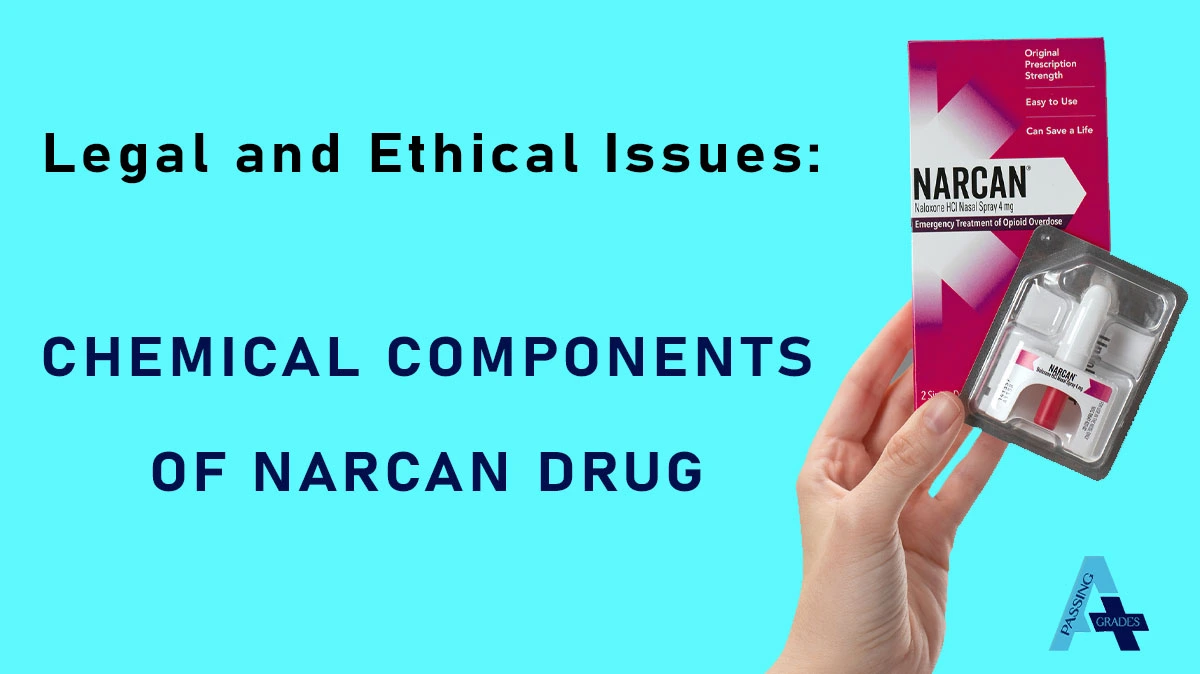
Naloxone, commercially known as Narcan, is a life-saving opioid antagonist that reverses respiratory depression caused by opioid overdose. Since its discovery by the Japanese company Sankyo in the 1960s, naloxone has become a central tool in global public health strategies to reduce opioid-related deaths. The World Health Organization (WHO, 2024) lists naloxone among its essential medicines, citing its critical role in combating the ongoing opioid crisis.
Despite its medical importance, naloxone presents a complex set of legal and ethical challenges. Policymakers worldwide debate how to expand access without encouraging risky opioid use or misuse of the medication. This paper examines the pharmacological basis of naloxone, its classification under drug regulations, and the key legal and ethical debates shaping its global administration. It also integrates findings from contemporary studies to evaluate how legal frameworks can balance accessibility, safety, and responsibility.
Chemical and Pharmacological Background
Naloxone functions as a competitive opioid receptor antagonist, primarily targeting the mu-opioid (µ) receptors that mediate the euphoric and respiratory-depressant effects of opioids (National Institute on Drug Abuse [NIDA], 2024). When administered intravenously or intranasally, naloxone rapidly displaces opioids from receptor sites, reversing respiratory depression and restoring consciousness within minutes. However, because naloxone’s half-life is shorter than that of many opioids, multiple doses may be required to maintain its life-saving effects.
Adverse effects are generally mild but can include nausea, vomiting, agitation, tachycardia, and sweating. In patients with underlying cardiovascular disease, the sudden reversal of opioid effects can induce arrhythmias or hypertension (U.S. Food and Drug Administration [FDA], 2023). Naloxone use during pregnancy is considered relatively safe, although fetal withdrawal symptoms may occur. The drug may also temporarily impair cognition and alertness, so patients are advised not to drive or operate machinery after administration.
When combined with buprenorphine (as in buprenorphine/naloxone formulations), naloxone helps deter misuse, since it is pharmacologically inactive when taken as prescribed but induces withdrawal if injected. This dual mechanism has made it a cornerstone in medication-assisted treatment (MAT) for opioid use disorder.
Legal Classification of Naloxone
Most nations regulate naloxone within existing frameworks for controlled or prescription medicines. The general categories of medication classification are as follows:
|
Category |
Description |
Access Restrictions |
|
General Sales List (GSL) |
Medicines available over-the-counter |
Minimal supervision |
|
Pharmacy Medicines (P) |
Sold only in pharmacies under supervision |
Pharmacist oversight required |
|
Prescription-Only Medicines (POM) |
Require prescription from a licensed provider |
Controlled dispensing |
|
Controlled Drugs (POM-CD) |
High-risk drugs subject to strict recordkeeping and legal controls |
Limited to licensed practitioners |
Injectable naloxone typically falls under the Controlled Drug (POM-CD) classification. However, regulatory reforms are gradually expanding community access.
In the United Kingdom, naloxone was historically restricted under the Medicines Act 1968 and Misuse of Drugs Regulations 1998. However, subsequent amendments, most recently the Human Medicines (Amendments Relating to Naloxone) Regulations 2024, now allow pharmacists, prison officers, and emergency responders to supply take-home naloxone without a prescription (UK Government, 2024). This shift represents a growing recognition that wider distribution can significantly reduce preventable overdose deaths.
In contrast, the United States follows a decentralized model. Federal agencies classify naloxone as a prescription medication, but state-level laws including standing orders and Good Samaritan statutes permit pharmacies to dispense naloxone without individual prescriptions (Centers for Disease Control and Prevention [CDC], 2023). As of 2024, all 50 states and the District of Columbia have enacted some form of naloxone access law. Despite this progress, disparities persist, particularly in rural areas where pharmacies or treatment centers are scarce.
Ethical and Legal Discussion
The ethical debate surrounding naloxone centers on harm reduction versus moral hazard. Critics claim that making naloxone readily available might inadvertently encourage risky opioid use by reducing the fear of fatal overdose. Proponents counter that the ethical imperative to save lives outweighs speculative concerns about enabling behavior.
From a public health ethics perspective, the principles of beneficence and justice support widespread naloxone distribution. Beneficence mandates acting to prevent harm and save life, while justice emphasizes equitable access to healthcare resources. Restricting naloxone due to moral or social stigma disproportionately harms vulnerable populations, particularly those suffering from addiction recognized today as a medical, not moral, condition (NIDA, 2024).
Legally, the issue involves liability and authorization. Some healthcare providers hesitate to distribute naloxone because of concerns about legal responsibility if administration fails. “Good Samaritan” laws in the U.S. address this by granting immunity to individuals and organizations that administer naloxone in good faith. Similar protections exist in the UK under the Medicines Act, which allows any person to administer naloxone during an emergency to save a life (UK Home Office, 2024).
Literature Review
Empirical evidence strongly supports community naloxone programs as cost-effective and life-saving interventions. A comprehensive review by Bennett et al. (2023) found that take-home naloxone programs reduced opioid-related mortality by up to 30% in regions with active community distribution. Similarly, WHO (2024) emphasizes that broad naloxone access is essential to achieving Sustainable Development Goal 3.5, which targets substance abuse reduction.
However, challenges persist. A U.S.-based study by Green et al. (2022) found that while naloxone availability has increased dramatically, inconsistent training and social stigma continue to limit its use during emergencies. Another concern involves misuse and diversion. As documented by Alho et al. (2009) and later supported by Cicero et al. (2014), some individuals obtain buprenorphine/naloxone illicitly to self-treat withdrawal or avoid more potent opioids. While these actions technically constitute misuse, they often reflect barriers to legitimate treatment access, such as cost and provider shortages, rather than criminal intent.
Recent European and North American policy analyses (Public Health England, 2023; National Institutes of Health, 2024) conclude that the ethical path forward is not restriction but responsible expansion that pairs naloxone distribution with addiction counseling, education, and referral systems. Such integrated approaches reduce mortality without encouraging new substance misuse.
Conclusion
Naloxone remains one of the most effective harm-reduction tools in modern medicine. Its pharmacological mechanism; rapid reversal of opioid-induced respiratory depression thus making it indispensable in both clinical and community settings. Yet, the question of how far access should extend continues to provoke debate.
Legally, countries such as the UK and U.S. are moving toward more inclusive distribution frameworks, balancing safety with accessibility. Ethically, withholding naloxone on the basis of potential misuse contradicts fundamental healthcare principles of compassion and justice. The evidence overwhelmingly supports the idea that wider access saves lives, particularly when paired with education and treatment pathways.
As the opioid crisis persists, policymakers must continue refining legal frameworks to ensure naloxone is accessible, affordable, and responsibly used. Effective harm reduction depends not only on the availability of this life-saving drug but also on society’s willingness to prioritize public health over stigma and moral judgment.
References
Alho, H., Sinclair, D., Vuori, E., & Holopainen, A. (2009). Abuse liability of buprenorphine–naloxone tablets in untreated IV drug users. Drug and Alcohol Dependence, 105(1-2), 133–136.
Bennett, A. S., Freeman, R., & Paone, D. (2023). Evaluating take-home naloxone programs: Evidence and implications for opioid overdose prevention. Addiction Research & Theory, 31(4), 276–288.
Centers for Disease Control and Prevention (CDC). (2023). U.S. state naloxone access laws and Good Samaritan protections.
Cicero, T. J., Ellis, M. S., & Chilcoat, H. D. (2014). Understanding the use and misuse of buprenorphine/naloxone in the U.S. Drug and Alcohol Dependence, 142, 98–104.
National Institute on Drug Abuse (NIDA). (2024). Naloxone drug facts. https://nida.nih.gov
UK Government. (2024). Human Medicines (Amendments Relating to Naloxone) Regulations 2024. https://www.gov.uk
U.S. Food and Drug Administration (FDA). (2023). Naloxone: Drug safety communication. https://www.fda.gov
World Health Organization (WHO). (2024). Naloxone and the management of opioid overdose: Technical update.
0
1448