
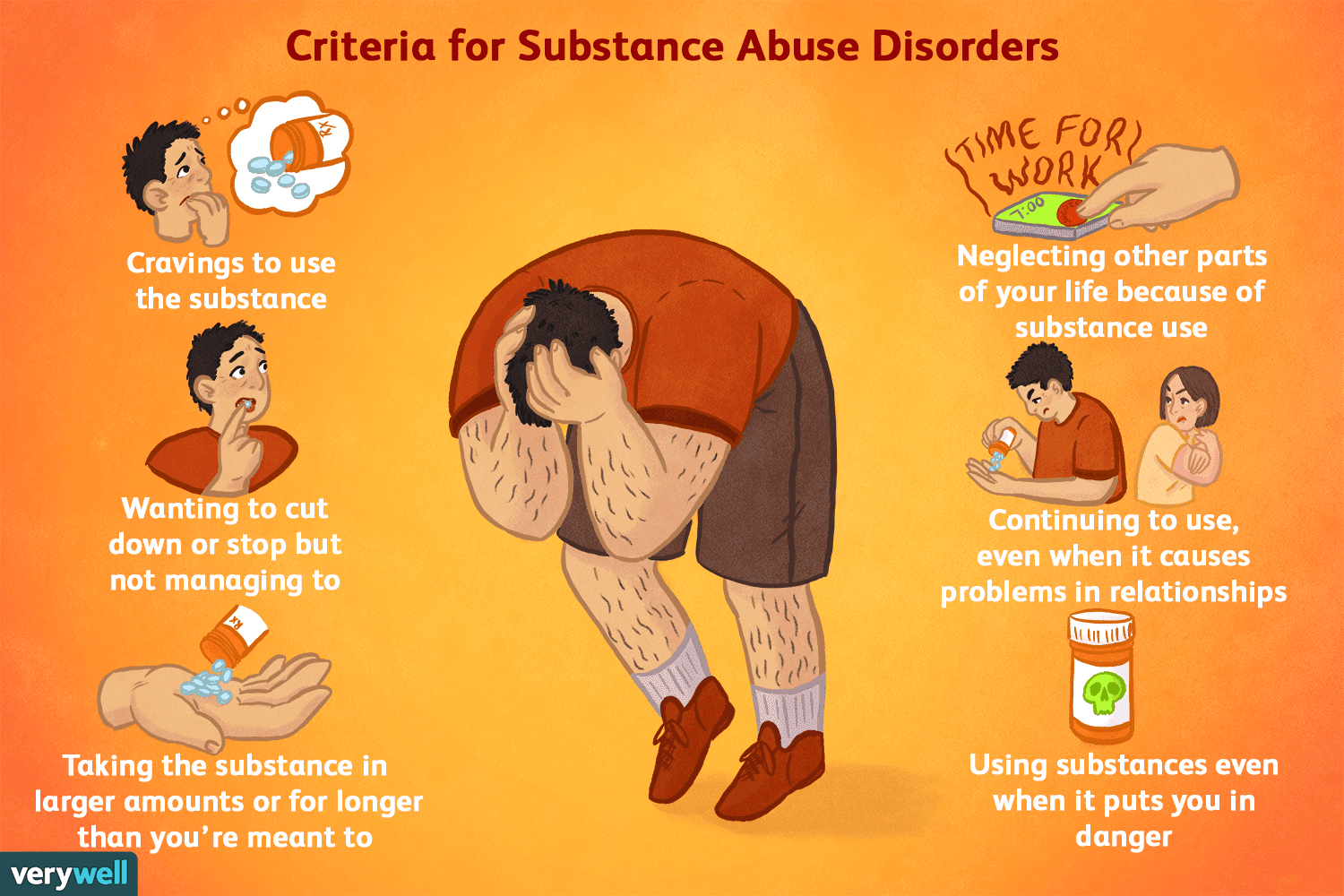
Introduction
There are numerous kinds of approved substance use disorder treatment approaches that are employed in contemporary society. However, the most common ones are Cognitive Behavioral Therapy (CBT) and Solution Focused Therapy (SF).
David, Cristea & Hofmann (2018) defines CBT as a psychotherapeutic treatment that is used to treat individuals who are finding it hard to identify and change destructive or rather disturbing thought pattern that affects their behavior and emotions negatively.
On the other hand, Franklin (2015) defines SFBT as a psychotherapeutic treatment that is goal oriented and uses a collaborative approach to empower clients to own their abilities in solving problems that are hindering their proper functioning in their daily lives.
Cognitive Behavioral Therapy
CBT is a talk therapy whereby the client works with a therapist or rather a counselor in a structured manner that incorporates attending several sessions. It helps a client to become aware of the negative or wrong perceptions that they have that tend to affect their behavior and actions.
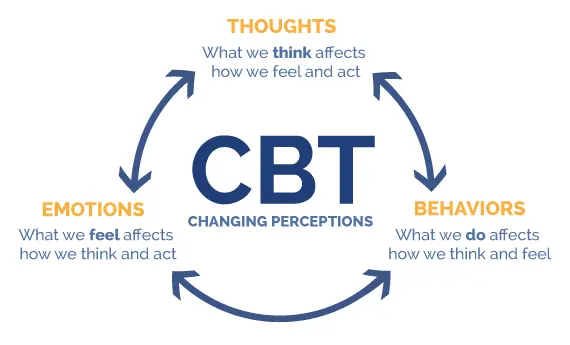
Numerous studies have confirmed that CBT is an effective treatment that leads to a notable improvement in behavior, functioning, and quality of life of a patient who submits to the mode of treatment. The treatment involves efforts to change the thinking patterns of the client to help them learn to identify one’s thinking that is creating problems. It also helps clients to reexamine their thoughts and behaviors appropriately.
Some of the strategies employed include learning to identify one’s misrepresentations in thinking, gaining insight into the behavior of an individual and that of others, and using problem-solving skills to deal with challenging situations (David, Cristea & Hofmann 2018).
Moreover, helping clients learn how to develop a greater sense of self-confidence. CBT also tries to change the behavior patterns of a client by guiding them on how to face individual fears instead of avoiding them, using role-play to get ready for potentially problematic interactions with other people.
Another technique is helping clients learn how to calm their minds and relax their bodies. Additionally, the therapy emphasizes aiding people to learn to be their own therapists. It focuses on what is going on in a person’s current life rather than the cause of the problems that the client or clients are experiencing. However, a specific amount of information regarding the client’s history is needed (David, Cristea & Hofmann 2018).
Solution Focused Therapy
On the other hand,Solution-focused therapy (SF) is a very unique kind of treatment for individuals with mental problems. Basing on its intervention technique, SF concentrates on an individual’s current and future scenarios and goals and not focusing on past experiences in the course of treating a patient (Franklin, 2015).
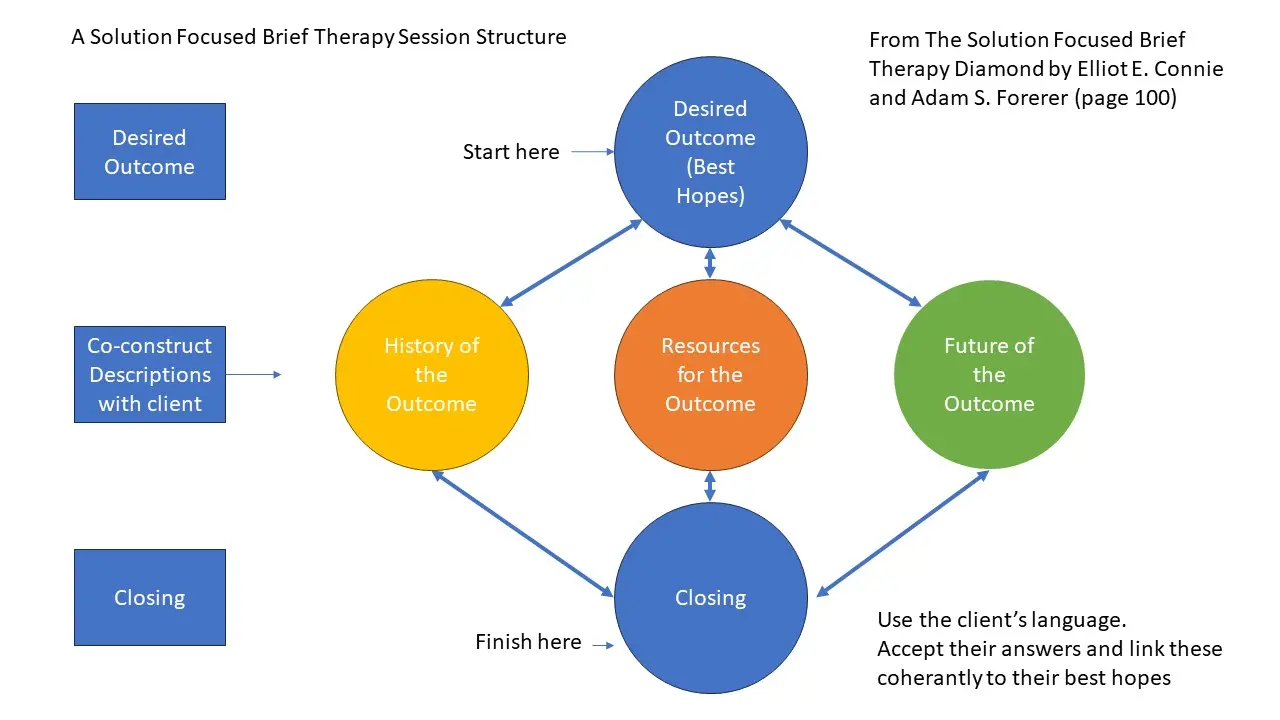
As a result, it is often described as a goal-oriented therapy and thus the issues or rather the symptoms that make a person seek therapy are not targeted but the professional therapist focuses on creating a vision of the future that will help an individual overcome the present challenges (Bavelas et al. 2013).
SF aims at helping individuals undergoing challenges to find things that they can use immediately to deal with the symptoms that are affecting them and be in a position leaving a better life.
Similarities and Differences
The two modes of substance use disorder treatment differ in many ways. However, they also have several similarities. A major similarity between the two therapies is that they both focus on behaviors and cognitions.
Also, both of them do not focus on changing the personality of the client but rather deal with the present subject. Moreover, they use a number of similar techniques in their treatment such as the use of scaling questions, goal setting, and assigning homework (Jordan, Froerer & Bavelas 2013).
On the other hand, the two treatments are different in a number of ways. The first difference is that CBT incorporates a wide range of spectrum of more specialized therapy orientations and approaches such as behavior therapy, rational emotive behavior therapy, cognitive therapy, mindfulness based cognitive therapy, and dialectical behavior therapy.
Contrarily, SFBT does not incorporate many therapy models but rather is a solution-building model that has a unique intervention that uses a highly disciplined set of communicative practices. As a result, SFBT counselors and therapists are more likely to offer treatment in a homogenous way (Jordan, Froerer & Bavelas 2013).
Another difference regards how CBT and SFBT therapists draw assumptions about their clients. Research shows that CBT therapies perceive their clients as individuals’ faulty or unhealthy cognitions which is the root of their behavior problems. On the other hand, SFBT therapists tend to assume that their patients have all the things that they need and as a result, there is no need of identifying deficiencies or pathologies.
Moreover, CBT therapists take professional stands and challenge the faulty cognitions of their clients. However, SFBT therapists take an innocent position and conduct their therapy by asking clients questions which will help them identify the resources and faulty cognitions. Lastly, CBT therapy aims at changing the clients’ faulty cognitions while SFBT focuses on making clients understand their faulty cognitions and plan their future (Jordan, Froerer & Bavelas 2013).
Preferred Method
The preferred method of treatment is Solution Focused Therapy. One of the notable things about SF is that it focuses on change, difference, building solutions, and not about solving problems.
This particular form of treatment employs the language of the client to connect with the client and understand the challenges that they are going through (Franklin, 2015). It is an outstanding form of therapy since it focuses on discovering the strengths and resources that a client has in order to help them discover feasible mechanisms that they can find a solution to their problems.
On the other hand, CBT fails to focus on what the client has that can be used to develop solutions. This is not the case in SF because the clients are treated as the expert since they are the ones who figure out the problem, the strengths that they have, the weaknesses hindering them from solving the problem, and also, they are the ones who come up with the possible solutions that can be used to eliminate the problem.
Additionally, SF reinforces the concept of positive psychology whereby the client says what they want and what they do not want while CBT tends to tell the client what is right and what is wrong thus not letting the client take control of their lives (Jordan, Froerer & Bavelas 2013).
Conclusion
Summing up, both CBT and SF are effective treatments when dealing with mental issues. However, SFBT seems to be a more appropriate technique when dealing with issues involving substance disorders while CBT is more effective when dealing with individuals suffering from chronic illnesses such as cancer and other mental conditions.
Also, CBT is more appropriate for younger people because they might not have comprehensive knowledge of themselves while SF presents to be more effective for older people since they understand themselves and the challenges that they are facing.
References
Bavelas, J., De Jong, P., Franklin, C., Froerer, A., Gingerich, W., Kim, J., & Trepper, T. S. (2013). Solution focused therapy treatment manual for working with individuals (2nd version). Solution Focused Brief Therapy Association, 1.
David, D., Cristea, I., & Hofmann, S. G. (2018). Why cognitive behavioral therapy is the current gold standard of psychotherapy. Frontiers in psychiatry, 9, 4.
Franklin, C. (2015). An update on strengths-based, solution-focused brief therapy. Health & social work, 40(2), 73-76.
Jordan, S. S., Froerer, A. S., & Bavelas, J. B. (2013). Microanalysis of positive and negative content in solution-focused brief therapy and cognitive behavioral therapy expert sessions. Journal of systemic Therapies, 32(3), 46-59.
0
1698