Pasing Grades
  • Start Selling
  • Blog
  • Contact
  • 0

    Your cart is empty!

English

  • English
  • Spanish
  • Arabic
Create Account Sign In
  • Library
    • New Prep Guides
    • Featured Prep Guides
    • Free Exam Prep Guides
    • Best sellers
  • General
  • Nursing
    • Research Paper
    • Case Study
    • Discussion Post
    • Assignment
    • Exam
    • Practice Questions and Answers
    • Test Bank
    • solutions manual
  • Accounting
    • Case Study
    • Thesis
    • Study Guide
    • Summary
    • Research Paper
    • test bank
  • English
    • Creative Writing
    • Research Paper
    • Summary
    • Rhetorics
    • Literature
    • Journal
    • Exam
    • Grammar
    • Discussion Post
    • Essay
  • Psychology
    • Hesi
    • Presentation
    • Essay
    • Summary
    • Study Guide
    • Essay
    • Solution Manual
    • Final Exam Review
    • Class Notes
    • test bank
  • Business
    • Lecture Notes
    • Solution Manual
    • Presentation
    • Business Plan
    • Class Notes
    • Experiment
    • Summary
    • Practice Questions
    • Study Guide
    • Case Study
    • test bank
    • Exam
  • More
    • Computer Science
    • Economics
    • Statistics
    • Engineering
    • Biology
    • Religious Studies
    • Physics
    • Chemistry
    • Mathematics
    • History
    • Sociology
    • Science
    • Philosophy
    • Law
  • Pages
    • About Us
    • Selling Tips
    • Delivery Policy
    • Faq
    • Privacy Policy
  • Flash Sale
  • Home
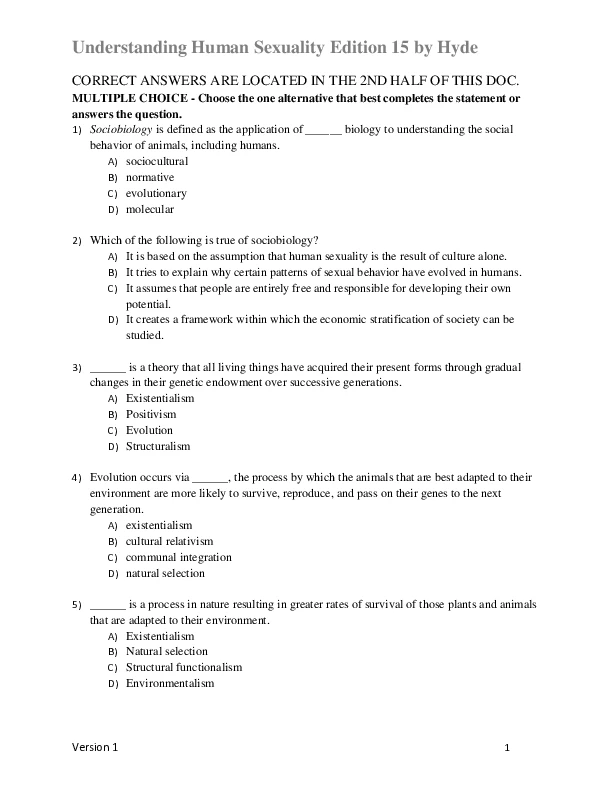
  • Test Bank for Understanding Human Sexuality, 15th Edition, Janet Hyde, John DeLamater

Test Bank for Understanding Human Sexuality, 15th Edition, Janet Hyde, John DeLamater

Preview page 1 Preview page 2 Preview page 3
Add To Favorites

Share this item Share this item

  • Item Details
  • Comments (0)
  • Reviews (0)
  • Contact Seller
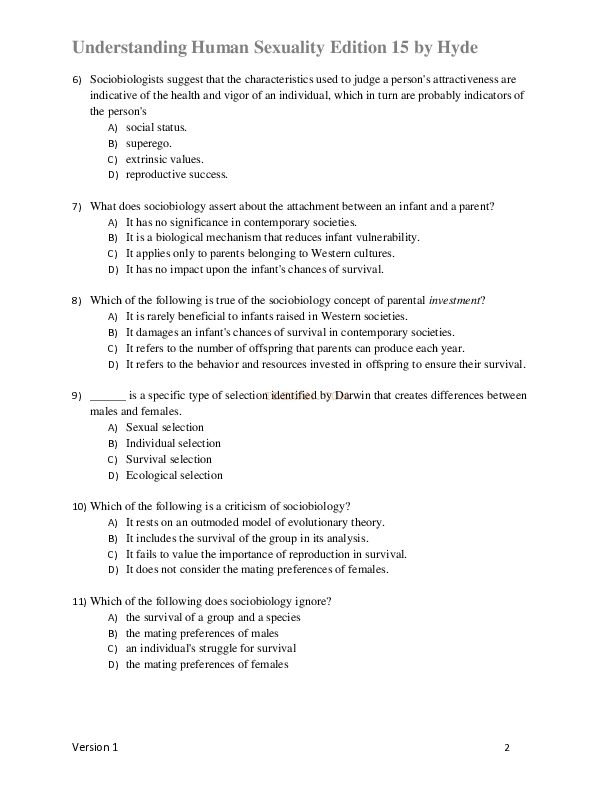
TEST BANK FOR UNDERSTANDING HUMAN SEXUALITY, 15TH EDITION, JANET HYDE, JOHN DELAMATER Test Bank for Understanding Human Sexuality, 15th Edition, Janet Hyde, John DeLamater 1. gender: Being male, female, or some other gender such as trans 2. sexual behavior: Behavior that produces arousal and increases the chance of orgasm 3. cultivation: In communications theory, the view that exposure to the mass media makes people think that what they see there represents the mainstream of what really occurs 4. agenda setting: In communications theory, the idea that the media define what is important and what is not by which stories they cover 5. social learning: In communications theory, the idea that the media provide role models whom we imitate 6. culture: Traditional ideas and values passed down from generation to generation within a group and transmitted to members of the group by symbols (e.g. language) 7. ethnocentrism: The tendency to regard one's own ethnic group and culture as superior to others and to believe that its customs and way of life are the standards by which other cultures should be judged 8. incest taboo: societal regulation prohibiting sexual interaction between blood relatives, such as brother and sister or father and daughter 9. masturbation: Self-stimulation of the genitals to produce sexual arousal 10. latinos: People of Latin American heritage 11. Familismo: Among Latinos, a strong cultural valuing of one's nuclear and extended family 12. racial microaggressions: Subtle insults directed at people of color and often done nonconsciously 13. sexual health: A state of physical, emotional, mental, and social well-being in relation to sexuality 14. sexual rights: Basic, inalienable rights regarding sexuality, both positive and negative, such as rights to reproductive self- determination and sexual self-expression and freedom from sexual abuse and violence 15. sociobiology: The application of evolutionary biology to understanding the social behavior of animals, including humans 16. evolution: A theory that all living things have acquired their present forms through gradual changes in their genetic endowment over successive generations 17. natural selection: A process in nature resulting in greater rates of survival of those plants and animals that are adapted to their environment 18. sexual selection: A specific type of selection that creates differences between males and females 19 evolutionary psychology: The study of psychological mechanisms that have been shaped by natural selection 20. psychoanalytic theory: A psychological theory originated by Sigmund Freud; it contains a basic assumption that part of human personality is unconscious 21. libido: In psychoanalytic theory, the term for the sex energy or sex drive 22. The Id: According to Freud, the part of the personality containing the libido 23. The Super Ego: According to Freud, the part of the personality containing the conscience 24. The Ego: According to Freud, the part of the personality that helps the person have realistic, rational interactions 25. Erogenous zones (Freud): Areas of the body that are particularly sensitive to sexual stimulation 26. Oedipus complex: According to Freud, the sexual attraction of a little boy for his mother 27. Electra complex: According to Freud, the sexual attraction of a little girl for her father 28. Classical conditioning: The learning process in which a previously neutral stimulus (conditioned stimulus) is repeatedly paired with an unconditioned stimulus that reflexively elicits an unconditioned response. Eventually the conditioned stimulus itself will evoke the response 29. Operant Conditioning: The process of changing the frequency of a behavior (the operant) by following it with positive reinforcement (which will make the behavior more frequent in the future) or punishment (which should make the behavior less frequent in the future 30. behavior modification: A set of operant conditioning techniques used to modify human behavior 31. self-efficacy: one's sense of competence and effectiveness 32. social exchange theory: A theory, based on the principle of reinforcement, that assumes that people will choose actions that maximize rewards and minimize costs 33. schema: A general knowledge framework that a person has about a particular topic 34. Intersectionality: An approach that simultaneously considers the consequences of multiple group memberships, e.g., the intersection of gender and ethnicity 35. Heteronormativity: The belief that heterosexuality is the only pattern that is normal and natural 36 Symbolic interaction theory: A theory based on the premise that human nature and the social order are products of communication among people 37. sexual field: A site populated with people with erotic dispositions that they project on the space and each other, creating a system of sexual stratification 38. medicalization of sexuality: The process by which certain sexual behaviors or conditions are defined in terms of health and illness, and problematic experiences or practices are given medical treatment 39. direct observation: A behavioral measure, in which the scientist directly observes the behavior being studied 40. eye-tracking: A behavioral measure, in which a device measures the participant's point of gaze over time 41. population: A group of people a researcher wants to study and make inferences about 42. sample: A part of a population 43. random sample: An excellent method of sampling in research, in which each member of the population has an equal chance of being included in the sample 44. probabilty sampling: An excellent method of sampling in research, in which each member of the population has a known probability of being included in the sample 45. problem of refusal or nonresponse: The problem that some people will refuse to participate in a sex survey, thus making it difficult to study a random sample 46. volunteer bias: A bias in the results of sex surveys that arises when some people refuse to participate, so that those who are in the sample are volunteers who may in some ways differ from those who refuse to participate 47. convenience sample: A sample chosen in a haphazard manner relative to the population of interest. not a random or probability sample. 48. purposeful distortion: Purposely giving false information in a survey 49. test-retest reliability: A method for testing whether self-reports are reliable or accurate; participants are interviewed (or given a questionnaire) and then interviewed a second time sometime later to determine whether their answers are the same both times 50. Computer-assisted self-interview (CASI): A method of data collection in which the respondent fills out questionnaires on a computer. Headphones and a soundtrack reading the questions can be added for young children or poor readers 51 Informed consent: An ethical principle in research, in which people have a right to be informed, before participating, of what they will be asked to do in the research 52. justice principle: An ethical principle in research, which holds that the risks of participation should be distributed fairly across groups in society, as should the benefits 53. cost-benefit approach: An approach to analyzing the ethics of a research study, based on weighing the costs of the research (the participants' time, stress to participants, and so on) against the benefits of the research (gaining knowledge about human sexuality 54. snowball sampling (respondent-driven sampling): A method for acquiring a sample of people, in which existing participants suggest names of future participants to be recruited 55. content analysis: A set of procedures used to make valid inferences about text 56. intercoder reliability: In content analysis, the correlation or percent of agreement between two coders independently rating the same texts 57. qualitative research: A collection of naturalistic, holistic methods, including participant observation and in-depth interviewing, in which the results are conveyed not in numbers but in words 58. ethnography: A research method used to provide a description of a human group, a social setting, or a society 59. Participant-observer technique: A research method in which the scientist becomes part of the community to be studied and makes observations from inside the community 60. correlational study: A study in which the researcher does not manipulate variables but rather studies naturally occurring relationships (correlations) among variables 61. experiment: A type of research study in which one variable (the independent variable) is manipulated by the experimenter while all other factors are held constant; the researcher can then study the effects of the independent variable on some measured variable (the dependent variable); the researcher is permitted to make causal inferences about the effects of the independent variable on the dependent variable 62. causal inference: Reaching the conclusion that one factor actually causes or influences an outcome 63. meta-analysis: A statistical method that allows the researcher to combine the results of all prior studies on a particular question to see what, taken together, they say. 64. mean: The average of respondents' scores 65. median: the middle score in a distribution; half the scores are above it and half are below it 66. incidence: The percentage of people giving a particular response 67. frequency: How often a person does something 68. correlation: A number that measures the relationship between two variables 69. vasocongestion: An accumulation of blood in the blood vessels of a region of the body, especially the genitals; a swelling or erection results 70. myotonia: Muscle contraction 71. excitement: The first stage of sexual response, during which erection in males and vaginal lubrication in females occur 72. orgasmic platform: A tightening of the entrance to the vagina caused by contractions of the bulbospongiosus muscle (which covers the vestibular bulbs) that occur during the excitement stage of sexual response 73. orgasm: The second stage of sexual response; an intense sensation that occurs at the peak of sexual arousal and is followed by release of sexual tensions 74. resolution: The third stage of sexual response, in which the body returns to the unaroused state 75. refractory period: The period following orgasm during which the male cannot be sexually aroused 76. clitoral orgasm: Freud's term for orgasm in females resulting from stimulation of the clitoris 77. vaginal orgasm: Freud's term for orgasm in females resulting from stimulation of the vagina in heterosexual intercourse; Freud considered vaginal orgasm to be more mature than clitoral orgasm 78. multiple orgasm: A series of orgasms occurring within a short period of time 79. triphasic model: Kaplan's model of sexual response in which there are three components: vasocongestion, muscular contractions, and sexual desire 80. dual control model: A model that holds that sexual response is controlled both by sexual excitation and by sexual inhibition 81. retrograde ejaculation: A condition in which orgasm in the male is not accompanied by an external ejaculation; instead, the ejaculate goes into the urinary bladder 82. graefenberg spot (g-spot): A small region on the front wall of the vagina, emptying into the urethra, and responsible for female ejaculation 83. lymbic system: A set of structures in the interior of the brain, including the amygdala, hippocampus, and fornix; believed to be important for sexual behavior in both animals and humans 84. organizing effects of hormones: Effects of sex hormones early in development, resulting in a permanent change in the brain or reproductive system 85. activating effects of hormones: Effects of sex hormones in adulthood, resulting in the activation of behaviors, especially sexual behaviors and aggressive behaviors 86. pheromones: Biochemicals secreted outside the body that are important in communication between animals and that may serve as sex attractants 87. menstrual synchrony: The convergence, over several months, of the dates of onset of menstrual periods among women who are in close contact with each other 88. Autoeroticism: Sexual self-stimulation; for example, masturbation 89. sexual fantasy: Sexual thoughts or images that alter the person's emotions or physiological state 90. dildo: A rubber or plastic cylinder, often shaped like a penis 91. coitus: Sexual intercourse; insertion of the penis into the vagina 92. cunnilingus: Mouth stimulation of the female genitals 93. fellatio: Mouth stimulation of the male genitals 94. annilingus: Mouth stimulation of the partner's anus 95. interfemoral intercourse: A sexual technique used by gay men in which one man moves his penis between the thighs of the other 96. tribadism: A sexual technique used by lesbians in which one woman lies on top of another and moves rhythmically in order to produce sexual pleasure, particularly clitoral stimulation 97. aphrodisiac: A substance that increases sexual desire 98. anaphrodisiac: A substance that decreases sexual desire

Contact the Seller

Please Sign In to contact this seller.


  • 👎  Report Copyright Violation

Frequently Asked Questions

What Do I Get When I Buy This Study Material?

+

When you buy a study material on Passing Grades, an instant download link will be sent directly to your email, giving you access to the file anytime after payment is completed.

Is Passing Grades a Trusted Platform?

+

Yes, Passing Grades is a reputable students’ marketplace with a secure payment system and reliable customer support. You can trust us to ensure a safe and seamless transaction experience.

Will I Be Stuck with a Subscription?

+

No, all purchases on Passing Grades are one-time transactions. You only pay for the notes you choose to buy, with no subscriptions or hidden fees attached.

Who Am I Buying These Study Materials From?

+

Passing Grades is a marketplace, which means you are purchasing the document from an individual vendor, not directly from us. We facilitate the payment and delivery process between you and the vendor.

Does Passing Grades Offer Free Study Materials?

+

Yes, sellers on Passing Grades have uploaded numerous free test banks, exams, practice questions, and class notes that can be downloaded at no cost.


Pasinggrades - Quality Study Materials

USD 15

    • Quality checked by Pasing Grades
    • 100% satisfaction guarantee
    • Seller: Pasing-Grades
Buy PDF $15

Seller Information

Pasing-Grades

Member since May 2021

  • icon
View Profile
  • total sales

    0
  • Favourites

    0
  • Comments

    0
    ( 0 Ratings )

Item Information

  • Uploaded

    28 August 2023

  • Updated

    01 October 2025

  • Category

    General

  • Item Type

    test bank

  • Tags

    Test Bank for Understanding Human Sexuality 15th Edition Janet Hyde John DeLamater

Related Exam Prep Guides by Pasing-Grades

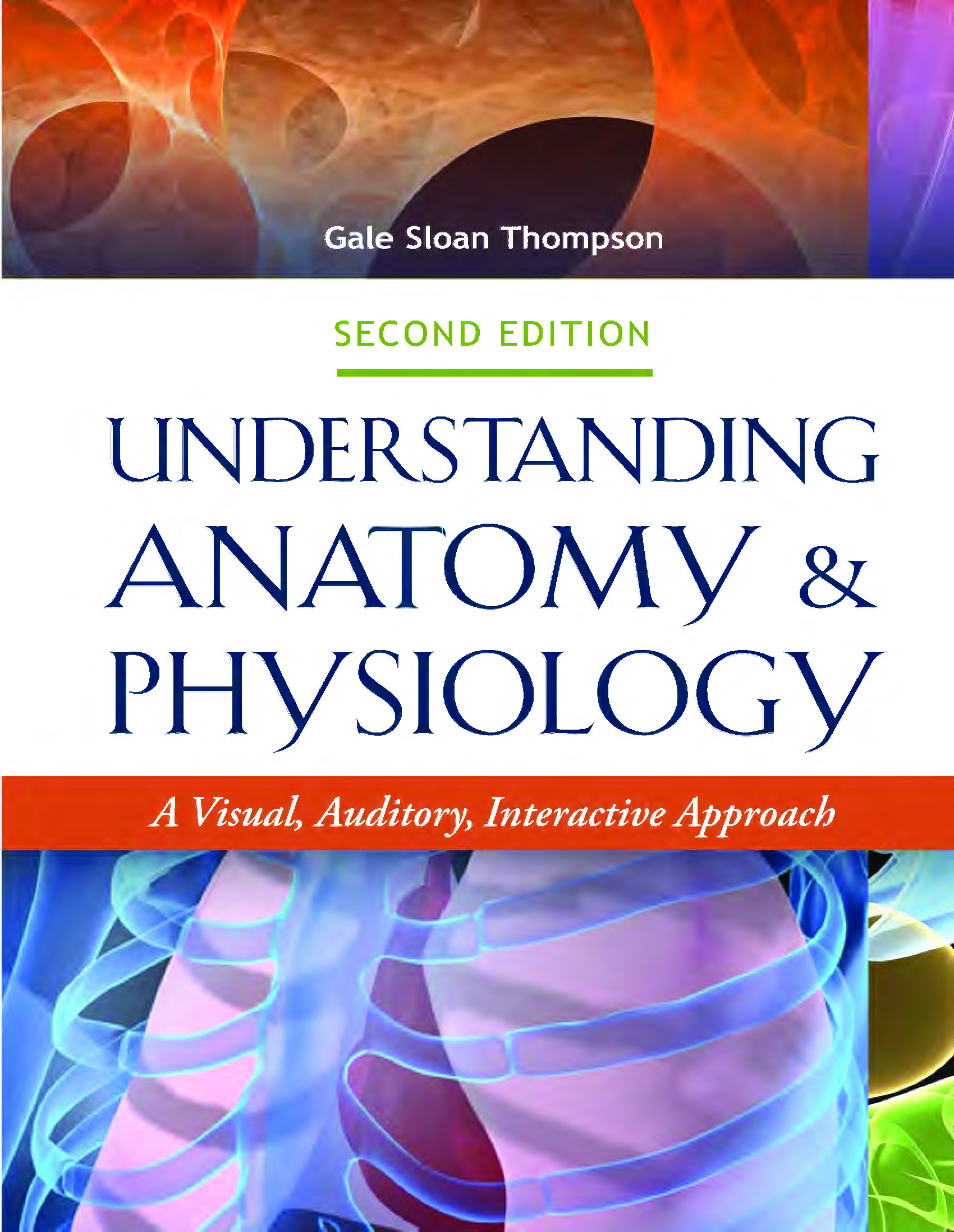
Understanding Anatomy and Physiology; A Visual, Auditory, Interactive Approach by Gale. S. Thompson
View Document

Understanding Anatom...

  • Pasing-Grades

    Pasing-Grades

  • test bank

Third Edition: Understanding Anatomy and Physiology; A Visual, Auditory, Interactive Approach by Gal...

15 USD

0

0

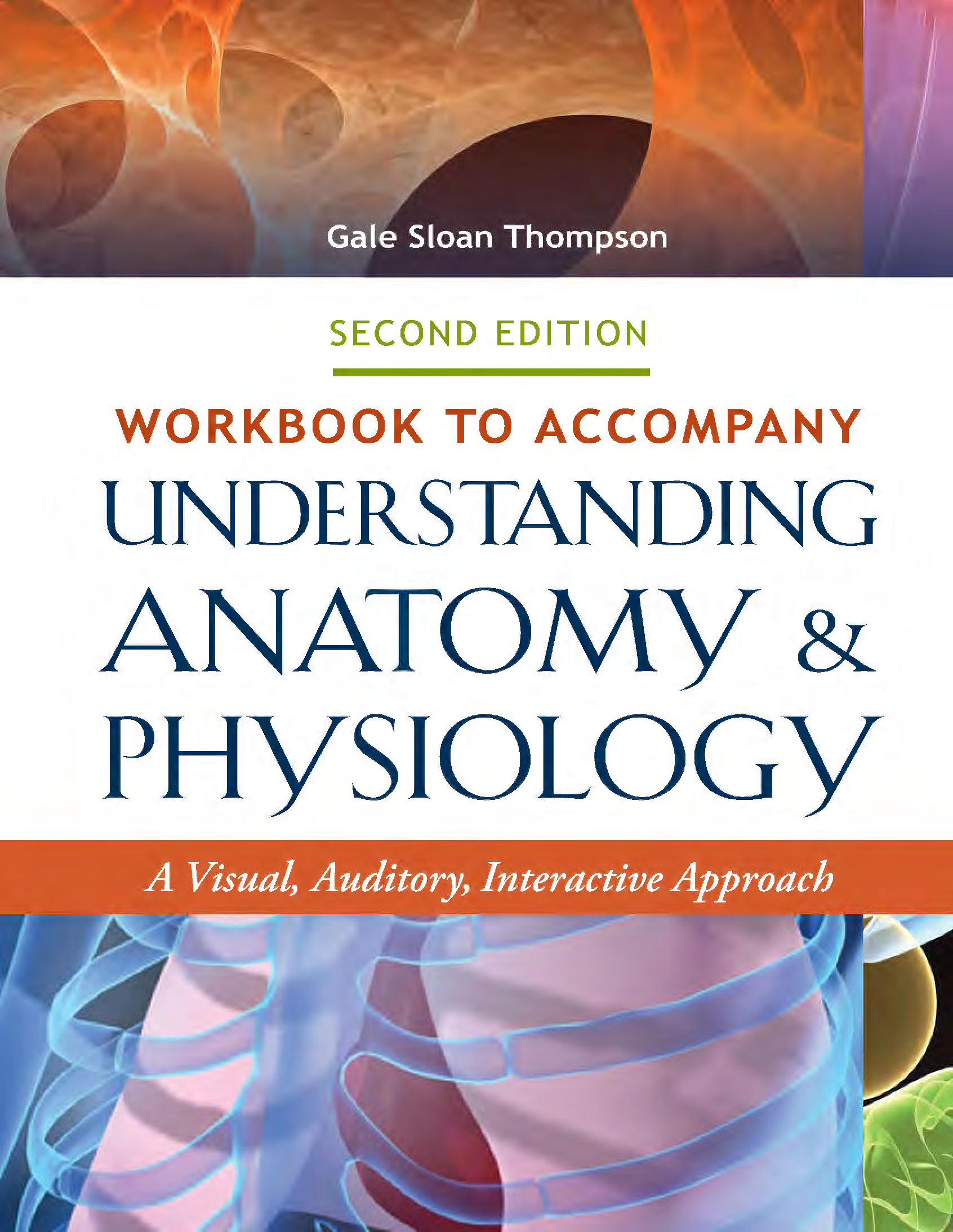
Workbook to Accompany Understanding Anatomy & Physiology: A Visual, Auditory, Interactive Approach by Gale Sloan Thompson RN
View Document

Workbook to Accompan...

  • Pasing-Grades

    Pasing-Grades

  • test bank

Workbook to Accompany Understanding Anatomy & Physiology: A Visual, Auditory, Interactive Approach b...

15 USD

0

0

Test Bank for Fundamentals of Nursing 10th Edition by Taylor
View Document

Test Bank for Fundam...

  • Pasing-Grades

    Pasing-Grades

  • test bank

Get now the Test Bank for Fundamentals of Nursing 10th Edition by Taylor. Instant PDF Download....

15 USD

0

0

Purchase

Download link will be sent to this email immediately after purchase.

IMPORTANT LINKS

  • How To Upload Class Notes
  • Selling Tips
  • Passing Grades's Study Materials
  • Scholarships for International Students 2025

POPULAR CATEGORIES

  • Law
  • Accounting
  • English
  • Psychology
  • Business
  • Nursing
  • Computer Science
  • General

View Document

  • Blog
  • Contact
  • Delivery Policy
  • Latest Scholarships Around the World
  • How to Pass Bar Exams: Passing Grades’ Strategies
  • How to Study and Pass the CPA Exam
  • All Test Banks
  • Faq
  • Copyright Claims
  • Privacy Policy
  • Terms of Use

KNOWLEDGE BASE

  • How to Write A+ Grade Good Research Paper
  • How to Manage Stress During Exam Period
  • Best Time to Study
  • How to Pass NCLEX-RN Exam
  • How To Effectively Utilize Test Banks
  • Popular Shadow Health Exam Assessments
  • Popular HESI Case Studies
  • How to Prepare for a Nursing Career
  • The Importance Of Summaries in Exam Revisvion

© 2026 Pasing Grades. All rights reserved.