Pasing Grades
  • Start Selling
  • Blog
  • Contact
  • 0

    Your cart is empty!

English

  • English
  • Spanish
  • Arabic
Create Account Sign In
  • Library
    • New Prep Guides
    • Featured Prep Guides
    • Free Exam Prep Guides
    • Best sellers
  • General
  • Nursing
    • Research Paper
    • Case Study
    • Discussion Post
    • Assignment
    • Exam
    • Practice Questions and Answers
    • Test Bank
    • solutions manual
  • Accounting
    • Case Study
    • Thesis
    • Study Guide
    • Summary
    • Research Paper
    • test bank
  • English
    • Creative Writing
    • Research Paper
    • Summary
    • Rhetorics
    • Literature
    • Journal
    • Exam
    • Grammar
    • Discussion Post
    • Essay
  • Psychology
    • Hesi
    • Presentation
    • Essay
    • Summary
    • Study Guide
    • Essay
    • Solution Manual
    • Final Exam Review
    • Class Notes
    • test bank
  • Business
    • Lecture Notes
    • Solution Manual
    • Presentation
    • Business Plan
    • Class Notes
    • Experiment
    • Summary
    • Practice Questions
    • Study Guide
    • Case Study
    • test bank
    • Exam
  • More
    • Computer Science
    • Economics
    • Statistics
    • Engineering
    • Biology
    • Religious Studies
    • Physics
    • Chemistry
    • Mathematics
    • History
    • Sociology
    • Science
    • Philosophy
    • Law
  • Pages
    • About Us
    • Selling Tips
    • Delivery Policy
    • Faq
    • Privacy Policy
  • Flash Sale
  • Home
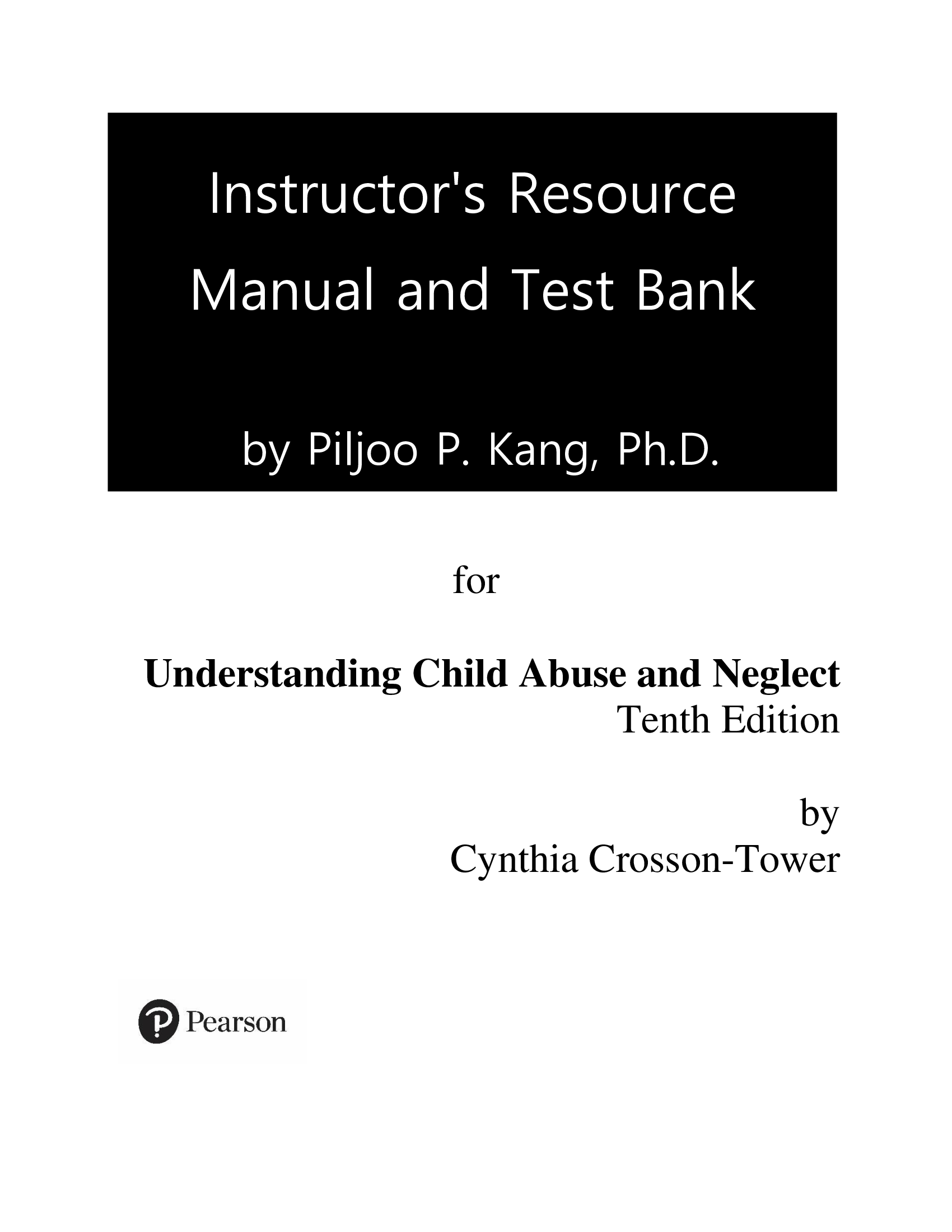
  • Test Bank for Understanding Child Abuse and Neglect, 10th Edition, Cynthia Crosson-Tower

Test Bank for Understanding Child Abuse and Neglect, 10th Edition, Cynthia Crosson-Tower

Preview page 1 Preview page 2 Preview page 3
Add To Favorites

Share this item Share this item

  • Item Details
  • Comments (0)
  • Reviews (0)
  • Contact Seller
Test Bank for Understanding Child Abuse and Neglect, 10th Edition, Cynthia Crosson-Tower TEST BANK FOR UNDERSTANDING CHILD ABUSE AND NEGLECT, 10TH EDITION, CYNTHIA CROSSON-TOWER for Understanding Child Abuse and Neglect Tenth Edition by Cynthia Crosson-Tower TABLE OF CONTENTS Introduction iv Chapter 1 The Maltreatment of Children Then and Now 1 Chapter 2 The Family: Roles, Responsibilities, and Rights 6 Chapter 3 Trauma and the Developing Child 10 Chapter 4 The Neglect of Children 14 Chapter 5 The Physical Abuse of Children 18 Chapter 6 The Sexual Abuse of Children 22 Chapter 7 Intrafamilial Abuse 27 Chapter 8 Extrafamilial Sexual Abuse, Misuse, and Exploitation 31 Chapter 9 Psychological Maltreatment of Children 35 Chapter 10 Intervention: Reporting, Investigation, and Assessment 39 Chapter 11 Collaborative Intervention and Case Management 43 Chapter 12 The Legal Response to Child Abuse and Neglect 47 Chapter 13 Case Management and Treatment of Physical Abuse and Neglect 51 Chapter 14 Treatment of Sexual Abuse 55 Chapter 15 Foster Care for Abused and Neglected Children 59 Chapter 16 Adults Abused as Children 63 Chapter 17 Working in Child Protection and Prevention 67 Answer Keys for the Multiple-Choice Exam Questions 72 Introduction New to this edition There are substantial revisions and updated materials throughout the 10 th edition. 1. The text has been reorganized into 17 chapters. 2. Each chapter ends with case studies. 3. Chapter 2 on families includes a look at the diverse populations of the twenty-first century. 4. Chapter 3 on child development includes material about the developing brain. 5. This thread of neuroscience continues throughout the text as the chapters discuss how the brain is affected by each particular form of child maltreatment. 6. Chapter 8 looks more closely at child sex trafficking. 7. Chapter 10 now covers the full range of intervention, from reporting through case management. 8. The old Chapter 10 has been separated into two chapters—Chapters 10 and 11—so that more attention could be given in Chapter 11 to the role of other professionals. 9. The functions of initial intervention and case management are more clearly defined. 10. The day in the life of a child protection worker in Chapter 17 has been rewritten by a protective services supervisor working in child protection to reflect today’s practices. 11. The references have been moved to the end of each chapter for easier access. 12. Learning objectives are provided in each chapter to guide the student in reading the material. A separate set of PowerPoint Slides have been created to accompany this text. To access these slides, please visit: http://www.pearsonhighered.com. You will need to register with Pearson’s Instructor Resource Center. Using the Instructors Manual This manual provides the instructors with useful instructional guidelines for each chapter to enhance teaching effectiveness. Overview This section gives a brief synopsis of the chapter. The content overviews can facilitate the organization of the course syllabus as well as weekly planning. Objectives Student learning outcomes are clearly specified in each chapter. Instructors may use these as a guide for assessment of student success. Key Words/Phrases There are certain terms or phrases that will be important for the future practitioner to master. These may be jargons used in the field, or just important words with which the student should become familiar. Key Points for Students to Learn By focusing on a handful of important points in the chapter, the instructor can help the students master the necessary concepts. References A short list of references is provided for instructors to have easy access to firsthand reading of the relevant articles. Introduction Essay/Discussion Questions Several questions are provided to be used in either essay exams or to stimulate class discussions. Multiple Choice Exam Questions A set of questions is included for each chapter that should lessen the burden on the instructor when it comes to creating tests. These questions provide a tool to determine if the students have mastered the material that was presented in the readings and class discussions. Introduction Chapter 1: The Maltreatment of Children Then and Now Chapter 1 The Maltreatment of Children Then and Now Overview This chapter examines the history of child maltreatment and the services for abused and neglected children. Such topics as dependence, discipline and child labor are discussed. Early sexual attitudes are traced to the present. The chapter also looks at the recent history of helping abused and neglected children, from the writings of such reformers as Dickens, to the formation of the Society for the Prevention of Cruelty to Children, and later, the efforts of C. Henry Kempe. In addition, the chapter discusses the influence of neurobiology on the understanding of trauma and the current state of child protection today and the need for further research. Objectives After reading this chapter, students should be able to:  Discuss how children were viewed prior to the twenty-first century, including their dependent status, how they were disciplined, and how they were sexually exploited.  Explain how children were used as part of the labor force and what efforts were made to change these practices.  Outline the early efforts to protect abused and neglected children.  Describe how the study of trauma influences the current view of child maltreatment and child protection  Describe the role of protective services today. Key Words/Phrases Infanticide Corporal Punishment Sexual Exploitation Indenture Elizabethan Poor Laws Settlement House Pederasty Mary Ellen Wilson C. Henry Kempe National Center for the Prevention of Child Abuse and Neglect Adverse Childhood Experiences (ACE) Study Trauma Theory Child Protective Services Family Preservation and Support Services Act Key Points for Students to Learn A. Early Views of Children 1. As property: infanticides in ancient world & farm labor in feudal societies. Initially children were the property of their parents who could decide their life, death, or discipline. 2. Matters of discipline: corporal punishment 3. Sexual exploitation: Female children were often bartered and abused in convents, while pederasty for boys were a common practice. 4. Contradictions in Victoria era with strict moral codes but rampant pornography 5. Child Labor during industrial revolution and slavery in the southern states. Indenture was a popular form of child labor in the early United States. Indenture also provided an opportunity for children to be abused. B. Growing Concerns and Awareness 1. Settlement Houses (late 1880’s) provided refuge from child labor, for white children 2. African American children were neglected by child welfare system Chapter 1: The Maltreatment of Children Then and Now 3. Native American children were removed from home and sent to boarding schools to assimilate them into the White culture. C. Early Attempts to protect children 1. A British writer Dickens wrote an autobiographical book Oliver Twist and brought the issue of child abuse to public attention. 2. The case of Mary Ellen, the first child removed from her homes due to abuse, gave rise to a myriad of reforms, such formation of Society for the Prevention of Cruelty to Children (SPCC) in 1875 and The Child Welfare League of American in 1920. 3. The coining of the term “the battered Child Syndrome” by C. Henry Kempe was a result of the discoveries of abuse made by Caffey and his colleagues when they noticed unexplained breaks on x-rays. The use of this term furthered both research and treatment efforts. D. Further Developments 1. Several pieces of federal legislation have had an impact on intervention with abused and neglected children. The Child Abuse Prevention Act (1974), The Indian Child Welfare Act (1978) and Family Preservation and Support Services Act (1993). 2. Emerging theoretical influences include Adverse Childhood Experiences Study and Psychological Trauma Theory. Studies have found significant correlation between child abuse and household dysfunctions. E. The Role of Child Protection Services 1. CPS has become more involved in solidifying risk assessment criteria, advocating for child protection teams, and offering more family centered services, following the model of Family Rehabilitation. References Caffey, J. (1946). Multiple fractures in the long bones of infants suffering from chronic subdural hematoma. American Journal of Roentgenology, 56, 163–173. Delima, J., & Vimpani, G. (2011). The neurological effects of childhood maltreatment: An often overlooked narrative related to long-term effects of early childhood trauma? Family Matters, 89, 42–52. Felitti, V. J., Anda, R. F., Nordenberg, D., Williamson, D. F., Spitz, A. M., Edwards, V., Koss, M. P., & Marks, J. S. (1998). Relationship of childhood abuse and household dysfunction to many of the leading causes of death in adults: The Adverse Childhood Experiences (ACE) Study. American Journal of Preventive Medicine, 14(4), 245–258. Halverson, K., Puig, M. E., & Byers, S. R. (2002). Culture loss: American Indian family disruption, urbanization, and the Indian Child Welfare Act. Child Welfare, 81(2), 319–336. Kempe, H., Silverman, F., Steele, B., Droegemueller, W., & Silver, H. (1962). The battered-child syndrome. Journal of the American Medical Association, 181, 17–24. Essay/Discussion Questions 1. What was the fate of children prior to the late nineteenth century? On what attitudes was this based? 2. Who was Mary Ellen and what influence did she have on the history of intervention on behalf of abuse children? 3. Why did it take one hundred years between the case of Mary Ellen, which greatly influenced the intervention in child maltreatment, until laws were passed on a national level to protect children from abuse and neglect? 4. Trace the more recent events in the history of intervening on behalf of abuse and neglected children. 5. Jane Addams is a fascinating individual in the history of the Settlement house movement and Hull House provided many of the leaders of child welfare reform. What might be a similar movement in today’s world? Multiple Choice Exam Questions Chapter 1: The Maltreatment of Children Then and Now 1. In the 2003 study on public perceptions on child maltreatment, when asked what they felt were the causes of child abuse, the majority of respondents pointed to a. the high divorce rates b. the lenient parenting c. the violence in media d. the increased alcohol and drug use among parents 2. The Elizabethan Poor Law was an organized attempt to protect children by a. placing them with their families b. separating them and putting them in foster homes c. providing coupons like food stamps d. putting them with relatives while their parents went to the workhouses 3. Indenture was a system utilized to a. provide punishment for delinquent children b. provide homes for boys only c. teach children trades d. remove children from abusive parents 4. Pederasty refers to: a. the selling of young girls into slavery b. the practice of adult males indoctrinating young boys sexually c. the use of young women who were about to enter the convent by monks d. the use of young girls as prostitutes for wealthy men 5. Jean Martin Charcot recognized that the origin of psychological symptoms such as hysteria might have some physiological basis and discovered that many of the young women he treated a. had suffered chronic brain ailments b. had suffered from a variety of violent experiences such as rape and sexual abuse c. had been in sexual relations with multiple partners d. had been left alone by their mothers for long periods of time 6. In the late 1880’s, the settlement house movement arose primarily to a. reduce child labor b. eradicate pederasty c. reduce sexual exploitation of the girls d. house orphaned Native American children 7. By 1867, the commissioner of Indian Affairs reported to Congress that the best method of solving “The Indian Problem” was to a. educate them in their traditional ways b. place them in their own farms to learn the ‘value of work’ c. remove children from their tribes and send them to boarding schools d. ‘civilize’ them by teaching the Christian doctrines through pagan methods 8. It was not until that the Society for the Prevention of Cruelty to Children was formed on the model of the . a. 1875; Society for the Prevention of Cruelty to Animals b. 1915; The Child Welfare League of America (CWLA) c. 1935; Aid to Families with Dependent Children (AFDC) d. 1974; Child Abuse Prevention and Treatment Act Chapter 1: The Maltreatment of Children Then and Now 9. John Caffey led a group of radiologists to suspect physical abuse in young children because a. the early writings of C. Henry Kempe caused him to be suspicious b. the X-rays of some infants demonstrated unexplained multiple fractures c. parents denied that anything had happened to their children d. the children had bruises in various stages of healing 10. In the 1960s and 1970s, child protection agencies were feared by some parents as the agency that could “take kids away”. In fact a. this was quite true, and CPS could remove children with little provocation b. CPS was largely dependent upon the juvenile court to authorize the removal of children c. CPS could only remove children when the parents agreed to their removal d. CPS could place children only if their parents actually abandoned them. 11. Infanticide was practiced in order to a. limit family size b. as a solution when children were born illegitimately c. to insure the abundance of a particular gender d. all of the above 12. Dr. C. Henry Kempe and his colleagues published an article titled “The Battered-Child Syndrome” and identified _________to be the significant indication of maltreatment. a. the unexplained fractures b. the multiple burn marks c. the difference between clinical findings and what the parents reported d. the collection of blood under the skull 13. Finally in 1974, after 100 years since Mary Ellen was rescued from her abusive home, the Child Abuse Prevention and Treatment Act was passed to mandate ____________ and to provide funds for research and training. a. training of clergy on child development b. reporting of excessive child labor c. training of legal professions on child maltreatment d. reporting of child maltreatment 14. Indian Child Welfare Act (ICWA) of 1978 sought to terminate the practice of a. removing children from their parents and tribes b. tribal care of children regardless of location c. federal standards dictating the rights of Native American children and families d. placing Native American children in non-Native American homes 15. The Adverse Childhood Experiences (ACE) Study concluded that there is a significant correlation between child abuse and ______________________. a. genetic expressions b. socioeconomic status c. household dysfunction d. religious practices 16. The new knowledge gained about the impact of childhood maltreatment on brain development (Traumainformed) helps us to create better a. mandated reporting system for child maltreatment b. diagnostic tools for psychiatric problems c. assessment of symptoms of physical abuse d. interventions and treatment outcomes for abused children Chapter 1: The Maltreatment of Children Then and Now 17. According to the National Child Abuse and Neglect Data System (NCANDS), in 2015, 84.7 percent of the fatalities were of children under _____ years of age with 77.7 percent of these death involving at least one parent. a. 3 b. 7 c. 10 d. 15 18. Intervention ideologies can be broken down into three basic orientations: a. physical, psychological, and sexual b. penal, medical, and social welfare c. cognitive, emotional, and social d. interpersonal, intrapersonal, and extrapersonal 19. Throughout the 1980s and 1990s, the focus of Child Protective Services shifted from that of ‘taking kids away’ to that of family _________________. a. dysfunction b. disruption c. rehabilitation d. redefinition 20. The debates surrounding child maltreatment brought the following three positive challenges, EXCEPT a. the search for risk assessment tools b. the development of child abuse registers c. the formation of child protection teams d. the facilitation of court hearings Answer Keys for the Multiple-Choice Exam Questions Answer Keys for the Multiple-Choice Exam Questions Chapter 1: The Maltreatment of Children Then and Now 1. d; 2. a; 3. c; 4. b; 5. b; 6. a; 7. c; 8. a; 9. b; 10. b; 11. d; 12. c; 13. d; 14. a; 15. c; 16. d; 17. a; 18. b; 19. c; 20. d.

Contact the Seller

Please Sign In to contact this seller.


  • 👎  Report Copyright Violation

Frequently Asked Questions

What Do I Get When I Buy This Study Material?

+

When you buy a study material on Passing Grades, an instant download link will be sent directly to your email, giving you access to the file anytime after payment is completed.

Is Passing Grades a Trusted Platform?

+

Yes, Passing Grades is a reputable students’ marketplace with a secure payment system and reliable customer support. You can trust us to ensure a safe and seamless transaction experience.

Will I Be Stuck with a Subscription?

+

No, all purchases on Passing Grades are one-time transactions. You only pay for the notes you choose to buy, with no subscriptions or hidden fees attached.

Who Am I Buying These Study Materials From?

+

Passing Grades is a marketplace, which means you are purchasing the document from an individual vendor, not directly from us. We facilitate the payment and delivery process between you and the vendor.

Does Passing Grades Offer Free Study Materials?

+

Yes, sellers on Passing Grades have uploaded numerous free test banks, exams, practice questions, and class notes that can be downloaded at no cost.

Pasinggrades - Quality Study Materials

USD 15

    • Quality checked by Pasing Grades
    • 100% satisfaction guarantee
    • Seller: Pasing-Grades
Buy PDF $15

Seller Information

Pasing-Grades

Member since May 2021

  • icon
View Profile
  • total sales

    0
  • Favourites

    0
  • Comments

    0
    ( 0 Ratings )

Item Information

  • Uploaded

    28 August 2023

  • Updated

    17 October 2025

  • Category

    Nursing

  • Item Type

    test bank

  • Tags

    Test Bank for Understanding Child Abuse and Neglect 10th Edition Cynthia Crosson Tower

Related Exam Prep Guides by Pasing-Grades

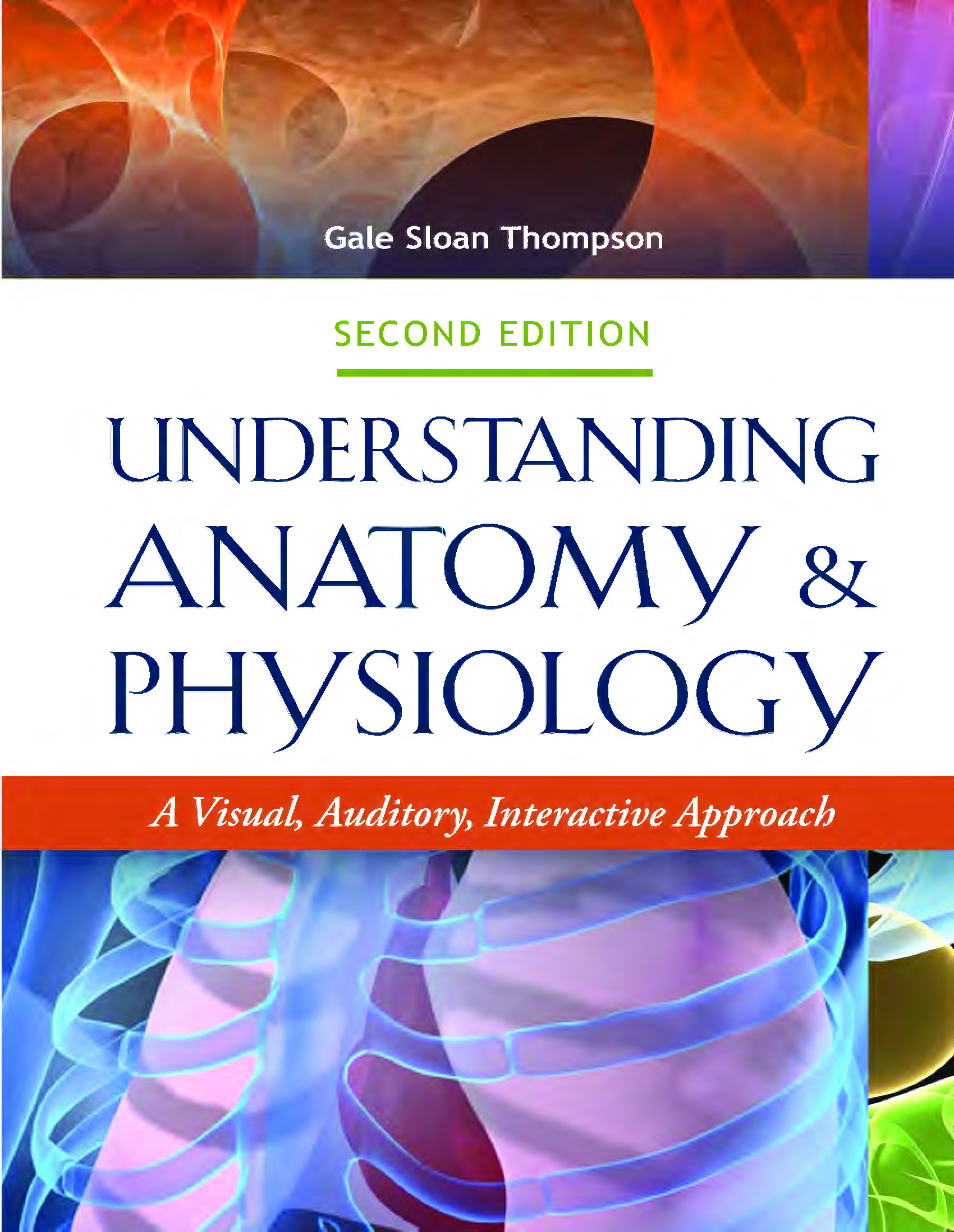
Understanding Anatomy and Physiology; A Visual, Auditory, Interactive Approach by Gale. S. Thompson
View Document

Understanding Anatom...

  • Pasing-Grades

    Pasing-Grades

  • test bank

Third Edition: Understanding Anatomy and Physiology; A Visual, Auditory, Interactive Approach by Gal...

15 USD

0

0

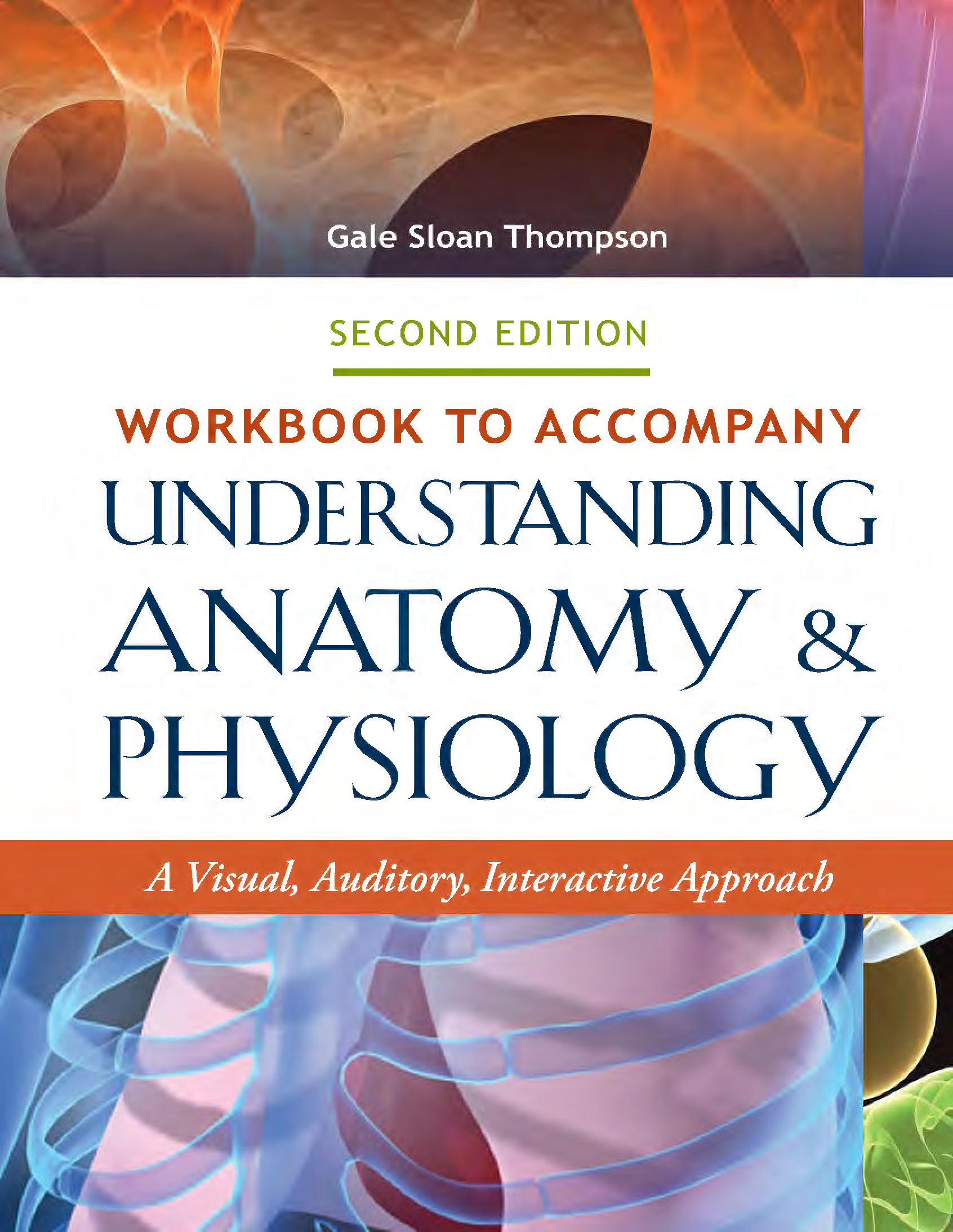
Workbook to Accompany Understanding Anatomy & Physiology: A Visual, Auditory, Interactive Approach by Gale Sloan Thompson RN
View Document

Workbook to Accompan...

  • Pasing-Grades

    Pasing-Grades

  • test bank

Workbook to Accompany Understanding Anatomy & Physiology: A Visual, Auditory, Interactive Approach b...

15 USD

0

0

Test Bank for Fundamentals of Nursing 10th Edition by Taylor
View Document

Test Bank for Fundam...

  • Pasing-Grades

    Pasing-Grades

  • test bank

Get now the Test Bank for Fundamentals of Nursing 10th Edition by Taylor. Instant PDF Download....

15 USD

0

0

Purchase

Download link will be sent to this email immediately after purchase.

IMPORTANT LINKS

  • How To Upload Class Notes
  • Selling Tips
  • Passing Grades's Study Materials
  • Scholarships for International Students 2025

POPULAR CATEGORIES

  • Law
  • Accounting
  • English
  • Psychology
  • Business
  • Nursing
  • Computer Science
  • General

View Document

  • Blog
  • Contact
  • Delivery Policy
  • Latest Scholarships Around the World
  • How to Pass Bar Exams: Passing Grades’ Strategies
  • How to Study and Pass the CPA Exam
  • All Test Banks
  • Faq
  • Copyright Claims
  • Privacy Policy
  • Terms of Use

KNOWLEDGE BASE

  • How to Write A+ Grade Good Research Paper
  • How to Manage Stress During Exam Period
  • Best Time to Study
  • How to Pass NCLEX-RN Exam
  • How To Effectively Utilize Test Banks
  • Popular Shadow Health Exam Assessments
  • Popular HESI Case Studies
  • How to Prepare for a Nursing Career
  • The Importance Of Summaries in Exam Revisvion

© 2026 Pasing Grades. All rights reserved.