Pasing Grades
  • Start Selling
  • Blog
  • Contact
  • 0

    Your cart is empty!

English

  • English
  • Spanish
  • Arabic
Create Account Sign In
  • Library
    • New Prep Guides
    • Featured Prep Guides
    • Free Exam Prep Guides
    • Best sellers
  • General
  • Nursing
    • Research Paper
    • Case Study
    • Discussion Post
    • Assignment
    • Exam
    • Practice Questions and Answers
    • Test Bank
    • solutions manual
  • Accounting
    • Case Study
    • Thesis
    • Study Guide
    • Summary
    • Research Paper
    • test bank
  • English
    • Creative Writing
    • Research Paper
    • Summary
    • Rhetorics
    • Literature
    • Journal
    • Exam
    • Grammar
    • Discussion Post
    • Essay
  • Psychology
    • Hesi
    • Presentation
    • Essay
    • Summary
    • Study Guide
    • Essay
    • Solution Manual
    • Final Exam Review
    • Class Notes
    • test bank
  • Business
    • Lecture Notes
    • Solution Manual
    • Presentation
    • Business Plan
    • Class Notes
    • Experiment
    • Summary
    • Practice Questions
    • Study Guide
    • Case Study
    • test bank
    • Exam
  • More
    • Computer Science
    • Economics
    • Statistics
    • Engineering
    • Biology
    • Religious Studies
    • Physics
    • Chemistry
    • Mathematics
    • History
    • Sociology
    • Science
    • Philosophy
    • Law
  • Pages
    • About Us
    • Selling Tips
    • Delivery Policy
    • Faq
    • Privacy Policy
  • Flash Sale
  • Home
  • Test Bank for Theories of Personality Understanding Persons, 7th Edition, Susan Cloninger,

Test Bank for Theories of Personality Understanding Persons, 7th Edition, Susan Cloninger,

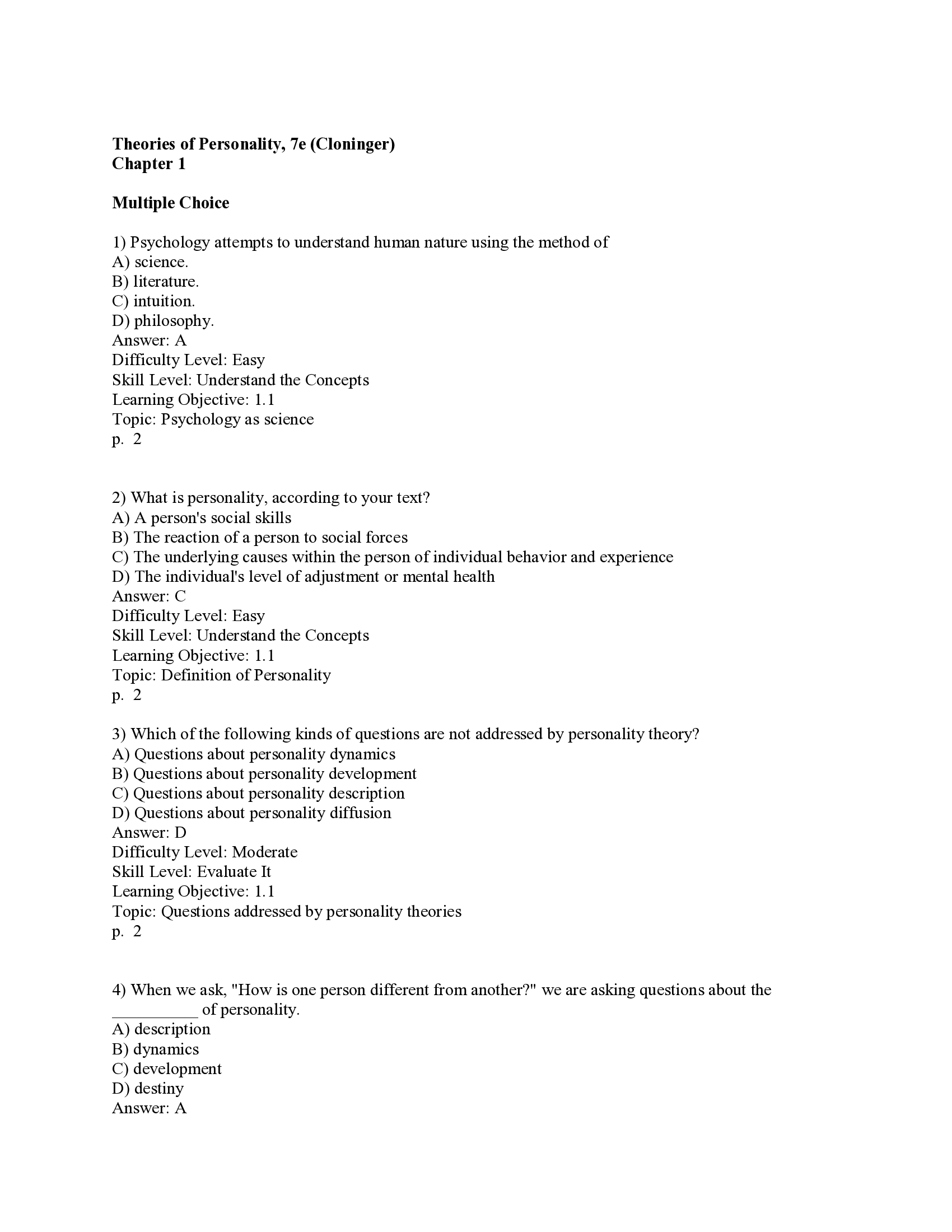
Preview page 1 Preview page 2 Preview page 3
Add To Favorites

Share this item Share this item

  • Item Details
  • Comments (0)
  • Reviews (0)
  • Contact Seller
TEST BANK FOR THEORIES OF PERSONALITY UNDERSTANDING PERSONS, 7TH EDITION, SUSAN CLONINGER, Theories of Personality, 7e (Cloninger) Chapter 1 Multiple Choice 1) Psychology attempts to understand human nature using the method of A) science. B) literature. C) intuition. D) philosophy. Answer: A Difficulty Level: Easy Skill Level: Understand the Concepts Learning Objective: 1.1 Topic: Psychology as science p. 2 2) What is personality, according to your text? A) A person's social skills B) The reaction of a person to social forces C) The underlying causes within the person of individual behavior and experience D) The individual's level of adjustment or mental health Answer: C Difficulty Level: Easy Skill Level: Understand the Concepts Learning Objective: 1.1 Topic: Definition of Personality p. 2 3) Which of the following kinds of questions are not addressed by personality theory? A) Questions about personality dynamics B) Questions about personality development C) Questions about personality description D) Questions about personality diffusion Answer: D Difficulty Level: Moderate Skill Level: Evaluate It Learning Objective: 1.1 Topic: Questions addressed by personality theories p. 2 4) When we ask, "How is one person different from another?" we are asking questions about the __________ of personality. A) description B) dynamics C) development D) destiny Answer: A Difficulty Level: Easy Skill Level: Understand the Concepts Learning Objective: 1.1 Topic: Personality Description p. 2 5) When we ask, "How do people adjust to their life situations?" and "How does their thought affect what they do?" we are asking questions about the __________ of personality. A) description B) dynamics C) development D) destiny Answer: B Difficulty Level: Difficult Skill Level: Analyze It Learning Objective: 1.1 Topic: Personality Dynamics p. 2 6) When we ask, "How do biology and experience influence a person from childhood onward?" we are asking questions about the __________ of personality. A) description B) dynamics C) development D) destiny Answer: C Difficulty Level: Moderate Skill Level: Analyze It Learning Objective: 1.1 Topic: Personality Development p. 2 7) Types represent ________________ descriptions of personality while traits are ________________ descriptions. A) categorical; quantitative B) quantitative; categorical C) individual differences; categorical D) precise; categorical Answer: A Difficulty Level: Difficult Skill Level: Evaluate It Learning Objective: 1.2 Topic: Types vs. traits p. 3 8) Categories of people with similar characteristics are called A) factors. B) traits. C) types. D) sets. Answer: C Difficulty Level: Easy Skill Level: Understand the Concepts Learning Objective: 1.2 Topic: Types p. 3 9) Which of the following does not describe a trait? A) Trait scores are not continuous variables. B) A person is given a numeric score to indicate how much of a trait the person possesses. C) There are many traits to describe everyone. D) A person can be described on every trait. Answer: A Difficulty Level: Moderate Skill Level: Understand the Concepts Learning Objective: 1.2 Topic: Trait p. 3 10) In the study of personality, including the influence of society and culture allows a better explanation of ____________ differences among people. A) gender B) ethnic C) cultural D) All of the above Answer: D Difficulty Level: Moderate Skill Level: Understand the Concepts Learning Objective: 1.3 Topic: Culture and personality p. 4 11) A __________ allows a more precise description of personality because it refers to a more focused set of characteristics. A) variable B) type C) temperament D) trait Answer: D Difficulty Level: Easy Skill Level: Understand the Concepts Learning Objective: 1.2 Topic: Trait p. 3 12) In comparison to traits, factors refer to more __________ characteristics. A) socially desirable B) specific C) broad D) changeable Answer: C Difficulty Level: Moderate Skill Level: Analyze It Learning Objective: 1.2 Topic: Factors p. 3 13) Research that gives personality tests to a group of people, and compares their scores, illustrates A) the idiographic approach. B) the case study approach. C) the nomothetic approach. D) the clinical approach. Answer: C Difficulty Level: Easy Skill Level: Understand the Concepts Learning Objective: 1.2 Topic: Nomothetic Approach p. 4 14) One person at a time is studied using the __________ approach. A) factor analytic B) eclectic C) nomothetic D) idiographic Answer: D Difficulty Level: Easy Skill Level: Understand the Concepts Learning Objective: 1.2 Topic: Idiographic Approach p. 4 15) Case studies and psychobiography are examples of the __________ approach. A) idiographic B) eclectic C) nomothetic D) correlational Answer: A Difficulty Level: Moderate Skill Level: Apply What You Know Learning Objective: 1.2 Topic: Ideographic Approach p. 4 16) Which of the following questions is not a major issue in personality theory when considering personality formation and change? A) To what extent is personality influenced by heredity? B) To what extent can personality change as a result of learning? C) How much change in personality can actually occur in adolescence? D) How critical are the childhood years for personality development? Answer: C Difficulty Level: Difficult Skill Level: Evaluate It Learning Objective: 1.4 Topic: Personality Development p. 5 17) Biological influences result in differences in styles of behavior and emotional reactions in infancy and afterwards. Which term best describes such differences? A) Personality B) Trait C) Type D) Temperament Answer: D Difficulty Level: Moderate Skill Level: Evaluate It Learning Objective: 1.4 Topic: Temperament p. 5 18) All of the following are dynamic issues addressed by personality theories except A) Individual Differences B) Adaptation and Adjustment C) Cognitive Processes D) Culture Answer: A Difficulty Level: Moderate Skill Level: Understand the Concepts Learning Objective: 1.3 Topic: Dynamics pp. 5 and 6 19) Which of the following is not a major issue addressed by personality theories? A) Descriptive issues B) Developmental issues C) Directive issues D) Dynamic issues Answer: C Difficulty Level: Easy Skill Level: Understand the Concepts Learning Objective: 1.4 Topic: Major issues in personality theory pp. 5 and 6 20) Personality theories are tested using the __________ method. A) intuitive B) clinical C) scientific D) idiographic Answer: C Difficulty Level: Easy Skill Level: Understand the Concepts Learning Objectives: 1.5 Topic: Scientific method p. 6 21) A __________ is a conceptual tool for understanding certain specified phenomena that includes theoretical constructs and propositions. A) operational definition B) psychological test C) theory D) variable Answer: C Difficulty Level: Easy Skill Level: Understand the Concepts Learning Objective: 1.5 Topic: Definition of theory p. 7 22) Theoretical constructs are A) obsolete in modern personality theory. B) the concepts of a theory. C) used only in experimental research. D) used only in correlational research. Answer: B Difficulty Level: Moderate Skill Level: Evaluate It Learning Objective: 1.5 Topic: Theoretical Construct p. 7 23) Which of the following illustrates an operational definition of "shyness"? A) Shyness is caused by teasing. B) Shyness in childhood predicts shyness in adulthood. C) Shyness is measured by a 25-item self-report test. D) Shyness is common in adolescence. Answer: C Difficulty Level: Moderate Skill Level: Apply What You Know Topic: Operational definition p. 7 24) The statement, "High self-esteem causes social responsibility" is A) a theoretical proposition. B) a hypothesis. C) an operational definition. D) a paradigm. Answer: A Difficulty Level: Difficult Skill Level: Analyze It Learning Objective: 1.5 Topic: Theoretical Proposition p. 7 25) A theoretical proposition is A) an abstract statement telling how two theoretical constructs are related. B) a statement saying how a theoretical construct can be measured. C) a prediction about observations in research. D) a proposal to change the way personality is developed, based on theoretical considerations. Answer: A Difficulty Level: Moderate Skill Level: Understand the Concepts Learning Objective: 1.5 Topic: Theoretical Proposition p. 7 26) The assumption of determinism, central to the scientific method, refers to the assumption that A) personality is determined primarily by nature. B) the phenomena being studied have causes and that empirical research can discover these causes. C) personality determines behavior. D) individuals differ in the extent to which they are determined to succeed. Answer: B Difficulty Level: Moderate Skill Level: Understand the Concepts Learning Objective: 1.5 Topic: Scientific method and determinism p. 6 27) A hypothesis is A) an abstract statement telling how two theoretical constructs are related. B) a statement saying how a theoretical construct can be measured. C) a prediction about observations in research. D) a proposal to change the way personality is developed, based on theoretical considerations. Answer: C Difficulty Level: Moderate Skill Level: Understand the Concepts Learning Objective: 1.5 Topic: Hypothesis p. 7 28) The criterion of verifiability requires that theoretical propositions be A) true. B) reliable. C) testable by empirical research. D) applicable to a variety of populations. Answer: C Difficulty Level: Moderate Skill Level: Understand the Concepts Learning Objective: 1.5 Topic: Verifiability pp. 7 and 8 29) For a theoretical construct to be clearly understood, it must be: A) verifiable. B) parsimonious. C) defined precisely. D) valuable heuristically. Answer: C Difficulty Level: Difficult Skill Level: Analyze It Learning Objective: 1.5 Topic: Clearly defining theoretical construct p. 7 30) Theories that apply to only a narrow range of behavior are not A) comprehensive. B) refutable. C) scientific. D) empirically verifiable. Answer: A Difficulty Level: Moderate Skill Level: Understand the Concepts Learning Objective: 1.5 Topic: Comprehensiveness criterion p. 8 31) A theory that offers practical strategies for improving human life is said to have A) comprehensiveness. B) applied value. C) generalizability. D) empirical verifiability. Answer: B Difficulty Level: Moderate Skill Level: Understand the Concepts Learning Objective: 1.5 Topic: Applied value criterion p. 8 32) Which of the following is not listed by the text as a criterion of a good theory? A) Comprehensiveness B) Verifiability C) Applied value D) Consistency with human values Answer: D Difficulty Level: Moderate Skill Level: Understand the Concepts Learning Objective: 1.5 Topic: Criteria of a Good Theory pp. 7–9 33) A theory that has suggested new ideas for later theories and research is said to have A) applied value. B) heuristic value. C) parsimony. D) empirical validity. Answer: B Difficulty Level: Difficult Skill Level: Analyze It Learning Objective: 1.5 Topic: Heuristic value criterion pp. 8 and 9 34) Which statement best describes the relationship between theory and research? A) Theory and research are separate disciplines within personality psychology. B) Theory influences research by suggesting research ideas, but research has no impact on theory. C) When research has become sophisticated, with good measuring instruments, theory is no longer necessary. D) Theory and research mutually influence one another. Answer: D Difficulty Level: Difficult Skill Level: Evaluate It Learning Objective: 1.5 Topic: Relationship Between Theory and Research p. 9 35) Implicit theories of personality could be described by all but which of the following? A) They are generally held by ordinary people. B) They are unscientific. C) They are not necessarily incorrect. D) Their accuracy is guaranteed. Answer: D Difficulty Level: Difficult Skill Level: Understand the Concepts Learning Objective: 1.5 Topic: Implicit personality theories pp. 9 and 10 36) Which statement best describes personality research methods? A) Experimental research is the best research method. Others are now obsolete. B) Personality can only be studied by correlational methods, since it is not possible to do true experiments in this area. C) Personality research is best done with large groups of subjects. D) A variety of personality research methods are appropriate for personality research. Answer: D Difficulty Level: Easy Skill Level: Understand the Concepts Learning Objective: 1.6 Topic: Research methods in personality p. 10 37) A personality measure that produces consistent scores from one time to another is A) valid. B) useless. C) reliable. D) projective. Answer: C Difficulty Level: Moderate Skill Level: Understand the Concepts Learning Objective: 1.6 Topic: Reliability p. 10 38) A researcher decides to see how consistent a new personality test is by computing two scores. One score is the total of the odd-numbered items. The other score is the total of the even-numbered items. What is the researcher assessing? A) Validity B) Test–retest reliability C) Alternate forms reliability D) Split-half reliability Answer: D Difficulty Level: Difficult Skill Level: Understand the Concepts Learning Objective: 1.6 Topic: Split-half reliability p. 11 39) Which of the following factors contributes to higher test reliability? A) A test containing similar items measuring the same construct B) A shorter test C) Changes in the personality trait over time D) A test containing items that measure different constructs Answer: A Difficulty Level: Difficult Skill Level: Evaluate It Learning Objective: 1.6 Topic: Test reliability p. 11 40) Assessing intelligence by measuring the size of a person's head would be A) reliable but not valid. B) valid but not reliable. C) neither reliable nor valid. D) both reliable and valid. Answer: A Difficulty Level: Easy Skill Level: Understand the Concepts Learning Objective: 1.6 Topic: Validity pp. 10 and 11 41) In using the "known groups method" to determine whether a test is valid, a researcher needs to test A) groups of people whom he or she knows personally. B) subjects who agree to have their names known. C) groups with published norms on a variety of personality tests. D) groups which can be presumed to differ on the construct being measured. Answer: D Difficulty Level: Difficult Skill Level: Understand the Concepts Learning Objective: 1.6 Topic: Known groups p. 11 42) Construct validity is present when A) a construct can be operationally defined. B) a test distinguishes among criterion groups. C) several research studies confirm the usefulness of the construct. D) good measurement has been demonstrated. Answer: C Difficulty Level: Moderate Skill Level: Understand the Concepts Learning Objective: 1.6 Topic: Construct Validity p. 11 43) Direct self-report measures of personality A) are seldom used. B) are often reliable. C) always measure several personality traits simultaneously. D) are valid even when subjects intentionally give false responses. Answer: B Difficulty Level: Difficult Skill Level: Analyze It Learning Objective: 1.6 Topic: Self-report measures p. 11 44) Tests, such as inkblot tests, which ask people to respond to ambiguous stimuli, are called A) self-report measures. B) response measures. C) projective tests. D) behavioral measures. Answer: C Difficulty Level: Moderate Skill Level: Understand the Concepts Learning Objective: 1.6 Topic: Projective tests p. 12 45) Correlational research A) is used to demonstrate causal relationships among variables. B) is seldom used in the field of personality. C) cannot determine causality underlying observed relationships among variables. D) includes independent and dependent variables. Answer: C Difficulty Level: Moderate Skill Level: Understand the Concepts Learning Objective: 1.6 Topic: Correlational research p. 13 46) Which of the following procedures can determine cause–effect relationships? A) Correlational research B) Factor analysis C) Experimental research D) The case study Answer: C Difficulty Level: Moderate Skill Level: Understand the Concepts Learning Objective: 1.6 Topic: Experimental research p. 14 47) The independent variable corresponds to what a researcher thinks is the A) cause. B) effect. C) third variable. D) uncontrollable factor. Answer: A Difficulty Level: Easy Skill Level: Understand the Concepts Learning Objective: 1.6 Topic: Independent variable p. 14 48) A researcher is interested in testing the proposition that being in a good mood causes increased cooperation among children at school. This can be tested by conducting an experiment in which the dependent variable is A) mood. B) being in school. C) cooperation. D) age. Answer: C Difficulty Level: Moderate Skill Level: Apply What You Know Learning Objective: 1.6 Topic: Dependent variable p. 14 49) Psychobiography is different from case studies because psychobiography has more emphasis on A) pathology. B) theoretical considerations. C) the individual. D) experimental methods. Answer: B Difficulty Level: Difficult Skill Level: Analyze It Learning Objective: 1.6 Topic: Psychobiography vs. case study p. 15 50) One major division among theories, sometimes called the "two disciplines" or "two cultures" of psychology, is between A) clinical and idiographic theories. B) scientific and humanistic approaches. C) human and animal theories. D) laboratory and scientific theories. Answer: B Difficulty Level: Difficult Skill Level: Evaluate It Learning Objective: 1.5 Topic: Scientific and humanistic approaches to personality p. 9 True/False 1) Personality may be defined as the underlying causes within the person of individual behavior and experience. Answer: TRUE Difficulty Level: Easy Skill Level: Understand the Concepts Learning Objective: 1.1 Topic: Defining personality p. 2 2) A personality type is broader than a personality trait. Answer: TRUE Difficulty Level: Moderate Skill Level: Understand the Concepts Learning Objective: 1.2 Topic: Types vs. traits p. 3 3) Most personality research is idiographic. Answer: FALSE Difficulty Level: Difficult Skill Level: Evaluate It Learning Objective: 1.2 Topic: Ideographic vs. nomothetic research p. 3 4) The idiographic approach studies one person at a time. Answer: TRUE Difficulty Level: Easy Skill Level: Understand the Concepts Learning Objective: 1.2 Topic: Ideographic research p. 3 5) Psychobiography uses a nomothetic approach to understanding people. Answer: FALSE Difficulty Level: Moderate Skill Level: Understand the Concepts Learning Objective: 1.2 Topic: Psychobiography p. 4 6) The study of personality dynamics often focuses on motivation directing behavior. Answer: TRUE Difficulty Level: Moderate Skill Level: Understand the Concepts Learning Objective: 1.3 Topic: Dynamics p. 4 7) Most personality psychologists think that heredity is unimportant as a determinant of personality. Answer: FALSE Difficulty Level: Moderate Skill Level: Evaluate It Learning Objective: 1.4 Topic: Heredity as determinant of personality p. 5 8) There is considerable evidence that personality is relatively stable over a person’s lifetime. Answer: TRUE Difficulty Level: Moderate Skill Level: Evaluate It Learning Objective: 1.4 Topic: Stability of personality p. 5 9) Cognitive processes are pertinent to dynamic, descriptive, and developmental personality issues. Answer: TRUE Difficulty Level: Moderate Skill Level: Evaluate It Learning Objective: 1.4 Topic: Major issues in personality theory pp. 4–6 10) Operational definitions provide a link between theoretical propositions and hypotheses. Answer: TRUE Difficulty Level: Moderate Skill Level: Evaluate It Learning Objective: 1.5 Topic: Propositions and hypotheses p. 7 11) When considering the “two disciplines” in psychology, the scientific culture emphasizes the ideographic approach, while the humanistic culture focuses on a nomothetic approach. Answer: FALSE Difficulty Level: Moderate Skill Level: Evaluate It Learning Objective: 1.5 Topic: Methodology and two disciplines p. 9 12) The scientific method requires personality psychologists, like other scientists, to assume that behavior is determined by causes that can be found through research. Answer: TRUE Difficulty Level: Moderate Skill Level: Evaluate It Learning Objective: 1.5 Topic: Determinism p. 6 13) Operational definitions describe the practical applications of personality theory to improving the human condition. Answer: FALSE Difficulty Level: Moderate Skill Level: Evaluate It Learning Objective: 1.5 Topic: Operational definitions p. 7 14) Propositions are associated with the theoretical level, while hypotheses are associated with the level of observables. Answer: TRUE Difficulty Level: Moderate Skill Level: Analyze It Learning Objective: 1.5 Topic: Propositions vs. hypotheses p. 7 15) Disconfirmation of a theory is as important as support found for a theory for advancing science. Answer: TRUE Difficulty Level: Easy Skill Level: Evaluate It Learning Objective: 1.5 Topic: Disconfirmation p. 8 16) Theory influences research, but the opposite does not occur. Answer: FALSE Difficulty Level: Difficult Skill Level: Evaluate It Learning Objective: 1.5 Topic: Theory and research pp. 9 and 10 17) A personality test which yields consistent scores on two occasions is said to be reliable. Answer: TRUE Difficulty Level: Easy Skill Level: Understand the Concepts Learning Objective: 1.6 Topic: Reliability p. 10 18) A personality test which yields consistent scores on two occasions is said to be valid. Answer: FALSE Difficulty Level: Easy Skill Level: Understand the Concepts Learning Objective: 1.6 Topic: Reliability (vs. validity) p. 10 19) A personality test which measures what it claims to measure is said to be valid. Answer: TRUE Difficulty Level: Easy Skill Level: Understand the Concepts Learning Objective: 1.6 Topic: Validity p. 10 20) One way of studying the validity of a test is to determine whether it predicts behavior. Answer: TRUE Difficulty Level: Moderate Skill Level: Understand the Concepts Learning Objective: 1.6 Topic: Predictive validity p. 10 21) A test that yields the same score on two occasions is said to have construct validity. Answer: FALSE Difficulty Level: Moderate Skill Level: Understand the Concepts Learning Objective: 1.6 Topic: Test–retest reliability (vs. construct validity) pp. 10 and 11 22) Behavioral measures help develop an understanding of personality in its real-world context. Answer: TRUE Difficulty Level: Moderate Skill Level: Understand the Concepts Learning Objective: 1.6 Topic: Behavioral measures of personality p. 12 23) In an experiment, the dependent variable measures the "cause." Answer: FALSE Difficulty Level: Easy Skill Level: Understand the Concepts Learning Objective: 1.6 Topic: Dependent (vs. independent) variable p. 14 24) It is generally difficult to manipulate a personality trait as a cause in an experiment. Answer: TRUE Difficulty Level: Difficult Skill Level: Evaluate It Learning Objective: 1.6 Topic: Personality traits and experiments p.14 25) An intensive investigation of a single individual is called a case study. Answer: TRUE Difficulty Level: Moderate Skill Level: Understand the Concepts Learning Objective: 1.6 Topic: Case study p. 15 26) A psychobiography is a case study that emphasizes theoretical considerations. Answer: TRUE Difficulty Level: Moderate Skill Level: Evaluate It Learning Objective: 1.6 Topic: Psychobiography vs. case study p. 15 27) Most personality psychologists can be considered eclectic. Answer: TRUE Difficulty Level: Moderate Skill Level: Understand the Concepts Learning Objective: 1.5 Topic: Eclecticism p. 9 28) In recent years, experts have agreed on one paradigm in personality. Answer: FALSE Difficulty Level: Moderate Skill Level: Understand the Concepts Learning Objective: 1.5 Topic: Paradigms in personality theory p. 9 29) Psychologists in the scientific culture emphasize experimentation over intuition. Answer: TRUE Difficulty Level: Difficult Skill Level: Evaluate It Learning Objective: 1.5 Topic: Divisions in psychology p. 9 30) The three ways of describing personality are type, temperament, and traits. Answer: FALSE Difficulty Level: Moderate Skill Level: Understand the Concepts Learning Objective: 1.2 Topic: Describing personality p. 3 Essay 1) How does the text define "personality"? Discuss this definition. Difficulty Level: Easy Skill Level: Understand the Concepts Learning Objective: 1.1 Topic: Defining personality p. 2 2) Contrast types, traits, and factors as units of personality. Give an example of each. Difficulty Level: Moderate Skill Level: Analyze It Learning Objective: 1.2 Topic: Types, traits, and factors p. 3 3) Would a researcher or a clinician be more likely to use a nomothetic approach to personality? Explain. Difficulty Level: Moderate Skill Level: Apply What You Know Learning Objective: 1.2 Topic: Applying nomothetic approach p. 4 4) Briefly discuss the role of culture, historically and currently, in personality study. Difficulty Level: Difficult Skill Level: Analyze It Learning Objective: 1.3 Topic: Culture in personality theory pp. 4 and 5 5) List the three main issues addressed by personality theories and some of the questions that each issue raises. Difficulty Level: Difficult Skill Level: Evaluate It Learning Objective: 1.1 Topic: Description, dynamics, and development p. 2 6) Explain what is meant by a "theoretical construct" and an "operational definition." Give examples of each. Difficulty Level: Easy Skill Level: Understand the Concepts Learning Objective: 1.5 Topic: Theoretical construct and operational definition pp. 7 and 8 7) List and explain the criteria of a good theory. Difficulty Level: Moderate Skill Level: Understand the Concepts Learning Objective: 1.5 Topic: Criteria of a Good Theory pp. 7–9 8) Explain what is meant by "reliability" of measurement. Are reliable measures always valid? Why or why not? Difficulty Level: Moderate Skill Level: Understand the Concepts Learning Objective: 1.6 Topic: Reliability and validity p. 10 9) Explain the difference between correlational research and experimental research. One of these methods can determine causality and one cannot. Explain which can determine causality, which one cannot and why. Difficulty Level: Moderate Skill Level: Analyze It Learning Objective: 1.6 Topic: Correlation vs. experimental methods pp. 13 and 14 10) What is "eclecticism"? What are some reasons this approach has value? Difficulty Level: Difficult Skill Level: Analyze It Learning Objective: 1.5 Topic: Eclecticism p. 9 11) Discuss the influence of temperament on personality development. Difficulty Level: Moderate Skill Level: Apply What You Know Learning Objective: 1.4 Topic: Biological Influences p. 5 12) Explain how experience in childhood and adulthood influence personality development. Difficulty Level: Moderate Skill Level: Apply What You Know Learning Objective: 1.4 Topic: Experience in Childhood and Adulthood p. 5 13. Explain how cognitive processes contribute to dynamic issues in personality theories. Difficulty Level: Difficulty Skill Level: Analyze It Learning Objective: 1.4 Topic: Cognitive Processes p. 6 14. Explain the similarities and differences among test–retest, alternate forms, and spit-half reliability. Difficulty Level: Moderate Skill Level: Analyze It Learning Objective: 1.6 Topic: Reliability types p. 10 Name:________________________________ Chapter 1—Quick Quiz 1) Psychology attempts to understand human nature using the method of A) science. B) literature. C) intuition. D) philosophy. 2) What is personality, according to your text? A) A person's social skills B) The reaction of a person to social forces C) The underlying causes within the person of individual behavior and experience D) The individual's level of adjustment or mental health 3) Categories of people with similar characteristics are called A) factors. B) traits. C) types. D) sets. 4) A __________ allows a more precise description of personality because they refer to a more focused set of characteristics A) variable B) type C) temperament D) trait 5) A __________ is a conceptual tool for understanding certain specified phenomena that includes theoretical constructs and propositions. A) operational definition B) psychological test C) theory D) variable 6) A theoretical proposition is A) an abstract statement telling how two theoretical constructs are related. B) a statement saying how a theoretical construct can be measured. C) a prediction about observations in research. D) a proposal to change the way personality is developed, based on theoretical considerations. 7) A hypothesis is A) an abstract statement telling how two theoretical constructs are related. B) a statement saying how a theoretical construct can be measured. C) a prediction about observations in research. D) a proposal to change the way personality is developed, based on theoretical considerations. 8) Tests, such as inkblot tests, which ask people to respond to ambiguous stimuli, are called A) self-report measures. B) response measures. C) projective tests. D) behavioral measures. 9) The independent variable corresponds to what a researcher thinks is the A) cause. B) effect. C) third variable. D) uncontrollable factor. 10) A researcher is interested in testing the proposition that being in a good mood causes increased cooperation among children at school. This can be tested by conducting an experiment in which the dependent variable is A) mood. B) being in school. C) cooperation. D) age. Answer Key Chapter 1—Quick Quiz 1. Answer: A Difficulty Level: Easy Skill Level: Understand the Concepts Learning Objective: 1.1 Topic: Psychology as science p. 2 2. Answer: C Difficulty Level: Easy Skill Level: Understand the Concepts Learning Objective: 1.1 Topic: Definition of Personality p. 2 3. Answer: C Difficulty Level: Easy Skill Level: Understand the Concepts Learning Objective: 1.2 Topic: Types p. 3 4. Answer: D Difficulty Level: Easy Skill Level: Understand the Concepts Learning Objective: 1.2 Topic: Trait p. 3 5. Answer: C Difficulty Level: Easy Skill Level: Understand the Concepts Learning Objective: 1.5 Topic: Definition of theory p. 7 6. Answer: A Difficulty Level: Moderate Skill Level: Understand the Concepts Learning Objective: 1.5 Topic: Theoretical Proposition p. 7 7. Answer: C Difficulty Level: Moderate Skill Level: Understand the Concepts Learning Objective: 1.5 Topic: Hypothesis p. 7 8. Answer: C Difficulty Level: Moderate Skill Level: Understand the Concepts Learning Objective: 1.6 Topic: Projective tests p. 12 9. Answer: A Difficulty Level: Easy Skill Level: Understand the Concepts Learning Objective: 1.6 Topic: Independent variable p. 14 10. Answer: C Difficulty Level: Moderate Skill Level: Apply What You Know Learning Objective: 1.6 Topic: Dependent variable p. 14

Contact the Seller

Please Sign In to contact this seller.


  • 👎  Report Copyright Violation

Frequently Asked Questions

What Do I Get When I Buy This Study Material?

+

When you buy a study material on Passing Grades, an instant download link will be sent directly to your email, giving you access to the file anytime after payment is completed.

Is Passing Grades a Trusted Platform?

+

Yes, Passing Grades is a reputable students’ marketplace with a secure payment system and reliable customer support. You can trust us to ensure a safe and seamless transaction experience.

Will I Be Stuck with a Subscription?

+

No, all purchases on Passing Grades are one-time transactions. You only pay for the notes you choose to buy, with no subscriptions or hidden fees attached.

Who Am I Buying These Study Materials From?

+

Passing Grades is a marketplace, which means you are purchasing the document from an individual vendor, not directly from us. We facilitate the payment and delivery process between you and the vendor.

Does Passing Grades Offer Free Study Materials?

+

Yes, sellers on Passing Grades have uploaded numerous free test banks, exams, practice questions, and class notes that can be downloaded at no cost.

Pasinggrades - Quality Study Materials

USD 15

    • Quality checked by Pasing Grades
    • 100% satisfaction guarantee
    • Seller: Pasing-Grades
Buy PDF $15

Seller Information

Pasing-Grades

Member since May 2021

  • icon
View Profile
  • total sales

    0
  • Favourites

    0
  • Comments

    0
    ( 0 Ratings )

Item Information

  • Uploaded

    28 August 2023

  • Updated

    01 October 2025

  • Category

    Psychology

  • Item Type

    test bank

  • Tags

    Test Bank for Theories of Personality Understanding Persons 7th Edition Susan Cloninger

Related Exam Prep Guides by Pasing-Grades

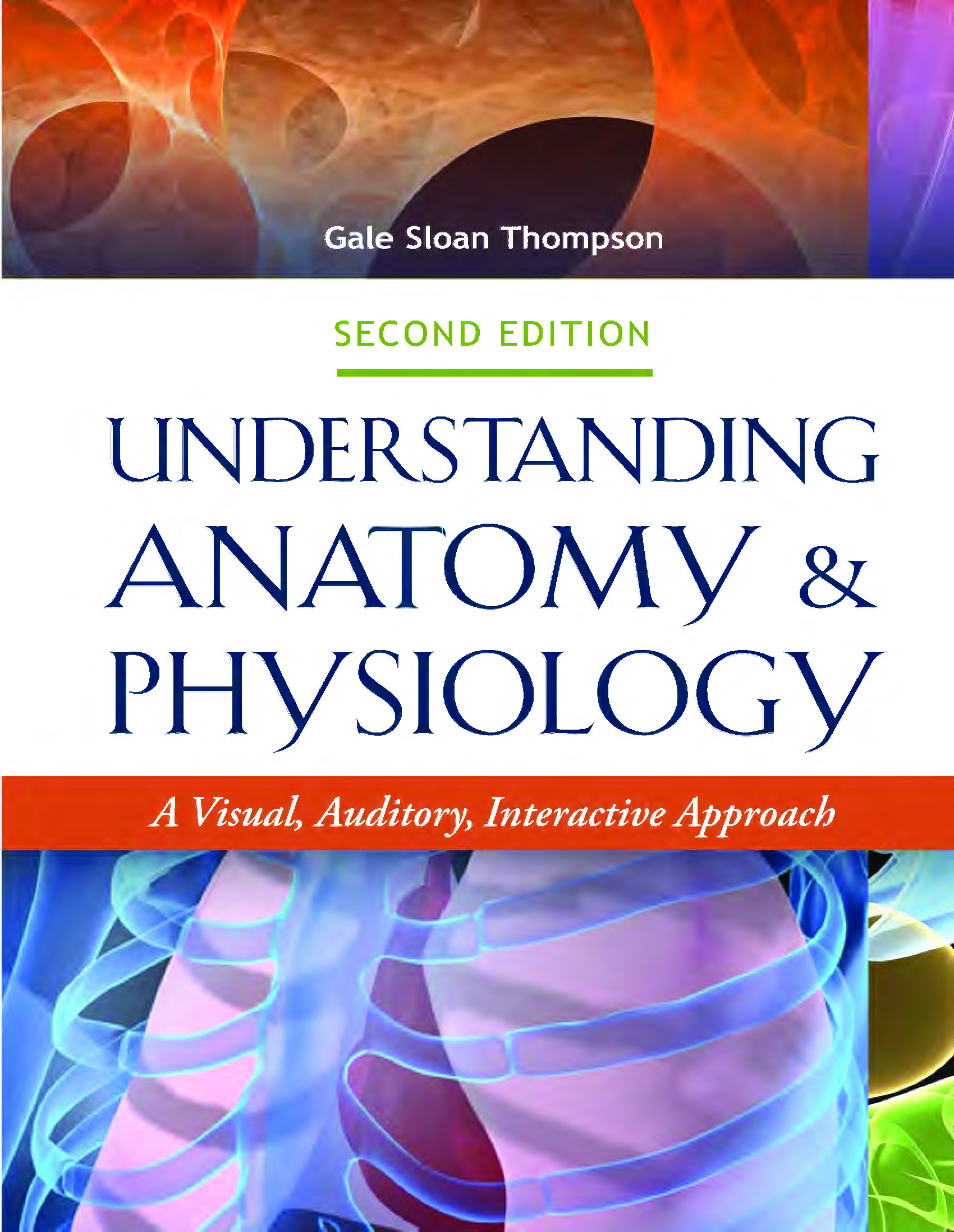
Understanding Anatomy and Physiology; A Visual, Auditory, Interactive Approach by Gale. S. Thompson
View Document

Understanding Anatom...

  • Pasing-Grades

    Pasing-Grades

  • test bank

Third Edition: Understanding Anatomy and Physiology; A Visual, Auditory, Interactive Approach by Gal...

15 USD

0

0

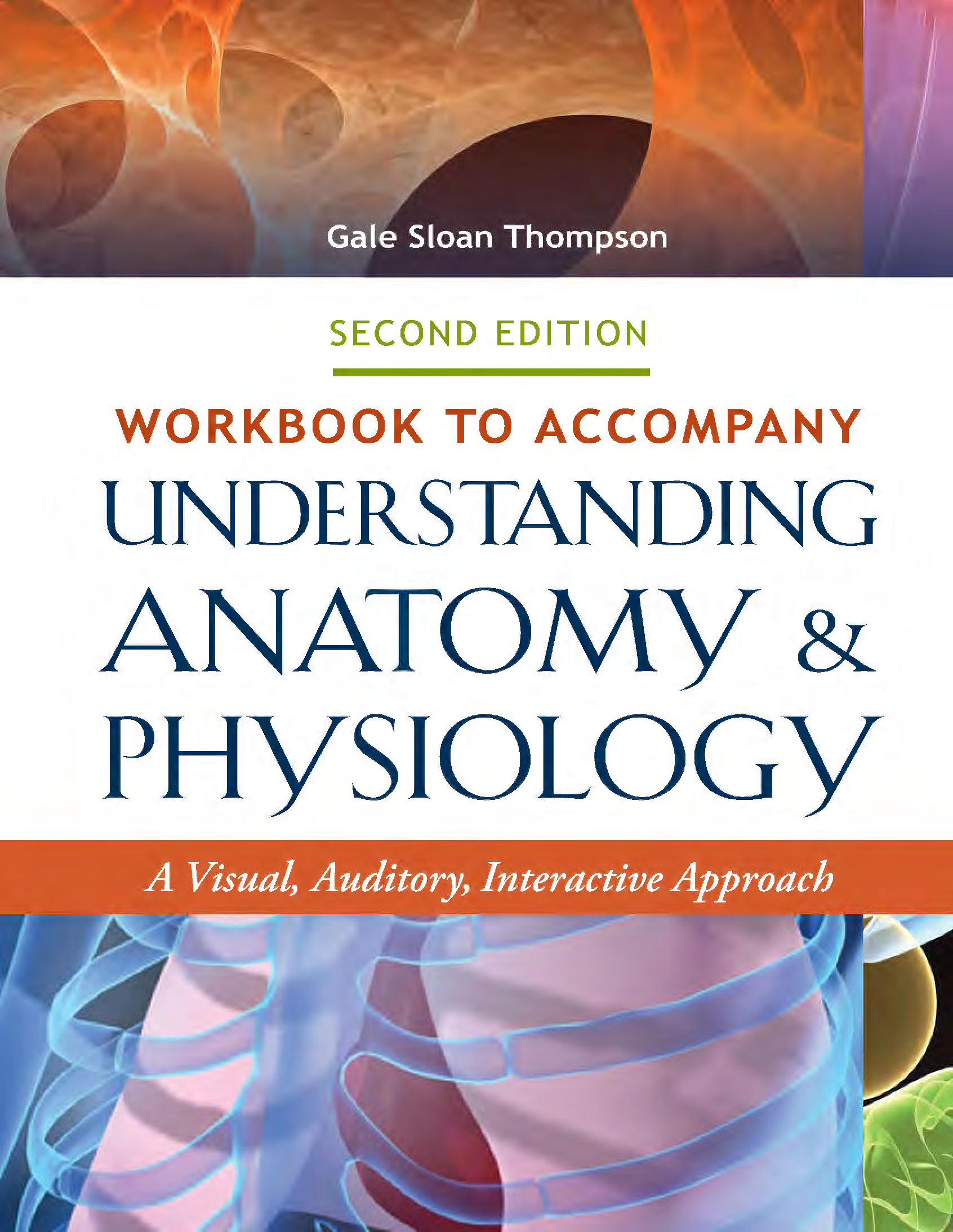
Workbook to Accompany Understanding Anatomy & Physiology: A Visual, Auditory, Interactive Approach by Gale Sloan Thompson RN
View Document

Workbook to Accompan...

  • Pasing-Grades

    Pasing-Grades

  • test bank

Workbook to Accompany Understanding Anatomy & Physiology: A Visual, Auditory, Interactive Approach b...

15 USD

0

0

Test Bank for Fundamentals of Nursing 10th Edition by Taylor
View Document

Test Bank for Fundam...

  • Pasing-Grades

    Pasing-Grades

  • test bank

Get now the Test Bank for Fundamentals of Nursing 10th Edition by Taylor. Instant PDF Download....

15 USD

0

0

Purchase

Download link will be sent to this email immediately after purchase.

IMPORTANT LINKS

  • How To Upload Class Notes
  • Selling Tips
  • Passing Grades's Study Materials
  • Scholarships for International Students 2025

POPULAR CATEGORIES

  • Law
  • Accounting
  • English
  • Psychology
  • Business
  • Nursing
  • Computer Science
  • General

View Document

  • Blog
  • Contact
  • Delivery Policy
  • Latest Scholarships Around the World
  • How to Pass Bar Exams: Passing Grades’ Strategies
  • How to Study and Pass the CPA Exam
  • All Test Banks
  • Faq
  • Copyright Claims
  • Privacy Policy
  • Terms of Use

KNOWLEDGE BASE

  • How to Write A+ Grade Good Research Paper
  • How to Manage Stress During Exam Period
  • Best Time to Study
  • How to Pass NCLEX-RN Exam
  • How To Effectively Utilize Test Banks
  • Popular Shadow Health Exam Assessments
  • Popular HESI Case Studies
  • How to Prepare for a Nursing Career
  • The Importance Of Summaries in Exam Revisvion

© 2026 Pasing Grades. All rights reserved.