Pasing Grades
  • Start Selling
  • Blog
  • Contact
  • 0

    Your cart is empty!

English

  • English
  • Spanish
  • Arabic
Create Account Sign In
  • Library
    • New Prep Guides
    • Featured Prep Guides
    • Free Exam Prep Guides
    • Best sellers
  • General
  • Nursing
    • Research Paper
    • Case Study
    • Discussion Post
    • Assignment
    • Exam
    • Practice Questions and Answers
    • Test Bank
    • solutions manual
  • Accounting
    • Case Study
    • Thesis
    • Study Guide
    • Summary
    • Research Paper
    • test bank
  • English
    • Creative Writing
    • Research Paper
    • Summary
    • Rhetorics
    • Literature
    • Journal
    • Exam
    • Grammar
    • Discussion Post
    • Essay
  • Psychology
    • Hesi
    • Presentation
    • Essay
    • Summary
    • Study Guide
    • Essay
    • Solution Manual
    • Final Exam Review
    • Class Notes
    • test bank
  • Business
    • Lecture Notes
    • Solution Manual
    • Presentation
    • Business Plan
    • Class Notes
    • Experiment
    • Summary
    • Practice Questions
    • Study Guide
    • Case Study
    • test bank
    • Exam
  • More
    • Computer Science
    • Economics
    • Statistics
    • Engineering
    • Biology
    • Religious Studies
    • Physics
    • Chemistry
    • Mathematics
    • History
    • Sociology
    • Science
    • Philosophy
    • Law
  • Pages
    • About Us
    • Selling Tips
    • Delivery Policy
    • Faq
    • Privacy Policy
  • Flash Sale
  • Home
  • Test Bank for Dewitt’s Fundamental Concepts and Skills for Nursing 5th Edition by Miles Duke

Test Bank for Dewitt’s Fundamental Concepts and Skills for Nursing 5th Edition by Miles Duke

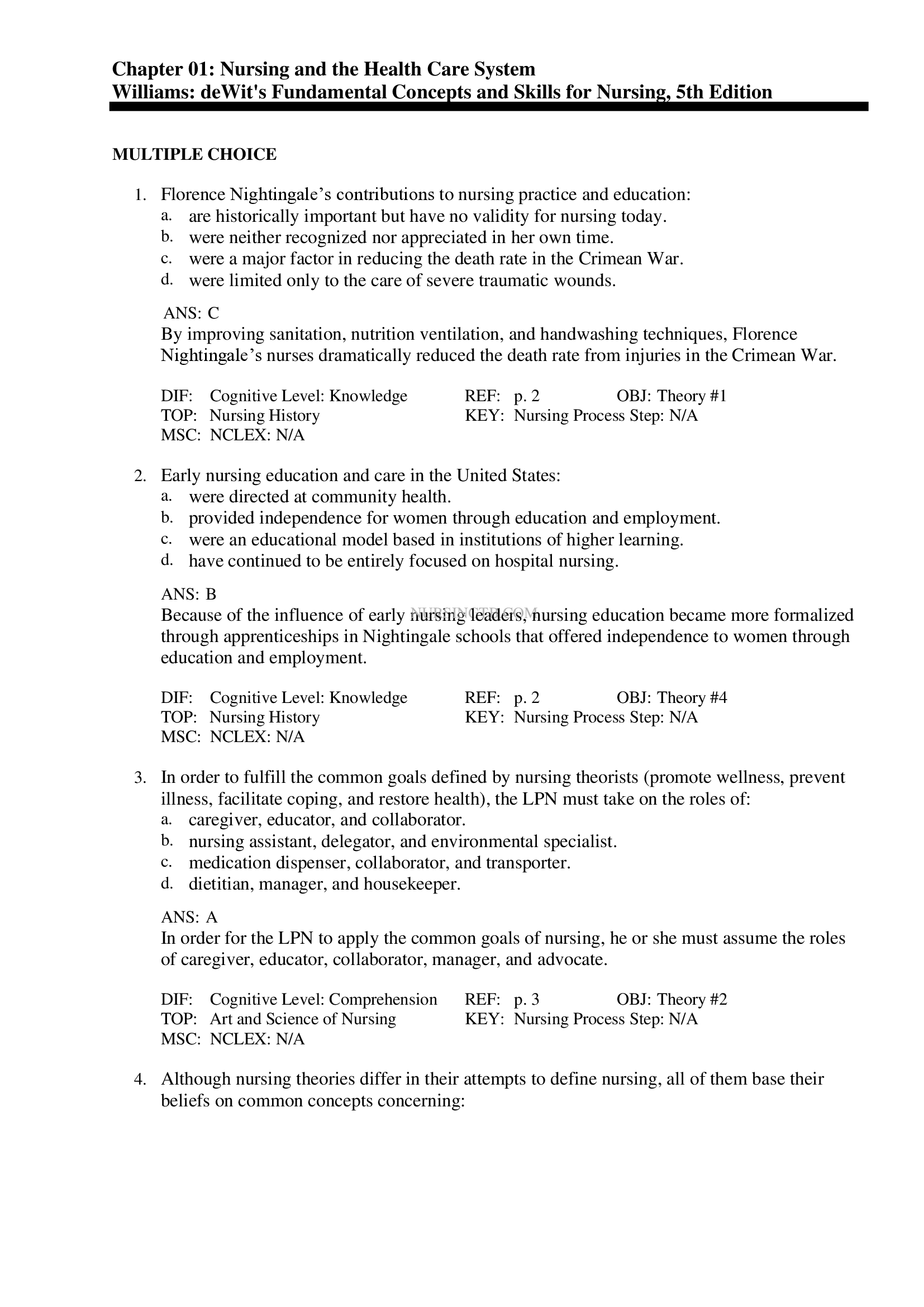
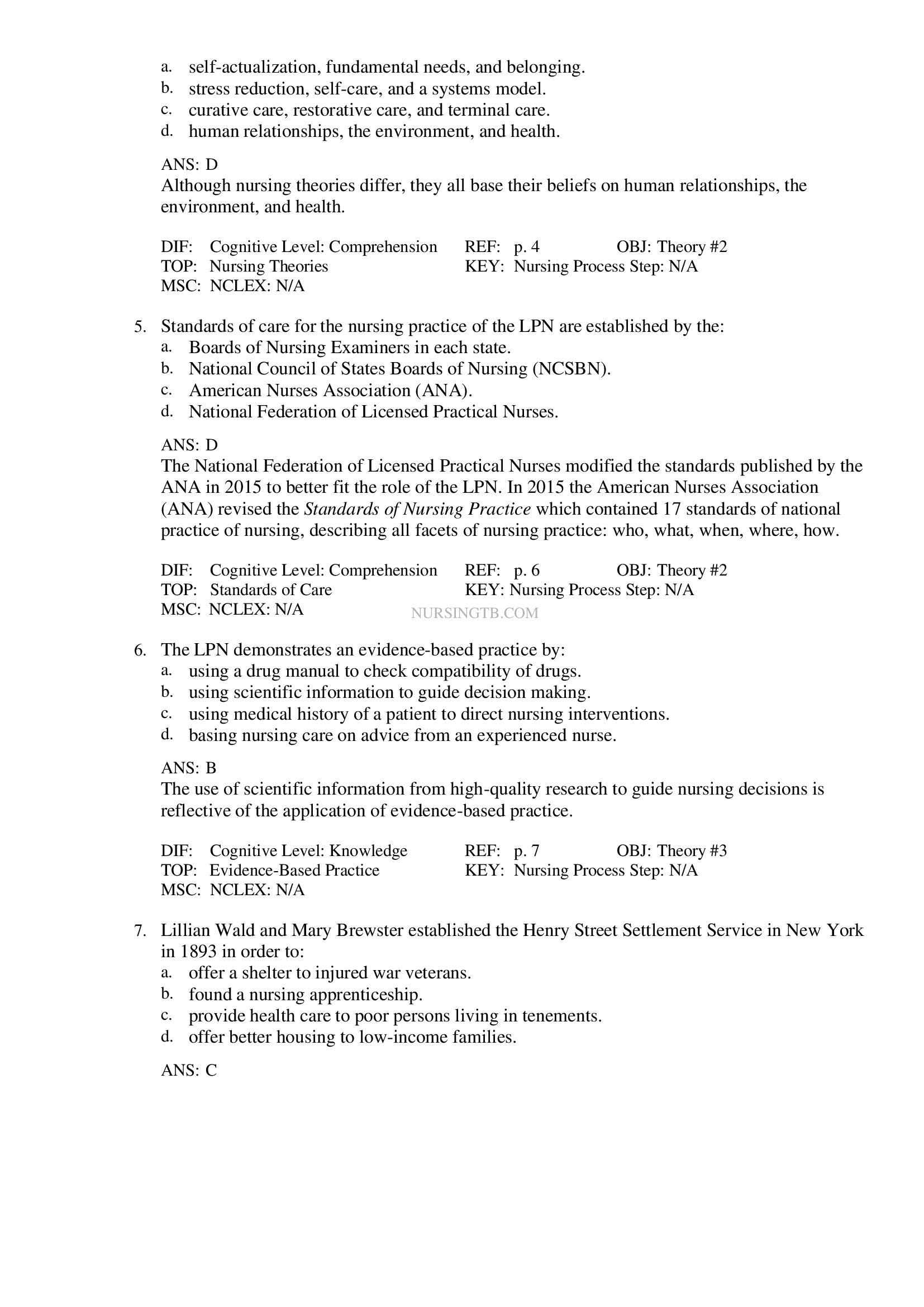
Preview page 1 Preview page 2 Preview page 3
Add To Favorites

Share this item Share this item

  • Item Details
  • Comments (0)
  • Reviews (0)
  • Contact Seller
Test Bank for Dewitt’s Fundamental Concepts and Skills for Nursing 5th Edition by Miles Duke The Patient Protection and Affordable Care Act is being phased in over several years. There are positive and negative aspects to this act, and many people have strong opinions about it. Since 2013 there have been insurance exchanges, along with requirements for uninsured people to purchase health insurance. Starting in 2015 people who have failed to purchase health insurance are being penalized on their income taxes. Provisions in the bill now prevent denial of insurance to those with preexisting illnesses who formerly could not buy health insurance, and young adults have been allowed to remain on their parents’ insurance through age 26. Starting in 2013 affluent people began paying an extra 3.8% tax on unearned income; drug manufacturers and the insurance industry are paying large annual fees to help cover the overall costs. Costs of the Medicare program will be contained by reducing payments to hospitals and health care providers. As coverage under the Affordable Care Act has expanded, the national uninsured rate has fallen from 16% to 11% of people under age 65 (people over age 65 are generally have universal coverage by Medicare). People who have benefitted the most from this coverage include people ages 18-34, blacks, Hispanics, and those living in rural areas (Quealy and Sanger-Katz, 2014). It is expected that the emphasis on prevention and coordinated care will produce a shift in nursing from the hospital to the community. There are many controversial parts of the bill, and the country is divided about whether the bill should be repealed and other health care legislation written. What happens in the Congress in the coming years will determine if all parts of the legislation will remain. DIF: Cognitive Level: Analysis REF: p. 11 OBJ: Theory #10 TOP: The Patient Protection and Affordable Care Act KEY: Nursing Process Step: N/A MSC: NCLEX: N/A MULTIPLE RESPONSE NURSINGTB.COM 1. Characteristics of primary nursing include: (Select all that apply.) a. elimination of fragmentation of care between shifts. b. evolved in the mid-1950s. c. planning and direction performed by one nurse. d. ancillary workers used to increase productivity. e. the care plan covering the entire day. f. associate nurses taking over care and planning when the primary nurse is off duty. ANS: A, C, D, E, F Primary care reduces fragmentation of care between shifts. Care is planned by one nurse to cover a 24-hour period using ancillary workers to increase the productivity. An associate nurse may take on direction of care in the absence of the primary nurse. DIF: Cognitive Level: Knowledge REF: p. 8 OBJ: Theory #8 TOP: Nursing Care Delivery KEY: Nursing P rocess Step: N/A MSC: NCLEX: N/A 2. In 1991, the American Nurses Association (ANA) published the Standards of Nursing Practice. These standards are designed to: (Select all that apply.) a. set standards for safe nursing care delivery. b. define the legal scope of practice. c. state legal requirements for clinical practice. d. protect the nurse, patient, and health care agency. e. regulate the nursing profession. f. define activities in which nurses may engage. ANS: A, D, F The Standards of Nursing Practice generally define activities in which nurses may engage, set standards for nursing care and delivery, and thereby protect the nurse, patient, and health care agency. DIF: Cognitive Level: Knowledge REF: p. 6|Box 1-1 OBJ: Theory #2 TOP: Nursing Practice KEY: Nursing Process Step: N/A MSC: NCLEX: N/A 3. An example of the role of an LPN as a delegator is: (Select all that apply.) a. changing a patient’s wound dressing. b. assisting a patient to complete his or her bath. c. assigning patient care tasks to certified nursing assistants. d. requesting the housecleaning staff to mop the floor of a patient’s room. e. instructing the unit secretary to page a physician to the floor. ANS: C, D, E Delegation under the scope of the practice of an LPN is the assignment of a certified nursing assistant to certain nursing care or other nonmedical staff to aspects of patient care. DIF: Cognitive Level: Comprehension REF: p. 3 OBJ: Theory #5 TOP: Art and Science of Nursing KEY: Nursing Process Step: N/A MSC: NCLEX: N/A 4. During the Civil War, nursing schools offered education to women both in England and in the United States. The schools in the UNUniRteSdINSGtTaBte.sCOdiMffered from those in Europe because in US schools: (Select all that apply.) a. students worked without pay. b. the core curriculum was the same. c. instruction was presented by physicians at the bedside. d. the educational focus was on nursing care. e. classes were held separately from the clinical experience. ANS: A, C In the United States, the students staffed the hospital and worked without pay. There were no formal classes; education was achieved through work. There was no set curriculum, and content varied depending on the type of cases present in the hospital. Instruction was done at the bedside by the physician and therefore came from a medical viewpoint. DIF: Cognitive Level: Comprehension REF: p. 4 OBJ: Theory #4 TOP: Early Nursing Education KEY: Nursing Process Step: N/A MSC: NCLEX: N/A COMPLETION 1. Preferred provider organizations (PPOs) use to finance their services and pay the physical cost of the service. ANS: capitated cost The capitated cost is the set fee that is paid to the network for each patient enrolled to finance its services. DIF: Cognitive Level: Knowledge REF: p. 11 OBJ: Theory #8 TOP: Capitated Cost KEY: Nursing P rocess Step: N/A MSC: NCLEX: N/A 2. In the United States, the Young Women’s Christian Association (YMCA) in New York opened The School, the first practical nursing school. ANS: Ballard In 1892, the YMCA opened The Ballard School, a 3-month course in practical nursing that was the first school of practical nursing. DIF: Cognitive Level: Knowledge REF: p. 2 OBJ: Theory #4 TOP: Ballard School KEY: Nursing P rocess Step: N/A MSC: NCLEX: N/A 3. Such health services as surgical procedures, restorative care, and home health care would be classified as care. ANS: secondary Surgical procedures, restorative caNrUe,RaSnINdGhToBm.CeOhMealth are part of the many services classified as secondary care. DIF: Cognitive Level: Comprehension REF: p. 11|Box 1-2 OBJ: Theory #10 TOP: Health Care Services KEY: Nursing Process Step: N/A MSC: NCLEX: N/A Chapter 02: Concepts of Health, Illness, Stress, and Health Promotion Williams: deWit's Fundamental Concepts and Skills for Nursing, 5th Edition MULTIPLE CHOICE 1. The nurse is aware that any description of health would include the concept that: a. health is the absence of illness, and illness is the presence of chronic disease. b. culture, education, and socioeconomic status influence one’s definition of health or illness. c. illness is a biological malfunction, and health is biological soundness. d. lifestyle factors are the major determinants of health or illness. ANS: B The concept of health is influenced by culture, education, and socioeconomic factors. DIF: Cognitive Level: Comprehension REF: p. 15 OBJ: Theory #1 TOP: Views of Health and Illness KEY: Nursing Process Step: Planning MSC: NCLEX: Health Promotion and Maintenance: Prevention and Detection of Disease 2. The nurse takes into consideration that the patient with an admitting diagnosis of Type 2 diabetes mellitus and influenza is described as having: a. two chronic illnesses. b. two acute illnesses. c. one chronic and one acute illness. d. one acute and one infectious illness. ANS: C NURSINGTB.COM Chronic illnesses can be controlled but not cured, and are long-lasting. Acute illnesses develop suddenly and resolve in a short time. Type 2 diabetes mellitus would be considered chronic, whereas influenza would be considered acute. DIF: Cognitive Level: Application REF: p. 15 OBJ: Theory #1 TOP: Classification of Illnesses KEY: Nursing Pr ocess Step: Planning MSC: NCLEX: Health Promotion and Maintenance: Prevention and Detection of Disease 3. The nurse explains that an idiopathic disease is one that: a. is caused by inherited characteristics. b. develops suddenly, related to new viruses. c. results from injury during labor or delivery. d. has an unknown cause. ANS: D Idiopathic disease is defined as disease whose cause is unknown. DIF: Cognitive Level: Knowledge REF: p. 15 OBJ: Theory #1 TOP: Classification of Illnesses KEY: Nursing Process Step: Implementation MSC: NCLEX: Health Promotion and Maintenance: Prevention and Detection of Disease 4. The nurse assesses a terminal illness in: a. a 76-year-old admitted to a nursing home with Alzheimer disease who is pacing and asking to go home. b. a 43-year-old with Lou Gehrig’s disease who is refusing food and fluid. c. a 2-year-old child who burned her esophagus by drinking drain cleaner and who is being fed by a tube. d. a 52-year-old diagnosed with lung cancer who had part of one lung removed and has a closed chest drainage device in place. ANS: B A terminal illness is defined as one in which a person will live only a few months, weeks, or days. A person who refuses food and hydration will generally not live more than a few days. DIF: Cognitive Level: Comprehension REF: p. 15 OBJ: Theory #1 TOP: Stages of Illness KEY: Nursing Process Step: Assessment MSC: NCLEX: Physiological Integrity: Physiological Adaptation 5. The nurse clarifies to a patient who now has an abscess following a ruptured appendix that the abscess is considered to be: a. a secondary illness. b. a life-threatening complication. c. an expected event following any surgery. d. a disorder easily treated with antibiotics. ANS: A A secondary illness is an illness that arises from a primary disorder. DIF: Cognitive Level: Comprehension REF: p. 15 OBJ: Theory #1 TOP: Views of Health and Illness KEY: Nursing Process Step: Intervention MSC: NCLEX: Physiological Integrity: Physiological Adaptation NURSINGTB.COM 6. The nurse uses a diagram to demonstrate how Dunn’s theory of health and illness can be compared with a: a. plant that grows from a seed, blossoms, wilts, and dies. b. continuum, with peak wellness and death at opposite ends; the person moves back and forth in a dynamic state of change. c. ladder; from birth to death the individual moves progressively downward a ladder to eventual death. d. state of mind dependent on the individual perception of their own health or illness. ANS: B Dunn’s theory of a health continuum shows how an individual moves between peak wellness and death in a constant process. DIF: Cognitive Level: Knowledge REF: p. 16 OBJ: Theory #1 TOP: Views of Health and Illness KEY: Nursing Process Step: Intervention MSC: NCLEX: Physiological Integrity: Physiological Adaptation 7. A patient has been advised by the primary care provider to take medication for high cholesterol and to change eating habits after discharge home. The home health nurse discovered that the patient refused to follow the medical and nutritional directions. The nurse’s best initial response to this situation is to: a. emphasize to the patient how important it is to follow the doctor’s advice. b. determine whether any cultural, socioeconomic, or religious values conflict, thus interfering with the patient’s compliance. c. explain that without diet and medication the condition will worsen and serious problems will develop. d. inform the primary care provider that the patient is unable to understand the instructions. ANS: B The patient may have cultural, socioeconomic, or religious values that cause conflicts that prevent her from following the doctor’s instructions. DIF: Cognitive Level: Application REF: p. 16 OBJ: Theory #5 TOP: Concepts of Health and Illness, Cultural Influences KEY: Nursing Process Step: Assessment MSC: NCLEX: Psychological Integrity: Coping and Adaptation 8. A nurse practicing a holistic approach to nursing care must: a. recognize that a change in one aspect of the person’s life can alter the whole of that person’s life. b. take responsibility for health care decisions. c. promote state of the art technology. d. discourage the use of more natural remedies and alternative methods of health care. ANS: A Holistic nursing requires that the nurse recognizes that a change in one aspect of the patient’s life (biological, sociological, psychological, and spiritual) will bring about changes in that patient’s whole life. DIF: Cognitive Level: ComprehensNioUnRSINRGETFB:.CpO.M19 OBJ: Theory #6 TOP: Holistic Approach to Caring KEY: Nursing Process Step: Assessment MSC: NCLEX: N/A 9. Included in Maslow’s hierarchy, physiological needs are those that: a. nurture intimacy. b. foster independence. c. encourage social interaction. d. protect from harm. ANS: D Physiological needs are those that are essential to human life, such as oxygenation, nutrition, and elimination. Protection from physical harm, from a nursing standpoint, is often equivalent in importance to physical needs. DIF: Cognitive Level: Application REF: p. 20 OBJ: Theory #7 TOP: Maslow’s Hierarchy of Needs KEY: Nursing P rocess Step: N/A MSC: NCLEX: Physiological Integrity: Physiological Adaptation 10. The factors involved in assessing the importance the patient attaches to the relief of a particular deficit include: a. needs that the nurse must assess to prioritize care, because they may be different from person to person. b. ordering needs according to Maslow’s hierarchy, with lower level needs being least compelling. c. needs based on a hierarchy in which higher level needs are more prominent and demand attention before lower level needs. d. needs that are usually not known to the patient and that must be determined by the nurse. ANS: A A person’s concern relative to a needs deficit must be assessed by the nurse to meet the needs of each patient. Needs are viewed differently from one person to the next. DIF: Cognitive Level: Comprehension REF: p. 20 OBJ: Theory #7 TOP: Maslow’s Hierarchy of Needs KEY: Nursing Process Step: Assessment MSC: NCLEX: Physiological Integrity: Physiological Adaptation 11. The nurse believes that patient teaching of how to give insulin and monitor blood glucose levels will improve the level of the patient’s: a. physiological well-being. b. security, by providing psychological comfort. c. self-esteem, by promoting independence and learning. d. self-actualization, by seeking knowledge and truth. ANS: C Patient education activities that are to be used after discharge enhance independence and promote self-esteem. DIF: Cognitive Level: Application REF: p. 27 OBJ: Theory #7 TOP: Maslow’s Hierarchy of Needs KEY: Nursing Process Step: Implementation MSC: NCLEX: Psychosocial Integrity: Psychosocial Adaptation NURSINGTB.COM 12. Homeostasis can be described as: a. the unchanging steady condition of humans in a changing external environment. b. a tendency of biological systems toward stability of the internal environment by continuously adjusting to survive. c. biological wellness that comes from the ability of the body to change and respond to physical changes in the environment. d. a response to stress that results from a person’s choice of coping mechanisms to deal with the stress. ANS: B Homeostasis results from the constant adjustment of the internal environment in response to change; it is mental, emotional, and biological, as well as conscious and unconscious. DIF: Cognitive Level: Comprehension REF: p. 22 OBJ: Theory #8 TOP: Homeostasis KEY: Nursing Process Step: Assessment MSC: NCLEX: N/A 13. A patient admitted for diagnostic tests is frightened of hospital procedures and is nervous about the possible outcome of the tests. She states that her mouth is dry and her heart is pounding. Her blood pressure is 168/78 mm Hg (her usual blood pressure is 140/80 mm Hg), pulse is 112 beats/min, and respirations are 22 breaths/min. The nurse will recognize that these signs and symptoms are: a. indicative of serious, acute health problems and should be reported to the primary care provider immediately. b. most likely related to the disease for which the patient is admitted to the hospital. c. the effects of the parasympathetic nervous system and can be ignored. d. the effects of the sympathetic nervous system that can negatively affect the patient’s health. ANS: D Fear stimulates the sympathetic nervous system to produce the symptoms identified in the question. If prolonged, they negatively affect a person’s health. DIF: Cognitive Level: Analysis REF: p. 26|Table 2-2 OBJ: Theory #10 TOP: Stress KEY: Nursing Process Step: Assessment MSC: NCLEX: Psychosocial Integrity: Coping and Adaptation 14. According to Hans Selye’s general adaptation syndrome (GAS), a person who has experienced excessive and prolonged stress is likely to: a. develop an illness or disease such as allergy, arthritis, or asthma. b. become resistant to biological methods of treatment. c. seek treatment for imagined illnesses and nonexistent symptoms. d. be admitted to the hospital during the alarm stage. ANS: A Many diseases are known to be caused or exacerbated by prolonged stress. Selye concluded that stress-induced illnesses respond to biological methods of treatment. DIF: Cognitive Level: Comprehension REF: p. 26|Box 2-2 OBJ: Theory #10 TOP: Adaptation KEY: Nursing Process Step: Assessment MSC: NCLEX: Psychosocial Integrity: Coping and Adaptation 15. The nurse is aware that a stressor NasUeRxSpINerGieTnBc.CedOMby an individual is usually perceived: a. as a negative event or stimulus that affects homeostasis in maladaptive ways. b. in different ways based on previous experience and personality traits. c. as an opportunity for growth and learning. d. in similar ways if age and education are similar. ANS: B Stressors are not perceived the same way by different people or even by the same person at different times. The experience of a stressor depends on previous experience and personality, as well as factors such as physical or emotional conditions, age, and education. DIF: Cognitive Level: Comprehension REF: p. 26 OBJ: Theory #9 TOP: General Adaptation Syndrome KEY: Nursing Process Step: Planning MSC: NCLEX: Psychological Integrity: Psychosocial Adaptation 16. In 1946, the World Health Organization redefined health as the: a. absence of disease or infirmity. b. state of complete physical, mental, and social well-being. c. presence of disease or infirmity. d. state of incomplete physical, mental, and social well-being. ANS: B In 1946, the World Health Organization redefined health as “the state of complete physical, mental, and social well–being, and not merely the absence of disease or infirmity.” DIF: Cognitive Level: Knowledge REF: p. 28 OBJ: Theory #1 TOP: Views of Health and Illness KEY: Nursing P rocess Step: N/A MSC: NCLEX: N/A 17. The nurse assesses that a person is in the acceptance stage of illness when the patient: a. looks to home remedies to become well. b. reassumes usual responsibilities and roles. c. assumes the “sick” role. d. rejects medical treatment. ANS: C When a person enters the acceptance stage of illness, he or she assumes the “sick role” and withdraws from usual responsibilities and will frequently seek medical treatment at this time. DIF: Cognitive Level: Comprehension REF: p. 15 OBJ: Theory #1 TOP: Acceptance Stage KEY: Nursing Process Step: Assessment MSC: NCLEX: Physiological Integrity: Physiological Adaptation 18. The nurse instructs a patient that according to Selye’s GAS theory, when stress is strong enough and occurs over a long enough period, the patient will enter the stage of: a. convalescence. b. alarm. c. transition. d. exhaustion. ANS: D The exhaustion stage in the GAS occurs when the stressor has been present for such a period that the patient will deplete the boNdUy’RsSrIeNsGoTuBrc.CesOMfor adaption. DIF: Cognitive Level: Comprehension REF: p. 24 OBJ: Theory #1 TOP: Exhaustion Stage of GAS KEY: Nursing Process Step: Intervention MSC: NCLEX: Psychosocial Integrity: Coping and Adaptation 19. The nurse explains defense mechanisms as a patient’s attempt to: a. justify the patient’s assumption of the “sick” role. b. reduce anxiety. c. problem solve. d. increase dependence. ANS: B Defense mechanisms are unconscious strategies to reduce anxiety. DIF: Cognitive Level: Knowledge REF: p. 26 OBJ: Theory #9 TOP: Defense Mechanisms KEY: Nursing Process Step: Implementation MSC: NCLEX: Psychological Integrity: Coping and Adaptation 20. In giving nursing care to persons of Asian origin, the nurse should: a. keep the room warm and free of drafts. b. look the patient directly in the eye. c. ask permission before touching the patient. d. warmly clasp the patient’s hand in greeting. ANS: C Seek permission before touching persons of Asian extraction, because they may be sensitive to physical, personal contact. DIF: Cognitive Level: Application REF: p. 18|Table 2-1 OBJ: Theory #4 TOP: Cultural Sensitivity KEY: Nursing Process Step: Implementation MSC: NCLEX: Psychological Integrity: Coping and Adaptation 21. Sickle cell anemia is an example of a biological trait found primarily in: a. Asian populations. b. African populations. c. American Indian populations. d. Hispanic populations. ANS: B Sickle cell anemia is a biological variation found predominantly in people of African descent. DIF: Cognitive Level: Knowledge REF: p. 18|Table 2-1 OBJ: Theory #5 TOP: Cultural Influences KEY: Nursing Process Step: N/A MSC: NCLEX: N/A 22. When a young family man hospitalized after breaking his leg confides to the nurse that he is concerned about the well-being of his family and financial stress, the nurse can best support his sense of security by: a. reassuring him that his leg will heal quickly. b. actively listening to his concerns. c. encouraging family to make frequent visits. d. distracting him from his conceNrnUsRbSIyNsGoTcBia.CliOzaMtion. ANS: B A nurse’s ability to use active listening will enhance the sense of security when patients feel that their needs are perceived accurately. DIF: Cognitive Level: Application REF: p. 21 OBJ: Theory #7 TOP: Maslow’s Hierarchy of Needs KEY: Nursing Process Step: Intervention MSC: NCLEX: Psychosocial Integrity: Coping and Adaptation 23. The nurse assesses successful adaptation in a post stroke patient when the patient: a. learns to walk and maintain balance with the aid of a walker. b. consistently takes antihypertensive drugs. c. attempts to get out of bed unassisted. d. refuses assistance with feeding. ANS: A Adaptation is a readjustment in habits to limitations and disabilities. Learning to walk and maintain balance with the aid of a walker is an example of this. DIF: Cognitive Level: Application REF: p. 22 OBJ: Theory #1 TOP: Adaptation KEY: Nursing Process Step: Assessment MSC: NCLEX: Physiological Integrity: Physiological Adaptation 24. The nurse takes into consideration that in the stage of resistance in Selye’s GAS, the patient: a. regresses to a dependent state. b. continues to battle for equilibrium. c. becomes maladaptive. d. begins to develop stress-related disorders. ANS: B The resistance stage is the second stage in the GAS when a patient is still attempting to find equilibrium. DIF: Cognitive Level: Comprehension REF: p. 24 OBJ: Theory #10 TOP: Salye’s GAS KEY: Nursing Process Step: Planning MSC: NCLEX: Physiological Integrity: Physiological Adaptation 25. A patient states, “I am not obese. My entire family is large.” The nurse assesses that the patient is using the defense mechanism of: a. sublimation. b. projection. c. denial. d. displacement. ANS: C Denial is a defense mechanism that allows a person to live as though an unwanted piece of information or reality does not exist. There is a persistent refusal to be swayed by the evidence. DIF: Cognitive Level: Application REF: p. 27|Table 2-3 OBJ: Theory #8 TOP: Denial KEY: Nursing Process Step: Assessment MSC: NCLEX: Psychosocial IntegriNtyU:RCSoIpNiGngTBan.CdOAMdaptation 26. A child who has just been scolded by her mother proceeds to hit her doll with a hairbrush. The nurse recognizes the child’s actions are characteristics of: a. denial. b. displacement. c. rationalization. d. repression. ANS: B Displacement is a defense mechanism that characterizes discharging intense feelings for one person onto an object or another person who is less threatening, thereby satisfying an impulse with a substitute object. DIF: Cognitive Level: Application REF: p. 27|Table 2-3 OBJ: Theory #8 TOP: Defense Mechanisms KEY: Nursing Process Step: Assessment MSC: NCLEX: Psychosocial Integrity: Coping and Adaptation 27. The nurse encourages a patient to participate in health maintenance by maintaining an ideal body weight as a method of: a. primary prevention. b. secondary prevention. c. tertiary prevention. d. simple prevention.

Contact the Seller

Please Sign In to contact this seller.


  • 👎  Report Copyright Violation

Frequently Asked Questions

What Do I Get When I Buy This Study Material?

+

When you buy a study material on Passing Grades, an instant download link will be sent directly to your email, giving you access to the file anytime after payment is completed.

Is Passing Grades a Trusted Platform?

+

Yes, Passing Grades is a reputable students’ marketplace with a secure payment system and reliable customer support. You can trust us to ensure a safe and seamless transaction experience.

Will I Be Stuck with a Subscription?

+

No, all purchases on Passing Grades are one-time transactions. You only pay for the notes you choose to buy, with no subscriptions or hidden fees attached.

Who Am I Buying These Study Materials From?

+

Passing Grades is a marketplace, which means you are purchasing the document from an individual vendor, not directly from us. We facilitate the payment and delivery process between you and the vendor.

Does Passing Grades Offer Free Study Materials?

+

Yes, sellers on Passing Grades have uploaded numerous free test banks, exams, practice questions, and class notes that can be downloaded at no cost.

Pasinggrades - Quality Study Materials

USD 15

    • Quality checked by Pasing Grades
    • 100% satisfaction guarantee
    • Seller: mentor2000
Buy PDF $15

Seller Information

mentor2000

Member since April 2021

  • icon
  • icon
View Profile
  • total sales

    0
  • Favourites

    0
  • Comments

    0
    ( 0 Ratings )

Item Information

  • Uploaded

    14 August 2023

  • Updated

    01 October 2025

  • Category

    No category

  • Item Type

    test bank

  • Tags

Related Exam Prep Guides by mentor2000

Test Bank for Essentials for Nursing Practice 8th Edition by Potter | All Chapters
View Document

Test Bank for Essent...

  • mentor2000

    mentor2000

  • test bank

Master nursing concepts with this study material; Test Bank for Essentials for Nursing Practice, 8th...

15 USD

0

0

A &P 1 MA278 BSC2 Final Module II Questions & Answers 2026 Update
View Document

A &P 1 MA278 BSC2 Fi...

  • mentor2000

    mentor2000

  • test bank

Prepare for success with A&P 1 MA278 BSC2 Final Module II 2024 Q&A. Boost your grades with this comp...

15 USD

0

0

ATI Comprehensive Predictor Exam 2026
View Document

ATI Comprehensive Pr...

  • mentor2000

    mentor2000

  • test bank

Prepare for success with the ATI Comprehensive Predictor Exam 2026. Access key practice questions to...

15 USD

0

0

Purchase

Download link will be sent to this email immediately after purchase.

IMPORTANT LINKS

  • How To Upload Class Notes
  • Selling Tips
  • Passing Grades's Study Materials
  • Scholarships for International Students 2026

POPULAR CATEGORIES

  • Law
  • Accounting
  • English
  • Psychology
  • Business
  • Nursing
  • Computer Science
  • General

View Document

  • Blog
  • Contact
  • Delivery Policy
  • Latest Scholarships Around the World
  • How to Pass Bar Exams: Passing Grades’ Strategies
  • How to Study and Pass the CPA Exam
  • All Test Banks
  • Faq
  • Copyright Claims
  • Privacy Policy
  • Terms of Use

KNOWLEDGE BASE

  • How to Write A+ Grade Good Research Paper
  • How to Manage Stress During Exam Period
  • Best Time to Study
  • How to Pass NCLEX-RN Exam
  • How To Effectively Utilize Test Banks
  • Popular Shadow Health Exam Assessments
  • Popular HESI Case Studies
  • How to Prepare for a Nursing Career
  • The Importance Of Summaries in Exam Revisvion

© 2026 Pasing Grades. All rights reserved.