Pasing Grades
  • Start Selling
  • Blog
  • Contact
  • 0

    Your cart is empty!

English

  • English
  • Spanish
  • Arabic
Create Account Sign In
  • Library
    • New Prep Guides
    • Featured Prep Guides
    • Free Exam Prep Guides
    • Best sellers
  • General
  • Nursing
    • Research Paper
    • Case Study
    • Discussion Post
    • Assignment
    • Exam
    • Practice Questions and Answers
    • Test Bank
    • solutions manual
  • Accounting
    • Case Study
    • Thesis
    • Study Guide
    • Summary
    • Research Paper
    • test bank
  • English
    • Creative Writing
    • Research Paper
    • Summary
    • Rhetorics
    • Literature
    • Journal
    • Exam
    • Grammar
    • Discussion Post
    • Essay
  • Psychology
    • Hesi
    • Presentation
    • Essay
    • Summary
    • Study Guide
    • Essay
    • Solution Manual
    • Final Exam Review
    • Class Notes
    • test bank
  • Business
    • Lecture Notes
    • Solution Manual
    • Presentation
    • Business Plan
    • Class Notes
    • Experiment
    • Summary
    • Practice Questions
    • Study Guide
    • Case Study
    • test bank
    • Exam
  • More
    • Computer Science
    • Economics
    • Statistics
    • Engineering
    • Biology
    • Religious Studies
    • Physics
    • Chemistry
    • Mathematics
    • History
    • Sociology
    • Science
    • Philosophy
    • Law
  • Pages
    • About Us
    • Selling Tips
    • Delivery Policy
    • Faq
    • Privacy Policy
  • Flash Sale
  • Home
  • Test Bank For Applied Pathophysiology A Conceptual Approach 4th Edition By Judi Nath, Carie Braun All Chapters

Test Bank For Applied Pathophysiology A Conceptual Approach 4th Edition By Judi Nath, Carie Braun All Chapters

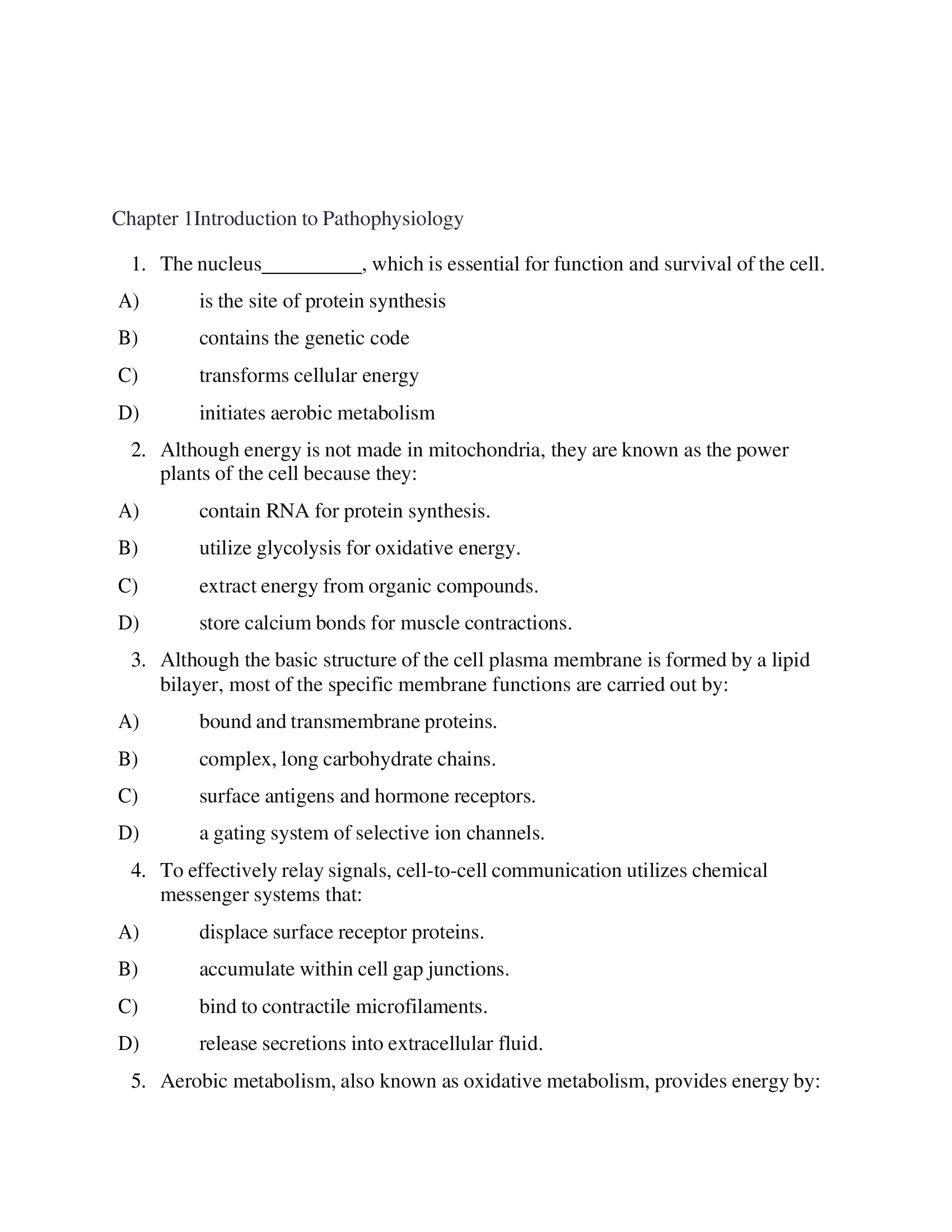
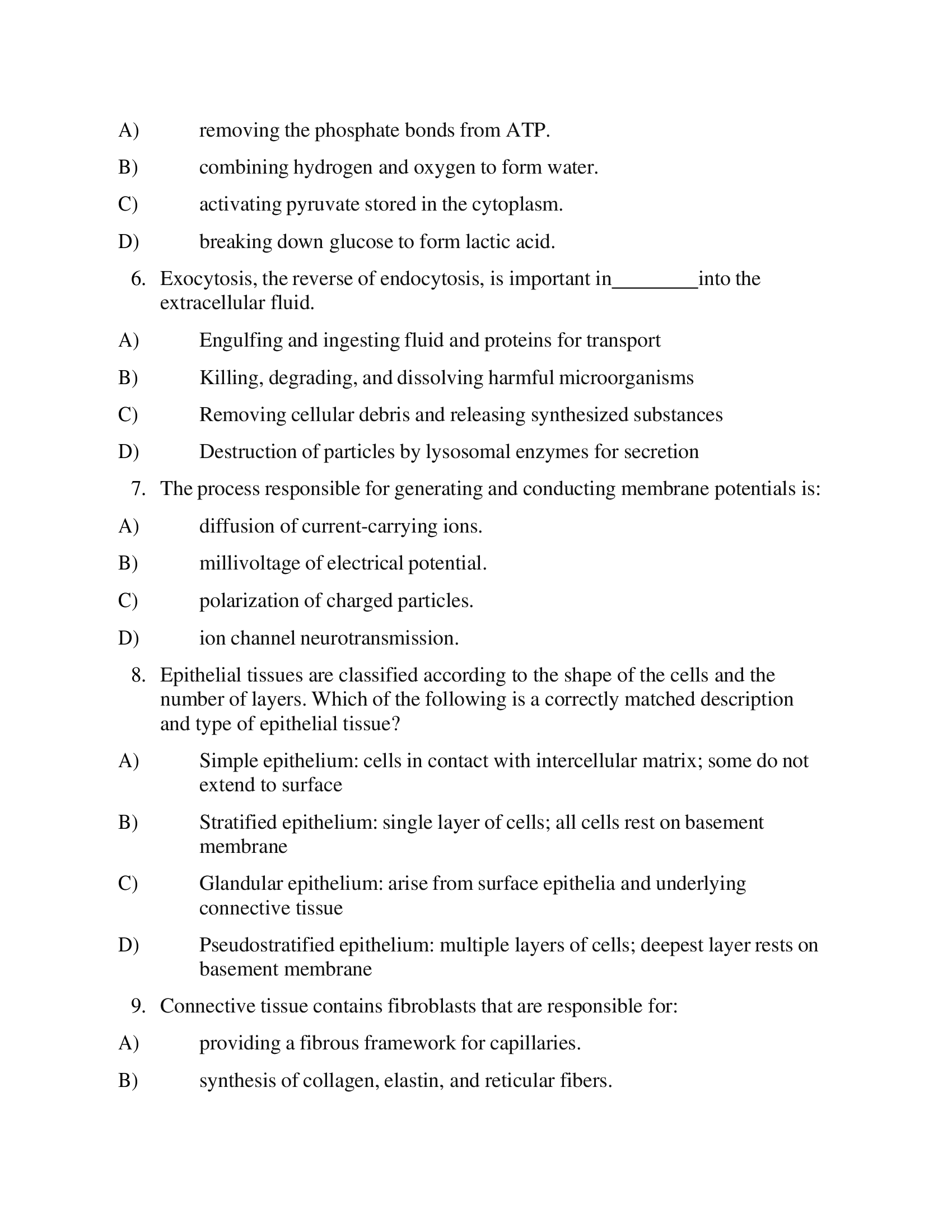
Preview page 1 Preview page 2 Preview page 3
Add To Favorites

Share this item Share this item

  • Item Details
  • Comments (0)
  • Reviews (0)
  • Contact Seller
Test Bank For Applied Pathophysiology A Conceptual Approach 4th Edition By Judi Nath, Carie Braun All Chapters B) tuberculosis C) pneumonia D) toxoplasmosis 8. Wasting syndrome, an AIDS-defining illness, is characterized by involuntary weight loss of at least 10% of baseline body weight in the presence of: A) diarrhea. B) hypermetabolism. C) weakness and fever. D) glucose intolerance. 9. The window period of HIV infection refers to the period of time between infection and: A) transmission. B) seroconversion. C) initial symptoms. D) antibody screening. 10. HIV-positive persons that display manifestations of laboratory category 3 or clinical category C are considered to have: A) zero viral load. B) seroconversion. C) complete remission. D) AIDS-defining illnesses. 11. Contact with poison ivy has resulted in intense pruritus, erythema, and weeping on a patients forearm. Which of the following processes resulted in the patients signs and symptoms? A) IgE-mediated mast cell degranulation B) Formation of antigen-antibody complexes C) Cytokine release by sensitized T cells D) Formation of antibodies against cell surface antigens 12. A patient with a long history of hay fever has recently begun a series of immunotherapy (allergy shots). How will this treatment potentially achieve a therapeutic effect? A) By blocking cytokine release from sensitized mast cells B) By preventing mast cells from becoming sensitized C) By causing T cells to be sequestered in the thymus for longer periods D) By stimulating production of IgG to combine with antigens 13. A patient with a diagnosis of cirrhosis has experienced an acute rejection of a donor liver. Which of the following cells is central to the rejection of the patients transplanted organ? A) Natural killer cells B) Mast cells C) T cells D) Neutrophils 14. A patient with a diagnosis of aplastic anemia has undergone allogenic bone marrow transplantation. Which of the following signs and symptoms would most clearly suggest the existence of graft-versus-host disease (GVHD)? A) Shortness of breath, audible crackles, and decreasing PaO 2 B) Presence of a pruritic rash that has begun to slough off C) Development of metabolic acidosis D) Diaphoresis, fever, and anxiety 15. A patient has developed pericarditis after developing acute glomerulonephritis, a development that may be attributable to the presence of similar epitopes on group A, b-hemolytic streptococci and the antigens in the patients heart tissue. Which of the following has most likely accounted for this patients autoimmune response? A) Breakdown of T-cell anergy B) Release of sequestered antigens C) Superantigens D) Molecular mimicry 16. A 70-year-old female patient has had her mobility and independence significantly reduced by rheumatoid arthritis. Which of the following processes likely contributed to the development of her health problem? A) Delayed-type hypersensitivity (DTH) reaction B) Proliferation of cytotoxic T cells C) Failure of normal self-tolerance D) Deletion of autoreactive B cells 17. Which of the following would constitute a normal assessment finding in a neonate? A) Minimal or absent levels of IgA and IgM B) Absence of plasma cells in the lymph nodes and spleen C) Undetectable levels of all immunoglobulins D) Absence of mature B cells with normal T-cell levels and function 18. A patient was diagnosed as HIV positive several years ago. Which of the following blood tests is most clinically useful for determining the stage and severity of her disease? A) Plasma levels B) CD4 + cell counts C) Viral load D) White blood cell count with differential 19. A patient has been admitted to the hospital for the treatment of HIV infection, which has recently progressed to overt AIDS. Which of the following nursing actions should the nurse prioritize when providing care for this patient? A) Frequent neurologic vital signs and thorough skin care B) Hemodynamic monitoring and physical therapy C) Careful monitoring of fluid balance and neurologic status D) Astute infection control and respiratory assessments 20. Shortly after being diagnosed with HIV, a patient has begun highly active antiretroviral therapy (HAART). What is the primary goal of the patients drug regimen? A) To limit the latent period of HIV B) To slow the progression of the disease C) To minimize opportunities for transmission D) To prevent seroconversion Answer Key 1. A 2. A 3. B 4. A 5. B 6. B 7. B 8. A 9. B 10. D 11. C 12. D 13. C 14. B 15. D 16. C 17. A 18. B 19. D 20. B Chapter 5 Infection 1. Although growth rate is variable among types of bacteria, the growth of bacteria is dependent on: A) biofilm communication. B) availability of nutrients. C) an intact protein capsid. D) individual cell motility. 2. Treponema pallidum, the cause of syphilis, is a spirochete bacterium that is spread from human to human by: A) tick or lice vector bites. B) direct physical contact. C) exposure to infected urine. D) inhaling airborne particles. 3. Chlamydiaceae, a rather common sexually transmitted infectious organism, has characteristics of both viruses and bacteria. The infectious form of this organisms life cycle is until it enters the host cell. A) an elementary body B) adhered to cholesterol C) propelled by filaments D) encapsulated hyphae 4. Because dermatophytes are capable of growing , the infection is mainly found on cutaneous surfaces of the body. A) a powdery colony B) in moist skin folds C) on cooler tissue D) branching filaments 5. Although both eukaryotes and prokaryotes are capable of causing infectious diseases in humans, eukaryotes are unique because they have a distinct: A) organized nucleus. B) circular plasmid DNA. C) cytoplasmic membrane. D) variation of shape and size. 6. Whatever the mechanism of entry, the human-to-human transmission of infectious agents is directly related to the: A) source of contact. B) site of infection. C) number of pathogens absorbed. D) virulence factors. 7. The course of any infectious disease progresses through several distinct stages after the pathogen enters the host. Although the duration may vary, the hallmark of the prodromal stage is: A) tissue inflammation and damage. B) initial appearance of symptoms. C) progressive pathogen elimination. D) containment of infectious pathogens. 8. Although bacterial toxins vary in their activity and effects on host cells, a small amount of gram-negative bacteria endotoxin: A) is released during cell growth. B) inactivates key cellular functions. C) uses protein to activate enzymes. D) in the cell wall activates inflammation. 9. Serology testing includes the measurement of which of the following? A) Antibody titers B) Culture growth C) Direct antigens D) DNA sequencing 10. Prions cause transmissible neurodegenerative diseases and are characterized by: A) a lack of reproductive capacity. B) hypermetabolism. C) enzyme production. D) chronic inflammation. 11. Which of the following individuals is experiencing a health problem that is the result of a parasite? A) A college student who contracted Chlamydia trachomatis during an unprotected sexual encounter B) A man who acquired malaria while on a tropical vacation C) A hospital patient who has developed postoperative pneumonia D) A woman who developed hepatitis A from eating at an unhygienic restaurant 12. Which of the following traits is characteristic of saprophytes? A) They derive energy from decaying organic matter. B) They are beneficial components of human microflora. C) They have RNA or DNA, but never both. D) They are capable of spore production. 13. A hospital patient was swabbed on admission for antibiotic-resistant organisms and has just been informed that methicillin-resistant Staphylococcus aureus (MRSA) is present in his groin. The patient has a normal core temperature and white blood cell count. This patient is experiencing which of the following? A) Infection B) Proliferation C) Colonization D) Inflammation 14. A 33-year-old patient who is a long-term intravenous user of heroin has been recently diagnosed with hepatitis C. Which of the following portals of entry most likely led to the patients infection? A) Direct contact B) Vertical transmission C) Ingestion D) Penetration 15. A 9-month-old infant has been diagnosed with botulism after he was fed honey. The childs mother was prompted to seek care because of this childs sudden onset of neuromuscular deficits, which were later attributed to the release of substances by Clostridium botulinum bacteria. Which virulence factor contributed to this childs illness? A) Endotoxins B) Adhesion factors C) Exotoxins D) Evasive factors 16. A patient with a long-standing diagnosis of Crohn disease has developed a perianal abscess. Which of the following treatments will this patient most likely require? A) Antiviral therapy B) Antibiotic therapy C) Surgical draining D) Pressure dressing 17. A patients primary care provider has ordered direct antigen detection in the care of a patient with a serious symptomatology of unknown origin. Which of the following processes will be conducted? A) Detecting DNA sequences that are unique to the suspected pathogen B) Growth of biofilms on various media in the laboratory setting C) Quantification of IgG and IgM antibodies in the patients blood D) Introduction of monoclonal antibodies to a blood sample from the patient 18. A patient has begun taking acyclovir, an antiviral medication, to control herpes simplex outbreaks. What is this drugs mechanism of action? A) Inhibition of viral adhesion to cells B) Elimination of exotoxin production C) Antagonism of somatic cell binding sites D) Interference with viral replication processes 19. International travel has contributed to increased prevalence and incidence of nonindigenous diseases by increasing which of the following? A) Portals of entry B) Sources of infection C) Virulence D) Disease course 20. A public health nurse should recognize that sexually transmitted infections (STIs) are typically spread by which of the following mechanisms? A) Penetration B) Vertical transmission C) Direct contact D) Ingestion Answer Key 1. B 2. B 3. A 4. C 5. A 6. C 7. B 8. D 9. A 10. A 11. B 12. A 13. C 14. D 15. C 16. C 17. D 18. D 19. B 20. C Chapter 6 Genetic and Developmental Disorders 1. Genetic disorders that involve a single gene trait are characterized by: A) multifactorial gene mutations. B) chromosome rearrangements. C) Mendelian patterns of transmission. D) abnormal numbers of chromosomes. 2. In addition to having a 50% chance of inheriting an autosomal dominant disorder from an affected parent, such a disorder is characterized by: A) aneuploidy of genes in all cells. B) deficiencies in enzyme synthesis. C) affected X transmission to daughters. D) varied gene penetration and expression. 3. Autosomal recessive disorders are characterized by: A) age of onset later in life. B) abnormal protein structure. C) inborn errors of metabolism. D) one in two risk of a carrier child. 4. When a male child inherits an X-linked disorder from his heterozygous carrier mother, A) his sons will be carriers. B) his father has the disorder. C) some of his sisters will be carriers. D) his daughters will have the disorder. 5. Multifactorial inheritance disorders, such as cleft palate, are often caused by during fetal development. A) multiple gene mutations B) dominant gene expression C) X-linked crossover problem D) polyploidy of chromosomes 6. The newborn has the distinctive physical features of trisomy 21, Down syndrome, which includes: A) upward slanting of eyes. B) large, protruding ears. C) thin lips and small tongue. D) long fingers with extra creases. 7. Aneuploidy of the X chromosome can result in a monosomy or polysomy disorder. The manifestations of monosomy X, Turner syndrome, differ from polysomy X disorders in numerous ways that include: A) short-stature female individual.. B) mental retardation. C) enlarged breasts. D) early onset puberty. 8. A teratogenic environmental agent can cause birth defects when: A) inherited as a recessive trait.

Contact the Seller

Please Sign In to contact this seller.


  • 👎  Report Copyright Violation

Frequently Asked Questions

What Do I Get When I Buy This Study Material?

+

When you buy a study material on Passing Grades, an instant download link will be sent directly to your email, giving you access to the file anytime after payment is completed.

Is Passing Grades a Trusted Platform?

+

Yes, Passing Grades is a reputable students’ marketplace with a secure payment system and reliable customer support. You can trust us to ensure a safe and seamless transaction experience.

Will I Be Stuck with a Subscription?

+

No, all purchases on Passing Grades are one-time transactions. You only pay for the notes you choose to buy, with no subscriptions or hidden fees attached.

Who Am I Buying These Study Materials From?

+

Passing Grades is a marketplace, which means you are purchasing the document from an individual vendor, not directly from us. We facilitate the payment and delivery process between you and the vendor.

Does Passing Grades Offer Free Study Materials?

+

Yes, sellers on Passing Grades have uploaded numerous free test banks, exams, practice questions, and class notes that can be downloaded at no cost.

Pasinggrades - Quality Study Materials

USD 15

    • Quality checked by Pasing Grades
    • 100% satisfaction guarantee
    • Seller: mentor2000
Buy PDF $15

Seller Information

mentor2000

Member since April 2021

  • icon
  • icon
View Profile
  • total sales

    3
  • Favourites

    0
  • Comments

    0
    ( 0 Ratings )

Item Information

  • Uploaded

    06 February 2024

  • Updated

    01 October 2025

  • Category

    No category

  • Item Type

    test bank

  • Tags

    Test Bank For Applied Pathophysiology A Conceptual Approach 4th Edition By Judi Nath Carie Braun All Chapters

Related Exam Prep Guides by mentor2000

Test Bank for Essentials for Nursing Practice 8th Edition by Potter | All Chapters
View Document

Test Bank for Essent...

  • mentor2000

    mentor2000

  • test bank

Master nursing concepts with this study material; Test Bank for Essentials for Nursing Practice, 8th...

15 USD

0

3

A &P 1 MA278 BSC2 Final Module II Questions & Answers 2026 Update
View Document

A &P 1 MA278 BSC2 Fi...

  • mentor2000

    mentor2000

  • test bank

Prepare for success with A&P 1 MA278 BSC2 Final Module II 2024 Q&A. Boost your grades with this comp...

15 USD

0

3

ATI Comprehensive Predictor Exam 2026
View Document

ATI Comprehensive Pr...

  • mentor2000

    mentor2000

  • test bank

Prepare for success with the ATI Comprehensive Predictor Exam 2026. Access key practice questions to...

15 USD

0

3

Purchase

Download link will be sent to this email immediately after purchase.

IMPORTANT LINKS

  • How To Upload Class Notes
  • Selling Tips
  • Passing Grades's Study Materials
  • Scholarships for International Students 2025

POPULAR CATEGORIES

  • Law
  • Accounting
  • English
  • Psychology
  • Business
  • Nursing
  • Computer Science
  • General

View Document

  • Blog
  • Contact
  • Delivery Policy
  • Latest Scholarships Around the World
  • How to Pass Bar Exams: Passing Grades’ Strategies
  • How to Study and Pass the CPA Exam
  • All Test Banks
  • Faq
  • Copyright Claims
  • Privacy Policy
  • Terms of Use

KNOWLEDGE BASE

  • How to Write A+ Grade Good Research Paper
  • How to Manage Stress During Exam Period
  • Best Time to Study
  • How to Pass NCLEX-RN Exam
  • How To Effectively Utilize Test Banks
  • Popular Shadow Health Exam Assessments
  • Popular HESI Case Studies
  • How to Prepare for a Nursing Career
  • The Importance Of Summaries in Exam Revisvion

© 2026 Pasing Grades. All rights reserved.