Pasing Grades
  • Start Selling
  • Blog
  • Contact
  • 0

    Your cart is empty!

English

  • English
  • Spanish
  • Arabic
Create Account Sign In
  • Library
    • New Prep Guides
    • Featured Prep Guides
    • Free Exam Prep Guides
    • Best sellers
  • General
  • Nursing
    • Research Paper
    • Case Study
    • Discussion Post
    • Assignment
    • Exam
    • Practice Questions and Answers
    • Test Bank
    • solutions manual
  • Accounting
    • Case Study
    • Thesis
    • Study Guide
    • Summary
    • Research Paper
    • test bank
  • English
    • Creative Writing
    • Research Paper
    • Summary
    • Rhetorics
    • Literature
    • Journal
    • Exam
    • Grammar
    • Discussion Post
    • Essay
  • Psychology
    • Hesi
    • Presentation
    • Essay
    • Summary
    • Study Guide
    • Essay
    • Solution Manual
    • Final Exam Review
    • Class Notes
    • test bank
  • Business
    • Lecture Notes
    • Solution Manual
    • Presentation
    • Business Plan
    • Class Notes
    • Experiment
    • Summary
    • Practice Questions
    • Study Guide
    • Case Study
    • test bank
    • Exam
  • More
    • Computer Science
    • Economics
    • Statistics
    • Engineering
    • Biology
    • Religious Studies
    • Physics
    • Chemistry
    • Mathematics
    • History
    • Sociology
    • Science
    • Philosophy
    • Law
  • Pages
    • About Us
    • Selling Tips
    • Delivery Policy
    • Faq
    • Privacy Policy
  • Flash Sale
  • Home
  • Test Bank For Applied Pathophysiology: A Conceptual Approach 4th Edition By Judi Nath; Carie Braun 9781975179199 Chapter 1-20 Complete Guide

Test Bank For Applied Pathophysiology: A Conceptual Approach 4th Edition By Judi Nath; Carie Braun 9781975179199 Chapter 1-20 Complete Guide

Preview page 1 Preview page 2 Preview page 3
Add To Favorites

Share this item Share this item

  • Item Details
  • Comments (0)
  • Reviews (0)
  • Contact Seller

Test Bank For Applied Pathophysiology: A Conceptual Approach 4th Edition By Judi Nath; Carie Braun 9781975179199 Chapter 1-20 Complete Guide

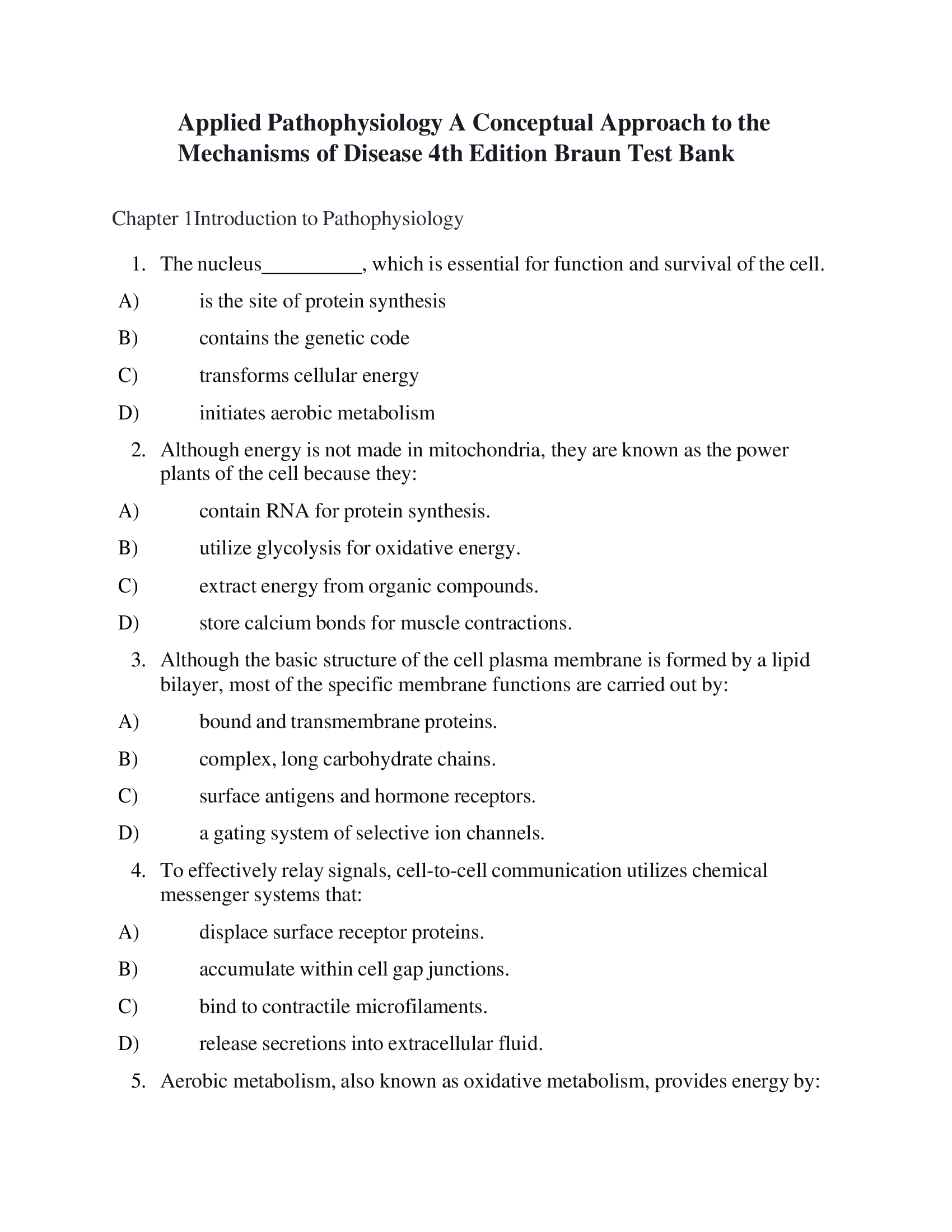
Chapter 1Introduction to Pathophysiology


1.     The nucleus                 , which is essential for function and survival of the cell.

A)                      is the site of protein synthesis

B)                      contains the genetic code

C)                      transforms cellular energy

D)                      initiates aerobic metabolism

2.     Although energy is not made in mitochondria, they are known as the power plants of the cell because they:

A)                      contain RNA for protein synthesis.

B)                      utilize glycolysis for oxidative energy.

C)                      extract energy from organic compounds.

D)                      store calcium bonds for muscle contractions.

3.     Although the basic structure of the cell plasma membrane is formed by a lipid bilayer, most of the specific membrane functions are carried out by:

A)                      bound and transmembrane proteins.

B)                      complex, long carbohydrate chains.

C)                      surface antigens and hormone receptors.

D)                      a gating system of selective ion channels.

4.     To effectively relay signals, cell-to-cell communication utilizes chemical messenger systems that:

A)                      displace surface receptor proteins.

B)                      accumulate within cell gap junctions.

C)                      bind to contractile microfilaments.

D)                      release secretions into extracellular fluid.

5.     Aerobic metabolism, also known as oxidative metabolism, provides energy by:


A)                      removing the phosphate bonds from ATP.

B)                      combining hydrogen and oxygen to form water.

C)                      activating pyruvate stored in the cytoplasm.

D)                      breaking down glucose to form lactic acid.

6.     Exocytosis, the reverse of endocytosis, is important in                                                                            into the extracellular fluid.

A)                      Engulfing and ingesting fluid and proteins for transport

B)                      Killing, degrading, and dissolving harmful microorganisms

C)                      Removing cellular debris and releasing synthesized substances

D)                      Destruction of particles by lysosomal enzymes for secretion

7.     The process responsible for generating and conducting membrane potentials is:

A)                      diffusion of current-carrying ions.

B)                      millivoltage of electrical potential.

C)                      polarization of charged particles.

D)                      ion channel neurotransmission.

8.     Epithelial tissues are classified according to the shape of the cells and the number of layers. Which of the following is a correctly matched description and type of epithelial tissue?

A)                      Simple epithelium: cells in contact with intercellular matrix; some do not extend to surface

B)                      Stratified epithelium: single layer of cells; all cells rest on basement membrane

C)                      Glandular epithelium: arise from surface epithelia and underlying connective tissue

D)                      Pseudostratified epithelium: multiple layers of cells; deepest layer rests on basement membrane

9.     Connective tissue contains fibroblasts that are responsible for:

A)                      providing a fibrous framework for capillaries.

B)                      synthesis of collagen, elastin, and reticular fibers.


C)                      forming tendons and the fascia that covers muscles.

D)                      filling spaces between tissues to keep organs in place.

10.     Although all muscle tissue cells have some similarities, smooth muscle (also known as involuntary muscle) differs by:

A)                      having dense bodies attached to actin filaments.

B)                      containing sarcomeres between Z lines and M bands.

C)                      having rapid contractions and abundant cross-striations.

D)                      contracting in response to increased intracellular calcium.

11.     Which of the following aspects of the function of the nucleus is performed by ribosomal RNA (rRNA)?

A)                      Copying and carrying DNA instructions for protein synthesis

B)                      Carrying amino acids to the site of protein synthesis

C)                      Providing the site where protein synthesis occurs

D)                      Regulating and controlling protein synthesis

12.     Breakdown and removal of foreign substances and worn-out cell parts are performed by which of the following organelles?

A)                      Lysosomes

B)                      Golgi apparatus

C)                      Ribosomes

D)                      Endoplasmic reticulum (ER)

13.     Impairment in the function of peroxisomes would result in:

A)                      inadequate sites for protein synthesis.

B)                      an inability to transport cellular products across the cell membrane.

C)                      insufficient energy production within a cell.

D)                      accumulation of free radicals in the cytoplasm.

14.     After several months of trying to conceive, a couple is undergoing fertility testing. Semen analysis indicates that the mans sperm have decreased motility, a finding that is thought to underlie the couples inability to become pregnant.


Which of the following cellular components may be defective within the mans sperm?

A)                      Ribosomes

B)                      Microtubules

C)                      Mitochondria

D)                      Microfilaments

15.     Which of the following statements is true of glycolysis?

A)                      Glycolysis requires oxygen.

B)                      Glycolysis occurs in cells without mitochondria.

C)                      Glycolysis provides the majority of the bodys energy needs.

D)                      Glycolysis produces energy, water, and carbon dioxide.

16.     Which of the following membrane transport mechanisms requires the greatest amount of energy?

A)                      Facilitated diffusion

B)                      Passive transport

C)                      Vesicular transport

D)                      Simple diffusion

17.     A male patient with a diagnosis of type 1 diabetes mellitus is experiencing hyperglycemia because he lacks sufficient insulin to increase the availability of glucose transporters in his cell membranes. Consequently, his cells lack intracellular glucose and it accumulates in his blood. Which of the following processes would best allow glucose to cross his cell membranes?

A)                      Facilitated diffusion

B)                      Simple diffusion

C)                      Secondary active transport

D)                      Endocytosis

18.     Which of the following statements is true of skeletal muscle cells?

A)                      Skeletal muscle cells each have an apical, lateral, and basal surface.


B)                      They are closely apposed and are joined by cell-to-cell adhesion molecules.

C)                      Their basal surface is attached to a basement membrane.

D)                      Skeletal muscle is multinucleated, lacking true cell boundaries.

19.     Which of the following body tissues exhibits the highest rate of turnover and renewal?

A)                      The squamous epithelial cells of the skin

B)                      The connective tissue supporting blood vessels

C)                      The skeletal muscle that facilitates movement

D)                      The nervous tissue that constitutes the central nervous system

20.     A patient with a pathophysiologic condition that affects the desmosomes is most likely to exhibit:

A)                      impaired contraction of skeletal and smooth muscle.

B)                      weakness of the collagen and elastin fibers in the extracellular space.

C)                      impaired communication between neurons and effector organs.

D)                      separation at the junctions between epithelial cells.


Answer Key


1.     B

2.     C

3.     A

4.     D

5.     B

6.     C

7.     A

8.     C

9.     B

10.     A


11.     C

12.     A

13.     D

14.     B

15.     B

16.     C

17.     A

18.     D

19.     A

20.     D


Chapter 2 Altered Cells and Tissues


1.     Ischemia and other toxic injuries increase the accumulation of intracellular calcium as a result of:

A)                      release of stored calcium from the mitochondria.

B)                      improved intracellular volume regulation.

C)                      decreased influx across the cell membrane.

D)                      attraction of calcium to fatty infiltrates.

2.     The patient is found to have liver disease, resulting in the removal of a lobe of his liver. Adaptation to the reduced size of the liver leads to                                                                                        of the remaining liver cells.

A)                      metaplasia

B)                      organ atrophy

C)                      compensatory hyperplasia

D)                      physiologic hypertrophy

3.     A person eating peanuts starts choking and collapses. His airway obstruction is partially cleared, but he remains hypoxic until he reaches the hospital. The prolonged cell hypoxia caused a cerebral infarction and resulting                                                                                                    in the brain.


A)                      caspase activation

B)                      coagulation necrosis

C)                      rapid phagocytosis

D)                      protein p53 deficiency

4.     Bacteria and viruses cause cell damage by             , which is unique from the intracellular damage caused by other injurious agents.

A)                      disrupting the sodium/potassium ATPase pump

B)                      interrupting oxidative metabolism processes

C)                      replicating and producing continued injury

D)                      decreasing protein synthesis and function

5.     The patient has a prolonged interruption in arterial blood flow to his left kidney, causing hypoxic cell injury and the release of free radicals. Free radicals damage cells by:

A)                      destroying phospholipids in the cell membrane.

B)                      altering the immune response of the cell.

C)                      disrupting calcium storage in the cell.

D)                      inactivation of enzymes and mitochondria.

6.     Injured cells have impaired flow of substances through the cell membrane as a result of:

A)                      increased fat load.

B)                      altered permeability.

C)                      altered glucose utilization.

D)                      increased surface receptors.

7.     Reversible adaptive intracellular responses are initiated by:

A)                      stimulus overload.

B)                      genetic mutations.

C)                      chemical messengers.

D)                      mitochondrial DNA.


8.     Injured cells become very swollen as a result of:

A)                      increased cell protein synthesis.

B)                      altered cell volume regulation.

C)                      passive entry of potassium into the cell.

D)                      bleb formation in the plasma membrane.

9.     A diabetic patient has impaired sensation, circulation, and oxygenation of his feet. He steps on a piece of glass, the wound does not heal, and the area tissue becomes necrotic. The necrotic cell death is characterized by:

A)                      rapid apoptosis.

B)                      cellular rupture.

C)                      shrinkage and collapse.

D)                      chronic inflammation.

10.     A 99-year-old woman has experienced the decline of cell function associated with age. A group of theories of cellular aging focus on programmed:

A)                      changes with genetic influences.

B)                      elimination of cell receptor sites.

C)                      insufficient telomerase enzyme.

D)                      DNA mutation or faulty repair.

11.     An 89-year-old female patient has experienced significant decreases in her mobility and stamina during a 3-week hospital stay for the treatment of a femoral head fracture. Which of the following phenomena most likely accounts for the patients decrease in muscle function that underlies her reduced mobility?

A)                      Impaired muscle cell metabolism resulting from metaplasia

B)                      Dysplasia as a consequence of inflammation during bone remodeling

C)                      Disuse atrophy of muscle cells during a prolonged period of immobility

D)                      Ischemic atrophy resulting from vascular changes while on bedrest

12.     A 20-year-old college student has presented to her campus medical clinic for a scheduled Papanicolaou (Pap) smear. The clinician who will interpret the smear will examine cell samples for evidence of:


A)                      changes in cell shape, size, and organization.

B)                      the presence of unexpected cell types.

C)                      ischemic changes in cell samples.

D)                      abnormally high numbers of cells in a specified field.

13.     Which of the following pathophysiologic processes is most likely to result in metastatic calcification?

A)                      Benign prostatic hyperplasia

B)                      Liver cirrhosis

C)                      Impaired glycogen metabolism

D)                      Hyperparathyroidism

14.     Despite the low levels of radiation used in contemporary radiologic imaging, a radiology technician is aware of the need to minimize her exposure to ionizing radiation. What is the primary rationale for the technicians precautions?

A)                      Radiation stimulates pathologic cell hypertrophy and hyperplasia.

B)                      Radiation results in the accumulation of endogenous waste products in the cytoplasm.

C)                      Radiation interferes with DNA synthesis and mitosis.

D)                      Radiation decreases the action potential of rapidly dividing cells.

15.     The parents of a 4-year-old girl have sought care because their daughter has admitted to chewing and swallowing imported toy figurines that have been determined to be made of lead. Which of the following blood tests should the care team prioritize?

A)                      White blood cell levels with differential

B)                      Red blood cell levels and morphology

C)                      Urea and creatinine levels

D)                      Liver function panel

16.     A 70-year-old male patient has been admitted to a hospital for the treatment of a recent hemorrhagic stroke that has left him with numerous motor and sensory deficits. These deficits are most likely the result of which of the following mechanisms of cell injury?


A)                      Free radical injury

B)                      Hypoxia and ATP depletion

C)                      Interference with DNA synthesis

D)                      Impaired calcium homeostasis

17.     Which of the following processes associated with cellular injury is most likely to be reversible?

A)                      Cell damage resulting from accumulation of fat in the cytoplasm

B)                      Cellular changes as a result of ionizing radiation

C)                      Cell damage from accumulation of free radicals

D)                      Apoptosis

18.     The extrinsic pathway of apoptosis can be initiated by:

A)                      damage to cellular DNA.

B)                      decreased ATP levels.

C)                      activation of the p53 protein.

D)                      activation of death receptors on the cell surface.

Contact the Seller

Please Sign In to contact this seller.


  • 👎  Report Copyright Violation

Frequently Asked Questions

What Do I Get When I Buy This Study Material?

+

When you buy a study material on Passing Grades, an instant download link will be sent directly to your email, giving you access to the file anytime after payment is completed.

Is Passing Grades a Trusted Platform?

+

Yes, Passing Grades is a reputable students’ marketplace with a secure payment system and reliable customer support. You can trust us to ensure a safe and seamless transaction experience.

Will I Be Stuck with a Subscription?

+

No, all purchases on Passing Grades are one-time transactions. You only pay for the notes you choose to buy, with no subscriptions or hidden fees attached.

Who Am I Buying These Study Materials From?

+

Passing Grades is a marketplace, which means you are purchasing the document from an individual vendor, not directly from us. We facilitate the payment and delivery process between you and the vendor.

Does Passing Grades Offer Free Study Materials?

+

Yes, sellers on Passing Grades have uploaded numerous free test banks, exams, practice questions, and class notes that can be downloaded at no cost.

Pasinggrades - Quality Study Materials

USD 15

    • Quality checked by Pasing Grades
    • 100% satisfaction guarantee
    • Seller: NASHON
Buy PDF $15

Seller Information

NASHON

Member since August 2023

  • icon
View Profile
  • total sales

    0
  • Favourites

    0
  • Comments

    0
    ( 0 Ratings )

Item Information

  • Uploaded

    11 September 2023

  • Updated

    24 October 2025

  • Category

    Accounting

  • Item Type

    questions & answers

  • Tags

    Test Bank For Applied Pathophysiology: A Conceptual Approach 4th Edition By Judi Nath; Carie Braun 9781975179199 Chapter 1 20 Complete Guide

Related Exam Prep Guides by NASHON

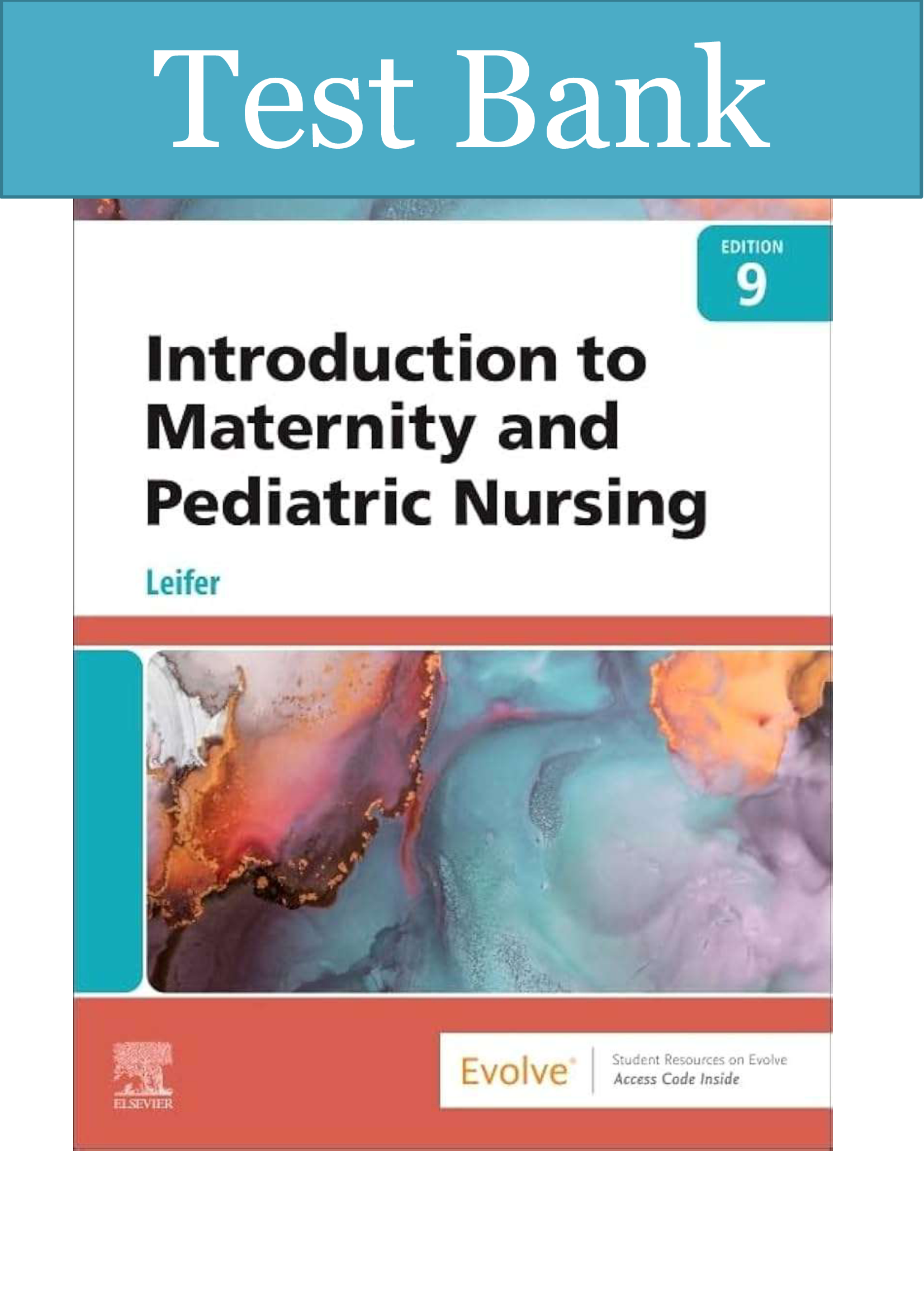
Test Bank For Introduction to Maternity and Pediatric Nursing 9th Edition BY Gloria Leifer | Complete Chapter 1 - 34 | 100 % Verified
View Document

Test Bank For Introd...

  • NASHON

    NASHON

  • questions & answers

TEST BANK For Introduction to Maternity and Pediatric Nursing 9th Edition BY Gloria Leifer |Complete...

15 USD

0

0

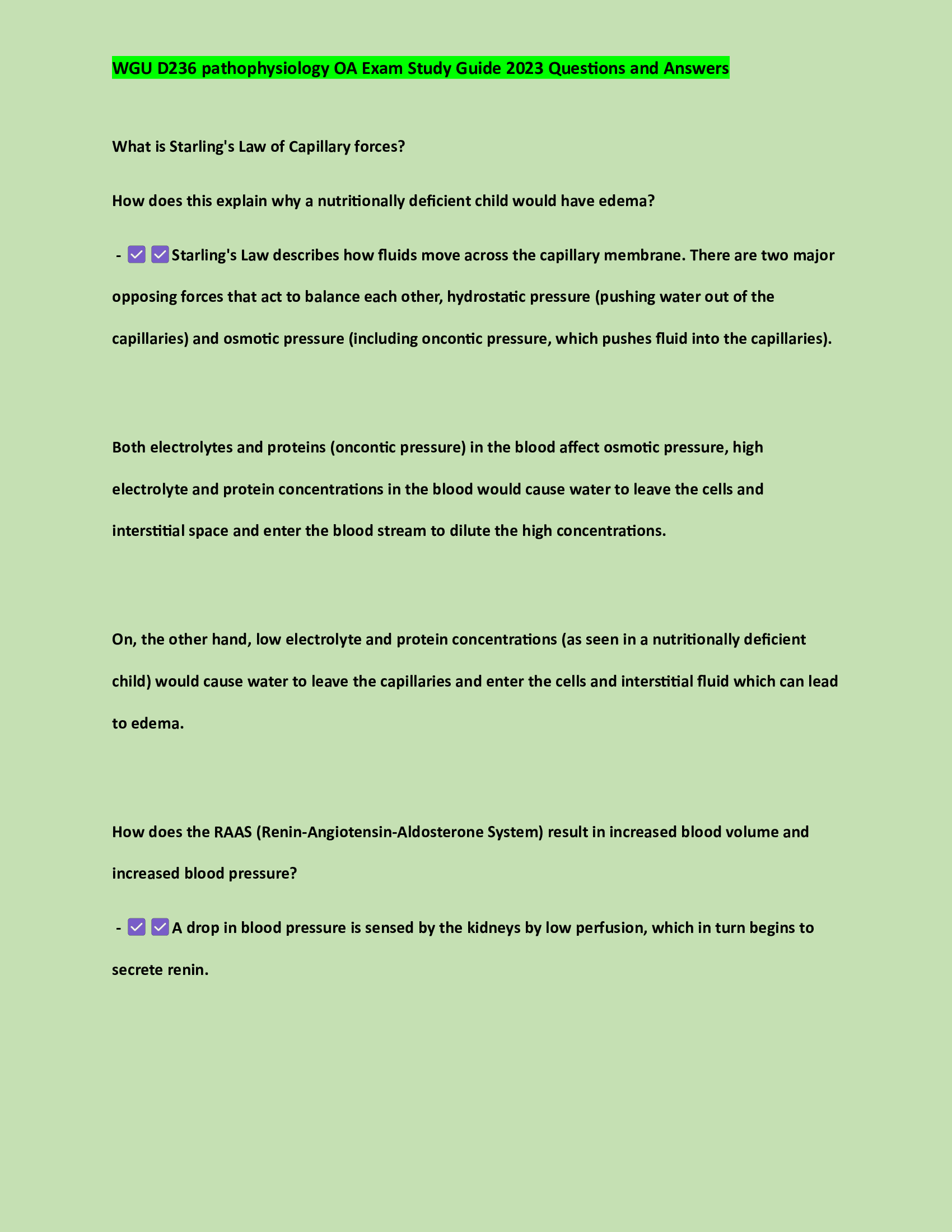
WGU D236 pathophysiology OA Exam Study Guide 2023 Questions and Answers (Verified Answers)
View Document

WGU D236 pathophysio...

  • NASHON

    NASHON

  • questions & answers

WGU D236 pathophysiology OA Exam Study Guide 2023 Questions and Answers (Verified Answers)...

15 USD

0

0

PSCYHOLOGY PSYC 515 Week 3 Quiz: Factorial Design Concepts.
View Document

PSCYHOLOGY PSYC 515 ...

  • NASHON

    NASHON

  • questions & answers

PSCYHOLOGY PSYC 515 Week 3 Quiz: Factorial Design Concepts....

15 USD

0

0

Purchase

Download link will be sent to this email immediately after purchase.

IMPORTANT LINKS

  • How To Upload Class Notes
  • Selling Tips
  • Passing Grades's Study Materials
  • Scholarships for International Students 2025

POPULAR CATEGORIES

  • Law
  • Accounting
  • English
  • Psychology
  • Business
  • Nursing
  • Computer Science
  • General

View Document

  • Blog
  • Contact
  • Delivery Policy
  • Latest Scholarships Around the World
  • How to Pass Bar Exams: Passing Grades’ Strategies
  • How to Study and Pass the CPA Exam
  • All Test Banks
  • Faq
  • Copyright Claims
  • Privacy Policy
  • Terms of Use

KNOWLEDGE BASE

  • How to Write A+ Grade Good Research Paper
  • How to Manage Stress During Exam Period
  • Best Time to Study
  • How to Pass NCLEX-RN Exam
  • How To Effectively Utilize Test Banks
  • Popular Shadow Health Exam Assessments
  • Popular HESI Case Studies
  • How to Prepare for a Nursing Career
  • The Importance Of Summaries in Exam Revisvion

© 2026 Pasing Grades. All rights reserved.