Pasing Grades
  • Start Selling
  • Blog
  • Contact
  • 0

    Your cart is empty!

English

  • English
  • Spanish
  • Arabic
Create Account Sign In
  • Library
    • New Prep Guides
    • Featured Prep Guides
    • Free Exam Prep Guides
    • Best sellers
  • General
  • Nursing
    • Research Paper
    • Case Study
    • Discussion Post
    • Assignment
    • Exam
    • Practice Questions and Answers
    • Test Bank
    • solutions manual
  • Accounting
    • Case Study
    • Thesis
    • Study Guide
    • Summary
    • Research Paper
    • test bank
  • English
    • Creative Writing
    • Research Paper
    • Summary
    • Rhetorics
    • Literature
    • Journal
    • Exam
    • Grammar
    • Discussion Post
    • Essay
  • Psychology
    • Hesi
    • Presentation
    • Essay
    • Summary
    • Study Guide
    • Essay
    • Solution Manual
    • Final Exam Review
    • Class Notes
    • test bank
  • Business
    • Lecture Notes
    • Solution Manual
    • Presentation
    • Business Plan
    • Class Notes
    • Experiment
    • Summary
    • Practice Questions
    • Study Guide
    • Case Study
    • test bank
    • Exam
  • More
    • Computer Science
    • Economics
    • Statistics
    • Engineering
    • Biology
    • Religious Studies
    • Physics
    • Chemistry
    • Mathematics
    • History
    • Sociology
    • Science
    • Philosophy
    • Law
  • Pages
    • About Us
    • Selling Tips
    • Delivery Policy
    • Faq
    • Privacy Policy
  • Flash Sale
  • Home
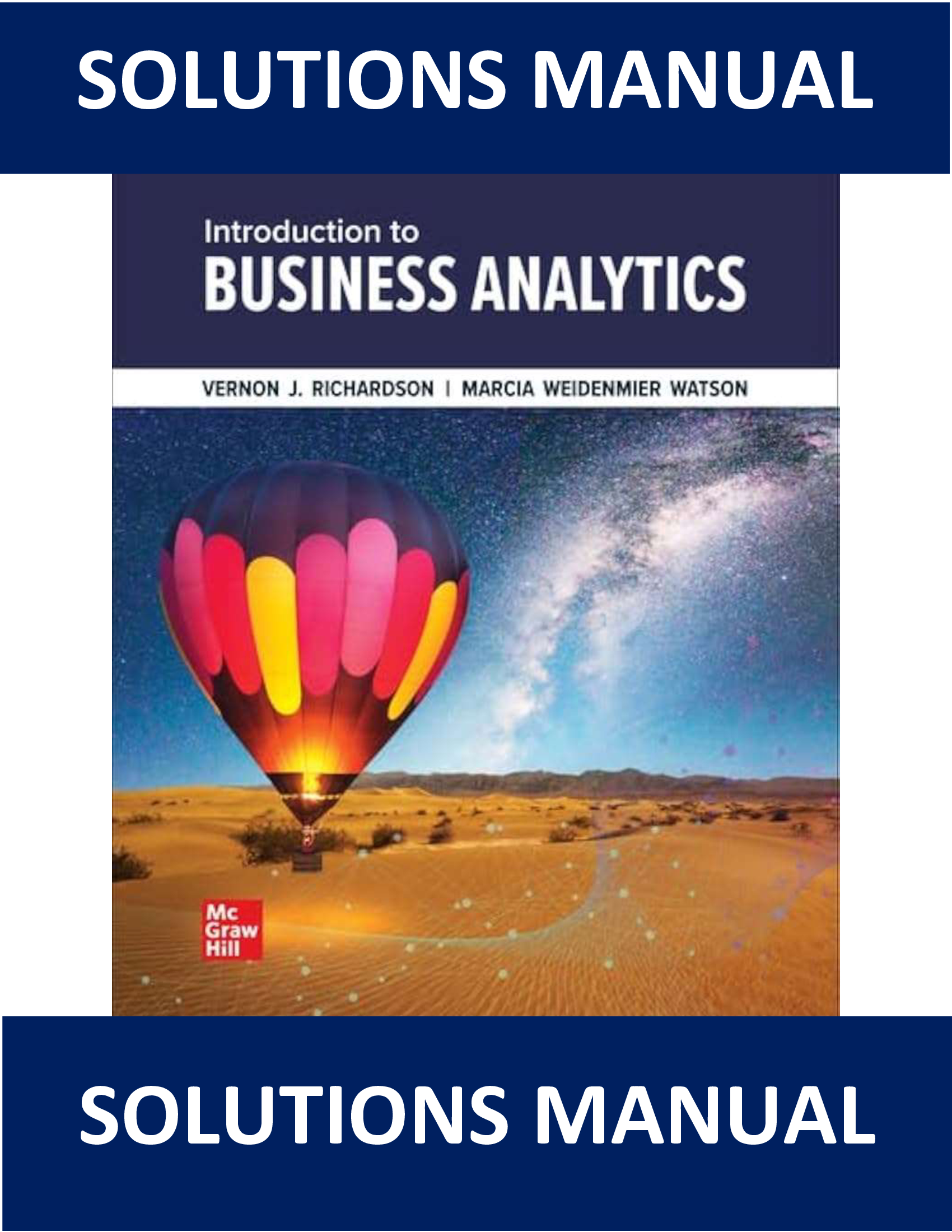
  • Solution Manual for Introduction to Business Analytics 1st Edition by Vernon Richardson and Marcia Watson

Solution Manual for Introduction to Business Analytics 1st Edition by Vernon Richardson and Marcia Watson

Preview page 1 Preview page 2 Preview page 3
Add To Favorites

Share this item Share this item

  • Item Details
  • Comments (0)
  • Reviews (0)
  • Contact Seller

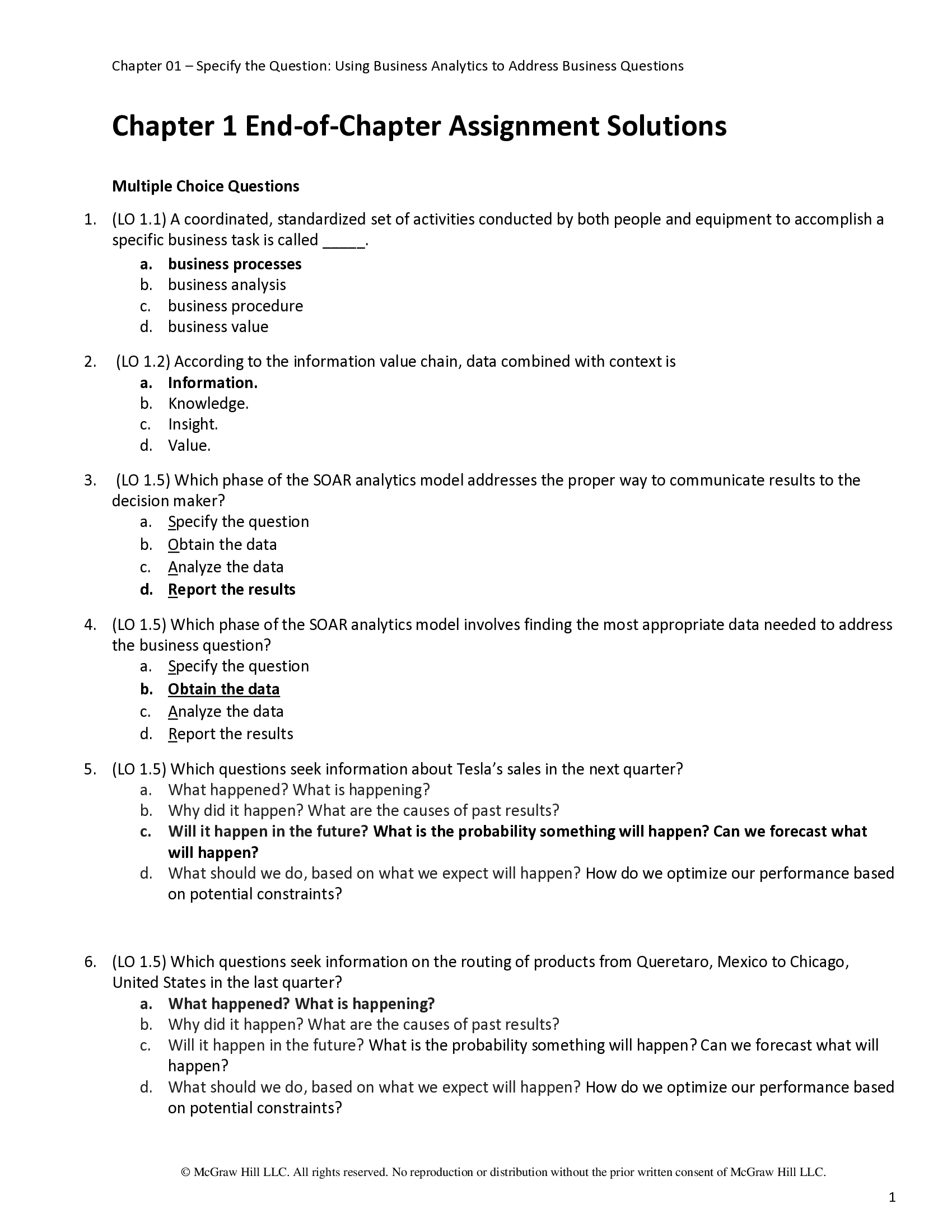
Introduction to Business Analytics 1st Edition-Solution Manual

Multiple Choice Questions

1.   (LO 1.1) A coordinated, standardized set of activities conducted by both people and equipment to accomplish a specific business task is called         _.

a.   business processes

b.   business analysis

c.    business procedure d.   business value

2.    (LO 1.2) According to the information value chain, data combined with context is

a.   Information.

b.   Knowledge. c.    Insight.

d.   Value.

3.               (LO 1.5) Which phase of the SOAR analytics model addresses the proper way to communicate results to the decision maker?

a.    Specify the question

b.   Obtain the data c.    Analyze the data

d.   Report the results

4.   (LO 1.5) Which phase of the SOAR analytics model involves finding the most appropriate data needed to address the business question?

a.    Specify the question

b.   Obtain the data c.    Analyze the data d.    Report the results

5.   (LO 1.5) Which questions seek information about Tesla’s sales in the next quarter?

a.    What happened? What is happening?

b.   Why did it happen? What are the causes of past results?

c.     Will it happen in the future? What is the probability something will happen? Can we forecast what will happen?

d.   What should we do, based on what we expect will happen? How do we optimize our performance based on potential constraints?

6.   (LO 1.5) Which questions seek information on the routing of products from Queretaro, Mexico to Chicago, United States in the last quarter?

a.   What happened? What is happening?

b.   Why did it happen? What are the causes of past results?

c.    Will it happen in the future? What is the probability something will happen? Can we forecast what will happen?

d.   What should we do, based on what we expect will happen? How do we optimize our performance based on potential constraints?

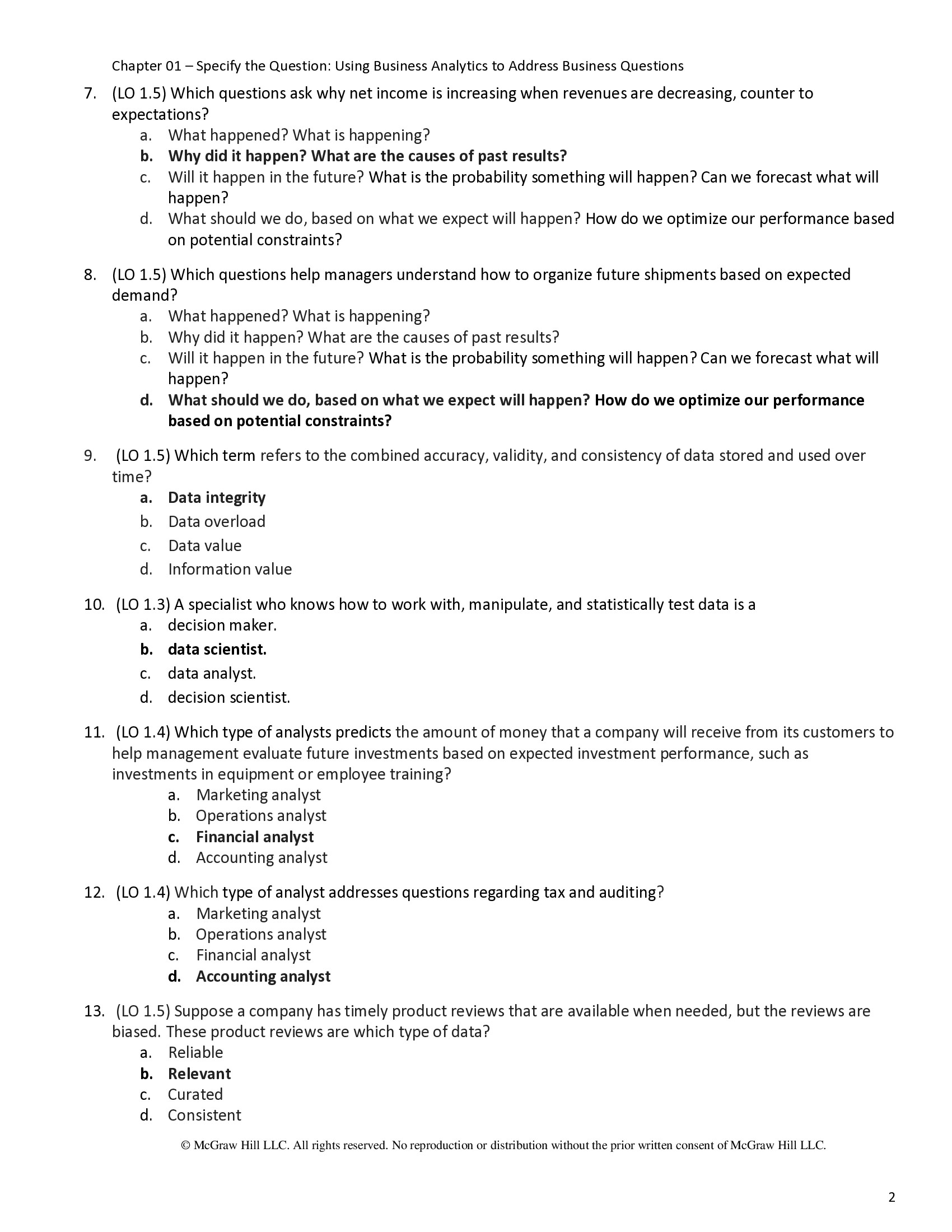
7.   (LO 1.5) Which questions ask why net income is increasing when revenues are decreasing, counter to expectations?

a.    What happened? What is happening?

b.   Why did it happen? What are the causes of past results?

c.     Will it happen in the future? What is the probability something will happen? Can we forecast what will happen?

d.   What should we do, based on what we expect will happen? How do we optimize our performance based on potential constraints?

8.   (LO 1.5) Which questions help managers understand how to organize future shipments based on expected demand?

a.    What happened? What is happening?

b.   Why did it happen? What are the causes of past results?

c.     Will it happen in the future? What is the probability something will happen? Can we forecast what will happen?

d.   What should we do, based on what we expect will happen? How do we optimize our performance based on potential constraints?

9.               (LO 1.5) Which term refers to the combined accuracy, validity, and consistency of data stored and used over time?

a.   Data integrity b.   Data overload c.    Data value

d.   Information value

10.  (LO 1.3) A specialist who knows how to work with, manipulate, and statistically test data is a a.    decision maker.

b.   data scientist.

c.    data analyst.

d.   decision scientist.

11.  (LO 1.4) Which type of analysts predicts the amount of money that a company will receive from its customers to help management evaluate future investments based on expected investment performance, such as investments in equipment or employee training?

a.    Marketing analyst b.   Operations analyst c.    Financial analyst

d.   Accounting analyst


12.  (LO 1.4) Which type of analyst addresses questions regarding tax and auditing?

a.    Marketing analyst b.   Operations analyst c.    Financial analyst

d.   Accounting analyst

13.  (LO 1.5) Suppose a company has timely product reviews that are available when needed, but the reviews are biased. These product reviews are which type of data?

a.    Reliable b.   Relevant c.    Curated

d.   Consistent

14.  (LO 1.6) Which common visualization type shows trends in values over time?

a.   Line graph b.   Scatterplot c.    Pie chart

d.   Bar chart

15.  (LO 1.6) Which common visualization type shows the composition of values over time?

a.    Line graph b.   Scatterplot c.    Pie chart

d.   Bar chart

Discussion Questions

1. (LO 1.1) Give five examples of business processes at Tesla. How do they create business value for Tesla and its shareholders?

Suggested Solution

Answers will vary,

1.   Tesla procures automobile parts from auto suppliers –         Because of Tesla’s unique styling, getting quality

parts from its suppliers on a timely basis will support its manufacturing business.

2.   Tesla manufactures batteries for its electric vehicle at its desired specifications – The quantity and quality of its batteries are of critical importance to Tesla.

3.   Accepting and processing preorders from its customers – Tesla receives some indication of the demand for each of its products, that helps with planning.

4.   Tesla markets its products – Tesla works to get Tesla products in the front of mind for its customers.

5.   Tesla car and truck design – Tesla designs its automobiles in a way that will appeal to its customers (for example, Cybertruck).

2. (LO 1.2) Explain the information value chain by summarizing how data are transformed into knowledge insights for decision-making. Use the example of a book review on Amazon and how it might lead Amazon to decide how many of those books to stock at its warehouses.

Suggested Solution:

Amazon allows those who purchase books and other products at its website to give product reviews and assign product ratings. The product reviews may provide text which textual analytics could use to understand the general sentiment about the specific book. The product rating could also be used to understand how well the book is liked by verified buyers.  Statistical correlations could be run among product review sentiment, product ratings and product sales to help forecast demand for the product. This will help Amazon determine how many books to keep in its warehouse ready for delivery.

This is an example of how data turns into information, knowledge and ultimately helps with decision making.

3. (LO 1.3) Explain the information value chain by summarizing how data are transformed into knowledge insights for decision-making. Use the example of a book review of this book on Amazon and how it might help the publisher, McGraw Hill, determine whether to revise this book for a new, updated edition as the discipline of data analytics evolves.

Contact the Seller

Please Sign In to contact this seller.


  • 👎  Report Copyright Violation

Frequently Asked Questions

What Do I Get When I Buy This Study Material?

+

When you buy a study material on Passing Grades, an instant download link will be sent directly to your email, giving you access to the file anytime after payment is completed.

Is Passing Grades a Trusted Platform?

+

Yes, Passing Grades is a reputable students’ marketplace with a secure payment system and reliable customer support. You can trust us to ensure a safe and seamless transaction experience.

Will I Be Stuck with a Subscription?

+

No, all purchases on Passing Grades are one-time transactions. You only pay for the notes you choose to buy, with no subscriptions or hidden fees attached.

Who Am I Buying These Study Materials From?

+

Passing Grades is a marketplace, which means you are purchasing the document from an individual vendor, not directly from us. We facilitate the payment and delivery process between you and the vendor.

Does Passing Grades Offer Free Study Materials?

+

Yes, sellers on Passing Grades have uploaded numerous free test banks, exams, practice questions, and class notes that can be downloaded at no cost.

Pasinggrades - Quality Study Materials

USD 15

    • Quality checked by Pasing Grades
    • 100% satisfaction guarantee
    • Seller: Kaponga
Buy PDF $15

Seller Information

Kaponga

Member since September 2022

  • icon
  • icon
View Profile
  • total sales

    0
  • Favourites

    0
  • Comments

    0
    ( 0 Ratings )

Item Information

  • Uploaded

    05 May 2025

  • Updated

    21 June 2025

  • Category

    No category

  • Item Type

    solution manual

  • Tags

    Solution Manual for Introduction to Business Analytics 1st Edition

Related Exam Prep Guides by Kaponga

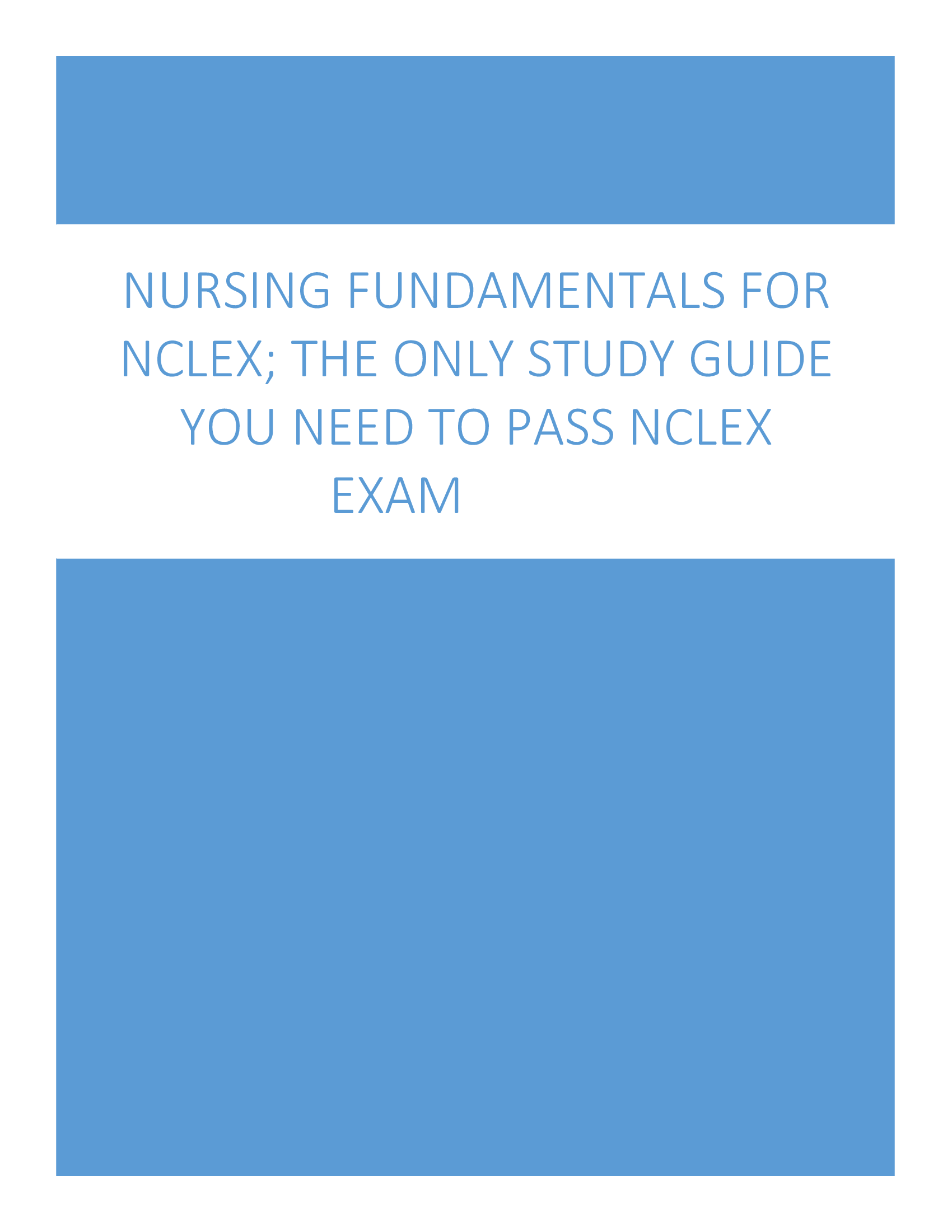
Nursing Fundamentals for NCLEX: The Only Study Guide You Need To PASS NCLEX Exam | 2026
View Document

Nursing Fundamentals...

  • Kaponga

    Kaponga

  • solution manual

Nursing Fundamentals for NCLEX; The Only Study Guide You Need to Pass NCLEX Exam, 2025, Comprehensiv...

15 USD

0

0

SEJPME II Module Test Bank: From Module 3 to 22 with Verified Answers Latest (2022)
View Document

SEJPME II Module Tes...

  • Kaponga

    Kaponga

  • solution manual

SEJPME II Module Test Bank: From Module 3 to 22 with Verified Answers Latest (2022)...

15 USD

0

0

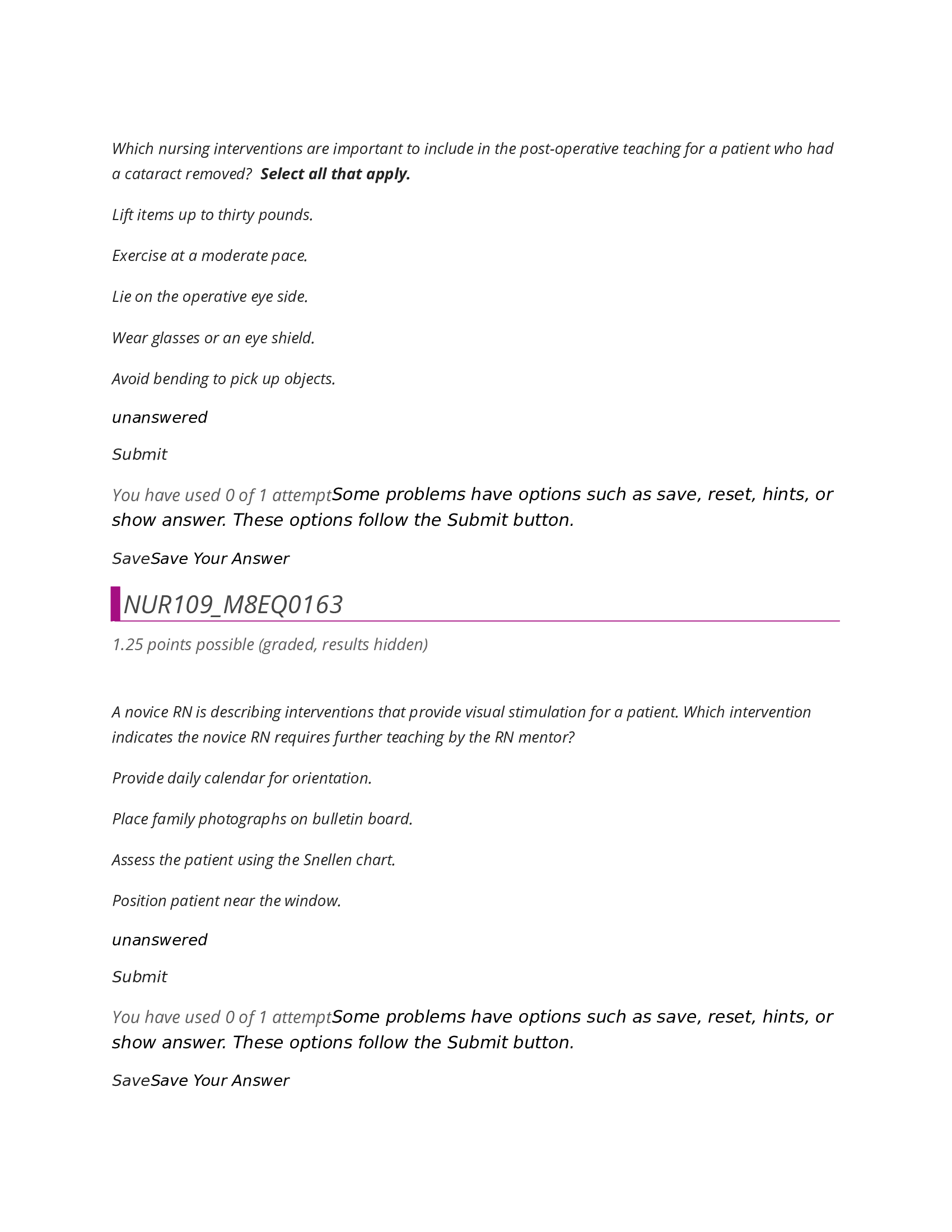
NUR109 EXAM 2 QUESTIONS WITH ANSWERS (Excelsior School 2022)
View Document

NUR109 EXAM 2 QUESTI...

  • Kaponga

    Kaponga

  • solution manual

NUR109 EXAM 2 QUESTIONS WITH ANSWERS (Excelsior School 2022)...

15 USD

0

0

Purchase

Download link will be sent to this email immediately after purchase.

IMPORTANT LINKS

  • How To Upload Class Notes
  • Selling Tips
  • Passing Grades's Study Materials
  • Scholarships for International Students 2025

POPULAR CATEGORIES

  • Law
  • Accounting
  • English
  • Psychology
  • Business
  • Nursing
  • Computer Science
  • General

View Document

  • Blog
  • Contact
  • Delivery Policy
  • Latest Scholarships Around the World
  • How to Pass Bar Exams: Passing Grades’ Strategies
  • How to Study and Pass the CPA Exam
  • All Test Banks
  • Faq
  • Copyright Claims
  • Privacy Policy
  • Terms of Use

KNOWLEDGE BASE

  • How to Write A+ Grade Good Research Paper
  • How to Manage Stress During Exam Period
  • Best Time to Study
  • How to Pass NCLEX-RN Exam
  • How To Effectively Utilize Test Banks
  • Popular Shadow Health Exam Assessments
  • Popular HESI Case Studies
  • How to Prepare for a Nursing Career
  • The Importance Of Summaries in Exam Revisvion

© 2026 Pasing Grades. All rights reserved.