Pasing Grades
  • Start Selling
  • Blog
  • Contact
  • 0

    Your cart is empty!

English

  • English
  • Spanish
  • Arabic
Create Account Sign In
  • Library
    • New Prep Guides
    • Featured Prep Guides
    • Free Exam Prep Guides
    • Best sellers
  • General
  • Nursing
    • Research Paper
    • Case Study
    • Discussion Post
    • Assignment
    • Exam
    • Practice Questions and Answers
    • Test Bank
    • solutions manual
  • Accounting
    • Case Study
    • Thesis
    • Study Guide
    • Summary
    • Research Paper
    • test bank
  • English
    • Creative Writing
    • Research Paper
    • Summary
    • Rhetorics
    • Literature
    • Journal
    • Exam
    • Grammar
    • Discussion Post
    • Essay
  • Psychology
    • Hesi
    • Presentation
    • Essay
    • Summary
    • Study Guide
    • Essay
    • Solution Manual
    • Final Exam Review
    • Class Notes
    • test bank
  • Business
    • Lecture Notes
    • Solution Manual
    • Presentation
    • Business Plan
    • Class Notes
    • Experiment
    • Summary
    • Practice Questions
    • Study Guide
    • Case Study
    • test bank
    • Exam
  • More
    • Computer Science
    • Economics
    • Statistics
    • Engineering
    • Biology
    • Religious Studies
    • Physics
    • Chemistry
    • Mathematics
    • History
    • Sociology
    • Science
    • Philosophy
    • Law
  • Pages
    • About Us
    • Selling Tips
    • Delivery Policy
    • Faq
    • Privacy Policy
  • Flash Sale
  • Home
  • Pediatric Advanced Life Support (PALS) Certification Course Exam Answers 2023

Pediatric Advanced Life Support (PALS) Certification Course Exam Answers 2023

Preview page 1 Preview page 2 Preview page 3
Add To Favorites

Share this item Share this item

  • Item Details
  • Comments (0)
  • Reviews (0)
  • Contact Seller
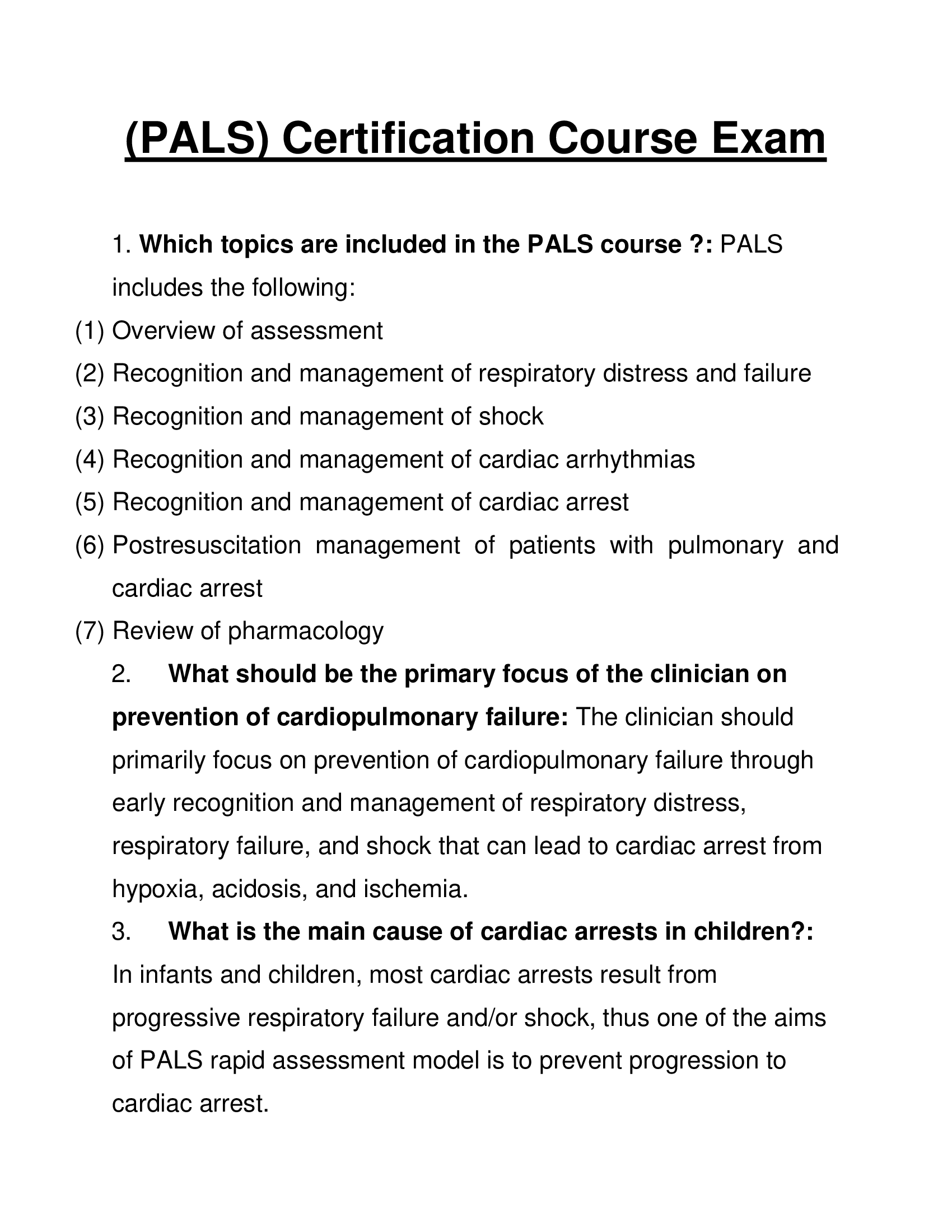
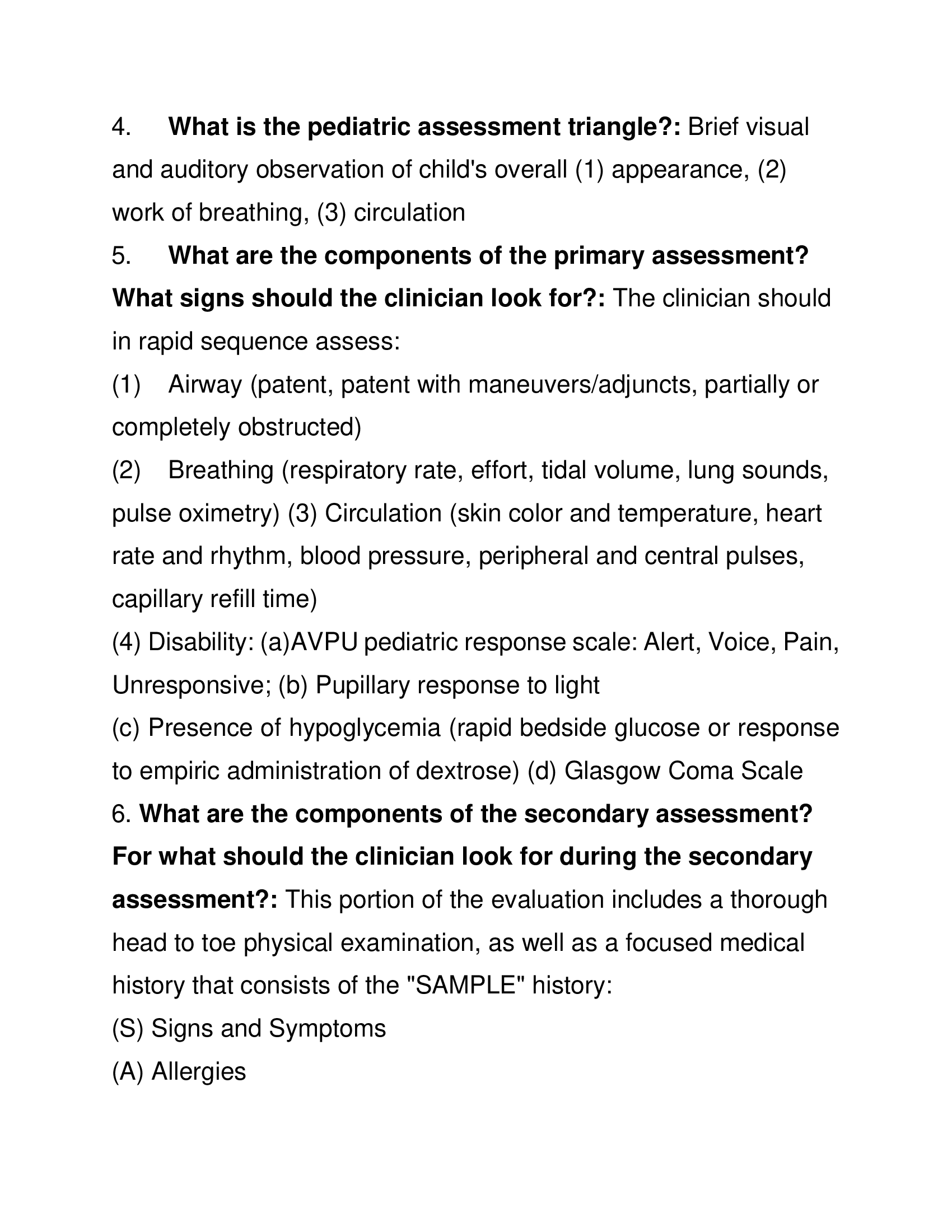
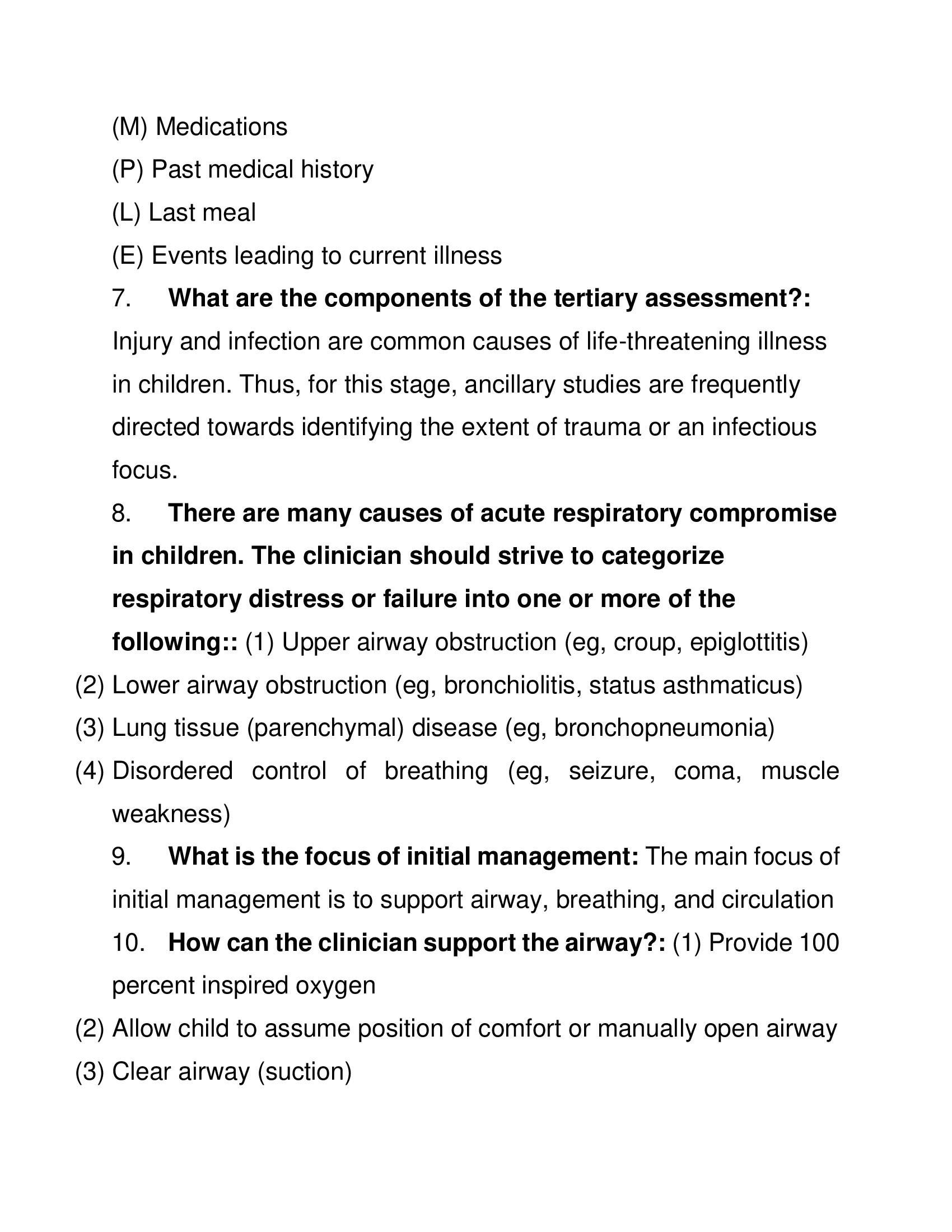
(PALS) Certification Course Exam 1. Which topics are included in the PALS course ?: PALS includes the following: (1) Overview of assessment (2) Recognition and management of respiratory distress and failure (3) Recognition and management of shock (4) Recognition and management of cardiac arrhythmias (5) Recognition and management of cardiac arrest (6) Postresuscitation management of patients with pulmonary and cardiac arrest (7) Review of pharmacology 2. What should be the primary focus of the clinician on prevention of cardiopulmonary failure: The clinician should primarily focus on prevention of cardiopulmonary failure through early recognition and management of respiratory distress, respiratory failure, and shock that can lead to cardiac arrest from hypoxia, acidosis, and ischemia. 3. What is the main cause of cardiac arrests in children?: In infants and children, most cardiac arrests result from progressive respiratory failure and/or shock, thus one of the aims of PALS rapid assessment model is to prevent progression to cardiac arrest. 4. What is the pediatric assessment triangle?: Brief visual and auditory observation of child's overall (1) appearance, (2) work of breathing, (3) circulation 5. What are the components of the primary assessment? What signs should the clinician look for?: The clinician should in rapid sequence assess: (1) Airway (patent, patent with maneuvers/adjuncts, partially or completely obstructed) (2) Breathing (respiratory rate, effort, tidal volume, lung sounds, pulse oximetry) (3) Circulation (skin color and temperature, heart rate and rhythm, blood pressure, peripheral and central pulses, capillary refill time) (4) Disability: (a)AVPU pediatric response scale: Alert, Voice, Pain, Unresponsive; (b) Pupillary response to light (c) Presence of hypoglycemia (rapid bedside glucose or response to empiric administration of dextrose) (d) Glasgow Coma Scale 6. What are the components of the secondary assessment? For what should the clinician look for during the secondary assessment?: This portion of the evaluation includes a thorough head to toe physical examination, as well as a focused medical history that consists of the "SAMPLE" history: (S) Signs and Symptoms (A) Allergies (M) Medications (P) Past medical history (L) Last meal (E) Events leading to current illness 7. What are the components of the tertiary assessment?: Injury and infection are common causes of life-threatening illness in children. Thus, for this stage, ancillary studies are frequently directed towards identifying the extent of trauma or an infectious focus. 8. There are many causes of acute respiratory compromise in children. The clinician should strive to categorize respiratory distress or failure into one or more of the following:: (1) Upper airway obstruction (eg, croup, epiglottitis) (2) Lower airway obstruction (eg, bronchiolitis, status asthmaticus) (3) Lung tissue (parenchymal) disease (eg, bronchopneumonia) (4) Disordered control of breathing (eg, seizure, coma, muscle weakness) 9. What is the focus of initial management: The main focus of initial management is to support airway, breathing, and circulation 10. How can the clinician support the airway?: (1) Provide 100 percent inspired oxygen (2) Allow child to assume position of comfort or manually open airway (3) Clear airway (suction) (4) Insert an airway adjunct if consciousness is impaired (eg, nasopharyngeal airway or, if gag reflex absent, oropharyngeal airway) 11. How can the clinician support breathing?: For supporting breathing, the clinician should: (1) Assist ventilation manually in patients not responding to basic airway maneuvers or with inadequate or ineffective respiratory effort (2) Monitor oxygenation by pulse oximetry (3) Monitor ventilation by end-tidal carbon dioxide (EtCO2) if available (4) Administer medications as needed (eg, albuterol, epinephrine) 12. T of F: in preparation for intubation, the patient should receive 100 percent oxygen?: True! In preparation for intubation, the patient should receive 100 percent oxygen via a highconcentration mask, or if indicated, positive pressure ventilation with a bag-valve-mask to preoxygenate and improve ventilation. 13. What should be done if the patient cannot maintain their airway, oxygenation, or ventilatory requirements?: In such cases, the patient should undergo placement of an artificial airway, usually via endotracheal intubation and less commonly with a laryngeal mask airway or alternative device. 14. T or F some patients with upper airway obstruction and/or respiratory failure may respond to noninvasive ventilation if airway reflexes are preserved.: True! Certain populations of patients with upper airway obstruction and/or respiratory failure may respond to noninvasive ventilation (CPAP or BiPAP) if airway reflexes are preserved. 15. When a patient appears to be in shock, what should be the goal of the next action taken?: The goal should be to recognize and categorize the type of shock in order to prioritize treatment options 16. Why is the early management of shock so critical for patient survival?: Early treatment of shock may prevent the progression to cardiopulmonary failure 17. In children, does shock present with low or high cardiac output?: Shock in children usually presents with low cardiac output, but some patients may have high cardiac output, such as with sepsis or severe anemia. 18. How can shock be classified?: Shock severity is usually classified based on its effect on systolic blood pressure at presentation (i.e. compensated vs. decompensated) or based on its pathophysiology (i.e hypovolemic; distributive; cardiogenic; obstructive shock) 19. What is the meaning of "compensated" shock, when does it occur?: Compensated shock occurs when compensatory mechanisms (including tachycardia, increased systemic vascular

Contact the Seller

Please Sign In to contact this seller.


  • 👎  Report Copyright Violation

Frequently Asked Questions

What Do I Get When I Buy This Study Material?

+

When you buy a study material on Passing Grades, an instant download link will be sent directly to your email, giving you access to the file anytime after payment is completed.

Is Passing Grades a Trusted Platform?

+

Yes, Passing Grades is a reputable students’ marketplace with a secure payment system and reliable customer support. You can trust us to ensure a safe and seamless transaction experience.

Will I Be Stuck with a Subscription?

+

No, all purchases on Passing Grades are one-time transactions. You only pay for the notes you choose to buy, with no subscriptions or hidden fees attached.

Who Am I Buying These Study Materials From?

+

Passing Grades is a marketplace, which means you are purchasing the document from an individual vendor, not directly from us. We facilitate the payment and delivery process between you and the vendor.

Does Passing Grades Offer Free Study Materials?

+

Yes, sellers on Passing Grades have uploaded numerous free test banks, exams, practice questions, and class notes that can be downloaded at no cost.


Pasinggrades - Quality Study Materials

USD 8

    • Quality checked by Pasing Grades
    • 100% satisfaction guarantee
    • Seller: Pasing-Grades
Buy PDF $8

Seller Information

Pasing-Grades

Member since May 2021

  • icon
View Profile
  • total sales

    0
  • Favourites

    0
  • Comments

    0
    ( 0 Ratings )

Item Information

  • Uploaded

    14 October 2023

  • Updated

    01 October 2025

  • Category

    General

  • Item Type

    exam

  • Tags

    Pediatric Advanced Life Support (PALS) Certification Course Exam Answers 2023

Related Exam Prep Guides by Pasing-Grades

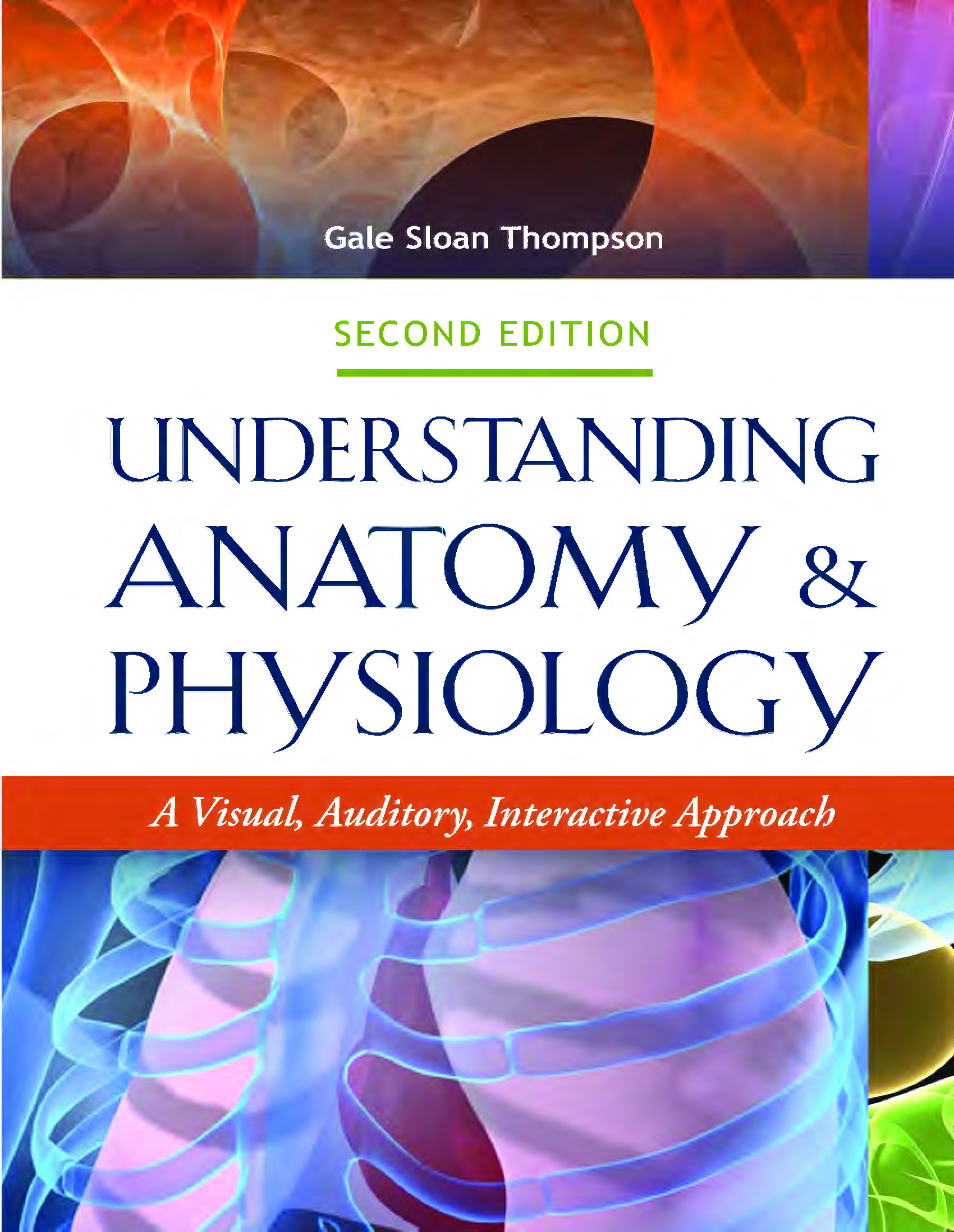
Understanding Anatomy and Physiology; A Visual, Auditory, Interactive Approach by Gale. S. Thompson
View Document

Understanding Anatom...

  • Pasing-Grades

    Pasing-Grades

  • exam

Third Edition: Understanding Anatomy and Physiology; A Visual, Auditory, Interactive Approach by Gal...

8 USD

0

0

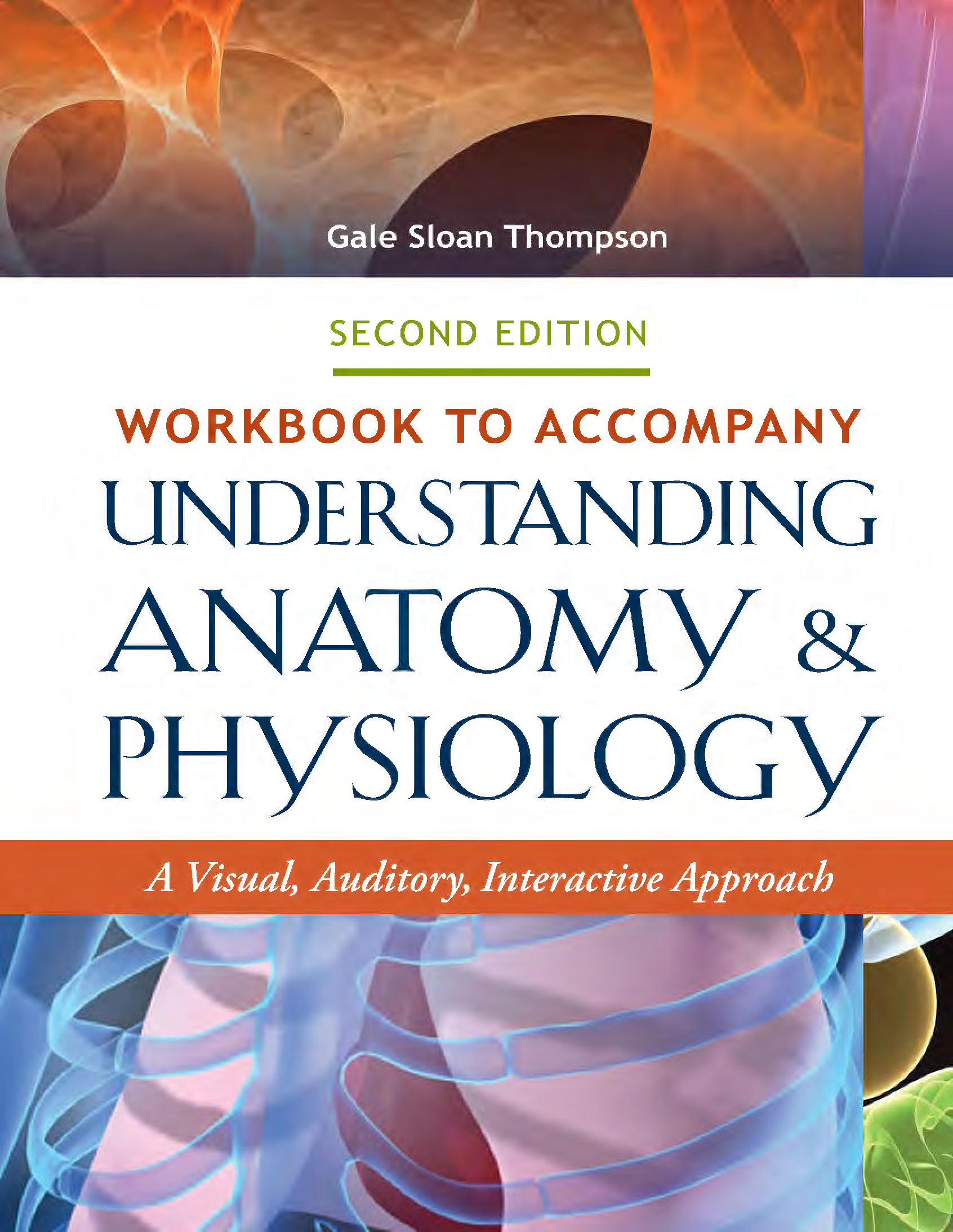
Workbook to Accompany Understanding Anatomy & Physiology: A Visual, Auditory, Interactive Approach by Gale Sloan Thompson RN
View Document

Workbook to Accompan...

  • Pasing-Grades

    Pasing-Grades

  • exam

Workbook to Accompany Understanding Anatomy & Physiology: A Visual, Auditory, Interactive Approach b...

8 USD

0

0

Test Bank for Fundamentals of Nursing 10th Edition by Taylor
View Document

Test Bank for Fundam...

  • Pasing-Grades

    Pasing-Grades

  • exam

Get now the Test Bank for Fundamentals of Nursing 10th Edition by Taylor. Instant PDF Download....

8 USD

0

0

Purchase

Download link will be sent to this email immediately after purchase.

IMPORTANT LINKS

  • How To Upload Class Notes
  • Selling Tips
  • Passing Grades's Study Materials
  • Scholarships for International Students 2026

POPULAR CATEGORIES

  • Law
  • Accounting
  • English
  • Psychology
  • Business
  • Nursing
  • Computer Science
  • General

View Document

  • Blog
  • Contact
  • Delivery Policy
  • Latest Scholarships Around the World
  • How to Pass Bar Exams: Passing Grades’ Strategies
  • How to Study and Pass the CPA Exam
  • All Test Banks
  • Faq
  • Copyright Claims
  • Privacy Policy
  • Terms of Use

KNOWLEDGE BASE

  • How to Write A+ Grade Good Research Paper
  • How to Manage Stress During Exam Period
  • Best Time to Study
  • How to Pass NCLEX-RN Exam
  • How To Effectively Utilize Test Banks
  • Popular Shadow Health Exam Assessments
  • Popular HESI Case Studies
  • How to Prepare for a Nursing Career
  • The Importance Of Summaries in Exam Revisvion

© 2026 Pasing Grades. All rights reserved.