Pasing Grades
  • Start Selling
  • Blog
  • Contact
  • 0

    Your cart is empty!

English

  • English
  • Spanish
  • Arabic
Create Account Sign In
  • Library
    • New Prep Guides
    • Featured Prep Guides
    • Free Exam Prep Guides
    • Best sellers
  • General
  • Nursing
    • Research Paper
    • Case Study
    • Discussion Post
    • Assignment
    • Exam
    • Practice Questions and Answers
    • Test Bank
    • solutions manual
  • Accounting
    • Case Study
    • Thesis
    • Study Guide
    • Summary
    • Research Paper
    • test bank
  • English
    • Creative Writing
    • Research Paper
    • Summary
    • Rhetorics
    • Literature
    • Journal
    • Exam
    • Grammar
    • Discussion Post
    • Essay
  • Psychology
    • Hesi
    • Presentation
    • Essay
    • Summary
    • Study Guide
    • Essay
    • Solution Manual
    • Final Exam Review
    • Class Notes
    • test bank
  • Business
    • Lecture Notes
    • Solution Manual
    • Presentation
    • Business Plan
    • Class Notes
    • Experiment
    • Summary
    • Practice Questions
    • Study Guide
    • Case Study
    • test bank
    • Exam
  • More
    • Computer Science
    • Economics
    • Statistics
    • Engineering
    • Biology
    • Religious Studies
    • Physics
    • Chemistry
    • Mathematics
    • History
    • Sociology
    • Science
    • Philosophy
    • Law
  • Pages
    • About Us
    • Selling Tips
    • Delivery Policy
    • Faq
    • Privacy Policy
  • Flash Sale
  • Home
  • PATHO EXAM 4 WE ARE OUT THE DOOR Q&A 2021

PATHO EXAM 4 WE ARE OUT THE DOOR Q&A 2021

Preview page 1 Preview page 2 Preview page 3
Add To Favorites

Share this item Share this item

  • Item Details
  • Comments (0)
  • Reviews (0)
  • Contact Seller

PATHO EXAM 4 WE ARE OUT THE DOOR Q&A 2021

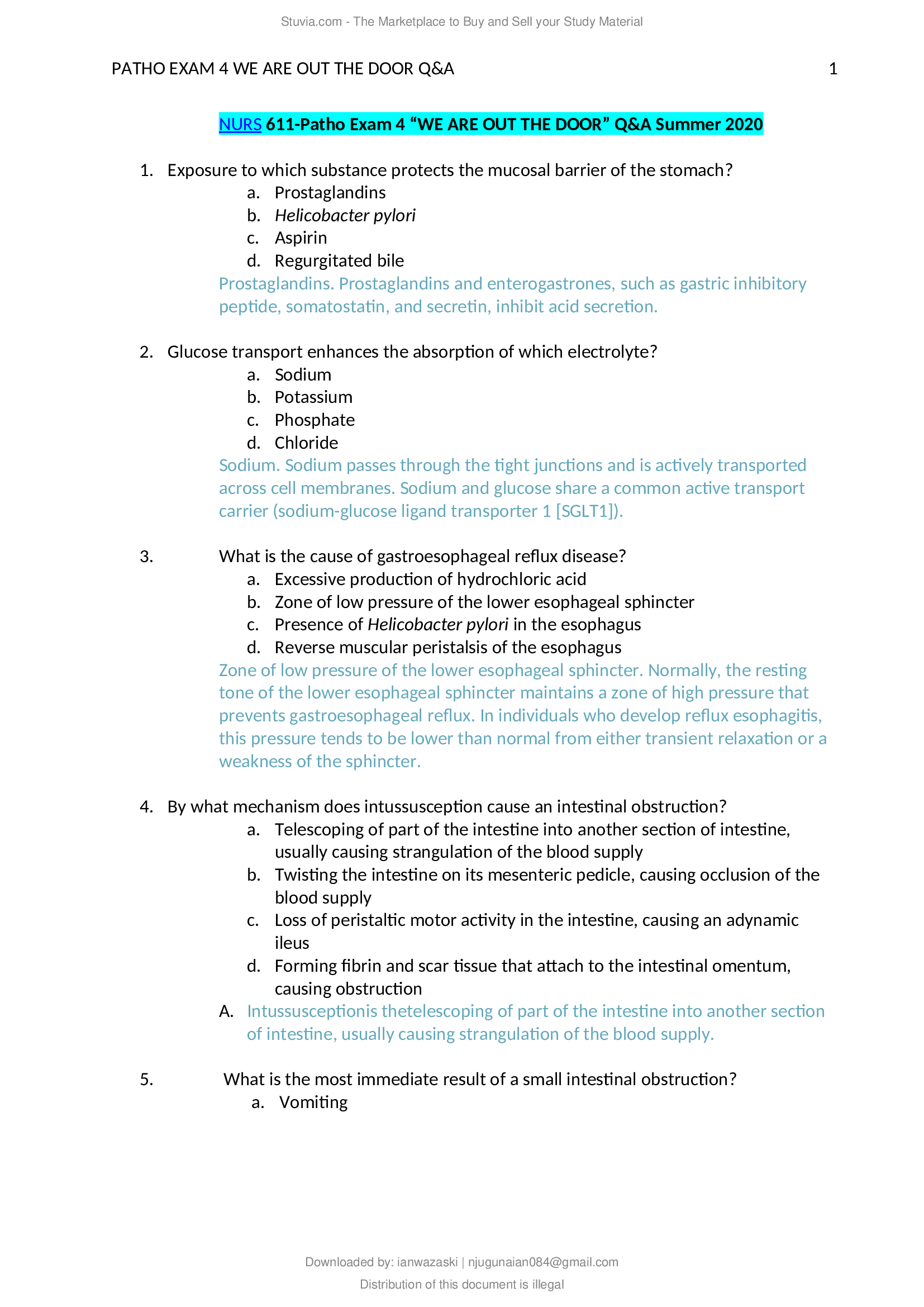
NURS 611-Patho Exam 4 “WE ARE OUT THE DOOR” Q&A Summer 2020

1.                              Exposure to which substance protects the mucosal barrier of the stomach?

a.      Prostaglandins

b.      Helicobacter pylori

c.       Aspirin

d.      Regurgitated bile

Prostaglandins. Prostaglandins and enterogastrones, such as gastric inhibitory peptide, somatostatin, and secretin, inhibit acid secretion.

2.                              Glucose transport enhances the absorption of which electrolyte?

a.      Sodium

b.      Potassium

c.       Phosphate

d.      Chloride

Sodium. Sodium passes through the tight junctions and is actively transported across cell membranes. Sodium and glucose share a common active transport carrier (sodium-glucose ligand transporter 1 [SGLT1]).

3.                              What is the cause of gastroesophageal reflux disease?

a.      Excessive production of hydrochloric acid

b.      Zone of low pressure of the lower esophageal sphincter

c.       Presence of Helicobacter pylori in the esophagus

d.      Reverse muscular peristalsis of the esophagus

Zone of low pressure of the lower esophageal sphincter. Normally, the resting tone of the lower esophageal sphincter maintains a zone of high pressure that prevents gastroesophageal reflux. In individuals who develop reflux esophagitis, this pressure tends to be lower than normal from either transient relaxation or a weakness of the sphincter.

4.                              By what mechanism does intussusception cause an intestinal obstruction?

a.      Telescoping of part of the intestine into another section of intestine, usually causing strangulation of the blood supply

b.      Twisting the intestine on its mesenteric pedicle, causing occlusion of the blood supply

c.       Loss of peristaltic motor activity in the intestine, causing an adynamic ileus

d.      Forming fibrin and scar tissue that attach to the intestinal omentum, causing obstruction

A. Intussusceptionis thetelescoping of part of the intestine into another section of intestine, usually causing strangulation of the blood supply.

5.                              What is the most immediate result of a small intestinal obstruction?

a.      Vomiting

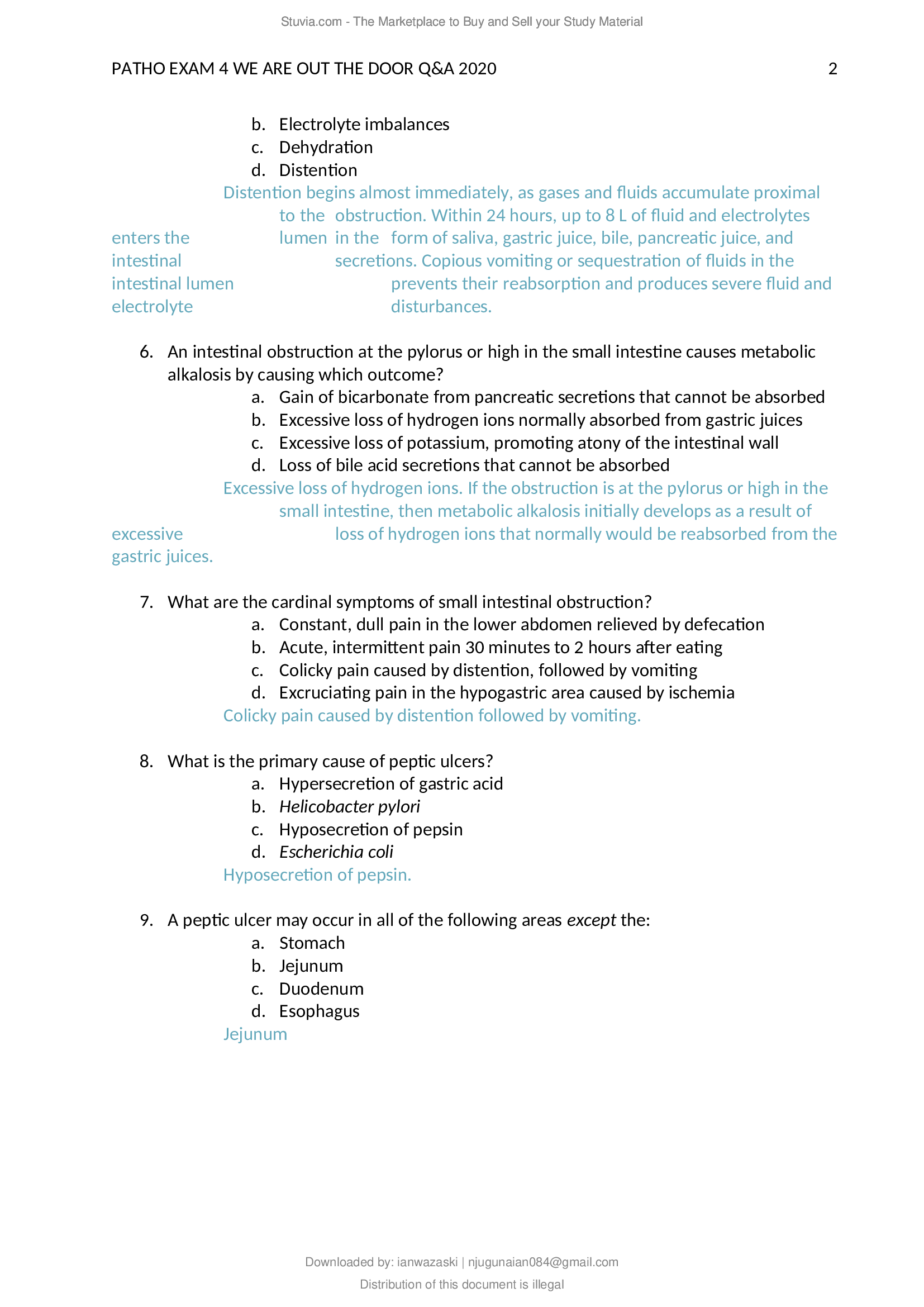
b.      Electrolyte imbalances

c.       Dehydration

d.      Distention

Distention begins almost immediately, as gases and fluids accumulate proximal to the obstruction. Within 24 hours, up to 8 L of fluid and electrolytes

enters the        lumen in the form of saliva, gastric juice, bile, pancreatic juice, and intestinal      secretions. Copious vomiting or sequestration of fluids in the

intestinal lumen          prevents their reabsorption and produces severe fluid and electrolyte             disturbances.

6.                              An intestinal obstruction at the pylorus or high in the small intestine causes metabolic alkalosis by causing which outcome?

a.      Gain of bicarbonate from pancreatic secretions that cannot be absorbed

b.      Excessive loss of hydrogen ions normally absorbed from gastric juices

c.       Excessive loss of potassium, promoting atony of the intestinal wall

d.      Loss of bile acid secretions that cannot be absorbed

Excessive loss of hydrogen ions. If the obstruction is at the pylorus or high in the small intestine, then metabolic alkalosis initially develops as a result of

excessive         loss of hydrogen ions that normally would be reabsorbed from the gastric juices.

7.                              What are the cardinal symptoms of small intestinal obstruction?

a.                   Constant, dull pain in the lower abdomen relieved by defecation

b.                   Acute, intermittent pain 30 minutes to 2 hours after eating

c.                   Colicky pain caused by distention, followed by vomiting

d.                   Excruciating pain in the hypogastric area caused by ischemia Colicky pain caused by distention followed by vomiting.

8.                              What is the primary cause of peptic ulcers?

a.      Hypersecretion of gastric acid

b.      Helicobacter pylori

c.       Hyposecretion of pepsin

d.      Escherichia coli

Hyposecretion of pepsin.

9.                              A peptic ulcer may occur in all of the following areas except the:

a.      Stomach

b.      Jejunum

c.       Duodenum

d.      Esophagus

Jejunum

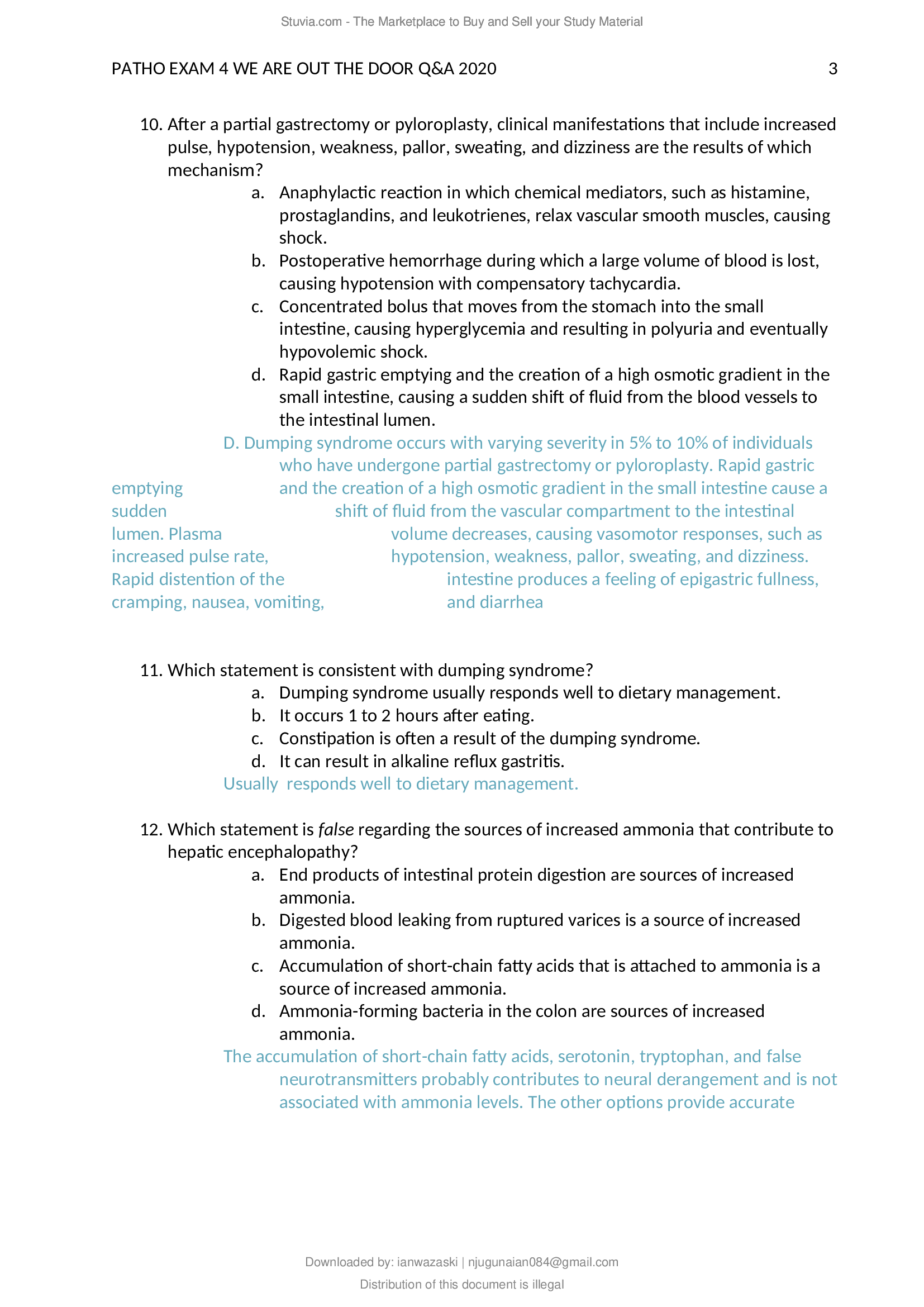
10.                          After a partial gastrectomy or pyloroplasty, clinical manifestations that include increased pulse, hypotension, weakness, pallor, sweating, and dizziness are the results of which mechanism?

a.      Anaphylactic reaction in which chemical mediators, such as histamine, prostaglandins, and leukotrienes, relax vascular smooth muscles, causing shock.

b.      Postoperative hemorrhage during which a large volume of blood is lost, causing hypotension with compensatory tachycardia.

c.       Concentrated bolus that moves from the stomach into the small intestine, causing hyperglycemia and resulting in polyuria and eventually hypovolemic shock.

d.      Rapid gastric emptying and the creation of a high osmotic gradient in the small intestine, causing a sudden shift of fluid from the blood vessels to the intestinal lumen.

D. Dumping syndrome occurs with varying severity in 5% to 10% of individuals who have undergone partial gastrectomy or pyloroplasty. Rapid gastric

emptying         and the creation of a high osmotic gradient in the small intestine cause a sudden             shift of fluid from the vascular compartment to the intestinal lumen. Plasma    volume decreases, causing vasomotor responses, such as increased pulse rate,             hypotension, weakness, pallor, sweating, and dizziness. Rapid distention of the       intestine produces a feeling of epigastric fullness, cramping, nausea, vomiting,         and diarrhea

11.                          Which statement is consistent with dumping syndrome?

a.      Dumping syndrome usually responds well to dietary management.

b.      It occurs 1 to 2 hours after eating.

c.       Constipation is often a result of the dumping syndrome.

d.      It can result in alkaline reflux gastritis.

Usually  responds well to dietary management.

12.                          Which statement is false regarding the sources of increased ammonia that contribute to hepatic encephalopathy?

a.      End products of intestinal protein digestion are sources of increased ammonia.

b.      Digested blood leaking from ruptured varices is a source of increased ammonia.

c.       Accumulation of short-chain fatty acids that is attached to ammonia is a source of increased ammonia.

d.      Ammonia-forming bacteria in the colon are sources of increased ammonia.

The accumulation of short-chain fatty acids, serotonin, tryptophan, and false neurotransmitters probably contributes to neural derangement and is not associated with ammonia levels. The other options provide accurate

information     regarding how the sources of ammonia contribute to hepatic encephalopathy.

13.                          Which statement is false regarding the pathophysiologic process of acute pancreatitis?

a.      Bile duct or pancreatic duct obstruction blocks the outflow of pancreatic digestive enzymes.

b.      Acute pancreatitis can also result from direct cellular injury from drugs or viral infection.

c.       Acute pancreatitis is an autoimmune disease in which immunoglobulin G (IgG) coats the pancreatic acinar cells; consequently, the pancreatic enzymes destroy the cells.

d.      Acute pancreatitis is usually mild and spontaneously resolves.

The false answer is C. The backup of pancreatic secretions and the activation and release of enzymes (activated trypsin activates chymotrypsin, lipase, and elastase) within the pancreatic acinar cells cause acute pancreatitis, an obstructive disease. The activated enzymes cause autodigestion (e.g.,             proteolysis, lipolysis) of the pancreatic cells and tissues, resulting in           inflammation. Acute pancreatitisis usually a mild disease and spontaneously       resolves; however, approximately 20% of those with the disease develop a     severe acute pancreatitis that requires hospitalization. Pancreatitis develops             because of a blockage to the outflow of pancreatic digestive enzymes caused by bile duct or pancreatic duct obstruction (e.g., gallstones). Acute pancreatitis can          also result from direct cellular injury from drugs or viral infection.

14.                          Obesity is defined as a body mass index (BMI) greater than what measurement?

a.      22

b.      28

c.       25

d.      30

Obesity is an energy imbalance, with caloric intake exceeding energy expenditure, and is defined as a BMI greater than 30.

15.                          Which are the early (prodromal) clinical manifestations of hepatitis? (Select all that apply.)

a.      Fatigue

b.      Vomiting

c.       Itching

d.      Splenomegaly

e.      Hyperalgia

A, B, E. The prodromal (preicteric) phase of hepatitis begins approximately 2 weeks after exposure and ends with the appearance of jaundice. Fatigue, anorexia, malaise, nausea, vomiting, headache, hyperalgia, cough,

and low-grade             fever are prodromal symptoms that precede the onset of jaundice.

16.                          Ulcerative colitis: Inflammation begins at the base of the crypts of Lieberkühn in the large intestine, primarily the left colon, with infiltration and release of inflammatory cytokines from neutrophils, lymphocytes, plasma cells, macrophages, eosinophils, and mast cells.

17.                          Crohn disease: In Crohn disease, elevations in IgG are associated with the severity of the disease.

18.                          Kidney stones in the upper part of the ureter would produce pain referred to which anatomical area?

a.      Vulva or penis

b.      Thighs

c.       Umbilicus

d.      Lower abdomen

Kidney stones in the upper part of the ureter would produce pain in the umbilicus. Sensory innervation for the upper part of the ureter arises

from the                                  tenth thoracic nerve roots with referred pain to the umbilicus.

19.                          The glomerular filtration rate is directly related to which factor?

a.      Perfusion pressure in the glomerular capillaries

b.      Diffusion rate in the renal cortex

c.       Diffusion rate in the renal medulla

d.      Glomerular active transport

Perfusion pressure. The filtration of the plasma per unit of time is known as the glomerular filtration rate (GFR), which is directly related to only the

perfusion                                pressure in the glomerular capillaries.

20.                          When renin is released, it is capable of which action?

a.                   Inactivation of autoregulation

b.                   Direct activation of angiotensin II

c.                   Direct release of antidiuretic hormone (ADH)

d.                   Formation of angiotensin I Formation of angiotensin I.

21.                          How high does the plasma glucose have to be before the threshold for glucose is achieved?

a.      126 mg/dl

b.      180 mg/dl

c.       150 mg/dl

d.      200 mg/dl

When the plasma glucose reaches 180 mg/dl, as occurs in the individual with uncontrolled diabetes mellitus, the threshold for glucose is achieved.

22.                          What is the end-product of protein metabolism that is excreted in urine?

a.                   Glucose

b.                   Bile

c.                   Ketones

d.                   Urea Urea

23.                          What provides the best estimate of the functioning of renal tissue?

a.                   Glomerular filtration rate

b.                   Hourly urine output

c.                   Serum blood urea nitrogen and creatinine

d.                   The specific gravity of the solute concentration of the urine

GFR

24.                          Which renal change is found in older adults?

a.                   Sharp decline in glomerular filtration rate

b.                   Sharp decline in renal blood flow

c.                   Decrease in the number of nephrons

d.                   Decrease in urine output

Decrease in the number of nephrons.

25.                          Compared with a younger individual, how is the specific gravity of urine in older adults affected?

a.                   Specific gravity of urine in older adults is increased.

b.                   Specific gravity of urine in older adults is considered high normal.

c.                   Specific gravity of urine in older adults is considered low normal.

d.                   Specific gravity of urine in older adults is decreased. SG in older adults is considered low normal.

26.                          How does progressive nephrons injury affect angiotensin II activity?

a.                   Angiotensin II activity is decreased.

b.                   It is elevated.

c.                   Angiotensin II activity is totally suppressed.

d.                   It is not affected.

It’s elevated. Angiotensin II activity is elevated with progressive nephron injury.

27.                          Which mineral accounts for the most common type of renal stone?

a.                   Magnesium-ammonium-phosphate

b.                   Calcium oxalate

c.                   Uric acid

d.                   Magnesium phosphate

Calcium stones(calcium phosphate or calcium oxalate) account for 70% to 80% of all stones requiring treatment.

28.                          Regarding the formation of renal calculi, what function does pyrophosphate, potassium citrate, and magnesium perform?

a.      They inhibit crystal growth.

b.      Pyrophosphate, potassium citrate, and magnesium stimulate the supersaturation of salt.

c.       They facilitate the precipitation of salts from a liquid to a solid state.

d.      Pyrophosphate, potassium citrate, and magnesium enhance crystallization of salt crystals to form stones. They inhibit crystal growth.

29.                          What is the most common cause of uncomplicated urinary tract infections?

a.      Staphylococcus

b.      Proteus

c.       Klebsiella

d.      Escherichia coli

E. Coli

30.                          Which differentiating sign is required to make the diagnosis of pyelonephritis from that of cystitis?

a.      Difficulty starting the stream of urine

b.      Spasmodic pain that radiates to the groin

c.       Increased glomerular filtration rate

d.      Urinalysis confirmation of white blood cell casts

UA of WBC casts. Clinical assessment, alone, is difficult to differentiate the symptoms of cystitis from those of pyelonephritis. Urine culture,

urinalysis, and             clinical signs and symptoms establish the specific diagnosis. White blood cell        casts indicate pyelonephritis, but they are not always present in the urine.

31.                          Which clinical manifestations of a urinary tract infection may be demonstrated in an 85year-old individual?

a.      Confusion and poorly localized abdominal discomfort

b.      Dysuria, frequency, and suprapubic pain

c.       Hematuria and flank pain

d.      Pyuria, urgency, and frequency

Contact the Seller

Please Sign In to contact this seller.


  • 👎  Report Copyright Violation

Frequently Asked Questions

What Do I Get When I Buy This Study Material?

+

When you buy a study material on Passing Grades, an instant download link will be sent directly to your email, giving you access to the file anytime after payment is completed.

Is Passing Grades a Trusted Platform?

+

Yes, Passing Grades is a reputable students’ marketplace with a secure payment system and reliable customer support. You can trust us to ensure a safe and seamless transaction experience.

Will I Be Stuck with a Subscription?

+

No, all purchases on Passing Grades are one-time transactions. You only pay for the notes you choose to buy, with no subscriptions or hidden fees attached.

Who Am I Buying These Study Materials From?

+

Passing Grades is a marketplace, which means you are purchasing the document from an individual vendor, not directly from us. We facilitate the payment and delivery process between you and the vendor.

Does Passing Grades Offer Free Study Materials?

+

Yes, sellers on Passing Grades have uploaded numerous free test banks, exams, practice questions, and class notes that can be downloaded at no cost.

Pasinggrades - Quality Study Materials

USD 7

    • Quality checked by Pasing Grades
    • 100% satisfaction guarantee
    • Seller: GradeA
Buy PDF $7

Seller Information

GradeA

Member since April 2021

  • icon
  • icon
  • icon
View Profile
  • total sales

    0
  • Favourites

    0
  • Comments

    0
    ( 0 Ratings )

Item Information

  • Uploaded

    24 October 2021

  • Updated

    24 October 2025

  • Category

    Nursing

  • Item Type

    exam

  • Tags

    PATHO EXAM 4

Related Exam Prep Guides by GradeA

Test Bank for Fundamentals of Corporate Finance 12th Edition By Stephen Ross and Randolph Westerfield and Bradford Jordan
View Document

Test Bank for Fundam...

  • GradeA

    GradeA

  • exam

Test Bank for Fundamentals of Corporate Finance 12th Edition By Stephen Ross and Randolph Westerfiel...

7 USD

0

0

[SOLUTION MANUAL) Fundamentals of Corporate Finance 12th Edition By Stephen Ross and Randolph Westerfield and Bradford Jordan
View Document

[SOLUTION MANUAL) Fu...

  • GradeA

    GradeA

  • exam

[SOLUTION MANUAL) Fundamentals of Corporate Finance 12th Edition By Stephen Ross and Randolph Wester...

7 USD

0

0

QMI1500 Assignment 02 2021 AS PER UPDATED TUTORIAL LETTER
View Document

QMI1500 Assignment 0...

  • GradeA

    GradeA

  • exam

QMI1500 Assignment 02 2021 AS PER UPDATED TUTORIAL LETTER...

7 USD

0

0

Purchase

Download link will be sent to this email immediately after purchase.

IMPORTANT LINKS

  • How To Upload Class Notes
  • Selling Tips
  • Passing Grades's Study Materials
  • Scholarships for International Students 2025

POPULAR CATEGORIES

  • Law
  • Accounting
  • English
  • Psychology
  • Business
  • Nursing
  • Computer Science
  • General

View Document

  • Blog
  • Contact
  • Delivery Policy
  • Latest Scholarships Around the World
  • How to Pass Bar Exams: Passing Grades’ Strategies
  • How to Study and Pass the CPA Exam
  • All Test Banks
  • Faq
  • Copyright Claims
  • Privacy Policy
  • Terms of Use

KNOWLEDGE BASE

  • How to Write A+ Grade Good Research Paper
  • How to Manage Stress During Exam Period
  • Best Time to Study
  • How to Pass NCLEX-RN Exam
  • How To Effectively Utilize Test Banks
  • Popular Shadow Health Exam Assessments
  • Popular HESI Case Studies
  • How to Prepare for a Nursing Career
  • The Importance Of Summaries in Exam Revisvion

© 2026 Pasing Grades. All rights reserved.