Pasing Grades
  • Start Selling
  • Blog
  • Contact
  • 0

    Your cart is empty!

English

  • English
  • Spanish
  • Arabic
Create Account Sign In
  • Library
    • New Prep Guides
    • Featured Prep Guides
    • Free Exam Prep Guides
    • Best sellers
  • General
  • Nursing
    • Research Paper
    • Case Study
    • Discussion Post
    • Assignment
    • Exam
    • Practice Questions and Answers
    • Test Bank
    • solutions manual
  • Accounting
    • Case Study
    • Thesis
    • Study Guide
    • Summary
    • Research Paper
    • test bank
  • English
    • Creative Writing
    • Research Paper
    • Summary
    • Rhetorics
    • Literature
    • Journal
    • Exam
    • Grammar
    • Discussion Post
    • Essay
  • Psychology
    • Hesi
    • Presentation
    • Essay
    • Summary
    • Study Guide
    • Essay
    • Solution Manual
    • Final Exam Review
    • Class Notes
    • test bank
  • Business
    • Lecture Notes
    • Solution Manual
    • Presentation
    • Business Plan
    • Class Notes
    • Experiment
    • Summary
    • Practice Questions
    • Study Guide
    • Case Study
    • test bank
    • Exam
  • More
    • Computer Science
    • Economics
    • Statistics
    • Engineering
    • Biology
    • Religious Studies
    • Physics
    • Chemistry
    • Mathematics
    • History
    • Sociology
    • Science
    • Philosophy
    • Law
  • Pages
    • About Us
    • Selling Tips
    • Delivery Policy
    • Faq
    • Privacy Policy
  • Flash Sale
  • Home
  • NR 325 Med Surg ATI HESI Review

NR 325 Med Surg ATI HESI Review

Preview page 1 Preview page 2 Preview page 3
Add To Favorites

Share this item Share this item

  • Item Details
  • Comments (0)
  • Reviews (0)
  • Contact Seller

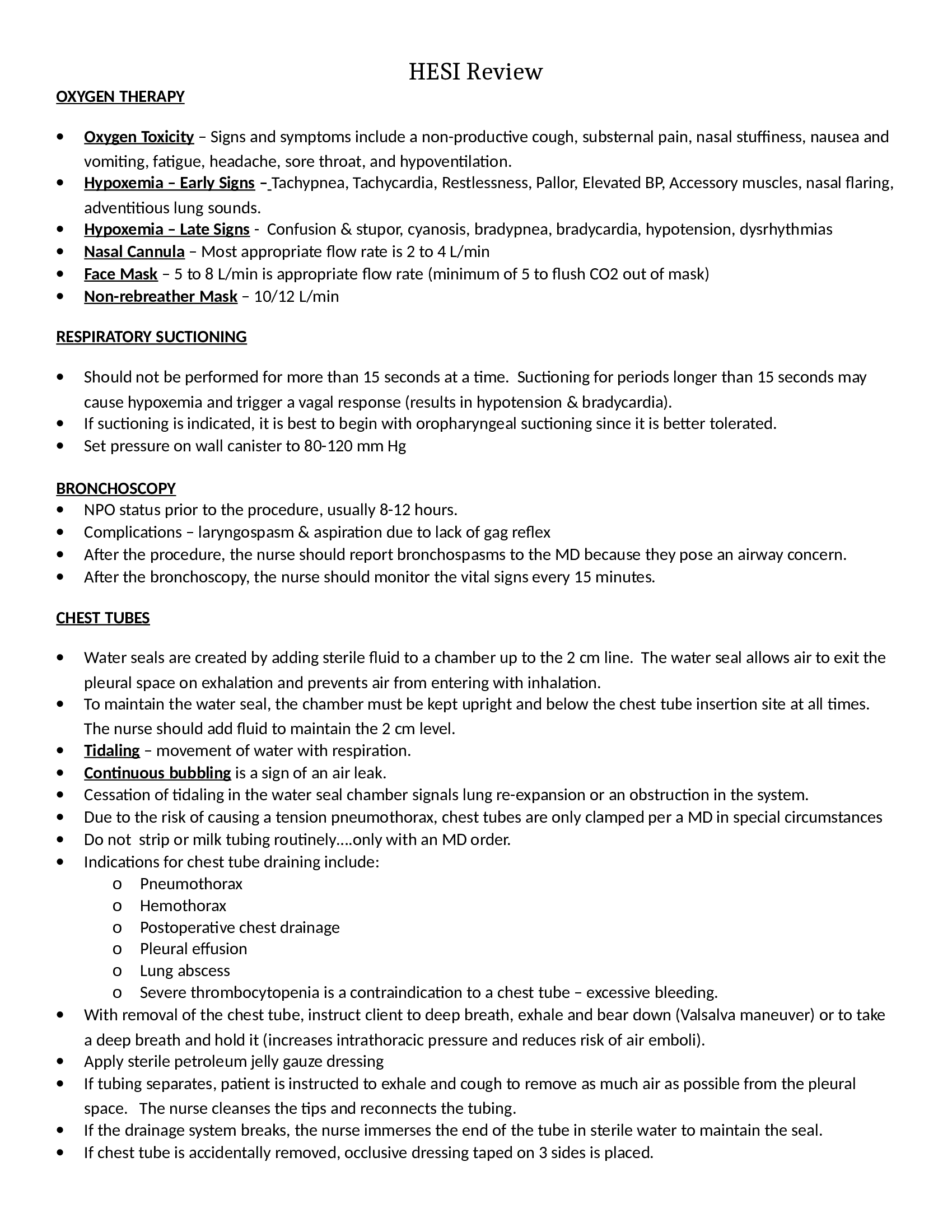
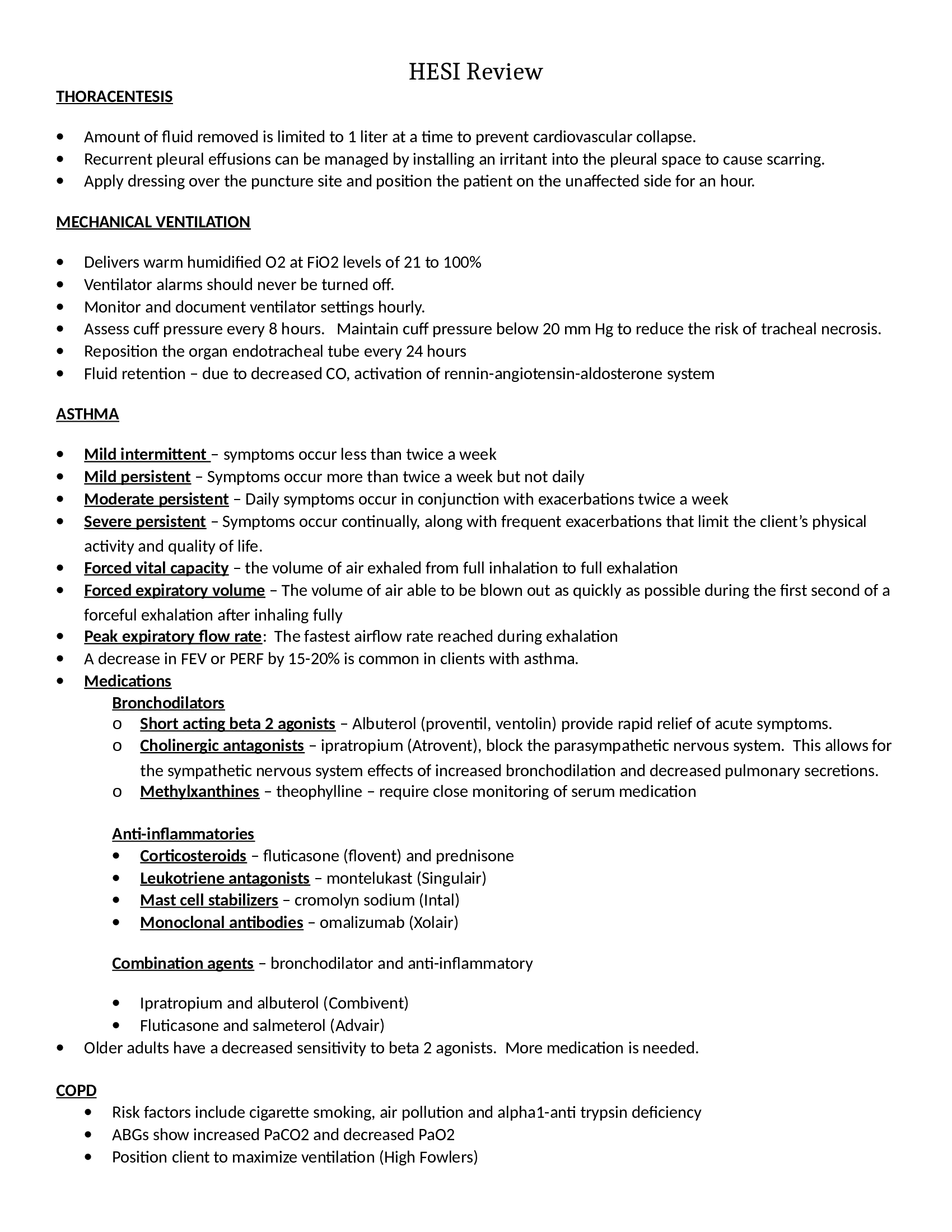
HESI Review OXYGEN THERAPY  Oxygen Toxicity – Signs and symptoms include a non-productive cough, substernal pain, nasal stuffiness, nausea and vomiting, fatigue, headache, sore throat, and hypoventilation.  Hypoxemia – Early Signs – Tachypnea, Tachycardia, Restlessness, Pallor, Elevated BP, Accessory muscles, nasal flaring, adventitious lung sounds.  Hypoxemia – Late Signs - Confusion & stupor, cyanosis, bradypnea, bradycardia, hypotension, dysrhythmias  Nasal Cannula – Most appropriate flow rate is 2 to 4 L/min  Face Mask – 5 to 8 L/min is appropriate flow rate (minimum of 5 to flush CO2 out of mask)  Non-rebreather Mask – 10/12 L/min RESPIRATORY SUCTIONING  Should not be performed for more than 15 seconds at a time. Suctioning for periods longer than 15 seconds may cause hypoxemia and trigger a vagal response (results in hypotension & bradycardia).  If suctioning is indicated, it is best to begin with oropharyngeal suctioning since it is better tolerated.  Set pressure on wall canister to 80-120 mm Hg BRONCHOSCOPY  NPO status prior to the procedure, usually 8-12 hours.  Complications – laryngospasm & aspiration due to lack of gag reflex  After the procedure, the nurse should report bronchospasms to the MD because they pose an airway concern.  After the bronchoscopy, the nurse should monitor the vital signs every 15 minutes. CHEST TUBES  Water seals are created by adding sterile fluid to a chamber up to the 2 cm line. The water seal allows air to exit the pleural space on exhalation and prevents air from entering with inhalation.  To maintain the water seal, the chamber must be kept upright and below the chest tube insertion site at all times. The nurse should add fluid to maintain the 2 cm level.  Tidaling – movement of water with respiration.  Continuous bubbling is a sign of an air leak.  Cessation of tidaling in the water seal chamber signals lung re-expansion or an obstruction in the system.  Due to the risk of causing a tension pneumothorax, chest tubes are only clamped per a MD in special circumstances  Do not strip or milk tubing routinely….only with an MD order.  Indications for chest tube draining include: o Pneumothorax o Hemothorax o Postoperative chest drainage o Pleural effusion o Lung abscess o Severe thrombocytopenia is a contraindication to a chest tube – excessive bleeding.  With removal of the chest tube, instruct client to deep breath, exhale and bear down (Valsalva maneuver) or to take a deep breath and hold it (increases intrathoracic pressure and reduces risk of air emboli).  Apply sterile petroleum jelly gauze dressing  If tubing separates, patient is instructed to exhale and cough to remove as much air as possible from the pleural space. The nurse cleanses the tips and reconnects the tubing.  If the drainage system breaks, the nurse immerses the end of the tube in sterile water to maintain the seal.  If chest tube is accidentally removed, occlusive dressing taped on 3 sides is placed. HESI Review THORACENTESIS  Amount of fluid removed is limited to 1 liter at a time to prevent cardiovascular collapse.  Recurrent pleural effusions can be managed by installing an irritant into the pleural space to cause scarring.  Apply dressing over the puncture site and position the patient on the unaffected side for an hour. MECHANICAL VENTILATION  Delivers warm humidified O2 at FiO2 levels of 21 to 100%  Ventilator alarms should never be turned off.  Monitor and document ventilator settings hourly.  Assess cuff pressure every 8 hours. Maintain cuff pressure below 20 mm Hg to reduce the risk of tracheal necrosis.  Reposition the organ endotracheal tube every 24 hours  Fluid retention – due to decreased CO, activation of rennin-angiotensin-aldosterone system ASTHMA  Mild intermittent – symptoms occur less than twice a week  Mild persistent – Symptoms occur more than twice a week but not daily  Moderate persistent – Daily symptoms occur in conjunction with exacerbations twice a week  Severe persistent – Symptoms occur continually, along with frequent exacerbations that limit the client’s physical activity and quality of life.  Forced vital capacity – the volume of air exhaled from full inhalation to full exhalation  Forced expiratory volume – The volume of air able to be blown out as quickly as possible during the first second of a forceful exhalation after inhaling fully  Peak expiratory flow rate: The fastest airflow rate reached during exhalation  A decrease in FEV or PERF by 15-20% is common in clients with asthma.  Medications Bronchodilators o Short acting beta 2 agonists – Albuterol (proventil, ventolin) provide rapid relief of acute symptoms. o Cholinergic antagonists – ipratropium (Atrovent), block the parasympathetic nervous system. This allows for the sympathetic nervous system effects of increased bronchodilation and decreased pulmonary secretions. o Methylxanthines – theophylline – require close monitoring of serum medication Anti-inflammatories  Corticosteroids – fluticasone (flovent) and prednisone  Leukotriene antagonists – montelukast (Singulair)  Mast cell stabilizers – cromolyn sodium (Intal)  Monoclonal antibodies – omalizumab (Xolair) Combination agents – bronchodilator and anti-inflammatory  Ipratropium and albuterol (Combivent)  Fluticasone and salmeterol (Advair)  Older adults have a decreased sensitivity to beta 2 agonists. More medication is needed. COPD  Risk factors include cigarette smoking, air pollution and alpha1-anti trypsin deficiency  ABGs show increased PaCO2 and decreased PaO2  Position client to maximize ventilation (High Fowlers)

Contact the Seller

Please Sign In to contact this seller.


  • 👎  Report Copyright Violation

Frequently Asked Questions

What Do I Get When I Buy This Study Material?

+

When you buy a study material on Passing Grades, an instant download link will be sent directly to your email, giving you access to the file anytime after payment is completed.

Is Passing Grades a Trusted Platform?

+

Yes, Passing Grades is a reputable students’ marketplace with a secure payment system and reliable customer support. You can trust us to ensure a safe and seamless transaction experience.

Will I Be Stuck with a Subscription?

+

No, all purchases on Passing Grades are one-time transactions. You only pay for the notes you choose to buy, with no subscriptions or hidden fees attached.

Who Am I Buying These Study Materials From?

+

Passing Grades is a marketplace, which means you are purchasing the document from an individual vendor, not directly from us. We facilitate the payment and delivery process between you and the vendor.

Does Passing Grades Offer Free Study Materials?

+

Yes, sellers on Passing Grades have uploaded numerous free test banks, exams, practice questions, and class notes that can be downloaded at no cost.

Pasinggrades - Quality Study Materials

USD 12

    • Quality checked by Pasing Grades
    • 100% satisfaction guarantee
    • Seller: Emily
Buy PDF $12

Seller Information

Emily

Member since November 2022

  • icon
View Profile
  • total sales

    0
  • Favourites

    0
  • Comments

    0
    ( 0 Ratings )

Item Information

  • Uploaded

    24 February 2024

  • Updated

    24 October 2025

  • Category

    Nursing

  • Item Type

    exam

  • Tags

    NR 325 Med Surg ATI HESI Review

Related Exam Prep Guides by Emily

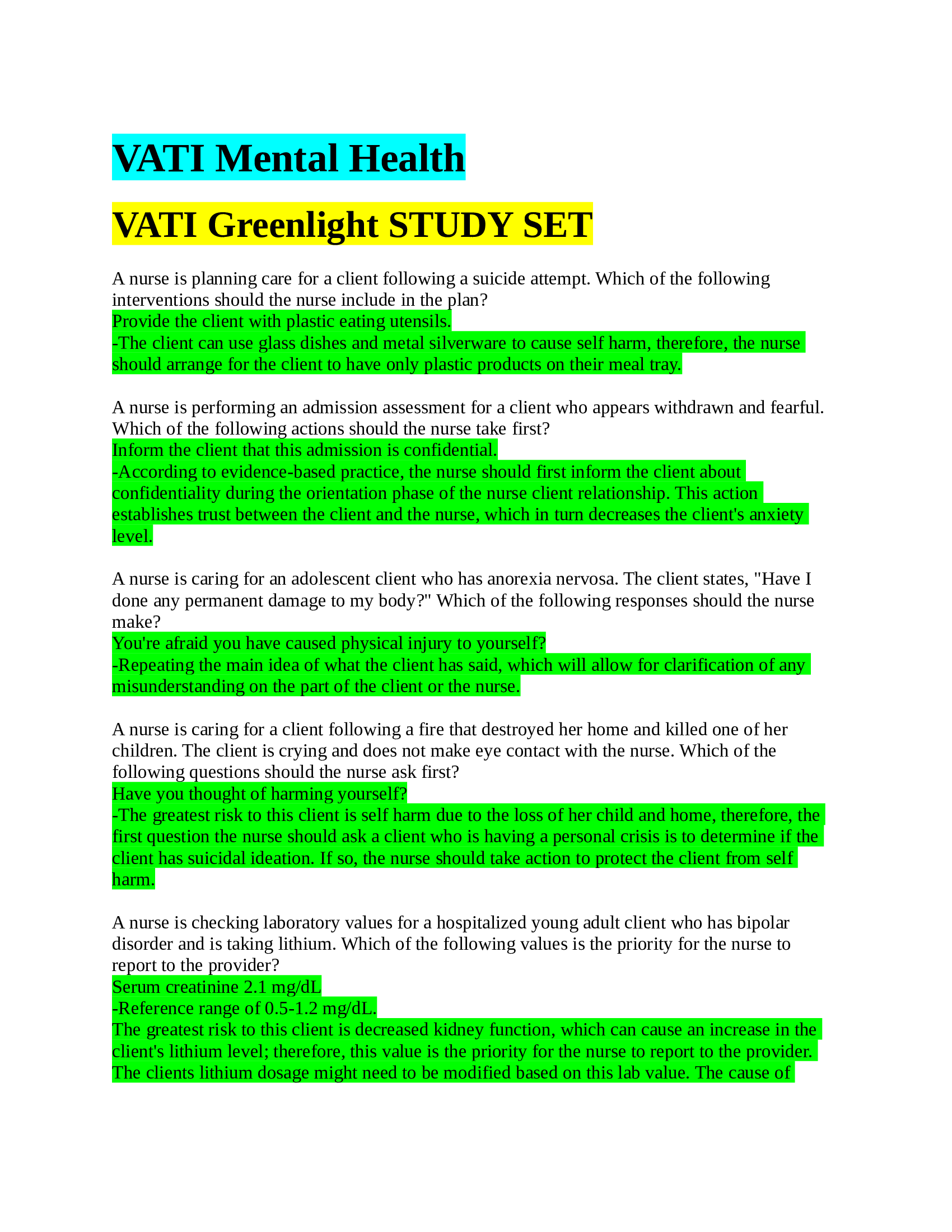
2022 NR 222 VATI Mental Health VATI Greenlight STUDY SET Questions and Answers
View Document

2022 NR 222 VATI Men...

  • Emily

    Emily

  • exam

2022 NR 222 VATI Mental Health VATI Greenlight STUDY SET Questions and Answers...

12 USD

0

0

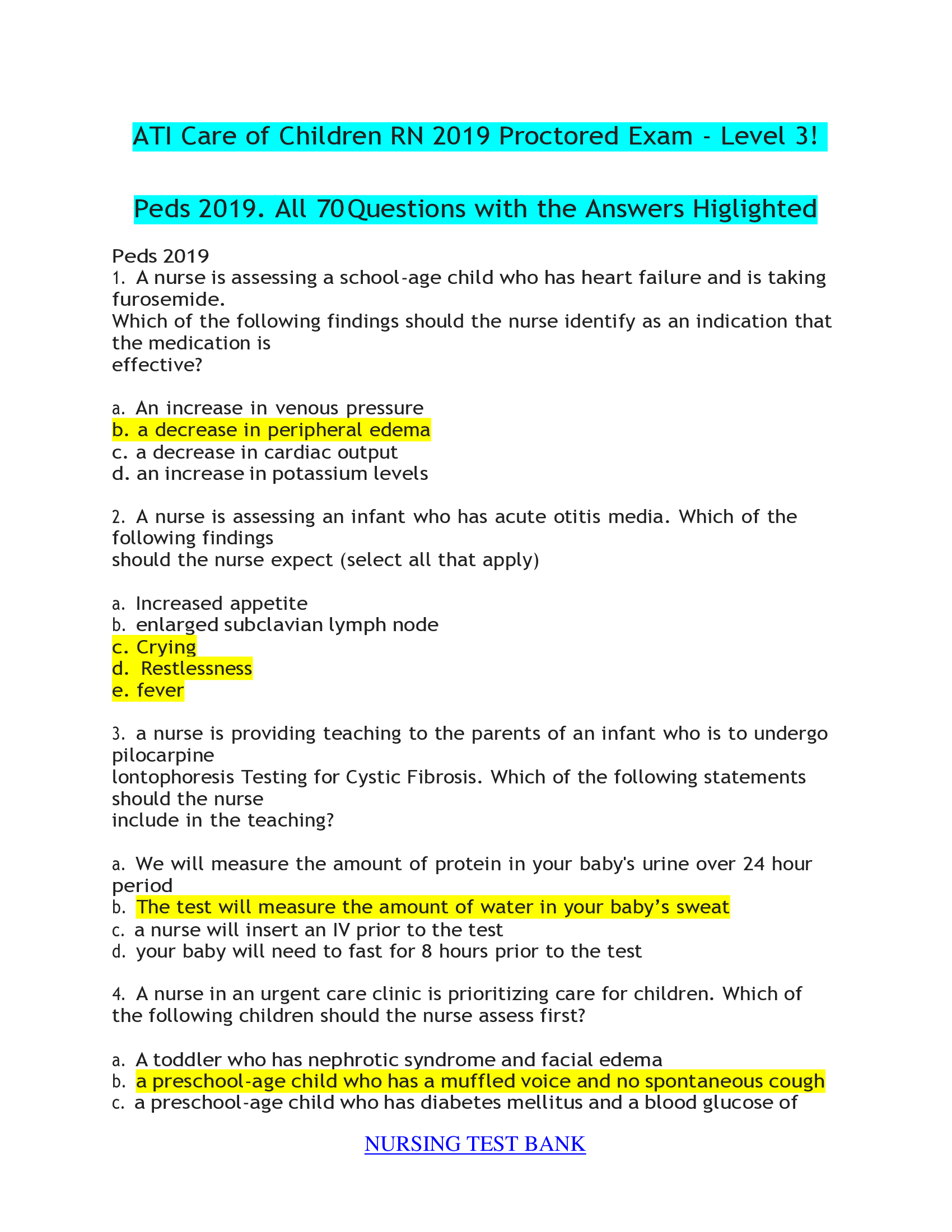
ATI Care of Children RN 2019 Proctored Exam - Level 3!. Peds 2019. All 70 Questions correctly Answered
View Document

ATI Care of Children...

  • Emily

    Emily

  • exam

ATI Care of Children RN 2019 Proctored Exam - Level 3!. Peds 2019. All 70 Questions correctly Answer...

12 USD

0

0

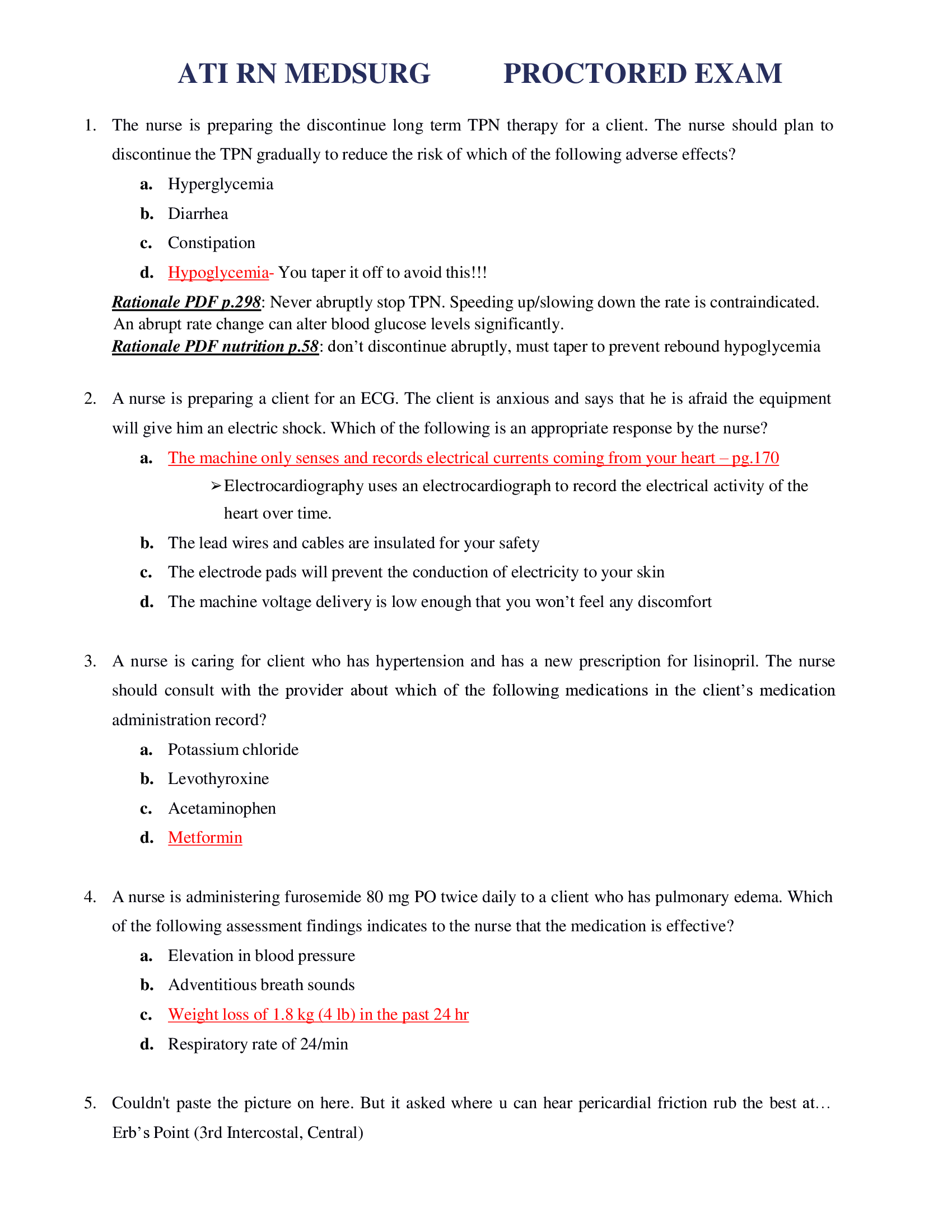
ATI RN MEDSURG PROCTORED EXAM {All Questions Answered And Elaborated}
View Document

ATI RN MEDSURG PROCT...

  • Emily

    Emily

  • exam

ATI RN MEDSURG PROCTORED EXAM {All Questions Answered And Elaborated}...

12 USD

0

0

Purchase

Download link will be sent to this email immediately after purchase.

IMPORTANT LINKS

  • How To Upload Class Notes
  • Selling Tips
  • Passing Grades's Study Materials
  • Scholarships for International Students 2026

POPULAR CATEGORIES

  • Law
  • Accounting
  • English
  • Psychology
  • Business
  • Nursing
  • Computer Science
  • General

View Document

  • Blog
  • Contact
  • Delivery Policy
  • Latest Scholarships Around the World
  • How to Pass Bar Exams: Passing Grades’ Strategies
  • How to Study and Pass the CPA Exam
  • All Test Banks
  • Faq
  • Copyright Claims
  • Privacy Policy
  • Terms of Use

KNOWLEDGE BASE

  • How to Write A+ Grade Good Research Paper
  • How to Manage Stress During Exam Period
  • Best Time to Study
  • How to Pass NCLEX-RN Exam
  • How To Effectively Utilize Test Banks
  • Popular Shadow Health Exam Assessments
  • Popular HESI Case Studies
  • How to Prepare for a Nursing Career
  • The Importance Of Summaries in Exam Revisvion

© 2026 Pasing Grades. All rights reserved.