Pasing Grades
  • Start Selling
  • Blog
  • Contact
  • 0

    Your cart is empty!

English

  • English
  • Spanish
  • Arabic
Create Account Sign In
  • Library
    • New Prep Guides
    • Featured Prep Guides
    • Free Exam Prep Guides
    • Best sellers
  • General
  • Nursing
    • Research Paper
    • Case Study
    • Discussion Post
    • Assignment
    • Exam
    • Practice Questions and Answers
    • Test Bank
    • solutions manual
  • Accounting
    • Case Study
    • Thesis
    • Study Guide
    • Summary
    • Research Paper
    • test bank
  • English
    • Creative Writing
    • Research Paper
    • Summary
    • Rhetorics
    • Literature
    • Journal
    • Exam
    • Grammar
    • Discussion Post
    • Essay
  • Psychology
    • Hesi
    • Presentation
    • Essay
    • Summary
    • Study Guide
    • Essay
    • Solution Manual
    • Final Exam Review
    • Class Notes
    • test bank
  • Business
    • Lecture Notes
    • Solution Manual
    • Presentation
    • Business Plan
    • Class Notes
    • Experiment
    • Summary
    • Practice Questions
    • Study Guide
    • Case Study
    • test bank
    • Exam
  • More
    • Computer Science
    • Economics
    • Statistics
    • Engineering
    • Biology
    • Religious Studies
    • Physics
    • Chemistry
    • Mathematics
    • History
    • Sociology
    • Science
    • Philosophy
    • Law
  • Pages
    • About Us
    • Selling Tips
    • Delivery Policy
    • Faq
    • Privacy Policy
  • Flash Sale
  • Home
  • Maryville University Patho NURS 611 Exam 3 QUESTIONS AND ANSWERS

Maryville University Patho NURS 611 Exam 3 QUESTIONS AND ANSWERS

Preview page 1 Preview page 2 Preview page 3
Add To Favorites

Share this item Share this item

  • Item Details
  • Comments (0)
  • Reviews (0)
  • Contact Seller
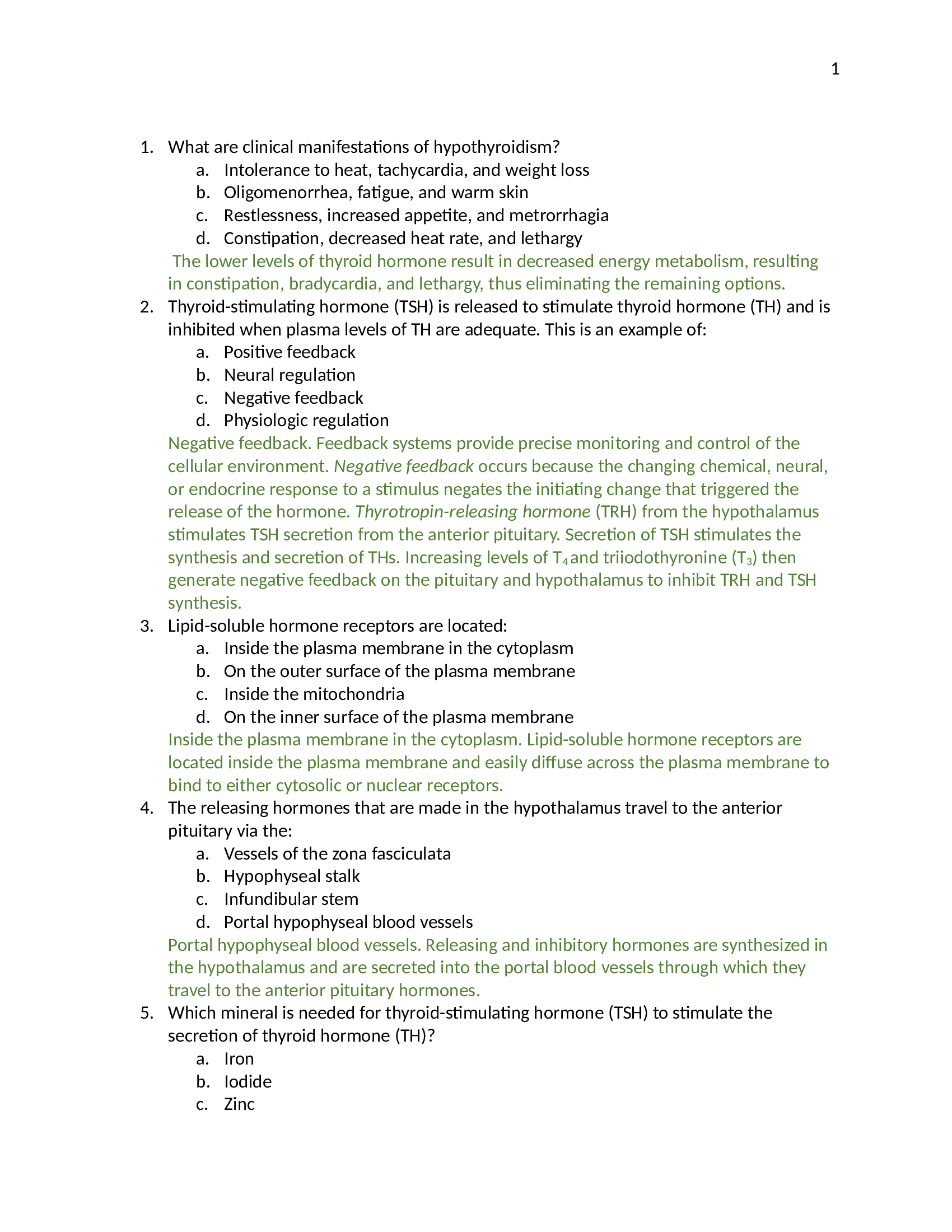
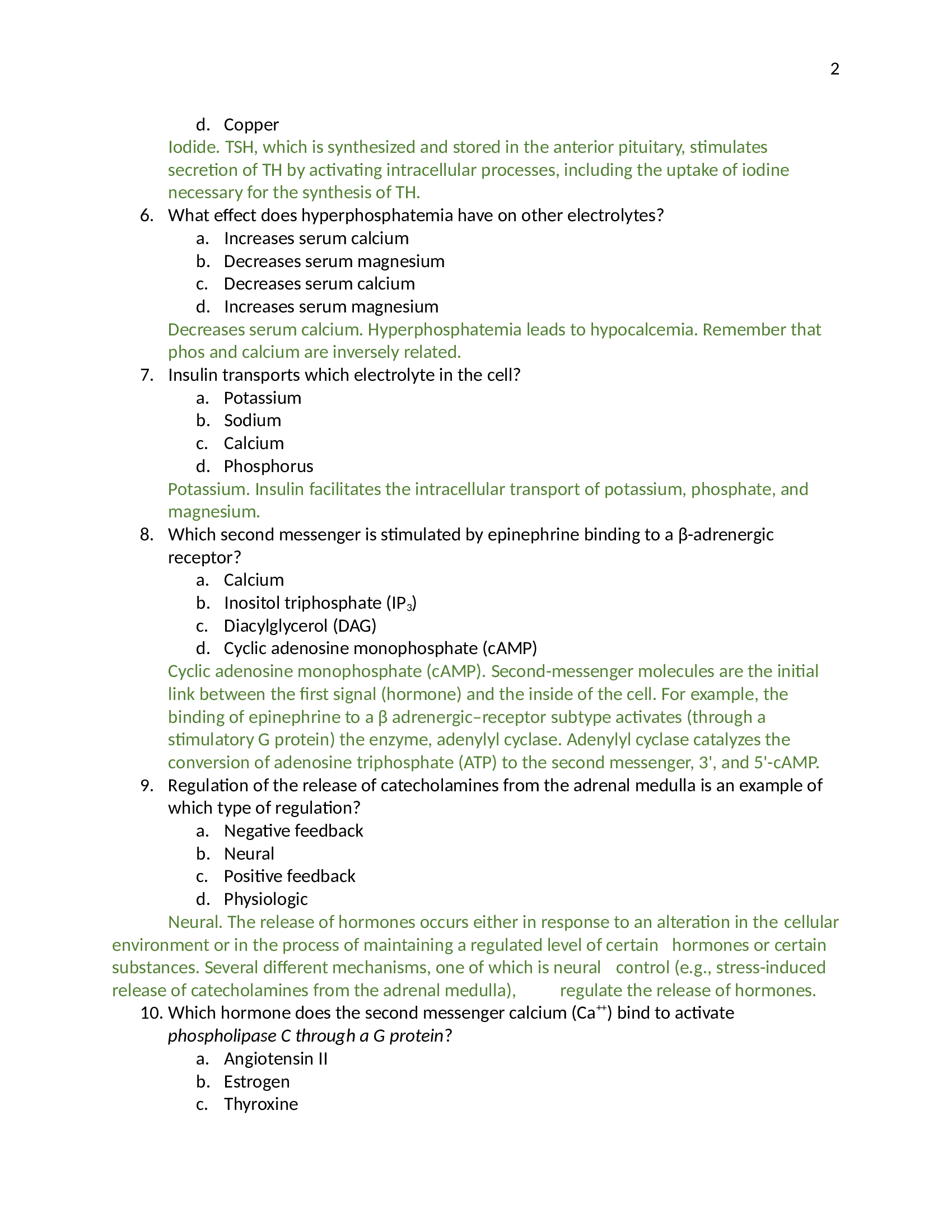
Maryville University Patho NURS 611 Exam 3 QUESTIONS AND ANSWERS Patho NURS 611 Exam 3 Questions and Answers 1. What are clinical manifestations of hypothyroidism? a. Intolerance to heat, tachycardia, and weight loss b. Oligomenorrhea, fatigue, and warm skin c. Restlessness, increased appetite, and metrorrhagia d. Constipation, decreased heat rate, and lethargy The lower levels of thyroid hormone result in decreased energy metabolism, resulting in constipation, bradycardia, and lethargy, thus eliminating the remaining options. 2. Thyroid-stimulating hormone (TSH) is released to stimulate thyroid hormone (TH) and is inhibited when plasma levels of TH are adequate. This is an example of: a. Positive feedback b. Neural regulation c. Negative feedback d. Physiologic regulation Negative feedback. Feedback systems provide precise monitoring and control of the cellular environment. Negative feedback occurs because the changing chemical, neural, or endocrine response to a stimulus negates the initiating change that triggered the release of the hormone. Thyrotropin-releasing hormone (TRH) from the hypothalamus stimulates TSH secretion from the anterior pituitary. Secretion of TSH stimulates the synthesis and secretion of THs. Increasing levels of T 4 and triiodothyronine (T ) then generate negative feedback on the pituitary and hypothalamus to inhibit TRH and TSH synthesis. 3. Lipid-soluble hormone receptors are located: a. Inside the plasma membrane in the cytoplasm b. On the outer surface of the plasma membrane c. Inside the mitochondria d. On the inner surface of the plasma membrane Inside the plasma membrane in the cytoplasm. Lipid-soluble hormone receptors are located inside the plasma membrane and easily diffuse across the plasma membrane to bind to either cytosolic or nuclear receptors. 4. The releasing hormones that are made in the hypothalamus travel to the anterior pituitary via the: a. Vessels of the zona fasciculata b. Hypophyseal stalk c. Infundibular stem d. Portal hypophyseal blood vessels Portal hypophyseal blood vessels. Releasing and inhibitory hormones are synthesized in the hypothalamus and are secreted into the portal blood vessels through which they travel to the anterior pituitary hormones. 5. Which mineral is needed for thyroid-stimulating hormone (TSH) to stimulate the secretion of thyroid hormone (TH)? a. Iron b. Iodide c. Zinc 3 1 d. Copper Iodide. TSH, which is synthesized and stored in the anterior pituitary, stimulates secretion of TH by activating intracellular processes, including the uptake of iodine necessary for the synthesis of TH. 6. What effect does hyperphosphatemia have on other electrolytes? a. Increases serum calcium b. Decreases serum magnesium c. Decreases serum calcium d. Increases serum magnesium Decreases serum calcium. Hyperphosphatemia leads to hypocalcemia. Remember that phos and calcium are inversely related. 7. Insulin transports which electrolyte in the cell? a. Potassium b. Sodium c. Calcium d. Phosphorus Potassium. Insulin facilitates the intracellular transport of potassium, phosphate, and magnesium. 8. Which second messenger is stimulated by epinephrine binding to a β-adrenergic receptor? a. Calcium b. Inositol triphosphate (IP ) c. Diacylglycerol (DAG) d. Cyclic adenosine monophosphate (cAMP) 3 Cyclic adenosine monophosphate (cAMP). Second-messenger molecules are the initial link between the first signal (hormone) and the inside of the cell. For example, the binding of epinephrine to a β adrenergic–receptor subtype activates (through a stimulatory G protein) the enzyme, adenylyl cyclase. Adenylyl cyclase catalyzes the conversion of adenosine triphosphate (ATP) to the second messenger, 3', and 5'-cAMP. 9. Regulation of the release of catecholamines from the adrenal medulla is an example of which type of regulation? a. Negative feedback b. Neural c. Positive feedback d. Physiologic Neural. The release of hormones occurs either in response to an alteration in the cellular environment or in the process of maintaining a regulated level of certain hormones or certain substances. Several different mechanisms, one of which is neural control (e.g., stress-induced release of catecholamines from the adrenal medulla), regulate the release of hormones. 10. Which hormone does the second messenger calcium (Ca ++ ) bind to activate phospholipase C through a G protein? a. Angiotensin II b. Estrogen c. Thyroxine 2 d. Testosterone Angiotensin II. Ca ++ is considered an important second messenger that facilitates the binding of a hormone (e.g., norepinephrine, angiotensin II) to a surface receptor, activating the enzyme phospholipase C through a G protein inside the plasma membrane. 11. The control of calcium in cells is important because it: a. Is controlled by the calcium negative-feedback loop. b. Is continuously synthesized. c. Acts as a second messenger. d. Carries lipid-soluble hormones in the bloodstream. Acts as a second messenger. In addition to being an important ion that participates in a multitude of cellular actions, Ca ++ is considered an important second messenger. 12. Where is antidiuretic hormone (ADH) synthesized, and where does it act? a. Hypothalamus; renal tubular cells b. Anterior pituitary; posterior pituitary c. Renal tubules; renal collecting ducts d. Posterior pituitary; loop of Henle Hypothalamus; renal tubular cells. Once synthesized in the hypothalamus, ADH acts on the vasopressin 2 (V2) receptors of the renal duct cells to increase their permeability. 13. How does a faulty negative-feedback mechanism result in a hormonal imbalance? a. Hormones are not synthesized in response to cellular and tissue activities. b. Decreased hormonal secretion is a response to rising hormone levels. c. Too little hormone production is initiated. d. Excessive hormone production results from a failure to turn of the system. Excessive hormone production results from a failure to turn off the system. Negativefeedback systems are important in maintaining hormones within physiologic ranges. The lack of negative-feedback inhibition on hormonal release often results in pathologic conditions. Excessive hormone production, which is the result of the failure to turn of the system, can cause various hormonal imbalances and related conditions. 14. A deficiency of which chemical may result in hypothyroidism? a. Iron b. Zinc c. Iodine d. Magnesium Zinc. The only cause of hypothyroidism from among the provided options is a deficiency of endemic iodine. 15. What imbalance lessens the rate of secretion of parathyroid hormone a. Increased serum calcium levels b. Decreased serum magnesium levels c. Decreased levels of thyroid-stimulating hormone d. Increased levels of thyroid-stimulating hormone The overall effect of parathyroid hormone (PTH)is to increase serum calcium and to decrease serum phosphate concentration. 16. Which condition may result from pressure exerted by a pituitary tumor? 3 a. Hypothyroidism b. Diabetes insipidus c. Hypercortisolism d. Insulin hyposecretion Hypothyroidism. If the tumor exerts sufficient pressure, then thyroid and adrenal hypofunction may occur because of lack of thyroid-stimulating hormone (TSH) and adrenocorticotropic hormone (ACTH). These result in the symptoms of hypothyroidism and hypocortisolism. 17. Which substance is a water-soluble protein hormone? a. Thyroxine b. Follicle-stimulating hormone c. Aldosterone d. Insulin Insulin. Peptide or protein hormones, such as insulin, pituitary, hypothalamic, and parathyroid, are water soluble and circulate in free (unbound) forms. 18. Which of the following is a lipid-soluble hormone? a. Cortisol b. Epinephrine c. Oxytocin d. Growth hormone Cortisol. Cortisol and adrenal androgens are lipid-soluble hormones and are primarily bound to a carrier or transport protein in circulation. 19. Most protein hormones are transported in the bloodstream and are: a. Bound to a lipid-soluble carrier b. Free in an unbound, water-soluble form c. Bound to a water soluble–binding protein d. Free because of their lipid-soluble chemistry Free in an unbound, water-soluble form. Peptide or protein hormones, such as insulin, pituitary, hypothalamic, and parathyroid, are water soluble and circulate in free (unbound) forms. 20. When insulin binds its receptors on muscle cells, an increase in glucose uptake by the muscle cells is the result. This is an example of what type of effect by a hormone? a. Pharmacologic b. Synergistic c. Permissive d. Direct Direct. Direct effects are the obvious changes in cell function that specifically result from the stimulation by a particular hormone. 21. Graves disease develops from a(n): a. Viral infection of the thyroid gland that causes overproduction of thyroid hormone. b. Autoimmune process during which lymphocytes and fibrous tissue replace thyroid tissue. 4 c. Thyroid-stimulating immunoglobulin that causes overproduction of thyroid hormones. d. Ingestion of goitrogens that inhibits the synthesis of the thyroid hormones, causing a goiter. Thyroid-stimulating immunoglobulin that causes the overproduction of thyroid hormones. The pathologic features of Graves disease indicates that normal regulatory mechanisms are overridden by abnormal immunologic mechanisms that result in the stimulation of excessive TH. 22. Pathologic changes associated with Graves disease include: a. High levels of circulating thyroid-stimulating immunoglobulins b. Diminished levels of thyrotropin-releasing hormone c. High levels of thyroid-stimulating hormone d. Diminished levels of thyroid-binding globulin High levels of circulating thyroid-stimulating immunoglobulins. The only option that correctly describes the changes associated with Graves disease identifies high levels of circulating thyroid-stimulating immunoglobulins that are found in more than 95% of individuals diagnosed with the disease. 23. The signs of thyrotoxic crisis include: a. Constipation with gastric distention b. Hyperthermia and tachycardia c. Bradycardia and bradypnea d. Constipation and lethargy Hyperthermia and tachycardia 24. The level of thyroid-stimulating hormone (TSH) in individuals with Graves disease is usually: a. High b. Normal c. Low d. In constant flux Low. The hyperfunction of the thyroid gland leads to suppression of TSH because of the normal negative feedback mechanism. 25. Palpation of the neck of a person diagnosed with Graves disease would detect a thyroid that is: a. Left of midline b. Normal in size c. Small with discrete nodules d. Diffusely enlarged Diffusely enlarged. 26. The effects of the syndrome of inappropriate antidiuretic hormone (SIADH) secretion include solute: a. Retention and water retention b. Dilution and water retention c. Retention and water loss d. Dilution and water loss 5 Retention and water loss 27. The common cause of elevated levels of antidiuretic hormone (ADH) secretion is: a. Ectopically produced ADH b. Posterior pituitary tumor c. Inflammation of the hypothalamus d. Inflammation of the nephrons Ectopically produced ADH 28. Which laboratory value would the nurse expect to find if a person is experiencing syndrome of inappropriate antidiuretic hormone (SIADH)? a. Hypernatremia and urine hypo-osmolality b. Serum potassium (K + ) level of 5 mEq/L and urine hyper-osmolality c. Serum sodium (Na + ) level of 120 mEq/L and serum hypo-osmolality d. Hypokalemia and serum hyper-osmolality Serum Na level of 120 and serum hypo-osmolatlity. A diagnosis of SIADH requires a serum sodium level of less than 135 mEq/L, serum hypo-osmolality less than 280 mOsm/kg, and urine hyper-osmolarity. Potassium levels are not considered a factor. 29. A patient who is diagnosed with a closed head injury has a urine output of 6 to 8 L/day. Electrolytes are within normal limits, but his antidiuretic hormone (ADH) level is low. Although he has had no intake for 4 hours, no change in his polyuria level has occurred. These symptoms support a diagnosis of: a. Neurogenic diabetes insipidus b. Syndrome of inappropriate antidiuretic hormone c. Psychogenic polydipsia d. Osmotically induced diuresis Neurogenic diabetes insipidus. Remember, sodium has to be below 135 to meet the requirement for SIADH. 30. Diabetes insipidus, diabetes mellitus, and syndrome of inappropriate antidiuretic hormone all exhibit which symptom? a. Polyuria b. Vomiting c. Edema d. Thirst Thirst, is the only symptom in common. 31. The cause of neurogenic diabetes insipidus (DI) is related to an organic a. Anterior pituitary b. Posterior pituitary c. Thalamus d. Renal tubules Posterior pituitary. Neurogenic DI is a result of dysfunctional antidiuretic hormone synthesis, caused by a lesion of the posterior pituitary, hypothalamus, or pituitary stalk. 32. Which form of diabetic insipidus (DI) will result if the target cells for antidiuretic hormone (ADH) in the renal collecting tubules demonstrate insensitivity? a. Neurogenic b. Nephrogenic 6 c. Psychogenic d. Ischemic Nephrogenic. Only nephrogenic DI is associated with an insensitivity of the renal collecting tubules to ADH. 33. Which laboratory value is consistently low in a patient with diabetes insipidus (DI)? a. Urine-specific gravity b. Urine protein c. Serum sodium d. Serum total protein Urine-specific gravity. The basic criteria for diagnosing DI include a low urine-specific gravity while sodium levels are high. Protein levels are not considered. 34. Which form of diabetes insipidus (DI) is treatable with exogenous antidiuretic hormone (ADH)? a. Neurogenic b. Nephrogenic c. Psychogenic d. Ischemic Neurogenic DI is treated with ADH replacement therapy. 35. The term used to describe a person who experiences a lack of all hormones associated with the anterior pituitary is: a. Panhypopituitarism b. Hypopituitarism c. Adrenocorticotropic hormone deficiency Panhypopituitarism is the only available term that is correctly associated with the lack of all anterior pituitary hormones. 36. Diabetes insipidus is a result of: a. Antidiuretic hormone hyposecretion b. Insulin hyposecretion c. Antidiuretic hormone hypersecretion d. Insulin hypersecretion ADH hyposecretion 37. Visual disturbances are a result of a pituitary adenoma because of the: a. Liberation of anterior pituitary hormones into the optic chiasm b. Pituitary hormones clouding the lens of the eyes c. Pressure of the tumor on the optic chiasm d. Pressure of the tumor on the optic and oculomotor cranial nerves Pressure on the optic chiasm is the only cause for visual disturbances resulting from a pituitary adenoma. 38. Which hormone is involved in the regulation of serum calcium levels? a. Parathyroid hormone (PTH) b. Thyroxine (T ) c. Adrenocorticotropic hormone (ACTH) d. Triiodothyronine (T 4 ) The parathyroid glands produce PTH, a regulator of serum calcium. 3 7 39. Target cells for parathyroid hormone are located in the: a. Tubules of nephrons b. Glomeruli of nephrons c. Thyroid gland d. Smooth and skeletal muscles Tubules of nephrons. Parathyroid hormone acts on its plasma membrane receptor only in the distal and proximal tubules of the kidney’s nephron. 40. Renal failure is the most common cause of which type of hyperparathyroidism? a. Primary b. Exogenous c. Secondary d. Inflammatory Secondary. Chronic renal failure is the most common cause of secondary hyperparathyroidism because of the resulting hyperphosphatemia that stimulates parathyroid hormone secretion. Although the other options may occur, they are not the most common types of the disorder. 41. The most common cause of hypoparathyroidism is: a. Pituitary hyposecretion b. Parathyroid gland damage c. Parathyroid adenoma d. Autoimmune parathyroid disease Parathyroid gland damage. The most common cause of hypoparathyroidism is damage caused during thyroid surgery. 42. The most probable cause of low serum calcium after a thyroidectomy is: a. Hyperparathyroidism, secondary to Graves disease b. Myxedema, secondary to surgery c. Hypoparathyroidism caused by surgical injury d. Hypothyroidism caused by the lack of thyroid replacement The most common cause of hypoparathyroidism is damage caused during thyroid surgery, resulting in a lack of circulating PTH and causing a depressed level of serum calcium. 43. A patient diagnosed with diabetic ketoacidosis (DKA) has the following laboratory values: arterial pH 7.20; serum glucose 500 mg/dl; positive urine glucose and ketones; serum potassium (K + ) 2 mEq/L; serum sodium (Na + ) 130 mEq/L. The patient reports that he has been sick with the “flu” for 1 week. What relationship do these values have to his insulin deficiency? a. Increased glucose use causes the shift of fluid from the intravascular to the intracellular space. b. Decreased glucose use causes fatty acid use, ketogenesis, metabolic acidosis, and osmotic diuresis. c. Increased glucose and fatty acids stimulate renal diuresis, electrolyte loss, and metabolic alkalosis. d. Decreased glucose use results in protein catabolism, tissue wasting, respiratory acidosis, and electrolyte loss. 8 Decreased glucose causes fatty acid use, ketogenesis, metabolic acidosis, and osmotic diuresis, which have resulted in the symptoms listed in the question. 44. Polyuria occurs with diabetes mellitus because of the: a. Formation of ketones b. Elevation in serum glucose c. Chronic insulin resistance d. Increase in antidiuretic hormone Elevation of serum glucose. Glucose accumulates in the blood and appears in the urine as the renal threshold for glucose is exceeded, producing an osmotic diuresis and the symptoms of polyuria and thirst. 45. Type 2 diabetes mellitus is best described as a(an): a. Resistance to insulin by insulin-sensitive tissues b. Need for lispro instead of regular insulin c. Increase of glucagon secretion from α cells of the pancreas d. Presence of insulin autoantibodies that destroy β cells in the pancreas Resistance to insulin by insulin-sensitive tissues. One of the basic pathophysiologic characteristics of type 2 diabetes is the development of insulin-resistant tissue cells. 46. A person diagnosed with type 1 diabetes experiences hunger, lightheadedness, tachycardia, pallor, headache, and confusion. The most probable cause of these symptoms is: a. Hyperglycemia caused by incorrect insulin administration b. Dawn phenomenon from eating a snack before bedtime c. Hypoglycemia caused by increased exercise d. Somogyi effect from insulin sensitivity Hypoglycemia caused by increased exercise. The most likely cause of these symptoms is hypoglycemia, which is often caused by a lack of systemic glucose as a result of muscular activity. 47. When comparing the clinical manifestations of both diabetic ketoacidosis (DKA) and hyperglycemic hyperosmolar nonketotic syndrome (HHNKS), which condition is associated with only DKA? a. Fluid loss b. Increased serum glucose c. Weight loss d. Kussmaul respirations Kussmaul respirations are only observed in those with DKA and is that “air hunger” or rapid deep labored breathing. 48. Hypoglycemia, followed by rebound hyperglycemia, is observed in those with: a. The Somogyi effect b. The dawn phenomenon c. Diabetic ketoacidosis d. Hyperosmolar hyperglycemic non-ketotic syndrome Hypoglycemia, followed by rebound hyperglycemia, is observed only in the Somogyi effect. 9

Contact the Seller

Please Sign In to contact this seller.


  • 👎  Report Copyright Violation

Frequently Asked Questions

What Do I Get When I Buy This Study Material?

+

When you buy a study material on Passing Grades, an instant download link will be sent directly to your email, giving you access to the file anytime after payment is completed.

Is Passing Grades a Trusted Platform?

+

Yes, Passing Grades is a reputable students’ marketplace with a secure payment system and reliable customer support. You can trust us to ensure a safe and seamless transaction experience.

Will I Be Stuck with a Subscription?

+

No, all purchases on Passing Grades are one-time transactions. You only pay for the notes you choose to buy, with no subscriptions or hidden fees attached.

Who Am I Buying These Study Materials From?

+

Passing Grades is a marketplace, which means you are purchasing the document from an individual vendor, not directly from us. We facilitate the payment and delivery process between you and the vendor.

Does Passing Grades Offer Free Study Materials?

+

Yes, sellers on Passing Grades have uploaded numerous free test banks, exams, practice questions, and class notes that can be downloaded at no cost.

Pasinggrades - Quality Study Materials

USD 10

    • Quality checked by Pasing Grades
    • 100% satisfaction guarantee
    • Seller: Namwaki
Buy PDF $10

Seller Information

Namwaki

Member since April 2021

  • icon
  • icon
  • icon
View Profile
  • total sales

    0
  • Favourites

    0
  • Comments

    0
    ( 0 Ratings )

Item Information

  • Uploaded

    06 March 2023

  • Updated

    29 September 2025

  • Category

    Nursing

  • Item Type

    exam

  • Tags

    Maryville University Patho NURS 611 Exam 3 QUESTIONS AND ANSWERS

Related Exam Prep Guides by Namwaki

Sophia Finance Milestone Final_Complete Questions and Answers 2021.
View Document

Sophia Finance Miles...

  • Namwaki

    Namwaki

  • exam

Sophia Finance Milestone Final_Complete Questions and Answers 2021...

10 USD

0

0

Medical Parasitology 7th Edition Leventhal Test Bank
View Document

Medical Parasitology...

  • Namwaki

    Namwaki

  • exam

Medical Parasitology 7th Edition Leventhal Test Bank...

10 USD

0

0

TEST- BANK FOR WONGS NURSING CARE OF INFANTS AND CHILDREN 11TH EDITION HOCKENBERRY
View Document

TEST- BANK FOR WONGS...

  • Namwaki

    Namwaki

  • exam

TEST- BANK FOR WONGS NURSING CARE OF INFANTS AND CHILDREN 11TH EDITION HOCKENBERRY – Download PDF...

10 USD

0

0

Purchase

Download link will be sent to this email immediately after purchase.

IMPORTANT LINKS

  • How To Upload Class Notes
  • Selling Tips
  • Passing Grades's Study Materials
  • Scholarships for International Students 2025

POPULAR CATEGORIES

  • Law
  • Accounting
  • English
  • Psychology
  • Business
  • Nursing
  • Computer Science
  • General

View Document

  • Blog
  • Contact
  • Delivery Policy
  • Latest Scholarships Around the World
  • How to Pass Bar Exams: Passing Grades’ Strategies
  • How to Study and Pass the CPA Exam
  • All Test Banks
  • Faq
  • Copyright Claims
  • Privacy Policy
  • Terms of Use

KNOWLEDGE BASE

  • How to Write A+ Grade Good Research Paper
  • How to Manage Stress During Exam Period
  • Best Time to Study
  • How to Pass NCLEX-RN Exam
  • How To Effectively Utilize Test Banks
  • Popular Shadow Health Exam Assessments
  • Popular HESI Case Studies
  • How to Prepare for a Nursing Career
  • The Importance Of Summaries in Exam Revisvion

© 2026 Pasing Grades. All rights reserved.