Pasing Grades
  • Start Selling
  • Blog
  • Contact
  • 0

    Your cart is empty!

English

  • English
  • Spanish
  • Arabic
Create Account Sign In
  • Library
    • New Prep Guides
    • Featured Prep Guides
    • Free Exam Prep Guides
    • Best sellers
  • General
  • Nursing
    • Research Paper
    • Case Study
    • Discussion Post
    • Assignment
    • Exam
    • Practice Questions and Answers
    • Test Bank
    • solutions manual
  • Accounting
    • Case Study
    • Thesis
    • Study Guide
    • Summary
    • Research Paper
    • test bank
  • English
    • Creative Writing
    • Research Paper
    • Summary
    • Rhetorics
    • Literature
    • Journal
    • Exam
    • Grammar
    • Discussion Post
    • Essay
  • Psychology
    • Hesi
    • Presentation
    • Essay
    • Summary
    • Study Guide
    • Essay
    • Solution Manual
    • Final Exam Review
    • Class Notes
    • test bank
  • Business
    • Lecture Notes
    • Solution Manual
    • Presentation
    • Business Plan
    • Class Notes
    • Experiment
    • Summary
    • Practice Questions
    • Study Guide
    • Case Study
    • test bank
    • Exam
  • More
    • Computer Science
    • Economics
    • Statistics
    • Engineering
    • Biology
    • Religious Studies
    • Physics
    • Chemistry
    • Mathematics
    • History
    • Sociology
    • Science
    • Philosophy
    • Law
  • Pages
    • About Us
    • Selling Tips
    • Delivery Policy
    • Faq
    • Privacy Policy
  • Flash Sale
  • Home
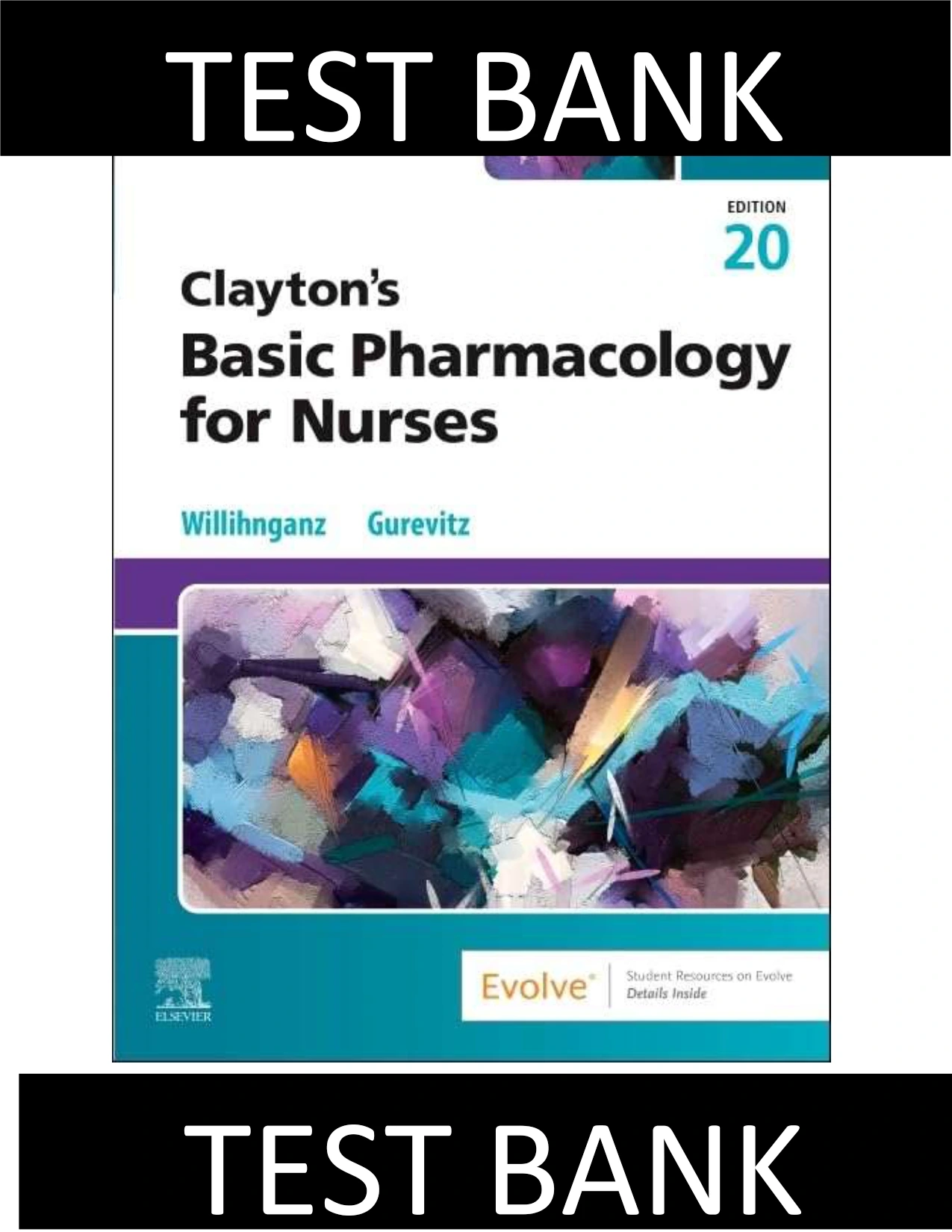
  • Clayton’s Test Bank For Basic Pharmacology for Nurses, 20th Edition by Michelle J. Willihnganz and Samuel L. Gurevitz

Clayton’s Test Bank For Basic Pharmacology for Nurses, 20th Edition by Michelle J. Willihnganz and Samuel L. Gurevitz

Preview page 1 Preview page 2 Preview page 3
Add To Favorites

Share this item Share this item

  • Item Details
  • Comments (0)
  • Reviews (0)
  • Contact Seller

Clayton’s Basic Pharmacology for Nurses Test Bank

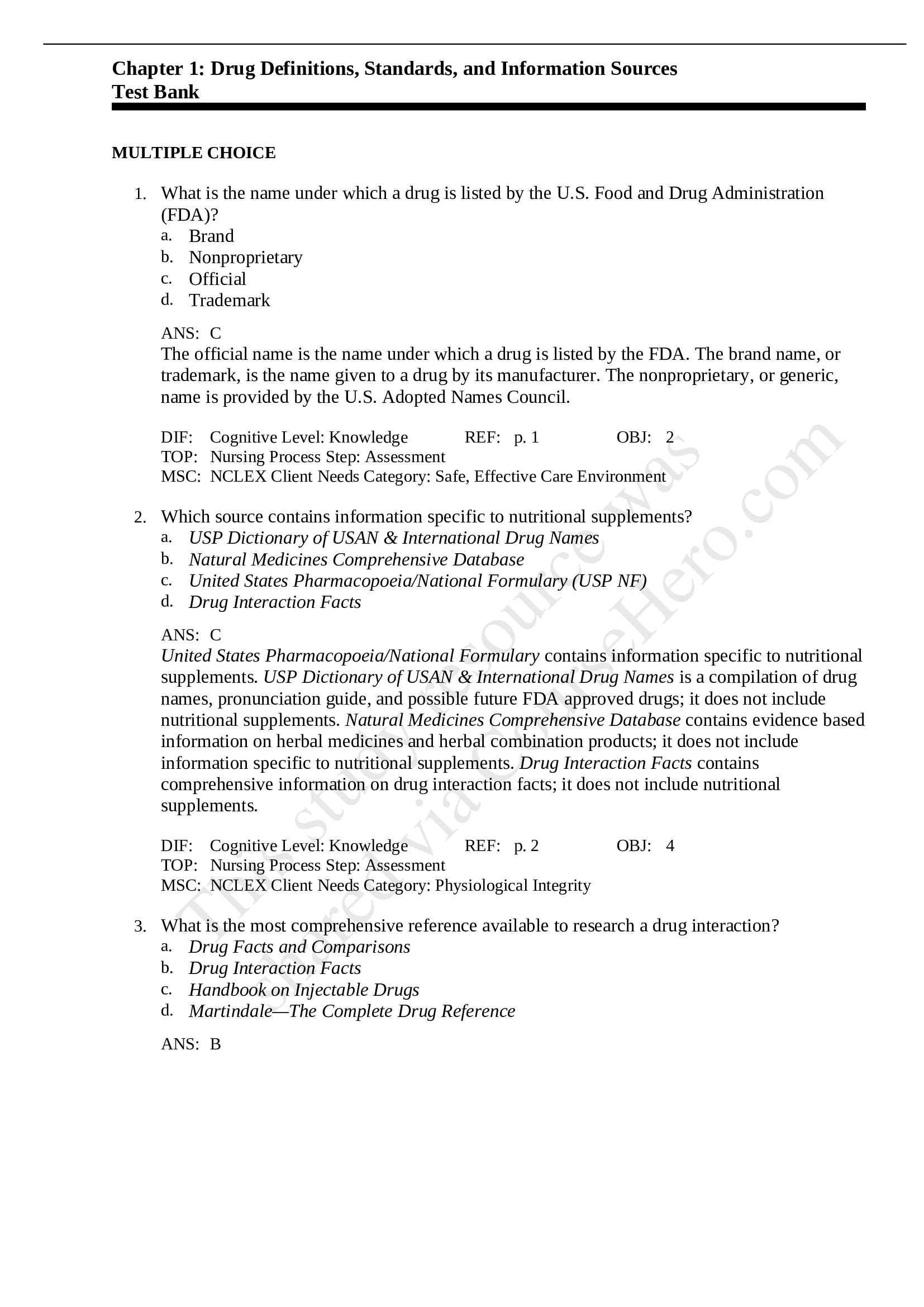
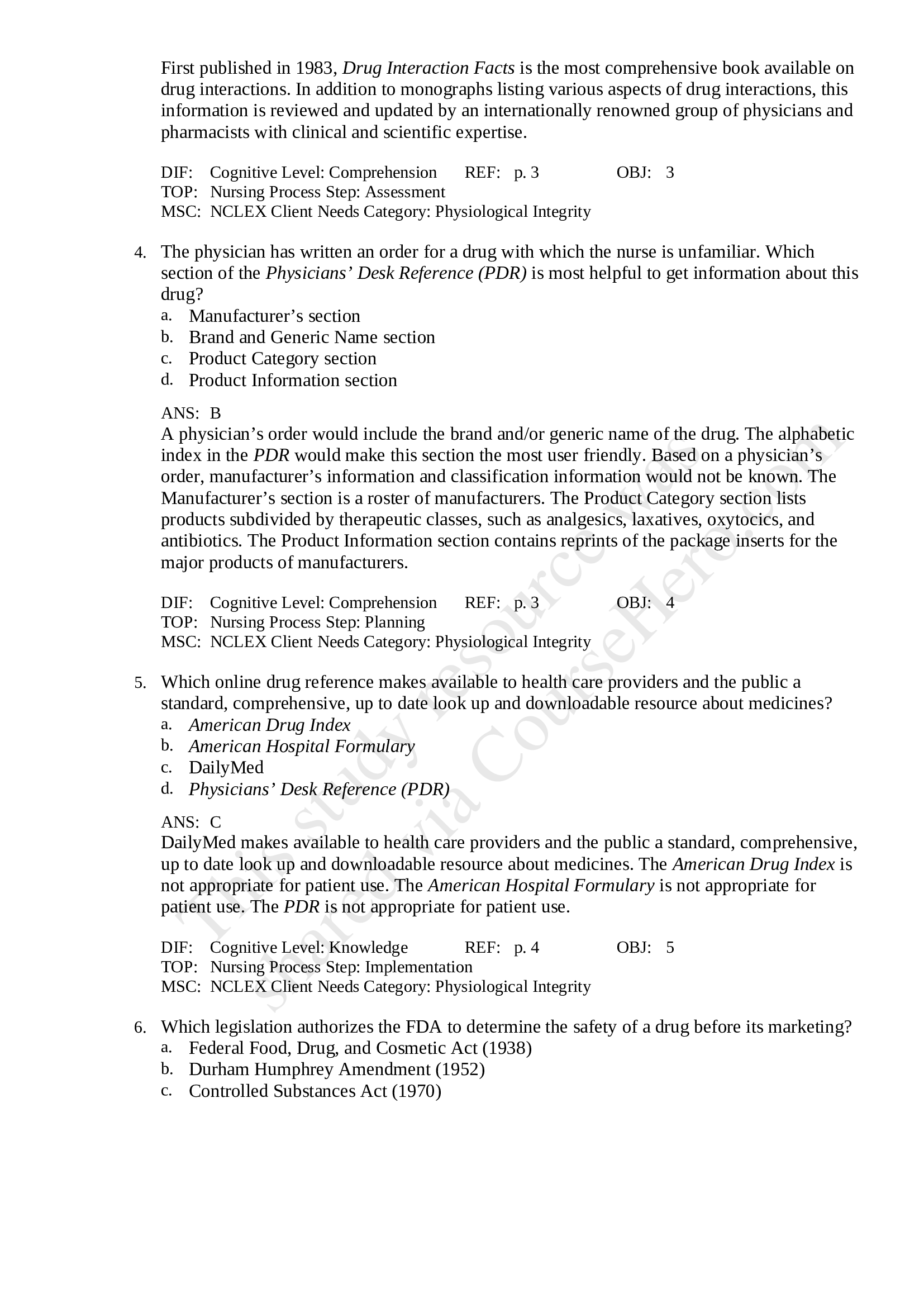
This document contains a detailed test bank for Clayton’s Basic Pharmacology for Nurses, 20th Edition. It includes multiple-choice and multiple-response questions with answers covering foundational topics such as drug definitions, standards, sources of drug information, basic principles of drug action, drug interactions, pharmacology across the lifespan, and the nursing process related to pharmacology. The questions are aligned with NCLEX client needs categories and are useful for exam preparation and knowledge reinforcement in nursing pharmacology.

Table of Contents for Basic Pharmacology for Nurses

UNIT I Introduction to Pharmacology

1 Basic Principles of Pharmacology
2 Drug Actions Across the Life Span
3 The Nursing Process and Pharmacology
4 Patient Education to Promote Health

UNIT II Medication Administration

5 Principles of Medication Administration and Medication Safety
6 Percutaneous Administration
7 Enteral Administration
8 Parenteral Administration: Safe Preparation
9 Parenteral Administration: Intradermal, Subcutaneous, and Intramuscular
10 Parenteral Administration: Intravenous

UNIT III Drugs Affecting Neurologic Disorders

11 Drugs Affecting the Central and Peripheral Nervous System
12 Drugs Used to Treat Neurodegenerative Disorders
13 Drugs Used to Treat Seizure Disorders
14 Drugs Used to Treat Headaches
15 Drugs Used to Treat Pain: Focus on Opioids

UNIT IV Drugs Affecting Psychiatric Disorders

16 Drugs Used to Treat Attention Deficit Hyperactivity Disorder
17 Drugs Used to Treat Substance Use Disorders
18 Drugs Used to Treat Schizophrenia
19 Drugs Used to Treat Depressive and Bipolar Disorders
20 Drugs Used to Treat Anxiety Disorders
21 Drugs Used to Treat Sleep Disorders

UNIT V Drugs Affecting Cardiovascular Disorders

22 Drugs Used to Treat Dyslipidemias
23 Drugs Used to Treat Hypertension
24 Drugs Used to Treat Arrhythmias
25 Drugs Used to Treat Angina Pectoris
26 Drugs Used to Treat Peripheral Vascular Disease
27 Drugs Used to Treat Thromboembolic Disorders
28 Drugs Used to Treat Heart Failure

UNIT VI Drugs Affecting the Respiratory System

29 Drugs Used to Treat Upper Respiratory Disease
30 Drugs Used to Treat Lower Respiratory Disease

UNIT VII Drugs Affecting the Digestive System

31 Drugs Used to Treat Gastroesophageal Reflux and Peptic Ulcer Disease
32 Drugs Used to Treat Nausea and Vomiting
33 Drugs Used to Treat Constipation and Diarrhea

UNIT VIII Drugs Affecting the Endocrine System

34 Drugs Used to Treat Diabetes Mellitus
35 Drugs Used to Treat Thyroid Disease

UNIT IX Drugs Affecting the Reproductive System

36 Drugs Used in Obstetrics
37 Drugs Used in Men’s and Women’s Health

UNIT X Drugs Affecting Other Body Systems

38 Drugs Used to Treat Urinary System Disorders
39 Drugs Used to Treat Glaucoma and Other Eye Disorders
40 Drugs Used to Treat Cancer
41 Drugs Used to Treat Musculoskeletal Disorders
42 Drugs Used to Treat Immune and Inflammatory Disorders

UNIT XI Drugs Used to Treat Infections

43 Drugs Used to Treat Bacterial Infections
44 Drugs Used to Treat Viral Infections
45 Drugs Used to Treat Fungal Infections

Sample Questions from Basic Pharmacology for Nurses Test Bank

Chapter 4: The Nursing Process and Pharmacology Test Bank

MULTIPLE CHOICE

1.   What is the primary purpose of the nursing assessment?

a.   Identifying underlying pathologic conditions

b.   Assisting the physician in identifying medical conditions

c.   Determining the patient’s mental status

d.   Exploring patient responses to health problems

ANS:  D

A nursing assessment is done to identify the patient’s response to health problems. During the nursing assessment phase, a comprehensive information base is developed through a physical examination, nursing history, medication history, and professional observation. Identifying underlying pathologic conditions and assisting the physician in identifying medical conditions is not part of the nursing process. Determining the patient’s mental status is one part of the nursing assessment, but it is not the primary purpose.

OBJ:   1 | 3

MSC: NCLEX Client Needs Category: Health Promotion and Maintenance

2.   What is the basis of the NANDA I taxonomy?

a.   Functional health patterns b.   Human response patterns c.   Basic human needs

d.   Pathophysiologic needs

ANS:  B

The NANDA I taxonomy identifies human response patterns. Functional components of health patterns are limited to activity, fluid volume, nutrition, self-care, and sensory perception. Basic human needs comprise less than merely health patterns. Pathophysiologic needs are not part of the scope of NANDA I.

DIF:        Cognitive Level: Knowledge        REF:   pp. 37-38  OBJ:   5

TOP:      Nursing Process Step: Diagnosis                               

MSC: NCLEX Client Needs Category: Physiological Integrity

3.   Which task is included in the assessment step of the nursing process?

a.   Establishing patient goals/outcomes

b.   Implementing the nursing care plan (NCP)

c.   Measuring goal/outcome achievement

d.   Collecting and communicating data

ANS:  D

Data are collected and communicated in the assessment phase of the nursing process. Establishing goals is the function of planning. Implementing the NCP is the function of implementation. Measuring outcome achievement is the function of evaluation.

OBJ:   2 | 3

MSC: NCLEX Client Needs Category: Health Promotion and Maintenance

4.   Which statement regarding nursing diagnoses is accurate?

a.   Nursing diagnoses remain the same for as long as the disease is present.

b.   Nursing diagnoses are written to identify disease states.

c.   Nursing diagnoses describe patient problems that nurses treat.

d.   Nursing diagnoses identify causes related to illness.

ANS:  C

Diagnostic statements identify problems a nurse is independently able to treat within the scope of professional practice. Nursing diagnoses vary with the changing condition of the patient. The response patterns are unique to the patient and are not disease specific. Nursing diagnoses describe the patient’s human response pattern.

DIF:        Cognitive Level: Comprehension              REF:   pp. 37-38        OBJ:   5

TOP:      Nursing Process Step: Diagnosis               

MSC: NCLEX Client Needs Category: Physiological Integrity

5.   What do the classification systems NIC and NOC provide?

a.   Individualized data banks of treatments related to disease processes

b.   Standardized language for reporting and analyzing nursing care delivery

c.   A measure for cost containment within medical institutions

d.   Specialized interventions for rare diseases

ANS:  B

Nursing classification systems such as NIC and NOC are designed to provide a standardized language for reporting and analyzing nursing care delivery that is individualized for each patient. Standardized terminology assists practitioners in the implementation of the five phases of the nursing process. Classification systems are not related to disease process and are not used for financial purposes. Classification systems include interventions for all health conditions.

DIF:   Cognitive Level: Knowledge             REF:   p. 34                OBJ:   11

TOP:  Nursing Process Step: Implementation

MSC: NCLEX Client Needs Category: Safe, Effective Care Environment

6.   Which type of nursing diagnosis will be written when the patient exhibits factors that makes him or her susceptible to the development of a problem?

a.   Actual diagnosis

b.   Risk diagnosis

c.   Possible diagnosis

d.   Wellness diagnosis

ANS:  B

When patients have the potential or risk for a problem to develop, a risk diagnosis is written. These diagnoses are two part statements such as Risk for falls related to unsteady gait. An actual diagnosis consists of a NANDA diagnostic label, contributing factor (if known), and defining characteristics such as signs and symptoms. A possible nursing diagnosis identifies a problem that may occur, but the assembled data are insufficient to confirm it. A wellness diagnosis applies to individuals for whom an enhanced level of wellness is possible.

OBJ:   5

MSC: NCLEX Client Needs Category: Physiological Integrity

7.   Which outcome statement identified by the nurse is written correctly?

a.   After surgery, patient will express acceptance of loss of breast.

b.   Patient will die with dignity.

c.   At the end of the shift, the nurse will determine whether the patient is more comfortable.

d.   Within the next 8 hours, urine output will be greater than 30 mL/hr.

ANS:  D

The statement, “Within the next 8 hours, urine output will be greater than 30 mL/hr” is patient oriented, realistic, and measurable, and has an appropriate time frame.

OBJ:   11

MSC: NCLEX Client Needs Category: Safe, Effective Care Environment


8.   Which is an example of an interdependent nursing action?

a.   Assess lung sounds every 4 hours.

b.   Educate the patient about the prescribed medication.

c.   Administer Demerol 50 mg intramuscularly (IM) every 4 hours PRN.

d.   Encourage the patient to express feelings.

ANS:  C

“Administer Demerol 50 mg IM every 4 hours PRN” requires the nurse to follow the parameters of the order, yet use nursing judgment to determine how often the medication is to be administered; therefore, it is an interdependent nursing action. Assessing lung sounds, educating the patient about medication, and encouraging the patient to express feelings are independent nursing actions.

DIF:   Cognitive Level: Application             REF:   p. 45                OBJ:   12

TOP:  Nursing Process Step: Implementation

MSC: NCLEX Client Needs Category: Safe, Effective Care Environment

9.   What is the nurse’s primary source of information when obtaining a patient history?

a.   The physician

b.   The patient record

c.   The family

d.   The patient

ANS:  D

The focus of the nursing process is the patient. Although family members contribute to the nursing history, this information is secondhand. It is important that the nurse continue to assess patient data for validation of this information. The physician is not to be relied on to provide information about a complete patient history. The patient record reflects only recorded past information and not current input that may be relevant. The family may provide information about a patient history if the patient is unable to provide it, but the information is subject to interpretation by someone other than the patient.

OBJ:   13


MSC: NCLEX Client Needs Category: Safe, Effective Care Environment

10.   An obese patient did not meet the goal of “by the end of the second week, is able to follow a

1500 calorie diet.” What will the nurse and the patient reassess?

a.   Patient’s weight

b.   Patient’s understanding of the 1500 calorie diet

c.   Nurse’s feelings about obese patients

d.   Health care agency’s ability to provide the prescribed diet

ANS:  B

When goals are not met, the nurse must reassess the patient’s understanding of the interventions and commitment to reaching the identified goal. All phases of the nursing process are ongoing as the nurse continues to evaluate, assess, and readjust interventions as indicated to facilitate patient achievement of outcomes. The patient may have followed the diet but not lost any weight. The nurse’s feelings should not be a factor in the assessment. The agency’s ability to provide the prescribed diet should have been determined before implementation of the plan.

DIF:        Cognitive Level: Analysis               REF:   pp. 42-43  OBJ:   12

TOP:      Nursing Process Step: Evaluation                             

MSC: NCLEX Client Needs Category: Safe, Effective Care Environment

11.   What is the priority nursing diagnosis for an older adult with diabetes who is hospitalized for pneumonia?

a.   Deficient knowledge related to lack of information about diabetic medication

b.   Risk for falls related to weakness

c.   Impaired gas exchange related to decreased pulmonary ventilation

d.   Imbalanced nutrition: more than body requirements related to obesity

ANS:  C

Airway is the first priority in a needs assessment (ABCs = airway, breathing, circulation).

Medication, weakness, and nutrition are less of a priority than the patient’s respiratory status.

DIF:        Cognitive Level: Analysis               REF:   pp. 37-38  OBJ:   9

TOP:      Nursing Process Step: Assessment                         

MSC: NCLEX Client Needs Category: Physiological Integrity

12.   What is a critical care pathway?

a.   A nursing care plan for a patient in a critical care unit

b.   A standardized care plan derived from best practice patterns

c.   A care plan that has been critiqued by a quality improvement officer

d.   A care plan based on measurable goals and outcomes

ANS:  B

A critical care pathway is a standardized care plan derived from best practice patterns, enabling the nurse to develop a treatment plan that sequences detailed clinical interventions to be performed over a projected amount of time for a specific case type of disease process. A nursing care plan for a patient in a critical care unit is not a critical care pathway. A care plan that has been critiqued by a quality improvement officer is not a critical care pathway. All good care plans are based on measurable goals and outcomes.

DIF:        Cognitive Level: Knowledge        REF:   p. 40           OBJ:   7

TOP:      Nursing Process Step: Planning                 

MSC: NCLEX Client Needs Category: Physiological Integrity

13.   When a nursing diagnosis statement is written, who or what directs the nurse to identify appropriate nursing interventions?

a.   Other nurses on staff who have experience with the diagnoses

b.   The patient and family who have an interest in the outcome

c.   The etiologies of the problems identified in the nursing diagnoses

d.   The medical staff who have more expertise than the nurses

ANS:  C

Nursing actions are suggested by the etiologies of the problems identified in the nursing diagnoses and are used to implement plans. Nursing actions are not suggested by other nurses, the patient and family, or by the medical staff.

OBJ:   12

MSC: NCLEX Client Needs Category: Physiological Integrity

14.   A patient is experiencing adverse effects of a medication. Which information obtained by the nurse is subjective?

a.   Cough b.   Edema c.   Nausea

d.   Tachycardia

ANS:  C

Nausea is a symptom for which only the person experiencing it can provide the information. Cough is heard by the nurse. Edema is measured and seen by the nurse. Tachycardia is assessed by the nurse.

OBJ:   13

MSC: NCLEX Client Needs Category: Physiological Integrity

15.   The nurse has determined that the pain medication given to a patient an hour ago has been effective. The nurse is using which step of the nursing process?

a.   Evaluation

b.   Intervention

c.   Nursing diagnosis

d.   Planning

ANS:  A

The nurse has used evaluation to assess the response to the administered medication. Intervention is the administration of the medication or teaching about the medication in this situation. This situation is not an example of making a nursing diagnosis. Planning is developing goal statements and prioritizing patient problems.

DIF:        Cognitive Level: Application        REF:   pp. 42-43  OBJ:   15

TOP:      Nursing Process Step: Evaluation                             

MSC: NCLEX Client Needs Category: Physiological Integrity

16.   Prior to the administration of a nephrotoxic drug, the nurse determines that the kidney lab data are within normal range. Which step of the nursing process is being used?

a.   Assessment

b.   Nursing diagnosis

c.   Planning

d.   Evaluation

ANS:  A

The nurse is collecting information about renal function through lab data; this is baseline assessment data. This action is not an example of the development of a nursing diagnosis. Planning is developing goal statements and prioritizing patient problems. Evaluation determines if goals have been met.

OBJ:   2

MSC: NCLEX Client Needs Category: Physiological Integrity

17.   Which statement best describes the planning phase of the nursing process?

a.   Administer insulin subcutaneously (subcut) in the abdominal area.

Contact the Seller

Please Sign In to contact this seller.


  • 👎  Report Copyright Violation

Frequently Asked Questions

What Do I Get When I Buy This Study Material?

+

When you buy a study material on Passing Grades, an instant download link will be sent directly to your email, giving you access to the file anytime after payment is completed.

Is Passing Grades a Trusted Platform?

+

Yes, Passing Grades is a reputable students’ marketplace with a secure payment system and reliable customer support. You can trust us to ensure a safe and seamless transaction experience.

Will I Be Stuck with a Subscription?

+

No, all purchases on Passing Grades are one-time transactions. You only pay for the notes you choose to buy, with no subscriptions or hidden fees attached.

Who Am I Buying These Study Materials From?

+

Passing Grades is a marketplace, which means you are purchasing the document from an individual vendor, not directly from us. We facilitate the payment and delivery process between you and the vendor.

Does Passing Grades Offer Free Study Materials?

+

Yes, sellers on Passing Grades have uploaded numerous free test banks, exams, practice questions, and class notes that can be downloaded at no cost.

Pasinggrades - Quality Study Materials

USD 15

    • Quality checked by Pasing Grades
    • 100% satisfaction guarantee
    • Seller: mentor2000
Buy PDF $15

Seller Information

mentor2000

Member since April 2021

  • icon
  • icon
View Profile
  • total sales

    1
  • Favourites

    0
  • Comments

    0
    ( 0 Ratings )

Item Information

  • Uploaded

    13 January 2024

  • Updated

    21 June 2025

  • Category

    Accounting

  • Item Type

    test bank

  • Tags

    Test Bank For Clayton’s Basic Pharmacology for Nurses 20th Edition by Michelle J. Willihnganz and Samuel L. Gurevitz pharmacology nursing pharmacology drug definitions drug standards drug information sources drug interactions drug action nursing process drug administration pharmacokinetics pharmacodynamics medication safety NCLEX preparation drug classifications drug metabolism drug absorption drug excretion drug toxicity patient teaching life span pharmacology drug scheduling therapeutic drugs allergic reactions renal dosing adjustment

Related Exam Prep Guides by mentor2000

Test Bank for Essentials for Nursing Practice 8th Edition by Potter | All Chapters
View Document

Test Bank for Essent...

  • mentor2000

    mentor2000

  • test bank

Master nursing concepts with this study material; Test Bank for Essentials for Nursing Practice, 8th...

15 USD

0

1

A &P 1 MA278 BSC2 Final Module II Questions & Answers 2026 Update
View Document

A &P 1 MA278 BSC2 Fi...

  • mentor2000

    mentor2000

  • test bank

Prepare for success with A&P 1 MA278 BSC2 Final Module II 2024 Q&A. Boost your grades with this comp...

15 USD

0

1

ATI Comprehensive Predictor Exam 2026
View Document

ATI Comprehensive Pr...

  • mentor2000

    mentor2000

  • test bank

Prepare for success with the ATI Comprehensive Predictor Exam 2026. Access key practice questions to...

15 USD

0

1

Purchase

Download link will be sent to this email immediately after purchase.

IMPORTANT LINKS

  • How To Upload Class Notes
  • Selling Tips
  • Passing Grades's Study Materials
  • Scholarships for International Students 2026

POPULAR CATEGORIES

  • Law
  • Accounting
  • English
  • Psychology
  • Business
  • Nursing
  • Computer Science
  • General

View Document

  • Blog
  • Contact
  • Delivery Policy
  • Latest Scholarships Around the World
  • How to Pass Bar Exams: Passing Grades’ Strategies
  • How to Study and Pass the CPA Exam
  • All Test Banks
  • Faq
  • Copyright Claims
  • Privacy Policy
  • Terms of Use

KNOWLEDGE BASE

  • How to Write A+ Grade Good Research Paper
  • How to Manage Stress During Exam Period
  • Best Time to Study
  • How to Pass NCLEX-RN Exam
  • How To Effectively Utilize Test Banks
  • Popular Shadow Health Exam Assessments
  • Popular HESI Case Studies
  • How to Prepare for a Nursing Career
  • The Importance Of Summaries in Exam Revisvion

© 2026 Pasing Grades. All rights reserved.