Pasing Grades
  • Start Selling
  • Blog
  • Contact
  • 0

    Your cart is empty!

English

  • English
  • Spanish
  • Arabic
Create Account Sign In
  • Library
    • New Prep Guides
    • Featured Prep Guides
    • Free Exam Prep Guides
    • Best sellers
  • General
  • Nursing
    • Research Paper
    • Case Study
    • Discussion Post
    • Assignment
    • Exam
    • Practice Questions and Answers
    • Test Bank
    • solutions manual
  • Accounting
    • Case Study
    • Thesis
    • Study Guide
    • Summary
    • Research Paper
    • test bank
  • English
    • Creative Writing
    • Research Paper
    • Summary
    • Rhetorics
    • Literature
    • Journal
    • Exam
    • Grammar
    • Discussion Post
    • Essay
  • Psychology
    • Hesi
    • Presentation
    • Essay
    • Summary
    • Study Guide
    • Essay
    • Solution Manual
    • Final Exam Review
    • Class Notes
    • test bank
  • Business
    • Lecture Notes
    • Solution Manual
    • Presentation
    • Business Plan
    • Class Notes
    • Experiment
    • Summary
    • Practice Questions
    • Study Guide
    • Case Study
    • test bank
    • Exam
  • More
    • Computer Science
    • Economics
    • Statistics
    • Engineering
    • Biology
    • Religious Studies
    • Physics
    • Chemistry
    • Mathematics
    • History
    • Sociology
    • Science
    • Philosophy
    • Law
  • Pages
    • About Us
    • Selling Tips
    • Delivery Policy
    • Faq
    • Privacy Policy
  • Flash Sale
  • Home
  • A Complete Solution Manual for Chemistry, 9th Edition Authors Steven Zumdahl, Susan Zumdahl

A Complete Solution Manual for Chemistry, 9th Edition Authors Steven Zumdahl, Susan Zumdahl

Preview page 1 Preview page 2 Preview page 3
Add To Favorites

Share this item Share this item

  • Item Details
  • Comments (0)
  • Reviews (0)
  • Contact Seller

A Complete Solution Manual for Chemistry, 9th Edition Authors Steven Zumdahl, Susan Zumdahl

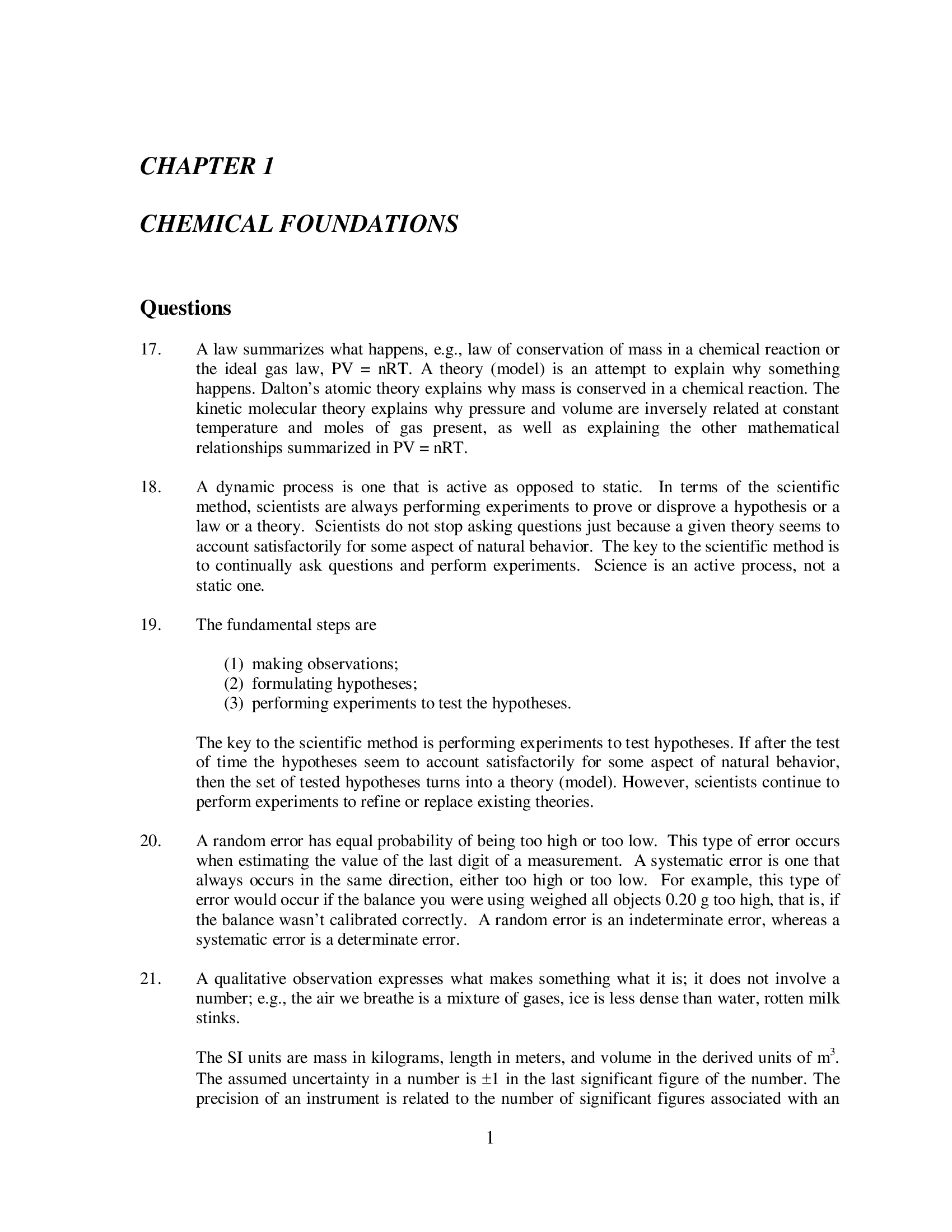
CHAPTER 1 CHEMICAL FOUNDATIONS Questions 17. A law summarizes what happens, e.g., law of conservation of mass in a chemical reaction or the ideal gas law, PV = nRT. A theory (model) is an attempt to explain why something happens. Dalton’s atomic theory explains why mass is conserved in a chemical reaction. The kinetic molecular theory explains why pressure and volume are inversely related at constant temperature and moles of gas present, as well as explaining the other mathematical relationships summarized in PV = nRT. 18. A dynamic process is one that is active as opposed to static. In terms of the scientific method, scientists are always performing experiments to prove or disprove a hypothesis or a law or a theory. Scientists do not stop asking questions just because a given theory seems to account satisfactorily for some aspect of natural behavior. The key to the scientific method is to continually ask questions and perform experiments. Science is an active process, not a static one. 19. The fundamental steps are (1) making observations; (2) formulating hypotheses; (3) performing experiments to test the hypotheses. The key to the scientific method is performing experiments to test hypotheses. If after the test of time the hypotheses seem to account satisfactorily for some aspect of natural behavior, then the set of tested hypotheses turns into a theory (model). However, scientists continue to perform experiments to refine or replace existing theories. 20. A random error has equal probability of being too high or too low. This type of error occurs when estimating the value of the last digit of a measurement. A systematic error is one that always occurs in the same direction, either too high or too low. For example, this type of error would occur if the balance you were using weighed all objects 0.20 g too high, that is, if the balance wasn’t calibrated correctly. A random error is an indeterminate error, whereas a systematic error is a determinate error. 21. A qualitative observation expresses what makes something what it is; it does not involve a number; e.g., the air we breathe is a mixture of gases, ice is less dense than water, rotten milk stinks. The SI units are mass in kilograms, length in meters, and volume in the derived units of m3 . The assumed uncertainty in a number is ±1 in the last significant figure of the number. The precision of an instrument is related to the number of significant figures associated with an 2 CHAPTER 1 CHEMICAL FOUNDATIONS experimental reading on that instrument. Different instruments for measuring mass, length, or volume have varying degrees of precision. Some instruments only give a few significant figures for a measurement, whereas others will give more significant figures. 22. Precision: reproducibility; accuracy: the agreement of a measurement with the true value. a. Imprecise and inaccurate data: 12.32 cm, 9.63 cm, 11.98 cm, 13.34 cm b. Precise but inaccurate data: 8.76 cm, 8.79 cm, 8.72 cm, 8.75 cm c. Precise and accurate data: 10.60 cm, 10.65 cm, 10.63 cm, 10.64 cm Data can be imprecise if the measuring device is imprecise as well as if the user of the measuring device has poor skills. Data can be inaccurate due to a systematic error in the measuring device or with the user. For example, a balance may read all masses as weighing 0.2500 g too high or the user of a graduated cylinder may read all measurements 0.05 mL too low. A set of measurements that are imprecise implies that all the numbers are not close to each other. If the numbers aren’t reproducible, then all the numbers can’t be very close to the true value. Some say that if the average of imprecise data gives the true value, then the data are accurate; a better description is that the data takers are extremely lucky. 23. Significant figures are the digits we associate with a number. They contain all of the certain digits and the first uncertain digit (the first estimated digit). What follows is one thousand indicated to varying numbers of significant figures: 1000 or 1 × 10³ (1 S.F.); 1.0 × 10³ (2 S.F.); 1.00 × 10³ (3 S.F.); 1000. or 1.000 × 10³ (4 S.F.). To perform the calculation, the addition/subtraction significant figure rule is applied to 1.5 − 1.0. The result of this is the one-significant-figure answer of 0.5. Next, the multiplication/division rule is applied to 0.5/0.50. A one-significant-figure number divided by a two-significant-figure number yields an answer with one significant figure (answer = 1). 24. From Figure 1.9 of the text, a change in temperature of 180°F is equal to a change in temperature of 100°C and 100 K. A degree unit on the Fahrenheit scale is not a large as a degree unit on the Celsius or Kelvin scales. Therefore, a 20° change in the Celsius or Kelvin temperature would correspond to a larger temperature change than a 20° change in the Fahrenheit scale. The 20° temperature change on the Celsius and Kelvin scales are equal to each other. 25. Straight line equation: y = mx + b, where m is the slope of the line and b is the y-intercept. For the TF vs. TC plot: TF = (9/5)TC + 32 y = m x + b The slope of the plot is 1.8 (= 9/5) and the y-intercept is 32°F. For the TC vs. TK plot: TC = TK − 273 y = m x + b The slope of the plot is 1, and the y-intercept is −273°C. CHAPTER 1 CHEMICAL FOUNDATIONS 3 26. a. coffee; saltwater; the air we breathe (N2 + O2 + others); brass (Cu + Zn) b. book; human being; tree; desk c. sodium chloride (NaCl); water (H2O); glucose (C6H12O6); carbon dioxide (CO2) d. nitrogen (N2); oxygen (O2); copper (Cu); zinc (Zn) e. boiling water; freezing water; melting a popsicle; dry ice subliming f. Elecrolysis of molten sodium chloride to produce sodium and chlorine gas; the explosive reaction between oxygen and hydrogen to produce water; photosynthesis, which converts H2O and CO2 into C6H12O6 and O2; the combustion of gasoline in our car to produce CO2 and H2O Exercises Significant Figures and Unit Conversions 27. a. exact b. inexact c. exact d. inexact (π has an infinite number of decimal places.) 28. a. one significant figure (S.F.). The implied uncertainty is ±1000 pages. More significant figures should be added if a more precise number is known. b. two S.F. c. four S.F. d. two S.F. e. infinite number of S.F. (exact number) f. one S.F. 29. a. 6.07 × 15 10− ; 3 S.F. b. 0.003840; 4 S.F. c. 17.00; 4 S.F. d. 8 × 10⁸ ; 1 S.F. e. 463.8052; 7 S.F. f. 300; 1 S.F. g. 301; 3 S.F. h. 300.; 3 S.F. 30. a. 100; 1 S.F. b. 1.0 × 10² ; 2 S.F. c. 1.00 × 10³ ; 3 S.F. d. 100.; 3 S.F. e. 0.0048; 2 S.F. f. 0.00480; 3 S.F. g. 4.80 × 3 10− ; 3 S.F. h. 4.800 × 3 10− ; 4 S.F. 31. When rounding, the last significant figure stays the same if the number after this significant figure is less than 5 and increases by one if the number is greater than or equal to 5. a. 3.42 × 4 10− b. 1.034 × 10⁴ c. 1.7992 × 101 d. 3.37 × 10⁵ 32. a. 4 × 10⁵ b. 3.9 × 10⁵ c. 3.86 × 10⁵ d. 3.8550 × 10⁵

Contact the Seller

Please Sign In to contact this seller.


  • 👎  Report Copyright Violation

Frequently Asked Questions

What Do I Get When I Buy This Study Material?

+

When you buy a study material on Passing Grades, an instant download link will be sent directly to your email, giving you access to the file anytime after payment is completed.

Is Passing Grades a Trusted Platform?

+

Yes, Passing Grades is a reputable students’ marketplace with a secure payment system and reliable customer support. You can trust us to ensure a safe and seamless transaction experience.

Will I Be Stuck with a Subscription?

+

No, all purchases on Passing Grades are one-time transactions. You only pay for the notes you choose to buy, with no subscriptions or hidden fees attached.

Who Am I Buying These Study Materials From?

+

Passing Grades is a marketplace, which means you are purchasing the document from an individual vendor, not directly from us. We facilitate the payment and delivery process between you and the vendor.

Does Passing Grades Offer Free Study Materials?

+

Yes, sellers on Passing Grades have uploaded numerous free test banks, exams, practice questions, and class notes that can be downloaded at no cost.

Pasinggrades - Quality Study Materials

USD 15

    • Quality checked by Pasing Grades
    • 100% satisfaction guarantee
    • Seller: studypal
Buy PDF $15

Seller Information

studypal

Member since December 2021

  • icon
  • icon
View Profile
  • total sales

    0
  • Favourites

    0
  • Comments

    0
    ( 0 Ratings )

Item Information

  • Uploaded

    19 January 2022

  • Updated

    01 October 2025

  • Category

    Accounting

  • Item Type

    test bank

  • Tags

    A Complete Solution Manual for Chemistry 9th Edition Authors Steven Zumdahl Susan Zumdahl

Related Exam Prep Guides by studypal

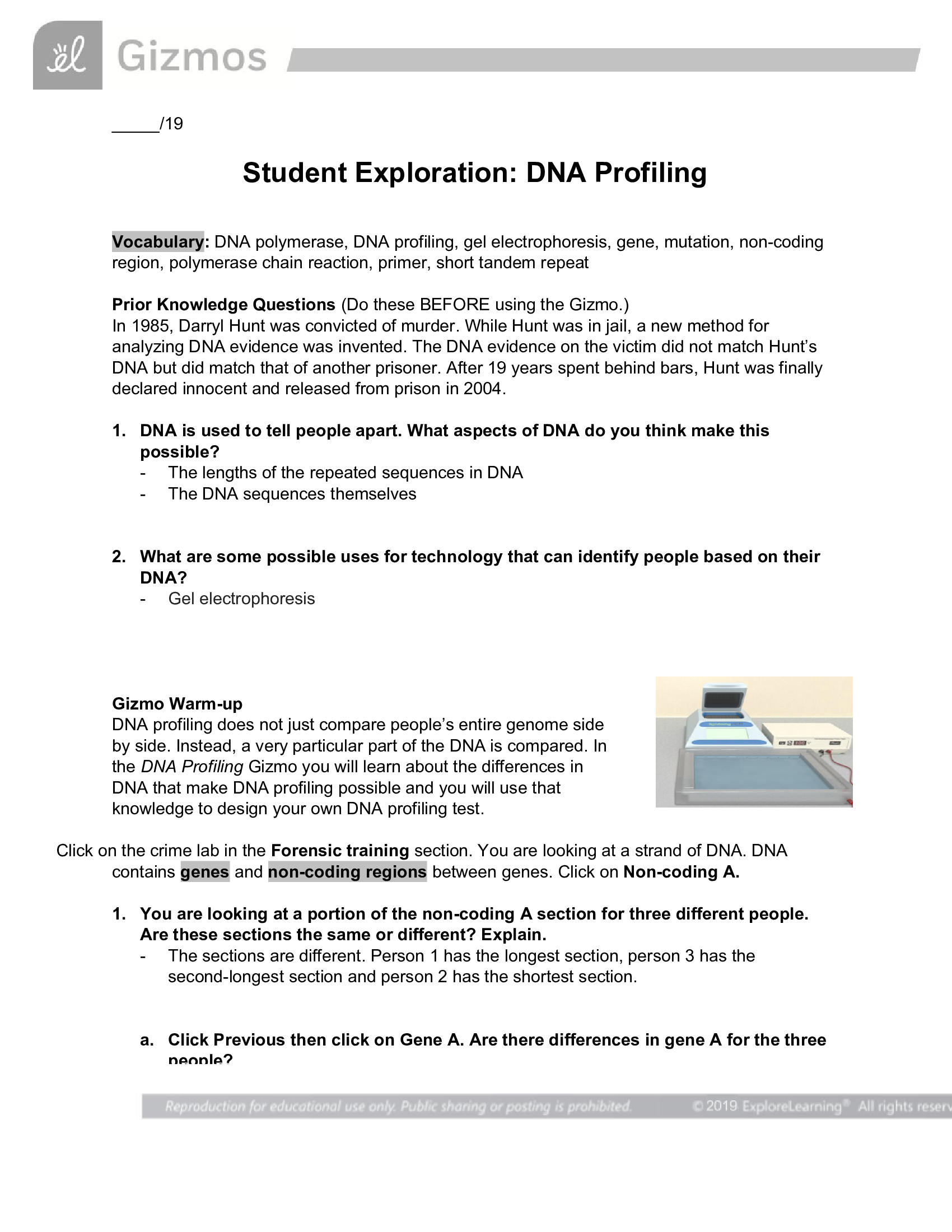
Gizmos - Student Exploration: DNA Profiling Answer key.
View Document

Gizmos - Student Exp...

  • studypal

    studypal

  • test bank

Find comprehensive answers with the Gizmos Student Exploration: DNA Profiling Answer Key. Perfect fo...

15 USD

0

0

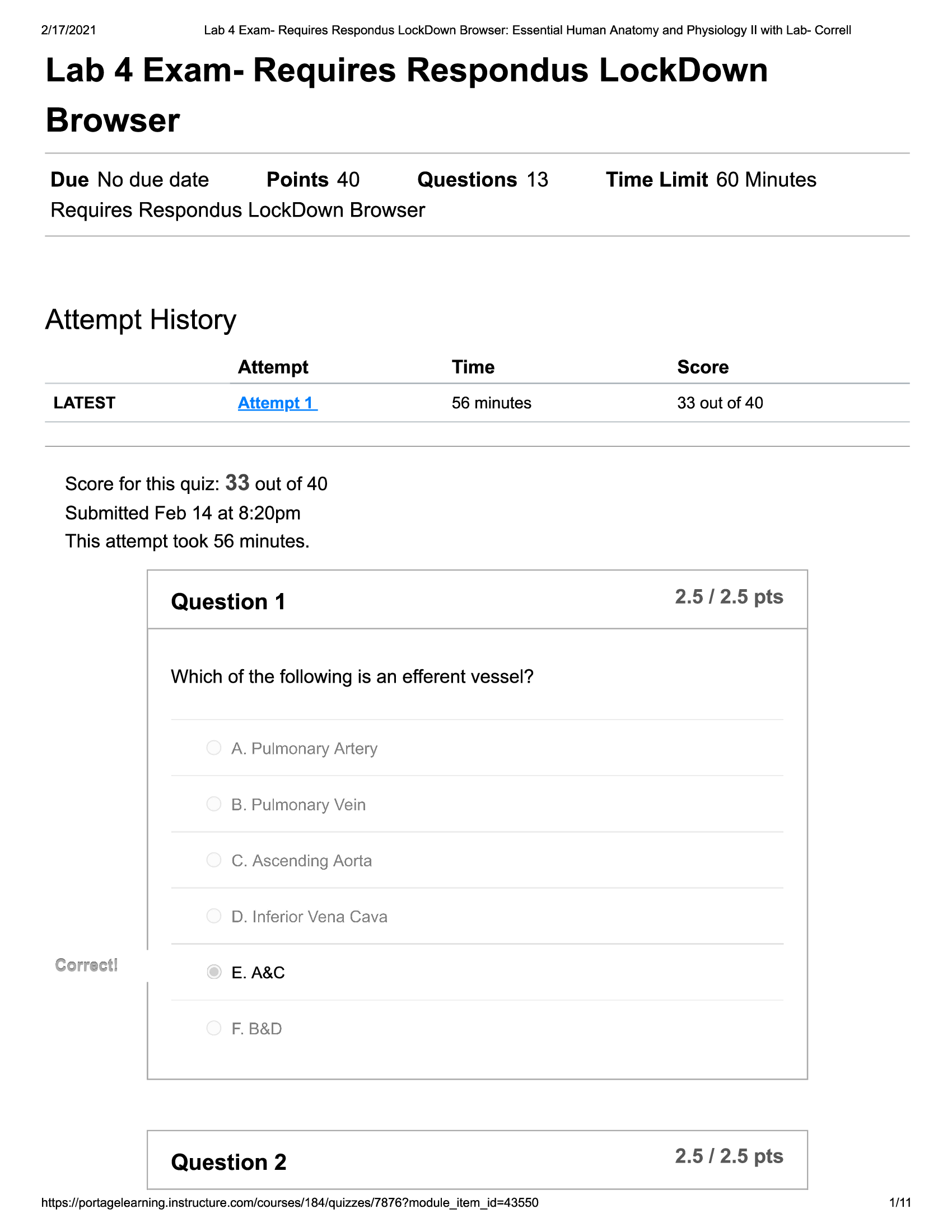
BIOD 152 Module 1 Exam- Portage Learning
View Document

BIOD 152 Module 1 Ex...

  • studypal

    studypal

  • test bank

BIOD 152 Module 1 Exam- Portage Learning...

15 USD

0

0

Primary Professional Military Education (Enlisted) Block 1 to 7, PPME Block 1-7 TEST BANK
View Document

Primary Professional...

  • studypal

    studypal

  • test bank

Primary Professional Military Education (Enlisted) Block 1 to 7, PPME Block 1-7 TEST BANK...

15 USD

0

0

Purchase

Download link will be sent to this email immediately after purchase.

IMPORTANT LINKS

  • How To Upload Class Notes
  • Selling Tips
  • Passing Grades's Study Materials
  • Scholarships for International Students 2025

POPULAR CATEGORIES

  • Law
  • Accounting
  • English
  • Psychology
  • Business
  • Nursing
  • Computer Science
  • General

View Document

  • Blog
  • Contact
  • Delivery Policy
  • Latest Scholarships Around the World
  • How to Pass Bar Exams: Passing Grades’ Strategies
  • How to Study and Pass the CPA Exam
  • All Test Banks
  • Faq
  • Copyright Claims
  • Privacy Policy
  • Terms of Use

KNOWLEDGE BASE

  • How to Write A+ Grade Good Research Paper
  • How to Manage Stress During Exam Period
  • Best Time to Study
  • How to Pass NCLEX-RN Exam
  • How To Effectively Utilize Test Banks
  • Popular Shadow Health Exam Assessments
  • Popular HESI Case Studies
  • How to Prepare for a Nursing Career
  • The Importance Of Summaries in Exam Revisvion

© 2026 Pasing Grades. All rights reserved.