Pasing Grades
  • Start Selling
  • Blog
  • Contact
  • 0

    Your cart is empty!

English

  • English
  • Spanish
  • Arabic
Create Account Sign In
  • Library
    • New Prep Guides
    • Featured Prep Guides
    • Free Exam Prep Guides
    • Best sellers
  • General
  • Nursing
    • Research Paper
    • Case Study
    • Discussion Post
    • Assignment
    • Exam
    • Practice Questions and Answers
    • Test Bank
    • solutions manual
  • Accounting
    • Case Study
    • Thesis
    • Study Guide
    • Summary
    • Research Paper
    • test bank
  • English
    • Creative Writing
    • Research Paper
    • Summary
    • Rhetorics
    • Literature
    • Journal
    • Exam
    • Grammar
    • Discussion Post
    • Essay
  • Psychology
    • Hesi
    • Presentation
    • Essay
    • Summary
    • Study Guide
    • Essay
    • Solution Manual
    • Final Exam Review
    • Class Notes
    • test bank
  • Business
    • Lecture Notes
    • Solution Manual
    • Presentation
    • Business Plan
    • Class Notes
    • Experiment
    • Summary
    • Practice Questions
    • Study Guide
    • Case Study
    • test bank
    • Exam
  • More
    • Computer Science
    • Economics
    • Statistics
    • Engineering
    • Biology
    • Religious Studies
    • Physics
    • Chemistry
    • Mathematics
    • History
    • Sociology
    • Science
    • Philosophy
    • Law
  • Pages
    • About Us
    • Selling Tips
    • Delivery Policy
    • Faq
    • Privacy Policy
  • Flash Sale
  • Home
  • Blog

W.A. Mozart, Piano Concerto in G Major, K. 453, mvt I

W.A. Mozart, Piano Concerto in G Major, K. 453, mvt I

W.A. Mozart, Piano Concerto in G Major, K. 453, mvt I

Last updated 10 April 2022

0

1489

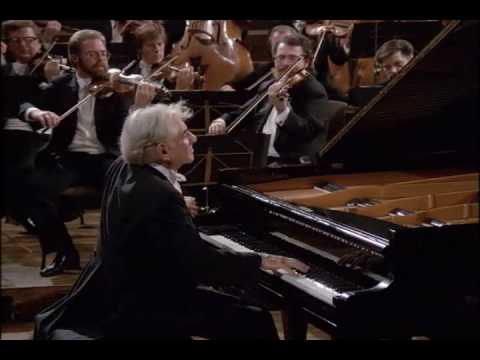
The first movement of Mozart’s Piano Concerto in G Major, K. 453 is marked with an allegro. It has 349 bars composed in 4/4. The allegro incorporates an orchestral ritornello, recapitulation, a solo exposition and a development. In the opening orchestral ritornello, it starts with the introduction of the initial theme through the use of violins and several woodwind supplement figures marked by a cadenza. The beginning phrase of the first movement begins on a tonic which refers to the initial scale degree of the diatonic scale. It then transforms to IV and goes back to tonic. What follows are small figures played using the woodwinds accompanied by violins clearly stating V (Precipotato, N.p).  While going back to the tonic, the piece shifts instantaneously with full orchestra starting the theme of transition. The transition introduces the second theme which is played by the string. After several phrases of strings marking the melody segment of the composition, woodwinds and violin ornamental figures are incorporated giving a pleasing balance and contrast from the first theme. The second theme leads to the last theme that brings about the solo exposition and ends in a forte whereby the piano is not played (Oláh 191).

A notable thing in this movement is that the themes presented are all the same only that they were played using different instruments. Also, the tonality of the movement has its modulation moving from major to minor key. However, the movement has been identified as a major key because the minor key is only played momentarily (Oláh 189).

Regarding instrumentation, there is the use of woodwind instruments which create the woodwind timber. The used timbre is also complemented with the melody that exhibits a very sparse and hanging note. Generally, the movement can be categorized as a polyphony in relation to texture since it has more than two simultaneous lines all having independent melody (Kristine, Andrew, and Joseph 36).

The composer of this piece, Wolfgang Amadeus Mozart was a very popular and influential composer during the classical period. He was born in the Roman Empire and developed an interest in music at a very young age. History has it that he started writing his own compositions when he was six years old. It is even noted that he wrote his first opera known as Mitridate Re di Ponto when he was 14 years old. Regarding the piece under discussion, he wrote it when he had settled in Vienna particularly in the year 1984. While growing up, Mozart drew his inspiration from other popular and influential composers such as Bach, Haydn and Handel. However, it is his father who made him gain an interest in music when he was very young. Therefore, it can be asserted that his style; the classical piano concerto was a product of Bach, Haydn and Handel classical music styles. Through the classical piano concerto style that Mozart created, he wrote more than 500 religious music that were diverse in nature (Oláh 185).

Works Cited

Kristine Forney, Andrew Dell'Antonio, and Joseph Machlis, The Enjoyment of Music, 13th edition. New York: W.W. Norton, 2018.

Oláh, B. E. (2017). VARIATION FORM IN MOZART’S PIANO WORKS. Studia Universitatis Babes-Bolyai-Musica, 62(1), 185-202.

Precipotato. "Wolfgang Amadeus Mozart - Piano Concerto No. 17 In G Major, K. 453". Youtube.Com, 2021, https://www.youtube.com/watch?v=fciaxuZY6zA.

Share this post

0 Comments

Leave A Reply

Categories

  • Study Guide 41
  • Student Knowledge Base 33
  • Assignment 38
  • Analysis 12
  • Case Study 15
  • Exam 24
  • Flashcards 38
  • Cornerstone 20
  • Essay 276
  • Research Papers 44
  • Reviews 35
  • Free Test Bank 77
  • Questions & Answers 92
  • Popular Posts
  • Latest Posts
  • The “Grandma’s Kimchi” College Essay

    The “Grandma’s Kimchi” College Essay

    11 August 2025

  • Mastery EAQ Delegation

    Mastery EAQ Delegation

    29 July 2025

  • Brunner and Suddarth 15th Edition Test Bank PDF – Medical-Surgical Nursing Practice Questions & NCLEX Prep Guide

    Brunner and Suddarth 15th Edition Test Bank PDF – Medical-Surgical Nursing Practice Questions & NCLEX Prep Guide

    25 July 2025

  • AP Exam Dates: Full Schedule, Late Testing, and Important Deadlines

    AP Exam Dates: Full Schedule, Late Testing, and Important Deadlines

    07 November 2025

  • Bontrager’s Textbook of Radiographic Positioning and Related Anatomy Sample Practice Questions + Test Bank

    Bontrager’s Textbook of Radiographic Positioning and Related Anatomy Sample Practice Questions + Test Bank

    29 December 2025

  • Local Artist Programs for Office Walls | Artesty Guide

    Local Artist Programs for Office Walls | Artesty Guide

    27 January 2026

  • ATI Proctored Exam Explained: Format, Scoring & What to Expect

    ATI Proctored Exam Explained: Format, Scoring & What to Expect

    22 January 2026

  • Sterile Processing Technician vs. Surgical Technologist: What’s the Difference?

    Sterile Processing Technician vs. Surgical Technologist: What’s the Difference?

    22 January 2026

  • Best Diamond Stud Earrings to Buy Under $800

    Best Diamond Stud Earrings to Buy Under $800

    20 January 2026

  • Hide Expert VPN: Privacy and Data Protection Online

    Hide Expert VPN: Privacy and Data Protection Online

    20 January 2026

Tags

  • mozart
  • movement
  • piano concerto

IMPORTANT LINKS

  • How To Upload Class Notes
  • Selling Tips
  • Passing Grades's Study Materials
  • Scholarships for International Students 2025

POPULAR CATEGORIES

  • Law
  • Accounting
  • English
  • Psychology
  • Business
  • Nursing
  • Computer Science
  • General

View Document

  • Blog
  • Contact
  • Delivery Policy
  • Latest Scholarships Around the World
  • How to Pass Bar Exams: Passing Grades’ Strategies
  • How to Study and Pass the CPA Exam
  • All Test Banks
  • Faq
  • Copyright Claims
  • Privacy Policy
  • Terms of Use

KNOWLEDGE BASE

  • How to Write A+ Grade Good Research Paper
  • How to Manage Stress During Exam Period
  • Best Time to Study
  • How to Pass NCLEX-RN Exam
  • How To Effectively Utilize Test Banks
  • Popular Shadow Health Exam Assessments
  • Popular HESI Case Studies
  • How to Prepare for a Nursing Career
  • The Importance Of Summaries in Exam Revisvion

© 2026 Pasing Grades. All rights reserved.