
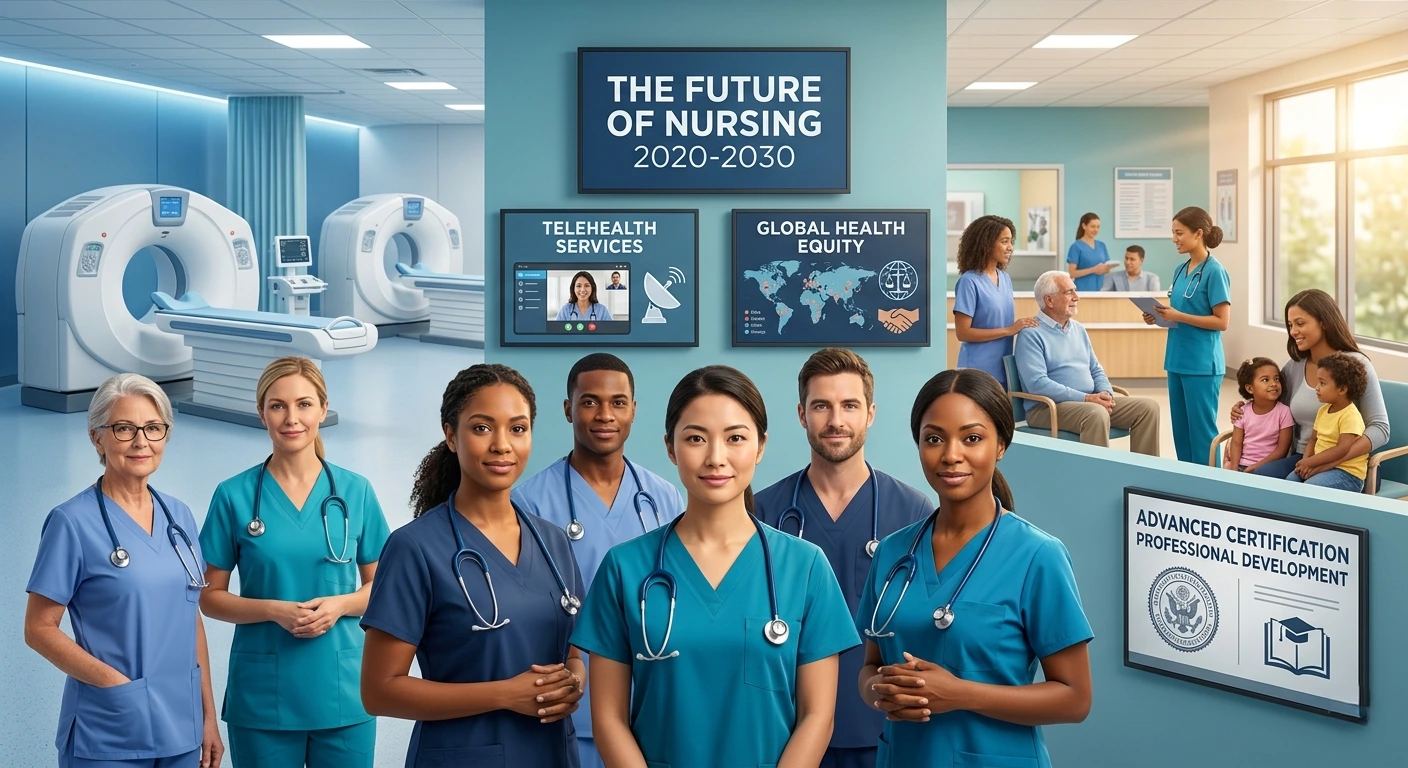
The nurses are heavily depended on by the American system of healthcare. They are known as the foundation of health with a more than five million population. They offer healthcare services to the administrative sector and the civilian continually.
Because of the significance of their work, individuals who perceive them as medical sector founders cannot be faulted. Due to this, education in this career is essential (Wakefield et al., 2021). All nurses must have appropriate requirements and credentials to ensure high quality of the services that they offer.
Discussion of Job Market Options Depending On the Level of Education
I work as a nurse practitioner and I possess a nursing associate degree. Registered nurses’ minimal requirement is a nursing associate degree, but one could perhaps get a position with higher compensation and more responsibility if they possess a bachelor of science in nursing. All in all, the RN title is not recognized to be having a true degree.
However, to become a RN or a licensed nurse practitioner, the minimal education requirement is an associate degree in nursing which is a two-year program. The student is required to do the NCLEX-RN examination after graduating and gets licensed after passing the exam. The associate degree in nursing is the qualification to sit for the NCLEX-RN examination.
Once the registered nurse has obtained the license then they can seek employment. The registered nurses who hold an associate degree in nursing (AND) are expected to perform some of the key duties including assisting doctors with patient evaluations, gathering medical histories, promoting patient counseling, managing medications, and scheduling tests.
Further, it’s important to note that ADNs nurses are hired by the facilities of healthcare to offer services outside their expertise areas. The ADNs new RNs perform general roles which are important including gathering the histories of the patient, assisting doctors to examine the patients, requesting tests, supporting the patients to be ready for procedures, dispensing medications, and giving instructions to patients.
They may specialize through some training in medicine branches including maternal, pediatrics, science, and behavioral issues. Other roles may include being in charge of staff members who are less experienced like certified nursing assistants and licensed practical nurses.
The Recommendations of Report in Charting a Path to Health Equity Achievement
In charting a path to health equity achievement, the professionals of healthcare have formulated recommendations for the process of education on how it should equip and get ready the nurses to manage the challenges of the public health effectively. The required competencies and readings for the doctor of nursing practice, bachelors, and master’s programs have been laid out by the Essentials of the American Association of Nursing Schools (Brewer et al., 2020).
However, social determinants of health, equity, and health promotions are still not incorporated sufficiently into the curriculum of nursing for both undergraduate and post-graduate education of nursing despite these repeated guidance and requests. Nursing is being integrated by community contexts such as skilled nursing facilities, workplaces, and schools into their everyday duties. Other cutting-edge methods of delivering care are highlighted using telehealth visits in homeless shelters and libraries.
Related article: The History of Nursing During the 1930s and 1940s
The nurses are trained practice in the hospitals even though community settings and telemedicine always not receive same preparedness and training level. Through community education, the nursing students can collaborate with individuals working within the non-health sector settings or fields and learn a wide care contexts’ range.
To construct a future with possibilities that are more equitable and to ensure healthcare improvement, disruption of entrenched firm traditional changes will be required. A future clinical leadership era which is prepared to advance and utilize the developing body of evidence and demonstrates the relationship between relative health and social determinants of health and embraces diversity is required since the same nurse role of ensuring community members’ well- being and safety has not changed.
The nurses are required lead in the formulation of plans for country’s health enhancement and at the same time consider the consider the needs of the neighbors, most undeserved people, and communities and the critical necessity of health justice achievement. To address the social determinants of health, change is being implemented. My goal is to be a completely qualified certified pediatric nurse. A RN must complete five years as a pediatric nurse practitioner or in the previous 24 months have completed 1800 hours pediatric clinical work to be a CPN. Further, a RN must have completed at least 3000 hours within 5 years while working in the pediatric nursing and at least 1000 hours within the previous 24 months to become a CPN.
Discussion on How Raising the Bar in Education Affects Competitiveness in Job Market and Future Nursing Role
To improve the quality of patient care, raising my education bar will provide me with the required skills. I will have the ability to unquestionably deliver standard and quality treatment and to enhance positive patient outcomes at the facility of healthcare I will work for. Through education improves people’s access to treatment and also raises their self-awareness concerning health (King et al., 2020). The idea that health is boosted by education through strengthening
individual sense of control and enhancing effective agency which in turn facilitates and promotes healthy life habits is accurate. The education positive impacts are self-amplifying, long-lasting, and cumulative and increases throughout the life of an individual.
The Discussion of the Relationship of the Scope of ANA Standards for Code of Ethics and Practices with Continuing Nursing Education to Knowledge, Competency, and Attitudes
The tasks regarded to a qualified nurse practitioner as authorized and competent to perform under their professional license rules are referred to using the term "practice standard." A RN seeks current knowledge and expertise and promotes critical thinking in the in nursing practice.
The capabilities of each standard may conform to the capabilities of the other standards. The list of skills is not exhaustive but full of options. The applicability of a particular competency depends on the circumstances. For instance, a nurse professional must gather data that is crucial to critical or unconscious patient who comes in an emergency to the hospital without the family’s company. The interprofessional collaboration of nurses improves due to lifelong education and they have more nursing diagnosis favorable trustworthiness assessment.
When nurses do not have sufficient information, it becomes difficult for them to make judgements resulting to them having a poor attitude to nursing profession. The nurses are able to grasp the nursing code of ethics through the lifelong education. This has been approved by the American Nurses Association as fulfilling their standards and that regardless of the settings, position, specialty areas, and demographics, all RNs must follow the practice scope of rules for the American Nurses Associations (Chan et al., 2020).
Discussion on Whether Nursing Education Continuation Should Be Compulsory
In my opinion, nursing education should be compulsory and it must practice and educate redesigned roles of the nurse in the dynamic system of healthcare, care management, and performance approaches of improvement.
They should provide advancement seamless opportunities to programs of higher degree and establish and implement lifelong learning. Various certification and licensing organizations must test for essential competencies and skills’ mastery demonstration in addition to the written tests and a degree.
The nurses must be diverse to address representation shortage of men in the industry of nursing and also shortage in the ethnic and minority groups. Due to this nurses through lifelong learning can get experience in various areas.
Written by Mina Cheriki.
References
Brewer, L. C., Fortuna, K. L., Jones, C., Walker, R., Hayes, S. N., Patten, C. A., & Cooper, L. A. (2020). Back to the future: achieving health equity through health informatics and digital health. JMIR mHealth and uHealth, 8(1), e14512.
Chan, T. E., Lockhart, J. S., Thomas, A., Kronk, R., & Schreiber, J. B. (2020). An integrative review of nurse practitioner practice and its relationship to the core competencies. Journal of Professional Nursing, 36(4), 189-199.
King, R., Ryan, T., Wood, E., Tod, A., & Robertson, S. (2020). Motivations, experiences and aspirations of trainee nursing associates in England: a qualitative study. BMC Health Services Research, 20(1), 1-10.
Wakefield, M., Williams, D. R., & Le Menestrel, S. (2021). The future of nursing 2020-2030: Charting a path to achieve health equity. National Academy of Sciences.
0
19