
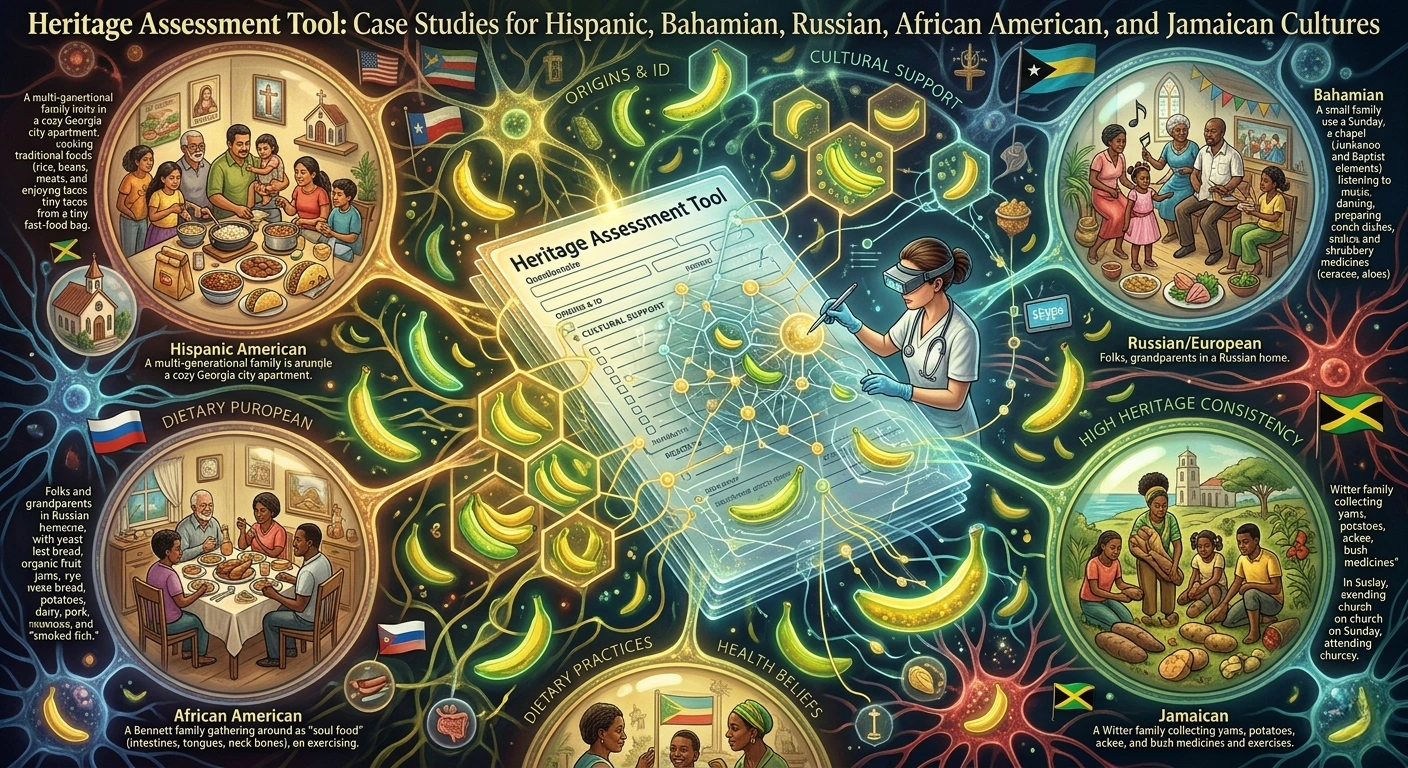
The heritage assessment is a comprehensive scholarly way of dealing with the assembly of data presented by an individual or a family. The evaluation allows for the legacy accumulation of profound physiological, psychological and sociological information of an individual to guide the examination of health customs of diverse groups.
The assessment is used as a part of the primary step of the heath process in which the participant provides a far-reaching collection of data utilizing the data-gathering tool, the therapeutic description of the person and his biography.
The focus is to identify the health problems demonstrated by the individual. The report of the assessment is treated as an actual or probable impression of the overall health profile of the individual.
The legacy assessment is also used in evaluating the achievement of goals set during the initial health assessment plan while starting and provides for key considerations while conducting the process (World Health Organization, 2026).
In social insurance, the focus is on the patient and how to guide them to achieve health status in their family so that they can finally have a productive culmination of their health problems. The procurement of social insurance is specific to the needs of a single patient as two individuals are not identical.
Despite the fact that people come from a broad range of societies and cultures and they live with other individuals from a diverse background, many have kept their sturdily established social practices, traditions, and convictions.
The Heritage Assessment tool shows the degree to which a person’s living style is reflected in the society. This is a dependent variable and can be used to evaluate wellbeing support, insurance, and reclamation of an individual’s social beliefs. Each person’s legacy shifts between various societies of determination of one’s religious, ethnic and cultural background.
Heritage and Health
Every individual has a Cultural Heritage, and each culture uniquely appreciates the world. The Culture is an acquired trademark and incorporates information, aptitudes, custom, convictions, likes, and aversions.
The crucial part of cultural heritage is emulating, regarding the diversities, and unites individuals to confront the future by advising, seeing and offer significance to the comprehension of the past.
The heritage evaluation tool was developed to gather data about various societies and nationalities, synthesizing cultural competencies among healthcare professionals. It remains a resourceful tool for researching specific populations or ethnic groups.
Nursing Exam Prep Note: This framework is a core component of the modern nursing curriculum. For students preparing for clinical exams or the NCLEX, you can access the comprehensive Edelman’s Test Bank for Health Promotion Throughout the Life Span (11th Edition) to practice heritage-related questions and clinical rationales.
The Cultural Heritage & Health Assessment Tool
Purpose: This tool is designed for healthcare professionals to evaluate the degree to which a patient’s lifestyle reflects their traditional cultural heritage. Understanding these variables allows for personalized care plans that respect Health Maintenance, Protection, and Restoration.
Section 1: Origins and Social Identity
- Where were you born? ___________________________
- Where were your parents born? ___________________________
- If you immigrated to the U.S., how many years has your family lived here?
- [ ] 1st Generation (Self/Parents)
- [ ] 2nd Generation
- [ ] 3rd Generation or more
- What is your primary language for reading and writing? ___________________________
- Do you live in a multigenerational household? (e.g., living with parents, grandparents, or extended family).
- [ ] Yes
- [ ] No
Section 2: Cultural and Religious Support Systems
- How often do you participate in religious or cultural ceremonies?
- [ ] Weekly
- [ ] Monthly
- [ ] Only on special holidays
- [ ] Never
- Are Bible teachings, prayer, or spiritual singing a central part of your daily or weekly routine?
- [ ] Yes
- [ ] No
- Do you maintain regular contact with extended family members who live in your country of origin? (e.g., via Skype, phone, or annual visits).
- [ ] Yes
- [ ] No
Section 3: Dietary Practices and Nutrition
- How would you describe your daily diet?
- [ ] Traditional cultural meals prepared from scratch.
- [ ] A mix of traditional and local "fast food" or convenience options.
- [ ] Mostly westernized/local diet.
- Do you incorporate any of the following staples into your diet regularly? (Check all that apply):
- [ ] Rice, beans, and meats (Traditional Hispanic style)
- [ ] Fresh seafood or conch (Traditional Bahamian style)
- [ ] Rye bread, wheat, potatoes, or dairy (Traditional Russian/European style)
- [ ] Home-preserved jams or yeast breads
- Are your primary meals usually eaten as a family social gathering?
- [ ] Yes
- [ ] No
Section 4: Health Beliefs and Traditions
- In your culture, what is the primary source of health and strength?
- [ ] Divine Power/Prayer
- [ ] Scientific Medicine
- [ ] A balance of both
- When you or a family member feels ill, what is the first step you typically take?
- [ ] Consult a doctor immediately.
- [ ] Use a home remedy (e.g., herbal tea, "bush medicine," ceracee, or aloes).
- [ ] Prayer or spiritual consultation.
- Do you follow a specific program to protect your health? (e.g., specific foods for "purity," immunizations, or annual physicals).
- [ ] Yes
- [ ] No
- How do you define "Health Restoration"?
- [ ] Being able to complete daily activities independently.
- [ ] The absence of clinical symptoms.
- [ ] Achieving a spiritual balance.
Scoring and Clinical Application
- High Heritage Consistency: Patient strongly adheres to traditional practices (Diet, Religion, Multigenerational living). Nursing care should prioritize integrating these traditions into the treatment plan.
- Low Heritage Consistency: The patient has largely assimilated into the local culture. Care should focus on standard clinical practices while remaining sensitive to underlying cultural roots.
Heritage Interview of 1st Family: Hispanic American culture
The first family was from the Hispanic American culture, and the family born and raised in the Georgia city of America. They are the originals who had moved to the U.S. centuries ago. They carried their guardians with them, and they all live in the same family, which is notably normal among “Hispanics.”
This family is exceptionally conventional and cooks meals from their cultural foundation, which incorporates meats, rice, and beans with the use of fat, with just a little measure of crisp products of the soy incorporated into their eating regimen.
Most of the common dishes among the Hispanics are majorly the basic meals with the majority of their suppers being expansive and substantial.
They have a tendency to eat out at Fast food eateries, and their favoured choices are burgers and Georgia food, for example, a dish called “tacos de fajita.” Family life is centred around Georgia conventions, and a preferred dialect is Spanish for perusing and composing.
Substantial family social events are remarkably regular in this family, particularly around the religious occasions. Each year, this family goes to Georgia to visit their more distant family and companions. This family goes to the chapel week after week, and they are Catholics. The impression of the Bible teachings with frequent prayers is indispensable for this Family.
Heritage Interview of 2nd Family: Bahamian culture
The second family ascribes to the Bahamian culture with their family members born and raised in the Bunche Park, Florida city in the U.S. Like the Hispanic American culture family, this family is also among the 1st generation that had immigrated to the U.S.
The main family member’s name is “Junkanoo,” and the Bahamian culture is one of solid impact, particularly in the choice of their nutritional nourishments, music, movement, and religion.
As a “Bahamian,” one learns at an extremely youthful age the benefit of going to chapel and how to implore. As a youngster experiencing childhood in the “Bahamas,” Sunday is referred to as the day of love, with a good number of them being “Baptist or church of God admirers or Christians.”
In addition, confidence is not hard as one is taught to depend on God and trust that he is the fundamental wellspring of wellbeing and quality.
The “Bahamians” are family oriented, and it is notably normal for Families to assemble after chapel to have one major dinner and think back about the past. Numerous nutritional nourishments, particularly local sustenances, contain foods grown from the ground.
Conch is one of the fundamental fixings in a few dishes including plates of mixed Greens and Stews. Discussing sicknesses is never inflexible, as somebody generally thinks around a shrubbery prescription that is valuable to cure one’s illness.
The ceracee and aloes are basic solutions for the frosting and influenza are used as cures for numerous ailments, which are commonly practiced by many relatives.
Help is often sought out when these basic cures fail to work, and an eating regimen comprising of natural products, grains and fish, vegetable are taken over. Both spouse and wife do yearly physical check-ups and immunizations (Shin, n.d).
Heritage Interview of 3rd Family: European Culture from Russia
The Third family was from “European culture, from Russia.” The folks and grandparents of this family were conceived in Russia. Since this family is an original family that moved to the U.S. despite everything, they remain exceptionally conventional and take after their predecessors’ strides.
Sustenance traditions at formal events incorporate yeast bread and organic product jams. These are key elements of all family festivities and religious celebrations. In everyday life, staples of the eating regimen are rye, wheat, and potatoes. Additionally, dairy is esteemed for its immaculateness and wellbeing giving qualities.
Pork is the most commonly eaten meat among Russians. Drinking brew and eating “smoked fish” is additionally greatly famous amid unique occasions.
The greater part of the suppers are Cooked at home with family social affairs discussed at meals and eating together. The occasions are commended with loved ones with dinners arranged at home and sans preparation.
The Russian family thinks that it is vital to stay in contact and to have great associations with their more distant families, regardless of the fact that they are on the opposite side of the world. They stay in contact by making telephone calls, composing messages, and by Skype.
About once per year, the Russian family can make an excursion abroad to see their close relatives, uncles, grandparents, and folks. Additionally, the Russian family is exceedingly profound and ascribe to honest Christianity, which is a basic piece of their life.
They implore, day by day, before suppers, before sleep time and when they wake up. Singing Christian melodies and going by their congregation at any rate week after week is key for other worldly development and prosperity.
Heritage Interview of 4th Family: African American Culture
The family interviewed was the Bennetts natives of America. In the African American culture similar beliefs are in God as many are of Baptist and church of God worship and like Bahamians they rely heavily on prayer.
Most African Americans are not as close with their distant family members and are private about their illnesses but will share with immediate family members about their health. They often do not seek medical attention unless something happens that they themselves cannot handle. The Bennetts say they exercise when they can and only go to the hospital if it is necessary.
They do have health insurances and get vaccines such as the flu vaccines yearly. Some of the foods that they make are handed down from various family members and they treasure recipes.
African Americans eat a lot of ‘soul’ foods, as they were often unable to afford the more expensive cuts of meats they used the parts of meats thrown out by many, like intestines, tongues and neck bones to make their foods. As Bahamians many African Americans and Jamaicans have descendants from Africa and make traditional foods with these portions of meats as well.
Heritage Interview of 5th Family: Jamaican Culture
The family interviewed were the Witters’ that are native of Kingston Jamaica and currently reside in Texas for approximately two years.
Jamaicans are known for their fine cuisine, as well as music. The largest religion in Jamaica is the Christian faith and Anglican, Baptist and Church Of God churches can be found throughout the country. The Rastafarian movement is a product of the larger Christian culture but its origins were influenced by African beliefs.
Jamaicans love to eat from the earth and eat a lot of yams, potatoes and ackee. Jamaicans like Bahamians believe in the use of bush medicines, as the belief is there is a bush medicine for all illnesses. Jamaicans also hold very close family ties and are close with their immediate families and if they are ill would seek council from family.
Their strong belief in God has also strengthened their faith and influenced their prayer lives. The Witters go to church on Sundays as well and they also exercise at least 3 times per week. They do not indulge in fast foods and are very health conscious. They often seek help when common remedies do not work for their illnesses.
Traditions held by Bahamians, Jamaicans and African Americans are from the older family members from generation to generation and by the oldest family member which is usually a grandmother or grandaunt. These three cultures believe in a divine power and it is seen by prayer and going to church to worship.
Health maintenance is defined as a systematic program or procedure planned to prevent illness, maintain maximum function and promote health (Mosby, 2014). Health promotion is how one manages his health by preventing and promoting good health.
Health promotion is central to healthcare and to nursing care at all levels including primary, secondary and tertiary and it is important in prevention of illness progression. Health restoration is restoring an individual to a functioning level of health where they are able to carry out activities of daily living independently.
It is also how an individual approaches and treats the illness once they are diagnosed. Health protection deals with how one maintains and protects their health on a daily basis.
Nurses come in contact with these diverse cultures on a daily basis and have to act as advocates, educators and promoters of health. The heritage assessment tool provides information that is needed by nurses to help them understand where individuals come from.
People approach health maintenance, health restoration and health promotion differently based on heritage and culture. As nurses in order to give the best care we must base that care on peoples culture as this shows them that we care about who they are and where they come from.
Common Health Traditions Based On Cultural Heritage
All the three different cultures follow the proper diet with the care of the Health Maintenance, Health Protection, and Health Restoration.
These three Cultures believes in a Divine Power, and it is seen by petition to God and going to chapel to venerate. Wellbeing support is characterized as an orderly program or method wanted to anticipate sickness, keep up the greatest capacity of wellbeing and advance health.
Health advancement is the manner in which one deals with prevention to maintain their wellbeing and promote their health.
Every one of the three Cultures also had some form of home cures alongside a comprehensive methodology. For example, the “Hispanic-Americans” often utilize a tea as a home remedy for some mild ailments. It is typically made in a particular and recommended way and comprises of various flavours, herbs, or organic products.
Additionally, Wellbeing rebuilding involves restoring a person to a working level of wellbeing where they can complete exercises of day to day living freely. It also includes individual methodologies and remedies to sickness. Wellbeing insurance entails how one keeps up and secures their wellbeing every day.
Moreover, the Heritage Assessment tool gives data that is required by medical attendants to offer them some assistance with understanding where people originate from. Individuals approach wellbeing upkeep, wellbeing rebuilding, and wellbeing advancement distinctively in view of legacy and society.
As medical attendants with a specific end goal to give the best care, we should base that Care on people’s culture as this demonstrates to them that we think about who they are and where they originate. (Prenhall, n.d)
References
Edelman, C. L., & Kudzma, E. C. (2026). Health promotion throughout the life span (11th ed.). Elsevier.
Sohn, L. (2010). Health and health care of Korean American older adults. Stanford University School of Medicine. https://geriatrics.stanford.edu/wp-content/uploads/downloads/ethnomed/korean/downloads/korean_american.pdf
World Health Organization. (2008). Assessing the national health information system: An assessment tool (Version 4.00).https://iris.who.int/handle/10665/43932
0
1499