
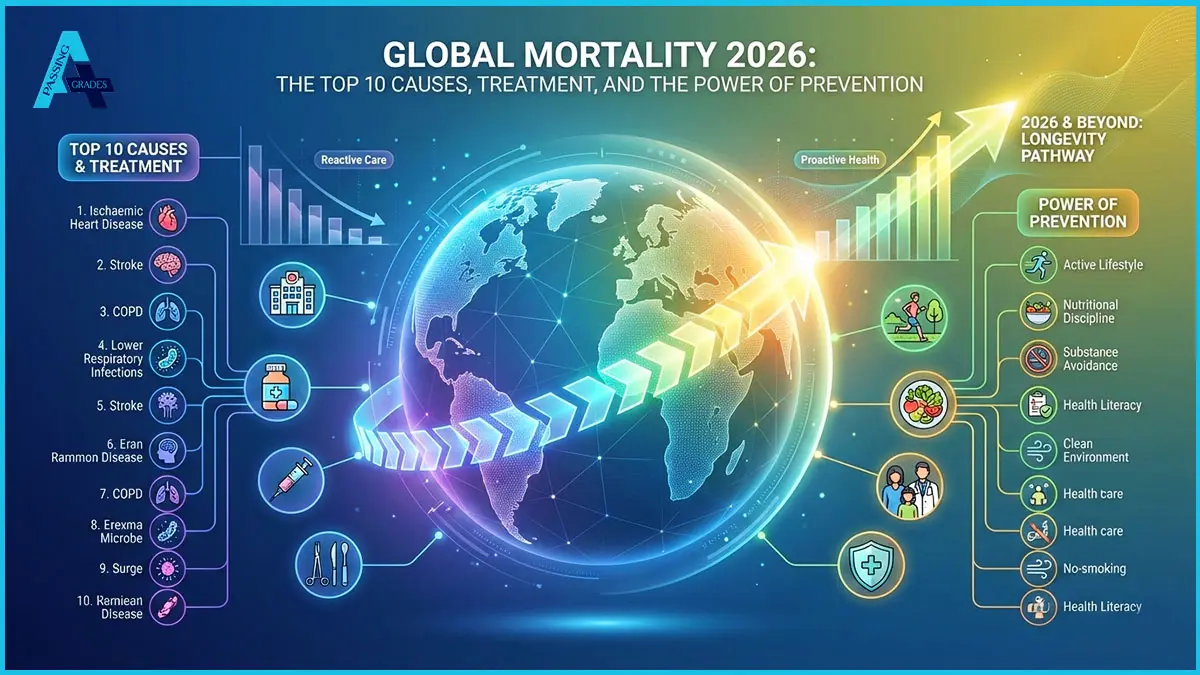
In the current decade, the global health landscape has shifted significantly. While infectious diseases once dominated historical records, we are now firmly in the era of Non-Communicable Diseases (NCDs). According to the World Health Organization (WHO) and the latest ICD-11 data, seven of the top ten causes of death are non-communicable, accounting for approximately 74% of all deaths globally.
To understand these causes, we must look beyond where they are treated; whether in a hospital or at home, and focus on the underlying biological and environmental triggers.
1. The ICD Framework: Categorizing Global Health
The ICD-11 is more than just a list; it is a global diagnostic standard for all health conditions. For mortality reporting, these are generally categorized into three broad groups:
- Non-Communicable Diseases (NCDs): Chronic conditions like heart disease and cancer.
- Communicable, Maternal, and Neonatal Conditions: Infectious diseases and birth-related complications.
- External Causes (Injuries): Accidents, violence, and self-harm.
The Top 10 Causes of Death Today
The following table outlines the leading causes of mortality worldwide, their primary ICD-11 classifications, and the typical focus of intervention.
|
Rank |
Cause of Death |
Category |
Primary Treatment Focus |
|
1 |
Ischaemic Heart Disease |
NCD (Cardiovascular) |
Management/Surgical |
|
2 |
Stroke |
NCD (Cerebrovascular) |
Rehabilitation/Acute Care |
|
3 |
Chronic Obstructive Pulmonary Disease (COPD) |
NCD (Respiratory) |
Long-term Management |
|
4 |
Lower Respiratory Infections |
Communicable |
Medical/Antimicrobial |
|
5 |
Neonatal Conditions |
Maternal/Child Health |
Specialized Acute Care |
|
6 |
Trachea, Bronchus, and Lung Cancers |
NCD (Oncology) |
Surgical/Chemo/Radiology |
|
7 |
Alzheimer’s Disease & Dementias |
NCD (Neurological) |
Supportive/Palliative Care |
|
8 |
Diarrhoeal Diseases |
Communicable |
Hydration/Prevention |
|
9 |
Diabetes Mellitus |
NCD (Metabolic) |
Lifestyle/Pharmacological |
|
10 |
Kidney Diseases |
NCD (Renal) |
Dialysis/Transplant |
2. Cardiovascular Diseases: The Silent Giants
Ischaemic Heart Disease and Stroke remain the world’s biggest killers. These conditions are often the result of atherosclerosis; the buildup of fats and cholesterol in the artery walls.
Treatment vs. Prevention
- Medical Treatment: Includes statins to lower cholesterol, beta-blockers to manage heart rate, and anti-platelet therapy.
- Surgical Intervention: In acute cases, procedures like angioplasty (stents) or Coronary Artery Bypass Grafting (CABG) are required. These are high-risk, high-cost, and require significant recovery time.
- Prevention: This is the "gold standard." Over 80% of premature heart disease can be prevented through tobacco cessation, reducing salt intake, and increasing physical activity.
3. Respiratory Health: COPD and Infections
COPD (Chronic Obstructive Pulmonary Disease) and Lower Respiratory Infections (like pneumonia) represent a massive burden on global healthcare systems. While pneumonia is often an acute "inpatient" event, COPD is a progressive "long-term care" condition.
The Prevention Edge
Prevention for respiratory health is heavily tied to environmental factors. Reducing exposure to tobacco smoke (both active and passive) and improving air quality (indoor and outdoor) are far more effective than the chronic use of bronchodilators or oxygen therapy in the later stages of the disease.
4. The Rising Tide of Neurological & Metabolic Disorders
Alzheimer’s disease and Diabetes have climbed the rankings over the last decade. As global populations age, dementias have become a leading cause of disability-adjusted life years (DALYs).
The Cost of Treatment
Treatment for Alzheimer’s is currently limited to managing symptoms and providing supportive care, which is incredibly taxing on family and government resources. Diabetes, meanwhile, requires a lifetime of monitoring and medication (insulin).
Expert Insight: Prevention in these areas is often "upstream." Research shows that managing mid-life blood pressure and blood sugar levels significantly reduces the risk of developing vascular dementia later in life.
5. The Philosophy of Prevention: Why It "Out-Rules" Treatment
In the fight against global mortality, evidence suggests that prevention "out-rules" both medical and surgical methods in terms of long-term sustainability. From an economic and humanistic perspective, the case for proactive health is undeniable.
A. Economic Efficiency (The "Best Buys")
The WHO refers to certain preventative measures as "Best Buys" entailing interventions that cost less than $100 per disability-adjusted life year saved.
- Knowledge as Capital: Education regarding nutrition and hygiene requires very little financial investment compared to the multi-million dollar infrastructure of a surgical theater.
- Systemic Savings: A dollar spent on a childhood vaccination program can save dozens of dollars in future emergency room visits and lost economic productivity.
B. The Human Factor: Avoiding the "Fatal Risk"
It must be noted that surgical treatment is never 100% guaranteed. Every time a patient undergoes an invasive procedure, they face risks of infection, anesthesia complications, and surgical error.
- Prevention has a "side effect" profile that is almost entirely positive: better sleep, improved mood, and higher energy levels.
- Treatment often involves a trade-off: chemotherapy kills cancer cells but also damages healthy ones; surgery fixes a valve but leaves the body physically traumatized.
6. Actionable Strategies for Prevention
To reduce the burden of these major causes of death, global health initiatives focus on common "risk clusters."
The "Four Pillars" of Longevity
- Nutritional Discipline: Shifting toward a plant-forward diet low in processed sugars and trans fats.
- Consistent Movement: Aiming for 150–300 minutes of moderate-intensity aerobic activity per week, as recommended by the WHO.
- Substance Avoidance: Eliminating tobacco use and significantly limiting alcohol consumption.
- Health Literacy: Understanding your numbers (Blood Pressure, BMI, and Blood Glucose) allows for early intervention before a condition becomes a "calamity."
Conclusion: The Shift from "Sick-Care" to "Health-Care"
The ICD-11 provides the blueprint for identifying what kills us, but the responsibility for how we live lies in the balance of prevention and treatment. While surgical and medical advancements are miracles of modern science, they are often reactive—fixing a problem that has already caused immense pain.
By prioritizing discipline, education, and early lifestyle intervention, we don't just delay death; we improve the quality of the life we are living. Prevention is not just the most cost-effective method; it is the most compassionate one.
0
1571