
The Scholastic Assessment Test (SAT) is a standardized exam used primarily used for college admissions in the United States. It's designed to assess a high school student’s readiness for college. SAT exams are administered by the College Board. In 2025, a major change has arrived: the SAT is now fully digital for all U.S. and international students. This is the biggest shift the exam has seen in years.
This guide is designed to help you understand exactly what the Digital SAT looks like in 2025, how to best prepare, what changes to expect, and answers to the most common SAT questions students have. If you’re getting ready to take the SAT this year, this article is your go-to resource.
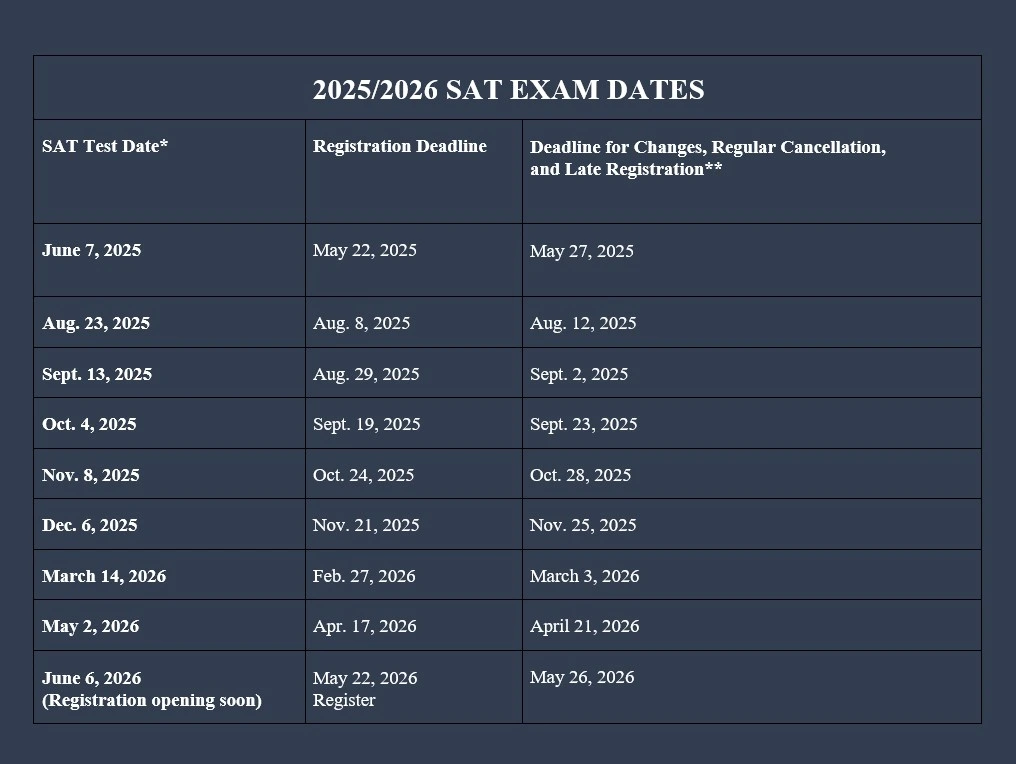
SAT 2025 Timetable can be found at the end of this article.
2025 SAT Practice Study Materials
SAT Practice Test - Math:
Practice your math skills with the official 2025 test materials
SAT Prep Vocabulary List - Vocabulary Practice:
Boost your word knowledge with this comprehensive list
SAT English Vocabulary - Vocabulary Practice:
Sharpen your English vocabulary for test success
Section 1: What’s New in the Digital SAT?
Since March 2025, the College Board, an organization responsible for administering SAT exams rolled out the digital SAT in USA. The transition had begun earlier in 2023 and its meant to change globally. Currently, all students are required to take SAT on the Bluebook testing app using either a tablet or computer.
Key changes in the Digital SAT format include:
- Shorter test length: The new SAT lasts about 2 hours and 14 minutes, compared to the previous 3 hours. This makes the test less exhausting and more focused.
- Adaptive testing: Each section is divided into two modules. The difficulty of the second module is based on your performance in the first. This adaptive model allows the test to better match each student's skill level and still produce a reliable score.
- Calculator allowed throughout the Math section: A built-in Desmos-style graphing calculator is available for the entire Math section. Students can also bring their own approved calculator, but it’s not required.
- Faster score reporting: Students typically receive their scores within a few days, usually around five. This is a major improvement over the previous 2-3 week wait.
- New tools in the interface: The digital SAT includes tools like question flagging, a countdown clock, and a built-in notepad. Students can highlight text and navigate more easily.
These changes affect how students approach test day. For example, timing strategies must adjust to the new format, and students need to feel comfortable reading and solving problems on a screen. However, the new format can also level the playing field by offering better accessibility features and a more personalized testing experience.
Section 2: How to Prepare for the Digital SAT
Success on the Digital SAT requires smart preparation, both in mastering academic content and getting used to the digital test environment. Here’s how to build a solid prep strategy:
1. Create a Study Timeline:
Start at least 3 to 6 months before your test date. Begin with a diagnostic test using the College Board’s Bluebook app to identify strengths and weaknesses. From there, create a weekly study plan that includes specific goals and practice.
2. Use Trusted Study Resources:
- Khan Academy (official SAT prep partner): Offers personalized practice aligned with College Board standards.
- College Board’s Bluebook App: Provides full-length digital practice tests in the exact format of the real SAT.
- Third-party tools: Apps like UWorld, Magoosh, and Princeton Review offer helpful practice problems and video explanations.
3. Practice With Digital Tests:
It’s essential to practice with the actual Bluebook app to get used to the tools, interface, and question styles. Focus on:
- Navigating the modules
- Using the built-in calculator
- Managing the countdown timer
4. Master the Tools:
- Learn how to flag questions you want to return to.
- Use the highlighter to mark important text in reading passages.
- Practice using the Desmos-style calculator efficiently.
5. Build Digital Test Stamina:
Unlike paper tests, digital exams require screen focus and navigation. Train your eyes and mind by completing full-length tests in one sitting. Get used to scrolling, reading on a screen, and using a digital notepad.
6. Prepare for Adaptive Difficulty:
Understand that your performance on the first module of a section affects which questions appear next. Aim to do your best from the start. If the second module feels harder, that may mean you performed well in the first one!
7. Balance Content Review With Digital Skills:
Keep reviewing core math, grammar, and reading skills, but spend equal time becoming fluent with the digital format. This balance is key to scoring well.
Section 3: Common Mistakes and How to Avoid Them
1. Overrelying on old prep materials:
Paper-based practice books can still help with content review, but they don’t reflect the digital experience. Always include digital practice.
2. Ignoring the adaptive format:
Some students think each module is the same. It’s not. Learn how the first module affects the second and give your best effort from the start.
3. Poor time management on the screen:
Digital tools help, but they can also distract. Practice pacing yourself using the Bluebook app.
4. Not practicing with the digital calculator:
Even if you’re comfortable with your own calculator, the built-in one is different. Make sure you know how to use it quickly.
5. Not updating logistics:
Test centers, dates, and technical requirements are different now. Make sure your device is approved, charged, and ready.
Avoiding these mistakes gives you a better shot at hitting your target score.
Conclusion
The Digital SAT is here, and it’s not going away. Adapting to this new format is key to succeeding in 2025 and beyond. With shorter sections, adaptive testing, and tech tools built in, today’s SAT is more streamlined but still challenging.
Preparation is everything. Take the time to learn both the academic material and the digital platform. Use official practice tools and don’t underestimate the value of simulating the real test environment.
Above all, don’t panic. This guide has shown you what to expect and how to prepare. Confidence comes from being informed and practicing smart. Ready to take the next step? Download the Bluebook app and get started on your digital SAT journey today!
2025/2026 SAT EXAM DATES |
||
|
SAT Test Date* |
Registration Deadline |
Deadline for Changes, Regular Cancellation, |
|
June 7, 2025 |
May 22, 2025 |
May 27, 2025 |
|
Aug. 23, 2025 |
Aug. 8, 2025 |
Aug. 12, 2025 |
|
Sept. 13, 2025 |
Aug. 29, 2025 |
Sept. 2, 2025 |
|
Oct. 4, 2025 |
Sept. 19, 2025 |
Sept. 23, 2025 |
|
Nov. 8, 2025 |
Oct. 24, 2025 |
Oct. 28, 2025 |
|
Dec. 6, 2025 |
Nov. 21, 2025 |
Nov. 25, 2025 |
|
March 14, 2026 |
Feb. 27, 2026 |
March 3, 2026 |
|
May 2, 2026 |
Apr. 17, 2026 |
April 21, 2026 |
|
June 6, 2026 |
May 22, 2026 |
May 26, 2026 |
Anticipated 2026-27 SAT Test Dates
Fall 2026 SAT Exam Dates
- August 15, 2026
- September 12, 2026
- October 3, 2026
- November 7, 2026
- December 5, 2026
Spring 2027 SAT Exam Dates
- March 13, 2027
- May 1, 2027
- June 5, 2027
0
1651