
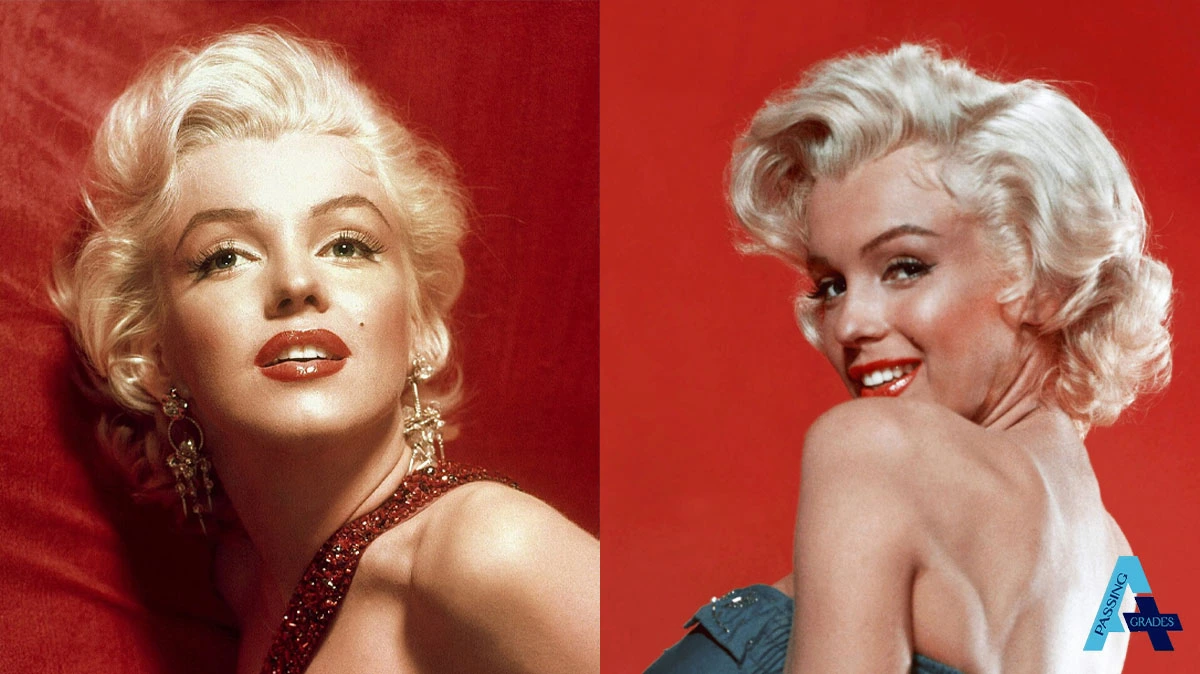
The Death of Marilyn Monroe: Facts, Theories & Case Study
- What was her given name?
Marilynn Monroe was born Norma jean Mortenson in Los Angeles on June 1st 1926 and began her life as an illegitimate child. She later took her mother’s maiden name.
- How many times was she married and to whom?
At the age of only 16 Norma jean married an aircraft worker named James Dougherty, four years later in 1946 she was divorced. Her second marriage was to baseball Joe DiMaggio in 1954 but lasted only 9 months. In 1956, she married again this time wedding celebrated play write. Arthur Mila. In just four years that marriage too ended in divorce.
- When did Marylyn Monroe die?
Her world was turned on Sunday august 5, 1962.It was reported that Marylyn Monroe was dead, A police commander, when logging an early morning call from the medical examiner reporting the death, that it was a joke and went personally to investigate on the death.
- Who was the pathologist assigned to the case?
Dr. Thomas Noguchi was the pathologist who was assigned to the case. He also at first thought the deceased was another woman of the same name-perhaps as he later explained, ‘because to me, as to almost all Americans, Marylyn Monroe was a phantom goddess of the screen, not a real person’.
- Who pronounced her dead?
It was pronounced by her physician doctor Hyman Angelberg.
- What was found next to her bed?
Several bottles of drugs, including an empty bottle of Nembutal slipping pills and a partially empty container of chloral hydrate were on the table next to her bed.
- What did the toxicologist’s report reveal?
The subsequent toxicologists report showed that the blood contained 8.0 mg. Percent of chloral hydrate while the liver had 13.0 mg percent of pentobarbital (Nembutal)-both being well above the fatal levels.
- Why do some believe she was murdered?
Marilyn Monroe had scarcely been buried when the usual conspiracy vultures began circling. Their theories largely involved Monroe’s murder being the result of a diary (apparently nonexistent) that somehow threatened Robert kennedy.one source posited that Kennedy himself was the murderer.
- How did doctor Baden counter the supporters of the conspiracy theory?
Proponents of the conspiracy theory point to the contradiction of a death by overdose and absence of pills or capsules in Monroe’s stomach. Doctor Michael Baden: “The process of absorbing liquids into the blood stream works faster in some people than in others.
- Why were no injection marks found on her body? Even though her psychiatrist admitted giving her one the previous day?
Punctures from fine surgical needles heel within a few hours, and one made 48 hours previously could not have been detected.
- How did the pathologist ensure there were no needle marks?
He used a magnifying lens to go over Monroe’s body very carefully-so carefully that the search was praised in a report by a deputy district attorney who was present.
- What else indicated the massive amounts of drugs were ingested?
A large amount of drugs was in the blood. It contained 8.0 mg. Percent of chloral hydrate while the liver had 13.0 mg percent of pentobarbital (Nembutal)
The report stated that the “mucosa shows petechial hemorrhage diffusely.”
- What is petechial hemorrhage? How did its presence prove she ingested drugs?
Petechial hemorrhage is a corrosive of raw, red appearance on the stomach lining .Dr. Noguchi: “underneath the stomachs lining or mucosa, there was observed a wide spread pin point hemorrhage-the very raw, red appearance that would be expected in the case of a large overdose of barbiturates.
- What made Marilyn Monroe so special?
Marilyn Monroe’s appeal went far beyond her beauty. She embodied a rare blend of vulnerability, confidence, and charisma that captivated both audiences and photographers alike. Behind the camera, she was the classic “blonde bombshell,” radiating glamour and sensuality. Off-screen, she was thoughtful, witty, and deeply introspective—qualities that made her more complex than the roles she often played.
She transformed herself from Norma Jeane Mortenson, a foster child with humble beginnings, into one of the most recognized women in the world. Her dedication to perfecting her craft led her to study acting at the Actors Studio in New York, where she worked tirelessly to be taken seriously as an actress rather than just a sex symbol.
Monroe’s mix of innocence and allure, combined with her emotional honesty and tragic vulnerability, made her unforgettable. She wasn’t just a movie star—she became a symbol of ambition, loneliness, and the pressures of fame. Even today, she represents both the dream and the cost of Hollywood stardom, which is what truly made her so special.
- What was the official cause of death?
The Los Angeles County coroner’s office ruled Marilyn Monroe’s death as a “probable suicide” caused by acute barbiturate poisoning. The autopsy results revealed high concentrations of Nembutal and chloral hydrate in her system—levels consistent with a fatal overdose. While this ruling was accepted officially, the circumstances surrounding her death left many unanswered questions.
- Was there a police investigation or review later on?
Yes. Although the initial investigation concluded suicide, police and forensic reviews were reopened several times due to public pressure and ongoing speculation. In 1982, the Los Angeles County District Attorney’s office conducted a comprehensive review but found no evidence of foul play or criminal activity. However, rumors of political interference and cover-ups persisted in the years that followed.
- What was the timeline of events the night she died?
On the evening of August 4, 1962, Marilyn spoke with several friends and colleagues over the phone, including her publicist and psychiatrist. Her housekeeper, Eunice Murray, later noticed a light still on in Monroe’s bedroom after midnight but received no response when she knocked. Around 3:00 a.m., Murray called Dr. Ralph Greenson, Monroe’s psychiatrist, who broke into the locked bedroom window and found her lifeless on the bed, clutching a telephone. Police were called shortly after 4:30 a.m., and Monroe was pronounced dead at the scene.
- Was there any evidence of foul play or cover-up?
Despite the coroner’s findings, many suspected inconsistencies fueled theories of foul play. The lack of pill residue in her stomach, the delay in notifying authorities, and conflicting witness statements led some to believe that her death scene had been staged. Others alleged involvement by high-profile political figures. However, official reviews found no verifiable evidence of tampering or murder.
- Did Marilyn Monroe have any health or mental issues that may have contributed?
Yes. Monroe had a long history of depression, anxiety, and insomnia, for which she frequently received medical treatment. She often relied on barbiturates and sedatives to help her sleep and manage stress. Friends and colleagues recalled her emotional struggles and frequent fatigue during her final months, suggesting she was mentally and physically exhausted from both her career pressures and personal relationships.
- Was she under the care of doctors or psychiatrists at the time of her death?
Indeed, Monroe was receiving active medical supervision. Her psychiatrist, Dr. Ralph Greenson, and her personal physician, Dr. Hyman Engelberg, both visited her regularly. Dr. Greenson had seen her the day before her death and prescribed medication to help her sleep. Although she was surrounded by medical care, many believed her access to multiple prescriptions increased the danger of accidental overdose.
- Who was the coroner or chief medical official who signed off on the autopsy?
The autopsy was conducted under the supervision of Dr. Theodore Curphey, the Los Angeles County Coroner. Dr. Thomas Noguchi performed the postmortem examination, and Dr. Curphey later reviewed and confirmed the findings that Monroe’s death resulted from an overdose of barbiturates, with no physical signs of violence present.
- What evidence contradicted the overdose theory?
Critics of the official report pointed to several puzzling details: no pills or capsules were found in Monroe’s stomach, the timeline of discovery appeared inconsistent, and early reports differed about whether her body had been moved. Some also noted that her housekeeper’s testimony changed over time. However, toxicology results supported the ingestion of fatal doses through liquid or dissolved medication, aligning with Dr. Noguchi’s conclusions.
- What are the most popular conspiracy theories about her death?
Over the decades, several conspiracy theories have emerged. The most well-known involve alleged affairs with President John F. Kennedy and Robert F. Kennedy, with claims that Monroe’s knowledge of political secrets made her a liability. Other theories implicate the Mafia, the CIA, or even her psychiatrist, suggesting she was silenced to protect reputations or government interests. None of these theories, however, have been substantiated by credible evidence.
- What were Marilyn Monroe’s last words before she died?
The exact last words of Marilyn Monroe remain uncertain, but the last known conversation she had was with her friend and former co-star Peter Lawford on the evening of August 4, 1962. According to Lawford, she sounded anxious and disoriented. When he asked how she was doing, she reportedly replied:
“Say goodbye to Pat, say goodbye to Jack, and say goodbye to yourself, because you’re a nice guy.”
Lawford said her voice faded away, and she soon stopped responding to his calls. A few hours later, Monroe was found dead in her Los Angeles home from an apparent overdose of barbiturates.
Because there were no witnesses to her final moments, and because of the many theories surrounding her death, her last words have become part of Hollywood legend—symbolizing both her loneliness and the mystery that still surrounds her life.
- Has any new evidence or documents emerged over time?
In recent years, previously unheard recordings, interviews, and declassified reports have reignited interest in Monroe’s case. The 2022 Netflix documentary “The Mystery of Marilyn Monroe: The Unheard Tapes” presented audio interviews with those close to her, but even these new revelations offered no definitive proof contradicting the original findings.
- How has popular media shaped public perception of her death?
Films, books, and documentaries have continually explored Monroe’s final days, often blurring the line between fact and speculation. Each portrayal—whether sympathetic, sensational, or investigative—has contributed to her enduring image as both a tragic icon and a symbol of Hollywood’s darker side. The fascination with her death continues to spark debate decades later.
The way Marilyn’s life and death have been retold over the years often mirrors how fiction writers shape emotional truth through narrative. This blend of fact and feeling is discussed in depth in “The Love of My Life” by Cheryl: Techniques of Fiction.
- What doubts remain unresolved regarding Marilyn Monroe?
Despite decades of investigation, lingering doubts remain about how and why Marilyn Monroe died. The uncertainty around the timeline, conflicting witness accounts, and possible suppression of evidence have left many unconvinced by the official suicide ruling. Her death remains one of the most enduring mysteries in Hollywood history, balancing between tragedy and speculation.
Life of Marilyn Biography Class Assignment
Note Cards Marilyn Monroe
My Speech
My speech is about a very famous actress Marilyn Monroe. Marilyn Monroe was the biggest movie actress her time. She stared in many movies and was a true idol. Her best dramatic work was Bus Stop, and her best comedy was Some Like It Hot.
Marilyn Monroe Challenges
Marilyn overcame adversity and personal challenges in her life. She had a very unhappy childhood and her mother placed her in a foster home. She once described herself as the girl nobody wanted.
Marilyn Monroe Marriages
She had three failed marriages. First was with James Dougherty when she was young from 1942-1946. Her next marriage was with Joe DiMaggio, a New York Yankee, and the most famous baseball player of his time. They where married for less then a year. Her third marriage was to Arthur Miller the greatest American playwright of the 50s and 60s. They where married for five years.
Marilyn Monroe Uniqueness
Marilyn was very unique in her style right down to the walk that she invented by wearing to heels of different heights to create her signature wiggle.
Marilyn Monroe Inspiration
Marilyn inspires me with her determination and perseverance, she motivates to pursue a successful acting career.
Marilyn Monroe Legacy
Marilyn Monroe will always be one of the most well known women in history. She influenced many people throughout her life. Her career as an actress spanned over 16 years and she made 29 films.
Marilyn Monroe Job and Influence
Marilyn had different jobs early in her life, many hardships and was married three times all of which ending in a divorce. On the outside she was beautiful and well liked, but on the inside she was struggling with many things emotionally. Marilyn Monroe influenced American culture during the 40s and 50s by being an influential actress, and model.
Marilyn Monroe Birth
Born as Norma Jean Mortenson on June 1, 1926 in Los Angeles General Hospital, she never knew who her father was. Due to her mother's mental instability and the fact she was unmarried at the time, Norma Jean was placed in the foster home of Ida and Albert Bolender. It was here she lived the first seven years of her life.
Marilyn Monroe Obituary
- Context: Alistair Cooke's (feature writer) obituary of Marilyn Monroe (a famous movie star and sex symbol who died at the age of 36) for the Guardian in 1962
- Purpose: To inform reader of death
To express Cooke's opinion on harmful society
To persuade the reader to share his point of view
To create sympathy and understanding of the private persona of Marilyn Monroe in contrast to her public image
- Audience: Wide and varied = MM fans/ AC followers/ readers of the Guardian/ educated adult readers
- Genre and mode: Obituary for news article and written and planned for publication
- Effects of Context: Opening declarative is provides context of situation
Matter-of-fact tone = direct and abrupt To represent the shook up at early death
- Effects of purpose: Lots of modifiers to further his opinions thoroughly and declarative to report as well as provide details
- Effects of audience: High frequency complex Lexes targets educated Guardian readers/ Use of allusions assumes intelligence of reader/ figuratively language to keep readers persuaded
- Effects of genre: Follows conventions for obituary = clearly crafted with opening and shaped to allow his own expression
- Effects of mode: Complex and long/ well-crafted/ complex sentences/ lack of informalities
- " The exploitation of this pneumatic, mocking, liquid lipped goddess": =
metaphor
Rule of three suggests this was an unrealistic representation of her
Infers her inability to match this manufactural version of her created by the media Identity loss
'Pneumatic' refers to a woman with a fuller chest = objectifying
These three qualities don't make up a goddess yet society thinks that looks do = she's more than just looks = mocking society
- " sixty feet tall and naked before howling mob": = onomatopoeic noun phrase
Describes a group out of control conveying them as savage and animalistic which heightens sympathy for Marilyn Monroe
Hyperbole of '60 feet and naked' illustrates how Marylin Monroe felt amongst sexualising men and how easy it is for men to idolise her
- "For the delectation of her troubled fans": = oxymoron
Shows how they don't care as they're only interested in the scandalous excitement of gossip = sense of apathy from fans
Dehumanises her and highlights Cooke's disgust and criticism
Marilyn Monroe is and always has been alone = predator like connotations
- "His apprising whinny echoed around the globe": = animalistic imagery
Portrays Marilyn Monroe as prey and men as predators
Heightens her vulnerability and sympathy for her
Shows how easy and quickly spread it to like way of men can spread
Cooke is the dehumanising men as he is showing what they did wrong = proves Cooke's contempt for those who objectify hair
- "The ultimate oblivion": = euphemism
Reinforces her inevitability which is predictable that it's not special = lessens the impact of her suicide
In an area where mental health issues weren't really spoken about = Cooke is cushioning the tragic reality of her suicide Mirrors how she wanted to be oblivious to what was happening to her and forgotten by the public
The hyperbole of the death shows how exaggerated the impact of her death will be for the wrong reasons = critical tone
- "Chaplin... 'The Little Man'"
"Lorelei"
"Raymond Chandler": =metaphors
Uses a number of allusions assuming his readership will understand them
Aims his audience as an adult, intelligent audience
- " A straw in the ocean of her compulsions": = metaphor
Depicts her vulnerability
Connotations of a light object in the middle of a vast ocean = it's direction and fate depends on the powerful ocean just like Marilyn Monroe's fate depends on the powerful influence of society
Reinforces the sense of a "tragic integrity" and loss of control which forebodes her ultimate demise
- "Charming" "pathetic" "forlorn" "bewildered" "baffled" "honest" "haunted": = semantic field of adjectives
Reinforces her as being naive and vulnerable
Suggest how she was taken advantage of which heightens the severity of her trauma
Infers how she had a many weaknesses conveying a sense of inevitability as these qualities weren't fit for society of "howling mobs"
Cooke is sympathising with her and is disgusted by society for allowing tragic stories like this to occur
- " The usual melodrama of a humble girl, cursed by beauty, to be dazed and doomed by the fame that was too much for her": = stereotype and juxtaposition
Shows that it isn't a unique story and it happens to many "humble" girls with "beauty" = Adjective "usual" reinforces this
Cliché because she shouldn't be treated as special in this case shown through the slightly ironic tone suggesting her death was inevitable
Juxtaposition mirrors her positive traits often end up with a negative outcomes which criticises society
Plosives and alliteration accentuate and over exaggerate how she couldn't cope
- Structure and discourse: Follows conventional genre of obituary
- opening in forms reader of time and place and circumstance of death (declarative)
- then provides overview of life = background knowledge which gives reader a clear indication of his sympathetic view
(humble girl)
- then craft more of a personal response by evaluating her life and struggles with fame concluding that drugs was an inevitable conclusion for the pressures of fame
- Cooke's writing is crafted as we expect from a written piece shaped by him to express his own opinions to create his own voice
- Grammar and syntax: Forceful declaratives make his opinions feel like facts ("this orphan of the rootless City of the Angels at last could feel no other identity then the one she saw in the mirror")
Confident declarative used to express opinion. Cooke admit some of his assertions are "preposterous" yet "is nevertheless true"
Assuming an intelligent readership Cooke structures lengthy and complex sentences to express complex ideas ("we restrict the word integrity.... of self righteousness") he's also mocking the establishment in this case
- Values and attitudes: Critical of society for creating icons like Marilyn Monroe get allowing her to be so vulnerable
Sympathetic towards her and recognises her weaknesses proving she was a victim
Hostile attitude to men like "Louis Colleen" as the animalistic imagery suggests his contempt for those who vocally admired her as a sex symbol
Knew that her and was inevitable as a result of society improved it's not a one off story
0
1381