Pasing Grades
  • Start Selling
  • Blog
  • Contact
  • 0

    Your cart is empty!

English

  • English
  • Spanish
  • Arabic
Create Account Sign In
  • Library
    • New Prep Guides
    • Featured Prep Guides
    • Free Exam Prep Guides
    • Best sellers
  • General
  • Nursing
    • Research Paper
    • Case Study
    • Discussion Post
    • Assignment
    • Exam
    • Practice Questions and Answers
    • Test Bank
    • solutions manual
  • Accounting
    • Case Study
    • Thesis
    • Study Guide
    • Summary
    • Research Paper
    • test bank
  • English
    • Creative Writing
    • Research Paper
    • Summary
    • Rhetorics
    • Literature
    • Journal
    • Exam
    • Grammar
    • Discussion Post
    • Essay
  • Psychology
    • Hesi
    • Presentation
    • Essay
    • Summary
    • Study Guide
    • Essay
    • Solution Manual
    • Final Exam Review
    • Class Notes
    • test bank
  • Business
    • Lecture Notes
    • Solution Manual
    • Presentation
    • Business Plan
    • Class Notes
    • Experiment
    • Summary
    • Practice Questions
    • Study Guide
    • Case Study
    • test bank
    • Exam
  • More
    • Computer Science
    • Economics
    • Statistics
    • Engineering
    • Biology
    • Religious Studies
    • Physics
    • Chemistry
    • Mathematics
    • History
    • Sociology
    • Science
    • Philosophy
    • Law
  • Pages
    • About Us
    • Selling Tips
    • Delivery Policy
    • Faq
    • Privacy Policy
  • Flash Sale
  • Home
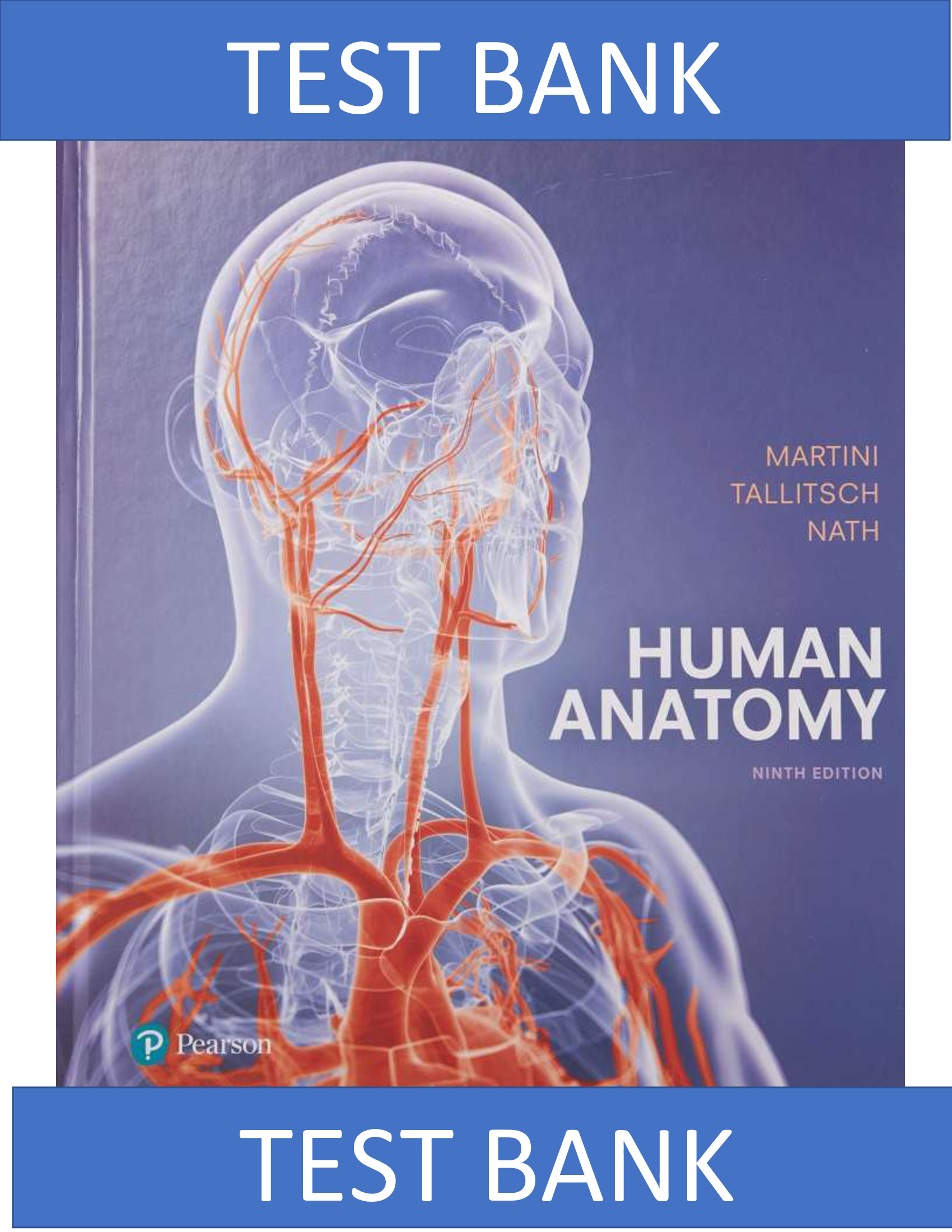
  • Test Bank For Human Anatomy, 9th Edition Martini Tallitsch Nath

Test Bank For Human Anatomy, 9th Edition Martini Tallitsch Nath

Preview page 1 Preview page 2 Preview page 3
Add To Favorites

Share this item Share this item

  • Item Details
  • Comments (0)
  • Reviews (0)
  • Contact Seller

This exam prep guide is a comprehensive test bank for the textbook Human Anatomy (9th Edition) by Martini, Tallitsch, and Nath. It contains a complete collection of multiple choice, true/false, labeling, and essay questions covering all chapters (1–28) of the book. The questions are organized by learning outcomes and Bloom's Taxonomy levels, making it an ideal resource for test preparation, self-assessment, and exam revision.

Each question includes the correct answer, and the content aligns closely with standard anatomy curricula. This test bank supports both students aiming to master foundational concepts and instructors preparing exams or quizzes.

Sample Questions and Answers from Human Anatomy Test Bank

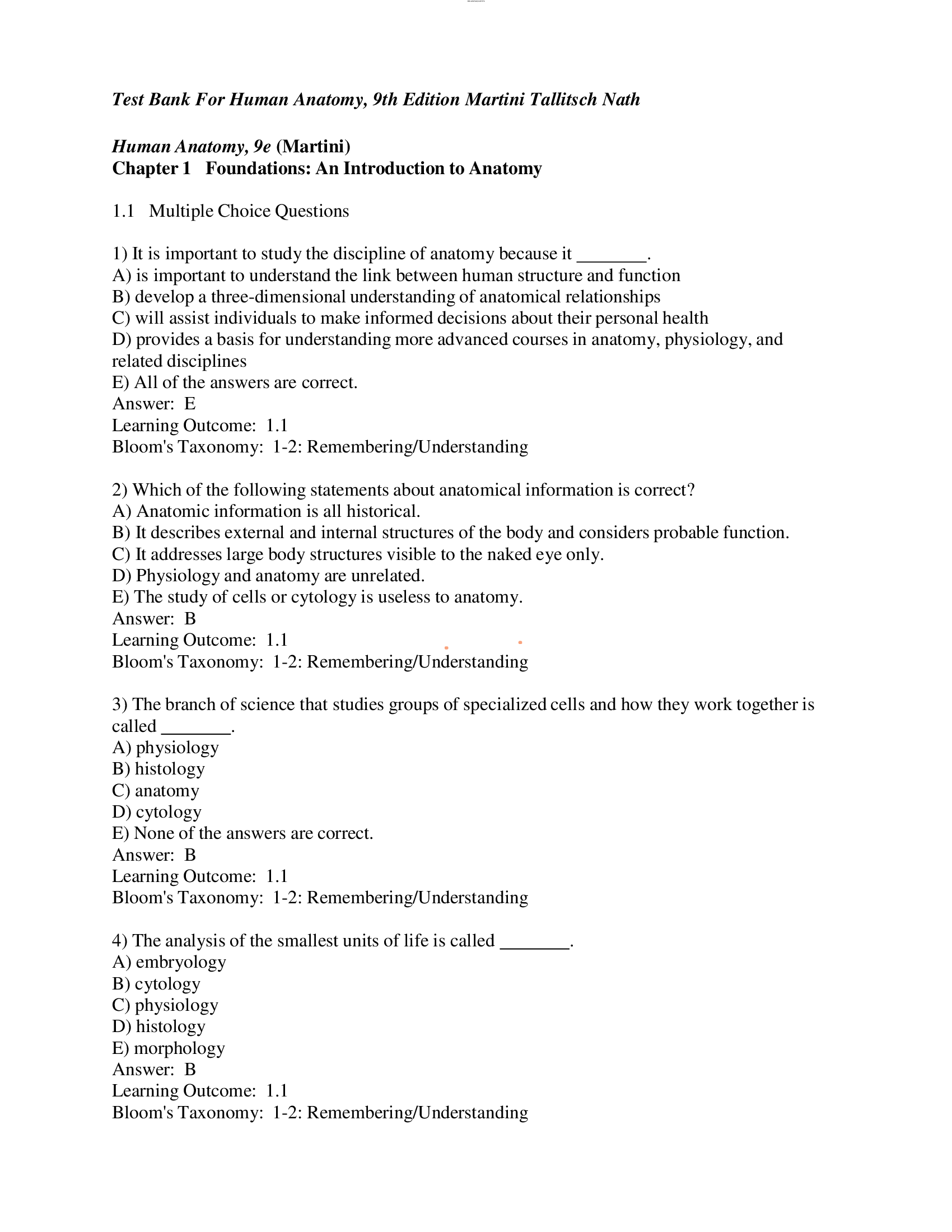
1) It is important to study the discipline of anatomy because it                .

A) is important to understand the link between human structure and function

B) develop a three-dimensional understanding of anatomical relationships

C) will assist individuals to make informed decisions about their personal health

D) provides a basis for understanding more advanced courses in anatomy, physiology, and related disciplines

E) All of the answers are correct. Answer: E

2) Which of the following statements about anatomical information is correct? A) Anatomic information is all historical.

B) It describes external and internal structures of the body and considers probable function. C) It addresses large body structures visible to the naked eye only.

D) Physiology and anatomy are unrelated.

E) The study of cells or cytology is useless to anatomy. Answer: B

3) The branch of science that studies groups of specialized cells and how they work together is called                .

A) physiology B) histology C) anatomy

D) cytology

E) None of the answers are correct. Answer: B

4) The analysis of the smallest units of life is called     

A) embryology

B) cytology

C) physiology

D) histology

E) morphology

Answer: B

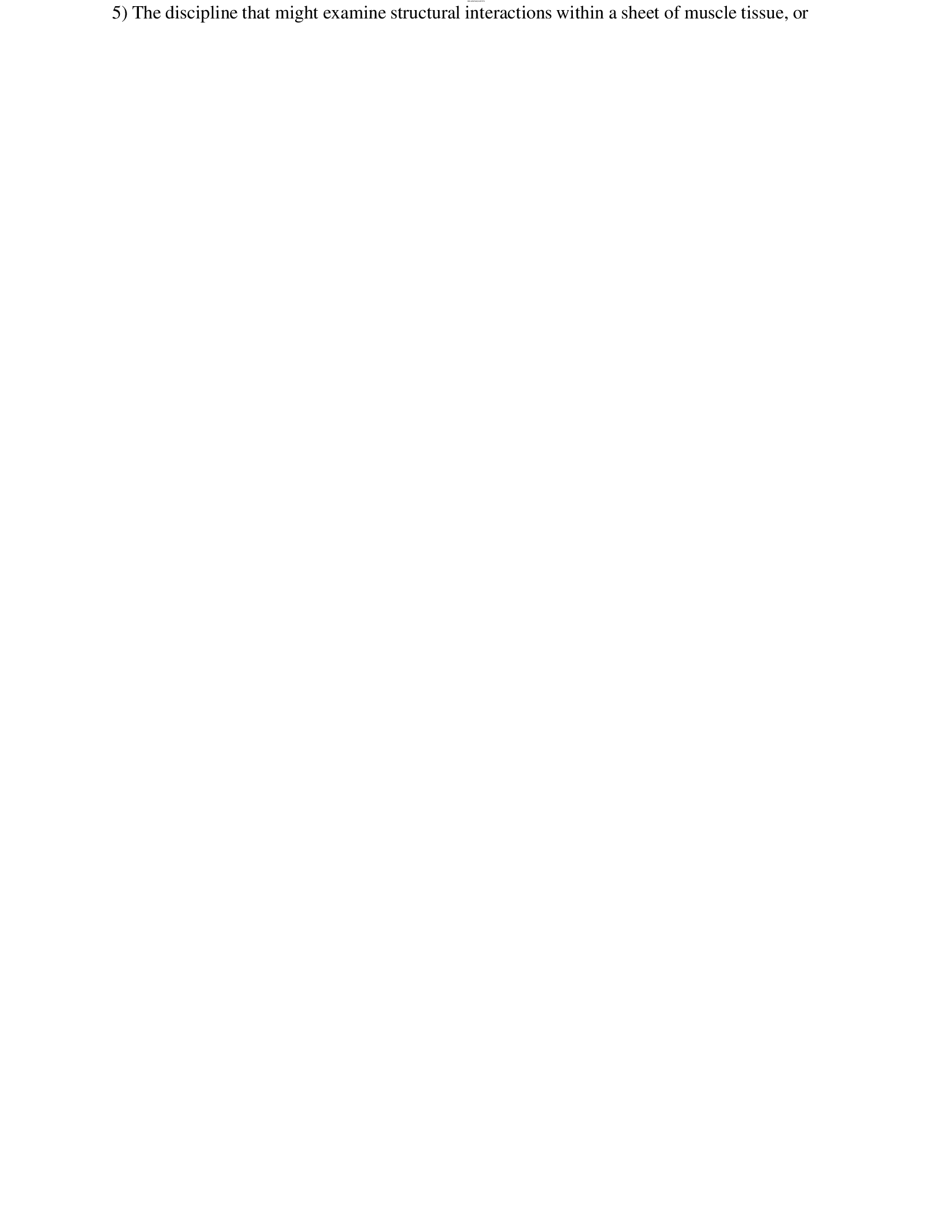
5) The discipline that might examine structural interactions within a sheet of muscle tissue, or groups of specialized cells and cell products that work together to perform specific functions, is called                .

A) morphology

B) radiology

C) embryology

D) histology E) cytology Answer: D

6) The anatomical specialty that refers to the study of general form (or morphology) and superficial anatomical markings is called                 .

A) surface anatomy

B) comparative anatomy

C) regional anatomy

D) developmental anatomy E) systemic anatomy Answer: A

7) Which type of anatomy refers to the study of all of the superficial and internal features in a specific area of the body?

A) surface anatomy B) regional anatomy C) systemic anatomy D) gross anatomy

E) microscopic anatomy

Answer: B

8) The study of the heart, blood, and blood vessels is which of the following approaches? A) systemic anatomy

B) regional anatomy

C) developmental anatomy

D) surface anatomy

E) gross anatomy

9) The study of the early processes during the first two months of development from conception is called               .

A) cytology

B) physiology

C) histology

D) embryology E) osteology Answer: D

10) The study of structures through specialized imaging techniques, such as ultrasounds, x-rays,

or other specialized procedures performed on an intact body, is called   .

A) cytology

B) embryology C) physiology D) histology

E) radiography

Answer: E

11) Gross anatomical specialties include              _. A) radiographic and surgical anatomy

B) cytology and embryology

C) histology

D) radiographic anatomy, surgical anatomy, cytology and embryology

E) cytology, histology and embryology

Answer: A

12) The study of anatomical features that may undergo recognizable pathological changes during illness is called                 anatomy.

A) clinical

B) developmental

C) comparative

D) systemic

E) regional

13)                 anatomy is a new subspecialty of gross anatomy as new advances, such as computed tomography and spiral CT scans, have emerged.

A) Surgical

B) Developmental C) Cross-sectional D) Regional

E) Comparative

Answer: C

14) Disease is the failure to maintain                 conditions. A) metabolic

B) homeostatic

C) allostatic

D) physiological E) pathological Answer: B

15) Which of the following is the highest level of organization? A) chemical

B) organelles

C) cellular D) tissues E) organs Answer: E

16) The study of disease is        

A) radiology

B) pathology

C) histology

D) neurology

E) cardiology Answer: B

17) Choose the correct arrangement of items 1-5, ranking them from the highest to the lowest level of complexity.

(1) organism

(2) tissue

(3) chemical or molecular

(4) cellular

(5) organ system

A) 1, 2, 3, 4, 5

B) 5, 4, 3, 2, 1

C) 1, 5, 2, 4, 3

D) 5, 3, 2, 4, 1

E) 2, 4, 1, 5, 3

Answer: C

18) The basic functions performed by all living humans include(s)              _. A) excretion

B) metabolism

C) growth and differentiation

D) movement

E) All of the answers are correct. Answer: E

19) The vital ability of an organism to take certain actions when changes occur in its immediate environment is called                 .

A) movement

B) growth

C) responsiveness

D) metabolism E) excretion Answer: C

20) Which of the following refers to all the chemical operations under way in the body? A) anabolism

B) respiration C) absorption D) metabolism E) excretion Answer: D

21) Excretion involves _             .

A) changes to adjust to an organism's environment

B) creation of a new generation of individuals

C) transport of substances within an organism

D) elimination of unnecessary or potentially harmful materials metabolic waste from the body

E) locomotion of the body

Answer: D

22) Growth and differentiation often include      .

A) specialization of individual cells           

B) increase in cell size    

C) increase in cell numbers         

D) changes in form and function              

E) All of the answers are correct.             

Answer: E           

23) Support, protection of soft tissues, mineral storage, and blood cell formation are all functions of the               .

A) skeletal system

B) cardiovascular system

C) immune system

D) reproductive system E) excretory system Answer: A

24) Directing immediate responses to stimuli, usually by coordinating the activities of other organ systems is the function of the                .

A) integumentary system

B) endocrine system

C) urinary system

D) nervous system

E) reproductive system

Answer: D

25) The major functions of the system are temperature control and protection of the body from the external environmental hazards.

A) digestive

B) cardiovascular

C) urinary

D) respiratory

E) integumentary

Answer: E

26) The primary site of blood cell production is within the               

 A) cardiovascular system

B) skeletal system

C) integumentary system

D) lymphatic system E) endocrine system Answer: B

27) Components of the urinary system include                . A) ureters and kidneys

B) liver and pancreas C) thymus and spleen D) bronchi and alveoli

E) None of the answers are correct. Answer: A

28) Organs systems are a component of the integumentary system which includes                . A) anatomical units with related functions

B) formed by two or more organs

C) often large enough to be studied without magnification

D) interdependent on each other E) All of the answers are correct. Answer: E

29) Which of the following is the primary function of the thymus in the lymphatic system? A) controls the development and maintenance of one class of lymphocytes

B) engulfs pathogens

C) monitors circulating blood

D) carries lymph and lymphocytes from peripheral tissues to the veins of the cardiovascular system

E) monitors the composition of lymph

Answer: A

30) Which of the following is NOT a primary function of the kidneys in the urinary system? A) form and concentrate urine

B) regulate blood pH and ion concentrations

C) perform endocrine functions

D) All are primary functions of the kidneys.

E) None of the answers are primary functions of the kidneys. Answer: D

31) The process of creating subsequent generations, either unicellular or multicellular, is referred to as               .

A) growth

B) reproduction

C) metabolism

D) differentiation E) responsiveness Answer: B

32) The process of cellular specialization to perform particular functions is called                . A) reproduction

B) differentiation

C) growth

D) irritability E) anabolism Answer: B

Contact the Seller

Please Sign In to contact this seller.


  • 👎  Report Copyright Violation

Frequently Asked Questions

What Do I Get When I Buy This Study Material?

+

When you buy a study material on Passing Grades, an instant download link will be sent directly to your email, giving you access to the file anytime after payment is completed.

Is Passing Grades a Trusted Platform?

+

Yes, Passing Grades is a reputable students’ marketplace with a secure payment system and reliable customer support. You can trust us to ensure a safe and seamless transaction experience.

Will I Be Stuck with a Subscription?

+

No, all purchases on Passing Grades are one-time transactions. You only pay for the notes you choose to buy, with no subscriptions or hidden fees attached.

Who Am I Buying These Study Materials From?

+

Passing Grades is a marketplace, which means you are purchasing the document from an individual vendor, not directly from us. We facilitate the payment and delivery process between you and the vendor.

Does Passing Grades Offer Free Study Materials?

+

Yes, sellers on Passing Grades have uploaded numerous free test banks, exams, practice questions, and class notes that can be downloaded at no cost.

Pasinggrades - Quality Study Materials

USD 15

    • Quality checked by Pasing Grades
    • 100% satisfaction guarantee
    • Seller: Eddah-Nafula
Buy PDF $15

Seller Information

Eddah-Nafula

Member since June 2021

  • icon
  • icon
  • icon
View Profile
  • total sales

    0
  • Favourites

    0
  • Comments

    0
    ( 0 Ratings )

Item Information

  • Uploaded

    15 June 2023

  • Updated

    11 July 2025

  • Category

    Nursing

  • Item Type

    test bank

  • Tags

    Test Bank For Human Anatomy 9th Edition Martini Tallitsch Nath anatomical terminology organ systems serous membranes body cavities directional terms cell structure organelles histology cytology gross anatomy systemic anatomy developmental anatomy radiographic anatomy plasma membrane Golgi apparatus mitochondria lysosomes ribosomes DNA structure labeling questions anatomy

Related Exam Prep Guides by Eddah-Nafula

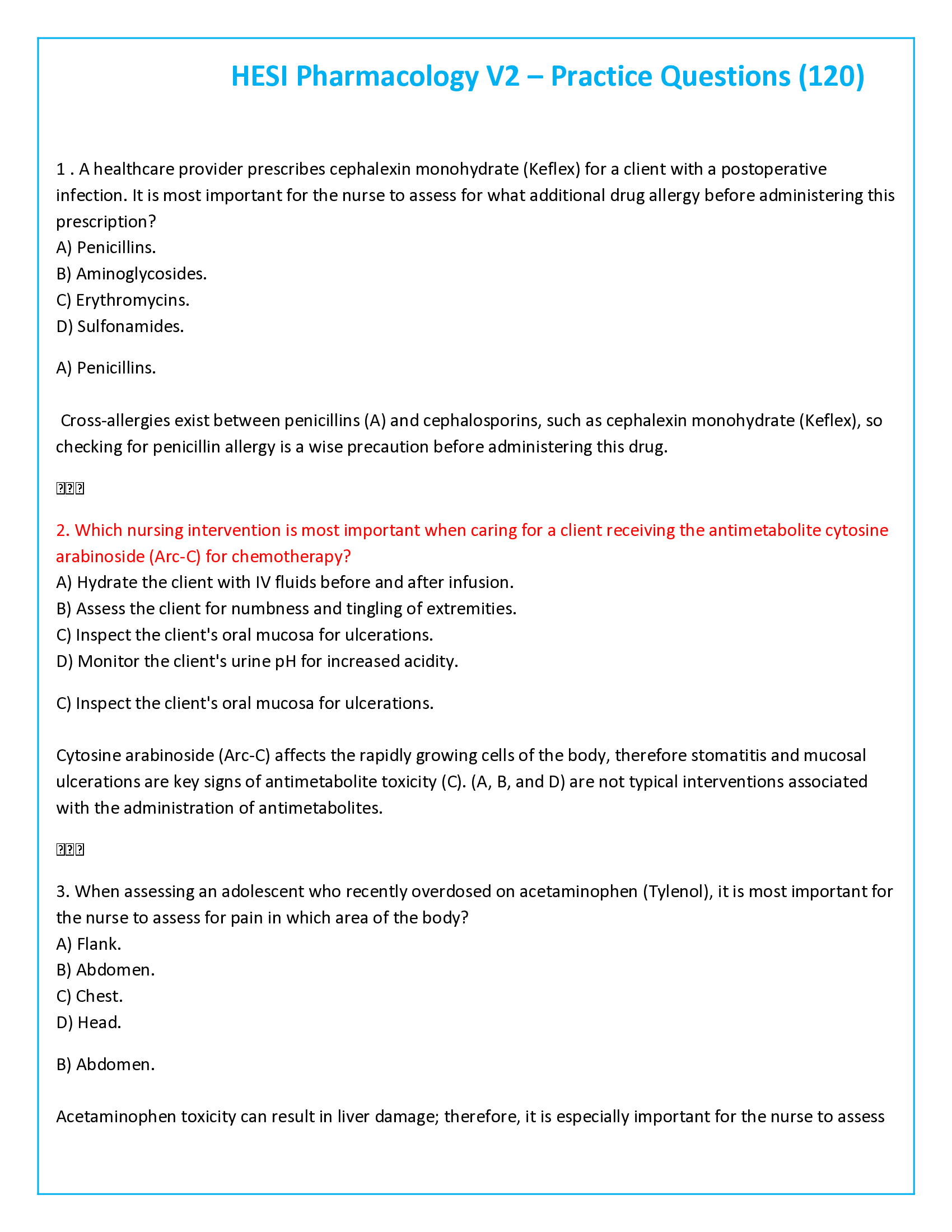
HESI Pharmacology V2 – Practice Questions (120) Latest 2026
View Document

HESI Pharmacology V2...

  • Eddah-Nafula

    Eddah-Nafula

  • test bank

HESI Pharmacology V2 – Practice Questions (120) Latest 2025...

15 USD

0

0

AIN2601 ASSIGNMENT 1 QUESTIONS AND ANSWERS 100 CORRECT (2021)
View Document

AIN2601 ASSIGNMENT 1...

  • Eddah-Nafula

    Eddah-Nafula

  • test bank

AIN2601 ASSIGNMENT 1 QUESTIONS AND ANSWERS 100 CORRECT (2021)...

15 USD

0

0

Ashley Davis patho objectives 5,6,7,20
View Document

Ashley Davis patho o...

  • Eddah-Nafula

    Eddah-Nafula

  • test bank

Ashley Davis patho objectives 5,6,7,20...

15 USD

0

0

Purchase

Download link will be sent to this email immediately after purchase.

IMPORTANT LINKS

  • How To Upload Class Notes
  • Selling Tips
  • Passing Grades's Study Materials
  • Scholarships for International Students 2025

POPULAR CATEGORIES

  • Law
  • Accounting
  • English
  • Psychology
  • Business
  • Nursing
  • Computer Science
  • General

View Document

  • Blog
  • Contact
  • Delivery Policy
  • Latest Scholarships Around the World
  • How to Pass Bar Exams: Passing Grades’ Strategies
  • How to Study and Pass the CPA Exam
  • All Test Banks
  • Faq
  • Copyright Claims
  • Privacy Policy
  • Terms of Use

KNOWLEDGE BASE

  • How to Write A+ Grade Good Research Paper
  • How to Manage Stress During Exam Period
  • Best Time to Study
  • How to Pass NCLEX-RN Exam
  • How To Effectively Utilize Test Banks
  • Popular Shadow Health Exam Assessments
  • Popular HESI Case Studies
  • How to Prepare for a Nursing Career
  • The Importance Of Summaries in Exam Revisvion

© 2026 Pasing Grades. All rights reserved.