

You signed the lease. You might have even done a little victory dance.
But the biggest challenge you are about to face, is what you need for your apartment.
Moving into your first apartment as a college student is one of those milestones that feels equally exciting and completely overwhelming. There's so much to think about, to start with; furniture, utilities, groceries, security deposits. Problem is, no one will hand you the manual. That's exactly why this guide exists.
Whether you're moving out of a dorm, stepping out of your family home for the first time, or relocating to a new city for school, this checklist walks you through everything you need before, during, and after move-in day.
By the time you're done reading, you'll know exactly what to buy, what paperwork to sort out, and how to make your new place feel like home without blowing your entire semester budget.
Before You Move In
Before you unpack a single box, there's a stack of invisible adulting you need to handle. This is very important as it getting it right protects your money and your peace of mind for the entire year ahead.
Read Your Lease Like It's a Final Exam
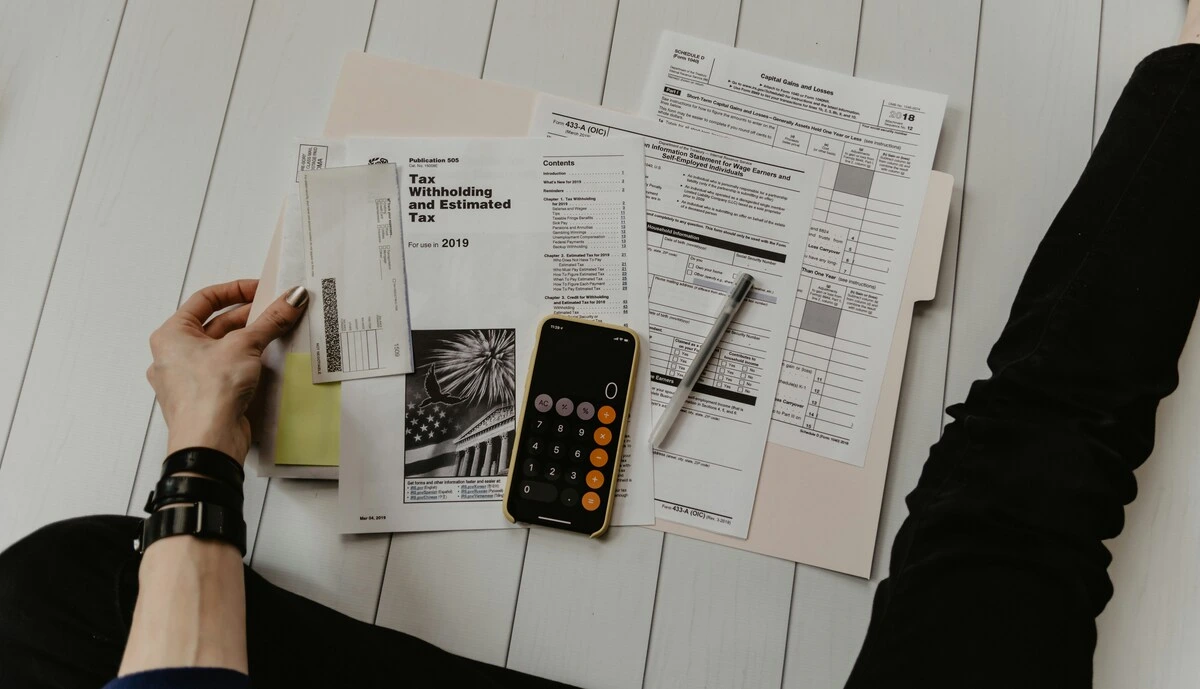
It's always advised to read every clause of your lease before you sign, a mistake many student do is skimming when actual reading and understanding is needed here. When reading, pay close attention to what's included in rent; water, trash, packing, the exact terms for breaking the lease early, guest policies, and what qualifies as damage versus normal wear and tear.
One particularly dangerous clause for students is joint and several liability, which means every individual who signs the lease is 100% responsible for the total rent and any damages incurred by any roommate.
If one roommate fails to pay or causes significant damage, your landlord can come after you for the full amount. This reality makes roommate selection far more serious than just picking someone fun to live with.
Also watch for an "as-is" clause, which suggests you accept the property in its current condition, including any defects or safety hazards. Never sign a lease with this clause without a written addendum specifying required repairs or a detailed move-in condition report documenting pre-existing issues.
Pro Tip: Highlight anything you don't understand and email your landlord with specific questions. Keep those replies in writing because most times verbal agreements don't hold up.
Get Renter's Insurance Before Move-In Day
Renter's insurance is one of the most overlooked apartment essentials for first-time renters. It covers your belongings if there's a fire, theft, or flood. Typically, it costs between $10–$20 per month. Your landlord's insurance only covers the building; it doesn't cover your laptop, your bike, or your clothes. Most student housing companies actually require it, and for good reason.
Set Up Your Utilities Early
Don't wait until after you move in. Some utility providers need 5–7 business days to activate accounts. Contact each provider as soon as you have your move-in date and ask your landlord which services you're responsible for as this varies widely by building. If your rent is "all-inclusive," clarify which utilities are included and whether there are any caps.
Take Strategic Move-In Photos
This is non-negotiable. Walk through every room on move-in day with your phone camera and document every existing scratch, scuff, stain, or broken item. Send these photos to your landlord via email the same day with timestamps. This protects you from being charged for pre-existing damage when you move out. Usually, this is one of the most common disputes that costs students hundreds of dollars every year. For maximum protection, that's if you are comfortable doing it, record a short video narrating the condition of each room and appliance.
Also forward your mail at your local post office (or usps.com) and update your address with your bank, financial aid office, subscriptions, and government documents.
The Complete Room-by-Room Checklist
Here's your apartment essentials breakdown. Don't try to buy everything at once. A wise move is prioritizing what you need for your first week and build from there.
Kitchen Essentials

You don't need a fully equipped chef's kitchen. You need enough to feed yourself without every meal coming from takeout or your meal plan.
-
One medium saucepan, one frying pan (ideally cast iron), and one baking sheet
-
A good chef's knife and a paring knife
-
Cutting board, mixing bowls, measuring cups, and a colander
-
Can opener, wooden spoon, silicone spatula, ladle
-
Dish soap, sponge, dish rack, and kitchen towels
-
Pantry basics: olive oil, salt, pepper, pasta, rice, canned beans, oats, eggs, and whatever sauces you actually eat
Pro Budget Cut Tip: Skip the full knife block. One good chef's knife and one paring knife will outlast five cheap ones and take up a third of the space.
Bedroom Essentials
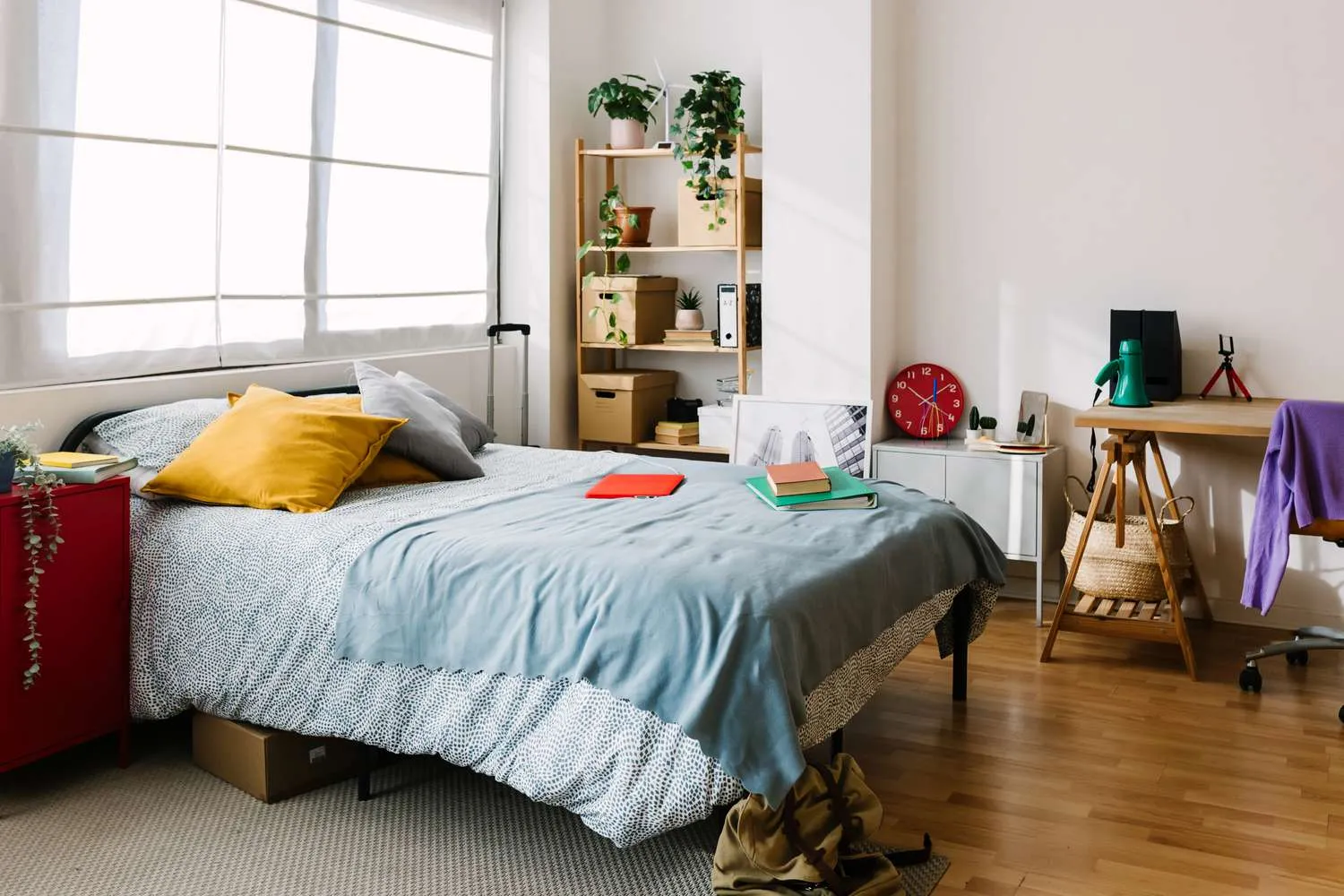
Your bedroom is your recovery zone and should be comfortable. It needs to support both sleep and study without becoming a disaster area.
-
Two sets of sheets (check mattress size first), pillowcases, and a duvet or comforter
-
Extra blanket for colder months
-
Blackout curtains are non-negotiable if you're a light sleeper or have early classes
-
Under-bed storage bins for out-of-season clothes
-
Bedside lamp with a warm bulb for evening wind-down reading
-
Laundry hamper and enough hangers for your wardrobe
Research shows that 50% of students report daytime sleepiness and 70% attain insufficient sleep which in turn negatively impacts their GPA. Your sleep environment directly affects your academic performance, so blackout curtains and quality bedding aren't luxuries, consider them academic investments.
Bathroom Essentials
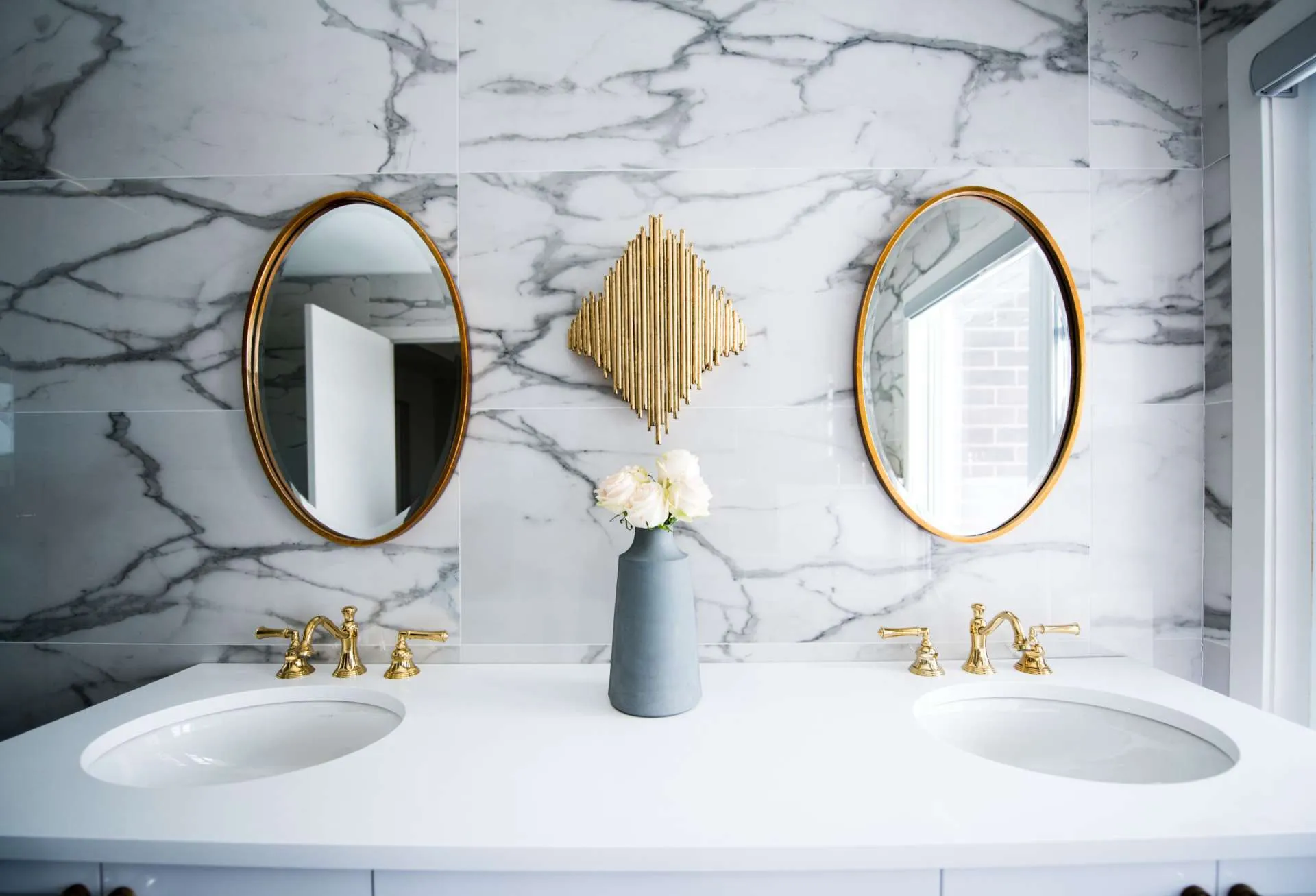
Stock your bathroom like someone who takes hygiene seriously, because your immune system will thank you.
-
Shower curtain and rings (many apartments don't include these)
-
Two sets of towels and a bath mat
-
Essential toiletries: toothpaste, shampoo, conditioner, body wash, razor, deodorant
-
First aid kit: bandages, antiseptic wipes, pain reliever, cold medicine, thermometer
-
Toilet brush, cleaning spray, and a plunger (get the plunger before you need it)
Pro Tip:Keep a small "sick day" kit in a bathroom drawer: electrolyte packets, cold medicine, soup packets. When you're ill and can barely move, having this stocked is genuinely life-changing.
Living and Study Space

Your workspace setup has a direct impact on your academic performance.
-
Desk lamp with adjustable brightness. Having overhead lighting alone causes eye strain during long study sessions
-
Surge protector with multiple outlets for your laptop, monitor, lamp, and chargers
-
Internet router placed centrally and elevated, not shoved behind the TV
-
Comfortable, ergonomic chair if you'll be sitting for hours
-
Whiteboard or bulletin board for assignment deadlines
-
Extension cords as needed since apartments rarely have enough outlets
Create a dedicated area reserved for academic work only. No scrolling, no eating, just studying. Your brain is highly context-dependent; if you study in bed, you'll start associating your bed with stress and struggle to relax there. Once your station is set up, you can optimize your routine with these tips for becoming an A student with minimal effort to make sure those hours at your desk actually count.
Appliances: What to Check Before You Unpack
Before you unpack a single box, test every appliance in the unit. Run the refrigerator through a full cooling cycle, ignite each burner on the stove, run the dishwasher if there is one, and run the washing machine and dryer on a short cycle. Document anything that isn't working correctly in an email to your landlord the same day.
Take photos of the model and serial number on each appliance (usually on a label inside the door or on the back). This information is essential if you ever need to report a fault or contact a repair service.
Understand what your lease says about repair responsibilities. In most cases, your landlord is responsible for appliance maintenance in a rental unit, however, it is worth noting that policies vary. If your unit comes with a Kenmore washer, it helps to know in advance that specialized services like kenmore washer machine repair exist, so a breakdown during exam week doesn't turn into a week of laundromat runs and lost study time.
Keep a note on your phone or a list on your fridge with your landlord's emergency maintenance number, utility company fault lines, and any appliance repair contacts relevant to the brands in your unit. When something breaks at 6 p.m. on a Tuesday before a midterm, you'll want that information in seconds.
Budgeting Your First Apartment on a Student Income
Budgeting for your first apartment is one of the more stressful parts of moving out. It is even worse for students working part-time or living largely on financial aid. The good news is that with a clear picture of your monthly costs, it's entirely manageable.
Estimate Your Real Monthly Costs
Beyond rent, factor in: electricity ($40–$100/month depending on climate), internet ($30–$70/month), groceries ($150–$250/month for one person cooking at home), transportation ($50–$150/month), and personal care. Don't overlook hidden costs either, extra fees like application fees, parking, or trash can add $100–$500 per month beyond advertised rent. Move-in costs (application fee, admin fee, deposit) can easily total $500–$1,500 before you even start paying rent.
Pro Tip:Check whether your building uses a shared electricity meter. If so, get clarity on how the bill is split before you commit. Surprises in utility bills are one of the most common complaints from first-time renters.
Adapt the 50/30/20 Rule for Student Life
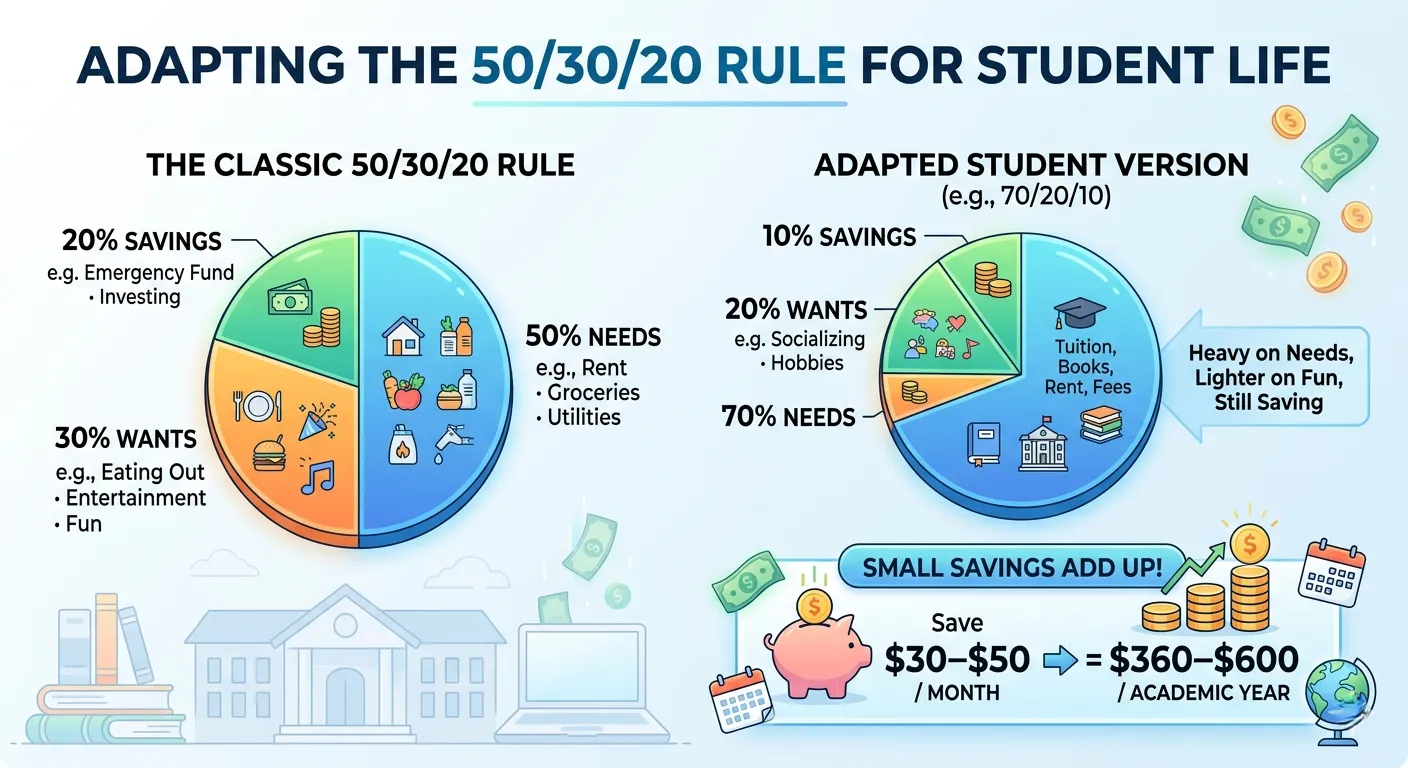
The classic budgeting rule allocates 50% of income to needs (rent, food, utilities), 30% to wants (eating out, entertainment), and 20% to savings.
As a student, your version might look more like 70/20/10; heavy on needs, lighter on fun, but still putting something aside. Even $30–$50 a month into a small emergency fund adds up to $360–$600 by the end of the academic year.
Try to have one month's essential expenses saved before you move in. This is your buffer for the unexpected: a burst pipe, a textbook you forgot to budget for, or a medical co-pay. Even $300–$500 changes how you handle stress when something goes wrong.
|
Expense Category |
Monthly Estimate |
What’s Included? |
|
Electricity |
$40 – $100 |
Varies wildly by climate and AC usage. |
|
Internet |
$30 – $70 |
Basic high-speed to premium packages. |
|
Groceries |
$150 – $250 |
Estimate for one person cooking at home. |
|
Transportation |
$50 – $150 |
Gas, public transit, or occasional ride-shares. |
|
Personal Care |
Variable |
Toiletries, haircuts, and gym memberships. |
|
Hidden Fees |
$100 – $500 |
Parking, trash valet, and pest control fees. |
|
TOTAL |
$370 – $1,070+ |
Monthly total beyond base rent. |
Use apps like Splitwise; essential if you split bills with roommates, YNAB for zero-based budgeting, or a free Google Sheet if you prefer flexibility over automation.
Smart Tips for Balancing Apartment Life with Your Studies
Living independently for the first time consumes far more time than you expect. Grocery runs, laundry, cooking, cleaning among several other essentials. Without a plan, apartment maintenance quietly eats into your study time and chips away at your academic performance.
Batch Your Chores Like You Batch Your Assignments
Treat household chores the same way you treat coursework: blocked into specific time slots rather than handled reactively. Assign one hour on Sunday evenings to cleaning, pick two fixed days for laundry, and meal prep two or three things at once rather than cooking from scratch every night.
A 20-minute "reset" at the end of each day. Ensure, dishes are done, bag is packed for tomorrow, a quick surface wipe. All these will prevent the slow creep of chaos that makes studying feel impossible in a messy apartment.
Protect Your Sleep Like It's a Course Grade
Sleep deprivation is the most reliable way to tank your GPA. Independent living gives you the freedom to stay up as late as you want, which means you're now your own enforcer. Prioritize a consistent sleep schedule, use those blackout curtains, and create an end-of-day routine that signals wind-down to your brain. Your retention, focus, and test performance all depend on it.
Build a Support Network
Managing a household while staying on top of coursework is a skill that takes time to develop. Set up study groups or accountability partners, communicate deadlines to roommates clearly, and take advantage of every academic resource available for instance, tutoring, writing centers, office hours, and study lounges. The students who thrive aren't necessarily the ones who manage everything perfectly; they're the ones who know what resources to lean on when things get hard.
Understanding these home systems isn't just a survival skill for renters; it’s also a booming professional field. If you find yourself interested in the mechanics of how homes are built and maintained, check out our career guide to Calgary’s modern home renovation industry to see how these practical skills can translate into a high-demand career.
You've Got This
Moving into your first apartment is a big deal. It's also something thousands of students navigate every year and its not something to panick about since most of them figure it out without a disaster story. The difference is usually preparation.
This checklist covers the paperwork that protects your deposit, the room-by-room essentials that keep daily life functional, the appliance awareness that saves you from costly surprises, and the budgeting habits that keep your finances from spiraling before February.
The goal isn't a perfect apartment. It's a functional, manageable space that lets you focus on what you're actually there for. Start with the non-negotiables, build from there, and don't be afraid to ask for help whenever in need of one.
You've already signed the lease. Now you're ready for everything that comes next.
0
16