
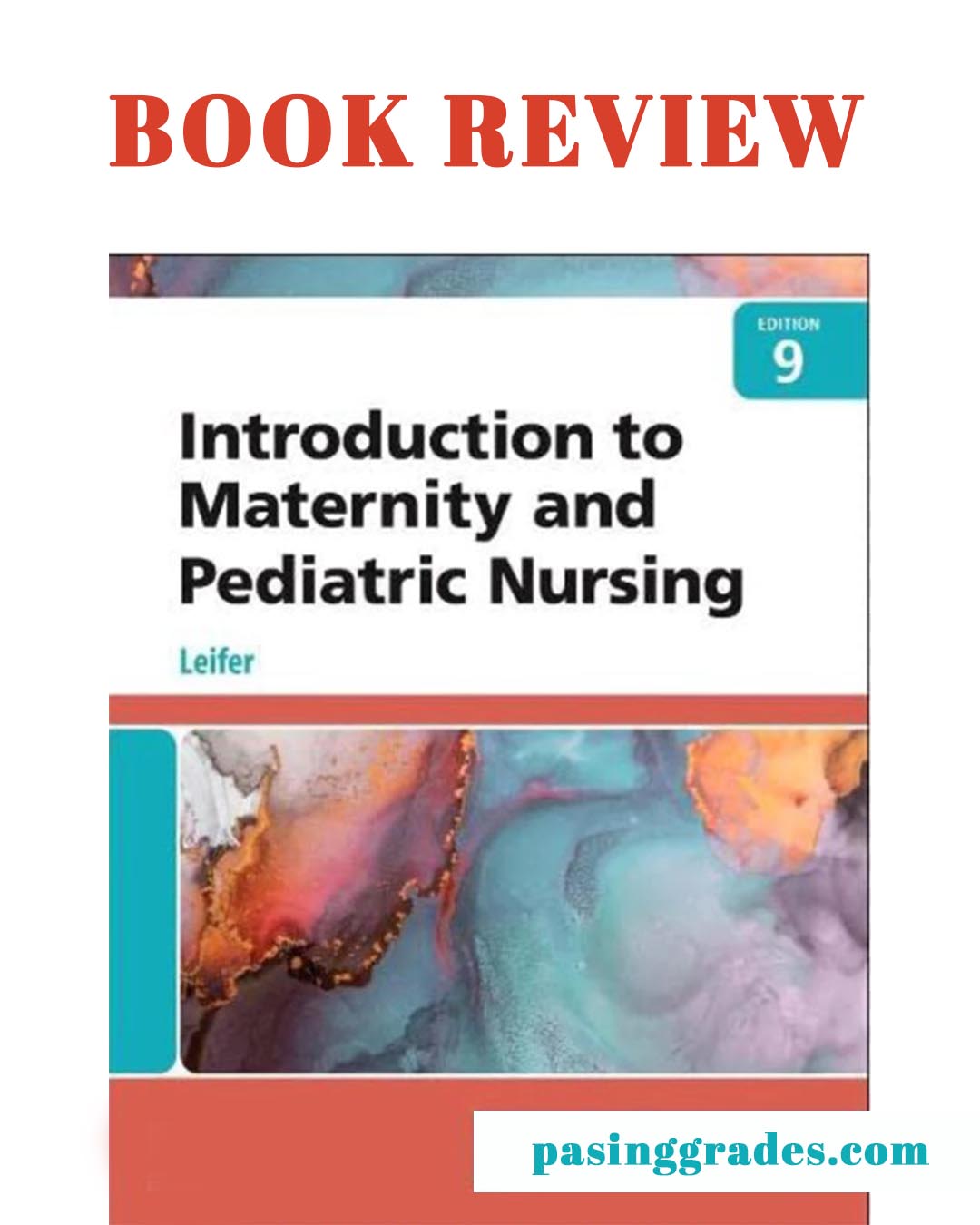
Is the New Edition Worth It? A Review of Leifer’s Introduction to Maternity and Pediatric Nursing (10th vs. 9th Edition)
For Licensed Practical and Vocational Nursing (LPN/LVN) students, finding a resource that balances clinical depth with exam readiness is a challenge. Leifer’s Introduction to Maternity and Pediatric Nursing, now in its 10th Edition (2025), remains the gold standard in the field. Authored by esteemed nursing educators Kim Cooper, MSN, RN and Kelly Gosnell, MSN, RN, this textbook is a comprehensive clinical roadmap designed for the modern nursing landscape .
Author Credibility: Who are Kim Cooper and Kelly Gosnell?
What makes this book stand out is its authorial expertise. Both Kim Cooper and Kelly Gosnell are academic leaders at Ivy Tech Community College, providing them with a unique perspective on the specific needs and time constraints of LPN students . They utilize the "LPN Threads" pedagogical design, which ensures the content is organized logically—moving from simple to complex and from health to illness—making even the most difficult pediatric pathophysiology easy to grasp .
What are the Differences Between the 9th and 10th Editions?
While the 9th Edition (2022) was a robust resource that introduced pandemic-responsive care and initial NCLEX-PN prep, the 10th Edition (2025) takes technical excellence to the next level .
- NCLEX-PN Evolution: The 10th edition is fully aligned with the Next Generation NCLEX (NGN) standards. It integrates the NCSBN Clinical Judgment Measurement Model (CJMM) into every chapter, ensuring students practice the higher-level reasoning required for the 2025 exam .
- Visual and Cultural Modernization: The latest edition features an updated art program with photos reflecting greater workforce diversity and a new focus on Cultural Considerations boxes to help students provide sensitive care to diverse populations .
- Clinical Updates: The 10th edition expands on emerging technologies like telehealth, virtual patient communication, and the latest World Health Organization (WHO) Baby-Friendly Hospital Initiative guidelines .
- Page Count: The text has grown from approximately 880 pages in the 9th edition to 912 pages in the 10th, reflecting the new medication protocols and expanded pediatric mental health sections .
How Leifer Prepares You for the Next Generation NCLEX (NGN)
If your goal is to rank high in your class and pass the NCLEX-PN on your first try, the 10th edition's study features are invaluable. It includes unfolding case studies that follow a single family through conception, birth, and pediatric care, forcing you to "recognize cues" just like you will on the exam. Additionally, the book features over 25 comprehensive nursing care plans that now include specific clinical judgment questions.
Industry Recognition and Verdict
The professional standing of this text is unrivaled. The 10th Edition was awarded 3rd Place in the 2025 American Journal of Nursing (AJN) Book of the Year Awards (Maternal–Child/Neonatal Nursing category) and received a near-perfect Doody’s Score of 97/100 (5 Stars) .
For students searching for the best study materials on pasinggrades.com, Leifer’s Introduction to Maternity and Pediatric Nursing is an essential investment. Whether you choose the reliable 9th edition or the award-winning 10th edition, this book provides the foundation needed for a compassionate and safe nursing career.
Download complete Leifer's Introduction to maternity 9th ed test bank
Sample Maternity and Pediatric Nursing Practice Questions and Answers
Chapter 01: The Past, Present, and Future
MULTIPLE CHOICE
1. A patient chooses to have the certified nurse midwife (CNM) provide care during her pregnancy. What does the CNMs scope of practice include?
a. Practice independent from medical supervision b. Comprehensive prenatal care
c. Attendance at all deliveries d. Cesarean sections
ANS: B
The CNM provides comprehensive prenatal and postnatal care, attends uncomplicated deliveries, and ensures that a backup physician is available in case of unforeseen problems.
DIF: Cognitive Level: Comprehension REF: Page 6
TOP: Advance Practice Nursing Roles KEY: Nursing Process Step: Implementation
MSC: NCLEX: Health Promotion and Maintenance: Prevention and Early Detection of Disease
2. Which medical pioneer discovered the relationship between the incidence of puerperal fever and unwashed hands?
a. Karl Cred
b. Ignaz Semmelweis c. Louis Pasteur
d. Joseph Lister
ANS: B
Ignaz Semmelweis deduced that puerperal fever was septic, contagious, and transmitted by the unwashed hands of physicians and medical students.
DIF: Cognitive Level: Knowledge REF: Page 2
TOP: The Past KEY: Nursing Process Step: N/A
MSC: NCLEX: Safe, Effective Care Environment: Safety and Infection Control
3. A pregnant woman who has recently immigrated to the United States comments to the nurse, I am afraid of childbirth. It is so dangerous. I am afraid I will die. What is the best nursing response reflecting cultural sensitivity?
a. Maternal mortality in the United States is extremely low.
b. Anesthesia is available to relieve pain during labor and childbirth. c. Tell me why you are afraid of childbirth.
d. Your condition will be monitored during labor and delivery.
ANS: C
Asking the patient about her concerns helps promote understanding and individualizes patient care.
DIF: Cognitive Level: Application REF: Page 7
TOP: Cross-Cultural Care KEY: Nursing Process Step: Implementation
MSC: NCLEX: Psychosocial Integrity: Psychological Adaptation
4. An urban area has been reported to have a high perinatal mortality rate. What information does this provide?
a. Maternal and infant deaths per 100,000 live births per year
b. Deaths of fetuses weighing more than 500 g per 10,000 births per year c. Deaths of infants up to 1 year of age per 1000 live births per year
d. Fetal and neonatal deaths per 1000 live births per year
ANS: D
The perinatal mortality rate includes fetal and neonatal deaths per 1000 live births per year. DIF: Cognitive Level: Comprehension REF: Page 12
OBJ: 9 TOP: The Present-Child Care
KEY: Nursing Process Step: Implementation
MSC: NCLEX: Safe, Effective Care Environment: Coordinated Care
5. What is the focus of current maternity practice?
a. Hospital births for the majority of women b. The traditional family unit
c. Separation of labor rooms from delivery rooms d. A quality family experience for each patient
ANS: D
Current maternity practice focuses on a high-quality family experience for all families, traditional or otherwise.
DIF: Cognitive Level: Comprehension REF: Page 6
TOP: The Present-Maternity Care KEY: Nursing Process Step: N/A MSC: NCLEX: Health Promotion and Maintenance
6. Who advocated the establishment of the Childrens Bureau?
a. Lillian Wald
b. Florence Nightingale c. Florence Kelly
d. Clara Barton
ANS: A
Lillian Wald is credited with suggesting the establishment of a federal Childrens Bureau.
DIF: Cognitive Level: Knowledge REF: Page 4
TOP: The Past KEY: Nursing Process Step: Implementation
MSC: NCLEX: Health Promotion and Maintenance: Growth and Development
7. What was the result of research done in the 1930s by the Childrens Bureau?
a. Children with heart problems are now cared for by pediatric cardiologists. b. The Child Abuse and Prevention Act was passed.
c. Hot lunch programs were established in many schools. d. Childrens asylums were founded.
ANS: C
School hot lunch programs were developed as a result of research by the Childrens Bureau on the effects of economic depression on children.
DIF: Cognitive Level: Knowledge REF: Page 4
TOP: The Past KEY: Nursing Process Step: N/A
MSC: NCLEX: Health Promotion and Maintenance: Coordinated Care
8. What government program was implemented to increase the educational exposure of preschool children?
a. WIC
b. Title XIX of Medicaid c. The Childrens Charter d. Head Start
ANS: D
Head Start programs were established to increase educational exposure of preschool children.
DIF: Cognitive Level: Knowledge REF: Page 3
TOP: Government Influences in Maternity and Pediatric Care KEY: Nursing Process Step: N/A MSC: NCLEX: Health Promotion and Maintenance: Growth and Development
9. What guidelines define multidisciplinary patient care in terms of expected outcome and timeframe from different areas of care provision?
a. Clinical pathways
b. Nursing outcome criteria c. Standards of care
d. Nursing care plan
ANS: A
Clinical pathways, also known as critical pathways or care maps, are collaborative guidelines that define patient care across disciplines. Expected progress within a specified timeline is identified.
DIF: Cognitive Level: Knowledge REF: Page 12
TOP: Health Care Delivery Systems KEY: Nursing Process Step: N/A MSC: NCLEX: Safe, Effective Care Environment: Coordinated Care
10. A nursing student has reviewed a hospitalized pediatric patient chart, interviewed her mother, and collected admission data. What is the next step the student will take to develop a nursing care plan for this child?
a. Identify measurable outcomes with a timeline.
b. Choose specific nursing interventions for the child. c. Determine appropriate nursing diagnoses.
d. State nursing actions related to the childs medical diagnosis.
ANS: C
The nurse uses assessment data to select appropriate nursing diagnoses from the NANDA-I list. Outcomes and interventions are then developed to address the relevant nursing diagnoses.
DIF: Cognitive Level: Application REF: Page 11
TOP: Nursing Process KEY: Nursing Process Step: Nursing Diagnosis
MSC: NCLEX: Safe, Effective Care Environment: Coordinated Care
0
1535